Green Words for a Cleaner Planet
A practical guide to the essential vocabulary of sustainability, climate action, and eco-friendly living.
The Language of Sustainability
When we talk about protecting the environment, a few key terms come up again and again. Sustainability refers to meeting our present needs without damaging the ability of future generations to meet theirs. Closely linked is the idea of a carbon footprint, which is the total amount of greenhouse gases released into the atmosphere by a person, company, or activity. Another important phrase is carbon neutral, used to describe a process whose emissions are balanced out by actions that remove an equivalent amount of CO2. Together, these words form the foundation of almost every modern environmental discussion.
Energy, Resources, and the Planet
Much of the environmental debate centres on how we produce and use energy. Fossil fuels such as coal, oil, and natural gas release large amounts of carbon when burned, contributing to climate change. By contrast, renewable energy sources like solar, wind, and hydro power replenish themselves naturally and produce far fewer emissions. The damage already done to forests is another major concern, captured in the word deforestation, the large-scale clearing of trees. Forests are vital because they support biodiversity, the rich variety of plant and animal life that keeps every ecosystem healthy and balanced.
Lifestyle Choices and Daily Habits
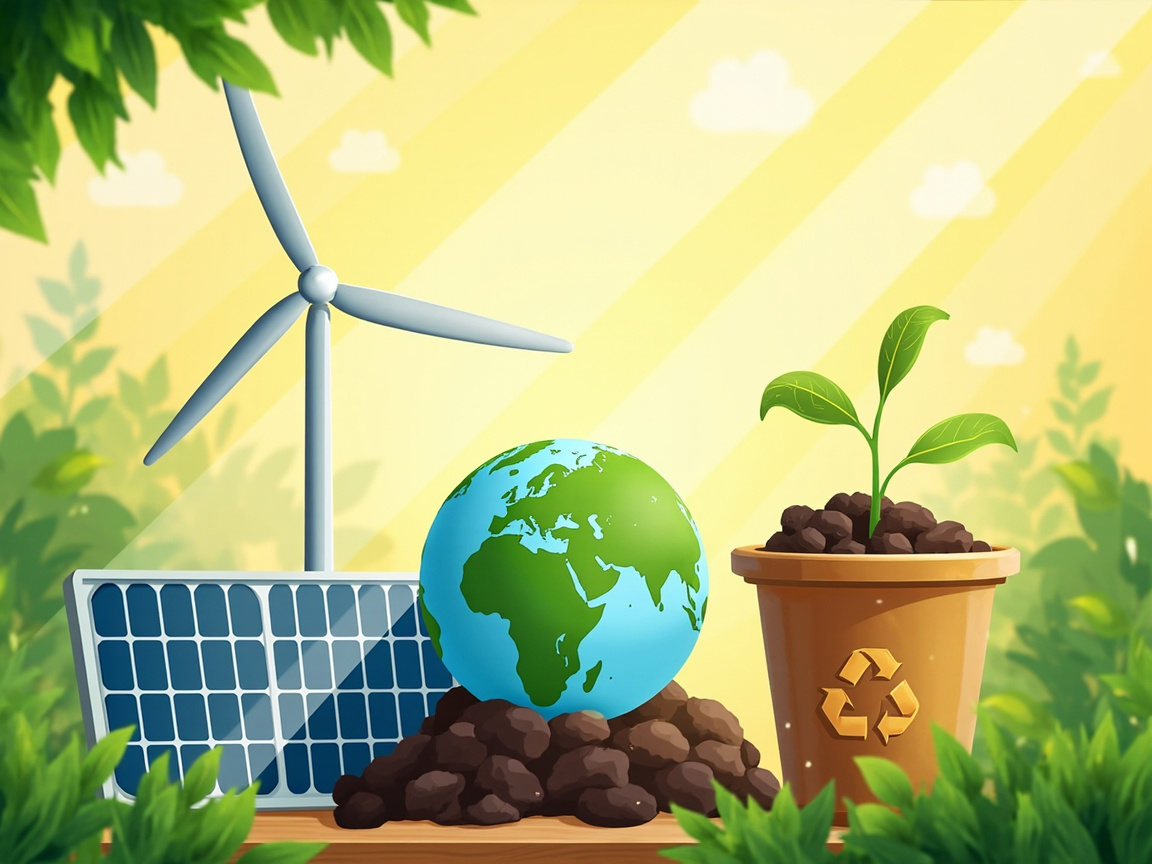
Beyond energy, our everyday decisions also leave a mark. The term zero waste describes a lifestyle that aims to send nothing to landfill by reusing, recycling, and composting. Materials that break down naturally, such as fruit peels or untreated wood, are called biodegradable, while those that can be turned into nutrient-rich soil are compostable. Creative reuse is at the heart of upcycling, the practice of transforming old or discarded items into something of higher value. Combined, these habits reduce our personal ecological footprint, the full impact a person has on the natural world.
Bigger Systems and a Greener Future
On a larger scale, governments and businesses are rethinking how the economy works. The circular economy is a model in which products are designed to be reused, repaired, or recycled rather than thrown away. Protecting wild spaces and species falls under the umbrella of conservation, the careful management of natural resources. Cutting greenhouse gas emissions remains urgent, since gases like methane and carbon dioxide trap heat in the atmosphere. Understanding these terms helps us follow the news, take part in conversations, and make informed choices for a cleaner planet.
اختبر نفسك
-
1According to the article, what does the term 'carbon footprint' refer to?
The article defines carbon footprint as the total amount of greenhouse gases released into the atmosphere by a person, company, or activity.
-
2Which energy sources are described as renewable in the article?
The article specifically lists solar, wind, and hydro power as renewable energy sources that replenish themselves naturally.
-
3What is the difference between biodegradable and compostable, as explained in the article?
The article explains that biodegradable means breaking down naturally, whereas compostable refers to materials that can be turned into nutrient-rich soil.
-
4What is a 'circular economy' designed to do?
The article defines a circular economy as a model in which products are designed to be reused, repaired, or recycled rather than thrown away.
-
5Why does the article say forests are important?
The article states that forests are vital because they support biodiversity, which keeps ecosystems healthy and balanced.