Describing Change: Transform, Shift, Evolve
The vocabulary you need to talk about how things change — whether it happens overnight or over decades.
The Speed of Change: From Gradual to Overnight
Change doesn't always come at the same pace. Some things evolve slowly, while others seem to transform in the blink of an eye. When a company has to undergo a complete redesign, the process can take years; when a technology shifts an entire industry, it can feel as if it happened overnight. The adjective gradual describes a slow, almost invisible process, while sweeping changes are wide-ranging and affect many areas at once. Overhaul, used as both a noun and a verb, refers to a thorough examination and repair of a system, organisation or even a personal habit.
Idioms That Capture Change
English is rich in idioms for describing powerful change. When a team is losing but suddenly starts winning, we say it has turned the tide. A deep, fundamental change in public opinion is often called a sea change, borrowed from Shakespeare to suggest movement as deep as an ocean current. The expression wind of change describes a mood or political direction that is starting to blow through a society, often signalling the end of an old order. To break new ground means to do something completely original, and to flip the script is to reverse a situation that seemed settled. A game-changer is an event, product or idea that completely transforms the rules of competition.
When Industries and Societies Shift
A paradigm shift, a phrase made popular by the scientist Thomas Kuhn, describes a fundamental change in the assumptions people make within a field. When factories phase out old equipment, they retire it gradually rather than stopping all at once. Governments often announce sweeping reforms that touch every part of public life, from education to healthcare. In the business world, a company may decide to overhaul its brand identity if consumer tastes have shifted dramatically. Even the most established institutions must sometimes undergo a transformation to remain relevant in a changing world.
Small Shifts and Subtle Metamorphoses
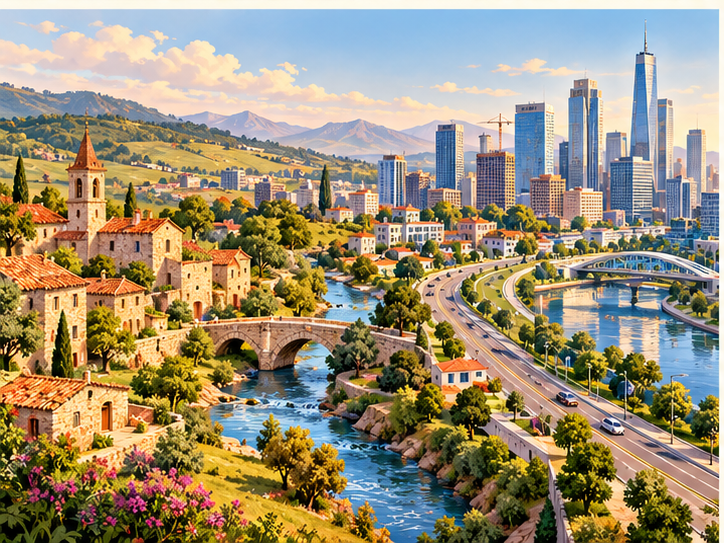
Not every change is loud and dramatic. Sometimes a product morphs into something new, with its developers quietly adding features over several updates. A personal metamorphosis might begin the day someone decides to learn a new skill or move to a new country. Cities, too, evolve: a once-quiet neighbourhood can transform into a bustling cultural hub over a decade. Recognising these gradual shifts helps us appreciate that change is rarely a single event; it is often a long series of small adjustments that, taken together, amount to something entirely new.
اختبر نفسك
-
1Which idiom is used in the article to describe a deep, fundamental change in public opinion, borrowed from Shakespeare?
The article states that a sea change describes a deep, fundamental change in public opinion and is borrowed from Shakespeare.
-
2According to the article, what does the phrase 'paradigm shift' originally describe?
The article explains that a paradigm shift, made popular by Thomas Kuhn, refers to a fundamental change in the basic assumptions of a field or society.
-
3Which word from the article is described as happening slowly and almost invisibly?
The article defines 'gradual' as describing a slow, almost invisible process, in contrast to 'overnight' or 'sweeping' changes.
-
4The article says that when a team is losing but starts winning, it has...
The article explicitly states that when a team is losing but suddenly starts winning, we say it has 'turned the tide'.
-
5What does the article say 'phase out' means in the context of factories?
The article explains that when factories phase out old equipment, they retire it gradually rather than stopping all at once.