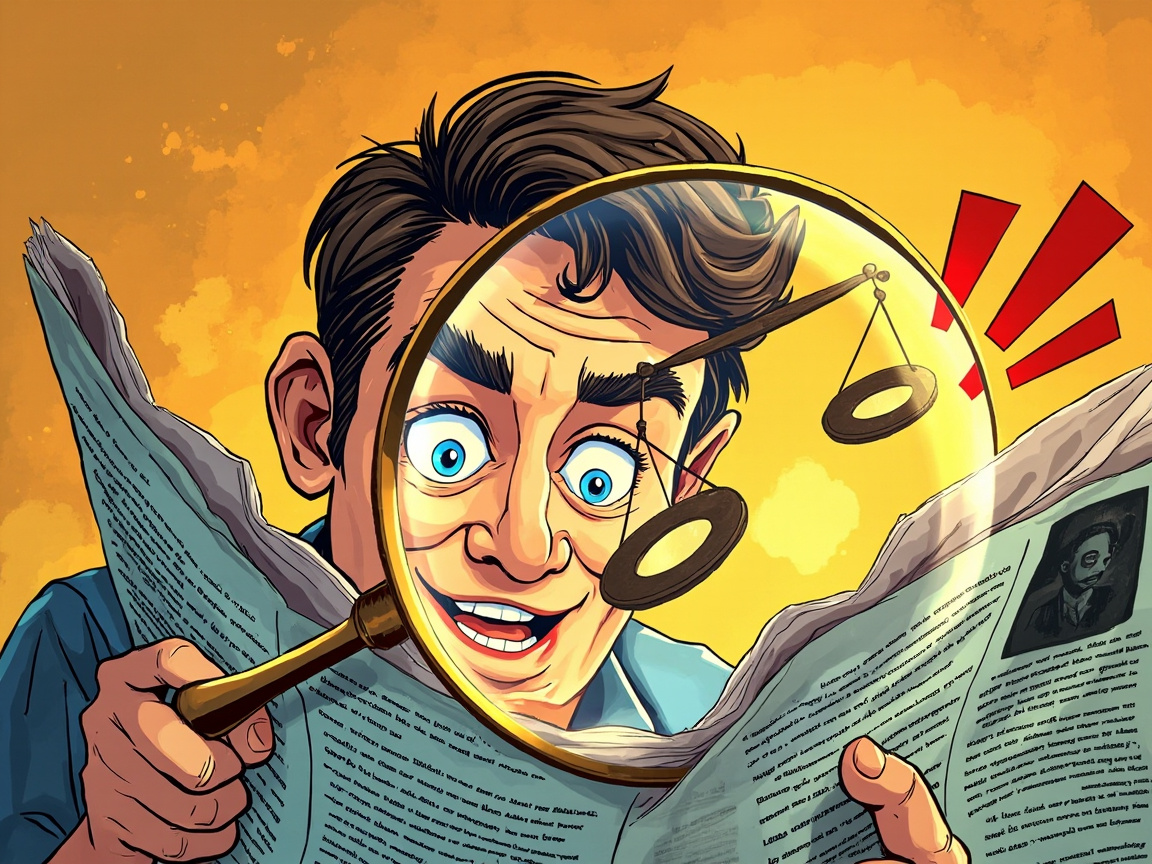
Critical Reading Challenge: Analyzing News Bias
Sharpen your ability to detect bias, loaded language, and unbalanced reporting in everyday news.
Understanding Media Bias
In today's information landscape, recognizing bias is essential for critical readers. Reporters may use framing to shape how events are perceived, often emphasizing certain aspects while ignoring others. sensationalism can distort the truth by focusing on shocking details. Additionally, loaded language may sway readers' emotions toward a particular viewpoint.
Spotlighting Unbalanced Reporting
Unbalanced reporting often results from an author's hidden agenda or pressure to support a specific narrative. Writers may engage in spin to present facts in a way that favors a particular side. Readers should assess the credibility of sources and notice if the tone is neutral. selective emphasis can also indicate unbalanced reporting, where key facts are downplayed.
اختبر نفسك
-
1Which term describes the practice of highlighting certain facts while ignoring others?
Selective emphasis highlights some facts while downplaying others.
-
2Which technique uses emotionally charged words to persuade readers?
Loaded language employs emotionally charged words.
-
3When a news story presents only one side of a conflict, it exemplifies…
Presenting only one side reflects unbalanced reporting.
-
4Which term refers to a hidden purpose behind a news piece?
Agenda indicates a hidden purpose.
-
5What is the name for the use of dramatic or shocking material to attract attention?
Sensationalism uses dramatic or shocking material.