
Cleft Sentences: It Was the Rain That...
It-clefts and wh-clefts put emphasis exactly where you want it.
Explanation
A cleft sentence splits one simple idea into two clauses so that a speaker can throw a spotlight on one particular piece of information. English has two main families: it-clefts and wh-clefts.
It-clefts use a dummy it as the subject, followed by be, the focused element, and a relative clause with that (or who for people):
It + be + focused element + that/who + rest of the information
Compare: The rain ruined the picnic. → It was the rain that ruined the picnic. The first version simply states a fact; the second version highlights 'the rain' as the cause.
Wh-clefts (also called pseudo-clefts) begin with what and place the focused information up front in a kind of summary clause:
What + focused element + be + subject + that/who + rest
Compare: I really need a coffee. → What I really need is a coffee.
Clefts are most useful in three situations: (1) correcting a misunderstanding, (2) contrasting two ideas, and (3) introducing a new or surprising piece of information.
Examples
Here are some natural uses at C1 level:
- It was the noise that kept me awake, not the light. (contrast)
- It isn't the salary that worries me — it's the workload. (correction)
- What surprised me most was his honesty. (highlighting)
- What we need is a clear plan, not more meetings. (recommendation)
- It was Sarah who suggested the new supplier. (focus on the agent)
Common mistakes
- Wrong word order after the cleft. In It was the manager that I phoned, the relative clause keeps its normal object position — do not add a pronoun such as 'him' after whom: ✱It was the manager whom I phoned him.
- Dropping that in formal writing. Native speakers often say It was the rain ruined the picnic in conversation. At C1 level, keep that in for clarity and accuracy.
- Overusing clefts. One or two in a paragraph add style; three or four in a row sound theatrical. Use clefts only when something genuinely deserves emphasis.
- Bad subject–verb agreement in wh-clefts. Match the verb to the tail of the sentence, not the head: What we need is more evidence (singular tail) but What we need are more examples (plural tail).
In real life
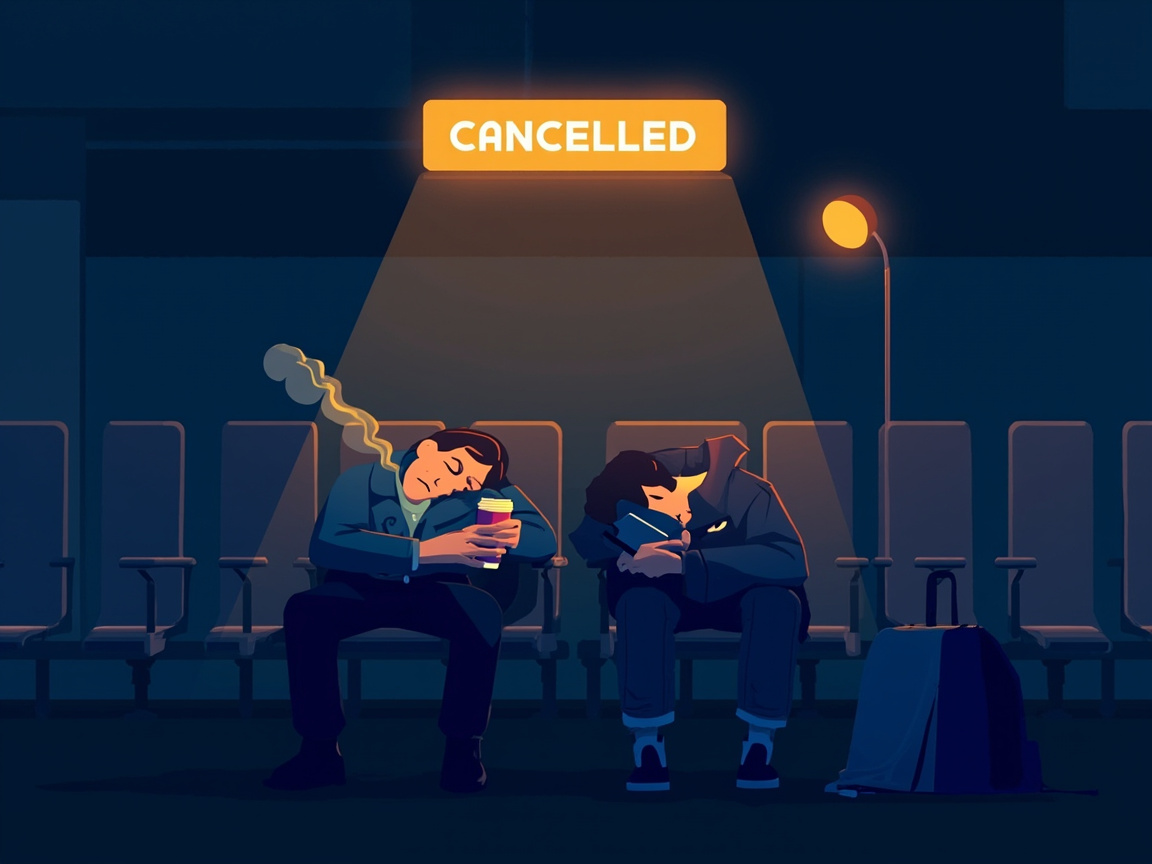
Two colleagues, Lena and Marco, are stuck at the airport after a cancelled flight.
Lena: So we're stuck here until tomorrow morning. Whose idea was it to book the 6 a.m. connection?
Marco: It wasn't me — it was the booking system that offered it automatically. I just clicked "confirm".
Lena: Typical. What I'd really love right now is a decent bed and a hot shower. What I don't need is another three hours in a plastic chair.
Marco: Don't worry. What I just managed to do was book us into the airport hotel. It's only the lounge they've given us, but at least it has a sofa.
Lena: You're a genius. What matters most is that we finally get some rest.
Quiz
-
1According to the article, what is the main purpose of a cleft sentence?
The Explanation section states that clefts throw a spotlight on one particular piece of information.
-
2In the example 'It was the rain that ruined the picnic', what is the focus?
The article explains that the cleft version highlights 'the rain' as the cause of the ruined picnic.
-
3What alternative name for a wh-cleft does the article mention?
The Explanation section notes that wh-clefts are also called pseudo-clefts.
-
4According to the Common mistakes section, which of these sentences is correct?
The article explains that a pronoun like 'him' is not needed after the relative pronoun in a cleft.
-
5In the In real life dialog, what does Lena say matters most at the end of the conversation?
Lena's final line is 'What matters most is that we finally get some rest.'