
Mastering Past Tenses: When to Use 'Did' vs. 'Was/Were'
Learn to correctly choose between simple past and past continuous to describe completed actions and ongoing events in the past.
Explanation
In English, the simple past tense describes actions or events that are completed at a specific point in the past. In positive statements, it uses the auxiliary verb did together with the base form of the verb (e.g., She did call). For negatives and questions, did is also used and the main verb stays in its base form.
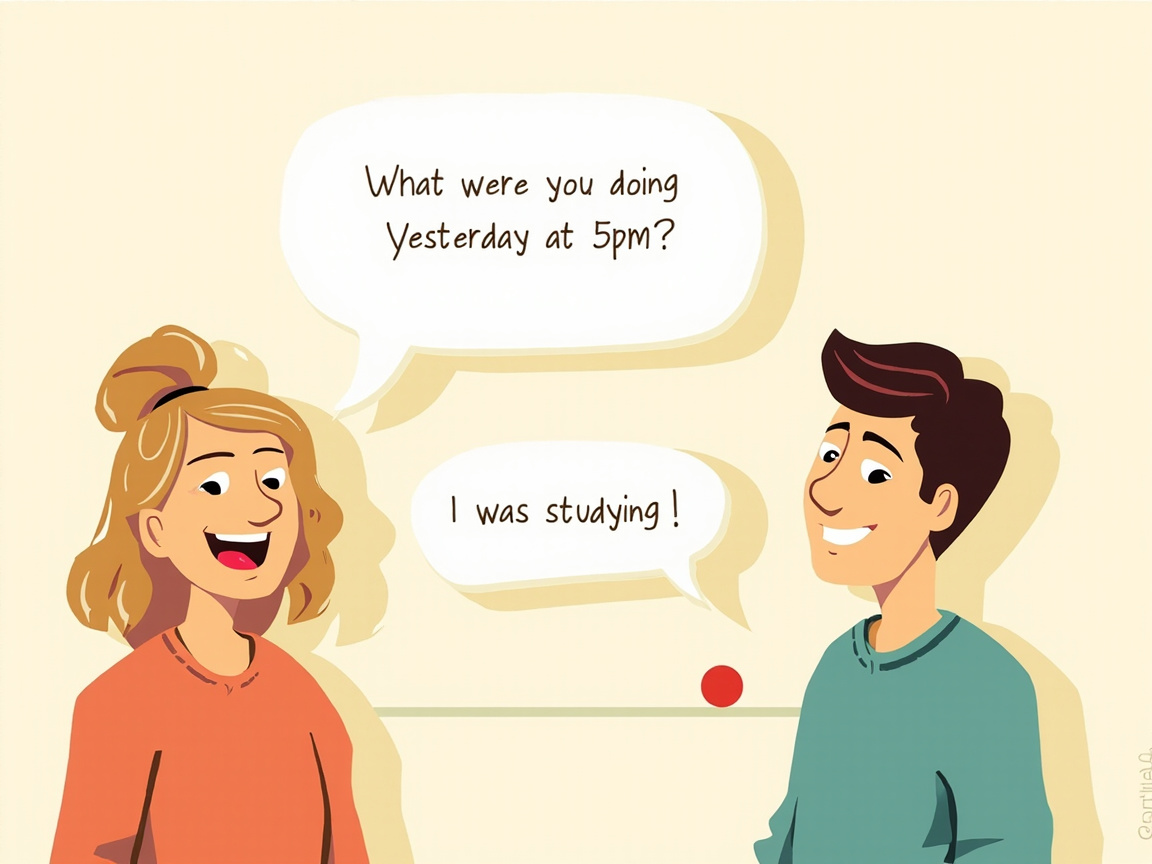
The past continuous tense (also called the past progressive) shows an action that was happening over a period of time in the past. It is formed with the past forms of 'be' – was or were – followed by the verb ending in -ing (e.g., They were watching a film). This tense is often used for longer background actions and for describing interruptions.
Examples
- She did finish her homework before dinner.
- He did not call me yesterday.
- Did you go to the meeting?
- They were playing football when it started raining.
- I was reading a book at 8 p.m.
- While she was cooking, the phone rang.
Common Mistakes
- Using both auxiliaries together: *She did was reading.* The correct form is either "She was reading" or "She did read."
- Forgetting the -ing ending: *He were working* → "He was working."
- Using stative verbs in the past continuous: *I was knowing the answer.* Use "I knew the answer."
- Mixing time markers: Using a definite time with a continuous form when the action was completed.
In Real Life
Anna: Hey, what did you do yesterday evening?
Ben: I was studying for my exam when the power went out.
Anna: Did you finish your revision?
Ben: No, I didn’t finish, but I did manage to read a few chapters.
Quiz
-
1What auxiliary verb is used to form the simple past in positive statements?
In positive simple past sentences, the auxiliary 'did' is used with the base verb.
-
2When do we use the past continuous?
Past continuous describes actions in progress at a particular past moment.
-
3Which sentence contains an interruption?
The past continuous action is interrupted by another quick action.
-
4Which verb cannot normally be used in the past continuous?
'Know' is a stative verb and does not normally appear in the past continuous.
-
5Choose the correct negative form in the simple past.
The correct negative uses 'did not' (didn't) followed by the base verb.