
Silent Languages: Understanding Gestures and Body Language Globally
How We Speak Without Words Across Different Cultures
The Universal Language We Never Learn in School
When we think of communication, most of us imagine spoken or written words. However, researchers estimate that up to 70% of all human interaction happens through non-verbal channels. This includes body language, facial expressions, and the way we use physical space. While we spend years learning languages with grammar books and dictionaries, we rarely study the gesture vocabulary that can make or break international relationships. Understanding these silent signals has become essential in our globally connected world.
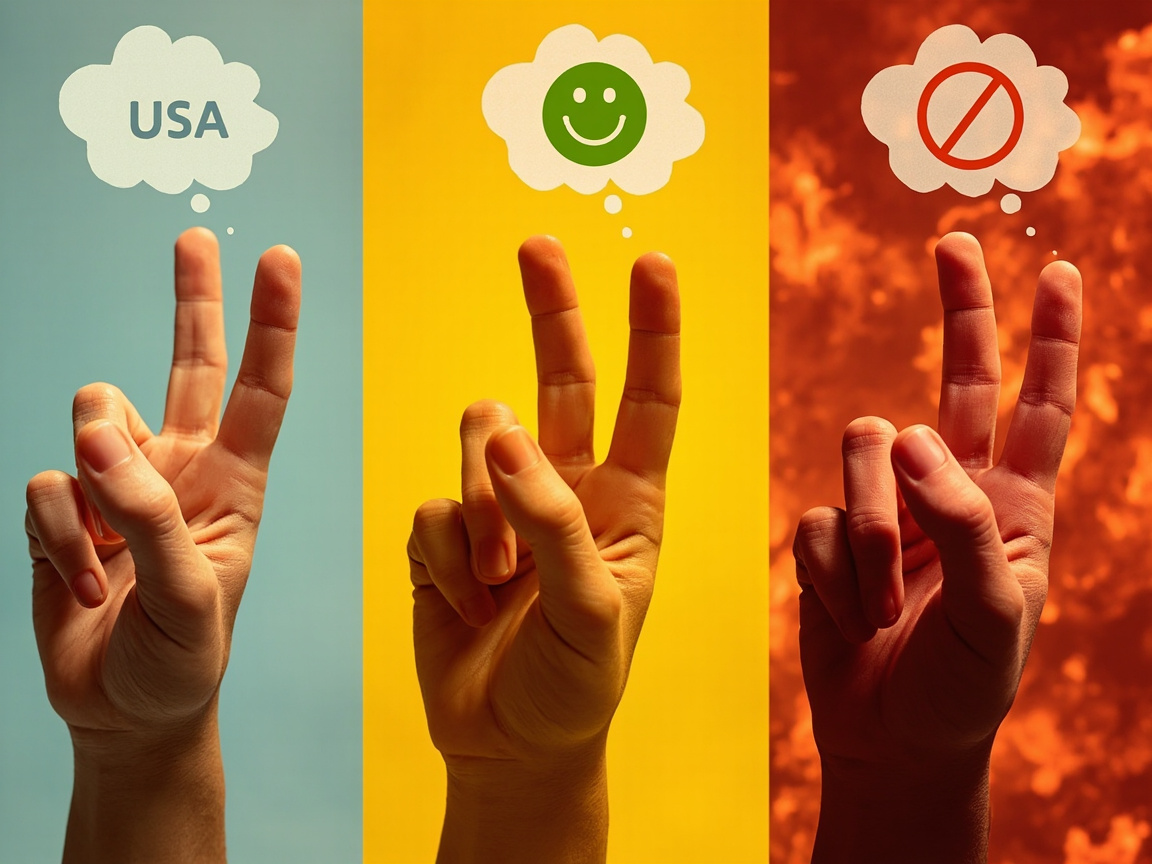
Hand Gestures: When the Same Sign Means Opposite Things
Perhaps no area of cultural norms causes more confusion than hand signals. The familiar 'OK' sign—formed by touching the thumb and index finger in a circle—appears friendly to Americans but is deeply inappropriate in Brazil, where it resembles a vulgar gesture. Meanwhile, in parts of the Middle East, the same sign can carry dangerous meanings. The 'thumbs up' gesture, celebrated as positive in many Western countries, can be offensive in parts of the Middle East, Australia, and West Africa. In Japan, pointing at yourself is considered acceptable when admitting fault, but in many other cultures it comes across as arrogant or self-centered.
Faces That Tell Different Stories
Facial expressions are often cited as evidence for universal human emotions, but their interpretation varies significantly across cultures. While a smile generally signals happiness worldwide, the context and frequency of smiling differ dramatically. In Japan, excessive smiling can be seen as nervous or ambiguous—it might mask discomfort rather than indicate genuine happiness. Eye contact provides another fascinating example: in Western business settings, direct eye contact suggests confidence and honesty, while in many Asian cultures, looking away from someone's eyes shows respect, particularly when addressing elders or authority figures. In some Latin American countries, extended eye contact between strangers might even be interpreted as a challenge or invitation.
The Invisible Space Around Us
Every culture has unwritten rules about personal space—the physical distance we maintain from others during conversations. Northern European and North American cultures typically prefer more space, becoming uncomfortable if someone stands too close. In contrast, people from Latin American, Middle Eastern, and Mediterranean cultures often prefer closer physical proximity, which can lead to a 'chase' effect where one person backs away and the other advances. Understanding this invisible boundary can prevent the uncomfortable feelings that arise when people from different regions interact, especially in professional settings where first impressions matter greatly.

Nodding, Bowing, and Greeting Customs
How we say hello varies as much as the word we use. The simple act of nodding can mean 'yes' in most of the Western world and parts of Asia, but it means 'no' in Bulgaria and parts of Greece. A head wobble in India and Sri Lanka indicates understanding or agreement, confusing visitors who expect a simple up-and-down motion. Greeting customs also range from handshakes to hugs to kisses on the cheek, depending on the relationship's familiarity and the context. Professional situations often require more formal gestures, while personal greetings allow warmth and physical closeness.
Navigating Global Conversations Successfully
For travelers and international professionals, the good news is that cross-cultural body language mistakes are rarely offensive when made with good intentions. The key is to observe before you act, especially in formal situations. When uncertain, mirror the behavior of local people, or maintain slightly more physical distance than might feel natural. Most importantly, remember that miscommunication through gestures rarely causes lasting damage—unlike mispronouncing a word, a misunderstood hand signal can usually be laughed off and clarified immediately. By developing awareness of these differences, we open ourselves to richer, more meaningful connections across cultural boundaries.
Quiz
-
1What percentage of human interaction is estimated to happen through non-verbal channels according to the article?
The article states that researchers estimate up to 70% of human interaction happens through non-verbal channels.
-
2Which gesture is described as friendly in the US but potentially offensive in Brazil?
The OK sign resembles a vulgar gesture in Brazil, making it inappropriate despite its friendly meaning in the US.
-
3According to the article, why might smiling be seen as ambiguous in Japan?
The article explains that in Japan, excessive smiling can be seen as nervous or ambiguous, potentially masking discomfort.
-
4What happens when people from cultures with different personal space preferences interact?
The article describes a 'chase' effect where people from cultures preferring closer proximity advance while those wanting more space back away.
-
5In Bulgaria, what does nodding (moving the head up and down) typically mean?
The article notes that nodding means 'no' in Bulgaria and parts of Greece, the opposite of most Western countries.