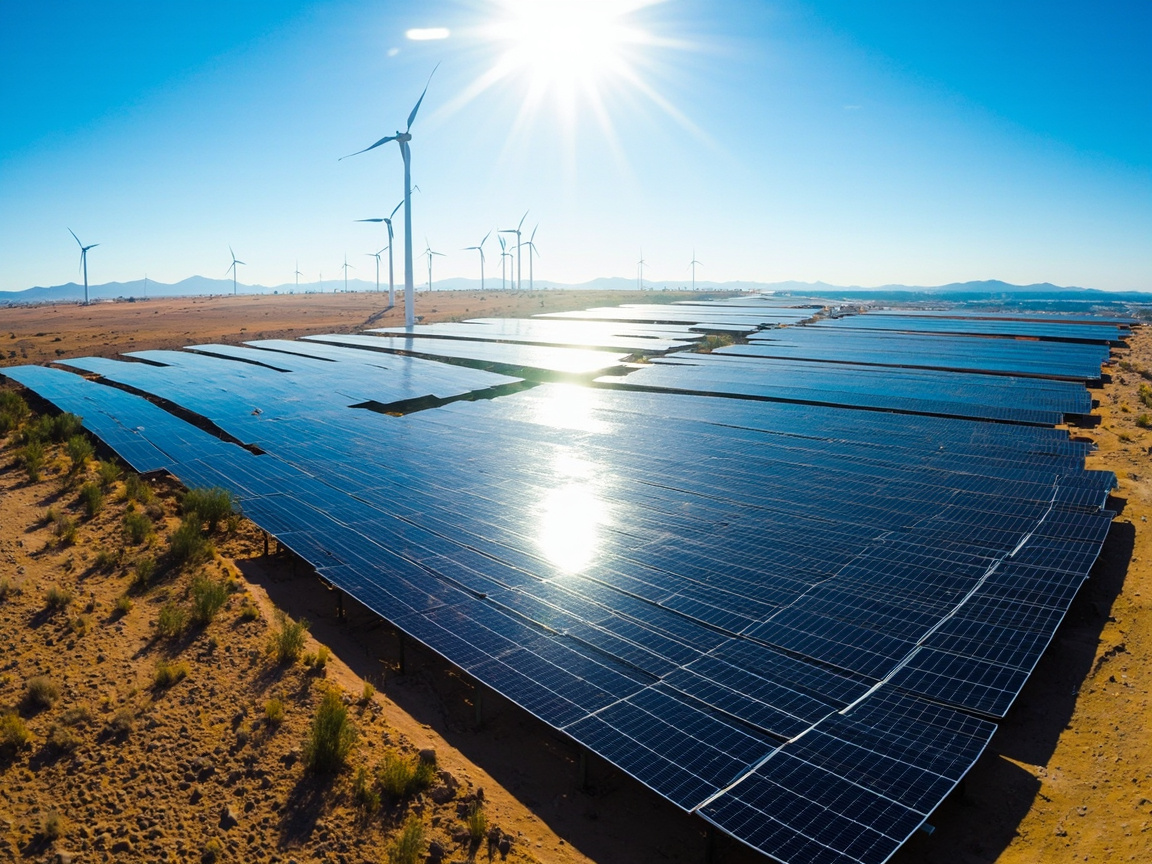
Renewable Energy Triumphs: The 2025 Scientific Breakthrough
Explore why the rise of renewable energy was named 2025's top scientific breakthrough, with analysis of policy, technology, and global impact.
A Landmark Decision by Experts
In December 2025, a panel of distinguished scientists and researchers convened to select the most consequential scientific achievement of the year. After rigorous deliberation, renewable energy technologies emerged as the clear winner, overtaking advances in artificial intelligence and biotechnology. This marks the first time that energy innovation has claimed the top spot in the annual ranking. The decision reflects a growing consensus that the energy transition represents humanity's most urgent technological imperative. Experts emphasized that this breakthrough is not merely academic but has tangible implications for billions of people worldwide.

The Technology Behind the Surge
The past year witnessed remarkable improvements in photovoltaic efficiency, with laboratory cells now converting more than 33 percent of sunlight into electricity. Wind turbine installation costs have plummeted, making offshore wind farms economically viable in previously unsuitable regions. Energy storage solutions, particularly next-generation batteries, have addressed the longstanding problem of intermittency that plagued solar and wind power. These innovations collectively demonstrate that sustainable energy can now compete directly with traditional fossil fuels on both cost and reliability.
Global Policy Momentum Accelerates
Governments across the globe have implemented ambitious policy frameworks designed to phase out carbon-intensive energy sources. The European Union's revised Green Deal mandates that 45 percent of energy consumption must come from renewables by 2030. Meanwhile, developing nations are leapfrogging traditional infrastructure entirely, installing solar grid systems in remote communities at unprecedented rates. International climate agreements have provided additional emissions reduction targets, creating enforceable obligations for signatory countries. This coordinated governmental action has created a favorable environment for continued investment and innovation.

Economic Transformation in Energy Markets
The renewable sector has become the fastest-growing industry in the global energy market, attracting over 1.5 trillion dollars in investment during 2025 alone. Traditional energy companies have responded by diversifying their portfolios, with major oil corporations now deriving significant revenue from renewable sources. The creation of green jobs has offset losses in conventional mining and drilling sectors, though workforce transitions remain challenging. Financial analysts predict that carbon neutrality targets will drive continued market growth for the next decade. These economic shifts underscore that the energy revolution is no longer a distant aspiration but an ongoing reality.
Challenges on the Horizon
Despite this progress, experts caution against complacency in the pursuit of decarbonization. Grid infrastructure in many regions requires substantial upgrades to accommodate variable energy inputs from wind and solar sources. Critical mineral shortages, particularly for lithium and cobalt used in batteries, pose supply chain vulnerabilities. Additionally, geopolitical tensions threaten to disrupt the international cooperation essential for achieving climate goals. Nevertheless, the momentum generated by 2025's breakthrough provides a solid foundation for addressing these remaining obstacles. The scientific community remains cautiously optimistic that the energy transition will continue to accelerate.
Quiz
-
1What significant achievement did renewable energy technologies accomplish in December 2025?
The expert panel selected renewable energy technologies as the top scientific breakthrough after rigorous deliberation.
-
2According to the article, what percentage of sunlight can advanced photovoltaic cells now convert into electricity?
Laboratory photovoltaic cells now convert more than 33 percent of sunlight into electricity.
-
3What problem has been addressed by improvements in energy storage solutions?
Next-generation batteries have addressed the intermittency problem that affected solar and wind power reliability.
-
4According to the European Union's revised Green Deal, what percentage of energy consumption must come from renewables by 2030?
The EU's revised Green Deal mandates that 45 percent of energy consumption must come from renewables by 2030.
-
5Which of the following does the article identify as a remaining challenge for the renewable energy transition?
The article mentions that grid infrastructure in many regions requires substantial upgrades to handle variable energy inputs.