Subjunctive Mood and Advanced Modal Complexity
Master the use of subjunctive forms, semi-modals, and complex modal combinations for expressing varying degrees of certainty and hypothetical scenarios.
Explanation
The subjunctive mood is a grammatical mood used to express wishes, demands, suggestions, or hypothetical situations. Unlike the indicative mood, which states facts, the subjunctive often appears in that‑clauses after expressions such as insist, recommend, essential, vital. The present subjunctive uses the base form of the verb (e.g., be, go, have), while the past subjunctive uses were for all persons (e.g., If I were taller…).
Modal verbs (can, may, must, will, shall, would, should, might, could) express modality—possibility, ability, obligation, or permission. Semi‑modals (ought to, have to, need to, dare to, used to) share some modal features but differ in negation, conjugation, or use with complement verbs.
Complex modal combinations arise when modals are paired with perfect infinitives, progressive infinitives, or other modals to convey nuanced meanings:
- might have been – a hypothetical past event.
- should have been – an expectation about a past event that did not happen.
- could have been – a past possibility that was not realized.
- would have been – a conditional past result.
These forms allow speakers to express varying degrees of certainty, speculation, and hypothetical reasoning.
Examples
Below are illustrative sentences that highlight the subjunctive mood and advanced modal usage. The target words are marked with highlighting.
- It is vital that she be present at the meeting.
- If I were you, I would reconsider the offer.
- He demanded that the report be submitted by Friday.
- God bless you.
- She might have been late, but she wasn’t.
- You ought to see a doctor about that cough.
- If we had studied harder, we could have passed the exam.
- They should have left earlier, but they didn’t.
Common mistakes
- Using "was" instead of "were" in the past subjunctive: If I was (incorrect) → If I were (correct).
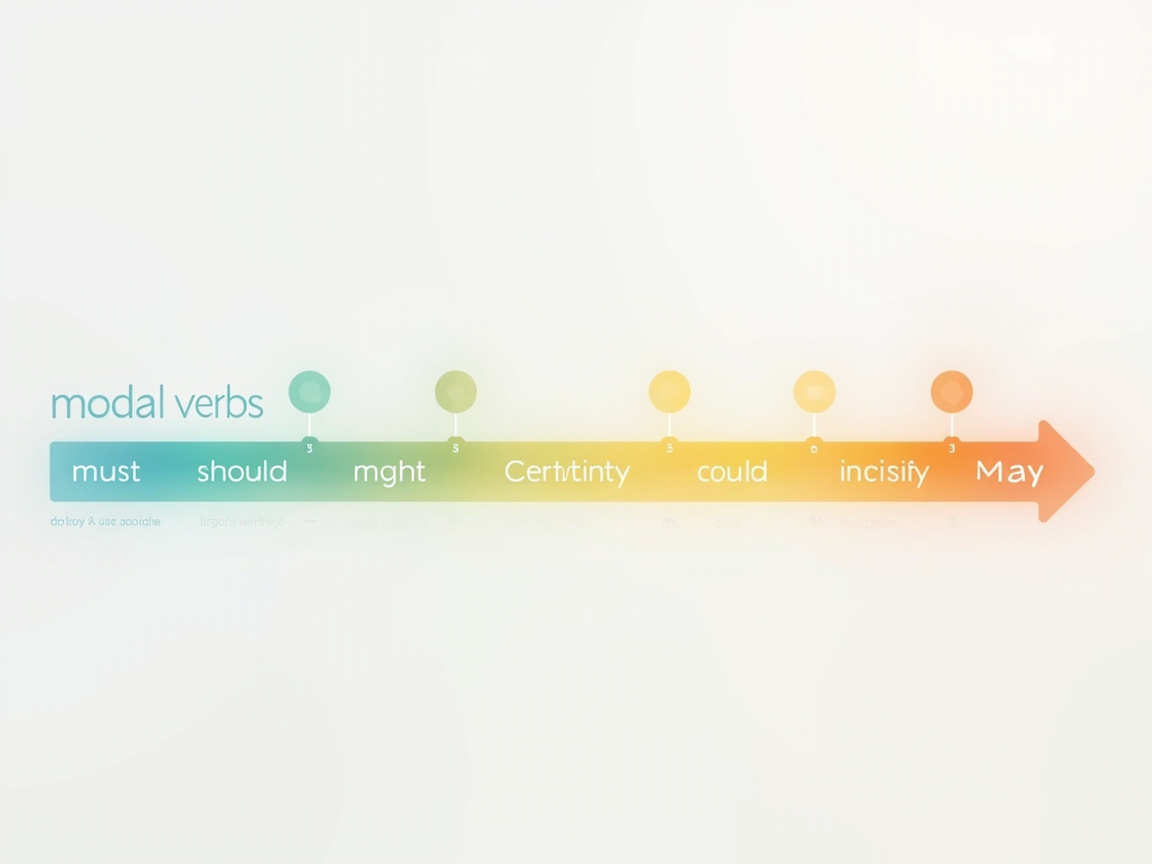
- Mixing up "might have" and "must have": "He must have missed the train" suggests certainty, while "He might have missed the train" indicates possibility. Mixing them changes the speaker’s certainty.
- Forgetting the base form after mandative subjunctive triggers: It is essential that he arrives (incorrect) → It is essential that he arrive (correct).
- Overusing semi‑modals as full modals: "I ought to can do it" is redundant; correct usage is "I ought to do it" or "I can do it."
- Misplacing the perfect infinitive with modals: "She could have" (no verb) is incomplete; must be "She could have gone."
In real life
Dialogue – Discussing a hypothetical job offer
Alex: If I were you, I’d seriously consider that position in Berlin.
Jordan: I’m not sure. I might have missed the application deadline.
Alex: You could still contact the HR department and ask for an extension.
Jordan: That’s a good point. I should have sent an email earlier, but I was busy.
Alex: Well, it might have worked out anyway. Let’s draft a polite request together.
اختبر نفسك
-
1What is the primary function of the subjunctive mood?
The subjunctive mood conveys wishes, demands, or hypothetical situations rather than facts.
-
2Which of the following sentences uses the present subjunctive?
The present subjunctive appears after ‘that’ expressions of importance, using the base form ‘be’.
-
3Which semi‑modal is used in the sentence ‘You ought to see a doctor’?
‘Ought to’ is classified as a semi‑modal because it shares some modal features but not all.
-
4Which complex modal combination can express a hypothetical event that did not occur?
All three forms (might have been, should have been, could have been) can indicate a past hypothetical that did not happen.
-
5In the third conditional, what tense is used in the if‑clause?
The third conditional uses the past perfect in the if‑clause to refer to an unreal past condition.