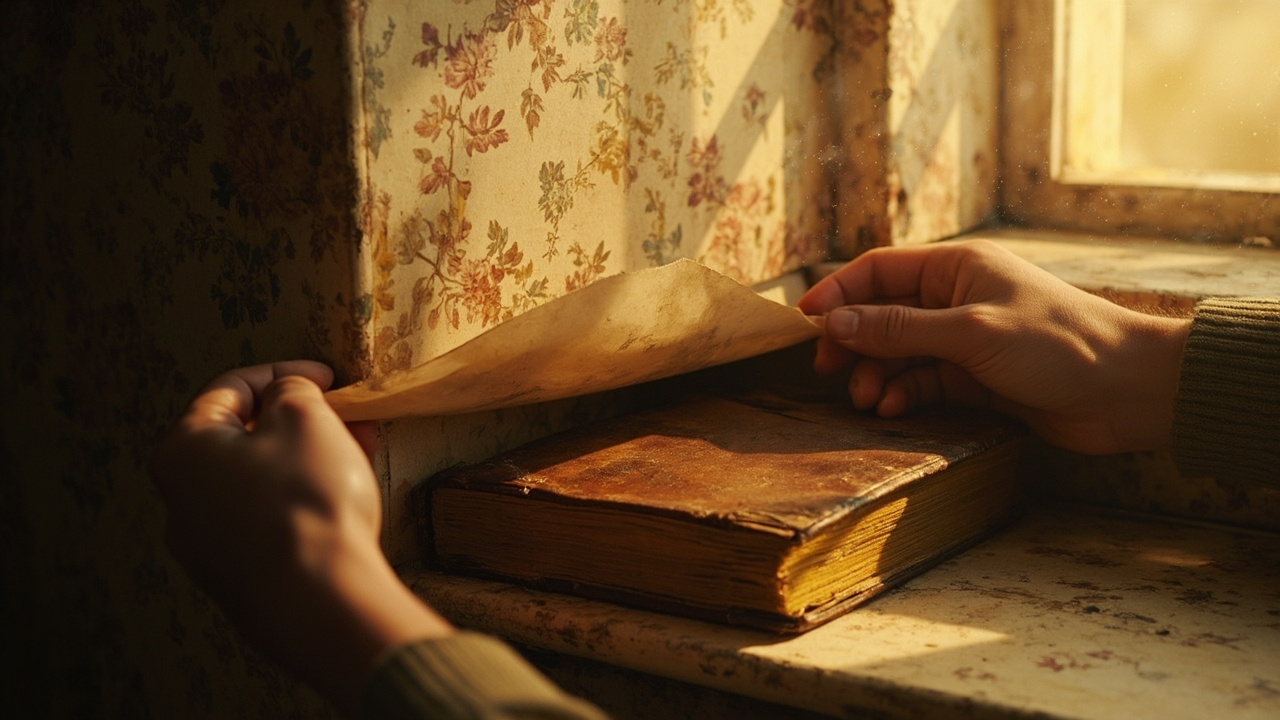
عنوان القصة: غرفة مع إطلالة
لم يكن شاحنة النقل قد غادرت حتى لاحظت إيما الشق في الجص. كان بالكاد مرئيًا، يمتد على طول جدار ما أسمياه "الغرفة الثانية" بكثير من التفاؤل. مررت بأصابعها على السطح غير المستوي، فشعرت بشيء يتحرك تحت ورق الجدران.
"ماذا تفعلين؟" نادى جيمس من المطبخ، حيث كان يكافح مع صندوق عنيد بشكل خاص مُعلَّم بـ"غلاية ومستلزمات الشاي الأساسية".
"وجدت شيئًا غريبًا"، ردت إيما، وهي تقشر زاوية من ورق الجدران المزهر الباهت. خلفه، كشف حرف في الجص عن نفسه - فاصل مخفي، مخفي بعناية ومنسي على ما يبدو منذ عقود.
عملا معًا لإزالة القسم، بينما الفضول يتفوق على حذرهما. خلف الجص كان هناك فراغ صغير، وبداخله، دفتر ملاحظات مُغلّف بالجلد، اصفرّ من العمر.
الصفحة الأولى تحمل تاريخًا: سبتمبر 1962. الخط أنيق لكنه متعجل، كأن كاتبته كانت يائسة من تسجيل أفكارها قبل أن تفلت منها.
يوميات إلينور أشوورث
قرأت إيما بصوت عالٍ بينما كان جيمس يحضّر الشاي. معًا، كشفا قصة شابة عاشت في هذه الشقة بالذات قبلهم بستين عامًا.
عملت إلينور كسكرتيرة في أحد مصانع النسيج التي سيطرت على المشهد الصناعي في مانشستر. كانت يومياتها عادية في البداية - وصفات لرحلاتها اليومية، شكاوى من الطقس، ملاحظات عن جيرانها. ثم، في أكتوبر 1962، تغير كل شيء.
"رسام جديد يعمل على الواجهة الخارجية للمبنى"، كتبت. "اسمه توماس. يلوّح لي من النافذة كل صباح، وأجد نفسي أنتظره الآن."
أصبحت المداخلات أكثر حميمية مع مرور الأسابيع. بدأت إلينور وتوماس بالالتقاء سرًا. كان من الطبقة العاملة، وهي من الطبقة الوسطى؛ لديها عائلة نظمت خطوبتها لامرأة تدعى مارغريت، ابنة شريك والدها في العمل. كانت الاحتمالات متراكمة ضدهم بشكل مستحيل.
"لا يمكننا أن نكون معًا"، كتبت إلينور في نوفمبر. "المجتمع لن يسمح بذلك أبدًا. ومع ذلك لا أستطيع أن أتخيل مستقبلًا بدونه فيه."
أصبحت المداخلات متفرقة بعد ذلك. بعض الصفحات مُزقت بالكامل. عندما استؤنفوا، تغير خط إلينور - لا يزال أنيقًا، لكنه يرتجف قليلاً.
"توماس اتخذ خياره"، كتبت في يناير 1963. "سيتزوج مارغريت كما تريد عائلته. لن ألومه. لم نكن مخصصين لأن نكون أكثر من فترة وجيزة في حياة بعضنا."
المداخلة الأخيرة مؤرخة في مارس 1963. "أغادر مانشستر. هذه الشقة تحمل ذكريات كثيرة. أترك هذه اليوميات مخفية حيث ربما يومًا ما، سيجدها شخص يفهم ويعرف أنني كنت موجودة. أنني أحببت."
ماذا حدث بعد ذلك
قضت إيما وجيمس الأسابيع التالية في البحث. زاروا الأرشيفات المحلية، يبحثون عن سجلات المبنى وسكانه السابقين. ما اكتشفوه فاجأهم.
توماس ويثورث تزوج بالفعل مارغريت بيرسون في يناير 1963، كما كتبت إلينور. لكن الزوجين انتقلا إلى لندن بعد حفل الزفاف بفترة قصيرة ولم تكون لهما صلة أخرى بمانشستر. أما إلينور أشوورث، فظهرت في سجلات مختلفة - كانت قد غادرت المدينة كما وعدت، وانتقلت إلى منطقة البحيرات، حيث عاشت وحدها حتى وفاتها في 2019.
"لم يكن مخططًا أن تُعثر على هذه اليوميات"، لاحظ جيمس، يقلب الصفحات الصفراء بعناية. "خبأتها ولم تعد إليها أبدًا."
"لكن أحدًا عاد من أجلها"، قالت إيما بهدوء. "انظري."
في الصفحة الأخيرة، مخبأة خلف آخر مداخلة لإلينور، كانت هناك صورة. تُظهر شابة شابة تقف عند هذه النافذة بالذات، تتطلع إلى شيء في الأسفل. على ظهرها، بحبر باهت: "لتوماس، الذي علّمني أن أرى العالم بشكل مختلف. كل حبي، دائمًا. إ.أ., أكتوبر 1962."
تعمقت الغموض. كيف انتهت الصورة مع اليوميات؟ هل عرف توماس عن مكان إخفاء إلينور؟ هل اكتشفها شخص آخر ووضع الصورة هناك عمدًا؟
لم يتعلموا الحقيقة الكاملة أبدًا. لكن أحيانًا، متأخرًا في الليل، كانت إيما تقف عند النافذة حيث كانت إلينور تقف ذات مرة، تراقب الشارع أدناه، وكانت تتخيل شابين واقعيين في الحب رغم كل العقبات. كانت تفكر في اليوميات المخفية، والفاصل المنسي، وقصة الحب التي انتظرت ستين عامًا لتُروى.
"إنها غريبة، أليس كذلك؟" قالت لجيمس ذات مساء. "أنا وجدناها. نحن من كان."
لف جيمس ذراعه حولها. "ربما أرادت إلينور منا أن نجدها. ربما كانت تنتظر شخصًا يقرأ قصتها ويتذكرها."
في الخارج، واصلت مانشستر تحولها اللانهائي - مبانٍ جديدة تعلو، قديمة تُرمَّم، حيوات تبدأ وتنتهي في إيقاع المدينة الأبدي. لكن في هذه الشقة الصغيرة، została opowiedziana في النهاية قصة حب من ستينيات القرن العشرين، وتم تذكر امرأة عاشت وخسرت وأحبت أخيرًا.
Titel der Geschichte: Ein Zimmer mit Aussicht
Der Möbelwagen war kaum abgefahren, als Emma den Riss im Putz bemerkte. Er war kaum sichtbar und verlief entlang der Wand dessen, was sie optimistisch das "zweite Schlafzimmer" genannt hatten. Sie strich mit den Fingern über die unebene Oberfläche, und etwas bewegte sich unter der Tapete.
"Was machst du da?" rief James aus der Küche, wo er mit einer besonders hartnäckigen Kiste kämpfte, die mit "Wasserkocher und wichtige Teevorräte" beschriftet war.
"Ich hab was Seltsames gefunden", antwortete Emma und löste eine Ecke der verblassten Blumtapete. Dahinter kam eine Naht im Putz zum Vorschein - eine versteckte Trennwand, sorgfältig verborgen und offenbar seit Jahrzehnten vergessen.
Sie arbeiteten gemeinsam daran, den Abschnitt zu entfernen, ihre Neugier überwog ihre Vorsicht. Hinter dem Putz lag ein kleiner Hohlraum, und darin eingebettet, ein ledergebundenes Notizbuch, das mit dem Alter vergilbt war.
Die erste Seite trug ein Datum: September 1962. Die Handschrift war elegant, aber gehetzt, als hätte die Verfasserin verzweifelt versucht, ihre Gedanken zu Papier zu bringen, bevor sie entkamen.
Das Tagebuch von Eleanor Ashworth
Emma las laut vor, während James Tee machte. Gemeinsam enthüllten sie die Geschichte einer jungen Frau, die in dieser Wohnung über sechzig Jahre vor ihnen gelebt hatte.
Eleanor arbeitete als Sekretärin in einer der Textilfabriken, die Manchesters Industrielandschaft dominierten. Ihre Einträge waren anfangs gewöhnlich - Beschreibungen ihres täglichen Pendelns, Beschwerden über das Wetter, Beobachtungen über ihre Nachbarn. Dann, im Oktober 1962, änderte sich alles.
"Ein neuer Maler arbeitet an der Außenfassade des Gebäudes", schrieb sie. "Er heißt Thomas. Er winkt mir jeden Morgen durchs Fenster zu, und ich ertappe mich dabei, wie ich auf ihn warte."
Die Einträge wurden im Laufe der Wochen intimer. Eleanor und Thomas hatten begonnen, sich heimlich zu treffen. Er war Arbeiterklasse, sie war Mittelklasse; seine Familie hatte eine Ehe mit einer Frau namens Margaret arrangiert, der Tochter des Geschäftspartners seines Vaters. Die Chancen waren unmöglich gegen sie.
"Wir können nicht zusammen sein", schrieb Eleanor im November. "Die Gesellschaft würde es niemals erlauben. Und doch kann ich mir keine Zukunft ohne ihn darin vorstellen."
Die Einträge wurden danach sporadisch. Einige Seiten waren ganz herausgerissen worden. Als sie wieder aufgenommen wurden, hatte sich Eleanors Handschrift verändert - noch immer elegant, aber leicht zitternd.
"Thomas hat seine Wahl getroffen", schrieb sie im Januar 1963. "Er wird Margaret heiraten, wie seine Familie es wünscht. Ich werde ihm nicht die Schuld geben. Wir waren nie dazu bestimmt, mehr als eine kurze Unterbrechung im Leben des anderen zu sein."
Der letzte Eintrag war auf März 1963 datiert. "Ich verlasse Manchester. Diese Wohnung birgt zu viele Erinnerungen. Ich lasse dieses Tagebuch versteckt, wo vielleicht eines Tages jemand, der versteht, es finden und wissen wird, dass ich existiert habe. Dass ich geliebt habe."
Was als Nächstes geschah
Emma und James verbrachten die folgenden Wochen mit Recherchieren. Sie besuchten die örtlichen Archive und suchten nach Aufzeichnungen über das Gebäude und seine ehemaligen Bewohner. Was sie entdeckten, überraschte sie.
Thomas Whitworth hatte tatsächlich Margaret Pearson im Januar 1963 geheiratet, wie Eleanor geschrieben hatte. Aber das Paar war kurz nach der Hochzeit nach London gezogen und hatte keinen weiteren Bezug zu Manchester. Eleanor Ashworth jedoch tauchte in verschiedenen Aufzeichnungen auf - sie hatte die Stadt verlassen, wie versprochen, und war in den Lake District gezogen, wo sie bis zu ihrem Tod im Jahr 2019 allein gelebt hatte.
"Das Tagebuch war nicht dafür bestimmt, gefunden zu werden", bemerkte James, während er vorsichtig die vergilbten Seiten umblätterte. "Sie hat es versteckt und ist nie wieder zurückgekommen."
"Jemand ist für sie zurückgekommen", sagte Emma leise. "Schau."
Auf der letzten Seite, hinter Eleanors letztem Eintrag versteckt, lag ein Foto. Es zeigte eine junge Frau, die an diesem Fenster stand und auf etwas hinunterblickte. Auf der Rückseite, in verblasster Tinte: "Für Thomas, der mich gelehrt hat, die Welt anders zu sehen. All meine Liebe, für immer. E.A., Oktober 1962."
Das Geheimnis vertiefte sich. Wie war das Foto zum Tagebuch gekommen? Hatte Thomas von Eleanors Versteck gewusst? Hatte jemand anderes es entdeckt und das Foto absichtlich dort platziert?
Sie erfuhren nie die ganze Wahrheit. Aber manchmal, spät in der Nacht, stand Emma am Fenster, wo Eleanor einst gestanden hatte, und beobachtete die Straße unten, und sie stellte sich zwei junge Menschen vor, die sich trotz aller Hindernisse verliebt hatten. Sie dachte an das versteckte Tagebuch, die vergessene Trennwand, die Liebesgeschichte, die sechzig Jahre darauf gewartet hatte, gehört zu werden.
"Das ist seltsam, nicht wahr?" sagte sie eines Abends zu James. "Dass wir es gefunden haben. Dass wir es waren."
James legte den Arm um sie. "Vielleicht wollte Eleanor, dass wir es finden. Vielleicht hat sie auf jemanden gewartet, der ihre Geschichte liest und sich an sie erinnert."
Draußen setzte Manchester seine endlose Transformation fort - neue Gebäude erhoben sich, alte wurden renoviert, Leben begannen und endeten im ewigen Rhythmus der Stadt. Aber in dieser kleinen Wohnung wurde eine Liebesgeschichte aus den 1960er Jahren endlich erzählt, und eine Frau, die gelebt und verloren und geliebt hatte, wurde schließlich erinnert.
Título del relato: Una habitación con vista
La furgoneta de mudanzas apenas se había marchado cuando Emma notó la grieta en el yeso. Era apenas visible, corriendo a lo largo de la pared de lo que habían llamado con optimismo el "segundo dormitorio". Pasó los dedos por la superficie irregular, y algo se movió bajo el papel pintado.
"¿Qué estás haciendo?" llamó James desde la cocina, donde estaba luchando con una caja particularmente terca etiquetada como "hervidor y provisiones esenciales de té".
"Encontré algo extraño", respondió Emma, despegando una esquina del descolorido papel pintado floral. Detrás de él, una costura en el yeso se reveló a sí misma - una partición oculta, cuidadosamente disimulada y al parecer olvidada durante décadas.
Trabajaron juntos para retirar la sección, su curiosidad superando su precaución. Detrás del yeso había un pequeño espacio hueco, y anidado dentro de él, un cuaderno encuadernado en cuero, amarillento por el tiempo.
La primera página llevaba una fecha: septiembre de 1962. La caligrafía era elegante pero apresurada, como si la autora hubiera estado desesperada por plasmar sus pensamientos en el papel antes de que escaparan.
El Diario de Eleanor Ashworth
Emma leyó en voz alta mientras James preparaba el té. Juntos, descubrieron la historia de una joven que había vivido en este mismo apartamento más de sesenta años antes que ellos.
Eleanor trabajaba como secretaria en una de las fábricas textiles que dominaban el paisaje industrial de Manchester. Sus entradas eran ordinarias al principio - descripciones de su desplazamiento diario, quejas sobre el clima, observaciones sobre sus vecinos. Luego, en octubre de 1962, todo cambió.
"Un nuevo pintor ha estado trabajando en el exterior del edificio", escribió. "Se llama Thomas. Me saluda desde la ventana cada mañana, y me encuentro observándolo ahora."
Las entradas se volvieron más íntimas a medida que pasaban las semanas. Eleanor y Thomas habían comenzado a encontrarse en secreto. Él era de clase trabajadora, ella de clase media; su familia había arreglado un matrimonio con una mujer llamada Margaret, hija del socio comercial de su padre. Las probabilidades estaban imposiblemente en su contra.
"No podemos estar juntos", escribió Eleanor en noviembre. "La sociedad nunca lo permitiría. Y sin embargo, no puedo imaginar un futuro sin él en él."
Las entradas se volvieron esporádicas después de eso. Algunas páginas fueron arrancadas por completo. Cuando se reanudaron, la caligrafía de Eleanor había cambiado - todavía elegante, pero temblando ligeramente.
"Thomas ha tomado su decisión", escribió en enero de 1963. "Se casará con Margaret como desea su familia. No lo culparé. Nunca estuvimos destinados a ser más que un breve interludio en la vida del otro."
La última entrada estaba fechada en marzo de 1963. "Estoy dejando Manchester. Este apartamento guarda demasiados recuerdos. Dejo este diario escondido donde quizás, algún día, alguien que entienda lo encuentre y sepa que existí. Que amé."
Lo que pasó después
Emma y James pasaron las siguientes semanas investigando. Visitaron los archivos locales, buscando registros del edificio y sus antiguos residentes. Lo que descubrieron los sorprendió.
Thomas Whitworth efectivamente se había casado con Margaret Pearson en enero de 1963, tal como Eleanor había escrito. Pero la pareja se había mudado a Londres poco después de la boda y no tenía más conexión con Manchester. Eleanor Ashworth, sin embargo, aparecía en diferentes registros - había dejado la ciudad como prometió, mudándose al Lake District, donde había vivido sola hasta su muerte en 2019.
"El diario nunca debió ser encontrado", observó James, pasando cuidadosamente las páginas amarillentas. "Lo escondió y nunca volvió por él."
"Alguien volvió por ella", dijo suavemente Emma. "Mira."
En la página final, escondida detrás de la última entrada de Eleanor, había una fotografía. Mostraba a una joven de pie en esta misma ventana, mirando hacia algo abajo. En la parte trasera, con tinta descolorida: "Para Thomas, que me enseñó a ver el mundo de manera diferente. Todo mi amor, siempre. E.A., octubre de 1962."
El misterio se aprofundizó. ¿Cómo había terminado la fotografía con el diario? ¿Thomas había conocido el escondite de Eleanor? ¿Alguien más lo había descubierto y había colocado la fotografía allí deliberadamente?
Nunca descubrieron la verdad completa. Pero a veces, tarde en la noche, Emma se paraba en la ventana donde Eleanor se había parado una vez, observando la calle abajo, y se imaginaba a dos jóvenes enamorándose a pesar de todos los obstáculos. Pensaba en el diario escondido, la partición olvidada, la historia de amor que había esperado sesenta años para ser contada.
"Es extraño, ¿verdad?" le dijo a James una noche. "Que lo encontráramos. Que fuéramos nosotros."
James la rodeó con el brazo. "Quizás Eleanor quería que lo encontráramos. Quizás ha estado esperando a alguien que lea su historia y la recuerde."
Afuera, Manchester continuaba su transformación sin fin - nuevos edificios alzándose, antiguos siendo renovados, vidas comenzando y terminando en el ritmo eterno de la ciudad. Pero en este pequeño apartamento, una historia de amor de los años sesenta había sido finalmente contada, y una mujer que había vivido y perdido y amado había sido recordada por fin.
Titre de l'histoire : Une chambre avec vue
Le camion de déménagement venait à peine de partir qu'Emma remarqua la fissure dans le plâtre. Elle était à peine visible, courant le long du mur de ce qu'ils avaient optimiste ment appelé la "deuxième chambre". Elle fit glisser ses doigts sur la surface inégale, et quelque chose se déplaça sous le papier peint.
"Qu'est-ce que tu fais ?" appela James depuis la cuisine, où il se battait avec une boîte particulièrement récalcitrante étiquetée "bouilloire et fournitures de thé essentielles".
"J'ai trouvé quelque chose d'étrange", répondit Emma en décollant un coin du papier peint fleuri délavé. Derrière, une couture dans le plâtre se révéla - une cloison cachée, soigneusement dissimulée et apparemment oubliée depuis des décennies.
Ils travaillèrent ensemble pour retirer la section, leur curiosité l'emportant sur leur prudence. Derrière le plâtre se trouvait un petit espace vide, et niché à l'intérieur, un carnet relié de cuir, jauni par le temps.
La première page portait une date : septembre 1962. L'écriture était élégante mais pressée, comme si l'auteur avait été désespérée de consigner ses pensées avant qu'elles ne s'échappent.
Le Journal d'Eleanor Ashworth
Emma lut à voix haute pendant que James préparait le thé. Ensemble, ils découvrirent l'histoire d'une jeune femme qui avait vécu dans cet appartement plus de soixante ans avant eux.
Eleanor travaillait comme secrétaire dans l'une des filatures qui dominaient le paysage industriel de Manchester. Ses entrées étaient ordinaires au début - descriptions de son trajet quotidien, plaintes sur la météo, observations sur ses voisins. Puis, en octobre 1962, tout changea.
"Un nouveau peintre travaille sur la façade de l'immeuble", écrivit-elle. "Il s'appelle Thomas. Il me fait signe par la fenêtre chaque matin, et je me surprends à l'attendre maintenant."
Les entrées devinrent plus intimes au fil des semaines. Eleanor et Thomas avaient commencé à se rencontrer en secret. Il était ouvrier, elle était petite-bourgeoise ; sa famille avait arrangé un mariage avec une femme nommée Margaret, fille du partenaire commercial de son père. Les chances étaient impossibilitément empilées contre eux.
"Nous ne pouvons pas être ensemble", écrivit Eleanor en novembre. "La société ne le permettrait jamais. Et pourtant je ne peux pas imaginer un avenir sans lui."
Les entrées devinrent sporadiques après cela. Certaines pages furent arrachées entièrement. Quand elles reprirent, l'écriture d'Eleanor avait changé - toujours élégante, mais tremblant légèrement.
"Thomas a fait son choix", écrivit-elle en janvier 1963. "Il épousera Margaret comme le souhaite sa famille. Je ne lui en voudrai pas. Nous n'étions destinés à être rien de plus qu'une brève interruption dans la vie de l'autre."
La dernière entrée était datée de mars 1963. "Je quitte Manchester. Cet appartement contient trop de souvenirs. Je laisse ce journal caché où peut-être, un jour, quelqu'un qui comprend le trouvera et saura que j'ai existé. Que j'ai aimé."
Ce qui s'est passé ensuite
Emma et James passèrent les semaines suivantes à rechercher. Ils visitèrent les archives locales, cherchant des registres de l'immeuble et de ses anciens résidents. Ce qu'ils découvrirent les surprit.
Thomas Whitworth avait effectivement épousé Margaret Pearson en janvier 1963, comme Eleanor l'avait écrit. Mais le couple s'était installé à Londres peu après le mariage et n'avait plus aucun lien avec Manchester. Eleanor Ashworth, cependant, apparaissait dans différents registres - elle avait quitté la ville comme promis, s'installant dans le Lake District, où elle avait vécu seule jusqu'à sa mort en 2019.
"Le journal n'était pas censé être trouvé", observa James en tournant soigneusement les pages jaunies. "Elle l'a caché et n'y est jamais revenue."
"Quelqu'un est revenu pour elle", dit doucement Emma. "Regarde."
Sur la dernière page, glissée derrière la dernière entrée d'Eleanor, se trouvait une photographie. Elle montrait une jeune femme debout à cette même fenêtre, contemplant quelque chose en contrebas. Au dos, à l'encre passée : "Pour Thomas, qui m'a appris à voir le monde différemment. Tout mon amour, toujours. E.A., octobre 1962."
Le mystère s'approfondit. Comment la photographie avait-elle fini avec le journal ? Thomas avait-il connu la cachette d'Eleanor ? Quelqu'un d'autre l'avait-il découverte et placé la photographie là délibérément ?
Ils n'apprirent jamais toute la vérité. Mais parfois, tard dans la nuit, Emma se tenait à la fenêtre où Eleanor s'était tenue une fois, observant la rue en contrebas, et elle imaginait deux jeunes gens tombant amoureux malgré tous les obstacles. Elle pensait au journal caché, à la cloison oubliée, à l'histoire d'amour qui avait attendu soixante ans pour être entendue.
"C'est étrange, n'est-ce pas ?" dit-elle à James un soir. "Que nous l'ayons trouvé. Que ce soit nous."
James la serra de son bras. "Peut-être qu'Eleanor voulait que nous le trouvions. Peut-être qu'elle attendait quelqu'un pour lire son histoire et se souvenir d'elle."
Dehors, Manchester continuait sa transformation sans fin - de nouveaux bâtiments s'élevant, d'anciens étant rénovés, des vies commençant et s'achevant dans le rythme éternel de la ville. Mais dans ce petit appartement, une histoire d'amour des années 1960 avait enfin été racontée, et une femme qui avait vécu, perdu et aimé avait été rappelée au final.
Titolo della storia: Una stanza con vista
Il furgone dei traslochi era appena partito quando Emma notò la crepa nell'intonaco. Era appena visibile, che correva lungo la parete di quella che avevano ottimisticamente chiamato la "seconda camera da letto". Fece scorrere le dita sulla superficie irregolare, e qualcosa si mosse sotto la carta da parati.
"Cosa stai facendo?" chiamò James dalla cucina, dove stava combattendo con una scatola particolarmente ostinata etichettata "bollitore e provviste essenziali per il tè".
"Ho trovato qualcosa di strano", rispose Emma, scrostando un angolo della carta da parati floreale sbiadita. Dietro di essa, una cucitura nell'intonaco si rivelò - una parete divisoria nascosta, accuratamente mascherata e apparentemente dimenticata da decenni.
Lavorarono insieme per rimuovere la sezione, la loro curiosità che prevaleva sulla cautela. Dietro l'intonaco c'era un piccolo spazio vuoto, e annidato al suo interno, un quaderno rilegato in pelle, ingiallito dal tempo.
La prima pagina portava una data: settembre 1962. La calligrafia era elegante ma frettolosa, come se la scrittrice fosse stata disperata di mettere nero su bianco i suoi pensieri prima che sfuggissero.
Il diario di Eleanor Ashworth
Emma lesse ad alta voce mentre James preparava il tè. Insieme, scoprirono la storia di una giovane donna che aveva vissuto in questo appartamento oltre sessant'anni prima di loro.
Eleanor lavorava come segretaria in uno dei mulini tessili che dominavano il paesaggio industriale di Manchester. Le sue annotazioni erano ordinarie all'inizio - descrizioni del suo pendolarismo quotidiano, lamentele sul tempo, osservazioni sui vicini. Poi, nell'ottobre 1962, tutto cambiò.
"Un nuovo imbianchino sta lavorando sulla facciata dell'edificio", scrisse. "Si chiama Thomas. Mi saluta dalla finestra ogni mattina, e mi ritrovo ad aspettarlo."
Le annotazioni divennero più intime con il passare delle settimane. Eleanor e Thomas avevano iniziato a incontrarsi di nascosto. Lui era di classe operaia, lei di classe media; la sua famiglia aveva combinato un matrimonio con una donna di nome Margaret, figlia del socio in affari del padre. Le probabilità erano impossibilmente contro di loro.
"Non possiamo stare insieme", scrisse Eleanor nel novembre. "La società non lo permetterebbe mai. Eppure non riesco a immaginare un futuro senza di lui."
Le annotazioni divennero sporadic dopo di ciò. Alcune pagine erano strappate completamente. Quando ripresero, la calligrafia di Eleanor era cambiata - ancora elegante, ma leggermente tremante.
"Thomas ha fatto la sua scelta", scrisse nel gennaio 1963. "Sposerà Margaret come desidera la sua famiglia. Non lo incolperò. Non eravamo destinati a essere più di una breve parentesi nella vita l'uno dell'altra."
L'ultima annotazione era datata marzo 1963. "Sto lasciando Manchester. Questo appartamento custodisce troppi ricordi. Lascio questo diario nascosto dove forse, un giorno, qualcuno che capisce lo troverà e saprà che sono esistita. Che ho amato."
Cosa è successo dopo
Emma e James trascorsero le settimane successive a fare ricerche. Visitarono gli archivi locali, cercando registri dell'edificio e dei suoi ex residenti. Ciò che scoprirono li sorprese.
Thomas Whitworth aveva effettivamente sposato Margaret Pearson nel gennaio 1963, proprio come aveva scritto Eleanor. Ma la coppia si era trasferita a Londra poco dopo il matrimonio e non aveva più alcun legame con Manchester. Eleanor Ashworth, tuttavia, appariva in diversi registri - aveva lasciato la città come promesso, trasferendosi nel Lake District, dove aveva vissuto sola fino alla sua morte nel 2019.
"Il diario non era destinato a essere trovato", osservò James, girando delicatamente le pagine ingiallite. "L'ha nascosto e non vi è mai tornato."
"Qualcuno è tornato per lei", disse piano Emma. "Guarda."
Nell'ultima pagina, nascosta dietro l'ultima annotazione di Eleanor, c'era una fotografia. Mostrava una giovane donna in piedi a questa stessa finestra, che guardava qualcosa in basso. Sul retro, con inchiostro sbiadito: "Per Thomas, che mi ha insegnato a vedere il mondo in modo diverso. Tutto il mio amore, sempre. E.A., ottobre 1962."
Il mistero si approfondì. Come era finita la fotografia con il diario? Thomas sapeva del nascondiglio di Eleanor? Qualcun altro l'aveva scoperto e aveva messo lì la fotografia deliberatamente?
Non vennero mai a conoscenza della verità completa. Ma a volte, tardi la notte, Emma si fermava alla finestra dove Eleanor si era fermata una volta, osservando la strada sottostante, e immaginava due giovani innamorarsi nonostante ogni ostacolo. Pensava al diario nascosto, alla parete divisoria dimenticata, alla storia d'amore che aveva aspettato sessant'anni per essere raccontata.
"È strano, vero?" disse a James una sera. "Che l'abbiamo trovato. Che fossimo noi."
James la strinse con il braccio. "Forse Eleanor voleva che lo trovassimo. Forse ha aspettato qualcuno che leggesse la sua storia e si ricordasse di lei."
Fuori, Manchester continuava la sua infinita trasformazione - nuovi edifici che sorgevano, vecchi che venivano ristrutturati, vite che iniziavano e finivano nel ritmo eterno della città. Ma in questo piccolo appartamento, una storia d'amore degli anni Sessanta era stata finalmente raccontata, e una donna che aveva vissuto e perso e amato era stata finalmente ricordata.