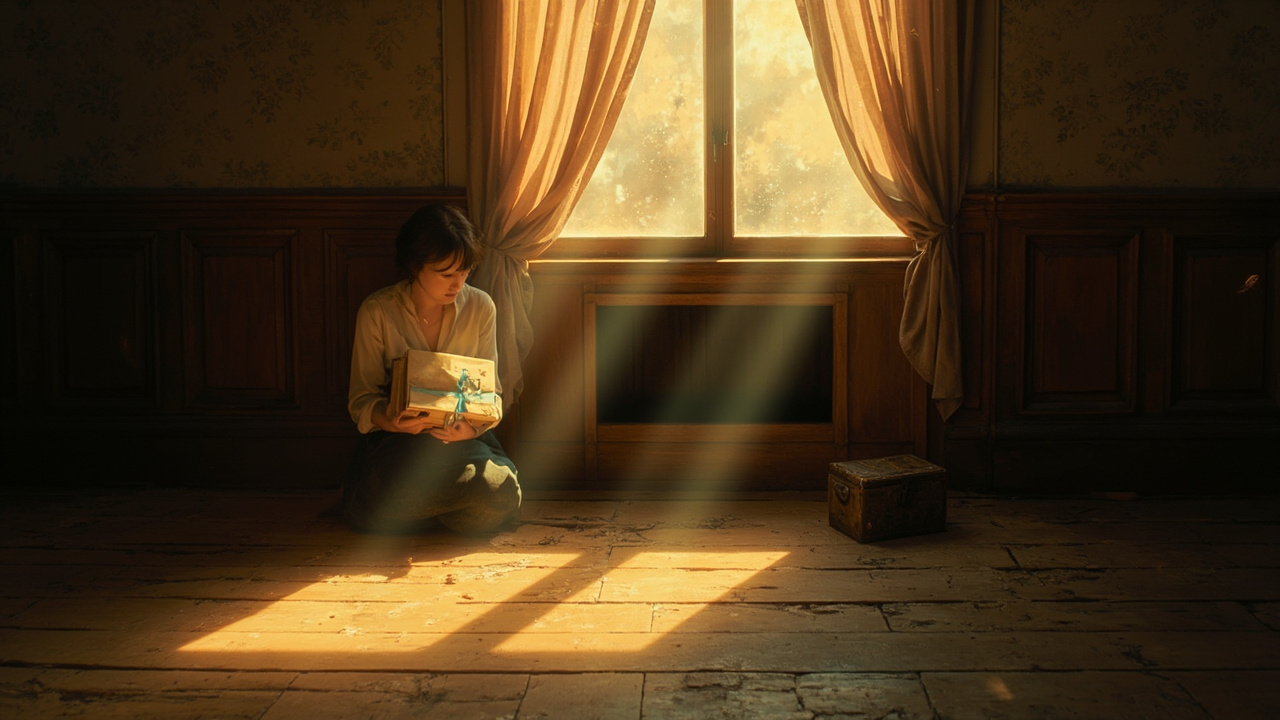
كانت كيار ميتشيل قد بعت عشرات المنازل عبر كامبريدج، لكن العقار في شارع بارتون كان يربكها بطرق لم تستطع شرحها. بدا المنزل اليونكتوري الفيكتوري، بسقفه المزخرف الأصلي وأرضياته الخشبية الصارية، كأنه يحبس أنفاسه وهي تمشي عبر الغرف الفارغة، تقيس المساحات وتدون التفاصيل للإدراج. كانت قد كلفت بإعداد المنزل للبيع بعد أن انتقلت المالكية العجوز، السيدة بيمبرتون، إلى دار رعاية. أرادت العائلة بيعاً سريعاً، وكانت كيار تفخر بتقديم النتائج. ومع ذلك، شيء ما في ورق الجدران الباهت والضوء بعد الظهر المتسرب عبر النوافذ المتربة جعلها تتوقف. كان ذلك أثناء المسح عندما اكتشف البناؤون الحجرة المخفية خلف ألواح الجدار في غرفة النوم. كانت كيار تتوقع رطوبة أو ربما أنابيب قديمة، لكنها بدلاً من ذلك وجدت علبة صفيح، صدئة الحواف، تحوي حزمة من الرسائل مربوطة بشريط أزرق باهت. كان الخط أنيقاً ومائلاً، موجهاً إلى شخص يدعى "عزيزتي إلينور." جلست كيار على أرضيات الغبار وقرأت الرسالة الأولى، المؤرخة عام 1892. كانت رسالة حب، شغوفة ومؤلمة، كتبها رجل يدعى توماس. كتب عن لحظات مسروقة في حدائق الجامعة، عن أحلام كبيرة أكثر من أن تتسع لها ظروفهما، وعن حب المجتمع يعتبره مستحيلاً. خلال الأيام التالية، وجدت كيار نفسها تعود إلى المنزل وحدها، تقرأ رسالة تلو الأخرى. كان توماس كاتباً من ذوي الدخل المحدود؛ وإلينور كانت ابنة أستاذ كلية. كانتا عائلتاهما قد منعتا زواجهما. ومع ذلك استمرا في الالتقاء سراً، يمرران الرسائل عبر أصدقاء موثوقين، يخبئان مراسلتهما في جدران هذا المنزل نفسه، الذي كانت عائلة إلينور قد امتلكته يوماً. الرسالة الأخيرة، المكتوبة بخط أرجف، أخبرت عن مغادرة توماس لأمريكا. كان قد وجد عملاً وأمل أن يكسب ما يكفي للعودة إلى إلينور. توسل إليها أن تنتظر، أن تتذكر وعودهما. لم يكن هناك رد من إلينور. ربما لم تكن قد تلقتها أبداً. اكتشفت كيار أن إلينور بيمبرتون توفيت قبل ستة أشهر فقط، عن عمر يناهز أربعة وتسعين عاماً. كان المنزل ملكاً لعائلتها لأجيال. لم تتزوج قط. وهي تقف في غرفة النوم الفارغة، شعرت كيار بثقل القرار أمامها. كانت الرسائل مأساة صغيرة خاصة، محفوظة في الطوب والجبس منذ أكثر من قرن. لا أحد حي يعرف بوجودها. يمكنها ببساطة إعادة دفنها، بيع المنزل، وترك الماضي يبقى تماماً حيث استقر منذ العصر الفيكتوري. لكن شيئاً ما في كلمات توماس كان يطاردها: "أحمل إياك معي في كل غد." كانت إلينور قد انتظرت، ربما حياتها كلها. حافظت على المنزل، حافظت على نفسها، وفي النهاية، ربما حافظت على الدليل ذاته لحب حاول العالم محوه. صورت كيار كل رسالة، نسختها بعناية، وأدرجتها مع التوثيق التاريخي للمنزل. عندما وقع المشترون الجدد، زوجان شابان من لندن، على الأوراق، سلمتهم مجلداً إلى جانب المفاتيح. "هناك أشياء تريد الجدران أن تقولها،" أخبرتهم. "ظننت أنكم يجب أن تعرفوا قصة هذا المنزل قبل أن تجعلوه ملكاً لكم." في تلك الليلة، وهي تمشي على طول نهر كام بينما كانت أبراج الجامعة تلتقط آخر الضوء، شعرت كيار بأنها قامت بشيء أهم من بيع عقار. كانت قد منحت صوتاً للدفون والمنسيين، وبفعلها ذلك، تذكرت نفسها أن كل منزل قديم يحمل صدى حياة عاشت يوماً بكاملها.
Clare Mitchell hatte dutzende Häuser in Cambridge verkauft, aber das Anwesen in der Barton Street beunruhigte sie auf eine Weise, die sie nicht erklären konnte. Das viktorianische Reihenhaus mit seinen originalen Stuckdecken und knarrenden Dielen schien den Atem anzuhalten, als sie durch die leeren Räume ging, Abstände maß und Details für das Exposé notierte. Sie war beauftragt worden, das Haus zum Verkauf vorzubereiten, nachdem die ältere Eigentümerin, Frau Pemberton, in ein Pflegeheim gezogen war. Die Familie wünschte sich einen schnellen Verkauf, und Clare war stolz darauf, Ergebnisse zu liefern. Und doch ließ sie etwas an der verblassten Tapete und dem nachmittäglichen Licht, das durch die staubigen Fenster sickerte, innehalten. Bei der Besichtigung entdeckten die Bauarbeiter das versteckte Fach hinter der Vertäfelung des Schlafzimmers. Clare hatte Schimmel oder vielleicht alte Rohre erwartet, stattdessen fanden sie eine Blechdose, an den Rändern verrostet, die ein Bündel Briefe enthielt, die mit einem verblassten blauen Band zusammengebunden waren. Die Handschrift war elegant und schräg, adressiert an jemanden namens "Meine liebste Eleanor." Clare setzte sich auf die staubigen Dielen und las den ersten Brief, datiert von 1892. Es war ein Liebesbrief, leidenschaftlich und schmerzlich, geschrieben von einem Mann namens Thomas. Er schrieb von gestohlenen Momenten in den Universitätsgärten, von Träumen, die zu groß für ihre Umstände waren, und von einer Liebe, die die Gesellschaft für unmöglich hielt. In den folgenden Tagen ertappte sich Clare dabei, wie sie allein zum Haus zurückkehrte, Brief um Brief las. Thomas war ein Angestellter mit bescheidenen Mitteln; Eleanor war die Tochter eines College-Professors. Ihre Familien hatten ihre Verbindung verboten. Und doch hatten sie heimlich weiterhin miteinander getroffen, Briefe über vertrauenswürdige Freunde weitergereicht, ihre Korrespondenz in den Wänden dieses Hauses versteckt, das einst der Familie von Eleanor gehört hatte. Der letzte Brief, in einer zittrigeren Handschrift geschrieben, erzählte von Thomas' Abreise nach Amerika. Er hatte Arbeit gefunden und hoffte, genug zu verdienen, um zu Eleanor zurückzukehren. Er flehte sie an zu warten, sich an ihre Versprechen zu erinnern. Es gab keine Antwort von Eleanor. Vielleicht hatte sie ihn nie erhalten. Clare entdeckte, dass Eleanor Pemberton nur sechs Monate zuvor im Alter von vierundneunzig Jahren gestorben war. Das Haus hatte ihrer Familie generationenlang gehört. Sie war nie verheiratet gewesen. Im leeren Schlafzimmer stehend, spürte Clare das Gewicht der Entscheidung vor ihr. Die Briefe waren eine kleine, private Tragödie, die in Ziegel und Gips für über ein Jahrhundert bewahrt worden war. Niemand Lebendes wusste von ihrer Existenz. Sie könnte sie einfach wieder vergraben, das Haus verkaufen und die Vergangenheit genau dort lassen, wo sie seit viktorianischen Zeiten geruht hatte. Aber etwas an Thomas' Worten verfolgte sie: "Ich trage dich mit mir in jede Zukunft." Eleanor hatte gewartet, vielleicht ihr ganzes Leben lang. Sie hatte das Haus behalten, sich selbst behalten, und am Ende vielleicht sogar den Beweis einer Liebe bewahrt, die die Welt zu löschen versucht hatte. Clare fotografierte jeden Brief, schrieb sie sorgfältig ab und fügte sie der historischen Dokumentation des Hauses bei. Als die neuen Eigentümer, ein junges Paar aus London, die Papiere unterzeichneten, reichte sie ihnen einen Ordner zusammen mit den Schlüsseln. "Es gibt Dinge, die die Wände sagen wollen," erzählte sie ihnen. "Ich dachte, Sie sollten die Geschichte dieses Hauses kennen, bevor Sie es zu Ihrem eigenen machen." An diesem Abend, als sie entlang des Cam wanderte, während die Universitätsspitzen das letzte Licht einfingen, fühlte Clare, dass sie etwas Wichtigeres getan hatte, als ein Anwesen zu verkaufen. Sie hatte den Vergrabenen und Vergessenen eine Stimme gegeben, und dabei sich selbst daran erinnert, dass jedes alte Haus die Echos von Leben enthält, die einst vollständig gelebt wurden.
Clare Mitchell avait vendu des dizaines de maisons à Cambridge, mais la propriété de Barton Street la troublait d'une manière qu'elle ne pouvait expliquer. La maison de ville victorienne, avec ses corniches d'origine et ses plancher qui grinçaient, semblait retenir son souffle tandis qu'elle traversait les pièces vides, mesurant les espaces et notant les détails pour l'annonce. On l'avait chargée de préparer la maison pour la vente après que la propriétaire âgée, Mme Pemberton, eut emménagé dans une maison de retraite. La famille voulait une vente rapide, et Clare était fière de fournir des résultats. Pourtant, quelque chose dans le papier peint délavé et la lumière de l'après-midi filtrant à travers les fenêtres poussiéreuses la fit hésiter. C'est lors de l'inspection que les builders découvrirent le compartiment caché derrière le lambris de la chambre. Clare s'attendait à de l'humidité ou peut-être à de vieilles canalisations, mais ils trouvèrent plutôt une boîte en fer-blanc, rouillée sur les bords, contenant un paquet de lettres attachées avec un ruban bleu délavé. L'écriture était élégante et penchée, adressée à quelqu'un nommé "Ma chère Eleanor." Clare s'assit sur les plancher poussiéreux et lut la première lettre, datée de 1892. C'était une lettre d'amour, passionnée et douloureuse, écrite par un homme nommé Thomas. Il écrivait sur des moments volés dans les jardins de l'université, sur des rêves trop grands pour leurs circonstances, et sur un amour que la société jugeait impossible. Au cours des jours suivants, Clare se surprit à revenir seule à la maison, lisant lettre après lettre. Thomas était un employé de moyens modestes ; Eleanor était la fille d'un professeur de collège. Leurs familles avaient interdit leur union. Pourtant, ils avaient continué à se rencontrer en secret, se passant des lettres par l'intermédiaire d'amis fiables, cachant leur correspondance dans les murs mêmes de cette maison, qui avait appartenu à la famille d'Eleanor. La dernière lettre, écrite d'une main tremblante, parlait du départ de Thomas pour l'Amérique. Il avait trouvé du travail et espérait gagner suffisamment pour revenir chercher Eleanor. Il la suppliait d'attendre, de se souvenir de leurs promesses. Il n'y avait pas de réponse d'Eleanor. Peut-être ne l'avait-elle jamais reçue. Clare découvrit qu'Eleanor Pemberton était décédée seulement six mois plus tôt, à l'âge de quatre-vingt-quatorze ans. La maison avait appartenu à sa famille pendant des générations. Elle ne s'était jamais mariée. Debout dans la chambre vide, Clare sentit le poids de la décision qui l'attendait. Les lettres étaient une petite tragédie privée, préservée dans la brique et le plâtre depuis plus d'un siècle. Personne de vivant ne savait qu'elles existaient. Elle pouvait simplement les enteriner à nouveau, vendre la maison et laisser le passé rester exactement là où il reposait depuis l'époque victorienne. Mais quelque chose dans les paroles de Thomas la hantait : "Je t'emporte avec moi dans chaque demain." Eleanor avait attendu, peut-être toute sa vie. Elle avait gardé la maison, gardé son identité, et finalement, avait peut-être gardé la preuve même d'un amour que le monde avait essayé d'effacer. Clare photographia chaque lettre, les transcrivit soigneusement et les inclut dans la documentation historique de la maison. Lorsque les nouveaux propriétaires, un jeune couple de Londres, signèrent les papiers, elle leur tendit un dossier avec les clés. "Il y a des choses que les murs veulent dire," leur dit-elle. "Je pensais que vous deviez connaître l'histoire de cette maison avant d'en faire la vôtre." Ce soir-là, en marchant le long de la Cam alors que les flèches de l'université capturaient les dernières lueurs, Clare sentit qu'elle avait fait quelque chose de plus important que vendre une propriété. Elle avait donné une voix aux ensevelis et aux oubliés, et ce faisant, s'était rappelé que chaque vieille maison garde l'écho de vies pleinement vécues.
Клэр Митчелл продала десятки домов по всему Кембриджу, но недвижимость на Бартон-стрит беспокоила её непонятным образом. Викторианский таунхаус с оригинальными карнизами и скрипучими половицами, казалось, задерживал дыхание, пока она ходила по пустым комнатам, замеряя пространства и записывая детали для объявления. Её наняли подготовить дом к продаже после того, как пожилая владелица, миссис Пембертон, переехала в дом престарелых. Семья хотела быструю продажу, и Клэр гордилась тем, что всегда добивалась результата. И всё же что-то в выцветших обоях и дневном свете, фильтрующемся через пыльные окна, заставляло её замереть. Именно во время осмотра строители обнаружили скрытую нишу за обшивкой стен в спальне. Клэр ожидала сырость или, может быть, старые трубы, но вместо этого нашла жестяную коробку с ржавыми краями, в которой лежала связка писем, перевязанная выцветшей синей лентой. Почерк был изящным и наклонным, адресованным кому-то по имени "Дорогая моя Элеанор". Клэр села на пыльные половицы и прочитала первое письмо, датированное 1892 годом. Это было письмо о любви — страстное и тоскливое, написанное мужчиной по имени Томас. Он писал об украденных мгновениях в садах университета, о мечтах, слишком больших для их обстоятельств, и о любви, которую общество считало невозможной. В последующие дни Клэр заставала себя за тем, что возвращалась в дом одна, читая письмо за письмом. Томас был конторским служащим со скромным достатком; Элеанор была дочерью профессора колледжа. Их семьи запретили их союз. И всё же они продолжали тайно встречаться, переправляя письма через надёжных друзей, пряча свою переписку в стенах этого самого дома, который когда-то принадлежал семье Элеанор. Последнее письмо, написанное более дрожащей рукой, рассказывало об отъезде Томаса в Америку. Он нашёл работу и надеялся заработать достаточно, чтобы вернуться за Элеанор. Он умолял её ждать, помнить их обещания. Ответа от Элеанор не было. Возможно, она никогда его не получала. Клэр discovered that Элеанор Пембертон умерла всего шесть месяцев назад в возрасте девяноста четырёх лет. Дом принадлежал её семье поколениями. Она никогда не выходила замуж. Стоя в пустой спальне, Клэр чувствовала тяжесть решения, стоявшего перед ней. Письма были маленькой, частной трагедией, сохранённой в кирпиче и штукатурке более века. Никто из живущих не знал об их существовании. Она могла просто снова захоронить их, продать дом и позволить прошлому оставаться именно там, где оно покоилось с викторианских времён. Но что-то в словах Томаса преследовало её: "Я ношу тебя с собой в каждое завтра." Элеанор ждала, возможно, всю свою жизнь. Она сохранила дом, сохранила себя, и в конце концов, возможно, сохранила само доказательство любви, которую мир пытался стереть. Клэр сфотографировала каждое письмо, тщательно переписала их и включила в историческую документацию дома. Когда новые владельцы, молодая пара из Лондона, подписали документы, она вручила им папку вместе с ключами. "Есть вещи, которые стены хотят сказать," — сказала она им. "Я подумала, что вам следует знать историю этого дома, прежде чем сделать его своим." Тем вечером, прогуливаясь вдоль Кэма, пока шпили университета ловили последний свет, Клэр почувствовала, что сделала что-то более важное, чем продажа недвижимости. Она дала голос похороненным и забытым, и тем самым напомнила себе, что каждый старый дом хранит отголоски жизней, когда-то полностью прожитых.