مفردات لا بدّ منها
| الكلمة | العربية | Deutsch | Français | Русский |
|---|---|---|---|---|
| غرف الشاي | Teezimmer | salon de thé | чайная комната | |
| متداعية | verfallen | délabré | ветхий | |
| ميراث | Erbe | héritage | наследство | |
| مالك | Inhaber | propriétaire | владелец | |
| تقشف | Strenge | austérité | аскетизм | |
| عتيق | Jahrgang | vintage | винтажный | |
| يتذوق | genießen | savourer | наслаждаться | |
| ترميم | Wiederherstellung | restauration | восстановление |
القصة
When Sophie Bennett walked through the door of the old tea rooms for the first time, she felt as though she had stepped into a forgotten world. Dust lay thick on the velvet chairs, and the faded curtains had turned a muddy shade of yellow. The building had been closed for three years, and it showed in every cracked tile and peeling corner. Yet Sophie saw something that others had missed—a skeleton waiting for new flesh, a story waiting to be continued.
She had spent five years working in fashionable London restaurants, but the corporate kitchen had never truly felt like home. When her grandmother left her a small inheritance along with the lease on this dilapidated property, Sophie recognised it as the chance she had been waiting for. She would restore the tea rooms to their former glory and serve the kind of food that made people feel genuinely welcome.
The discovery happened during her second week of cleaning. Behind a false panel in the kitchen cupboard, Sophie found a metal box tied with string. Inside lay a collection of handwritten recipe cards, their edges brown with age. The first card she unfolded bore the date 1952 and the name 'Eleanor Finch, Proprietor'. Sophie's grandmother had known Eleanor, and suddenly the connection felt almost meant to be.
The recipes were treasures from another era. There were instructions for Victoria sponge cakes drizzled with elderflower syrup, scones light enough to float off the plate, and delicate sandwiches cut into perfect triangles. But what fascinated Sophie most were the recipes she had never encountered before—marzipan twists filled with rose petal jam, cucumber paste on white bread served with a whisper of mint, and a ginger parkin that made the whole kitchen smell of autumn. She spent weeks testing each recipe, adjusting quantities to suit modern tastes while preserving the essential character of each dish.
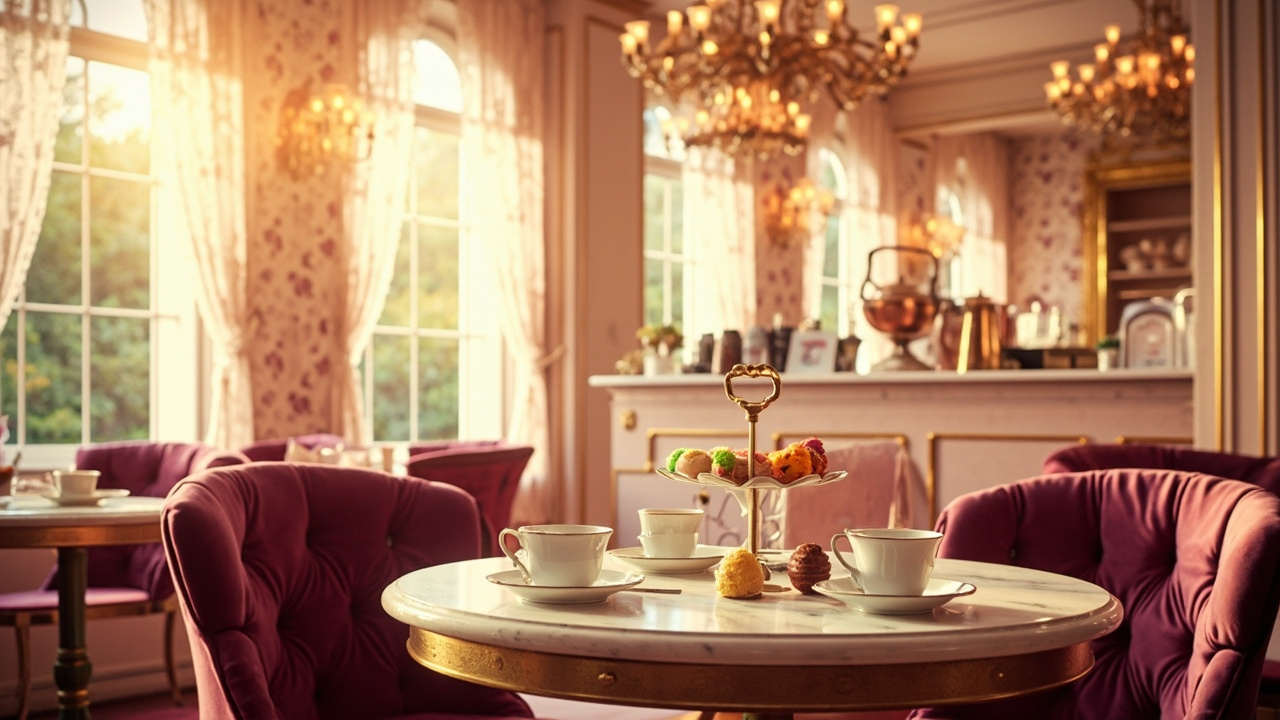
Meanwhile, she worked on the décor. She stripped away the unfortunate 1980s wallpaper and discovered the original cream and rose pattern beneath. A local carpenter restored the marble-topped tables and re-polished the brass fittings. Sophie tracked down vintage tea cups from charity shops and car boot sales, each one adding character to the shelves that lined the walls. By October, the transformation was complete. The Copper Kettle had risen from its slumber, reborn in shades of cream and dusty pink, with curtains as soft as wedding dresses and lights that cast everything in a gentle golden glow.
The opening day brought a crowd she had not expected. Many were elderly customers who remembered Eleanor Finch's tea rooms from their childhood. They sat at the restored tables and tasted the Victoria sponge with trembling hands, their eyes growing bright as they savoured flavours that had lived only in memory for sixty years. But Sophie had also prepared something for a new generation—tiny sandwiches presented on vintage stands, delicate cakes alongside strong pots of tea served in proper bone-china cups, and the knowledge that here was a place where conversation mattered more than screens. Word spread quickly through the town. Young professionals began arriving for afternoon tea after work. Mothers brought their children to experience the magic that their own parents had once known. The Copper Kettle had found its place in the present by honouring its past.
On quiet afternoons, Sophie sometimes sat by the window and watched the street. She thought about Eleanor Finch, who had served tea through the austerity of the 1950s and the uncertainty of the 1960s. She thought about her grandmother, who had believed in the value of simple pleasures. And she thought about all the people who now came through the door, seeking not just tea and cake but a moment of stillness in a world that never stopped rushing forward. The Copper Kettle was no longer just a business. It had become a living thing once more, a place where the old and the new sat side by side, sharing stories and slices of ginger parkin, and remembering together.