موسم السُّمنة المتنقّل
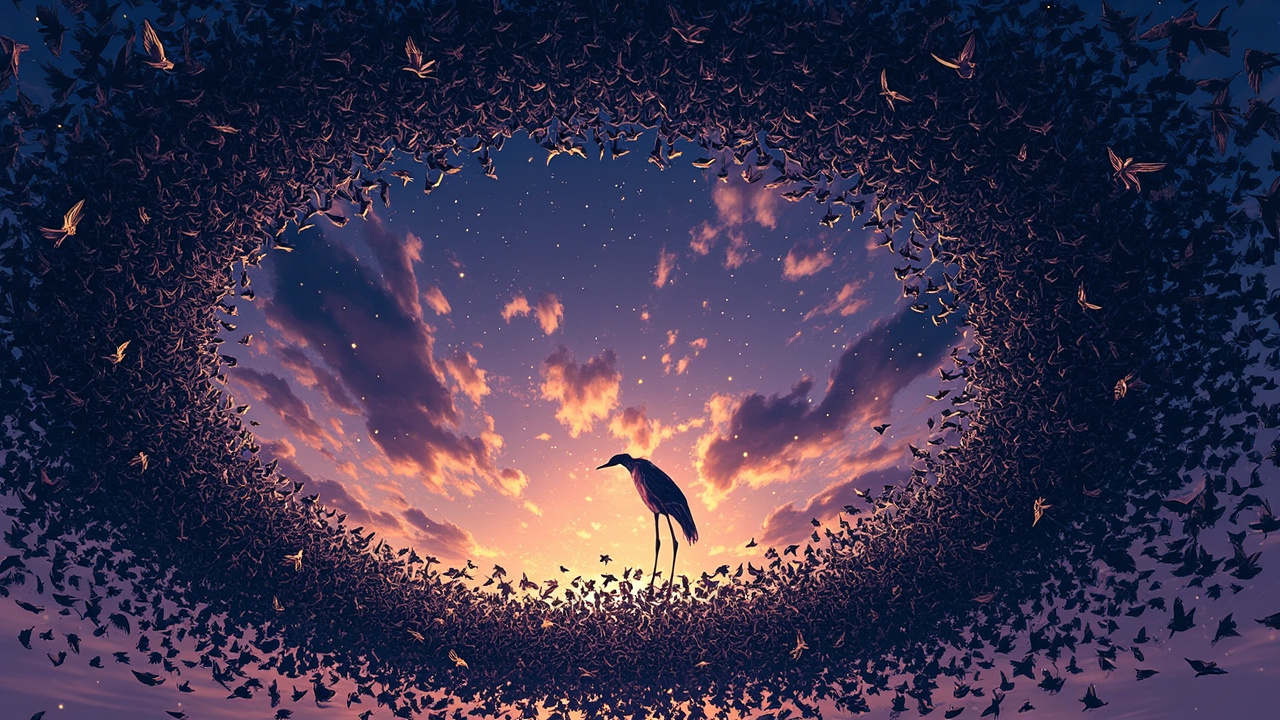
أمضى توم خمسة عشر شتاءً يصوّر الحياة البرية في سهول سومرست، لكنه لم يشهد قط مشهداً كهذا المساء من السابع من ديسمبر. كان الضوء يتلاشى بسرعة عندما وصل إلى الكوخ المُطلّ على مستنقعات القصب، وحقيبته الثقيلة تضغط على كتفه. كان قد سمع شائعات عن سرب استثنائي من السُّمنة يتشكّل هذه السنة - آلاف المؤلفة من الطيور تلتقي في نصف الظلام، تتحرّك ككائن واحد ضد السماء المتلوّنّة. بحلول الوقت الذي أعدّ فيه معداته، كانت الطيور قد بدأت بالوصول. في البداية، جاءت بمجموعات صغيرة، تتنقل وتهبط عبر الهواء البارد. ثم ازدادت الأعداد. المئات أصبحت آلافاً، وسرعان ما بدت السماء نفسها حيّة بالحركة. رفع توم كاميرته وبدأ بالتصوير، يعدّل إعداداته بسرعة مع خفوت الضوء. كانت الطيور تلتفّ وتدور في تزامن تام، منحوتة حيّة من الريش والظل. كان يسمع همساً خافتاً لأجنحة آلاف الطيور بينما يؤدي السرب رقصته الليلية. تحرّكت الطيور موجياً، تنكمش وتتمدد كنبض القلب. أحياناً، يظهر مُفترس - صقر أو باز - عند حافة القطيع، فيتفاعل السرب فوراً، مولّداً فراغاً على شكل الطائر المفترس قبل أن يعيد التشكّل بعد لحظات. كان المشهد مذهلاً، شبه خارق للطبيعة. صوّر توم بشراهة، واعياً أن هذا العرض سينتهي خلال بضع دقائق غالية قبل أن تنزل الطيور إلى القصب للمأوى. التقط صورة تلو الأخرى، كلٌّ منها تلتقط تشكيلة مختلفة للكتلة الدوّارة. عندما اختفى آخر طائر أخيراً في الظلام أدناه، تراجع إلى الوراء، يداه ترتجفان قليلاً من البرد والإثارة.
في كوخه، حمّل توم الصور على حاسوبه وبدأ بمراجعتها. معظمها أظهر الجمال المتوقع - الأنماط التجريدية للطيور مقابل سماء الشفق. لكن بينما كان يتصفّح التسلسل الأخير، توقفت صورة واحدة. قرّب الصورة على مركز السرب، squinting عند الشاشة. هناك، متكوّنة بين السُّمنة، كانت هناك شكل لا ينتمي. كانت أكبر من الطيور المحيطة، بسيلوت مميّز - رقبة طويلة، جسم مستدير، وما بدا أنه أرجل مطوية تحته. مُزنّ. مُزنّ شائع، ليكون دقيقاً. كان نادراً بشكل استثنائي في بريطانيا، نوعاً انقرض في إنجلترا لمئات السنين، ومع ذلك ها هو، مُapture في وسط سرب السُّمنة.
تسارع قلب توم بينما فحص الصورة بمزيد من العناية. بدا المُزنّ مرتاحاً تماماً بين السُّمنة، كأنه انضمّ إليها في هذه الطقوس الليلية. شغّل الصورة عبر عدة برامج تحسين، يتحقق ويعيد التحقق مما يراه. الدليل كان لا يُنكر. الصورة كانت أصلية. تواصل فوراً مع RSPB وأرسل لهم الصورة. خلال ساعات، أكد الخبراء اكتشافه. المُزنّ، أوضحوا، كان على الأرجح واحداً من عدد صغير أُعيد إدخاله إلى سهول سومرست كجزء من برنامج حفظ. لم يدرك أحد أنهم ينضمّون إلى أسراب السُّمنة.
نُشرت الصورة الأسبوع التالي وأثارت sensation. observeurs الطيور تدفّقوا على السهول بالآلاف، يأملون في لمحة من المُزنّ النادر في الطيران. بدأ العلماء يدرسون whether كان المُزنّ يتعلّم سلوكاً من السُّمنة، أو ربما يُعلّمهم شيئاً جديداً. استمر توم في تصويره، على الرغم من أن nothing قاطع المطابقة لذلك المساء من ديسمبر. أحياناً، عندما ينظر إلى الصورة على جداره، يتساءل عن منظور المُزنّ - يطير بين آلاف الطيور الأصغر، جزءاً من شيء vast وغامض. يتخيل أنه شعر بالضبط ما شعر به تلك الليلة: الدهشة من أن تكون جزءاً من شيء أكبر من الذات.
Das Starenmurmeln
Tom hatte fünfzehn Winter damit verbracht, die Tierwelt in den Somerset Levels zu fotografieren, aber er hatte noch nie etwas gesehen wie an diesem Abend des siebten Dezembers. Das Licht schwand rasch dahin, als er den Beobachtungsschuppen erreichte, der über die Schilfgebiete blickte, seine Kameratasche schwer auf seiner Schulter. Er hatte Gerüchte gehört über einen außergewöhnlichen Starenschwarm, der sich dieses Jahr bilden sollte - Tausende und Abertausende von Staren, die sich in der Dämmerung versammelten, sich wie ein einziger Organismus gegen den sich verdunkelnden Himmel bewegten. Als er seine Ausrüstung aufgebaut hatte, waren die Vögel bereits angekommen. Zuerst kamen sie in kleinen Gruppen, schwenkten und tauchten durch die kalte Luft. Dann wuchsen die Zahlen. Hunderte wurden zu Tausenden, und bald schien der Himmel selbst vor Bewegung zu leben. Tom hob seine Kamera und begann zu schießen, ajustierte seine Einstellungen rasch, während das Licht nachließ. Die Vögel drehten und wanden sich in perfekter Synchronisation, eine lebende Skulptur aus Federn und Schatten. Er konnte das sanfte Rauschen von Tausenden von Flügeln hören, während der Schwarm seinen nächtlichen Tanz aufführte. Die Vögel bewegten sich in Wellen, kontrahierten und expandierten wie ein Herzschlag. Gelegentlich erschien ein Raubvogel - ein Habicht oder Falke - am Rand der Schar, und der Schwarm reagierte sofort, schuf eine Leere in der Form des jagenden Vogels, bevor er sich Momente später wieder formte. Es war atemberaubend, fast übernatürlich. Tom fotografierte wie besessen, sich bewusst, dass dieses Spektakel nur wenige kostbare Minuten dauern würde, bevor die Vögel in den Schilf zum Schlafen hinabstiegen. Er nahm Schuss um Schuss auf, jeder eine andere Konfiguration der wirbelnden Masse einfangend. Als der letzte Vogel schließlich in der Dunkelheit darunter verschwand, lehnte er sich zurück, seine Hände zitterten leicht vor Kälte und Aufregung.
Zurück in seiner Hütte lud Tom die Bilder auf seinen Computer und begann sie zu überprüfen. Die meisten zeigten die erwartete Schönheit - die abstrakten Muster der Vögel gegen den Dämmerungshimmel. Aber als er durch die letzte Sequenz scrollte, ließ ihn ein Bild innehalten. Er zoomte auf die Mitte des Schwarms, squintete auf den Bildschirm. Dort, eingebettet zwischen den Staren, befand sich eine Form, die nicht dazugehörte. Sie war größer als die umgebenden Vögel, mit einer unverwechselbaren Silhouette - langer Hals, runder Körper, und was wie unter ihm eingeklappte Beine aussah. Ein Kranich. Ein Gemeiner Kranich, um genau zu sein. Er war außerordentlich selten in Britannien, eine Art, die in England seit Hunderten von Jahren ausgestorben war, und doch war er hier, mitten in einem Starenschwarm eingefangen. Toms Herz raste, während er das Bild sorgfältiger untersuchte. Der Kranich schien völlig wohlgemüt unter den Staren, als hätte er sich ihnen für dieses nächtliche Ritual angeschlossen. Er ließ das Bild durch mehrere Verbesserungsprogramme laufen, überprüfte und wiederholte die Überprüfung dessen, was er sah. Der Beweis war unbestreitbar. Das Foto war authentisch. Er kontaktierte sofort die RSPB und schickte ihnen das Bild. Innerhalb weniger Stunden bestätigten Experten seine Entdeckung. Der Kranich, erklärten sie, war wahrscheinlich einer von einer kleinen Anzahl, die als Teil eines Erhaltungsprogramms in die Somerset Levels wieder eingeführt worden waren. Niemand hatte realized, dass sie sich den Starenschwärmen anschlossen. Das Foto wurde in der folgenden Woche veröffentlicht und sorgte für Aufsehen. Vogelbeobachter strömten zu Tausenden in die Levels, in der Hoffnung, einen Blick auf den seltenen Kranich im Flug zu erhaschen. Wissenschaftler begannen zu untersuchen, ob der Kranich Verhalten von den Staren lernte, oder ihnen vielleicht etwas Neues beibrachte. Tom setzte seine Fotografie fort, obwohl nie wieder etwas ganz an diesen Dezemberabend heranreichte. Manchmal, wenn er das Foto an seiner Wand betrachtete, fragte er sich nach der Perspektive des Kranichs - wie er unter Tausenden kleinerer Vögel flog, Teil von etwas Vastem und Geheimnisvollem. Er stellte sich vor, dass er genau das fühlte, was er in jener Nacht gefühlt hatte: Ehrfurcht davor, Teil von etwas zu sein, das größer ist als man selbst.
Le Murmure des Étourneaux
Tom avait passé quinze hivers à photographier la faune sauvage dans les Somerset Levels, mais il n'avait jamais rien vu de tel. C'était le sept décembre au soir, la lumière déclinait rapidement lorsqu'il arriva à l'affût surplombant les roselières, son sac photo lourd sur l'épaule. Il avait entendu des rumeurs concernant un murmure extraordinaire cette année - des milliers et des milliers d'étourneaux se rassemblant dans la pénombre, se mouvant comme un seul organisme contre le ciel qui s'assombrissait. Quand il installa son matériel, les oiseaux avaient commencé à arriver. D'abord par petits groupes, plongeant et virevoltant dans l'air froid. Puis les nombres grossirent. Des centaines devinrent des milliers, et bientôt le ciel lui-même sembla vivant de mouvement. Tom leva son appareil et commença à photographier, ajustant rapidement ses paramètres tandis que la lumière faiblissait. Les oiseaux tournoyèrent et pivotèrent en parfaite synchronisation, une sculpture vivante de plumes et d'ombre. Il pouvait entendre le doux froissement de milliers d'ailes tandis que le murmure exécutait sa danse nocturne. Les oiseaux se déplaçaient par vagues, se contractant et s'expansant comme un battement de cœur. Occasionnellement, un prédateur - un faucon ou un émerillon - apparaissait aux bords du groupe, et le murmure réagissait instantanément, créant un vide en forme de l'oiseau de chasse avant de se reformer quelques instants plus tard. C'était à couper le souffle, presque surnaturel. Tom photographiait furieusement, conscient que ce spectacle ne durerait que quelques précieuses minutes avant que les oiseaux ne descendent dans les roseaux pour se percher. Il prenait photo sur photo, chacune capturant une configuration différente de la masse tourbillonnante. Quand le dernier oiseau disparut enfin dans les ténèbres en contrebas, il s'adossa, les mains tremblant légèrement de froid et d'excitation.
Dans sa chaumière, Tom téléchargea les images sur son ordinateur et commença à les examiner. La plupart montraient la beauté attendue - les motifs abstraits des oiseaux contre le ciel crépusculaire. Mais en faisant défiler la dernière séquence, une image le fit s'arrêter. Il zooma sur le centre du murmure, plissant les yeux devant l'écran. Là, nichée parmi les étourneaux, se trouvait une forme qui n'y avait pas sa place. Elle était plus grande que les oiseaux environnants, avec une silhouette distinctive - cou long, corps arrondi, et ce qui semblait être des pattes repliées en dessous. Une grue. Une grue cendrée, plus précisément. Elle étaitextraordinairement rare en Grande-Bretagne, une espèce éteinte en Angleterre depuis des siècles, et pourtant la voici, capturée au milieu d'un murmure d'étourneaux. Le cœur de Tom s'emballa tandis qu'il examinait l'image plus attentivement. La grue semblait parfaitement à l'aise parmi les étourneaux, comme si elle s'était jointe à eux pour ce rituel nocturne. Il fit passer l'image à travers plusieurs programmes d'amélioration, vérifiant et revérifiant ce qu'il voyait. La preuve était indéniable. La photo était authentique. Il contacta immédiatement la RSPB et leur envoya l'image. En quelques heures, les experts confirmèrent sa découverte. La grue, expliquèrent-ils, était probablement l'une des quelques rares qui avaient été réintroduites dans les Somerset Levels dans le cadre d'un programme de conservation. Personne ne s'était rendu compte qu'elles rejoignaient les murmures d'étourneaux.
La photo fut publiée la semaine suivante et fit sensation. Des ornithologues affluèrent par milliers sur les Levels, espérant apercevoir la rare grue en vol. Les scientifiques commencèrent à étudier si la grue apprenait un comportement des étourneaux, ou peut-être leur enseignait-elle quelque chose de nouveau. Tom continua sa photographie, bien que rien ne égalât jamais vraiment cette soirée de décembre. Parfois, quand il regardait la photo sur son mur, il se demandait ce que voyait la grue - volant parmi des milliers d'oiseaux plus petits, faisant partie de quelque chose de vaste et de mystérieux. Il imaginait qu'elle ressentait exactement ce qu'il avait ressenti cette nuit-là : l'émerveillement d'être partie intégrante de quelque chose de plus grand que soi-même.
Косяк скворцов
Том провёл пятнадцать зим, фотографируя дикую природу на равнинах Сомерсета, но никогда ещё не видел ничего подобного этому вечеру седьмого декабря. Свет быстро мерк, когда он прибыл в скрадок над зарослями тростника, тяжёлая сумка с камерой давила на плечо. Он слышал слухи о необыкновенном косяке скворцов, формирующемся в этом году — тысячи и тысячи птиц, собирающихся в сумерках, движущихся как единый организм на фоне темнеющего неба. К тому моменту, когда он установил оборудование, птицы уже начали прибывать. Сначала они летели небольшими группами, проносясь и ныряя сквозь холодный воздух. Затем их число росло. Сотни стали тысячами, и вскоре само небо, казалось, ожило от движения. Том поднял камеру и начал снимать, быстро регулируя настройки по мере того, как свет угасал. Птицы скручивались и поворачивались в идеальной синхронизации, живая скульптура из перьев и теней. Он слышал мягкий шорох тысяч крыльев, пока косяк исполнял свой ночной танец. Птицы двигались волнами, сжимаясь и расширяясь, как сердцебиение. Иногда на краю стаи появлялся хищник — ястреб или сокол — и косяк реагировал мгновенно, создавая пустоту в форме охотящейся птицы, прежде чем воссоединиться через мгновения. Это было захватывающе, почти сверхъестественно. Том отчаянно фотографировал, понимая, что это зрелище продлится лишь несколько драгоценных минут, прежде чем птицы спустятся в тростник на ночлег. Он делал снимок за снимком, каждый запечатлевал новую конфигурацию кружащейся массы. Когда последняя птица наконец исчезла в темноте внизу, он откинулся назад, его руки слегка дрожали от холода и волнения.
Вернувшись в свою хижину, Том загрузил изображения на компьютер и начал их просматривать. Большинство показывали ожидаемую красоту — абстрактные узоры птиц на фоне сумеречного неба. Но когда он прокрутил последнюю последовательность, одна фотография заставила его остановиться. Он увеличил центр косяка, прищурившись на экране. Там, среди скворцов, была форма, которая не принадлежала. Она была крупнее окружающих птиц, с характерным силуэтом — длинная шея, округлое тело и то, что казалось поджатыми под ним ногами. Журавль. Обыкновенный журавль, если быть точным. В Британии он был невероятно редок, вид, вымерший в Англии сотни лет назад, и всё же вот он, запечатлённый среди косяка скворцов. Сердце Тома забилось быстрее, пока он внимательнее рассматривал изображение. Журавль казался совершенно спокойным среди скворцов, словно присоединился к ним для этого ночного ритуала. Он прогнал изображение через несколько программ улучшения, проверяя и перепроверяя увиденное. Доказательство было неоспоримым. Фотография была подлинной. Он немедленно связался с RSPB и отправил им изображение. В течение нескольких часов эксперты подтвердили его открытие. Журавль, объяснили они, вероятно был одним из небольшого числа особей,重新引入ленных на равнины Сомерсета в рамках программы сохранения. Никто не осознавал, что они присоединяются к косякам скворцов.
Фотография была опубликована на следующей неделе и вызвала сенсацию. Тысячи ornithologues устремились на равнины, надеясь мельком увидеть редкого журавля в полёте. Учёные начали изучать, учится ли журавль поведению у скворцов или, возможно, преподаёт им что-то новое. Том продолжал заниматься фотографией, хотя ничто никогда не сравнилось бы с тем декабрьским вечером. Иногда, глядя на фотографию на стене, он размышлял о перспективе журавля — полёт среди тысяч меньших птиц, часть чего-то огромного и загадочного. Он представлял, что тот чувствовал именно то, что чувствовал он той ночью: благоговение от осознания себя частью чего-то большего, чем сам.