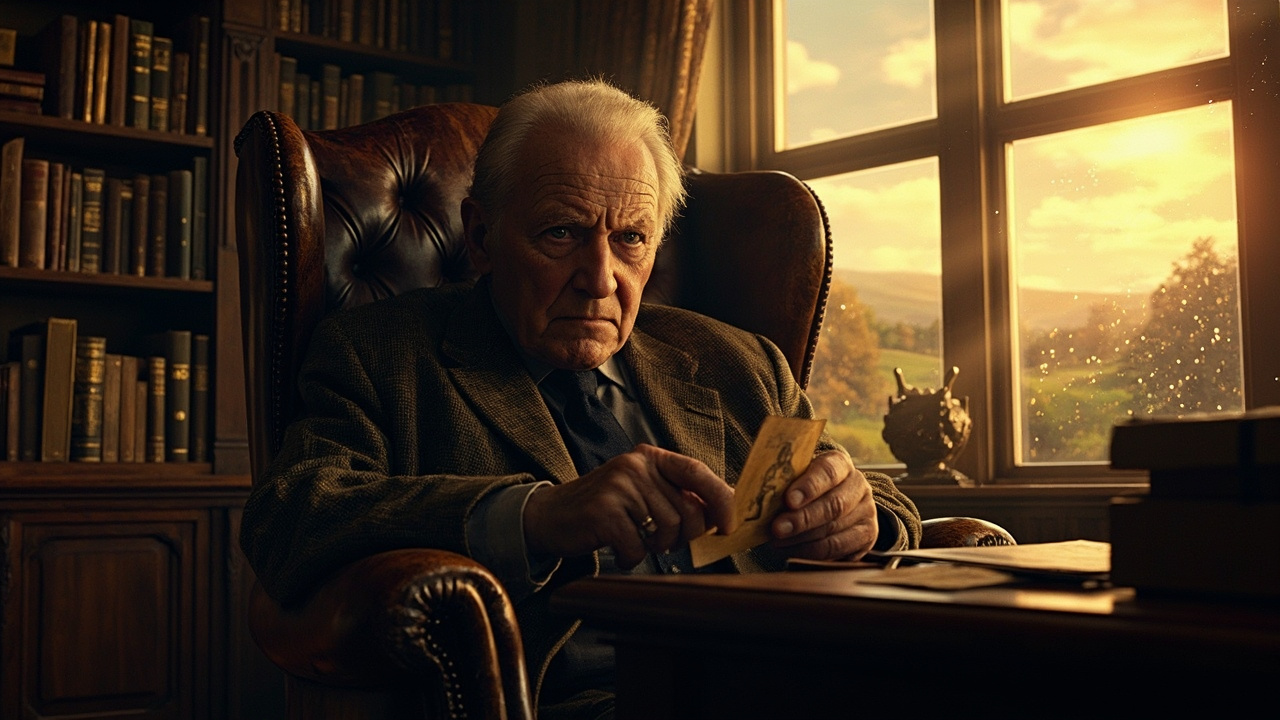
البيت كان في نهاية ممر تحيط به البلوطات الكثيفة لدرجة أنه بدا وكأنه يتراجع عن العالم بدلاً من أن يُعلن عن نفسه. كنت أقود السيارة لساعتين للوصول إليه، وعندما انحرفتُ إلى الممر الحصوي وأطفأتُ المحرك، شعرتُ أنني وصلتُ إلى مكان خارج الزمن العادي. جاءني التكليف من خلال أمين متحف أعرفه: مسح تصويري لبيت ريفي جورجي في كامبريا، من المقرر بيعه وتقسيمه. كان صاحبه، آرثر أشوورث، في الرابعة والثمانين وصحةُه متدهورة. قدَّر لي أمين المتحف أنه وافق على المشروع بتردد. أراد توثيق كل شيء قبل أن يُنهي المحامون عملهم. استقبلني آرثر عند الباب الأمامي بنفسه. كان أقصر مما توقعتُ، محنياً قليلاً، بوجه يحمل جودة قطعة أثاث باهتة تمتديدها لقرون. لكن عينيه كانتا حادتين ومتململتين، تراقبانني بفضول حذر. "أنت المصور الفوتوغرافي،" قال. ليس سؤالاً. "إن كنتَ تسمح لي." أومأ برأسه وتراجع جانباً. كان المدخل فسيحاً خافتاً، والسقف يضيع في الظل، وكان الهواء تفوح منه رائحة شمع النحل والورق القديم. قادني عبر الغرفة تلو الأخرى، مُشيراً إلى التفاصيل - الموقد آدم، وسقف الجبس المُزخرف، والنوافذ الطويلة التي تُطل على التلال. كان أسلوبه دقيقاً وغير مستعجل، كأنه أدَّى هذه الحفلة مرات لا تُحصى. أدركتُ أنه لم يكن يُريني بيته فحسب؛ كان يُقدمني لنسخة من نفسه مستعداً لمشاركتها. بدأت في غرفة الصباح، أعمل بالضوء الطبيعي كما أفعل دائماً. راقبني آرثر لبعض الوقت، ثم قال إنه سيتركني وشأني. بدا مُرهقاً، فاقترحتُ عليه الراحة. "سأكون في الدراسة،" قال. "عندما تكون جاهزاً، تعال واعثر عليّ." قادني العمل عبر المكتبة، وغرفة الطعام، وبيت زجاجي اكتظ بأجمة مفرطة النمو. صوَّرتُ كل شيء - الحرير الباهت على الجدران، وبقع الماء على السقف، والصور الفوتوغرافية على كل سطح التي تحكي عن حياة مُتراكبة. احتلت صور العائلة الرسمية الأماكن الظاهرة: آرثر وامرأة افترضتُ أنها زوجته الراحلة، مارغريت، رسمية وبلا ابتسامة في كل إطار. لكن الأمر كان في درج مكتب الكتابة، بينما كنتُ أَوَثّق محتويات الغرفة، حين وجدتُ الصندوق. كان مصنوعاً من الورق المقوى البني، عادياً، مُغلقاً برباط مطاطي تفتت منذ زمن بعيد. في الداخل كانت هناك نحو ثلاثين صورة فوتوغرافية، فضفاضة وغير مُثبتة، تمتد عبر ما بدا أنه عقود. امرأة تظهر في معظمها. كانت شابة - منتصف العشرينات، شعرها داكن، بوجه غير عادي جميل أكثر منه جذاب. ظهرت في مواقع خارجية، وداخلية، مرة في ما بدا أنه جامعة. لم تكن مارغريت أشوورث. أحضرتُ الصندوق لآرثر في الدراسة. كان جالساً في كرسي جلدي يُواجه النافذة، ويداه مطويتان في حضنه. نظر إلى الصندوق لحظة طويلة قبل أن ينظر إليّ. "وجدتها،" قال. وضعتُ الصندوق على المكتب بيننا. "يمكنني إعادتها إذا كنتَ تُفضل." "لا." فكَّ يديه عن بعضهما. "لا، لقد كنتُ أنتظر وقتاً طويلاً جداً أن يجدها أحد." كان هناك صمت له ملمس - كثيف، مُشحون، مليء بالسنوات. لم يُطلب مني الجلوس، لكنني سحبتُ كرسياً من المكتب وجلستُ أمامه. كان ضوء الشتاء يتسلل منخفضاً عبر النافذة ويلتقط حافة وجهه، والتجاويف تحت عظام خديه، والجلد كلمعان ورقي مشدود على العظم. "اسمها إيلينا،" قال. "إيلينا وايتمور. كانت عازفة بيانو. التقينا في عام 1968، الصيف الذي بلغتُ فيه التاسعة والعشرين. كنتُ متزوجاً من مارغريت منذ ثلاث سنوات. كانت إيلينا تعرف مارغريت. مارغريت لم تعرف إيلينا. كانت تلك هي الصيغة، وكانت صيغة لم يكن لي الحق أن أطلبها من أحد." تحدث بهدوء أدركتُ أنه كُسب بصعوبة - هدوء شخص تدرب على الاعتراف مرات لا تُحصى حتى فقد قوته في الأذى، إلا في عيشه. "عندما أخبرتني إيلينا بأنها حامل، واجهتُ اختياراً لم يكن لي الحق الأخلاقي لاتخاذه. لم أكن شجاعاً بما فيه الكفاية. اخترتُ ميراثي، واسمي العائلي، وحياتي المريحة. طلبتُ من إيلينا أن تدع الطفل يتبناه أختها، امرأة في ليدز لم يكن لها أطفال. رفضت في البداية. لكنني ضغت عليها. ضغت عليها حتى وافقت." مدَّ يده في الصندوق وأخرج صورة فوتوغرافية قرب قاع الكومة. طفل رضيع، لا يزيد عمره عن بضعة أشهر، نائم في مهد أبيض. أمسكها بكلتا يديه، ورأيتُ أنها ترتجف. "اسمه توماس،" قال آرثر. "راقبته من بعيد طوال حياته. رأيته في تخرجه من الجامعة. وقفتُ خارج بيته في إدنبرة مرة، في المطر، ولم أتمكن من أن أطرق الباب. يبلغ من العمر ستين عاماً الآن. لديه أطفاله الخاصون. لا يعرف من أنا." لم أعرف ماذا أقول. ضخامة الأمر جلس في الغرفة بيننا كحضور ثالث. خمسون عاماً من رجل يعيش بجانب سر لم يُشكّل حياته فحسب، بل فرَّغها أيضاً. الصور الرسمية على كل جدار، الزوج المُكرَّس، السيناريو المحترم - كل ذلك نوع من العمارة المُبنية حول غياب. "لماذا تُرينني هذا؟" سألتُ، وصوتي بدا غريباً لي أيضاً. وضع آرثر الصورة الفوتوغرافية في الصندوق بعناية، يُحاذي حوافها بدقة. "لأنك آخر شخص سيُنظر إلى هذا البيت بالطريقة التي أحتاج أن يُنظر بها. بعدك، يأتي المحامون. ثم وكلاء العقارات، والمساحون، والمشترون بخططهم. سيُقاس كل شيء ويُقسم ويُباع. لكن في هذه اللحظة بالذات، هناك شخص يقف في هذه الغرف يرى ليس فقط ما تستحقه، بل ما احتوته." أغلق الصندوق. أغلق عينيه. تحرك ضوء الشتاء عبر السجادة وصعد الجدار خلفه، بلا مبالاة وببطء، بالطريقة التي يتحرك بها الضوء دائماً حين تمتلئ الغرفة بنهاية شيء.
Das Haus stand am Ende eines Weges, der so dicht von Eichen überhangen war, dass es sich eher aus der Welt zurückzuziehen schien, als sich anzukündigen. Ich hatte zwei Stunden lang gefahren, um es zu erreichen, und als ich auf den Kies bog und den Motor abstellte, hatte ich das Gefühl, irgendwo angekommen zu sein, jenseits der gewöhnlichen Zeit. Der Auftrag war über einen Kurator gekommen, den ich kannte: eine fotografische Bestandsaufnahme eines georgianischen Landhauses in Cumbria, das verkauft und aufgeteilt werden sollte. Der Besitzer, Arthur Ashworth, war vierundachtzig und krank. Er hatte sich nur widerwillig auf das Projekt eingelassen, hatte der Kurator gewarnt. Er wollte alles dokumentiert haben, bevor die Anwälte ihre Arbeit beendeten. Arthur empfing mich persönlich an der Haustür. Er war kleiner, als ich erwartet hatte, leicht gebeugt, mit einem Gesicht, das die abgetragene Qualität eines Möbelstücks hatte, das jahrzehntelang benutzt worden war. Seine Augen allerdings waren scharf und rastlos und nahmen mich mit einer Art wachsamer Neugier in sich auf. "Sie sind der Fotograf", sagte er. Keine Frage. "Wenn Sie mich nehmen wollen." Er nickte und trat zur Seite. Die Halle war geräumig und dämmrig, die Decke im Schatten verloren, und die Luft roch nach Bienenwachs und altem Papier. Er führte mich durch Raum für Raum und wies auf Details hin – den Adam-Kamin, die Stuckdecke, die langen Fenster, die auf die Hügel hinausgingen. Seine Art war präzise und unge haste, als hätte er diese Vorstellung viele Male geprobt. Ich verstand, dass er mir nicht einfach sein Haus zeigte; er stellte mich einer Version von sich vor, die er zu teilen bereit war. Ich begann im Morgenzimmer und arbeitete wie immer mit natürlichem Licht. Arthur schaute eine Weile zu, dann sagte er, er lasse mich allein. Er schien müde, und ich schlug vor, er solle sich ausruhen. "Ich bin im Arbeitszimmer", sagte er. "Wenn Sie fertig sind, kommen Sie und suchen Sie mich." Die Arbeit führte mich durch die Bibliothek, das Esszimmer, einen Wintergarten, der vor überwucherten Hortensien verwildert war. Ich fotografierte alles – die verblichene Seide an den Wänden, die Wasserflecken an der Decke, die Fotografien auf jeder Fläche, die von einem Leben in Schichten erzählten. Familienporträts nahmen die offensichtlichen Plätze ein: Arthur und eine Frau, von der ich annahm, dass es seine verstorbene Frau Margaret war, formell und unnahbar in jedem Rahmen. Aber es war in einer Schublade des Sekretärs, während ich den Inhalt des Raumes dokumentierte, dass ich die Schachtel fand. Sie war aus braunem Karton, unauffällig, versiegelt mit einem Gummiband, das längst porös geworden war. Darin waren etwa dreißig Fotografien, lose und nicht montiert, die sich über mehrere Jahrzehnte zu erstrecken schienen. Eine Frau war auf den meisten von ihnen zu sehen. Sie war jung – Mitte zwanzig, dunkelhaarig, mit einem ungewöhnlichen Gesicht, das eher markant als hübsch war. Sie erschien in Außenaufnahmen, in Innenräumen, einmal an dem, was wie eine Universität aussah. Sie war nicht Margaret Ashworth. Ich brachte die Schachtel zu Arthur ins Arbeitszimmer. Er saß in einem Ledersessel am Fenster, die Hände im Schoß gefaltet. Er sah die Schachtel lange an, bevor er mich ansah. "Sie haben sie gefunden", sagte er. Ich stellte die Schachtel auf den Schreibtisch zwischen uns. "Ich kann sie wieder zurücklegen, wenn Sie es vorziehen." "Nein." Er faltete die Hände auf. "Nein, ich habe ziemlich lange darauf gewartet, dass jemand sie findet." Es gab eine Stille, die eine Textur hatte – dick, geladen, voller Jahre. Er bat mich nicht, mich zu setzen, aber ich zog einen Stuhl vom Schreibtisch und setzte mich ihm gegenüber. Das Winterlicht kam tief durch das Fenster und traf die Kante seines Gesichts, die Höhlen unter seinen Wangenknochen, die Haut wie Papier über Knochen gespannt. "Sie hieß Elena", sagte er. "Elena Whitmore. Sie war Pianistin. Wir haben uns 1968 kennengelernt, den Sommer, als ich neunundzwanzig wurde. Ich war seit drei Jahren mit Margaret verheiratet. Elena wusste von Margaret. Margaret wusste nichts von Elena. Das war die Vereinbarung, und es war eine, zu der ich kein Recht hatte, jemanden zu bitten." Er sprach mit einer Beständigkeit, die ich als hart erkämpft erkannte – die Ruhe von jemandem, der ein Geständnis so oft geprobt hat, dass es seine Macht verloren hat zu verletzen, außer im Leben selbst. "Als Elena mir sagte, dass sie schwanger war, stand ich vor einer Wahl, zu der ich keine moralische Befugnis hatte. Ich war nicht mutig genug. Ich wählte mein Erbe, meinen Familiennamen, mein bequemes Leben. Ich bat Elena, das Kind von ihrer Schwester adoptieren zu lassen, einer Frau in Leeds, die keine eigenen Kinder hatte. Zuerst weigerte sie sich. Aber ich habe auf sie eingeredet. Ich habe so lange auf sie eingeredet, bis sie zustimmte." Er griff in die Schachtel und zog ein Foto nahe dem Boden des Stapels hervor. Ein Baby, höchstens einige Monate alt, das in einem weißen Kinderbettchen schlief. Er hielt es mit beiden Händen, und ich sah, dass sie zitterten. "Er hieß Thomas", sagte Arthur. "Ich habe ihn mein ganzes Leben aus der Ferne beobachtet. Ich sah ihn bei seinem Universitätsabschluss. Einmal stand ich vor seinem Haus in Edinburgh, im Regen, und brachte es nicht über mich zu klopfen. Er ist jetzt sechzig Jahre alt. Er hat selbst Kinder. Er weiß nicht, wer ich bin." Ich wusste nicht, was ich sagen sollte. Die Ungeheuerlichkeit davon saß im Raum zwischen uns wie eine dritte Präsenz. Fünfzig Jahre eines Mannes, der neben einem Geheimnis lebte, das sein Leben nicht nur geformt, sondern ausgehöhlt hatte. Die förmlichen Porträts an jeder Wand, der hingebungsvolle Ehemann, der respektable Gutsbesitzer – alles eine Art Architektur, die um eine Abwesenheit herum gebaut war. "Warum zeigen Sie mir das?", fragte ich, und meine Stimme klang auch mir seltsam in den Ohren. Arthur legte das Foto sorgfältig zurück in die Schachtel und richtete die Kanten präzise aus. "Weil Sie die letzte Person sind, die dieses Haus so betrachten wird, wie ich es betrachtet haben möchte. Nach Ihnen kommen die Anwälte. Dann die Makler, die Gutachter, die Käufer mit ihren Plänen. Alles wird gemessen und geteilt und verkauft. Aber gerade jetzt, in diesem Moment, steht jemand in diesen Räumen, der nicht nur sieht, was sie wert sind, sondern was sie enthielten." Er schloss die Schachtel. Er schloss die Augen. Das Winterlicht bewegte sich über den Teppich und die Wand hinter ihm hinauf, gleichgültig und langsam, so wie Licht sich immer bewegt, wenn ein Raum sich mit dem Ende von etwas füllt.
La maison se trouvait au bout d'un chemin si ombragé de chênes qu'elle semblait se retirer du monde plutôt que de s'annoncer. J'avais conduit pendant deux heures pour l'atteindre, et en m'engageant sur le gravier et en coupant le moteur, j'avais le sentiment d'être arrivé quelque part en dehors du temps ordinaire. La commande était venue par l'intermédiaire d'un conservateur que je connaissais : une étude photographique d'une maison de campagne géorgienne dans le Cumbria, destinée à être vendue et divisée. Le propriétaire, Arthur Ashworth, avait quatre-vingt-quatre ans et une santé fragile. Il avait accepté le projet à contrecœur, m'avait prévenu le conservateur. Il voulait que tout soit documenté avant que les avocats ne terminent leur travail. Arthur m'accueillit lui-même à la porte d'entrée. Il était plus petit que je ne l'avais prévu, légèrement voûté, avec un visage qui avait la qualité usée d'un meuble que l'on a manipulé pendant des décennies. Ses yeux, cependant, étaient vifs et agités, m'examinant avec une sorte de curiosité méfiante. « Vous êtes le photographe », dit-il. Ce n'était pas une question. « Si vous voulez bien de moi. » Il hocha la tête et s'écarta. Le hall était vaste et sombre, le plafond perdu dans l'ombre, et l'air sentait la cire d'abeille et le vieux papier. Il me fit visiter pièce par pièce, me montrant les détails — le cheminée Adam, le plafond en plâtre orné, les longues fenêtres donnant sur les collines. Sa manière était précise et sans hâte, comme s'il avait répété cette représentation de nombreuses fois. Je compris qu'il ne me montrait pas simplement sa maison ; il m'introduisait à une version de lui-même qu'il était prêt à partager. Je commençai par le salon du matin, travaillant à la lumière naturelle comme je le faisais toujours. Arthur regarda pendant un moment, puis dit qu'il me laisserait. Il semblait fatigué, et je lui suggérai de se reposer. « Je serai dans le bureau », dit-il. « Quand vous serez prêt, venez me trouver. » Le travail me mena à travers la bibliothèque, la salle à manger, une véranda envahie par des hortensias sauvages. Je photographiai tout — la soie décolorée sur les murs, les taches d'eau au plafond, les photographies sur chaque surface qui parlaient d'une vie vécue en couches. Les portraits de famille occupaient les endroits évidents : Arthur et une femme que je supposais être sa défunte épouse, Margaret, formels et impassibles dans chaque cadre. Mais c'est dans un tiroir du bureau où j'étais en train de documenter le contenu de la pièce que je trouvai la boîte. Elle était en carton brun, ordinaire, scellée par un élastique depuis longtemps perforé. À l'intérieur se trouvaient peut-être une trentaine de photographies, lâches et non montées, s'étalant sur ce qui semblait être plusieurs décennies. Une femme figurait sur la plupart d'entre elles. Elle était jeune — une vingtaine d'années bien tassées, cheveux sombres, avec un visage inhabituel qui était beau plutôt que joli. Elle apparaissait en extérieurs, en intérieurs, une fois dans ce qui ressemblait à une université. Ce n'était pas Margaret Ashworth. Je portai la boîte à Arthur dans le bureau. Il était assis dans un fauteuil en cuir face à la fenêtre, les mains repliées sur ses genoux. Il regarda la boîte un long moment avant de me regarder. « Vous les avez trouvées », dit-il. Je déposai la boîte sur le bureau entre nous. « Je peux les remettre si vous préférez. » « Non. » Il déplia ses mains. « Non, j'attendais depuis assez longtemps que quelqu'un les trouve. » Il y eut un silence qui avait une texture — épais, chargé, plein d'années. Il ne me demanda pas de m'asseoir, mais je tirai une chaise du bureau et m'assis face à lui. La lumière hivernale entrait bas par la fenêtre et saisissait le bord de son visage, les creux sous ses pommettes, la peau comme du papier tendu sur les os. « Elle s'appelait Elena », dit-il. « Elena Whitmore. Elle était pianiste. Nous nous sommes rencontrés en 1968, l'été de mes vingt-neuf ans. J'étais marié à Margaret depuis trois ans. Elena savait pour Margaret. Margaret ne savait pas pour Elena. C'était l'arrangement, et c'en était un que je n'avais pas le droit de demander à quiconque. » Il parlait avec une steadiness que je reconnus comme âprement acquise — le calme de quelqu'un qui a répété un aveu tellement de fois qu'il a perdu son pouvoir de blesser, sauf dans le fait de le vivre. « Quand Elena m'a dit qu'elle était enceinte, j'ai été confronté à un choix que je n'avais aucune légitimité morale pour faire. Je n'étais pas assez courageux. J'ai choisi mon héritage, mon nom de famille, ma vie confortable. J'ai demandé à Elena de laisser l'enfant être adopté par sa sœur, une femme à Leeds qui n'avait pas d'enfants. Elle a refusé d'abord. Mais je l'ai soumise à pression. Je l'ai soumise à pression jusqu'à ce qu'elle accepte. » Il plongea dans la boîte et en sortit une photographie près du fond de la pile. Un bébé, pas plus de quelques mois, dormant dans un berceau blanc. Il le tint à deux mains, et je vis qu'elles tremblaient. « Il s'appelait Thomas », dit Arthur. « Je l'ai regardé de loin toute sa vie. Je l'ai vu à sa remise de diplôme à l'université. Une fois, je me suis tenu devant sa maison à Édimbourg, sous la pluie, et je n'ai pas pu me résoudre à frapper. Il a soixante ans maintenant. Il a ses propres enfants. Il ne sait pas qui je suis. » Je ne savais pas quoi dire. L'énormité de tout cela était dans la pièce entre nous comme une troisième présence. Cinquante ans d'un homme vivant aux côtés d'un secret qui n'avait pas seulement façonné mais vidé sa vie. Les portraits formels sur chaque mur, le mari dévoué, le squire respectable — tout cela une sorte d'architecture bâtie autour d'une absence. « Pourquoi me montrer cela ? » demandai-je, et ma voix semblait étrange aussi à mes oreilles. Arthur remit soigneusement la photographie dans la boîte, alignant ses bords avec précision. « Parce que vous êtes la dernière personne qui regardera cette maison comme j'ai besoin qu'on la regarde. Après vous, viennent les avocats. Puis les agents immobiliers, les arpenteurs, les acheteurs avec leurs plans. Tout sera mesuré, divisé et vendu. Mais juste maintenant, dans cet instant, il y a quelqu'un qui se tient dans ces pièces et qui voit non seulement ce qu'elles valent, mais ce qu'elles ont contenu. » Il ferma la boîte. Il ferma les yeux. La lumière hivernale se déplaça sur le tapis et remonta le mur derrière lui, indifférente et lente, la façon dont la lumière se déplace toujours quand une pièce se remplit de la fin de quelque chose.
Дом стоял в конце переулка, так густо заросшего дубами, что казался скорее отступающим от мира, чем заявляющим о себе. Я ехал два часа, чтобы добраться до него, и когда свернул на гравий и заглушил двигатель, мне показалось, что я прибыл куда-то вне обычного времени. Заказ пришёл через знакомого мне куратора: фотосъёмка георгианского загородного дома в Камбрии, который должен был быть продан и разделён. Владелец, Артур Эшворт, был восьмидесяти четырёх лет и в плохом состоянии здоровья. Он согласился на проект неохотно, предупредил куратор. Он хотел, чтобы всё было задокументировано до того, как юристы закончат свою работу. Артур встретил меня у парадной двери сам. Он оказался ниже, чем я ожидал, слегка сутулый, с лицом, имевшим потёртую качество мебели, которую десятилетиями трогали руками. Но глаза его были острыми и беспокойными, оглядывали меня с какой-то настороженной любознательностью. «Вы фотограф», — сказал он. Не вопрос. «Если вы согласны на меня.» Он кивнул и отошёл в сторону. Холл был обширным и сумрачным, потолок терялся в тени, а воздух пах воском и старой бумагой. Он провёл меня через комнату за комнатой, указывая на детали — камин Адам, лепной потолок, длинные окна, выходящие на холмы. Его манера была точной и неспешной, словно он много раз репетировал это представление. Я понял, что он не просто показывает мне свой дом; он представляет мне версию себя, которой готов поделиться. Я начал с утренней комнаты, работая при естественном освещении, как всегда. Артур какое-то время наблюдал, затем сказал, что оставит меня. Он казался усталым, и я предложил ему отдохнуть. «Я буду в кабинете», — сказал он. «Когда будете готовы, приходите и найдите меня.» Работа привела меня через библиотеку, столовую, заросший бешеными гортензиями зимний сад. Я сфотографировал всё — выцветший шёлк на стенах, водяные пятна на потолке, фотографии на каждой поверхности, говорящие о жизни, прожитой слоями. Семейные портреты занимали очевидные места: Артур и женщина, которую я предположил была его покойной женой, Маргарет, формальные и неулыбающиеся в каждой рамке. Но именно в ящике бюро, когда я документировал содержимое комнаты, я нашёл коробку. Она была из коричневого картона, ничем не примечательная, запечатанная резинкой, которая давно рассыпалась. Внутри было около тридцати фотографий, свободных и ненаклеенных, охватывающих, по всей видимости, несколько десятилетий. На большинстве из них была женщина. Она была молода — около двадцати пяти, тёмные волосы, с необычным лицом, красивым, но не милым. Она появлялась на улице, в помещениях, один раз — в том, что выглядело как университет. Это была не Маргарет Эшворт. Я принёс коробку Артуру в кабинет. Он сидел в кожаном кресле лицом к окну, руки сложены на коленях. Он долго смотрел на коробку, прежде чем посмотреть на меня. «Вы их нашли», — сказал он. Я поставил коробку на стол между нами. «Я могу убрать их обратно, если хотите.» «Нет.» Он развернул руки. «Нет, я довольно долго ждал, что кто-нибудь их найдёт.» Воцарилась тишина, имевшая свою текстуру — густая, насыщенная, полная лет. Он не просил меня садиться, но я пододвинул стул от стола и сел напротив него. Зимний свет низко падал через окно и касался края его лица, впадин под скулами, кожи, натянутой на кости, как бумага. «Её звали Елена», — сказал он. «Елена Уитмор. Она была пианисткой. Мы встретились в 1968 году, тем летом, когда мне исполнилось двадцать девять. Я был женат на Маргарет три года. Елена знала о Маргарет. Маргарет не знала о Елене. Таковы были условия, и это были условия, которых я не имел права просить ни от кого.» Он говорил с невозмутимостью, которую я узнал как завоёванную с трудом — спокойствие того, кто произносил признание так много раз, что оно утратило свою силу ранить, кроме как в самом проживании. «Когда Елена сказала мне, что беременна, я столкнулся с выбором, на который не имел морального права. Я не был достаточно храбрым. Я выбрал своё наследство, свою фамилию, свой комфортный жизнь. Я попросил Елену позволить ребёнку быть усыновлённым её сестрой, женщиной из Лидса, у которой не было своих детей. Сначала она отказалась. Но я давил на неё. Я давил на неё, пока она не согласилась.» Он запустил руку в коробку и вытащил фотографию почти со дна стопки. Ребёнок, не старше нескольких месяцев, спящий в белой кроватке. Он держал его обеими руками, и я видел, что они дрожат. «Его звали Томас», — сказал Артур. «Я наблюдал за ним издалека всю его жизнь. Я видел его на выпускном в университете. Однажды я стоял перед его домом в Эдинбурге, под дождём, и не смог заставить себя постучать. Ему сейчас шестьдесят лет. У него свои дети. Он не знает, кто я.» Я не знал, что сказать. Огромность этого сидела в комнате между нами как третье присутствие. Пятьдесят лет мужчины, жившего рядом с секретом, который не просто сформировал, а выпотрошил его жизнь. Формальные портреты на каждой стене, преданный муж, респектабельный сквайр — всё это было своего рода архитектурой, построенной вокруг отсутствия. «Зачем вы мне это показываете?» — спросил я, и мой голос тоже показался мне странным. Артур аккуратно положил фотографию обратно в коробку, тщательно выравнивая края. «Потому что вы — последний человек, который будет смотреть на этот дом так, как мне нужно, чтобы на него смотрели. После вас придут юристы. Затем агенты по недвижимости, оценщики, покупатели со своими планами. Всё будет измерено, разделено и продано. Но прямо сейчас, в этот момент, есть кто-то, стоящий в этих комнатах, кто видит не только то, сколько они стоят, но и то, что они хранили.» Он закрыл коробку. Он закрыл глаза. Зимний свет двигался по ковру и поднимался по стене за ним, безразличный и медленный, так, как свет всегда движется, когда комната наполняется концом чего-то.