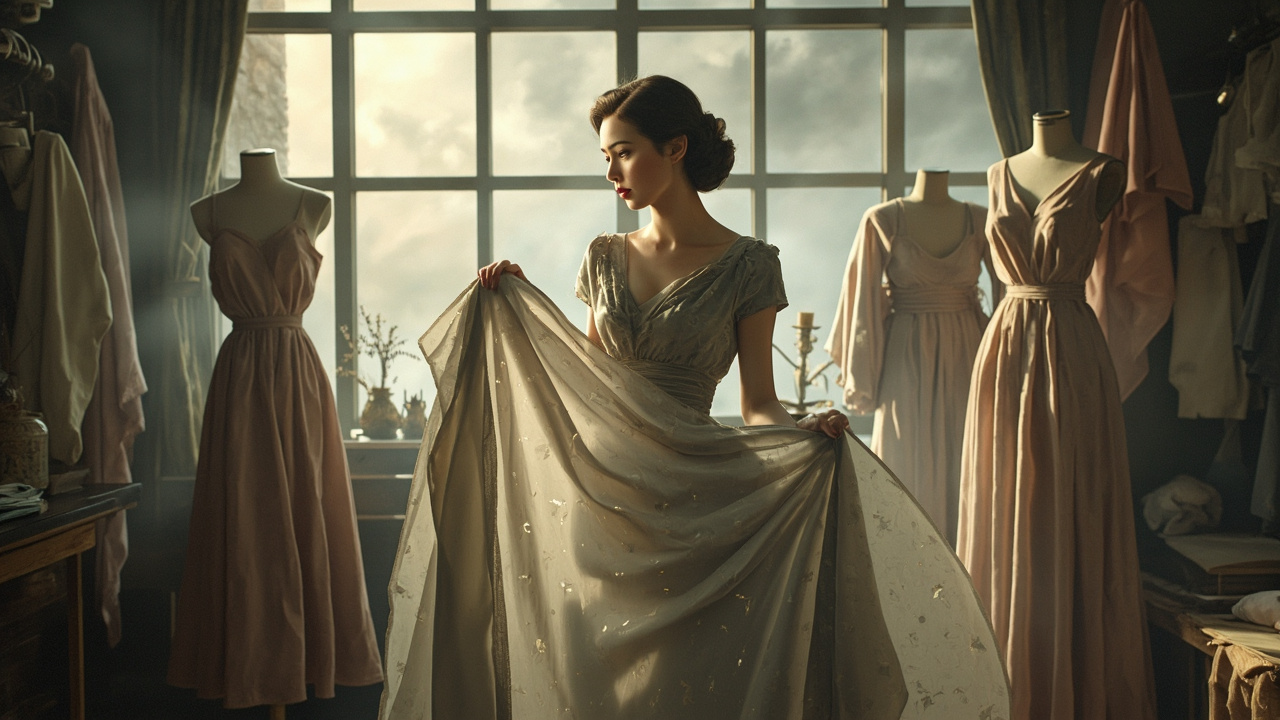
استقبلها عند الباب رائحة الحرير والقطن المكوي — مزيج مميز بدا وكأنه ينتمي لعصر آخر. خطت مارجوت ثورن داخل ورشة مادام فايكانكور في شارع سافيل وبدأت تفهم فوراً لماذا أصرت أمها على تقدمها لهذا المنصب، رغم الراتب الزهيد والرحلات الطويلة من بيكام. مادام إليز فايكانكور كانت أسطورة. كانت ترتدي واليس سيمبسون، وترتدي دوقة وندسور، وترتدي نساء تظهر أسماؤهن في الصحف وأخريات ظلّت هوياتهن مخفية عمداً. في الثانية والسبعين من عمرها، كانت تخدم الأكثر مكانة بين عملاء لندن وما وراءها — أعضاءroyalty، نجوم السينما، الشابات الساعيات للفستان المثالي لبداية دخولهن المجتمع. درست مارجوت الصور في المجلات لسنوات، معجبة بكيفية بناء مادام فايكانكور لملابس تتجاوز مجرد القماش — كانت عمارة للجسد، كل خياطة موضوعة بدقة رياضية. "أنتِ الجديدة"، قالت مادام فايكانكور، لتظهر في المدخل كشبح من الدخان. كانت أصغر مما تصورت مارجوت، شعرها الفضي مشدود بخفة، عيناها بلون غيوم العاصفة. "أمك تقول إنكِ لديكِ يدان ثابتتان واهتمام بالتفاصيل." "أتمنى ذلك، سيدتي." "الأمل عديم الفائدة. أرييني." أشارت نحو ورشة العمل، حيث كانت الفساتين شبه المكتملة معلقة على القضبان كجلود مخلوعة. "هل يمكنكِ أن تحافظي على سر؟" ترددت مارجوت. "لم يسبق لي سبب أحافظ على واحد." "إذاً ستتعلمين." شيء ماومض في تلك العيون الرمادية — موافقة، ربما، أو مجرد إدراك لصفة مفيدة. "غرفة التعديل تحتاج كياً. لا تتحدثي مع العميلات. لا تسألي أسئلة. وأياً مما ترينه، لم ترَ شيئاً على الإطلاق." هكذا بدأت تدريب مارجوت، الذي سار بالطريقة المعتادة لمثل هذه الأشياء: تثبيت الأذيل، قص الأنماط، تعلم كيفية خياطة ماكينة الخياطة الصناعية. لكن تحت المهام العادية كان هناك شيء آخر — تهيئة صامتة لأسرار الورشة. مادام فايكانكور كانت تتكلم قليلاً، وتتوقع الكثير، وكان يبدو أنها تراقب دائماً. تراقب ماذا، لم تستطع مارجوت القول. مرت ثلاثة أسابيع قبل أن تمنحها العجوز لمحة حقيقية خلف الستار. "تعالي"، قالت في ظهيرة رمادية، قائدة مارجوت إلى ورشة العمل الداخلية حيث كان فستان شبه مكتمل ممدود على طاولة القص. "امسكي هذا نحو الضوء." أطاعت مارجوت. القماش كان حريرياً، رمادياً كالحمام، مبطناً بما بدا كقطن بتيست. لا شيء غير عادي. ثم مالت به نحو النافذة، وأمسك الضوء شيئاً — نمط في خياطة البطانة، غير مرئي إلا إذا كنت تعرف كيف تنظر. أحرف صغيرة ودقيقة مخيطة بخيط بلون القماش. "إحداثيات"، قالت مادام فايكانكور بهدوء. "نقطة إنزال في ليون. أسماء، مشفرة في هامش الأذيل. رسائل لا أكبر من الهمس، تُرسل عبر الحدود في جلد فستان سهرة." أحبس مارجوت أنفاسها. "أثناء الحرب؟" "الحرب لم تنتهِ حقاً، طفلتي. مجرد غيّرت ملابسها." صوت العجوز كان بعيداً، يلمس شيئاً ما وراء الحاضر. "كنت في الثالثة والعشرين عندما بدأت هذا العمل. كانت يدي أكثر ثباتاً آنذاك. لم تكن عيني قد بدأت تخونني بعد." التفتت إلى مارجوت فجأة بحدة. "الآن أطلب منكِ أن تحملي ما لا أستطيع." "لا أفهم." "ستفهمين. سألتيني عن الأسرار التي أحفظها. أحفظ أسماء نساء خاطرن بكل شيء، اللواتي خيطن الأمل في الأذيل والشجاعة في الأكمام، اللواتي確保 أنtruth حتى عندما Taken أزواجهن، اختفى أطفالهن، احترقت بيوتهن، truth نجت في الحرير والخيط." وضعت يدها فوق يد مارجوت، قبضتها قوية بشكل مدهش. "حفظت تلك الأسماء ستين عاماً. الآن أطلب من شخص أصغر أن يحملها فترة أطول." مرت fortnight لاحقاً عندما جاء الماضي يطرق الباب. كانت مارجوت قد وصلت باكراً، كما اعتادت الآن، لتجد رجلاً ينتظر في منطقة الاستقبال. كان في الخمسين تقريباً، يرتدي بدلة impeccable spoke من تفصيل شارع سافيل، بعيون ذكّرتها بشكل مزعج بكلب صيد يشم رائحة الفريسة. ابتسم عندما رآها. "آه، أنتِ يجب أن تكوني المتدربة الجديدة. أخشى أنني جئت بشأن مسألة حساسة جداً — شيء يتعلق بأعمال مادام خلال wartime. لن تكوني تعرفين شيئاً عن ذلك، أليس كذلك؟" نبرته كانت خفيفة، شبه مرحة، لكن مارجوت تعلمت أن تقرأ الصمت في الأسابيع التي تلت تلك المحادثة. سمعت التهديد تحت المجاملة. "أنا مجرد متدربة"، قالت بحذر. "أثبت الأذيل وأكوي اللحامات. لن أعرف شيئاً عن الأعمال wartime." "لا؟ ما إحباط." أخرج بطاقة عمل، ووضعها على مكتب الاستقبال بعناية متعمدة. "أعطيه لهذه سيدتي، أليس كذلك؟ أخبريها أنMonsieur Leblanc يريد كثيراً مناقشة certain الأمور من الأيام old. ديون معينة remained unpaid." عندما gone، وجدت مارجوت مادام فايكانكور في ورشة العمل، واقفة motionless أمام mannequin كأنها كانت تنتظر هناك طوال الوقت. وجهها قال لمارجوت كل ما تحتاج أن تعرفه. "كان من الأمن"، said العجوز. "ليس الحالي — القديم. الذي كان يعمل لصالح فيشي." تنهدت، stabilize herself. "كان يبحث عن الأسماء التي أخفيتها durante occupation. أسماء أولئك who helped المقاومة. أسماء أولئك الذين خونوا collaborators للماكي." "لا يمكنه — لن يفعل —" "انتظر طويلاً، طفلتي. إنهم دائماً يفعلون." في الأسابيع التي Followed، فهمت مارجوت ماذا meant أن تعيش في ظل ماضٍ يرفض أن يبقى مدفوناً. رأت كيف عملاء مادام فايكانكور لم يكونوا مجرد زبائن — كانوا، كثيرون منهم، بنات وحفيدات النساء اللواتي ارتدين تلك الرسائل المخفية durante الحرب. رأت كيف كانت يدا العجوز ترتجف الآن عندما كانت steady ذات يوم، كيف تعبت عيناها بسرعة أكبر، كيف الرموز التي تخيطها grew أصغر، أكثر ازدحاماً، أصعب read. ورأت أيضاً، كيف عاد الرجل. ليس إلى الورشة — كان لديه الذوق، أو perhaps الحيلة، لي—
Der Geruch von Seide und gebügeltem Baumwoll empfing sie an der Tür — eine Mischung so eigenständig, dass sie einer anderen Ära anzugehören schien. Margot Thorne trat in Madame Vaillancourts Atelier in der Savile Row ein und verstand sofort, warum ihre Mutter darauf bestanden hatte, dass sie sich um diese Stelle bewirbt, trotz der kargen Löhne und der langen Anfahrt von Peckham. Madame Élise Vaillancourt war eine Legende. Sie hatte Wallis Simpson eingekleidet, die Herzogin von Windsor, Frauen deren Namen in Zeitungen erschienen und solche, deren Identitäten bewusst verborgen blieben. Mit zweiundsiebzig befehligte sie die renommierteste Kundschaft in London und darüber hinaus — Royalty, Filmstars, Debütantinnen auf der Suche nach dem perfekten Debütantinnenballkleid. Margot hatte jahrelang die Fotos in Zeitschriften studiert und war dabei fasziniert gewesen, wie Madame Vaillancourt Kleidungsstücke schuf, die über bloße Kleidung hinausgingen — es war Architektur für den Körper, jede Naht mit mathematischer Präzision gesetzt. "Du bist die Neue", sagte Madame Vaillancourt und erschien im Türrahmen wie ein Hauch von Rauch. Sie war kleiner als Margot es sich vorgestellt hatte, silbernes Haar streng zurückgekämmt, Augen in der Farbe von Gewitterwolken. "Deine Mutter sagt, du hast ruhige Hände und ein Auge für Details." "Das hoffe ich, Madame." "Hoffnung ist nutzlos. Zeig mir." Sie deutete auf den Arbeitsraum, wo halbfertige Kleider auf Stangen hingen wie abgelegte Haut. "Kannst du ein Geheimnis bewahren?" Margot zögerte. "Ich hatte nie Grund, eines zu bewahren." "Dann wirst du es lernen." Etwas flackerte in diesen grauen Augen — Zustimmung, vielleicht, oder einfach die Erkenntnis einer nützlichen Eigenschaft. "Der Anprobenraum muss gebügelt werden. Sprich nicht mit den Kundinnen. Stell keine Fragen. Und was auch immer du siehst, hast du nichts gesehen." So begann Margots Lehrzeit, die sich auf die übliche Weise solcher Dinge entwickelte: Säume anstecken, Schnittmuster schneiden, eine industrielle Nähmaschine einfädeln lernen. Doch unter den alltäglichen Aufgaben lag etwas anderes — eine unausgesprochene Einführung in die Geheimnisse des Ateliers. Madame Vaillancourt sprach wenig, erwartete viel und schien immer zu beobachten. Wonach sie suchte, konnte Margot nicht sagen. Es vergingen drei Wochen, bevor die alte Frau ihr den ersten echten Blick hinter den Vorhang gewährte. "Komm", sagte sie an einem grauen Nachmittag und führte Margot in den inneren Arbeitsraum, wo ein halbfertiges Kleid auf dem Schneidetisch lag. "Halt das gegen das Licht." Margot gehorchte. Der Stoff war Seide, taubengrau, gefüttert mit dem, was wie Baumwollbatist aussah. Nichts Ungewöhnliches. Dann neigte sie es zum Fenster, und das Licht fing etwas ein — ein Muster in der Naht des Futters, unsichtbar, es sei denn, man wusste, wo man hinsehen musste. Kleine, präzise Buchstaben, in Faden in der Farbe des Stoffes eingenäht. "Koordinaten", sagte Madame Vaillancourt leise. "Ein Treffpunkt in Lyon. Namen, verschlüsselt im Saum. Nachrichten nicht größer als ein Flüstern, über Grenzen hinweg geschickt im Kleid einer Ballrobe." Margots Atem stockte. "Während des Krieges?" "Der Krieg ist nie wirklich zu Ende gegangen, Kind. Er hat nur seine Kleidung gewechselt." Die Stimme der alten Frau war fern, berührte etwas jenseits der Gegenwart. "Ich war dreiundzwanzig, als ich diese Arbeit begann. Meine Hände waren damals ruhiger. Meine Augen hatten mich noch nicht verraten." Sie wandte sich Margot mit plötzlicher Intensität zu. "Jetzt bitte ich dich, zu tragen, was ich nicht mehr kann." "Ich verstehe nicht." "Das wirst du. Du hast mich gefragt, welche Geheimnisse ich hüte. Ich hüte die Namen von Frauen, die alles riskiert haben, die Hoffnung in Säume und Mut in Ärmel genäht haben, die dafür gesorgt haben, dass selbst als ihre Männer geholt, ihre Kinder verschwanden, ihre Häuser brannten, die Wahrheit in Seide und Faden überlebte." Sie legte ihre Hand auf Margots, ihr Griff überraschend fest. "Ich habe diese Namen sechzig Jahre lang gehütet. Jetzt bitte ich jemand Jüngeren, sie noch ein wenig länger zu halten." Es war zwei Wochen später, als die Vergangenheit anklopfte. Margot war früh angekommen, wie es jetzt ihre Gewohnheit war, und fand einen Mann in der Empfangshalle. Er war vielleicht fünfzig, makellos gekleidet in einem Anzug, der von Savile Row Handwerkskunst sprach, mit Augen, die Margot unangenehm an einen Jagdhund erinnerten, der eine Fährte wittert. Er lächelte, als er sie sah. "Ah, du musst die neue Lehrling sein. Ich fürchte, ich bin wegen einer ziemlich delikaten Angelegenheit gekommen — etwas bezüglich Madame's Kriegsarbeit. Du wüsstest zufällig nichts darüber, oder?" Sein Ton war leicht, beinahe spielerisch, aber Margot hatte in den Wochen seit diesem Gespräch gelernt, Schweigen zu lesen. Sie hörte die Drohung unter der Höflichkeit. "Ich bin nur eine Lehrling", sagte sie vorsichtig. "Ich stecke Säume und bügele Nähte. Ich wüsste nichts über Kriegsarbeit." "Nein? Wie enttäuschend." Er zog eine Visitenkarte hervor und legte sie mit bewusster Sorgfalt auf den Empfangstisch. "Gib dies bitte der Madame, ja? Sag ihr, dass Monsieur Leblanc sehr gerne bestimmte Angelegenheiten aus alten Zeiten besprechen möchte. Bestimmte Schulden, die unbezahlt geblieben sind." Als er gegangen war, fand Margot Madame Vaillancourt in der Werkstatt, reglos vor einer Schneiderpuppe stehend, als hätte sie die ganze Zeit dort gewartet. Ihr Gesicht sagte Margot alles, was sie wissen musste. "Er war von der Sureté", sagte die alte Frau. "Nicht die heutige — die alte. Die, die für Vichy arbeitete." Sie holte Atem und stabilisierte sich. "Er suchte die Namen, die ich während der Besatzung versteckt hielt. Die Namen derer, die der Resistance halfen. Die Namen derer, die Kollaborateure an die Maquis verrieten." "Er kann nicht — er würde nicht —" "Er hat lange gewartet, Kind. Sie warten immer." In den Wochen, die folgten, verstand Margot, was es bedeutete, im Schatten einer Vergangenheit zu leben, die sich weigerte, begraben zu bleiben. Sie sah, wie Madame Vaillancourts Kundinnen niemals nur Kundinnen waren — sie waren, viele von ihnen, Töchter und Enkelinnen der Frauen, die diese versteckten Nachrichten während des Krieges getragen hatten. Sie sah, wie die Hände der alten Frau jetzt zitterten, wo sie einst ruhig gewesen waren, wie ihre Augen schneller ermüdeten, wie die Codes, die sie nähte, kleiner, enger, schwerer zu lesen wurden. Und sie sah auch, wie der Mann zurückkehrte. Nicht ins Atelier — er hatte die Anständigkeit, oder vielleicht die List, es nicht zu tun —
L'odeur de soie et de coton amidonné l'accueillit à la porte — un mélange si distinct qu'il semblait appartenir à une autre époque. Margot Thorne entra dans l'atelier de Madame Vaillancourt sur Savile Row et comprit immédiatement pourquoi sa mère avait insisté pour qu'elle postule à ce poste, malgré les maigres salaires et le long trajet depuis Peckham. Madame Élise Vaillancourt était une légende. Elle avait habillé Wallis Simpson, la duchesse de Windsor, des femmes dont les noms paraissaient dans les journaux et d'autres dont les identités restaient délibérément dissimulées. À soixante-douze ans, elle commandait la clientèle la plus prestigieuse de Londres et au-delà — membres de la famille royale, stars de cinéma, débutantes cherchant la robe parfaite pour leur entrée dans le monde. Margot avait étudié les photographies dans les magazines pendant des années, émerveillée de voir comment Madame Vaillancourt construisait des vêtements qui transcendaient le simple habillage — c'était de l'architecture pour le corps, chaque couture placée avec une précision mathématique. "Tu es la nouvelle", dit Madame Vaillancourt, apparaissant dans l'embrasure comme un effluve de fumée. Elle était plus petite que Margot ne l'avait imaginé, ses cheveux argentés tirés en arrière sévèrement, ses yeux de la couleur des nuages d'orage. "Ta mère dit que tu as les mains sûres et l'œil pour les détails." "Je l'espère, Madame." "L'espoir est inutile. Montre-moi." Elle désigna l'atelier de travail, où des robes à moitié terminées pendaient sur des tringles comme des peaux muées. "Peux-tu garder un secret ?" Margot hésita. "Je n'ai jamais eu de raison d'en garder un." "Alors tu apprendras." Quelque chose vacilla dans ces yeux gris — approbation, peut-être, ou simplement la reconnaissance d'une qualité utile. "La cabine d'essayage a besoin d'être pressée. Ne parle pas aux clientes. Ne pose pas de questions. Et quoi que tu voies, tu n'as rien vu du tout." Ainsi commença l'apprentissage de Margot, qui se dérouler de la manière habituelle de ces choses : épingler des ourlets, couper des patrons, apprendre à enfiler une machine à coudre industrielle. Pourtant, sous les tâches banales se cachait autre chose — une initiation silencieuse aux mystères de l'atelier. Madame Vaillancourt parlait peu, attendait beaucoup, et semblait toujours observer. Observer quoi, Margot ne pouvait le dire. Ce fut trois semaines avant que la vieille femme ne lui accorde son premier vrai regard derrière le rideau. "Viens", dit-elle un après-midi gris, guidant Margot dans l'atelier intérieur où une robe à moitié construite reposait sur la table de coupe. "Tiens ceci vers la lumière." Margot obéit. Le tissu était de la soie, gris colombe, doublée de ce qui ressemblait à du coton batiste. Rien d'inhabituel. Puis elle l'inclina vers la fenêtre, et la lumière attrapa quelque chose — un motif dans la couture de la doublure, invisible à moins de savoir regarder. De petites lettres précises cousues en fil de la couleur du tissu. "Des coordonnées", dit doucement Madame Vaillancourt. "Un point de drop à Lyon. Des noms, codés dans la marge de l'ourlet. Des messages pas plus grands qu'un murmure, envoyés à travers les frontières dans la peau d'une robe de bal." Le souffle de Margot se bloqua. "Pendant la guerre ?" "La guerre n'a jamais vraiment pris fin, mon enfant. Elle a simplement changé de vêtements." La voix de la vieille femme était lointaine, touchant quelque chose au-delà du présent. "J'avais vingt-trois ans quand j'ai commencé ce travail. Mes mains étaient plus sûres alors. Mes yeux ne m'avaient pas encore trahie." Elle se tourna vers Margot avec une intensité soudaine. "Maintenant je te demande de porter ce que je ne peux plus." "Je ne comprends pas." "Tu comprendras. Tu m'as demandé quels secrets je garde. Je garde les noms de femmes qui ont tout risqué, qui ont cousu l'espoir dans les ourlets et le courage dans les manches, qui ont assuré que même quand leurs maris étaient pris, leurs enfants disparaissaient, leurs maisons brûlaient, la vérité survivait dans la soie et le fil." Elle posa sa main sur celle de Margot, sa prise étonnamment ferme. "J'ai gardé ces noms pendant soixante ans. Maintenant je demande à quelqu'un de plus jeune de les tenir un peu plus longtemps." Ce fut une quinzaine plus tard que le passé vint frapper à la porte. Margot était arrivée tôt, comme c'était maintenant son habitude, pour trouver un homme qui attendait dans la zone de réception. Il avait peut-être cinquante ans, vêtu d'un costume impeccable qui parlait du tailoring de Savile Row, avec des yeux qui rappelaient à Margot, de façon inconfortable, un chien de chasse flairant une proie. Il sourit quand il la vit. "Ah, tu dois être la nouvelle apprentie. Je crains être venu pour une affaire assez délicate — quelque chose concernant le travail de Madame pendant la guerre. Tu n'aurais pas connaissance de cela, par hasard ?" Son ton était léger, presque badin, mais Margot avait appris à lire les silences au cours des semaines depuis cette conversation. Elle entendit la menace sous la courtoisie. "Je suis juste une apprentie", dit-elle soigneusement. "J'épingle les ourlets et je presse les coutures. Je ne saurais rien du travail de guerre." "Non ? Quelle déception." Il sortit une carte de visite, la plaçant sur le bureau de réception avec un soin délibéré. "Donne ceci à Madame, veux-tu ? Dis-lui que Monsieur Leblanc aimerait beaucoup discuter de certaines questions des anciens jours. Certaines dettes restées impayées." Quand il fut parti, Margot trouva Madame Vaillancourt dans l'atelier, immobile devant un mannequin comme si elle avait attendu là tout du long. Son visage dit à Margot tout ce qu'elle avait besoin de savoir. "Il était de la Sureté", dit la vieille femme. "Pas celui d'aujourd'hui — l'ancien. Celui qui travaillait pour Vichy." Elle prit une inspiration, se stabilisant. "Il cherchait les noms que j'ai cachés pendant l'occupation. Les noms de ceux qui ont aidé la résistance. Les noms de ceux qui ont livré des collaborateurs aux Maquis." "Il ne peut pas — il ne ferait pas —" "Il a attendu longtemps, mon enfant. Ils attendent toujours." Dans les semaines qui suivirent, Margot comprit ce que signifiait vivre dans l'ombre d'un passé qui refusait de rester enterré. Elle vit comment les clientes de Madame Vaillancourt n'étaient jamais de simples clientes — elles étaient, beaucoup d'entre elles, des filles et des petites-filles des femmes qui avaient porté ces messages cachés pendant la guerre. Elle vit comment les mains de la vieille femme tremblaient maintenant alors qu'elles avaient été sûres autrefois, comment ses yeux se fatiguaient plus vite, comment les codes qu'elle cousait devenaient plus petits, plus serrés, plus difficiles à lire. Et elle vit, aussi, comment l'homme revint. Non pas à l'atelier — il avait la décence, ou peut-être la ruse, pour ne pas le faire —
Запах шёлка и накрахмаленного хлопка встретил её у двери — смесь настолько особенная, что казалась принадлежащей другой эпохе. Марго Торн вошла в ателье мадам Вайянкур на Савил Роу и сразу поняла, почему её мать настаивала, чтобы она подала заявку на эту должность, несмотря на жалкую оплату и долгую дорогу из Пекема. Мадам Элиз Вайянкур была легендой. Она одевала Wallis Simpson, герцогиню Виндзорскую, женщин, чьи имена появлялись в газетах, и тех, чьи имена оставались намеренно скрытыми. В семьдесят два года она обслуживала самых престижных клиентов в Лондоне и за его пределами — royalty, кинозвёзд, дебютанток в поисках идеального платья для выхода в свет. Марго годами изучала фотографии в журналах, восхищаясь тем, как мадам Вайянкур создавала наряды, которые выходили за рамки простой одежды — это была архитектура для тела, каждый шов размещён с математической точностью. "Ты новая", — сказала мадам Вайянкур, появляясь в дверях как призрак дыма. Она была меньше, чем представляла себе Марго, серебряные волосы сурово зачёсаны назад, глаза цвета грозовых облаков. "Твоя мать говорит, что у тебя твёрдые руки и глаз на детали." "Надеюсь, что так, мадам." "Надежда бесполезна. Покажи мне." Она указала в сторону мастерской, где недошитые платья висели на вешалках как сброшенные шкуры. "Можешь хранить секрет?" Марго замялась. "Мне никогда не приходилось их хранить." "Тогда научишься." Что-то мелькнуло в этих серых глазах — одобрение, возможно, или просто признание полезного качества. "Примерочную нужно отпарить. Не разговаривай с клиентками. Не задавай вопросов. И что бы ты ни увидела, ты ничего не видела." Так началась учёба Марго, которая шла обычным для таких вещей порядком: намётывать подолы, кроить выкройки, учиться заправлять промышленную швейную машину. Но под рутинными задачами скрывалось нечто другое — безмолвное посвящение в тайны ателье. Мадам Вайянкур мало говорила, многого ожидала и, казалось, всегда наблюдала. За чем именно, Марго не могла сказать. Прошло три недели, прежде чем старуха позволила ей впервые заглянуть за кулисы. "Иди сюда", — сказала она однажды серым днём, ведя Марго во внутреннюю мастерскую, где на столе для раскроя лежало недошитое платье. "Подержи это к свету." Марго повиновалась. Ткань была шёлковая, цвета голубя, на подкладке из того, что казалось хлопковым батистом. Ничего необычного. Затем она наклонила платье к окну, и свет поймал кое-что — узор в строчке подкладки, невидимый, если не знать, куда смотреть. Маленькие, аккуратные буквы, вшитые нитками в цвет ткани. "Координаты", — тихо сказала мадам Вайянкур. "Точка сбора в Лионе. Имена, зашифрованные в припуске на подол. Сообщения не крупнее шёпота, переправляемые через границы в шкуре бального платья." У Марго перехватило дыхание. "Во время войны?" "Война никогда по-настоящему не закончилась, дитя моё. Она просто сменила одежду." Голос старухи был далёким, касаясь чего-то за пределами настоящего. "Мне было двадцать три, когда я начала эту работу. Мои руки тогда были твёрже. Мои глаза ещё не начали предавать меня." Она резко повернулась к Марго. "Теперь я прошу тебя нести то, что не могу нести сама." "Я не понимаю." "Поймёшь. Ты спросила меня, какие секреты я храню. Я храню имена женщин, рисковавших всем, вшивавших надежду в подолы и отвагу в рукава, тех, кто обеспечил, что даже когда их мужей увозили, детей похищали, дома сжигали — истина выживала в шёлке и нити." Она положила руку на руку Марго, её хватка была удивительно крепкой. "Я хранила эти имена шестьдесят лет. Теперь я прошу кого-то моложе подержать их ещё немного." Две недели спустя прошлое постучало в дверь. Марго пришла пораньше, как было её привычкой, и обнаружила в приёмной мужчину. Ему было около пятидесяти, безупречно одетый в костюм, говоривший о мастерстве Савил Роу, с глазами, неприятно напоминавшими охотничью собаку, почуявшую след. Он улыбнулся, когда увидел её. "А, ты, должно быть, новая ученица. Боюсь, я пришёл по довольно деликатному делу — кое-что касается военной работы мадам. Ты случайно ничего об этом не знаешь?" Его тон был лёгким, почти игривым, но Марго за эти недели научилась читать молчание. Она услышала угрозу под учтивостью. "Я всего лишь ученица", — осторожно сказала она. "Мне подшивают подолы и гладят швы. Я ничего не знаю о военной работе." "Нет? Как разочаровывающе." Он достал визитную карточку и аккуратно положил её на стойку администратора. "Передай это мадам, пожалуйста. Скажи ей, что месье Леблан хотел бы обсудить кое-какие дела из старых времён. Кое-какие долги, которые остались неоплаченными." Когда он ушёл, Марго нашла мадам Вайянкур в мастерской, неподвижно стоявшую перед манекеном, как будто она ждала там всё это время. Её лицо сказало Марго всё, что ей нужно было знать. "Он был из Сюрте", — сказала старуха. "Не нынешнего — старого. Того, что работало на Виши." Она сделала вдох, чтобы успокоиться. "Он искал имена, которые я прятала во время оккупации. Имена тех, кто помогал Сопротивлению. Имена тех, кто предавал коллаборационистов Маки." "Он не может — он не стал бы —" "Он долго ждал, дитя моё. Они всегда ждут." В последующие недели Марго поняла, что значит жить в тени прошлого, которое отказывается оставаться погребённым. Она видела, как клиентки мадам Вайянкур никогда не были просто покупательницами — многие из них были дочерьми и внучками женщин, которые носили те тайные послания во время войны. Она видела, как руки старухи теперь дрожали, хотя раньше были твёрдыми, как её глаза уставали быстрее, как шифры, которые она вышивала, становились меньше, плотнее, труднее для прочтения. И она видела также, как мужчина вернулся. Не в ателье — у него хватило такта, или, возможно, хитрости, чтобы не делать этого —