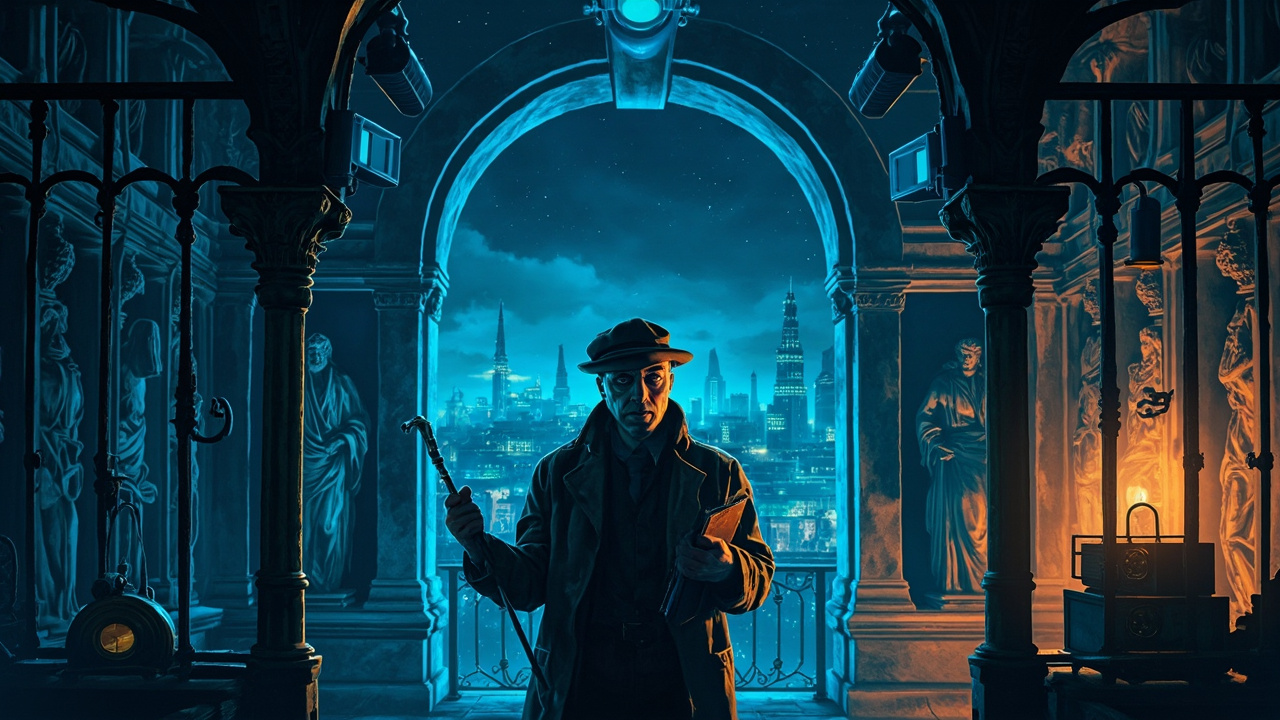
كان منبه الساعة الجدارية في قاعة المدخل قد دقّ للتو مرتين عندما لاحظ ماركوس ويب أن شيئاً ما ليس على ما يرام. ليس خطأً بالضبط. بل... غير طبيعي. وقف ساكناً عند نقطة المراقبة الخاصة به، تتبع عيناه الشبكة المألوفة من شاشات الدوائر التلفزيونية المغلقة، بينما تستريح مصباحه اليدوية الثقيلة على فخذه. كان المعرض الخاص بحجر رشيد فارغاً. كانت آثار البارثينون معلقة undisturbed في محرابها الزجاجي. لكن شيئاً ما كان يسحب خيوط عقله كخيط منفوش من سترة محبوبة قديمة. كان ذلك الصمت. خلال ثمانية عشر شهراً من عمله كحارس ليلي في المتحف البريطاني، أصبح ماركوس معتاداً على السيمفونية الليلية للمبنى — طنين أنظمة التحكم في المناخ، البعد المسموع لاستقرار الحديد الفيكتوري، القعقعة العرضية لفأرة تستكشف متجر الهدايا. الليلة، ذابت تلك الأصوات في صمت غير طبيعي. فحص سجل القطع الأثرية على لوحه. كانت ثلاث قطع قد شوهدت للصيانة الروتينية: ختم أسطواني من بلاد ما بين النهرين، حصان من أسرة تانغ، ومجذاف إنويت منحوت. كانت جميعها مجدولة للمغادرة المؤقتة من المعارض العامة. روتيني، قال السجل. روتيني، أكدت التوقيعات. لكن ماركوس لم يُعلم، وكان يجب أن يُعلم. ارتدى معطفه وبدأ جولاته، وتحت أحذيته كانت ألواح الأرضية تئن بشكواها المألوفة. بينما كان يمر عبر展厅 التنوير، انبثق جهاز الراديو الشخصي الخاص به — محطة المجتمع المتأخرة، تبث من مكان ما في بلومزبري. صعد صوت امرأة عبر الطنين، دافئ غير مستعجل، تغني لامية لم يتعرف عليها ماركوس. كانت اللامية بسيطة، شبه طفولية: عبارة نازلة، ثم صاعدة، ثم ثلاث ملاحظات قصيرة تكرر كنبض القلب. وجدها غريبة الاطمئنان وتركها تعزف بينما كان يعمل. بنهاية الأسبوع، اختفت قطعتان أثريتان أخريان — الختم الأسطواني والحصان من تانغ — وكل اختفاء سبقه، في تلك الليلة بالذات، نفس اللامية على نفس المحطة. صدفة، قال مشرفه عندما أبلغ ماركوس. التوقيعات كانت سليمة. هذه الأمور تحدث. لا تصنع ضجة، ويب. لكن ماركوس كان قد خدم في الشرطة العسكرية الملكية قبل أن تفشل ركبتاه، وكان يعرف الفرق بين الشذوذ والنمط. بدأ يحتفظ بدفتر ملاحظات. جاء الاختراق يوم الخميس، يستمع في شقته فوق متجر رقائق في كينيش تاون. جاءت اللامية كالمعتاد، لكن هذه المرة أمسك ماركوس قلم رصاص وسجل النغمات بينما كانت تُغنى: صول، مي، دو، ثم صول مرة أخرى، ثم ري. حدق في الحروف. ص-م-د-ص-ر. تجهم. ثم تجهم أعمق. ثم مد يده نحو حاسوبه المحمول. أدرك ماركوس أن اللامية لم تكن لامية على الإطلاق. كانت شفرة — لفظية موسيقية، تستخدم نغمات السولفيج التي ترسم، من خلال مفتاح لم يفكه بعد، لحروف الأبجدية. كانت العبارة تحاول أن تخبره بشيء. لكن التحليل التشفيري لم يكن من نقاط قوته، وكان قسم تقنية المعلومات في المتحف البريطاني قد ذكره مؤخراً، بصرامة، أن الأجهزة الشخصية غير مسموح بها في المبنى. احتاج مساعدة. تدير إلينور تشن متجراً صغيراً فوضوياً في شارع المتحف يشتري ويبيع إلكترونيات قديمة وراديوهات عتيقة، وأحياناً، معلومات. كانت محللة استخبارات إشارات شبه متقاعدة كانت قد أمضت عقداً مع GCHQ قبل أن تذهب شيئاً غير محدد بشكل جانبي وتتراجع إلى العالم الهادئ من الترددات القصيرة ومكائن التشفير. وجدها ماركوس منحنية فوق محلل الطيف، وكوب شاي يبرد بجانبها، وعرض عليها دفتر ملاحظاته. فحصت إلينور النغمات بصمت لمدة دقيقة كاملة. ثم ابتسمت — ابتسامة رفيعة حادة أشارت إلى أنها لم تستخدم تلك العضلة المحددة منذ وقت طويل. "أنت لست مخطئاً،" قالت. "لكنك لا تنظر إلى النغمات الصحيحة. استمع مجدداً." استدعت ملفاً صوتياً على حاسوبها — كانت تسجل المحطة بنفسها، حدساً. "النغمات المهمة ليست تلك التي تغنيها. بل تلك التي تتخطاها." شغّلت برنامجاً يحلل البنية التوافقية للامية. "هناك — الفجوات. الغيابات. تلك هي شفرتك." بالعمل معاً خلال سلسلة من جلسات الليل المتأخرة في غرفة إلينور الخلفية، فكوا الشفرة embed في البث خلال الأسابيع الثلاثة الماضية. كانت جدولاً زمنياً — جدولاً دقيقاً لإزالة القطع الأثرية من المتحف، مع أرقام المعارض وأكواد الدخول واسم جهة الاتصال الخارجية التي ستستقبل القطع. الرسالة النهائية احتوت على تاريخ ووقت: الليلة، الساعة الثانية صباحاً، الفناء الكبير. اتصل ماركوس بجهات اتصاله القديمة في شرطة العاصمة. بحلول منتصف الليل، أحاط المتحف بموظفين سريين متنكرين في زي عمال الصيانة وموظفي الأمن وطاقم تنظيف غير مقنع إلى حد ما. كانت إلينور قد نصبت هوائياً.directional على سطح متجرها لمراقبة تردد الراديو. احتل ماركوس مكانه عند نقطة مراقبته، كأن شيئاً لم يكن، قلبه يطرقضل against أضلاعه كطائر محاصر. قبل دقيقتين من الثانية، بدأت اللامية. هذه المرة، رسم برنامج إلينورها في الوقت الفعلي، مترجماً الفجوات في اللامية إلى إحداثيات. الفناء الكبير. الربع الشمالي الغربي. ظهر رجل في زي الصيانة من باب "للموظفين فقط" قرب معارض أفريقيا، يدفع عربة حفظ محملة بصناديق. لم يكن وحده. ظهرت شخصية ثانية من جناح الفن الآسيوي، تحمل ما بدا أنه حقيبة سفر. رفع ماركوس راديوه. "إنهم يتحركون." تحركت الشرطة أسرع. خلال تسعين ثانية، غمر الفناء الكبير بالضوء الأزرق والأوامر الصارخة. أُوقف الرجلان دون مقاومة. احتوت حقيبة السفر، عند فتحها، على الختم الأسطواني من بلاد ما بين النهرين وثلاث قطع أخرى كانت قد reported missing خلال الشهر السابق. تبين أن التوقيعات في سجل الصيانة كانت مزورة — وكان المزور، كما اتضح، أمين سجلات مبتدئ كان لديه وصول إلى الأنظمة الداخلية للمتحف وكان يضيف إلى راتبه المتواضع دخلاً جانبياً مربحاً جداً. القضية —
Die Großvateruhr im Eingangsflur hatte gerade zwei geschlagen, als Marcus Webb bemerkte, dass etwas nicht stimmte. Nicht falsch, genau genommen. Eher... ungewöhnlich. Er stand reglos an seiner Überwachungsstation, seine Augen folgten dem vertrauten Raster der Überwachungsmonitore, seine Taschenlampe ruhte schwer an seinem Oberschenkel. Die Rosetta-Stein-Galerie war leer. Die Parthenon-Marmore hingen ungestört in ihrem gläsernen Heiligtum. Und doch zog etwas an seinem Hinterkopf wie ein loser Faden an einem geliebten Pullover. Es war die Stille. Während seiner achtzehn Monate als Nachtwächter im British Museum hatte Marcus sich an die nächtliche Symphonie des Gebäudes gewöhnt – das Summen der Klimaanlagen, das ferne Knarren des viktorianischen Eisens, das gelegentliche Klappern einer Maus, die den Geschenkeladen erkundete. Heute Nacht waren diese Geräusche zu einem unnatürlichen Schweigen verebbt. Er überprüfte das Artefakt-Protokoll auf seinem Klemmbrett. Drei Objekte waren zur routinemäßigen Wartung markiert: ein mesopotamischer Zylindersiegel, ein Pferd aus der Tang-Dynastie und ein geschnitztes Inuit-Paddel. Alle drei sollten vorübergehend die öffentlichen Galerien verlassen. Routinemäßig, stand im Protokoll. Routinemäßig, bestätigten die Unterschriften. Aber Marcus war nicht informiert worden, und er hätte es sein müssen. Er zog seinen Mantel an und begann seine Runde, die Dielen knarrten ihre vertrauten Beschwerden unter seinen Stiefeln. Als er durch die Aufklärungs-Galerie ging, erwachte sein persönliches Radio zum Leben – der spätabendliche Community-Sender, der irgendwo in Bloomsbury ausstrahlte. Eine Frauenstimme schwebte durch das Rauschen, warm und gemächlich, und sang ein Wiegenlied, das Marcus nicht erkannte. Die Melodie war einfach, fast kindlich: eine absteigende Phrase, dann eine aufsteigende, dann drei kurze Noten, die sich wie ein Herzschlag wiederholten. Er fand es seltsam tröstlich und ließ es spielen, während er arbeitete. Ende der Woche waren zwei weitere Artefakte verschwunden – der Zylindersiegel und das Tang-Pferd – und jedes Verschwinden war, in jener Nacht, von demselben Wiegenlied auf derselben Station angekündigt worden. Zufall, sagte sein Vorgesetzter, als Marcus es meldete. Die Unterschriften waren in Ordnung. Das passiert. Mach keinen Wirbel, Webb. Aber Marcus hatte bei der Königlichen Militärpolizei gedient, bevor seine Knie versagten, und er kannte den Unterschied zwischen einer Anomalie und einem Muster. Er begann, ein Notizbuch zu führen. Der Durchbruch kam an einem Donnerstag, als er in seiner Wohnung über einem Fish-and-Chips-Laden in Kentish Town lauschte. Das Wiegenlied kam wie gewöhnlich, aber diesmal griff Marcus nach einem Bleistift und kritzelte die Noten mit, während sie gesungen wurden: G, E, C, dann wieder G, dann D. Er starrte auf die Buchstaben. G-E-C-G-D. Er runzelte die Stirn. Dann runzelte er sie tiefer. Dann griff er nach seinem Laptop. Das Wiegenlied, wurde ihm klar, war überhaupt kein Wiegenlied. Es war eine Chiffre – eine melodische, die Solfège-Noten verwendete, die durch einen Schlüssel, den er noch nicht geknackt hatte, auf Buchstaben des Alphabets abbildeten. Die Phrase versuchte, ihm etwas mitzuteilen. Aber Kryptoanalyse war nicht seine Stärke, und die IT-Abteilung des British Museum hatte ihn kürzlich daran erinnert, strikt, dass persönliche Geräte im Gebäude nicht erlaubt waren. Er brauchte Hilfe. Eleanor Chen betrieb einen kleinen, überfüllten Laden in Museum Lane, der Vintage-Elektronik, alte Radios und manchmal Informationen kaufte und verkaufte. Sie war eine halb pensionierte Signalintelligenzanalystin, die ein Jahrzehnt beim GCHQ verbracht hatte, bevor etwas Unspecified schiefgelaufen war und sie sich in die ruhige Welt der Kurzwellenfrequenzen und Chiffriermaschinen zurückgezogen hatte. Marcus fand sie über einen Spektralanalysator gebeugt, eine Tasse Tee daneben erkaltend, und breitete sein Notizbuch aus. Eleanor untersuchte die Noten schweigend eine ganze Minute lang. Dann lächelte sie – ein dünnes, scharfes Lächeln, das darauf hindeutete, dass sie diese bestimmte Muskelgruppe längere Zeit nicht benutzt hatte. "Du liegst nicht falsch," sagte sie. "Aber du schaust dir die falschen Noten an. Hör nochmal zu." Sie rief eine Audiodatei auf ihrem Computer auf – sie hatte die Station selbst aufgezeichnet, aus einem Bauchgefühl. "Die Noten, auf die es ankommt, sind nicht die, die sie singt. Es sind die, die sie auslässt." Sie führte ein Programm aus, das die harmonische Struktur des Wiegenlieds visualisierte. "Dort – die Lücken. Die Abwesenheiten. Das ist deine Chiffre." Während sie zusammen durch eine Reihe von spätabendlichen Sitzungen in Eleanors Hinterzimmer arbeiteten, entschlüsselten sie die Nachricht, die in den Sendungen der letzten drei Wochen embedded war. Es war ein Zeitplan – ein präziser Zeitplan für die Entfernung von Artefakten aus dem Museum, komplett mit Galerienummern, Zugangscodes und dem Namen des externen Kontakts, der die Stücke erhalten sollte. Die letzte Nachricht enthielt ein Datum und eine Uhrzeit: heute Nacht, 2 Uhr morgens, der Große Hof. Marcus rief seine alten Kontakte bei der Metropolitan Police an. Mitternacht war das Museum von Undercover-Beamten umzingelt, die sich als Wartungsarbeiter, Sicherheitspersonal und ein ziemlich unconvincing Reinigungsteam ausgaben. Eleanor hatte eine Richtantenne auf dem Dach ihres Ladens aufgestellt, um die Radiofrequenz zu überwachen. Marcus bezog Position an seiner Überwachungsstation, als ob nichts nicht stimmte, sein Herz hämmerte gegen seine Rippen wie ein gefangener Vogel. Zwei Minuten vor zwei begann das Wiegenlied. Diesmal stellte Eleanors Programm es in Echtzeit dar und übersetzte die Lücken in der Melodie in Koordinaten. Der Große Hof. Nordwest-Quadrant. Ein Mann in Wartuniform kam durch die "Nur für Personal"-Tür in der Nähe der afrikanischen Galerien, schob einen Konservierungswagen beladen mit Kisten. Er war nicht allein. Eine zweite Gestalt erschien aus dem Flügel der asiatischen Kunst, trug, was wie ein Reisekoffer aussah. Marcus hob sein Radio. "Sie bewegen sich." Die Polizei war schneller. Innerhalb von neunzig Sekunden wurde der Große Hof mit blauem Licht und gerufenen Befehlen überflutet. Die beiden Männer wurden ohne Widerstand festgenommen. Der Reisekoffer enthielt, als er geöffnet wurde, das mesopotamische Zylindersiegel und drei weitere Stücke, die im Vormonat als vermisst gemeldet worden waren. Die Unterschriften im Wartungsprotokoll waren, wie sich herausstellte, gefälscht worden – und der Fälscher war, wie sich herausstellte, ein Junior-Archivar, der Zugang zu den internen Systemen des Museums hatte und sein bescheidenes Gehalt mit einem sehr lukrativen Nebenverdienst aufbesserte. Der Fall –
Le grandfather clock de l'entrée venait à peine de sonner deux coups lorsque Marcus Webb remarqua que quelque chose n'allait pas. Pas vraiment une erreur. Simplement... décalé. Il resta immobile à son poste de surveillance, ses yeux traçant la grille familière des écrans de vidéosurveillance, sa torche reposant lourdement contre sa cuisse. La galerie de la Pierre de Rosette était vide. Les marbres du Parthénon pendaient undisturbed dans leur sanctuaire de verre. Pourtant, quelque chose tirait sur l'arrière de son esprit comme un fil décousu sur un cardigan préféré. C'était le silence. Pendant ses dix-huit mois en tant que vigile nocturne au British Museum, Marcus s'était habitué à la symphonie nocturne du bâtiment — le bourdonnement des systèmes de contrôle climatique, le lointain craquement du fer victorien qui se stabilise, le cliquetis occasionnel d'une souris explorant la boutique de souvenirs. Ce soir, ces sons s'étaient aplanis en un silence surnaturel. Il vérifia le registre des artefacts sur son presse-papiers. Trois objets avaient été marqués pour maintenance routine : un sceau cylindrique mésopotamien, un cheval de la dynastie Tang et une pagaie inuite sculptée. Les trois étaient programmés pour quitter temporairement les galeries publiques. Routinier, disait le registre. Routinier, confirmaient les signatures. Mais Marcus n'avait pas été informé, et il aurait dû l'être. Il enfila son manteau et commença sa ronde, les plancher's gémissant leurs plaintes familières sous ses bottes. En passant par la galerie des Lumières, sa radio personnelle crépita — la station communautaire de fin de soirée, diffusant quelque part à Bloomsbury. Une voix féminine s'éleva dans le statique, chaude et désinvolte, chantant une berceuse que Marcus ne reconnaissait pas. La mélodie était simple, presque enfantine : une phrase descendante, puis une montante, puis trois notes courtes qui se répétaient comme un battement de cœur. Il la trouva étrangement réconfortante et la laissa jouer pendant qu'il travaillait. À la fin de la semaine, deux autres artefacts avaient disparu — le sceau cylindrique et le cheval Tang — et chaque disparition avait été précédée, cette nuit-là même, de la même berceuse sur la même station. Coïncidence, dit son superviseur quand Marcus le rapporta. Les signatures étaient en ordre. Ces choses arrivent. Ne faites pas d'histoires, Webb. Mais Marcus avait servi dans la Police militaire royale avant que ses genoux le lâchent, et il connaissait la différence entre une anomalie et un schéma. Il commença à tenir un carnet. La percée vint un jeudi, en écoutant dans son appartement au-dessus d'un fish-and-chips shop à Kentish Town. La berceuse commença comme d'habitude, mais cette fois Marcus saisit un crayon et nota les notes au fur et à mesure du chant : sol, mi, do, puis sol à nouveau, puis ré. Il fixa les lettres. S-M-D-S-R. Il fronça les sourcils. Puis plus profondément. Puis saisit son ordinateur portable. La berceuse, réalisa-t-il, n'était pas une berceuse du tout. C'était un chiffrement — mélodique, utilisant des notes de solfège qui correspondaient, par une clé qu'il n'avait pas encore percée, à des lettres de l'alphabet. La phrase essayait de lui dire quelque chose. Mais la cryptanalyse n'était pas son point fort, et le département informatique du British Museum lui avait récemment rappelé, fermement, que les appareils personnels n'étaient pas autorisés dans les locaux. Il avait besoin d'aide. Eleanor Chen tenait une petite boutique encombrée sur Museum Lane qui achetait et vendait des équipements électroniques vintage, de vieilles radios et, parfois, des informations. C'était une ancienne analyste du renseignement signals semi-retraitée qui avait passé une décennie avec le GCHQ avant que quelque chose de non spécifié ne se passe mal et qu'elle ne se retire dans le monde paisible des fréquences ondes courtes et des machines de chiffrement. Marcus la trouva penchée sur un analyseur de spectre, une tasse de thé refroidissant à côté d'elle, et étala son carnet. Eleanor examina les notes en silence pendant une bonne minute. Puis elle sourit — un sourire fin et acéré qui suggérait qu'elle n'avait pas utilisé ce muscle particulier depuis un moment. « Vous n'avez pas tort, » dit-elle. « Mais vous ne regardez pas les bonnes notes. Écoutez à nouveau. » Elle lança un fichier audio sur son ordinateur — elle avait elle-même enregistré la station, par intuition. « Les notes qui comptent ne sont pas celles qu'elle chante. Ce sont celles qu'elle saute. » Elle exécuta un programme qui visualisait la structure harmonique de la berceuse. « Là — les vides. Les absences. C'est votre chiffre. » En travaillant ensemble à travers une série de sessions nocturnes tardives dans l'arrière-boutique d'Eleanor, ils décodèrent le message intégré dans les émissions au cours des trois dernières semaines. C'était un calendrier — un horaire précis pour le retrait des artefacts du musée, complet avec les numéros de galerie, les codes d'accès et le nom du contact externe qui recevrait les pièces. Le message final contenait une date et une heure : ce soir, 2 heures du matin, la Grande Cour. Marcus appela ses anciens contacts à la Metropolitan Police. À minuit, le musée était encerclé par des agents en civil déguisés en ingénieurs de maintenance, en personnel de sécurité et en équipe de nettoyage assez peu convaincante. Eleanor avait installé une antenne directionnelle sur le toit de sa boutique pour surveiller la fréquence radio. Marcus prit sa position à son poste de surveillance, comme si rien n'était anormal, son cœur martelant ses côtes comme un oiseau piégé. À deux minutes de deux, la berceuse commença. Cette fois, le programme d'Eleanor la rendit en temps réel, traduisant les vides de la mélodie en coordonnées. La Grande Cour. Quadrant nord-ouest. Un homme en uniforme de maintenance émergea de la porte « Personnel seulement » près des galeries africaines, poussant un chariot de conservation chargé de boîtes. Il n'était pas seul. Une deuxième silhouette apparut depuis l'aile des arts asiatiques, portant ce qui ressemblait à une valise de voyage. Marcus leva sa radio. « Ils bougent. » La police fut plus rapide. En quatre-vingt-dix secondes, la Grande Cour fut inondée de lumière bleue et d'ordres criés. Les deux hommes furent détenus sans résistance. La valise de voyage, une fois ouverte, contenait le sceau cylindrique mésopotamien et trois autres pièces qui avaient été signalées disparues au cours du mois précédent. Les signatures dans le registre de maintenance, il s'avéra, avaient été falsifiées — et le faussaire, il s'avéra, était un archiviste junior qui avait accès aux systèmes internes du musée et qui complétait son maigre salaire par un métier secondaire très rentable. L'affaire —
Часы с кукушкой в прихожей только что пробили два, когда Маркус Уэбб заметил, что что-то не так. Не неправильно, если быть точным. Просто... неправильно. Он замер у своей наблюдательной станции, глазами очерчивая привычную сетку экранов видеонаблюдения, фонарик тяжело лежал на бедре. Галерея Розеттского камня пустовала. Парфенонские мраморы невозмутимо висели в своём стеклянном святилище. Но что-то тянуло в глубине сознания, как свободная нитка от любимого кардигана. Это была тишина. За восемнадцать месяцев работы ночным сторожем в Британском музее Маркус привык к ночной симфонии здания — гул систем климат-контроля, далёкий скрип викторианского чугуна, случайный шебуршения мыши, исследующей сувенирный магазин. Сегодня ночью эти звуки слились в неестественную тишину. Он проверил журнал артефактов на своём планшете. Три предмета были отмечены для планового техобслуживания: месопотамская цилиндрическая печать, лошадь династии Тан и резное эскимосское весло. Все три должны были временно покинуть публичные галереи. Рутинно, говорилось в журнале. Рутинно, подтверждали подписи. Но Маркуса не уведомили, а должны были. Он накинул пальто и начал обход, половицы скрипели под его сапогами, выражая привычные жалобы. Проходя через Галерею Просвещения, его личное радио ожило — поздневечерняя общественная станция, вещающая откуда-то из Блумсбери. Женский голос плыл сквозь статику, тёплый и неспешный, напевая колыбельную, которую Маркус не узнавал. Мелодия была простой, почти детской: нисходящая фраза, затем восходящая, затем три короткие ноты, повторяющиеся как сердцебиение. Он нашёл это странно утешительным и позволил ей играть, пока работал. К концу недели исчезли ещё два артефакта — цилиндрическая печать и лошадь Тан — и каждое исчезновение предварялось, в ту самую ночь, той же колыбельной на той же станции. Совпадение, сказал его начальник, когда Маркус доложил. Подписи в порядке. Такое случается. Не поднимай шум, Уэбб. Но Маркус служил в Королевской военной полиции, пока его колени не сдали, и он знал разницу между аномалией и паттерном. Он начал вести блокнот. Прорыв произошёл в четверг, когда он слушал у себя в квартире над закусочной с рыбой и картофелем в Кентиш-Тауне. Колыбельная началась как обычно, но на этот раз Маркус схватил карандаш и записал ноты по мере пения: соль, ми, до, затем снова соль, затем ре. Он уставился на буквы. С-М-Д-С-Р. Нахмурился. Потом ещё сильнее. Затем потянулся к ноутбуку. Колыбельная, понял он, вовсе не колыбельная. Это был шифр — мелодический, использующий ноты сольфежа, которые через ключ, который он ещё не взломал, соответствовали буквам алфавита. Фраза пыталась ему что-то сказать. Но криптоанализ не был его сильной стороной, а отдел информационных технологий Британского музея недавно настоятельно напомнил ему, что личные устройства запрещены на территории. Ему нужна была помощь. Элеанор Чен управляла небольшим захламлённым магазином на Музейной улице, который покупал и продавал винтажную электронику, старые радиоприёмники и иногда информацию. Это была полу-пенсионированная аналитик разведывательных сигналов, которая провела десятилетие в GCHQ, прежде чем что-то неопределённое пошло наперекосяк, и она удалилась в тихий мир коротких волн и шифровальных машин. Маркус нашёл её склонившейся над анализатором спектра, с остывающей чашкой чая рядом, и расстелил перед ней свой блокнот. Элеанор молча изучала ноты целую минуту. Затем улыбнулась — тонкой, острой улыбкой, которая предполагала, что она давно не использовала эту конкретную мышцу. «Ты не ошибаешься, — сказала она. — Но ты смотришь не на те ноты. Слушай ещё раз». Она вызвала аудиофайл на своём компьютере — она сама записывала станцию, по наитию. «Ноты, которые важны, не те, что она поёт. Это те, что она пропускает». Она запустила программу, которая визуализировала гармоническую структуру колыбельной. «Вот — промежутки. Отсутствия. Это твой шифр». Работая вместе через серию поздних ночных сессий в задней комнате Элеанор, они расшифровали послание, встроенное в передачи за последние три недели. Это было расписание — точный график вывоза артефактов из музея, с номерами галерей, кодами доступа и именем внешнего контакта, который получит предметы. Финальное послание содержало дату и время: сегодня ночью, 2 часа ночи, Большой двор. Маркус позвонил своим старым контактам в Скотленд-Ярде. К полуночи музей был окружён тайными агентами, маскирующимися под работников техобслуживания, охранников и весьма неубедительной уборной бригадой. Элеанор установила направленную антенну на крыше своего магазина для мониторинга радиочастоты. Маркус занял позицию у своей наблюдательной станции, как будто ничего не происходило, его сердце колотилось о рёбра, как птица в клетке. За две минуты до двух началась колыбельная. На этот раз программа Элеанор рендерила её в реальном времени, переводя промежутки в мелодии в координаты. Большой двор. Северо-западный квадрант. Мужчина в форме работника техобслуживания вышел из двери «Только для персонала» возле африканских галерей, толкая консервационную тележку, гружённую ящиками. Он был не один. Вторая фигура появилась из крыла азиатского искусства, неся то, что выглядело как дорожный чемодан. Маркус поднял рацию. «Они двигаются». Полиция двигалась быстрее. В течение девяноста секунд Большой двор залило синим светом и криками команд. Оба мужчины были задержаны без сопротивления. Дорожный чемодан, при вскрытии, содержал месопотамскую цилиндрическую печать и три других предмета, о пропаже которых было сообщено за предыдущий месяц. Подписи в журнале техобслуживания, как выяснилось, были подделаны — и фальсификатор, как выяснилось, был младшим архивистом, имевшим доступ к внутренним системам музея и пополнявшим свой скромный оклад весьма прибыльным побочным заработком. Дело —