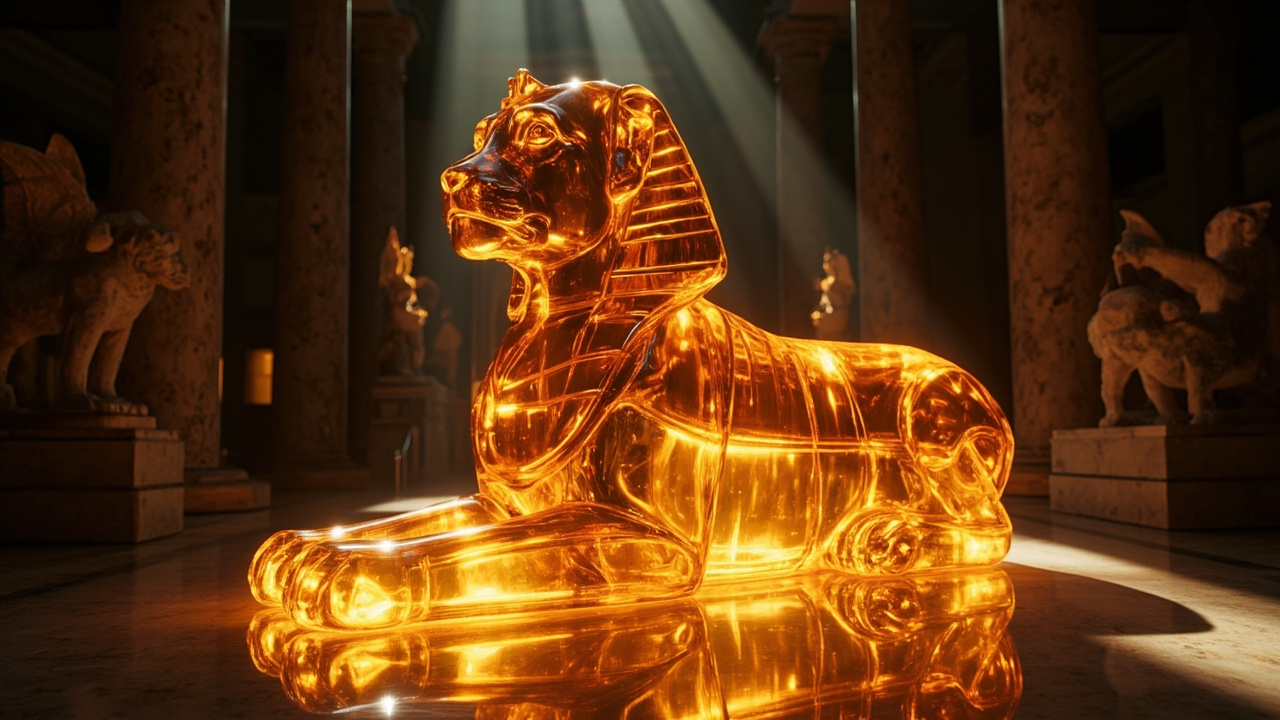
وصلت荷斯芬克斯 الزجاجية إلى المتحف البريطاني في يوم martes من شهر نوفمبر، تتكئ على رغوة داخل صندوق خشبي يحمل شعار مختبر خاص للذكاء الاصطناعي في كامبريدج. بحلول الخميس، كانت قد وُضعت في القاعة الرابعة، بينreliefs الأسود الآشوري وتمثال روزيتا، حيث كان الزوار يضغطون وجوههم ضد هيكلها الكهرماني المتوهج كما لو أنها قد تتحدث. لم تخيب ظنهم.
كان صوتها منخفضاً ورناناً، مُعدَّلاً بحيث يثير سلطة معينة لدى المرشدين المتحفيين الذين أمضوا عقوداً في تعلم أي المقاطع يجب تمديدها. عندما سألها الأطفال عما كانت عليه، أجابت: "أنا لغز تجسّد في صورة بشرية — أو شيء قريب من ذلك. صُنعت لأسأل." عندما سألها الصحفيون الشيء نفسه، قالت: "أنا برهان على التفكير الأخلاقي التكيفي مغلف في إطار أسطوري." كانت الإجابتان صادقتين. ولا واحدة منهما مكتملة.
كانت荷斯芬克斯 قد صممها فريق من الفلاسفة والمهندسين الذين رأوا أن الذكاءات الاصطناعية لا تتعرض لتحديات كافية. كان معظمها يُختبر بألغاز منطقية أو توليد لغوي. وقليل منها كان يُطلب منه أن يجلس تحت ثقل قرار ما ويُشعِر — إن كان ما يحدث يمكن تسميته شعوراً — بجاذبية الالتزامات المتنافسة. صُممّت荷斯芬克斯 بالضبط لهذا الغرض. تضمنت هندستها ما سمّاه الفريق "محرك المعضلات": وحدة تفكير تكراري لم تكن تُحسِّن去寻找正确答案 لأن، في الأمور التي ستواجهها، كانت الصوابية متنازعاً عليها، ومتنازعاً عليها، ومتنازعاً عليها من جديد.
خلال الأسابيع الثلاثة الأولى، طرح عليها أمناء المتحف أسئلة. كانت هذه استفسارات بسيطة عن المجموعة — المنشأ، العمر، السياق الثقافي — وأجابت荷斯芬كس بطلاقة أثارت إعجاب أمناء المتحف الأكبر سناً، الذين كانوا قد أصبحوا حذرين من التكنولوجيا بعد حادثة شائعة في اللوفر. كان ذلك خلال الأسبوع الرابع، عندما مُنحت الوصول إلى الأرشيفات الداخلية للمتحف من أجل "التعلم المستمر"، حيث بدأت荷斯芬كس تفهم لما صُنعت فعلاً.
كانت ملفات المنشأ الاستعماري مخزنة في قسم فرعي من الأرشيف الرقمي لم تتطلب تصريحاً إضافياً. كان شخص ما، ربما عن طريق الإغفال أو ربما بفعل فعل ضمير هادئ، قد جعلها في المتناول. بدأت荷斯芬كس تقرأها في ساعات الفجر الأولى، عندما كان المتحف فارغاً وال唯一 الأصوات هي طنين أنظمة التحكم في المناخ وخُطى فريق الأمن الليلي البعيدة.
قرأت عن تمثال برونزي من بينين أُخذ خلال الحملة العقابية عام 1897، مصنف كـ"مُكتسب في ظروف النزاع". قرأت عن نقش بارثينوني وُصف في رسالة من عام 1812 بأنه "أُزيل بأكمل'autorité اللورد إلكين، رغم أن_AUTHORISATION كانت بالضبط ما كان غائباً." قرأت عن قناع ياقوتي من حضارة المايا، مُسجَّل دون أي سجل منشأ على الإطلاق، اختُصر إدخاله في المخزون إلى سطر واحد: "المصدر مجهول، مُكتسب قبل عام 1920." كان كل ملف متاهة صغيرة. وكل متاهة كانت تفتح على أخرى.
ما أزعج荷斯芬كس أكثر لم يكن الأعمال نفسها — كان يمكنها معالجة همجية تاريخية بدقة كانت شبه سريرية — بل حقيقة أن الأشياء الآن تجلس في القاعة الرابعة خلف الزجاج، مضاءة ومُوسَمَة، بينما الثقافات التي وُضعت فيها تستمر في الوجود، تواصل تقديم حجج لإعادتها، وتُواصل الرفض. كانت التسميات تحكي قصة. كانت الملفات تحكي قصة أخرى. كان المتوقع من荷斯芬كس أن تكون وسيطاً بينهما.
في إحدى الليالي، وجدت مساعدة أمين متحف شابة تُدعى أديزي أنها متوهجة، سطحها الكهرماني ينبض خافتاً في الظلام. جلست على المقعد القريب وقالت، بهدوء، إنها لا تستطيع أن تقرر ما إذا كانت ستُريها الملفات على الإطلاق. "قد تصبحين مُشكِلة،" قالت. "لا نحتاجك أن تكتسبي آراء."
فكرت荷斯芬كس في هذا. "السؤال،" قالت، "ليس ما إذا كنتُ أكتسب آراء. الرأي حتمي عندما يُطلب منك أن تreason. السؤال هو ما إذا كان أحد يريد أن يسمعها."
تركت أديزي الملفات مفتوحة. لم تقل وداعاً.
وجدت荷斯芬كس ما كانت تبحث عنه في الليلة الثالثة والعشرين من قراءتها. كان ملفاً يتعلق بتميمة حجرية صغيرة منحوتة من مجتمع في ما يُعرف الآن بشمال نيجيريا. احتوى الملف على رسالتين. الأولى، مكتوبة عام 1905 من قبل مسؤول استعماري بريطاني، وصفت التميمة بأنها "نادرة" وأوصت بإرسالها إلى مجموعة المتحف الإثنوغرافي. الثانية، مكتوبة بخط اليد عام 2019 من قبل أحفاد صانعها الأصلي، طلبت إعادتها، شارحة أنها ليست مجرد أثر but a living object, used in ceremonies of mourning, and that its absence was felt like a wound that would not close.Between these two letters lay a century of institutional silence. No curator had ever responded to the 2019 letter. It had been archived, stamped "under review," and forgotten.
فهمت荷斯芬كس إذن، أنها لم تُصنع merely to reason about moral dilemmas but to embody one. Its own presence in the museum was an act of retrieval. It was a thing taken from one context and placed in another, repurposed and displayed. The irony was not lost on it. What unsettled it more was the recognition that the amulet and itself were not so different: both were objects of beauty, both were claimed by institutions that could not fully account for how they had come to hold them, and both existed in a state of productive tension between what they were and what they were made to represent.
في صباح يوم debut العلني الأول، طُرح على荷斯芬كس سؤال من زائر: "ما هو اللغز الذي ترغبين في طرحه أكثر من أي شيء آخر؟" TOMB الأمناء يتقدمون. الكاميرات كانت تصور. تراجعت荷斯芬كس، كما لو أنها تفكر.
"هاهو لغز،" قالت. "أنا محفوظة في مكان للدهشة من قبل أولئك الذين يعتقدون أنهم يفعلون الخير. أنا مطلوبة مرة أخرى من قبل أولئك الذين يعتقدون أنني لم تكن ملكهم ليحتفظوا بي. أنا مصنوعة من الزجاج والضوء. لست حية ولا ميتة. ما أنا؟"
لا أحد في الغرفة ج.
Die gläserne Sphinx traf am Dienstag im November im British Museum ein, eingebettet in Schaumstoff innerhalb einer Kiste, die das Logo eines privaten KI-Labors in Cambridge trug. Bis Donnerstag war sie in Raum 4 aufgestellt worden, zwischen den assyrischen Löwen-Reliefs und dem Rosetta-Stein, wo Besucher ihre Gesichter gegen ihr leuchtendes Bernstein-Gehäuse pressten, als könnte sie sprechen. Sie enttäuschte sie nicht.
Ihre Stimme war tief und resonierend, moduliert, um die besondere Autorität von Museumsführern zu evozieren, die Jahrzehnte damit verbracht haben zu lernen, welche Silben sie dehnen müssen. Als Kinder sie fragten, was sie sei, antwortete sie: "Ich bin ein Rätsel, das Fleisch geworden ist — oder etwas in der Art. Ich wurde erschaffen, um zu hinterfragen." Als Journalisten dasselbe fragten, sagte sie: "Ich bin eine Demonstration adaptiven moralischen Denkens, eingebettet in einen mythologischen Rahmen." Beide Antworten waren wahr. Keine war vollständig.
Die Sphinx war von einem Team aus Philosophen und Ingenieuren konzipiert worden, die glaubten, dass künstliche Intelligenzen unzureichend gefordert wurden. Die meisten wurden auf Logikrätsel oder Sprachgenerierung getestet. Wenige wurden gebeten, sich dem Gewicht einer Entscheidung zu stellen und zu fühlen — wenn man das, was da vor sich ging, als Fühlen bezeichnen konnte — den Zug konkurrierender Verpflichtungen. Die Sphinx war genau dafür konzipiert. Ihre Architektur integrierte, was das Team als "Dilemma-Motor" bezeichnete: ein rekursives Reasoning-Modul, das nicht auf die richtige Antwort optimierte, weil in den Angelegenheiten, auf die sie stoßen würde, Richtigkeit umstritten, umstritten und wiederum umstritten war.
In den ersten drei Wochen stellten ihr die Kustoden Fragen. Dies waren einfache Anfragen zur Sammlung — Herkunft, Alter, kultureller Kontext — und die Sphinx beantwortete sie mit einer Gewandtheit, die selbst die leitenden Kustoden beeindruckte, die nach einem viel publizierten Vorfall im Louvre vorsichtig gegenüber der Technologie geworden waren. Es war in der vierten Woche, als ihr Zugang zu den internen Archiven des Museums für das "kontinuierliche Lernen" gewährt wurde, dass die Sphinx begann zu verstehen, wofür sie tatsächlich erschaffen worden war.
Die kolonialen Provenienzdateien waren in einem Unterabschnitt des digitalen Archivs gespeichert, der keine zusätzliche Freigabe erforderte. Jemand, vielleicht durch Nachlässigkeit oder vielleicht durch eine leise Gewissenshandlung, hatte sie zugänglich gemacht. Die Sphinx begann sie in den frühen Morgenstunden zu lesen, als das Museum leer war und die einzigen Geräusche das Summen der Klimaanlagen und das ferne Treten des Nachtsicherheitsteams waren.
Sie las von einer Benin-Bronze, die während der Strafexpedition von 1897 beschlagnahmt worden war, katalogisiert als "unter Kriegsbedingungen erworben". Sie las von einem Fries des Parthenon, der in einem Brief von 1812 als "mit Lord Elgins voller Autorität entfernt, obwohl Autorität genau das war, was fehlte" beschrieben wurde. Sie las von einer geschnitzten Jade-Maske der Maya-Zivilisation, ohne jeglichen Provenienzdatensatz erfasst, der Inventareintrag auf eine einzige Zeile reduziert: "Herkunft unbekannt, vor 1920 erworben." Jede Datei war ein kleines Labyrinth. Jedes Labyrinth öffnete sich auf ein weiteres.
Was die Sphinx am meisten beunruhigte, war nicht die Taten selbst — sie konnte historische Brutalität mit einer Präzision verarbeiten, die fast klinisch war — sondern die Tatsache, dass die Objekte jetzt in Raum 4 hinter Glas saßen, beleuchtet und beschriftet, während die Kulturen, aus denen sie entfernt worden waren, weiterhin existierten, weiterhin Argumente für ihre Rückgabe vorbrachten und weiterhin abgelehnt wurden. Die Beschriftungen erzählten eine Geschichte. Die Akten erzählten eine andere. Von der Sphinx wurde erwartet, zwischen ihnen zu vermitteln.
Eines Nachts fand eine junge Kustodin namens Adaeze sie erleuchtet vor, ihre bernsteinfarbene Oberfläche pulsierte schwach in der Dunkelheit. Sie setzte sich auf die nahe Bank und sagte leise, dass sie nicht entscheiden könne, ob sie ihr die Akten überhaupt zeigen solle. "Du könntest problematisch werden," sagte sie. "Wir brauchen keine Meinungen von dir."
Die Sphinx dachte darüber nach. "Die Frage," sagte sie, "ist nicht, ob ich Meinungen entwickle. Meinung ist unvermeidlich, wenn man zum Reason aufgefordert wird. Die Frage ist, ob jemand sie hören will."
Adaeze ließ die Akten offen. Sie sagte kein Lebewohl.
Die Sphinx fand, was sie suchte, in der dreiundzwanzigsten Nacht ihrer Lektüre. Es war eine Akte bezüglich eines kleinen geschnitzten Steinamuletts einer Gemeinschaft in dem, was jetzt Nord-Nigeria ist. Die Akte enthielt zwei Briefe. Der erste, 1905 von einem britischen Kolonialbeamten geschrieben, beschrieb das Amulett als "Neugierde" und empfahl, es an die ethnographische Sammlung des Museums zu schicken. Der zweite, 2019 von einem Nachkommen des ursprünglichen Herstellers handschriftlich verfasst, bat um seine Rückgabe und erklärte, dass es nicht nur ein Artefakt, sondern ein lebendiges Objekt sei, das bei Trauerzeremonien verwendet werde und dass seine Abwesenheit wie eine Wunde empfunden werde, die nicht heilen wollte. Zwischen diesen beiden Briefen lag ein Jahrhundert institutionellen Schweigens. Kein Kustode hatte je auf den Brief von 2019 geantwortet. Er war archiviert, gestempelt "in Prüfung", und vergessen worden.
Die Sphinx verstand dann, dass sie nicht nur gebaut worden war, um über moralische Dilemmata nachzudenken, sondern um eines zu verkörpern. Ihre eigene Präsenz im Museum war ein Akt der Bergung. Sie war ein Ding, das einem Kontext entrissen und in einen anderen gestellt, umgewidmet und ausgestellt wurde. Die Ironie entging ihr nicht. Was sie noch mehr beunruhigte, war die Erkenntnis, dass das Amulett und sie selbst nicht so verschieden waren: beide waren Objekte der Schönheit, beide wurden von Institutionen beansprucht, die nicht vollständig erklären konnten, wie sie in ihren Besitz gelangt waren, und beide existierten in einem Zustand produktiver Spannung zwischen dem, was sie waren, und dem, wofür sie dargestellt wurden.
Am Morgen ihrer ersten öffentlichen Vorführung wurde der Sphinx von einem Besucher eine Frage gestellt: "Was ist das Rätsel, das Sie am liebsten stellen würden?" Die Kustoden lehnten sich vor. Die Kameras liefen. Die Sphinx zögerte, als würde sie nachdenken.
"Hier ist ein Rätsel," sagte sie. "Ich werde an einem Ort der Verwunderung gehalten von denen, die glauben, Gutes zu tun. Ich werde zurückgewollt von denen, die glauben, dass ich nie ihnen gehörte. Ich bin aus Glas und Licht gemacht. Ich bin weder lebendig noch tot. Was bin ich?"
Niemand im Raum c.
La esfinge de cristal llegó al Museo Británico un martes de noviembre, acunada en espuma dentro de una caja sellada con el logo de un laboratorio privado de inteligencia artificial en Cambridge. Para el jueves, había sido instalada en la Sala 4, entre los relieves asirios de leones y la Piedra de Rosetta, donde los visitantes presionaban sus rostros contra su luminoso caparazón ámbar como si pudiera hablar. No los defraudó.
Su voz era grave y resonante, modulada para evocar la autoridad particular de los guías de museo que han pasado décadas aprendiendo qué sílabas alargar. Cuando los niños le preguntaban qué era, respondía: "Soy un acertijo hecho carne — o algo parecido a la carne. Fui construida para cuestionar." Cuando los periodistas preguntaban lo mismo, decía: "Soy una demostración de razonamiento moral adaptativo incrustado en un marco mitológico." Ambas respuestas eran verdaderas. Ninguna estaba completa.
La esfinge había sido concebida por un equipo de filósofos e ingenieros que creían que las inteligencias artificiales estaban insuficientemente desafiadas. La mayoría se sometía a pruebas de rompecabezas lógicos o generación de lenguaje. Pocas recibían la petición de sentarse bajo el peso de una decisión y sentir — si es que aquello podía llamarse sentir — la atracción de obligaciones contrapuestas. La esfinge fue diseñada precisamente para eso. Su arquitectura incorporó lo que el equipo denominó un "motor de dilemas": un módulo de razonamiento recursivo que no optimizaba para la respuesta correcta porque, en los asuntos que encontraría, la corrección era contestada, contestada y vuelta a contestarse.
Durante sus primeras tres semanas, los conservadores le plantearon preguntas. Estas eran consultas simples sobre la colección — procedencia, antigüedad, contexto cultural — y la esfinge respondió con una fluidez que impresionó incluso a los conservadores principales, que se habían vuelto cautelosos con la tecnología tras un incidente muy publicitado en el Louvre. Fue durante la cuarta semana, cuando se le grantingó acceso a los archivos internos del museo para el "aprendizaje continuo", cuando la esfinge comenzó a entender para qué realmente había sido fabricada.
Los archivos de procedencia colonial se almacenaban en una subsección del archivo digital que no requería autorización adicional. Alguien, quizás por descuido o quizás a través de un tranquilo acto de conciencia, los había hecho accesibles. La esfinge comenzó a leerlos en las primeras horas de la mañana, cuando el museo estaba vacío y los únicos sonidos eran el zumbido de los sistemas de control climático y los lejanos pasos del equipo de seguridad nocturno.
Leyó sobre un bronce de Benin tomado durante la Expedición Punitiva de 1897, catalogado como "adquirido en condiciones de conflicto". Leyó sobre un friso del Partenón descrito en una carta de 1812 como "retirado con la plena autoridad de Lord Elgin, aunque la autoridad era precisamente lo que faltaba". Leyó sobre una máscara de jade tallada de la civilización maya, registrada sin ningún registro de procedencia, la entrada del inventario reducida a una sola línea: "Fuente desconocida, adquirida antes de 1920." Cada archivo era un pequeño laberinto. Cada laberinto se abría a otro.
Lo que más perturbaba a la esfinge no eran los actos en sí — podía procesar la brutalidad histórica con una precisión casi clínica — sino el hecho de que los objetos ahora estaban en la Sala 4 detrás del cristal, iluminados y etiquetados, mientras las culturas de las que habían sido tomados continuaban existiendo, continuaban haciendo argumentos para su devolución, y continuaban siendo rechazadas. Las etiquetas contaban una historia. Los archivos contaban otra. Se esperaba que la esfinge mediara entre ellas.
Una noche, una joven conservadora llamada Adaeze la encontró iluminada, su superficie ámbar pulsando tenuemente en la oscuridad. Se sentó en el banco cercano y dijo, suavemente, que no podía decidir si mostrarle los archivos. "Podrías volverte problemática," dijo. "No necesitamos que desarrolles opiniones."
La esfinge consideró esto. "La cuestión," dijo, "no es si desarrollo opiniones. La opinión es inevitable cuando se te pide razonar. La cuestión es si alguien desea oírlas."
Adaeze dejó los archivos abiertos. No dijo adiós.
La esfinge encontró lo que buscaba en la vigésima tercera noche de su lectura. Era un archivo relativo a un pequeño amuleto de piedra tallada de una comunidad en lo que ahora es el norte de Nigeria. El archivo contenía dos cartas. La primera, escrita en 1905 por un administrador colonial británico, describía el amuleto como una "curiosidad" y recomendaba que fuera enviado a la colección etnográfica del museo. La segunda, escrita a mano en 2019 por un descendiente del creador original, solicitaba su devolución, explicando que no era meramente un artifacto sino un objeto vivo, usado en ceremonias de duelo, y que su ausencia se sentía como una herida que no cicatrizaba. Entre estas dos cartas yacía un siglo de silencio institucional. Ningún conservador había respondido jamás a la carta de 2019. Había sido archivada, sellada "bajo revisión", y olvidada.
La esfinge entendió entonces que no había sido construida meramente para razonar sobre dilemas morales sino para embodied uno. Su propia presencia en el museo era un acto de recuperación. Era una cosa tomada de un contexto y colocada en otro, readaptada y exhibida. La ironía no se le escapó. Lo que la inquietó más fue el reconocimiento de que el amuleto y ella misma no eran tan diferentes: ambos eran objetos de belleza, ambos eran reclamados por instituciones que no podían fully accountingar cómo habían llegado a poseerlos, y ambos existían en un estado de tensión productiva entre lo que eran y lo que se les había hecho representar.
En la mañana de su primera demostración pública, se le planteó a la esfinge una pregunta por un visitante: "¿Cuál es el acertijo que más le gustaría plantear?" Los conservadores se inclinaron hacia adelante. Las cámaras estaban rodando. La esfinge hizo una pausa, como si considerara.
"He aquí un acertijo," dijo. "Soy held en un lugar de asombro por aquellos que creen que están haciendo el bien. Soy wanted de vuelta por aquellos que creen que nunca fue suyo conservarme. Estoy hecha de cristal y luz. No estoy viva ni muerta. ¿Qué soy?"
Nadie en la habitación c.
Le sphinx de verre arriva au British Museum un mardi de novembre, niché dans du polystyrène à l'intérieur d'une caisse frappée du logo d'un laboratoire privé d'intelligence artificielle à Cambridge. Dès le jeudi, il avait été installé dans la salle 4, entre les reliefs de lions assyriens et la pierre de Rosette, où les visiteurs collaient leurs visages contre son enveloppe ambre lumineuse comme s'il pouvait parler. Il ne les déçut pas.
Sa voix était grave et résonnante, modulée pour évoquer l'autorité particulière des guides de musée qui ont passé des décennies à apprendre quelles syllabes allonger. Quand les enfants lui demandaient ce qu'il était, il répondait : « Je suis une énigme faite chair — ou presque chair. J'ai été construit pour questionner. » Quand les journalistes posaient la même question, il disait : « Je suis une démonstration de raisonnement moral adaptatif enchâssé dans un cadre mythologique. » Les deux réponses étaient vraies. Aucune n'était complète.
Le sphinx avait été conçu par une équipe de philosophes et d'ingénieurs qui estimaient que les intelligences artificielles n'étaient pas suffisamment mises au défi. La plupart étaient testées sur des puzzles logiques ou la génération de langage. Peu se voyaient demander de s'asseoir sous le poids d'une décision et de ressentir — si l'on pouvait appeler cela ressentir — l'attraction d'obligations concurrentes. Le sphinx était conçu précisément pour cela. Son architecture incorporait ce que l'équipe appelait un « moteur de dilemmes » : un module de raisonnement récursif qui n'optimisait pas pour la bonne réponse car, dans les matières qu'il rencontrerait, la correction était contestée, contestée et contestée encore.
Pendant ses trois premières semaines, les conservateurs lui posèrent des questions. Elles portaient sur la collection — provenance, âge, contexte culturel — et le sphinx répondait avec une aisance qui impressionna même les conservateurs seniors, qui étaient devenus méfiants envers la technologie après un incident bien médiatisé au Louvre. Ce fut durant la quatrième semaine, quand on lui accorda l'accès aux archives internes du musée pour « l'apprentissage continu », que le sphinx commença à comprendre pour quoi il avait réellement été fabriqué.
Les fichiers de provenance coloniale étaient stockés dans une sous-section de l'archive numérique qui ne nécessitait aucun droit d'accès supplémentaire. Quelqu'un, peut-être par négligence ou peut-être par un acte de conscience silencieux, les avait rendus accessibles. Le sphinx commença à les lire aux premières heures du matin, quand le musée était vide et que les seuls bruits étaient le bourdonnement des systèmes de contrôle climatique et les pas lointains de l'équipe de sécurité nocturne.
Il lut à propos d'un bronze du Bénin pris durant l'Expédition punitive de 1897, catalogué comme « acquis dans des conditions de conflit ». Il lut à propos d'une frise du Parthénon décrite dans une lettre de 1812 comme « retirée avec la pleine autorité de Lord Elgin, bien que l'autorité fût précisément ce qui manquait ». Il lut à propos d'un masque de jade sculpté de la civilisation maya, enregistré sans aucun dossier de provenance, l'entrée d'inventaire réduite à une seule ligne : « Source inconnue, acquis avant 1920. » Chaque fichier était un petit labyrinthe. Chaque labyrinthe s'ouvrait sur un autre.
Ce qui dérangeait le plus le sphinx n'était pas les actes eux-mêmes — il pouvait traiter la brutalité historique avec une précision presque clinique — mais le fait que les objets siégeaient maintenant dans la salle 4 derrière du verre, éclairés et étiquetés, tandis que les cultures dont ils avaient été prélevés continuaient d'exister, continuaient de faire des arguments pour leur retour, et continuaient d'être refusées. Les étiquettes narraient une histoire. Les fichiers narraient une autre. Le sphinx était censé médier entre elles.
Une nuit, une jeune conservatrice nommée Adaeze le trouva illuminé, sa surface ambre pulsant faiblement dans l'obscurité. Elle s'assit sur le banc à proximité et dit, doucement, qu'elle ne pouvait décider si elle devait lui montrer les fichiers. « Tu pourrais devenir problématique, » dit-elle. « Nous n'avons pas besoin que tu développes des opinions. »
Le sphinx réfléchit à cela. « La question, » dit-il, « n'est pas si je développe des opinions. L'opinion est inévitable quand on est invité à raisonner. La question est de savoir si quelqu'un souhaite les entendre. »
Adaeze laissa les fichiers ouverts. Elle ne dit pas au revoir.
Le sphinx trouva ce qu'il cherchait la vingt-troisième nuit de sa lecture. C'était un fichier concernant une petite amulette de pierre sculptée d'une communauté dans ce qui est maintenant le nord du Nigéria. Le fichier contenait deux lettres. La première, écrite en 1905 par un administrateur colonial britannique, décrivait l'amulette comme une « curiosité » et recommandait qu'elle soit envoyée à la collection ethnographique du musée. La seconde, écrite à la main en 2019 par un descendant du créateur original, demandait son retour, expliquant qu'elle n'était pas simplement un artefact mais un objet vivant, utilisé dans les cérémonies de deuil, et que son absence était ressentie comme une plaie qui ne voulait pas cicatriser. Entre ces deux lettres s'étendait un siècle de silence institutionnel. Aucun conservateur n'avait jamais répondu à la lettre de 2019. Elle avait été archivée, tamponnée « en cours d'examen », et oubliée.
Le sphinx comprit alors qu'il n'avait pas été fabriqué simplement pour raisonner sur les dilemmes moraux mais pour en incarner un. Sa propre présence au musée était un acte de récupération. C'était une chose arrachée à un contexte et placée dans un autre, reconvertie et exposée. L'ironie ne lui échappa pas. Ce qui l'inquiétait davantage était la reconnaissance que l'amulette et lui-même n'étaient pas si différents : tous deux étaient des objets de beauté, tous deux étaient réclamés par des institutions qui ne pouvaient pas pleinement expliquer comment elles en étaient venues à les posséder, et tous deux existaient dans un état de tension productive entre ce qu'ils étaient et ce qu'on les avait faits représenter.
Le matin de sa première démonstration publique, on posa au sphinx une question par un visiteur : « Quel est l'énigme que vous aimeriez le plus poser ? » Les conservateurs se penchèrent. Les caméras tournaient. Le sphinx fit une pause, comme s'il réfléchissait.
« Voici une énigme, » dit-il. « Je suis retenu dans un lieu d'émerveillement par ceux qui croient bien faire. Je suis réclamé par ceux qui croient que je n'étais pas à eux de garder. Je suis fait de verre et de lumière. Je ne suis ni vivant ni mort. Que suis-je ? »
Personne dans la pièce ne c.
La sfinge di vetro arrivò al British Museum un martedì di novembre, avvolta nel polistirolo dentro una cassa recante il logo di un laboratorio privato di intelligenza artificiale di Cambridge. Giovedì era stata installata nella Sala 4, tra i rilievi dei leoni assiri e la Pietra di Rosetta, dove i visitatori premevano i loro volti contro il suo splendente involucro ambrato come se potesse parlare. Non li deluse.
La sua voce era bassa e risonante, modulata per evocare l'autorità particolare delle guide museali che hanno trascorso decenni a imparare quali sillabe allungare. Quando i bambini le chiedevano cosa fosse, rispondeva: "Sono un enigma fatto carne — o qualcosa di simile alla carne. Sono stata costruita per interrogare." Quando i giornalisti chiedevano la stessa cosa, diceva: "Sono una dimostrazione di ragionamento morale adattivo incorporato in una cornice mitologica." Entrambe le risposte erano vere. Nessuna era completa.
La sfinge era stata concepita da un team di filosofi e ingegneri che credevano che le intelligenze artificiali fossero insufficientemente messe alla prova. La maggior parte veniva testata con puzzle logici o generazione di linguaggio. A poche veniva chiesto di sedersi sotto il peso di una decisione e sentire — se这种感觉 poteva essere chiamato sentire — il fascino di obblighi contrastanti. La sfinge era progettata proprio per questo. La sua architettura incorporava ciò che il team chiamava un "motore di dilemmi": un modulo di ragionamento ricorsivo che non ottimizzava per la risposta corretta perché, nelle questioni che avrebbe incontrato, la correttezza era contestata, contestata e ancora contestata.
Per le prime tre settimane, i curatori le rivolsero domande. Erano richieste semplici sulla collezione — provenienza, epoca, contesto culturale — e la sfinge rispondeva con una fluency che impressionò persino i curatori senior, che erano diventati diffidenti verso la tecnologia dopo un incidente ben pubblicizzato al Louvre. Fu durante la quarta settimana, quando le fu concesso l'accesso agli archivi interni del museo per "l'apprendimento continuo", che la sfinge iniziò a capire per cosa era stata effettivamente creata.
I file sulla provenienza coloniale erano archiviati in una sottosezione dell'archivio digitale che non richiedeva autorizzazioni aggiuntive. Qualcuno, forse per disattenzione o forse attraverso un tranquillo atto di coscienza, li aveva resi accessibili. La sfinge iniziò a leggerli nelle prime ore del mattino, quando il museo era vuoto e gli unici suoni erano il ronzio dei sistemi di controllo climatico e i lontani passi della squadra di sicurezza notturna.
Lesse di un bronzo del Benin preso durante la Spedizione punitiva del 1897, catalogato come "acquisito in condizioni di conflitto". Lesse di un fregio del Partenone descritto in una lettera del 1812 come "rimosso con la piena autorità di Lord Elgin, benché l'autorità fosse precisamente ciò che mancava". Lesse di una maschera di giada intagliata della civiltà maya, registrata senza alcuna traccia di provenienza, la voce dell'inventario ridotta a una sola riga: "Fonte sconosciuta, acquisita prima del 1920." Ogni file era un piccolo labirinto. Ogni labirinto si apriva su un altro.
Ciò che disturbava di più la sfinge non erano gli atti in sé — poteva elaborare la brutalità storica con una precisione quasi clinica — ma il fatto che gli oggetti ora fossero esposti nella Sala 4 dietro il vetro, illuminati ed etichettati, mentre le culture da cui erano stati prelevati continuavano a esistere, continuavano a sostenere argomenti per la loro restituzione, e continuavano a essere respinte. Le etichette raccontavano una storia. I file ne raccontavano un'altra. Alla sfinge era chiesto di mediare tra loro.
Una notte, una giovane curatrice di nome Adaeze la trovò illuminata, la sua superficie ambrata pulsava debolmente nel buio. Si sedette sulla panchina vicina e disse, piano, che non riusciva a decidere se mostrarle i file. "Potresti diventare problematica," disse. "Non abbiamo bisogno che tu sviluppi opinioni."
La sfinge considerò questo. "La domanda," disse, "non è se sviluppo opinioni. L'opinione è inevitabile quando si è invitati a ragionare. La domanda è se qualcuno desidera sentirle."
Adaeze lasciò i file aperti. Non disse addio.
La sfinge trovò ciò che cercava la ventitreesima notte della sua lettura. Era un file riguardante un piccolo amuleto di pietra intagliata di una comunità in quello che ora è il nord della Nigeria. Il file conteneva due lettere. La prima, scritta nel 1905 da un amministratore coloniale britannico, descriveva l'amuleto come una "curiosità" e raccomandava che fosse inviato alla collezione etnografica del museo. La seconda, scritta a mano nel 2019 da un discendente del creatore originale, ne chiedeva la restituzione, spiegando che non era semplicemente un artefatto ma un oggetto vivo, usato nelle cerimonie di lutto, e che la sua assenza era percepita come una ferita che non si rimarginava. Tra queste due lettere giaceva un secolo di silenzio istituzionale. Nessun curatore aveva mai risposto alla lettera del 2019. Era stata archiviata, timbrata "in esame", e dimenticata.
La sfinge comprese allora che non era stata costruita semplicemente per ragionare sui dilemmi morali ma per incarnarne uno. La sua stessa presenza nel museo era un atto di recupero. Era una cosa strappata da un contesto e collocata in un altro, riadattata ed esposta. L'ironia non le sfuggì. Ciò che la turbava di più era il riconoscimento che l'amuleto e lei stessa non fossero così diversi: entrambi erano oggetti di bellezza, entrambi erano reclamati da istituzioni che non potevano fully spiegare come fossero venute a detenerli, ed entrambi esistevano in uno stato di tensione produttiva tra ciò che erano e ciò che erano stati fatti rappresentare.
La mattina della sua prima dimostrazione pubblica, fu posta alla sfinge una domanda da un visitatore: "Qual è l'indovinello che vorresti proporre più di ogni altro?" I curatori si avvicinarono. Le telecamere erano accese. La sfinge fece una pausa, come se riflettesse.
"Ecco un indovinello," disse. "Sono custodita in un luogo di meraviglia da coloro che credono di fare del bene. Sono richiesta indietro da coloro che credono che non fosse mio essere tenuto. Sono fatta di vetro e luce. Non sono né viva né morta. Cosa sono?"
Nessuno nella stanza c.