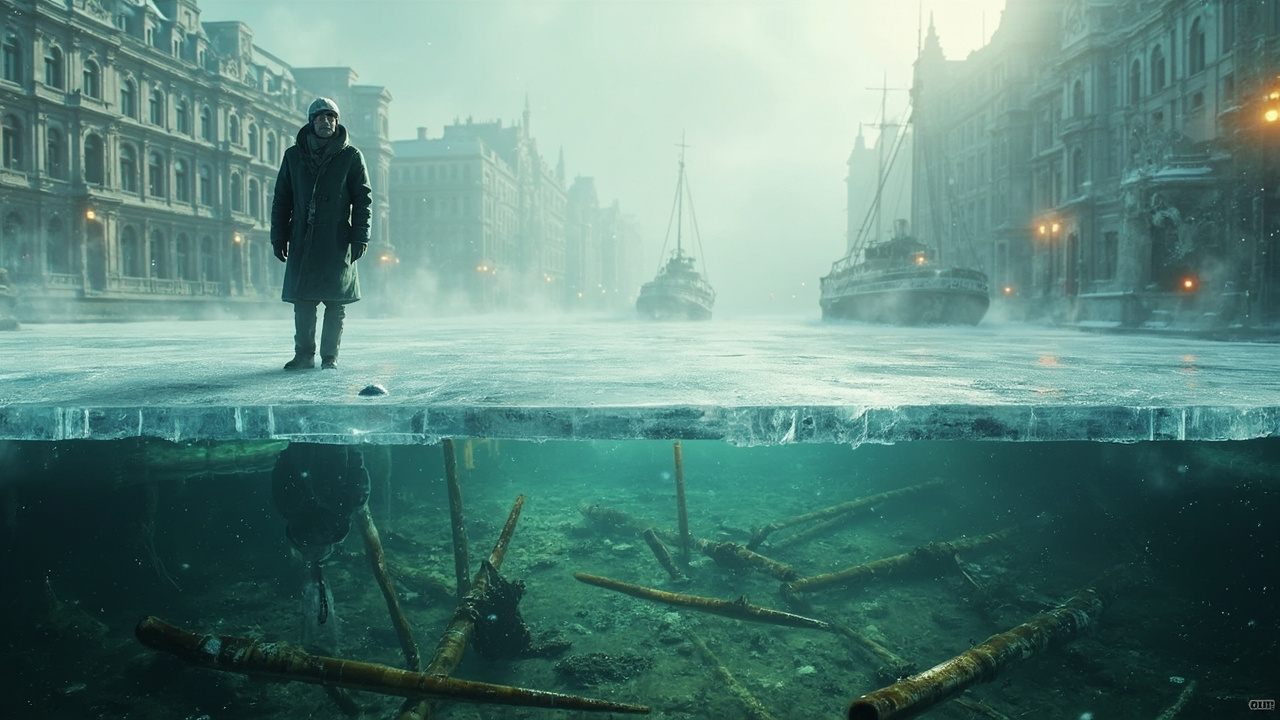
العنوان: نهر الزجاج
النص:
جاء الصقيع دون سابق إنذار في الثالث من فبراير، وهي قسوة气象ية فريدة حوّلت نهر التايمز إلى شيء غير طبيعي تمامًا. مع الفجر، استيقظ سكان لندن ليجدوا نهرهم العريق مختومًا تحت طبقة من الجليد الشفاف المتناهية الكمال لدرجة بدت أقل ظاهرة طبيعية منها فعل حفظ متعمد—كأن المدينة قد أُحيطت بالكهرمان بين عشية وضحاها.
وقفت الدكتورة إلينور مارش على ممشى النهر الجنوبي، متجمدة أنفاسها في الهواء القارس، تتأمل ما ستسميه الصحف لاحقًا "التايمز الزجاجي". كانت قد درست النظم البيئية للنهر لعقدين من الزمن، وأصدرت منشورات واسعة عن تعافي الممرات المائية الحضرية، لكنها لم تشهد قط شيئًا كهذا. امتلك الجليد صفاءً مرعبًا، كاشفًا عن قاع النهر على بعد ستة أمتار تقريبًا بحدّة تكاد تتهم. كل عائق مغمور، كل ركيزة قديمة، كل ظل شبحي لسفينة تحللت منذ زمن طويل—كلها ظهرت مرئية كما لو حُل محل الماء بأكبر غرفة عرض متحف في العالم.
كان هذا الصفاء هو الذي جذبها إلى العينات. عندما أتيحت فرصة جمع أنوية جليدية لبرنامج المراقبة الشتوية التابع لجهاز البيئة، تطوعت إلينور دون تردد. كان ثمة شيء في ذلك الشفافية يشير إلى أشياء مخفية، أسرار تنتظر أن تُقرأ.
جاءت الأنوية سليمة تمامًا، كل منها عمودًا عموديًا من التايمز المتجمد، وأنفقت إلينور ثلاثة أيام في تحليلها في مختبرها بكلية إمبريال. روت الطبقات الخارجية قصصًا مألوفة: علامات التلوث المعاصرة، والجسيمات البلاستيكية الدقيقة، والتوقيعات الكيميائية لمياه الأمطار الحضرية الحديثة. كانت هذه ملوثات قضت حياتها المهنية في تتبعها، وهي قائمة الاهتمام البيئي المألوفة.
لكن على عمق اثني عشر سنتيمترًا، حدث خطأ ما في أدواتها. كان التحليل الطيفي يُعيد قراءات مستحيلة. كانت المستعمرات البكتيرية التي استنبتتها من تلك الطبقات الوسطى تتصرف بطرق لم تُجهّز بروتوكولاتها لها—تستقلب مركبات كان ينبغي أن تكون مستحيلة، تتكاثر في محاليل خُلت من كل المغذيات التي كان يجب أن تحتاجها.
كررت الاختبارات. أعادت معايرة المعدات. دعت زميلها جيمس تشن من قسم علم الأحياء الدقيقة ليُشاهد، ظنًا منها ربما أنها أخطأت خطأً أوليًا. فحصا معًا المزارع تحت المجهر الإلكتروني، وما وجدا هناك أوقف نفس إلينور تمامًا.
لم تكن الكائنات حديثة. بنيتها الخلوية، تكوين إنزيماتها، بنيتها الوراثية نفسها تنتمي إلى عصر مختلف—وقت سبقت فيه الكيمياء الصناعية الحديثة توحيد مخرجاتها. عندما أجرت إلينور تسلسل حمضها النووي وشغّلت النتائج عبر قواعد البيانات التاريخية، جاء التطابق بنسبة يقين 94.7%: كانت هذه كائنات دقيقة أصيلة في التايمز من ثمانينيات القرن التاسع عشر، سنوات ذروة التفريغ الصناعي، عندما كان النهر يجري ثخينًا بقطران الفحم، وفضلات الأمونيا، ومخلفات ألف مصنع غير منظم.
"لقد كانت معلقة،" قالت إلينور، وصوتها بدا حتى لنفسها غريبًا، منفصلاً. "طوال هذا الوقت، معلقة في الجليد. في انتظار."
انفتحت الدلالات ببطء، كزهرة داكنة. لأكثر من قرن، كان التايمز يلتئم ببطء، أو هكذا أشارت الأدبيات البيئية. أدى التنظيف الكبير في ستينيات وسبعينيات القرن العشرين إلى تحويل النهر من مجرى صرف مفتوح إلى نظام بيئي مزدهر. عاد السلمون. شوهدت الفقمات. كانت قصة التعافي واحدة من قصص النجاح البيئي العظيمة في أواخر القرن العشرين.
لكن عينات إلينور حكت قصة مختلفة. لم تنقرض تلك الكائنات القديمة. بل تراجعت، تراجعت إلى الجليد نفسه، إلى الفراغات المتجمدة لفصل الشتاء، منتظرة ظروفًا تسمح لها بالعودة. والآن، مع تحولات أنماط المناخ وصيف شتاءات لندن أكثر دفئًا وتقلبًا في آن واحد، وصلت تلك الظروف. لم يكن الصقيع الغريب مجرد مشهد—بل كان بابًا يُفتح.
في الأسابيع التالية، جمعت إلينور فريقًا. استخرجوا الأنوية مرة بعد مرة، من وستمنستر إلى غرينيتش، وفي كل مكان استمر النمط. كانت الطبقات المتجمدة العميقة مخطوطة كهنائية لتاريخ النهر الصناعي: مستعمرات بكتيريا متحللة للفينول تطورت خلال ازدهار مصانع المواد الكيميائية في تسعينيات القرن التاسع عشر؛ مجتمعات كائنات مثبتة للكبريت كانت قد ت flourished في الظروف اللاهوائية لعصر الرائحة الكريهة العظيمة؛ عاثيات فيروسية تكافأت مع كل ذلك، نظام بيئي خفي استمر دون علم الإنسان لأكثر من مئة عام.
كانت الدلالات التنظيمية عميقة. صُممت معايير البيئة الحالية مع وضع التلوث الحديث في الاعتبار—المركبات الاصطناعية، بقايا الأدوية، المواد الجديدة للعصر البشري. لكن التايمز لا يزال يحمل داخله الإرث الكيميائي للقرن التاسع عشر، كائنات تطورت لمعالجة مواد لم تعد تظهر في أي إطار مراقبة للتلوث لأن أحدًا لم يتوقع وجودها.
عرضت إلينور نتائجها على لجنة عاجلة عُقدت في وزارة البيئة والغذاء والشؤون الريفية. تحدثت لمدة أربعين دقيقة، تراقب وجوه المسؤولين تتحول من الشك المهذب إلى الذعر الواضح. عندما انتهت، امتد الصمت طويلاً بما يكفي ليصبح بيانًا بحد ذاته.
العناوين التي تلت كانت مذهلة كما هو متوقع، لكن تحت المبالغة ثار شيء حقيقي. أجبر الاكتشاف على مواجهة حدود الذاكرة البيئية—مدى قلة ما يُعرف فعلاً عنPersistence طويل الأمد للتلوث الصناعي، كيف ربما كانت قصة التعافي الإيكولوجي أنيقة أكثر من اللازم، واثقة أكثر من اللازم. صُرفت بروتوكولات مراقبة جديدة. أُخرجت سجلات التفريغ التاريخية من الحقبة الفيكتورية وعُبرت معًا. مُولت مبادرة بحثية تمتد عبر اثنتي عشرة جامعة خلال العام.
أما إلينور، فقد عادت غالبًا إلى النهر الجنوبي في الأشهر التي تلت.
Titel: Der Glasfluss
Der Frost kam ohne Vorwarnung am dritten Februar, eine einzigartige meteorologische Grausamkeit, die die Themse in etwas völlig anderes verwandelte. Bei Morgengrauen erwachten die Londoner und fanden ihren uralten Fluss unter einer Decke aus durchscheinendem Eis versiegelt, so vollkommen, dass es weniger als natürliches Phänomen denn als bewusster Konservierungsakt erschien — als wäre die Stadt über Nacht in Bernstein eingehüllt worden.
Dr. Eleanor Marsh stand auf dem South-Bank-Gehweg, ihr Atem kristallisierte in der bitteren Luft, und betrachtete das, was die Zeitungen später das Gläserne Themse nennen würden. Sie hatte zwei Jahrzehnte lang Flussökosysteme studiert, ausführlich über die Wiederherstellung städtischer Wasserwege veröffentlicht, aber sie hatte noch nie etwas ganz so gesehen. Das Eis besaß eine unheimliche Klarheit, die den Flussgrund etwa sechs Meter tiefer mit fast anklagender Schärfe enthüllte. Jedes untergetauchte Hindernis, jeder alte Pfahl, jeder geisterhafte Schatten eines längst verrotteten Schiffes — alles sichtbar gemacht, als wäre das Wasser durch die größte Museumsvitrine der Welt ersetzt worden.
Es war diese Klarheit, die sie zu den Proben zog. Als sich die Gelegenheit ergab, Eisbohrkerne für das Winterüberwachungsprogramm der Umweltbehörde zu sammeln, meldete sich Eleanor ohne zu zögern freiwillig. Es war etwas an dieser Transparenz, das auf verborgene Dinge hindeutete, Geheimnisse, die darauf warteten, gelesen zu werden.
Die Kerne kamen wunderschön intakt herauf, jeder ein senkrechter Strang gefrorener Themse, und Eleanor verbrachte drei Tage mit ihrer Analyse in ihrem Labor am Imperial College. Die äußeren Schichten erzählten vertraute Geschichten: zeitgenössische Verschmutzungsmarker, Mikroplastik, chemische Signaturen modernen städtischen Abflusses. Dies waren die Schadstoffe, denen sie ihre Karriere gewidmet hatte, die vertraute Litanei der Umweltbedenken.
Aber in zwölf Zentimetern Tiefe stimmte etwas mit ihren Instrumenten nicht. Die Spektralanalyse lieferte immer wieder unmögliche Messwerte. Die Bakterienkolonien, die sie aus diesen mittleren Schichten kultivierte, verhielten sich auf Weise, auf die ihre Protokolle sie nicht vorbereitet hatten — sie metabolisierten Verbindungen, die unmöglich hätten sein sollen, vermehrten sich in Lösungen, die aller Nährstoffe beraubt waren, die sie eigentlich bräuchten.
Sie wiederholte die Tests. Sie kalibrierte die Ausrüstung neu. Sie lud ihren Kollegen James Chen aus der Mikrobiologie ein, zuzusehen, in der Annahme, sie hätte vielleicht einen elementaren Fehler gemacht. Gemeinsam untersuchten sie die Kulturen unter Elektronenmikroskopie, und was sie dort fanden, entzog Eleanor völlig den Atem.
Die Organismen waren nicht zeitgenössisch. Ihre Zellstruktur, ihre Enzymkonfigurationen, ihre gesamte genetische Architektur gehörten einer anderen Ära an — einer Zeit, bevor die moderne Industriechemie ihre Ausgaben standardisiert hatte. Als Eleanor ihre DNA sequenzierte und die Ergebnisse durch historische Datenbanken laufen ließ, kam die Übereinstimmung mit 94,7 Prozent Sicherheit zurück: dies waren Mikroorganismen, die ursprünglich in der Themse der 1880er Jahre beheimatet waren, den Jahren der Spitzen-Industrieentleerung, als der Fluss dick von Steinkohleteer, Ammoniakabfällen und dem Abfluss von tausend unregulierten Fabriken floss.
„Sie waren aufgeschwebt", sagte Eleanor, und selbst in ihren eigenen Ohren klang ihre Stimme fremd, losgelöst. „Die ganze Zeit, aufgeschwebt im Eis. Wartend."
Die Implikationen entfalteten sich langsam, wie eine dunkle Blume. Seit über einem Jahrhundert hatte sich die Themse langsam selbst geheilt, oder zumindest legte das die Umweltliteratur nahe. Die große Säuberung der 1960er und 70er Jahre hatte den Fluss von einer offenen Kloake in ein gedeihendes Ökosystem verwandelt. Lachse waren zurückgekehrt. Robben waren gesichtet worden. Die Erzählung der Erholung war eine der großen Umwelterfolgsgeschichten des späten zwanzigsten Jahrhunderts.
Aber Eleanors Proben erzählten eine andere Geschichte. Diese alten Organismen waren nicht ausgestorben. Sie hatten sich zurückgezogen, zurückgezogen ins Eis selbst, in die gefrorenen Zwischenräume des Winters, und warteten auf Bedingungen, die ihre Rückkehr ermöglichen würden. Und jetzt, da sich die Klimamuster verschoben und Londons Winter gleichzeitig milder und unberechenbarer wurden, waren diese Bedingungen eingetreten. Der freakige Frost war nicht nur ein Spektakel — es war eine sich öffnende Tür.
In den folgenden Wochen baute Eleanor ein Team auf. Sie bohrten immer wieder, von Westminster nach Greenwich, und überall hielt das Muster. Die tiefgefrorenen Schichten waren ein Palimpsest der industriellen Geschichte des Flusses: Kolonien von Phenol-abbauenden Bakterien, die sich während des Chemiewerksbooms der 1890er Jahre entwickelt hatten; Gemeinschaften von Schwefel-fixierenden Organismen, die in den anoxischen Bedingungen der Ära des Großen Gestanks gediehen waren; virale Phagen, die mit allem co-evolviert waren, ein verborgenes Ökosystem, das über hundert Jahre lang unter menschlicher Wahrnehmung fortbestanden hatte.
Die regulatorischen Implikationen waren tiefgreifend. Die aktuellen Umweltstandards waren mit moderner Kontamination konzipiert — den synthetischen Verbindungen, pharmazeutischen Rückständen, neuartigen Materialien des Anthropozäns. Aber die Themse trug noch immer das chemische Erbe des neunzehnten Jahrhunderts in sich, Organismen, die sich entwickelt hatten, um Substanzen zu verarbeiten, die in keinem Überwachungsrahmen für Verschmutzung mehr auftauchten, weil niemand erwartet hatte, dass sie existieren.
Eleanor präsentierte ihre Ergebnisse einem hastig einberufenen Gremium im Ministerium für Umwelt, Ernährung und ländliche Angelegenheiten. Sie sprach vierzig Minuten lang und beobachtete, wie sich die Gesichter der Beamten von höflicher Skepsis zu unverhohlener Alarmierung wandelten. Als sie fertig war, dehnte sich die Stille lange genug aus, um zu ihrer eigenen Aussage zu werden.
Die Schlagzeilen, die folgten, waren vorhersehbar sensationell, aber unter der Übertreibung regte sich etwas Echtes. Die Entdeckung erzwang eine Auseinandersetzung mit den Grenzen der Umwelterinnerung — wie wenig tatsächlich über die langfristige Persistenz industrieller Kontamination bekannt war, wie die Erzählung der ökologischen Erholung vielleicht zu ordentlich, zu selbstbewusst gewesen war. Neue Überwachungsprotokolle wurden ausgearbeitet. Historische Ablassungsunterlagen aus der viktorianischen Ära wurden ausgegraben und abgeglichen. Eine Forschungskooperation, die sich über zwölf Universitäten erstreckte, wurde noch im selben Jahr finanziert.
Was Eleanor betraf, kehrte sie in den folgenden Monaten oft an die South Bank zurück.
Título: El Río de Cristal
La helada llegó sin previo aviso el tres de febrero, una crueldad meteorológica singular que transformó el Támesis en algo completamente sobrenatural. Al amanecer, los londinenses se despertaron para encontrar su antiguo río sellado bajo una capa de hielo translúcido tan perfecta que parecía menos un fenómeno natural que un acto deliberado de conservación — como si la ciudad hubiera quedado envuelta en ámbar durante la noche.
La Dra. Eleanor Marsh estaba de pie en el paseo del South Bank, su aliento cristalizándose en el aire amargo, contemplando lo que los periódicos后来的 llamarían el Támesis de Cristal. Había estudiado los ecosistemas fluviales durante dos décadas, había publicado extensamente sobre la recuperación de las vías navegables urbanas, pero nunca había presenciado nada parecido. El hielo poseía una claridad insólita, revelando el lecho del río a unos seis metros más abajo con una nitidez casi acusadora. Cada obstrucción sumergida, cada pilote antiguo, cada sombra fantasmal de una embarcación hace mucho descompuesta — todo renderizado visible como si el agua hubiera sido reemplazada por la vitrina de museo más grande del mundo.
Fue esa claridad la que la atrajo hacia las muestras. Cuando surgió la oportunidad de recoger núcleos de hielo para el programa de monitoreo invernal de la Agencia de Medio Ambiente, Eleanor se ofreció como voluntaria sin dudarlo. Había algo en esa transparencia que sugería cosas ocultas, secretos esperando ser leídos.
Los núcleos subieron bellamente intactos, cada uno una columna vertical de Támesis congelado, y Eleanor pasó tres días analizándolos en su laboratorio en el Imperial. Las capas externas contaban historias familiares: marcadores de contaminación contemporánea, microplásticos, las firmas químicas de la escorrentía urbana moderna. Estos eran los contaminantes a los que había dedicado su carrera, la letanía familiar de preocupaciones ambientales.
Pero a doce centímetros de profundidad, algo iba mal con sus instrumentos. El análisis espectral seguía devolviendo lecturas imposibles. Las colonias bacterianas que cultivó a partir de esas capas intermedias se comportaban de maneras para las que sus protocolos no la habían preparado — metabolizando compuestos que deberían haber sido imposibles, multiplicándose en soluciones despojadas de todo nutriente que deberían requerir.
Repitió las pruebas. Recalibró el equipo. Invitó a su colega James Chen del departamento de microbiología a observar, pensando quizás que había cometido un error elemental. Juntos examinaron los cultivos bajo microscopía electrónica, y lo que encontraron allí detuvo completamente el aliento de Eleanor.
Los organismos no eran contemporáneos. Su estructura celular, sus configuraciones enzimáticas, su propia arquitectura genética pertenecían a una era diferente — un tiempo antes de que la química industrial moderna hubiera estandarizado sus productos. Cuando Eleanor secuenció su ADN y ejecutó los resultados a través de bases de datos históricas, la coincidencia regresó con un 94,7 por ciento de certeza: estos eran microorganismos nativos del Támesis de la década de 1880, los años de máxima descarga industrial, cuando el río corría espeso con breas de carbón, desechos de amoníaco y el effluente de mil fábricas no reguladas.
"Han estado suspendidos", dijo Eleanor, y incluso para sus propios oídos su voz sonaba extraña, detachada. "Todo este tiempo, suspendidos en el hielo. Esperando."
Las implicaciones se desplegaron lentamente, como una flor oscura. Durante más de un siglo, el Támesis se había estado curando lentamente, o eso sugería la literatura ambiental. La gran limpieza de las décadas de 1960 y 70 había transformado el río de un alcantarillado abierto a un ecosistema próspero. Los salmones habían vuelto. Se habían avistado focas. La narrativa de recuperación era una de las grandes historias de éxito ambiental de finales del siglo XX.
Pero las muestras de Eleanor contaban una historia diferente. Estos organismos antiguos no se habían extinguido. Se habían retirado, retirado al hielo mismo, a los intersticios congelados del invierno, esperando condiciones que les permitirían regresar. Y ahora, con los patrones climáticos cambiando y los inviernos de Londres volviéndose simultáneamente más suaves y más erráticos, esas condiciones habían llegado. La helada anómala no era meramente un espectáculo — era una puerta abriéndose.
Durante las semanas siguientes, Eleanor reunió un equipo. Perforaron una y otra vez, desde Westminster hasta Greenwich, y en todas partes el patrón se mantuvo. Los estratos profundamente congelados eran un palimpsesto de la historia industrial del río: colonias de bacterias degradadoras de fenol evolucionadas durante el boom de las fábricas químicas de la década de 1890; comunidades de organismos fijadores de azufre que habían prosperado en las condiciones anóxicas de la era del Gran Hedor; fagos virales que habían coevolucionado con todo esto, un ecosistema oculto que había persistido bajo la mirada humana durante más de cien años.
Las implicaciones regulatorias fueron profundas. Los estándares ambientales actuales estaban diseñados pensando en la contaminación moderna — los compuestos sintéticos, los residuos farmacéuticos, los materiales novedosos del Antropoceno. Pero el Támesis aún llevaba dentro de sí la herencia química del siglo diecinueve, organismos evolucionados para procesar sustancias que ya no aparecían en ningún marco de monitoreo de contaminación porque nadie esperaba que existieran.
Eleanor presentó sus hallazgos a un panel convocado urgentemente en el Departamento de Medio Ambiente, Alimentación y Asuntos Rurales. Habló durante cuarenta minutos, observando cómo los rostros de los funcionarios pasaban del escepticismo cortés a la alarma sin disimulo. Cuando terminó, el silencio se extendió lo suficiente como para convertirse en su propia declaración.
Los titulares que siguieron fueron predeciblemente sensacionalistas, pero bajo la hipérbole algo genuino se agitaba. El descubrimiento forzó una liquidación con los límites de la memoria ambiental — cuánto poco se conocía realmente sobre la persistencia a largo plazo de la contaminación industrial, cómo la narrativa de recuperación ecológica quizás había sido demasiado ordenada, demasiado segura. Se redactaron nuevos protocolos de monitoreo. Los registros históricos de vertidos de la era victoriana fueron desenterrados y cruzados. Una iniciativa de investigación que abarcaba doce universidades fue financiada dentro del año.
En cuanto a Eleanor, regresó a menudo al South Bank en los meses que siguieron.
Titre : La Rivière de Verre
Le gel est venu sans avertissement le trois février, une cruauté météorologique singulière qui a transformé la Tamise en quelque chose d'entièrement surnaturel. À l'aube, les Londonniens se sont réveillés pour découvrir leur rivière ancestrale scellée sous une couche de glace translucide si parfaite qu'elle semblait moins un phénomène naturel qu'un acte délibéré de conservation — comme si la ville avait été enchâssée dans l'ambre du jour au lendemain.
Le Dr Eleanor Marsh se tenait sur la promenade de la rive sud, sa respiration se cristallisant dans l'air mordant, contemplant ce que les journaux appelleraient plus tard la Tamise de Verre. Elle avait étudié les écosystèmes fluviaux pendant deux décennies, avait publié extensivement sur la récupération des voies navigables urbaines, mais elle n'avait jamais rien vu de tel. La glace possédait une clarté surnaturelle, révélant le lit de la rivière quelque six mètres plus bas avec une netteté presque accusatrice. Chaque obstruction immergée, chaque vieux pieu, chaque ombre spectrale d'un navire depuis longtemps décomposé — tout rendu visible comme si l'eau avait été remplacée par la plus grande vitrine de musée du monde.
C'était cette clarté qui l'attirait vers les échantillons. Quand l'occasion se présenta de collecter des carottes de glace pour le programme de surveillance hivernale de l'Agence de l'environnement, Eleanor se porta volontaire sans hésitation. Il y avait quelque chose dans cette transparence qui suggérait des choses cachées, des secrets attendant d'être lus.
Les carottes sortirent magnifiquement intactes, chacune une colonne verticale de Tamise gelée, et Eleanor passa trois jours à les analyser dans son laboratoire à l'Imperial. Les couches extérieures racontaient des histoires familières : marqueurs de pollution contemporains, microplastiques, signatures chimiques du ruissellement urbain moderne. C'étaient les contaminants qu'elle avait passé sa carrière à suivre, le litanie familière des préoccupations environnementales.
Mais à douze centimètres de profondeur, quelque chose n'allait pas avec ses instruments. L'analyse spectrale ne cessait de renvoyer des lectures impossibles. Les colonies bactériennes qu'elle cultivait à partir de ces strates médianes se comportaient de façons auxquelles ses protocoles ne l'avaient pas préparée — métabolisant des composés qui auraient dû être impossibles, se multipliant dans des solutions privées de tout nutriment qu'elles auraient dû nécessiter.
Elle répéta les tests. Elle recalibra l'équipement. Elle invita son collègue James Chen du département de microbiologie à observer, pensant peut-être qu'elle avait fait une erreur élémentaire. Ensemble, ils examinèrent les cultures sous microscopie électronique, et ce qu'ils trouvèrent là arrêta complètement le souffle d'Eleanor.
Les organismes n'étaient pas contemporains. Leur structure cellulaire, leurs configurations enzymatiques, leur architecture génétique même appartenaient à une autre époque — une époque avant que la chimie industrielle moderne n'ait standardisé ses productions. Quand Eleanor séquença leur ADN et fit tourner les résultats dans les bases de données historiques, la correspondance revint avec 94,7 pour cent de certitude : c'étaient des micro-organismes indigènes à la Tamise des années 1880, les années de décharge industrielle maximale, quand la rivière coulait épaisse de goudrons de houille, de déchets d'ammoniaque et de l'effluent de mille usines non réglementées.
« Ils ont été suspendus », dit Eleanor, et même à ses propres oreilles, sa voix semblait étrange, détachée. « Tout ce temps, suspendus dans la glace. En attente. »
Les implications se déployèrent lentement, comme une fleur sombre. Depuis plus d'un siècle, la Tamise se guérissait lentement, ou du moins le suggérait la littérature environnementale. Le grand nettoyage des années 1960 et 70 avait transformé la rivière d'un égout à ciel ouvert en un écosystème prospère. Le saumon était revenu. Des phoques avaient été aperçus. Le récit de récupération était l'une des grandes histoires de succès environnemental de la fin du vingtième siècle.
Mais les échantillons d'Eleanor racontaient une autre histoire. Ces organismes anciens n'étaient pas morts. Ils s'étaient retirés, retirés dans la glace elle-même, dans les interstices gelés de l'hiver, attendant des conditions qui leur permettraient de revenir. Et maintenant, avec le changement des climats et les hivers de Londres devenant simultanément plus doux et plus erratiques, ces conditions étaient arrivées. Le gel abnormal n'était pas simplement un spectacle — c'était une porte qui s'ouvrait.
Au cours des semaines suivantes, Eleanor assembla une équipe. Ils carottèrent encore et encore, de Westminster à Greenwich, et partout le schéma se répétait. Les strates profondément gelées étaient un palimpseste de l'histoire industrielle de la rivière : colonies de bactéries dégradant le phénol évoluées pendant la période faste des usines chimiques des années 1890 ; communautés d'organismes fixant le soufre qui avaient prospéré dans les conditions anoxiques de l'époque de la Grande Puanteur ; bactériophages viraux qui avaient coévolué avec tout cela, un écosystème caché qui avait persisté sous le nez humain pendant plus de cent ans.
Les implications réglementaires étaient profondes. Les normes environnementales actuelles étaient conçues pour tener compte de la contamination moderne — les composés synthétiques, les résidus pharmaceutiques, les nouveaux matériaux de l'Anthropocène. Mais la Tamise portait encore en elle l'héritage chimique du dix-neuvième siècle, des organismes evolved pour traiter des substances qui n'apparaissaient plus dans aucun cadre de surveillance de la pollution parce que personne ne s'attendait à ce qu'ils existent.
Eleanor présenta ses conclusions à un groupe convoqué en urgence au Département de l'environnement, de l'alimentation et des affaires rurales. Elle parla pendant quarante minutes, observant les visages des officiels passer du scepticisme poli à l'alarme non dissimulée. Quand elle termina, le silence s'étira suffisamment longtemps pour devenir son propre déclaration.
Les gros titres qui suivirent étaient prévisiblement sensationnels, mais sous l'hyperbole, quelque chose de véritable se mouvait. La découverte forçait un compte à régler avec les limites de la mémoire environnementale — combien peu était vraiment connu sur la persistance à long terme de la contamination industrielle, comment le récit de récupération écologique avait peut-être été trop net, trop confiant. De nouveaux protocoles de surveillance furent rédigés. Les registres de décharge historiques de l'ère victorienne furent exhumés et recoupés. Une initiative de recherche s'étendant sur douze universités fut financée dans l'année.
Quant à Eleanor, elle revint souvent sur la rive sud dans les mois qui suivirent.
Titolo: Il Fiume di Vetro
Il gelo arrivò senza preavviso il tre febbraio, una singolare crudeltà meteorologica che trasformò il Tamigi in qualcosa di completamente ultraterreno. All'alba, i Londinesi si svegliarono per trovare il loro antico fiume sigillato sotto una lastra di ghiaccio traslucido così perfetta che sembrava meno un fenomeno naturale che un atto deliberato di conservazione — come se la città fosse stata incapsulata nell'ambra durante la notte.
La dottoressa Eleanor Marsh stava sul lungofiume South Bank, il respiro che si cristallizzava nell'aria pungente, a contemplare ciò che i giornali avrebbero poi chiamato il Tamigi di Vetro. Aveva studiato gli ecosistemi fluviali per due decenni, aveva pubblicato ampiamente sul recupero delle vie d'acqua urbane, ma non aveva mai assistito a nulla di simile. Il ghiaccio possedeva una chiarezza inquietante, rivelando il fondale a circa sei metri sotto con una nitidezza quasi accusatoria. Ogni ostruzione sommersa, ogni palo vecchio, ogni ombra spettrale di un'imbarcazione ormai decomposta — tutto reso visibile come se l'acqua fosse stata sostituita dalla più grande teca museale del mondo.
Fu questa chiarezza ad attirarla verso i campioni. Quando si presentò l'opportunità di raccogliere carote di ghiaccio per il programma di monitoraggio invernale dell'Agenzia per l'Ambiente, Eleanor si offrì volontaria senza esitazione. C'era qualcosa in quella trasparenza che suggeriva cose nascoste, segreti in attesa di essere letti.
Le carote emersero bellamente intatte, ognuna una colonna verticale di Tamigi ghiacciato, e Eleanor trascorse tre giorni ad analizzarle nel suo laboratorio all'Imperial. Gli strati esterni raccontavano storie familiari: marcatori di inquinamento contemporanei, microplastiche, firme chimiche del deflusso urbano moderno. Questi erano i contaminanti a cui aveva dedicato la carriera, la familiare litania delle preoccupazioni ambientali.
Ma a dodici centimetri di profondità, qualcosa non andava nei suoi strumenti. L'analisi spettrale continuava a restituire letture impossibili. Le colonie batteriche che aveva coltivato da quegli strati mediani si comportavano in modi per cui i suoi protocolli non l'avevano preparata — metabolizzando composti che avrebbero dovuto essere impossibili, moltiplicandosi in soluzioni private di ogni nutriente che avrebbero dovuto richiedere.
Ripeté i test. Ricalibrò le attrezzature. Invitò il collega James Chen del dipartimento di microbiologia a osservare, pensando forse di aver commesso un errore elementare. Insieme esaminarono le colture al microscopio elettronico, e ciò che trovarono lì tolse completamente il fiato a Eleanor.
Gli organismi non erano contemporanei. La loro struttura cellulare, le loro configurazioni enzimatiche, la loro stessa architettura genetica appartenevano a un'altra era — un tempo prima che la chimica industriale moderna avesse standardizzato i suoi prodotti. Quando Eleanor sequenziò il loro DNA e fece girare i risultati attraverso banche dati storiche, la corrispondenza tornò con una certezza del 94,7%: questi erano microrganismi nativi del Tamigi degli anni 1880, gli anni del picco di scarico industriale, quando il fiume scorreva denso di catrami di carbone, rifiuti di ammoniaca e liquami di mille fabbriche non regolamentate.
"Sono stati sospesi", disse Eleanor, e anche alle sue stesse orecchie la sua voce suonò strana, distaccata. "Per tutto questo tempo, sospesi nel ghiaccio. In attesa."
Le implicazioni si dispiegarono lentamente, come un fiore scuro. Per oltre un secolo, il Tamigi si era lentamente guarito da solo, o almeno suggeriva la letteratura ambientale. La grande bonifica degli anni '60 e '70 aveva trasformato il fiume da una fogna a cielo aperto in un ecosistema fiorente. I salmoni erano tornati. Erano stati avvistati foche. La narrativa del recupero era una delle grandi storie di successo ambientale della fine del ventesimo secolo.
Ma i campioni di Eleanor raccontavano una storia diversa. Questi organismi antichi non si erano estinti. Si erano ritirati, ritirati nel ghiaccio stesso, negli interstizi ghiacciati dell'inverno, in attesa di condizioni che permettessero loro di tornare. E ora, con i modelli climatici che cambiavano e gli inverni di Londra che diventavano simultaneamente più miti e più irregolari, quelle condizioni erano arrivate. La gelata anomala non era solo uno spettacolo — era una porta che si apriva.
Nelle settimane successive, Eleanor assemblò una squadra. Estrassero carote ancora e ancora, da Westminster a Greenwich, e ovunque il pattern si ripeté. Gli strati profondamente congelati erano un palinsesto della storia industriale del fiume: colonie di batteri che degradano i fenoli evolutesi durante il boom delle fabbriche chimiche degli anni 1890; comunità di organismi fissatori di zolfo che avevano prosperato nelle condizioni anossiche dell'era del Gran Puzzo; fagi virali che avevano co-evoluto con tutto questo, un ecosistema nascosto che era persistito sotto il naso umano per oltre cent'anni.
Le implicazioni normative erano profonde. Gli attuali standard ambientali erano progettati tenendo conto dell'inquinamento moderno — i composti sintetici, i residui farmaceutici, i materiali nuovi dell'Antropocene. Ma il Tamigi portava ancora dentro di sé l'eredità chimica del diciannovesimo secolo, organismi evoluti per elaborare sostanze che non apparivano più in nessun quadro di monitoraggio dell'inquinamento perché nessuno si aspettava che esistessero.
Eleanor presentò i suoi risultati a un panel convocato d'urgenza al Dipartimento per l'Ambiente, l'Alimentazione e gli Affari Rurali. Parlò per quaranta minuti, osservando i volti dei funzionari passare dallo scetticismo cortese all'allarme manifesto. Quando finì, il silenzio si prolungò abbastanza a lungo da diventare una dichiarazione a sé stante.
I titoli che seguirono erano prevedibilmente sensazionali, ma sotto l'iperbole qualcosa di genuino si agitava. La scoperta impose un rendiconto con i limiti della memoria ambientale — quanto poco fosse realmente conosciuto sulla persistenza a lungo termine della contaminazione industriale, come la narrativa del recupero ecologico fosse forse troppo ordinata, troppo sicura di sé. Nuovi protocolli di monitoraggio furono redatti. I registri storici degli scarichi dell'era vittoriana furono disseppelliti e incrociati. Un'iniziativa di ricerca che spaziava su dodici università fu finanziata entro l'anno.
Quanto a Eleanor, tornò spesso sulla South Bank nei mesi che seguirono.