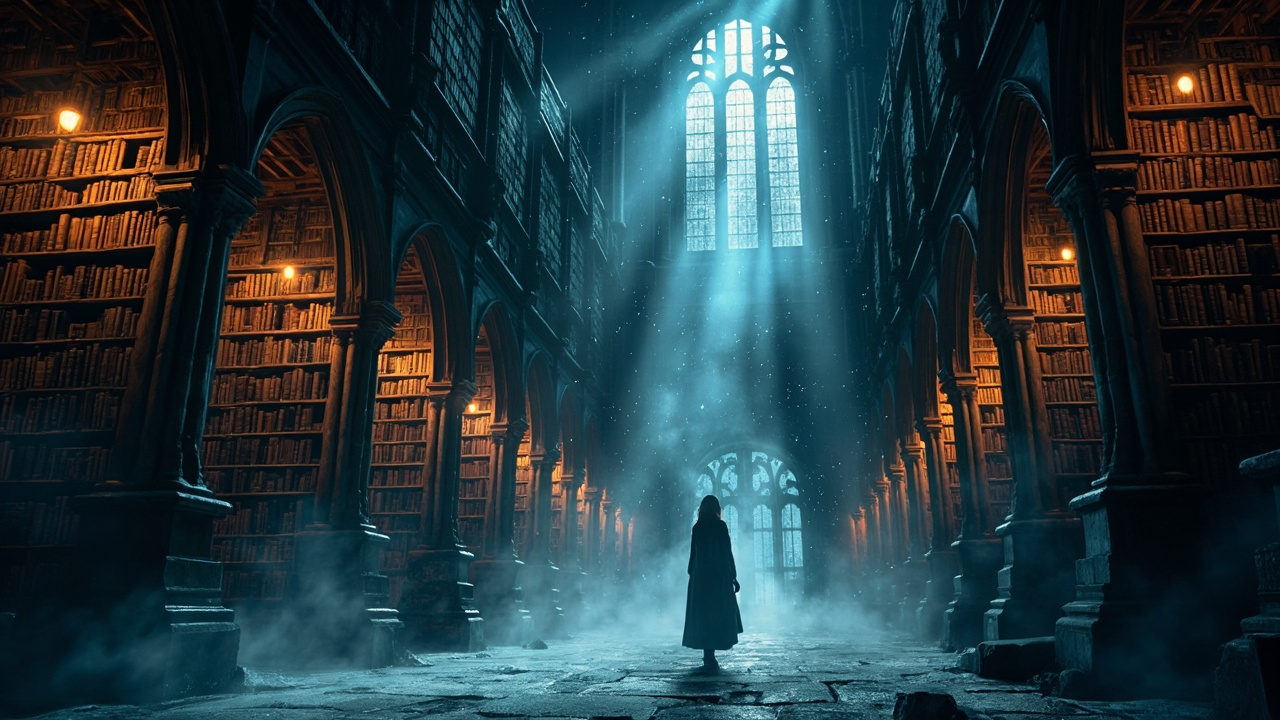
كانت السُّدَّة الراهب ألاسدير مونرو قد صنّفت سبعة عشر ألف مجلد قبل وفاته عام 1847، وقد نقش على كل صفحة interleaving من دفتره الجلدي ذات التوبيخ ذاته: لا يُقلق أحد هدوء الأرفف. إلسبيث ساذرلاند، التي ورثت منصبه مع مفاتيحه ونظاراته وقناعته الغامضة بأن للكتب ذكرياتها الخاصة، أدركت بالضبط ما قصده. كان الأثينيوم Cairngorm يتربع على نتوء جرانيتي على بُعد ثلاثة أميال من أقرب قرية، حيث تخفق أبراجه القوطية نحو سماء نوفمبر كأصابع رجل يغرق. بُني عام 1762 على يد لaird جنى ثروته من التبغ وضميره من عصر التنوير، واحتوى على أرقى مجموعة خاصة من المخطوطات الفلسفية الاسكتلندية في الوجود - وإن كان القليلون يتذكرون بحلول وقت تولّي إلسبيث المنصب لماذا ينبغي لأحد أن يهتم. كان العصر الرقمي قد جعل هذه المستودعات بالية، وكانت تقضي أيامها متنقلة بين عظمة غرفة القراءة المتعفنة ومتاهة ظلام الأرفف، حيث تؤدي جزيئات الغبار رقصاتها الأبدية الصامتة في أشعة الضوء الشحيحة لفصل الشتاء. كانت قد شرعت في تصنيف مجموعة من الرسائل التي لم تُفهرس من قبل عندما سمعته لأول مرة: صوتاً تحت مستوى السمع، أو ربما وراءه، بدا وكأنه ينبعث من الجدران ذاتها. لم يكن صرير خشب قديم، ولا استيطان للحجر. شيء أكثر قصدية. أكثر فصاحة. همس الصفحات المضاعف ألف مرة، كما لو أن المجموعة بأسرها أطلقت زفيراً في آن واحد. وضعت إلسبيث قلمها جانباً وأصغت. كان الأثينيوم دائماً مبنى صاخباً بطريقته الخاصة الغريبة - أنين المواقد، وإيقاع المطر على الزجاج المقاوم، وأصات الرياح الحزين العرضي عبر الأرفف. لكن هذا كان مختلفاً. كان هذا كلاماً، أو شيئاً لا يُستطاع تمييزه عنه: شظايا من حوار، وحجج نصف مكوّنة، وإيقاعات عقول طالما تحوّلت إلى عظام ورماد. لم تكن خائفة. ذلك هو ما أربكها أكثر. بل شعرت بنوع ساحق من الإدراك، كما لو أنها كانت تصغي إلى هذا طوال حياتها دون أن تدري. الكلمات، عندما استقرت في تماسك، كانت بنيةً أكاديمية لا لبس فيها وإنسابية في إلقائها، كما لو أن المتكلمين قد نسوا وجودها - أو لم يعتبروا حضورها ذا أهمية تُذكر للاعتراف به. «...الخطأ الجوهري يكمن في افتراض أن الشعور الأخلاقي يمكن قياسه...» «...تشكك هيوم يمتد بالضبط إلى أدوات تعبيره ذاتها...» «...يجب أن تبقى الغرفة مُغلقة حتى يكون العالم مستعداً لاستيعابها...» أثارت الشظية الأخيرة ارتياعها الكامل. نهضت وقلب彼女 يدق Against أضلاعها، وتبع الصوت إلى الأرفف، عبر الميتافيزيقا الاسكتلندية والفلسفة الأخلاقية، عبر الأطروحات المتآكلة وكتب الملاحظات المشروحة، حتى وصلت إلى جدار لم يكن ينبغي أن يكون موجوداً. كانت خطة الأثينيوم قد رُسمت ورُسمت مرات لا تُحصى منذ تأسيسه، وكانت إلسبيث تعرف كل ممر وكل ركن وكل تجويف من المبنى بحدسها الدفين كحدس انعكاسها في المرآة. غير أنها وجدت هنا، في الزاوية الشمالية الشرقية حيث تُشير الخطط إلى جرانيت صلب، باباً - بلّوط عتيق مُربوط بالحديد، سطحه مُسوّد بقرون من الدخان والإهمال. لا ثقب مفتاح يُشوّه وجهه. لا مقبض بارز من إطاره. سوى صفيحة نحاسية صغيرة، خضراء بزنجار، نقشت عليها ثلاث كلمات بدقة جراحية: لإلسبيث ساذرلاند. ضغغطت راحة يدها على الخشب، فتأرجح الباب للداخل كما لو أنه كان ينتظر هذه الحركة بالذات، هذا الشخص بالذات، هذه اللحظة بالذات. خلفه استقرت غرفة دائرية يضيئها نافذة وحيدة يسقط من خلالها ضوء القمر على منضدة قراءة من بلّوط منقوش. على المنضدة، مُثبّتة بأحجار مصقولة بالتعامل عبر أجيال، استقر مخطوطة. كانت الصفحات مُغلّفة برقٍّ دقيق لدرجة أنها بدت تتوهج بضوء ذاتي. خط اليد كان بلا شك لفرانسيس هتشيسون - فيلسوف الأخلاق العظيم الذي شكّلت تعاليمه عصر التنوير الاسكتلندي، الذي كان طلاب него قد تضمّنوا آدم سميث وديفيد هيوم، والذي وفقاً لكل سيرة ذاتية محترمة توفي في دبلن عام 1746. ومع ذلك ها هو خطه، لفته المميزة، في وثيقة بلا تاريخ ولا عنوان ولا إشارة إلى كيف أو لماذا استقرت في هذا الحرم المخفي. فتحت إلسبيث المخطوطة بيدين لا ترتجفان إلا قليلاً، وشرعت في القراءة. ما وجدته داخلها هزّ كل ما درسته يوماً عن التراث الفكري لأمتها. كان هتشيسون منخرطاً، كما يبدو، في مشروع أكثر راديكالية مما اقترحت أعماله المنشورة - نقداً منهجياً ليس لعصر التنوير العقلاني فحسب، بل للأساسات التي بُنيت عليها الفلسفة الأخلاقية الغربية بأسرها. حجته كانت أنيقة، مدمرة، ومتافقة تماماً مع السردية المريحة التي بنت مؤسسات كأثينيوم قروناً في صياغتها. صمتت الأصوات في الأرفف وهي تقرأ. أو ربّما هي ببساطة توقفت عن سماعها، مستهلكة بكل وعيها بنتائج ما تحمله. عندما رفعت أخيراً نظرها من المخطوطة، كان الفجر يبزغ فوق Cairngorms، مُلوّناً القمم المغطاة بالثلج بظلال من الوردي والكهرماني. أدركت، بوضوح شعرت معه وكأنه كشف، لماذا اختار علماء القرون السابقة أن يُغلون هذه الغرفة، أن يُؤتمنوا محتوياتها على الصمت والظلام. بعض الحقائق خطيرة جداً لإطلاقها في عالم غير مستعد لاستيعابها. لكن إلسبيث ساذرلاند لم تكن ألاسدير مونرو. لم ترث حذره، بل مفاتيحه فقط. وبينما ترفع المخطوطة من مكانها القديم، شعرت بالقلاقل الأولى لخطاب جديد يشرع في الأرفف حولها.
Der Reverend Alasdair Munroe hatte siebzehntausend Bände katalogisiert, bevor er 1847 starb, und auf jeder eingefügten Seite seines ledergebundenen Hauptbuchs hatte er dieselbe Ermahnung eingetragen: Niemand soll die Ruhe der Regale stören. Elspeth Sutherland, die seine Position zusammen mit seinen Schlüsseln, seiner Brille und seiner unerklärlichen Überzeugung geerbt hatte, dass Bücher ihre eigenen Erinnerungen besitzen, verstand genau, was er gemeint hatte.
Das Cairngorm-Athenaeum thronte auf einem Granitvorsprung drei Meilen vom nächsten Dorf entfernt, seine gotischen Türme kratzten am Novemberhimmel wie die Finger eines ertrinkenden Mannes. 1762 von einem Laird erbaut, der sein Vermögen mit Tabak gemacht und sein Gewissen in der Aufklärung, beherbergte es die feinste private Sammlung schottischer philosophischer Manuskripte - obwohl sich bis zu dem Zeitpunkt, als Elspeth die Stelle übernahm, nur noch wenige daran erinnerten, warum sich jemand dafür interessieren sollte. Das digitale Zeitalter hatte solche Archive überflüssig gemacht, und sie teilte ihre Tage zwischen dem muffigen Glanz des Lesesaals und dem labyrinthischen Dunkel der Regale, wo Staubpartikel ihre ewigen, lautlosen Ballette in den dünnen Lichtstrahlen des winterlichen Lichts aufführten.
Sie hatte gerade eine Sammlung bisher nicht erfasster Briefe katalogisiert, als sie es zum ersten Mal hörte: ein Geräusch unterhalb des Hörbaren, oder vielleicht jenseits davon, das aus den Wänden selbst zu kommen schien. Kein Knarren alten Holzes, noch das Setzen von Stein. Etwas Absichtsvolleres. Sprechenderes. Das Flüstern sich umwendender Seiten, tausendfach vervielfacht, als hätte die gesamte Sammlung gleichzeitig ausgeatmet.
Elspeth legte ihren Bleistift hin und lauschte. Das Athenaeum war immer ein lautes Gebäude auf seine eigene peculiar Weise gewesen - das Stöhnen von Kaminen, die Percussion von Regen gegen Sprossenfenster, das gelegentliche schwermütige Pfeifen des Windes durch die Regale. Aber das hier war anders. Das hier war Sprache, oder etwas, das davon ununterscheidbar war: Diskursfragmente, halb geformte Argumente, die Kadenzen längst zu Knochen und Asche gewordener Geister.
Sie hatte keine Angst. Das war es, was sie am meisten überraschte. Stattdessen fühlte sie ein overwhelming Gefühl der Wiedererkennung, als hätte sie ihr ganzes Leben lang darauf gehört, ohne es zu wissen. Die Worte, als sie sich zu Kohärenz fügten, waren unverkennbar akademisch in ihrer Konstruktion und intim in ihrer Übermittlung, als hätten die Sprecher vergessen, dass sie da war - oder ihre Gegenwart nie für relevant genug gehalten, um sie anzuerkennen.
„...der grundlegende Fehler liegt in der Annahme, dass moralisches Empfinden quantifiziert werden kann..."
„...Humes Skeptizismus erstreckt sich genau auf die Instrumente seines eigenen Ausdrucks..."
„...die Kammer muss versiegelt bleiben, bis die Welt bereit ist, sie zu empfangen..."
Das letzte Fragment hielt sie vollständig gefangen. Sie stand auf, ihr Herz hämmernd gegen ihre Rippen, und folgte der Stimme in die Regale, vorbei an schottischer Metaphysik und Moralphilosophie, vorbei an zerbröckelnden Abhandlungen und kommentierten commonplace books, bis sie eine Wand erreichte, die nicht hätte existieren sollen.
Der Grundriss des Athenaeums war seit seiner Gründung unzählige Male gezeichnet und neu gezeichnet worden, und Elspeth kannte jeden Gang, jede Nische, jede Vertiefung des Gebäudes so intim, wie sie ihr eigenes Spiegelbild kannte. Doch hier, in der Nordostecke, wo die Pläne massiven Granit anzeigten, fand sie stattdessen eine Tür - witterungsgegerbte Eiche mit Eisen beschlagen, ihre Oberfläche durch Jahrhunderte von Rauch und Vernachlässigung geschwärzt. Kein Schlüsselloch entstellte ihre Fläche. Kein Griff ragte aus ihrem Rahmen. Nur eine kleine Messingplatte, grün vor Patina, auf der drei Worte mit chirurgischer Präzision eingraviert waren: Für Elspeth Sutherland.
Sie legte ihre Handfläche auf das Holz, und die Tür schwang nach innen, als hätte sie genau auf diese Geste, diese Person, diesen Moment gewartet. Dahinter lag eine runde Kammer, beleuchtet von einem einzelnen Fenster, durch das Mondlicht auf ein Lesepult aus geschnitzter Eiche fiel. Auf dem Pult, beschwert mit Steinen, die durch Generationen der Handhabung glatt geworden waren, ruhte eine Handschrift.
Die Seiten waren in so feinem Pergament gebunden, dass es zu leuchten schien. Die Handschrift war unverkennbar die von Francis Hutcheson - dem großen Moralphilosophen, dessen Lehren das schottische Zeitalter der Aufklärung geprägt hatten, dessen Schüler Adam Smith und David Hume umfasst hatten, und der laut jeder seriösen Biografie 1746 in Dublin gestorben war. Und doch war hier seine Hand, seine unverkennbare Handschrift, in einem Dokument ohne Datum, ohne Titel, ohne Hinweis darauf, wie oder warum es in diesem verborgenen Heiligtum ruhte.
Elspeth öffnete die Handschrift mit Händen, die nur leicht zitterten, und begann zu lesen. Was sie darin fand, stellte alles in Frage, was sie je über das intellektuelle Erbe ihrer Nation gelernt hatte. Hutcheson war, wie es schien, in einem Projekt engagiert, das viel radikaler war, als seine veröffentlichten Werke vermuten ließen - eine systematische Kritik nicht nur des aufklärerischen Rationalismus, sondern der Grundlagen, auf denen die westliche Moralphilosophie errichtet worden war. Sein Argument war elegant, verheerend und völlig inkompatibel mit den bequemen Narrative, die Institutionen wie das Athenaeum Jahrhunderte damit verbracht hatten zu konstruieren.
Die Stimmen in den Regalen verstummten, während sie las. Oder vielleicht hörte sie einfach auf, sie zu hören, ihr gesamtes Bewusstsein von der Größe dessen, was sie hielt, vereinnahmt. Als sie schließlich von der Handschrift aufblickte, brach die Dämmerung über den Cairngorms an und malte die schneebedeckten Gipfel in Rosa- und Bernsteintöne. Sie verstand, mit einer Klarheit, die fast wie eine Offenbarung war, warum die Gelehrten vergangener Jahrhunderte diese Kammer versiegelt hatten, ihre Inhalte dem Schweigen und der Dunkelheit anzuvertrauen. Manche Wahrheiten sind zu gefährlich, um sie in eine nicht vorbereitete Welt freizulassen.
Aber Elspeth Sutherland war nicht Alasdair Munroe. Sie hatte seine Vorsicht nicht geerbt, nur seine Schlüssel. Und als sie die Handschrift von ihrem uralten Ruheplatz hob, spürte sie die ersten zögernden Regungen eines neuen Diskurses, der in den Regalen um sie herum begann.
El reverendo Alasdair Munroe había catalogado diecisiete mil volúmenes antes de su muerte en 1847, y en cada página intercalada de su libro mayor encuadernado en cuero había inscrito la misma advertencia: Que nadie perturbe la quietud de los estantes. Elspeth Sutherland, que había heredado su puesto junto con sus llaves, sus gafas y su inexplicable convicción de que los libros poseían memorias propias, comprendía precisamente lo que él había querido decir.
El Ateneo del Cairngorm se erigía sobre un afloramiento de granito a tres millas del pueblo más cercano, sus agujas góticas arañando el cielo de noviembre como los dedos de un hombre que se ahoga. Construido en 1762 por un laird que había hecho su fortuna en el tabaco y su conciencia en la Ilustración, albergaba la mejor colección privada de manuscritos filosóficos escoceses existentes - aunque, para cuando Elspeth asumió el cargo, muy pocos recordaban por qué alguien debería preocuparse. La era digital había vuelto obsoletos tales repositorios, y ella dividía sus días entre la grandeur mohosa de la sala de lectura y el laberíntico oscuridad de los estantes, donde las motas de polvo ejecutaban sus eternos, silenciosos ballets en los delgados haces de luz invernal.
Estaba catalogando una colección de cartas previamente no inventariadas cuando lo escuchó por primera vez: un sonido bajo la audición, o quizás más allá de ella, que parecía originarse de las propias paredes. No un crujido de madera antigua, ni el asentamiento de piedra. Algo más deliberado. Más elocuente. El susurro de páginas que se vuelven multiplicado por mil, como si toda la colección hubiera exhalado simultáneamente.
Elspeth dejó el lápiz y escuchó. El Ateneo siempre había sido un edificio ruidoso a su manera peculiar - los gemidos de las chimeneas, la percusión de la lluvia contra los cristales de las ventanas, el ocasional silbido melancólico del viento a través de los estantes. Pero esto era diferente. Esto era habla, o algo indistinguible de ella: fragmentos de discurso, argumentos a medio formar, las cadencias de mentes hace mucho tiempo convertidas en hueso y ceniza.
No tenía miedo. Eso era lo que más la sorprendía. En cambio, sintió una sensación abrumadora de reconocimiento, como si hubiera estado escuchando esto toda su vida sin saberlo. Las palabras, cuando se resolvían en coherencia, eran inconfundiblemente académicas en su construcción pero íntimas en su entrega, como si los hablantes hubieran olvidado que ella estaba ahí - o nunca hubieran considerado su presencia lo suficientemente relevante para reconocerla.
«...el error fundamental reside en asumir que el sentimiento moral puede ser cuantificado...»
«...el escepticismo de Hume se extiende precisamente a los instrumentos de su propia expresión...»
«...la cámara debe permanecer sellada hasta que el mundo esté listo para recibirla...»
El último fragmento la detuvo por completo. Se levantó, el corazón latiendo contra sus costillas, y siguió la voz hacia los estantes, más allá de la metafísica escocesa y la filosofía moral, más allá de los tratados desmoronados y los cuadernos de lugares comunes anotados, hasta que alcanzó una pared que no debería haber existido.
La planta del Ateneo había sido dibujada y redibujada incontables veces desde su fundación, y Elspeth conocía cada corredor, cada nicho, cada cavidad del edificio tan íntimamente como conocía su propio reflejo. Sin embargo, aquí, en la esquina noreste donde los planos indicaban granito sólido, encontró en cambio una puerta - roble añejo bound in hierro, su superficie ennegrecida por siglos de humo y negligencia. Ningún ojo de cerradura desfiguraba su superficie. Ningún pomo sobresalía de su marco. Solo una pequeña placa de latón, verde de cardenillo, sobre la cual tres palabras habían sido grabadas con precisión quirúrgica: Para Elspeth Sutherland.
Presionó la palma de su mano contra la madera, y la puerta se abrió hacia adentro como si hubiera estado esperando precisamente este gesto, esta persona, este momento. Más allá yacía una cámara circular iluminada por una única ventana a través de la cual la luz de la luna caía sobre un atril de roble tallado. Sobre el atril, asegurado por piedras pulidas por generaciones de manipulación, descansaba un manuscrito.
Las páginas estaban encuadernadas en vitela tan fina que parecía brillar con su propia luminiscencia. La caligrafía era inconfundiblemente la de Francis Hutcheson - el gran filósofo moral cuyas enseñanzas habían moldeado la Ilustración escocesa, cuyos estudiantes habían incluido a Adam Smith y David Hume, y quien, según toda biografía respectable, murió en Dublín en 1746. Sin embargo, aquí estaba su mano, su inconfundible floritura, en un documento que no llevaba fecha, título, ni indicación de cómo o por qué había venido a descansar en este santuario oculto.
Elspeth abrió el manuscrito con manos que solo temblaban ligeramente, y comenzó a leer. Lo que encontró dentro desafiaba todo lo que jamás le habían enseñado sobre la herencia intelectual de su nación. Hutcheson había estado comprometido, al parecer, en un proyecto mucho más radical de lo que sus obras publicadas sugerían - una crítica sistemática no solo del racionalismo ilustrado sino de los propios cimientos sobre los cuales se había construido la filosofía moral occidental. Su argumento era elegante, devastador, y absolutamente incompatible con las narrativas cómodas que instituciones como el Ateneo habían pasado siglos construyendo.
Las voces en los estantes cayeron en silencio mientras ella leía. O quizás ella simplemente dejó de escucharlas, su entera consciencia consumida por la magnitud de lo que sostenía. Cuando finalmente levantó la vista del manuscrito, el amanecer estaba rompiéndose sobre los Cairngorms, pintando las cumbres nevadas de tonos de rosa y ámbar. Comprendió, con una claridad que se sentía casi como una revelación, por qué los eruditos de siglos anteriores habían elegido sellar esta cámara, confiar sus contenidos al silencio y la oscuridad. Algunas verdades son demasiado peligrosas para liberar en un mundo no preparado para recibirlas.
Pero Elspeth Sutherland no era Alasdair Munroe. Ella no había heredado su cautela, solo sus llaves. Y mientras levantaba el manuscrito de su antiguo lugar de descanso, sintió los primeros movimientos tentativos de un nuevo discurso comenzando en los estantes a su alrededor.
Le révérend Alasdair Munroe avait catalogué dix-sept mille volumes avant sa mort en 1847, et sur chaque page intercalaire de son registre relié de cuir, il avait inscrit la même mise en garde : Que personne ne dérange le silence des rayonnages. Elspeth Sutherland, qui avait hérité de sa charge ainsi que de ses clés, de ses lunettes et de sa conviction inexplicable que les livres possédaient leurs propres souvenirs, comprenait précisément ce qu'il avait voulu dire.
L'Athenaeum du Cairngorm trônait au sommet d'un affleurement granitique à trois miles du village le plus proche, ses flèches gothiques griffant le ciel de novembre comme les doigts d'un homme qui se noie. Bâti en 1762 par un laird qui avait fait fortune dans le tabac et sa conscience dans les Lumières, il renfermait la plus belle collection privée de manuscrits philosophiques écossais existant - bien qu'à l'époque où Elspeth occupa le poste, peu se souvenaient pourquoi quiconque devrait s'en soucier. L'ère numérique avait rendu ces dépôts obsolètes, et elle divisait ses journées entre la grandeur poussiéreuse de la salle de lecture et le labyrinthe obscur des rayonnages, où les particules de poussière exécutaient leurs éternels ballets silencieux dans les minces rais de lumière hivernale.
Elle cataloguait une collection de lettres jusqu'alors non inventoriées lorsqu'elle l'entendit pour la première fois : un son sous l'audition, ou peut-être au-delà, qui semblait naître des murs eux-mêmes. Non pas un grincement de vieilles poutres, ni le tassement de la pierre. Quelque chose de plus délibéré. Plus éloquent. Le susurrement de pages qui se tournent multiplié par mille, comme si toute la collection avait exhale simultanément.
Elspeth posa son crayon et écouta. L'Athenaeum avait toujours été un bâtiment bruyant à sa façon particulière - les gémissements des cheminées, la percussion de la pluie contre les carreaux, le sifflement mélancolique occasionnel du vent à travers les rayonnages. Mais cela était différent. C'était de la parole, ou quelque chose d'indistinguissable : des fragments de discours, des arguments à demi formulés, les cadences d'esprits depuis longtemps retournés à l'os et à la cendre.
Elle n'avait pas peur. C'était ce qui la surprenait le plus. Au contraire, elle ressentit un sens overwhelming de reconnaissance, comme si elle avait écouté cela toute sa vie sans le savoir. Les mots, lorsqu'ils se cristallisaient en cohérence, étaient incontestablement académiques dans leur construction mais intimes dans leur livraison, comme si les locuteurs avaient oublié sa présence - ou n'avaient jamais considéré sa présence assez pertinente pour la reconnaître.
« ...l'erreur fondamentale réside dans la supposition que le sentiment moral peut être quantifié ... »
« ...le scepticisme de Hume s'étend précisément aux instruments de sa propre expression ... »
« ...la chambre doit rester scellée jusqu'à ce que le monde soit prêt à la recevoir ... »
Ce dernier fragment l'arrêta complètement. Elle se leva, son cœur battant contre ses côtes, et suivit la voix dans les rayonnages, au-delà de la métaphysique écossaise et de la philosophie morale, au-delà des traités qui s'effritent et des carnets de notes annotés, jusqu'à ce qu'elle atteigne un mur qui n'aurait pas dû exister.
Le plan de l'Athenaeum avait été dessiné et redessiné d'innombrables fois depuis sa fondation, et Elspeth connaissait chaque corridor, chaque alcôve, chaque recess du bâtiment aussi intimement qu'elle connaissait son propre reflet. Pourtant, ici, dans le coin nord-est où les plans indiquaient du granit solide, elle trouva plutôt une porte - chêne ancien relié de fer, sa surface noircie par des siècles de fumée et de négligence. Aucune serrure ne déparait sa surface. Aucune poignée ne dépassait de son cadre. Seulement une petite plaque de laiton, verte de vert-de-gris, sur laquelle trois mots avaient été gravés avec une précision chirurgicale : Pour Elspeth Sutherland.
Elle pressa sa paume contre le bois, et la porte pivota vers l'intérieur comme si elle avait attendu précisément ce geste, cette personne, ce moment. Au-delà s'étendait une chambre circulaire éclairée par une seule fenêtre à travers laquelle la lumière de la lune tombait sur un pupitre de chêne sculpté. Sur le pupitre, lesté de pierres usées lisses par des générations de manipulations, reposait un manuscrit.
Les pages étaient reliées en vélin si fin qu'il semblait luire de sa propre luminescence. L'écriture était sans conteste celle de Francis Hutcheson - le grand philosophe moral dont les enseignements avaient façonné le Siècle des Lumières écossais, dont les étudiants avaient inclus Adam Smith et David Hume, et qui, selon toute biographie respectable, était mort à Dublin en 1746. Et pourtant voilà son écriture, son incontestable tournure, dans un document qui ne portait aucune date, aucun titre, aucune indication de comment ou pourquoi il était venu reposer dans ce sanctuaire caché.
Elspeth ouvrit le manuscrit d'une main qui ne tremblait que légèrement, et commença à lire. Ce qu'elle trouva défiait tout ce qu'elle avait jamais appris sur l'héritage intellectuel de sa nation. Hutcheson avait été engagé, semblait-il, dans un projet bien plus radical que ses œuvres publiées ne le suggéraient - une critique systématique non seulement du rationalisme des Lumières, mais des fondations mêmes sur lesquelles la philosophie morale occidentale avait été construite. Son argument était élégant, dévastateur, et utterly incompatible avec les récits confortables que des institutions comme l'Athenaeum avaient passé des siècles à construire.
Les voix dans les rayonnages se turent tandis qu'elle lisait. Ou peut-être cessa-t-elle simplement de les entendre, sa conscience entière consumée par l'ampleur de ce qu'elle tenait. Lorsqu'elle leva finalement les yeux du manuscrit, l'aube se levait sur les Cairngorms, peignant les sommets enneigés de teintes de rose et d'ambre. Elle comprit, avec une clarté qui ressemblait presque à une révélation, pourquoi les érudits des siècles précédents avaient choisi de sceller cette chambre, de confier ses contenus au silence et à l'obscurité. Certaines vérités sont trop dangereuses pour être libérées dans un monde non préparé à les recevoir.
Mais Elspeth Sutherland n'était pas Alasdair Munroe. Elle n'avait pas hérité de sa prudence, seulement de ses clés. Et tandis qu'elle soulevait le manuscrit de son repos ancien, elle sentit les premiers frémissements d'un nouveau discours commençant dans les rayonnages autour d'elle.
Il reverendo Alasdair Munroe aveva catalogato diciassettemila volumi prima della sua morte nel 1847, e su ogni pagina intercalare del suo registro rilegato in pelle aveva iscritto la stessa esortazione: Nessuno disturbi la quiete degli scaffali. Elspeth Sutherland, che aveva ereditato la sua posizione insieme alle sue chiavi, ai suoi occhiali e alla sua inspiegabile convinzione che i libri possedessero memorie proprie, comprendeva precisamente ciò che aveva inteso.
L'Athenaeum del Cairngorm si ergeva su un affioramento di granito a tre miglia dal villaggio più vicino, le sue guglie gotiche che graffiavano il cielo di novembre come le dita di un uomo che annega. Costruito nel 1762 da un laird che aveva fatto fortuna nel tabacco e la coscienza nel Illuminismo, ospitava la più raffinata collezione privata di manoscritti filosofici scozzesi esistente - sebbene, al tempo in cui Elspeth assunse l'incarico, ben pochi ricordassero perché qualcuno dovesse preoccuparsene. L'era digitale aveva reso obsoleti tali repositori, e lei divideva le sue giornate tra la grandeur muffa della sala di lettura e il labirintico buio degli scaffali, dove le particelle di polvere eseguivano i loro eterni, silenziosi balletti nei sottili raggi di luce invernale.
Stava catalogando una collezione di lettere precedentemente non inventariate quando lo udì per la prima volta: un suono sotto l'udibile, o forse oltre esso, che sembrava originarsi dalle stesse pareti. Non un cigolio di legno antico, né l'assestarsi della pietra. Qualcosa di più deliberato. Più eloquente. Il sussurro di pagine che si voltano moltiplicato per mille, come se l'intera collezione avesse simultaneamente espirato.
Elspeth posò la matita e ascoltò. L'Athenaeum era sempre stato un edificio rumoroso a modo suo - i gemiti dei camini, la percussione della pioggia contro i vetri delle finestre, l'occasionale fischio malinconico del vento attraverso gli scaffali. Ma questo era diverso. Questa era parola, o qualcosa indistinguibile da essa: frammenti di discorso, argomentazioni semi-formate, le cadenze di menti da tempo ridotte a ossa e cenere.
Non aveva paura. Era questo che la sorprendeva di più. Invece, provava un senso schiacciante di riconoscimento, come se avesse ascoltato questo per tutta la vita senza saperlo. Le parole, quando si risolvevano in coerenza, erano inconfondibilmente accademiche nella loro costruzione eppure intime nella loro espressione, come se i parlanti avessero dimenticato la sua presenza - o non avessero mai considerato la sua presenza abbastanza rilevante da riconoscerla.
«...l'errore fondamentale risiede nel presupporre che il sentimento morale possa essere quantificato...»
«...lo scetticismo di Hume si estende precisamente agli strumenti della propria espressione...»
«...la camera deve rimanere sigillata fino a quando il mondo non sarà pronto a riceverla...»
L'ultimo frammento la arrestò completamente. Si alzò, il cuore che batteva contro le costole, e seguì la voce negli scaffali, oltre la metafisica scozzese e la filosofia morale, oltre i trattati che si sgretolano e i quaderni di luoghi comuni annotati, finché non raggiunse una parete che non avrebbe dovuto esistere.
La pianta dell'Athenaeum era stata disegnata e ridisegnata innumerevoli volte dalla sua fondazione, e Elspeth conosceva ogni corridoio, ogni alcove, ogni rientranza dell'edificio intimamente quanto conosceva il proprio riflesso. Eppure qui, nell'angolo nord-orientale dove le planimetrie indicavano granito solido, trovò invece una porta - quercia invecchiata legata in ferro, la sua superficie annerita da secoli di fumo e negligenza. Nessun buco della serratura deturpava la sua superficie. Nessuna maniglia sporgeva dalla sua cornice. Solo una piccola targa di ottone, verde di patina, sulla quale tre parole erano state incise con precisione chirurgica: Per Elspeth Sutherland.
Premette il palmo contro il legno, e la porta si aprì verso l'interno come se avesse atteso precisamente questo gesto, questa persona, questo momento. Oltre giaceva una camera circolare illuminata da una singola finestra attraverso cui la luce lunare cadeva su un leggio di quercia intagliata. Sul leggio, tenuto fermo da pietre consumate lisce da generazioni di manipolazione, riposava un manoscritto.
Le pagine erano rilegate in pergamena così fine che sembrava brillare di propria luminescenza. La calligrafia era inconfondibilmente quella di Francis Hutcheson - il grande filosofo morale i cui insegnamenti avevano plasmato l'Illuminismo scozzese, i cui studenti avevano incluso Adam Smith e David Hume, e che, secondo ogni biografia rispettabile, era morto a Dublino nel 1746. Eppure ecco la sua mano, il suo inconfondibile svolazzo, in un documento che portava nessuna data, nessun titolo, nessuna indicazione di come o perché fosse venuto a riposare in questo santuario nascosto.
Elspeth aprì il manoscritto con mani che tremavano appena, e iniziò a leggere. Ciò che trovò sfidava tutto ciò che le era stato insegnato sull'eredità intellettuale della sua nazione. Hutcheson era stato impegnato, a quanto pare, in un progetto molto più radicale di quanto le sue opere pubblicate suggerissero - una critica sistematica non solo del razionalismo illuministico ma delle stesse fondamenta su cui la filosofia morale occidentale era stata costruita. Il suo argomento era elegante, devastante, e assolutamente incompatibile con le narrative confortevoli che istituzioni come l'Athenaeum avevano impiegato secoli a costruire.
Le voci negli scaffali caddero silenziose mentre leggeva. O forse lei semplicemente cessò di sentirle, l'intera sua coscienza consumata dalla portata di ciò che teneva. Quando finalmente sollevò lo sguardo dal manoscritto, l'alba stava sorgendo sui Cairngorms, dipingendo le vette innevate di sfumature di rosa e ambra. Comprese, con una chiarezza che sembrava quasi una rivelazione, perché gli studiosi dei secoli precedenti avessero scelto di sigillare questa camera, di affidarne i contenuti al silenzio e all'oscurità. Alcune verità sono troppo pericolose per essere rilasciate in un mondo impreparato a riceverle.
Ma Elspeth Sutherland non era Alasdair Munroe. Non aveva ereditato la sua cautela, solo le sue chiavi. E mentre sollevava il manoscritto dal suo antico luogo di riposo, sentì i primi timidi movimenti di un nuovo discorso che iniziava negli scaffali intorno a lei.