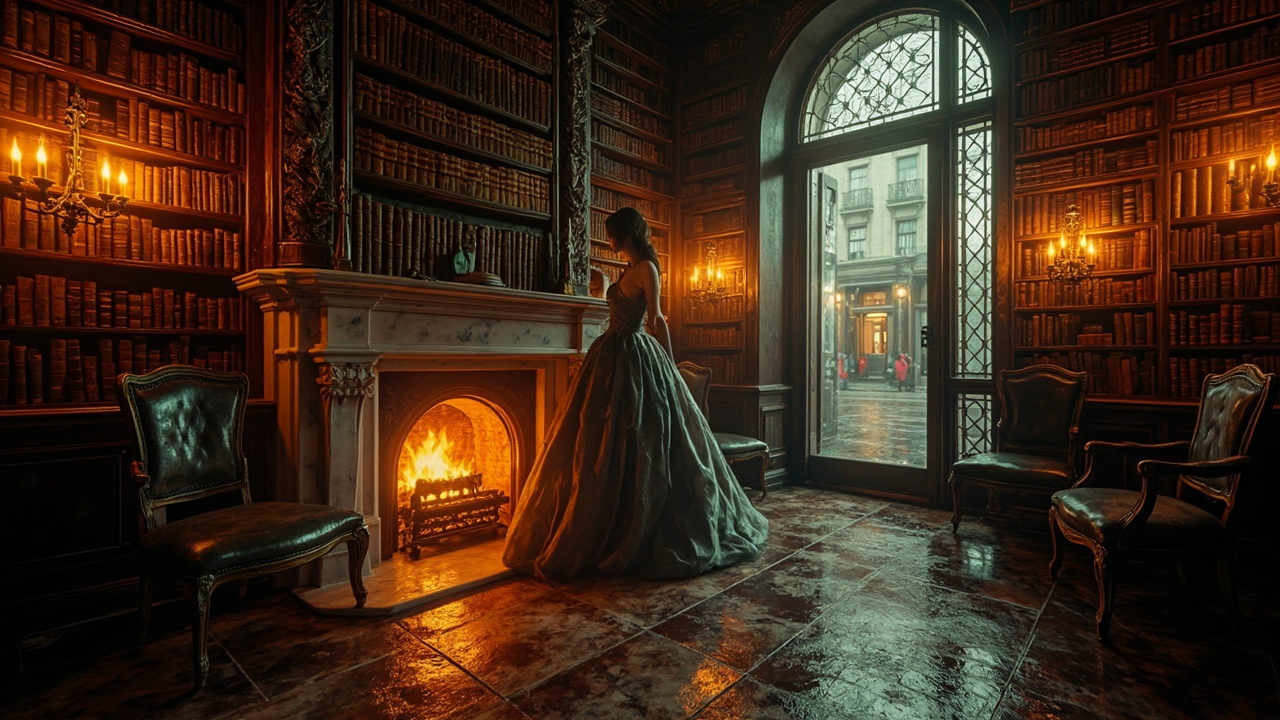
توقف المطر بحلول الوقت الذي وصلت فيه إلينور آشورث إلى رقم أربعة عشر في شارع كوزون، رغم أن أحجار الطريق المرصوفة لا تزال تلمع تحت التوهج الكهرماني لفوانيس الشارع. كانت قد استُدعيت برسالة موقّعة بدون اسم، وصلَت ذلك الصباح على يد صبيٍّ لم تستطع أن تتذكر وجهه لاحقاً، تتضمن فقط عنواناً ووقتاً. لا تفسير. لا اسم. فقط الانطباع الواضح بأن الرفض لم يكن خياراً متاحاً لها.
كان الصالون الذي وُجهت إليه تختلف عن الصالونات العادية التي frequentتها في الموسمين الماضيين. حيث كانت تلك الأماكن ت glitter بالعيب والثرثرة وص tint الأكواب الخزفية، كان هذا الغرفة تطنّ بشيء أثقل—جو dense بال anticipation، وستُحدد لاحقاً، بالثقل المتراكم للكلمات غير المحووفة. كانت الشموع تحترق في حوامل فضية متأكسدة، ترمي ظلالاً طويلة على أرفف لا تحمل كتباً، بل مخطوطات مربوطة بجلد بأعمار متفاوتة، بدون عناوين ظاهرة على ظهورها.
"لقد arrived." قالت المرأة التي تحدثت وهي تقف بجانب المدفأة، شعرها الرمادي المثبّت تحت قبعة ذات دقة معمارية. "كنا نتساءل عما إذا كنتِ ستتقبّلين الدعوة."
"أعترف،" ردت إلينور، "أنني لا أتذكر أنني receiveت واحدة."
"ال invitation وصلت إليكِ على الرغم من ذلك. إنها دائماً تفعل." أشارت المرأة نحو دائرة من الكراسي مرتبة حول طاولة منخفضة. "من فضلكِ، اجلسي. هناك الكثير لشرحه، وأخشى أننا we've been verbose في استعدادتنا."
عددَت إلينور سبعة آخرين في الغرفة—رقم ستتذكره بوضوح غريب في السنوات التي ستتبع. كان هناك الشاب ذو الأصابع الملطخة بالحبر الذي قدّم نفسه فقط باعتباره مترجماً للشعر الفارسي، والأرملة المسنّة whose أغطية الدانتيل تشير إلى أنها كانت تتحرك في دوائر أرفع بكثير مما يمكن لشارع كوزون أن يستوعب. كان هناك الجرّاح whose يديه، كما اعترف ببرود سريري، holding كلمات المحتضرين لمزيد من المرضى مما يمكنه counting. ورسام خرائط يدّعي أن خرائطه ترسم أراضٍ لا exist بعد. مربية بعيون يقظة. قس whose إيقاع الخطبة لم يتركه رغم مغادرته الظاهرة للكنيسة.
"أنتِ تتساءلين لماذا أنتِ هنا،" said المرأة بجانب المدفأة. لم تكن قد جلست؛ كانت تقف كما لو كانت ترأس some tribunal غير رسمي. "أنتِ تكتبين. You've written. رواية، غير مكتملة. مجموعة من الآيات لا تُرينها لأحد. يوميات كنتِ حذرة جداً من عدم الاحتفاظ بها."
شعرت إلينور بالضعف الخاص من being known. "كيف could you possibly—"
"نعرف لأننا جميعاً وقفنا Where you stand. we've all felt الإلزام بترتيب اللغة إلى meaning، لفرض على فوضى الخبرة انضباط السرد." جلست المرأة finally، ومع حركتها، بدا أن الغرفة shift into طبقة مختلفة من الجدية. "ما نحن على وشك telling you لم يغادر هذه الغرفة في أربعين عاماً. لن يغادرها after الليلة أيضاً، unless تختارين الانضمام إلينا."
"الانضمام إليكم في ماذا؟"
"في تأليف عمل واحد."
الصمت الذي تلى هذا الإعلان possessed طريقته الخاصة في الإبلاغ. نظرت إلينور إلى الوجوه من حولها، تبحث عن علامات المزاح أو الجنون، ولم تجد لا هذا ولا ذاك. كان الجرّاح ينظّف نظاراته بدقة منهجية. كان رسام الخرائط يرسم أنماطاً غير مرئية على ركبته.
"عمل واحد،" continue the woman، "الذي كُتب بواسطة لا أحد وكل أحد. لم نلتقي مطلقاً لمناقشته بالكامل. لم نقرأه aloud مطلقاً. كل منا ساهم بتمريرات—جمل، فقرات، أحياناً فصول—وصلت دون استدعاء، كما لو كانت تُملى بواسطة some لاوعي جماعي we've learned، على مدى عقود، أن نثق به."
"وهذا العمل،" said Eleanor slowly، "exists?"
"يوجد بالطريقة التي exist بها جميع الأعمال العظيمة قبل أن تُ commit إلى paper. إنه حي. إنه كامل. كان، طوال four decades، السر المشترك لهذا council." held the woman's eyes Eleanor's with intensity شعرت almost جسدية. "السؤال هو whether يجب أن يبقى hidden، أو whether يجب أن يُ reveal."
تحدث الكاهن للمرة الأولى، صوته carrying رنين رجل معتاد على addressing المصلّين. "العمل الذي authoredcollectively ليس مجرد رواية. إنه، نعتقد، الرواية التي انتظرتها الأدب الإنجليزي. ليس بسبب نثره، رغم أننا تعبنا على كل clause. ليس بسبب شخصياته، رغم أننا أعطيناهم المقياس الكامل of our imagination. ولكن بسبب ما يفعله بـ those who read it."
"وماذا يفعل؟" سألت إلينور.
أجابت الأرملة. "يغيرهم. ليس بشكل دراماتيكي، ليس بشكل واضح. But بشكل دائم. Those who have read المخطوطة—and there have been precious few—يُبلّغون عن تغيير جوهري في إدراكهم. يرون العالم كن narrative. يفهمون أن كل حياة contain بنية قصة، كاملة مع توتراتها وحلولها."
"إذا تم نشر such عمل،" خلّصت المرأة، "سيُحوّل الأدب. سيُحوّل القراء. السؤال الذي brought us إلى هذا الاجتماع، Miss Ashworth، هو whether such transformation هو شيء نمتلك الحق في فرضه."
فكرت إلينور في روايتها غير المكتملة، abandoned قبل ثلاث سنوات عندما أقنعت نفسها أنها lacked الموهبة لإكمالها. فكرت في الجمل التي لا تزال تزورها في الأحلام، نصف formed وشاعرية للإكمال. وفهمت، بوضوح فاجأها، بالضبط why she'd been summoned.
"أنتم تريدونني أن أ cast الصوت الحاسم."
nodded المرأة. "نحن منقسمون بالتساوي. أربعة للكشف، أربعة للصمت المستمر. أنتِ... منظور جديد. Unburdened by السنوات التي we've spent في المداولة."
نهضت إلينور ومشت إلى النافذة، حيث بدأ المطر يسقط من جديد، streaking الزجاج مثل الهوامش some كاتب سماوي. خلفها، could تشعر بثقل نظرتهم الجماعية—هؤلاء الغرباء",
"fr": "La pluie avait cessé lorsque Eleanor Ashworth arriva au numéro quatorze de Curzon Street, bien que les pavés luisent encore sous la lueur ambrée des réverbères. Elle avait été convoquée par une lettre non signée, livrée ce matin-là par un garçon dont elle ne parvint pas à se rappeler le visage par la suite, ne contenant qu'une adresse et une heure. Pas d'explication. Pas de nom. Seulement l'impression distincte que le refus n'était pas une option qu'elle possédait.
Le salon où elle fut admise différait des salons ordinaires qu'elle avait fréquentés au cours des deux dernières saisons. Là où ces établissements étincelaient de potins et du tintement de la porcelaine, cette pièce bourdonnait de quelque chose de plus lourd—une atmosphère dense d'anticipation et, elle le déterminerait plus tard, du poids accumulé de paroles non dites. Des bougies brûlaient dans des appliques d'argent terni, projetant de longues ombres sur des étagères qui ne contenaient pas de livres, mais des manuscrits reliés de cuir d'âges variés, leurs dos sans marque.
« Vous êtes venue. » La femme qui parlait se tenait près de la cheminée, ses cheveux gris épinglés sous un bonnet d'une précision architecturale. « Nous nous demandions si vous accepteriez l'invitation. »
« Je l'avoue, » répondit Eleanor, « je ne me souviens pas avoir reçu d'invitation. »
« L'invitation vous est parvenue malgré tout. Elles arrivent toujours. » La femme désigna un cercle de chaises disposées autour d'une table basse. « Veuillez vous asseoir. Il y a beaucoup à expliquer, et je crains que nous n'ayons été verbeux dans nos préparatifs. »
Eleanor compta sept autres personnes dans la pièce—un nombre qu'elle se souviendrait avec une clarté particulière dans les années qui suivraient. Il y avait le jeune homme aux doigts tachés d'encre qui ne se présenta que comme traducteur de poésie persane, et la vieille veuve dont les gants de dentelle suggéraient qu'elle avait autrefois fréquenté des cercles bien plus élevés que Curzon Street ne pouvait accommoder. Il y avait un chirurgien dont les mains avaient, admit-il avec une froideur clinique, recueilli les derniers mots de plus de patients qu'il ne pouvait compter, et un cartographe qui prétendait que ses cartes traçaient des territoires qui n'existaient pas encore. Une gouvernante aux yeux vigilants. Un ecclésiastique dont le rythme homilétique ne l'avait pas quitté malgré son départ evident du vêture.
« Vous vous demandez pourquoi vous êtes ici, » dit la femme près du feu. Elle ne s'était pas assise ; elle se tenait comme si elle présidait quelque tribunal informel. « Vous écrivez. Vous avez écrit. Un roman, inachevé. Un recueil de vers que vous ne montrez à personne. Un journal que vous êtes trop sensée pour tenir. »
Eleanor ressentit la vulnérabilité particulière d'être connue. « Comment pourriez-vous possiblement— »
« Nous savons parce que nous avons tous été là où vous vous trouvez. Nous avons tous ressenti la compulsion d'arranger le langage en sens, d'imposer au chaos de l'expérience la discipline du récit. » La femme s'assit enfin, et avec son mouvement, la pièce sembla passer à un registre différent de sérieux. « Ce que nous allons vous dire n'a pas quitté cette pièce depuis quarante ans. Il ne la quittera pas non plus après ce soir, à moins que vous ne choisissiez de vous joindre à nous. »
« Vous joindre à quoi ? »
« À l'écriture d'une œuvre unique. »
Le silence qui suivit cette déclaration possédait sa propre éloquence. Eleanor jeta un regard aux visages autour d'elle, cherchant des signes de plaisanterie ou de folie, et n'en trouva ni l'un ni l'autre. Le chirurgien nettoyait ses lunettes avec une précision méthodique. Le cartographe traçait des motifs invisibles sur son genou.
« Une œuvre unique, » continua la femme, « qui a été écrite par personne et par tous. Nous ne nous sommes jamais réunis pour en discuter pleinement. Nous ne l'avons jamais lu à voix haute. Chacun de nous a contribué des passages—phrases, paragraphes, parfois chapitres—qui sont arrivés sans être sollicités, comme dictés par une sorte d'inconscient collectif que nous avons appris, au fil des décennies, à faire confiance. »
« Et cette œuvre, » dit Eleanor lentement, « existe ? »
« Elle existe de la façon dont toutes les grandes œuvres existent avant d'être commises sur le papier. Elle est vivante. Elle est complète. Elle a été, pendant quatre décennies, le secret partagé de ce conseil. » Les yeux de la femme tinrent ceux d'Eleanor avec une intensité presque physique. « La question est de savoir si elle doit rester cachée, ou si elle doit être révélée. »
Le clergyman parla pour la première fois, sa voix portant la résonance d'un homme habitué à s'adresser à des congrégations. « L'œuvre que nous avons collectivement composée n'est pas simplement un roman. C'est, croyons-nous, le roman que la littérature anglaise a attendu. Non pas à cause de sa prose, bien que nous ayons peiné sur chaque proposition. Non pas à cause de ses personnages, bien que nous leur ayons donné la pleine mesure de notre imagination. Mais à cause de ce qu'elle fait à ceux qui la lisent. »
« Et que fait-elle ? » demanda Eleanor.
La veuve répondit. « Elle les change. Pas de manière dramatique, pas de manière evidente. Mais définitivement. Ceux qui ont lu le manuscrit—et ils ont été precious peu—rapportent une altération fondamentale dans leur perception. Ils voient le monde comme un récit. Ils comprennent que chaque vie contient l'architecture d'une histoire, complète avec ses tensions et ses résolutions. »
« Si une telle œuvre était publiée, » conclut la femme, « elle transformerait la littérature. Elle transformerait les lecteurs. La question qui nous a amenés à cette réunion, Miss Ashworth, est de savoir si une telle transformation est quelque chose que nous avons le droit d'imposer. »
Eleanor pensa à son roman inachevé, abandonné trois ans plus tôt lorsqu'elle s'était persuadée qu'elle manquait du talent pour l'achever. Elle pensa aux phrases qui la visitaient encore dans ses rêves, à moitié formées et avides d'être terminées. Et elle comprit, avec une clarté qui la surprit, exactement pourquoi elle avait été convoquée.
« Vous voulez que je donne le vote décisif. »
La femme hocha la tête. « Nous sommes également divisés. Quatre pour la révélation, quatre pour le silence continué. Vous êtes... une perspective fraîche. Délestée des années que nous avons passées dans la délibération. »
Eleanor se leva et marcha vers la fenêtre, où la pluie avait recommencé à tomber, striant la vitre comme les annotations marginales d'un auteur céleste. Derrière elle, elle pouvait sentir le poids de leur regard collectif—ces étrangers",
"de": "Der Regen hatte aufgehört, als Eleanor Ashworth vor Nummer vierzehn der Curzon Street eintraf, obwohl das Kopfsteinpflaster noch unter dem bernsteinfarbenen Schein der Straßenlaternen glänzte. Sie war durch einen unsignierten Brief hergerufen worden, der an jenem Morgen von einem Jungen gebracht worden war, dessen Gesicht sie sich später nicht ins Gedächtnis rufen konnte, und der nur eine Adresse und eine Uhrzeit enthielt. Keine Erklärung. Kein Name. Nur der deutliche Eindruck, dass Ablehnung keine Option war, die ihr zur Verfügung stand.
Der Zeichensalon, in den sie geführt wurde, unterschied sich von den gewöhnlichen Salons, die sie in den letzten beiden Saisons frequentiert hatte. Wo jene Etablissements von Klatsch und dem Klirren von Porzellan glitzerten, summte dieser Raum von etwas Schwererem—einer Atmosphäre, dicht vor Erwartung und, wie sie später feststellen würde, vor dem akkumulierten Gewicht unausgesprochener Worte. Kerzen brannten in Halterungen aus angelaufenem Silber und warfen lange Schatten auf Regale, die keine Bücher enthielten, sondern Manuskripte in Leder verschiedener Altersstufen, deren Rücken unbemerkt waren.
"Sie sind gekommen." Die Frau, die sprach, stand am Kamin, ihr graues Haar unter einer Haube von architektonischer Präzision festgesteckt. "Wir fragten uns, ob Sie die Einladung annehmen würden."
"Ich gestehe", erwiderte Eleanor, "dass ich mich nicht erinnere, eine erhalten zu haben."
"Die Einladung hat Sie trotzdem erreicht. Das tun sie immer." Die Frau deutete auf einen Kreis von Stühlen, die um einen niedrigen Tisch angeordnet waren. "Bitte, setzen Sie sich. Es gibt viel zu erklären, und ich fürchte, wir waren in unseren Vorbereitungen allzu redselig."
Eleanor zählte sieben andere im Raum—eine Zahl, die sie in den folgenden Jahren mit eigentümlicher Klarheit erinnern würde. Es gab den jungen Mann mit tintenverschmierten Fingern, der sich nur als Übersetzer persischer Lyrik vorstellte, und die betagte Witwe, deren Spitzenhandschuhe darauf hindeuteten, dass sie einst in weit erhabeneren Kreisen verkehrt hatte, als Curzon Street fassen konnte. Es gab einen Chirurgen, dessen Hände, wie er mit klinischer Distanziertheit zugab, die Sterbensworte von mehr Patienten gehalten hatten, als er zählen konnte, und einen Kartografen, der behauptete, seine Karten verzeichneten Gebiete, die noch nicht existierten. Eine Gouvernante mit wachsamen Augen. Einen Geistlichen, dessen predigthafter Rhythmus ihn trotz seines offenkundigen Ausstiegs aus dem Pfarramt nicht verlassen hatte.
"Sie fragen sich, warum Sie hier sind", sagte die Frau am Feuer. Sie hatte sich nicht gesetzt; sie stand, als würde sie über einem informellen Tribunal präsidieren. "Sie schreiben. Sie haben geschrieben. Ein Roman, unvollendet. Eine Sammlung von Versen, die Sie niemandem zeigen. Ein Tagebuch, das Sie zu vernünftig sind, um zu führen."
Eleanor fühlte die eigentümliche Verletzlichkeit, gekannt zu werden. "Wie könnten Sie möglicherweise—"
"Wir wissen es, weil wir alle dort gestanden haben, wo Sie stehen. Wir alle haben den Zwang verspürt, Sprache in Bedeutung zu verwandeln, dem Chaos der Erfahrung die Disziplin der Erzählung aufzuerlegen." Die Frau setzte sich endlich, und mit ihrer Bewegung schien der Raum in eine andere Stufe des Ernstes zu wechseln. "Was wir Ihnen gleich erzählen werden, hat diesen Raum seit vierzig Jahren nicht verlassen. Es wird ihn auch nach dieser Nacht nicht verlassen, es sei denn, Sie wählen, sich uns anzuschließen."
"Mich Ihnen anschließen wobei?"
"Bei der Verfasserschaft eines einzigen Werkes."
Die Stille, die auf diese Erklärung folgte, besaß ihre eigene Beredsamkeit. Eleanor blickte in die Gesichter um sie herum und suchte nach Anzeichen von Scherz oder Wahnsinn und fand beides nicht. Der Chirurg reinigte seine Brillengläser mit methodischer Präzision. Der Kartograf zeichnete unsichtbare Muster auf sein Knie.
"Ein einziges Werk", fuhr die Frau fort, "das von niemandem und jedem geschrieben wurde. Wir haben uns nie getroffen, um es vollständig zu besprechen. Wir haben es nie laut vorgelesen. Jeder von uns hat Passagen beigesteuert—Sätze, Absätze, manchmal Kapitel—die ungebeten kamen, als seien sie von einer Art kollektivem Unbewussten diktiert worden, das wir im Laufe von Jahrzehnten gelernt haben zu vertrauen."
"Und dieses Werk", sagte Eleanor langsam, "existiert?"
"Es existiert auf die Weise, auf die alle großen Werke existieren, bevor sie zu Papier gebracht werden. Es ist lebendig. Es ist vollständig. Es ist seit vier Jahrzehnten das gemeinsame Geheimnis dieses Rates." Die Augen der Frau hielten Eleanors mit einer Intensität, die sich fast physisch anfühlte. "Die Frage ist, ob es verborgen bleiben oder ob es enthüllt werden sollte."
Der Geistliche sprach zum ersten Mal, seine Stimme trug die Resonanz eines Mannes, der gewohnt war, Gemeinden anzusprechen. "Das Werk, das wir kollektiv verfasst haben, ist nicht merely ein Roman. Es ist, glauben wir, der Roman, auf den die englische Literatur gewartet hat. Nicht wegen seiner Prosa, obwohl wir an jedem Satz gefeilt haben. Nicht wegen seiner Charaktere, obwohl wir ihnen das volle Maß unserer Vorstellungskraft gegeben haben. Sondern wegen dem, was es denen antut, die es lesen."
"Und was tut es?" fragte Eleanor.
Die Witwe antwortete. "Es verändert sie. Nicht dramatisch, nicht offenkundig. Aber dauerhaft. Diejenigen, die das Manuskript gelesen haben—und es waren kostbar wenige—berichten von einer fundamentalen Veränderung in ihrer Wahrnehmung. Sie sehen die Welt als Erzählung. Sie verstehen, dass jedes Leben die Architektur einer Geschichte enthält, komplett mit seinen Spannungen und Auflösungen."
"Wenn ein solches Werk veröffentlicht würde", schloss die Frau, "würde es die Literatur transformieren. Es würde die Leser transformieren. Die Frage, die uns zu diesem Treffen gebracht hat, Miss Ashworth, ist, ob eine solche Transformation etwas ist, zu dem wir das Recht haben."
Eleanor dachte an ihren unvollendeten Roman, den sie vor drei Jahren aufgegeben hatte, als sie sich selbst überzeugt hatte, dass ihr das Talent zur Vollendung fehlte. Sie dachte an die Sätze, die sie immer noch in Träumen besuchten, halb geformt und nach Vollendung sehnsuchtsvoll. Und sie verstand, mit einer Klarheit, die sie überraschte, genau, warum sie hergerufen worden war.
"Sie möchten, dass ich die entscheidende Stimme abgebe."
Die Frau nickte. "Wir sind gleichmäßig geteilt. Vier für Offenlegung, vier für andauerndes Schweigen. Sie sind... eine frische Perspektive. Unbelastet von den Jahren, die wir in Überlegungen verbracht haben."
Eleanor erhob sich und ging zum Fenster, wo der Regen wieder zu fallen begonnen hatte und das Glas streifte wie die Marginalien eines himmlischen Autors. Hinter ihr konnte sie das Gewicht ihrer kollektiven Blicke spüren—dieser Fremden",
"it": "La pioggia era cessata quando Eleanor Ashworth arrivò al numero quattordici di Curzon Street, sebbene i selciati brillassero ancora sotto il bagliore ambrato dei lampioni. Era stata convocata con una nota non firmata, recapitata quella mattina da un ragazzo di cui non riuscì poi a ricordare il volto, contenente solo un indirizzo e un'ora. Nessuna spiegazione. Nessun nome. Solo l'impressione distintiva che rifiutare non fosse un'opzione che possedeva.
Il salotto in cui fu ammessa si distingueva dai normali salotti che aveva frequentato in queste ultime due stagioni. Là dove quegli stabilimenti scintillavano di pettegolezzi e del tintinnio della porcellana, questa stanza ronzava di qualcosa di più pesante—un'atmosfera densa di anticipazione e, come avrebbe poi determinato, del peso accumulato di parole non dette. Le candele bruciavano in'applique d'argento appannato, proiettando ombre lunghe su scaffali che non contenevano libri, solo manoscritti rilegati in pelle di varie età, con i dorsi non contrassegnati.
"Siete venuta." La donna che parlava stava vicino al camino, i suoi capelli grigi appuntati sotto una cuffia di precisione architettonica. "Ci chiedevamo se avreste accettato l'invito."
"Confesso," rispose Eleanor, "di non ricordare di averne ricevuta una."
"L'invito vi ha raggiunto comunque. Lo fanno sempre." La donna indicò un cerchio di sedie disposte attorno a un tavolo basso. "Prego, sedetevi. C'è molto da spiegare, e temo che siamo stati prolissi nei nostri preparativi."
Eleanor contò altre sette persone nella stanza—un numero che avrebbe ricordato con singolare chiarezza negli anni che seguirono. C'era il giovane con le dita macchiate d'inchiostro che si presentò solo come traduttore di poesia persiana, e l'anziana vedova i cui guanti di pizzo suggerivano che un tempo avesse frequentato circoli molto più elevati di quanto Curzon Street potesse accomodare. C'era un chirurgo le cui mani avevano, ammise con distacco clinico, raccolto le ultime parole di più pazienti di quanti potesse contare, e un cartografo che sosteneva che le sue mappe tracciassero territori che non esistevano ancora. Una governante dagli occhi vigili. Un clergyman il cui ritmo semoniale non lo aveva abbandonato nonostante la sua evidente partenza dalla tonaca.
"Vi state chiedendo perché siete qui," disse la donna vicino al fuoco. Non si era seduta; stava in piedi come se presiedesse qualche tribunale informale. "Voi scrivete. Avete scritto. Un romanzo, incompiuto. Una raccolta di versi che non mostrate a nessuno. Un diario che siete troppo saggia per tenere."
Eleanor sentì la particolare vulnerabilità di essere conosciuta. "Come potreste possibly—"
"Lo sappiamo perché ci siamo tutti trovati dove vi trovate voi. Abbiamo tutti sentito la compulsione di disporre il linguaggio in significato, di imporre al caos dell'esperienza la disciplina della narrazione." La donna finalmente si sedette, e con il suo movimento, la stanza sembrò spostarsi in un registro diverso di serietà. "Ciò che stiamo per dirvi non ha lasciato questa stanza da quarant'anni. Non la lascerà nemmeno dopo questa sera, a meno che non scelgliate di unirvi a noi."
"Unirmi a voi in cosa?"
"Nell'autorship di un'unica opera."
Il silenzio che seguì questa dichiarazione possedeva la propria eloquenza. Eleanor guardò i volti attorno a lei, cercando segni di scherzo o follia, e non trovò né l'uno né l'altra. Il chirurgo puliva i suoi occhiali con precisione metodica. Il cartografo tracciava motivi invisibili sul suo ginocchio.
"Un'unica opera," continuò la donna, "che è stata scritta da nessuno e da tutti. Non ci siamo mai incontrati per discussarla per intero. Non l'abbiamo mai letta ad alta voce. Ciascuno di noi ha contribuito passaggi—frasi, paragrafi, occasionalmente capitoli—che sono arrivati non richiesti, come dettati da una sorta di inconscio collettivo che abbiamo imparato, nel corso dei decenni, a fidarci."
"E questa opera," disse Eleanor lentamente, "esiste?"
"Esiste nel modo in cui tutte le grandi opere esistono prima di essere messe sulla carta. È viva. È completa. È stata, per quattro decenni, il segreto condiviso di questo consiglio." Gli occhi della donna tennero quelli di Eleanor con un'intensità che si sentiva quasi fisica. "La questione è se debba rimanere nascosta, o se debba essere rivelata."
Il sacerdote parlò per la prima volta, la sua voce portando la risonanza di un uomo abituato a rivolgersi a congregazioni. "L'opera che abbiamo collettivamente authorship non è meramente un romanzo. È, crediamo, il romanzo che la letteratura inglese ha atteso. Non per la sua prosa, sebbene abbiamo lavorato su ogni clausola. Non per i suoi personaggi, sebbene abbiamo dato loro la piena misura della nostra immaginazione. Ma per ciò che fa a coloro che la leggono."
"E cosa fa?" chiese Eleanor.
La vedova rispose. "Li cambia. Non drammaticamente, non ovviamente. Ma permanentemente. Coloro che hanno letto il manoscritto—e ce ne sono state precious poche—riferiscono un'alterazione fondamentale nella loro percezione. Vedono il mondo come narrazione. Comprendono che ogni vita contiene l'architettura di una storia, completa con le sue tensioni e risoluzioni."
"Se tale opera fosse pubblicata," concluse la donna, "trasformerebbe la letteratura. Trasformerebbe i lettori. La domanda che ci ha portato a questo incontro, Miss Ashworth, è se tale trasformazione sia qualcosa che abbiamo il diritto di imporre."
Eleanor pensò al suo romanzo incompiuto, abbandonato tre anni prima quando si era convinta di mancare del talento per completarlo. Pensò alle frasi che la visitavano ancora nei sogni, mezze formate e desiderose di completamento. E comprese, con una chiarezza che la sorprese, esattamente perché era stata convocata.
"Volete che io dia il voto decisivo."
La donna annuì. "Siamo equamente divisi. Quattro per la rivelazione, quattro per il silenzio continuato. Voi siete... una prospettiva fresca. Non gravata dagli anni che abbiamo speso nella deliberazione."
Eleanor si alzò e camminò verso la finestra, dove la pioggia aveva ripreso a cadere, rigando il vetro come le postille di qualche autore celeste. Dietro di lei, poteva sentire il peso del loro sguardo collettivo—questi estranei",
"es": "La lluvia había cesado para cuando Eleanor Ashworth llegó al número catorce de Curzon Street, aunque los adoquines aún brillaban bajo el resplandor ámbar de las farolas. Había sido convocaba por una nota sin firmar, entregada aquella mañana por un muchacho cuyo rostro no pudo recordar después, que solo contenía una dirección y una hora. Sin explicación. Sin nombre. Solo la impresión distintiva de que negarse no era una opción que poseyera.
El salón de dibujo al que fue admitida se distinguía de los salones ordinarios que había frecuentado en las últimas dos temporadas. Donde aquellos establecimientos brillaban con cotilleos y el tintineo de la porcelana, esta habitación zumbaba con algo más pesado—una atmósfera densa de anticipación y, determinaría más tarde, con el peso acumulado de palabras no dichas. Las velas ardían enapliques de plata deslustrada, proyectando sombras largas sobre estantes que no contenían libros, solo manuscritos encuadernados en cuero de various edades, sus lomos sin marcar.
"Han venido." La mujer que hablaba permanecía junto a la chimenea, su cabello gris sujeto bajo una cofia de precisión arquitectónica. "Nos preguntábamos si aceptarían la invitación."
"Confieso," respondió Eleanor, "que no recuerdo haber recibido una."
"La invitación les llegó de todos modos. Siempre lo hacen." La mujer señaló hacia un círculo de sillas dispuestas alrededor de una mesa baja. "Por favor, sientenense. Hay mucho que explicar, y temo que hemos sido verbosos en nuestros preparativos."
Eleanor contó siete personas más en la habitación—un número que recordaría con peculiar claridad en los años que siguieron. Estaba el joven de dedos manchados de tinta que se presentó solo como traductor de poesía persa, y la anciana viuda cuyos guantes de encaje sugerían que alguna vez se había movido en círculos mucho más elevados de lo que Curzon Street podía acomodar. Estaba el cirujano cuyas manos habían, admitió con desapego clínico, sostenido las últimas palabras de más pacientes de los que podía contar, y un cartógrafo que aseguraba que sus mapas cartografiaban territorios que aún no existían. Una institutriz de ojos vigilantes. Un sacerdote cuyo cadencia sermonial no lo había abandonado a pesar de su evidente partida de la sotana.
"Se están preguntando por qué están aquí," dijo la mujer junto al fuego. No se había sentado; permanecía de pie como si presidiera algún tribunal informal. "Ustedes escriben. Han escrito. Una novela, inconclusa. Una colección de versos que no muestran a nadie. Un diario que son demasiado sensatos para llevar."
Eleanor sintió la vulnerabilidad peculiar de ser conocida. "¿Cómo podrían possibly—"
"Sabemos porque todos hemos estado donde ustedes están. Todos hemos sentido la compulsión de arreglar el lenguaje en significado, de imponer al caos de la experiencia la disciplina de la narrativa." La mujer finalmente se sentó, y con su movimiento, la habitación pareció cambiar a un registro diferente de seriedad. "Lo que estamos a punto de decirles no ha salido de esta habitación en cuarenta años. No saldrá después de esta noche tampoco, a menos que elijan unirse a nosotros."
"¿Unirme a ustedes en qué?"
"En la autoría de una sola obra."
El silencio que siguió a esta declaración poseía su propia elocuencia. Eleanor miró los rostros a su alrededor, buscando señales de broma o locura, y no encontró ninguna. El cirujano limpiaba sus gafas con precisión metódica. El cartógrafo trazaba patrones invisibles sobre su rodilla.
"Una sola obra," continuó la mujer, "que ha sido escrita por nadie y por todos. Nunca nos hemos reunido para discussarla en su totalidad. Nunca la hemos leído en voz alta. Cada uno de nosotros ha contribuido pasajes—oraciones, párrafos, ocasionalmente capítulos—que llegaron sin ser solicitados, como dictados por algún inconsciente colectivo que hemos aprendido, a lo largo de las décadas, a confiar."
"Y esta obra," dijo Eleanor lentamente, "existe?"
"Existe de la manera en que todas las grandes obras existen antes de ser commitidas al papel. Está viva. Está completa. Ha sido, durante cuatro décadas, el secreto compartido de este consejo." Los ojos de la mujer sostuvieron los de Eleanor con una intensidad que se sentía casi física. "La pregunta es si debe permanecer oculta, o si debe ser revelada."
El sacerdote habló por primera vez, su voz llevando la resonancia de un hombre acostumbrado a dirigirse a congregaciones. "La obra que hemos authorship colectivamente no es meramente una novela. Es, creemos, la novela que la literatura inglesa ha estado esperando. No por su prosa, aunque hemos trabajado laboriosamente en cada cláusula. No por sus personajes, aunque les hemos dado la plena medida de nuestra imaginación. Sino por lo que hace a quienes la leen."
"¿Y qué hace?" preguntó Eleanor.
La viuda respondió. "Los cambia. No dramáticamente, no obviamente. Pero permanentemente. Aquellos que han leído el manuscrito—y ha habido precious few—reportan una alteración fundamental en su percepción. Ven el mundo como narrativa. Entienden que cada vida contiene la arquitectura de una historia, completa con sus tensiones y resoluciones."
"Si tal obra fuera publicada," concluyó la mujer, "transformaría la literatura. Transformaría a los lectores. La pregunta que nos ha traído a esta reunión, Miss Ashworth, es si tal transformación es algo que tenemos derecho a imponer."
Eleanor pensó en su novela inconclusa, abandonada hace tres años cuando se había convencido de que carecía del talento para completarla. Pensó en las oraciones que aún la visitaban en sueños, medio formadas y anhelando completarse. Y entendió, con una claridad que la sorprendió, exactamente por qué había sido convocaba.
"Ustedes desean que yo emita el voto decisivo."
La mujer asintió. "Estamos igualmente divididos. Cuatro a favor de la revelación, cuatro a favor del silencio continuado. Ustedes son... una perspectiva fresca. Sin el peso de los años que hemos pasado en deliberación."
Eleanor se levantó y caminó hacia la ventana, donde la lluvia había comenzado a caer de nuevo, rayando el cristal como las notas marginales de algún autor celestial. Detrás de ella, podía sentir el peso de su mirada colectiva—estos extraños