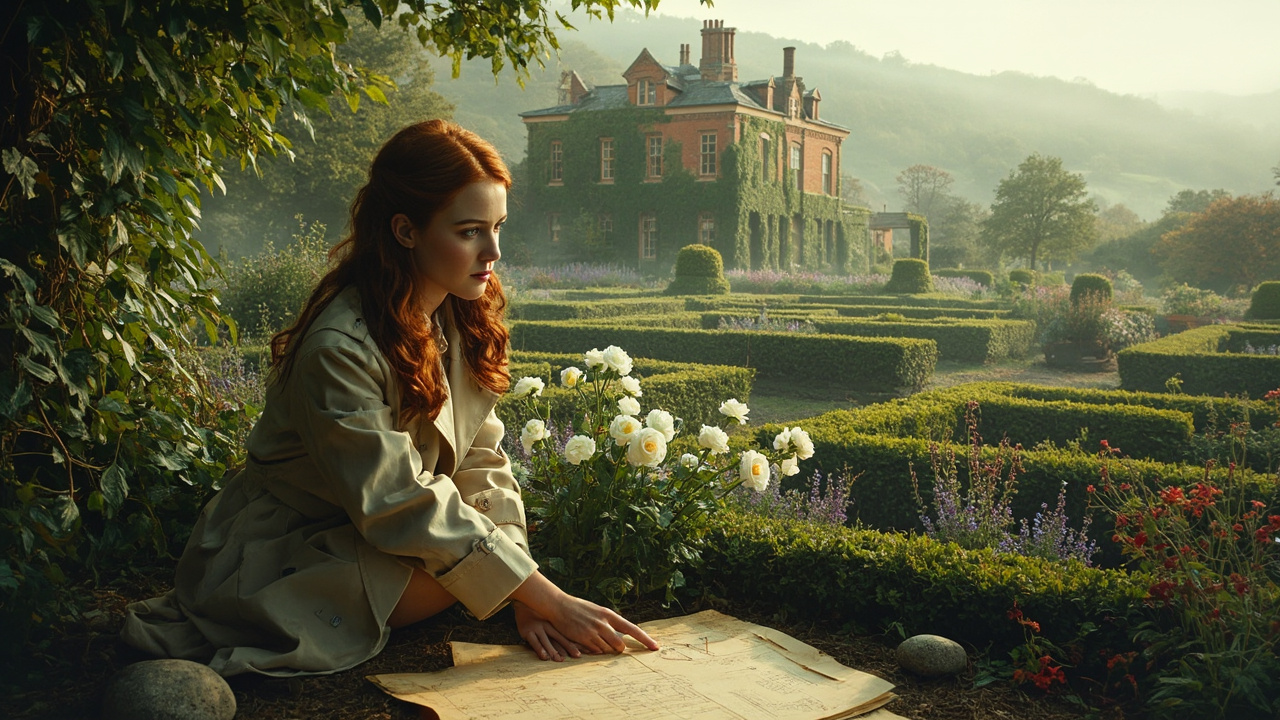
عنوان القصة: الحديقة غير المكتملة
وصلت الرسالة في يوم الخميس، محشورة بين فاتورة مرافق وكتيب أثاث حدائق. تعرفت إلينور على ختم المحامي قبل أن تقرأ المحتوى، وانقبض شيء في صدرها بالرعب الغريب الذي يرافق الإرث.
ماتت جدتها في الحادي والعشرين من مارس، أول يوم من الربيع. لم تكن إلينور قد رآها منذ إحدى عشرة سنة، منذ ذلك الجدال الذي قطع أي خيط هش كان يربط بينهما. والآن عاد ذلك الخيط في شكل وثيقة قانونية تسميها الوريثة الوحيدة لمنزل ميدوكروفت وأراضيه—بما في ذلك، بشكل سخيف، "جميع الأوراق والخطط والمستندات المتعلقة بتصميم الحديقة".
كانت إلينور مهندسة مناظر طبيعية. بنت مسيرتها المهنية على أنقاض القصور القديمة، محية الحدائق الرسمية من فوضى إهمال العقود. كانت تفهم، أفضل من غيرها، أن الحدائق نصوص بانتظار أن تُقرأ. لكن ما لم يكن بإمكانها توقعه هو أن جدتها تركت لها نصاً كهذا—مكتوباً ليس بالإنجليزية بل بالبتلات.
قادت سيارتها إلى ميدوكروفت في صباح رمادي من أبريل، والكائن في تلال كوتسوولد المنطوية حيث كان إشارة الهاتف مجرد شائعة والطريق يتكشف عبر قرى لم تتغير منذ الحرب. كان المنزل نفسه متواضعاً بمعايير الأرستقراطية: قصر جورجي مع إضافات فكتورية، وطوبه الأحمر المخفف باللبلاب والصمت الخاص للأماكن التي عرفت السكنى وتنتظره الآن من جديد.
كانت خطط الحديقة ملفوفة في أسطوانة معدنية، والورق مصفراً لكنه سليم. نشرتها إلينور على طاولة المطبخ، والقهوة تبرد بجانبها وهي تدرس التصميم المرسوم باليد. كانت جدتها دقيقة، شبه مهووسة في تعليقاتها. كل فراش مرقّم. كل نوع مسمى بالاسم الكامل—الاسم الشائع والتسمية النباتية، واللاتينية تنازل صغير للدقة.
لكن الخطط كانت غير مكتملة. في جميع أنحاء التصميم، حملت بعض المناطق عبارة NB—nota bene، انتبه—يعقبها كلمة واحدة: فك الشفرة أولاً.
ضحكت إلينور، صوت قصير أجوف في المطبخ الفارغ. بالطبع ستفعل جدتها هذا. كانت فرانسيس كافيندش محللة شفرات أثناء الحرب، حقيقة كشفت عنها مرة واحدة فقط، في خضم جدالهما الأخير. "قضيت حياتي أقرأ الأشياء المخفية،" قالت، وصوتها كصقيع على الزجاج. "كان عليّ أن أعلمكِ كيف تبحثين عنها."
لقد تركت تعليمات إذن، مدفونة في الحديقة غير المكتملة. أدركت إلينور حينها أن المشروع كان قد أُهمل عمداً—ليس بسبب المرض أو العجز، بل لأن الرسالة نفسها لم تكن جاهزة للإرسال.
جاء المفتاح من كتاب قديم لجدتها، موجود في الدراسة أعلى الدرج: "مشاعر الزهور"، نُشر عام 1876، وصفحاته الناعمة بالعمر والتعامل. كانت لغة الزهور الفكتورية نظاماً دقيقاً، كل زهرة تحمل معنى محدداً. الوردة تعني الحب، لكن أي لون؟ أبيض أم أحمر؟ القرنفل يعني الحب النقي، أو حب المرأة، أو الرفض—حسب الظل. كان النظام يعتمد على السياق، متعدد الطبقات، مفردات كاملة تنتظر أن تُجمع.
عادت إلينور إلى الخطط بعينين جديدتين. الفراشات المرقمة لم تكن عشوائية؛ كانت تتبع تسلسلاً، والزهور داخل كل منها تقابل حروف الأبجدية. فراش يحتوي على الإديلفايس والياسمين الأبيض فقط مثلاً، يهجئ EJ—الحرفان الأولان من رسالة استمرت عبر ثمانية عشر مخطط زراعة متناثرة في جميع أنحاء التصميم غير المكتمل.
استغرق الأمر ثلاثة أيام.
تنقلت عبر المنزل كشبح، آكلة من المؤونة التي أحضرتها، نائمة في ملاءات تفوح منها رائحة اللافندر والزمن. كانت الحديقة بالخارج برية الآن، خطة فيكتورية الأصل مُهملة منذ زمن طويل للعليق والزعرور. لكنها استطاعت أن ترى، في عين عقلها، ما كان مقصوداً أن يصبحه—والرسالة التي دفنت جدتها فيها.
الحروف المفكوكة شفرتها جمعت في جملة واحدة:
إلينور، لم أكن ألومكِ على وفاة كلارا. كنت ألوم نفسي على عدم منعها. لم أتوقف يوماً عن حبكِ. من فضلكِ أكملي الحديقة.
كلارا. أمها. ابنة فرانسيس، التي غرقت في بحيرة ميدوكروفت عندما كانت إلينور في السابعة من عمرها. كان الحكم الرسمي حادثاً، لكن التهم الصامتة تدفقت عبر العائلة كسم في الماء. إلينور، الابنة، كانت مسؤولة بشكل ما. إلينور، الناجية، كانت صعبة الاحتمال. وهكذا أُرسلت بعيداً، وسمحت جدتها لها بالمغادرة دون اعتراض.
باستثناء أن ذلك لم يكن الحقيقة. أو بالأحرى، لم يكن الحقيقة كاملة.
مشت إلينور إلى الحديقة المتراكية حيث اخترقت الشمس السحب، مرسية ظلالاً طويلة عبر الورود البرية والاسيجة المتشابكة. أدركت الآن لماذا لم تستطع جدتها إكمال التصميم أبداً. كيف يمكنك زراعة رسالة حب واعتذار في تربة منقوعة بالحزن؟ كيف يمكنك ترتيب الزهور عندما كانت المرأة التي تعتذر لها قد طُردت بصمتك الخاصة؟
كانت قد انتظرت. ثلاثة وأربعون عاماً، ربما أكثر. انتظرت حتى كبرت إلينور، حتى أصبح لدى الغضب الوقت لالتحام في شيء قابل للتعامل، حتى صارت الحديقة نفسها فضاءً للنمو وليس الفقدان. فقط حينها وضعت وصيتها الأخيرة غير المكتملة—تثق، ربما تأمل، أن حفيدتها ستفهم ما يعنيه قراءة حديقة.
جثت إلينور في الوحل بجانب ما كان الفراش الأول في التصميم. التربة كانت داكنة وغنية، جاهزة. استطاعت أن تراها تقريباً: الإديلفايس والياسمين الأبيض اللذين ستزرعهما هنا، الإديلفايس للشجاعة، الياسمين للود. ستنمو الرسالة مع الحديقة، موسم بعد موسم، شيء حي سيعيش أطول منهم جميعاً.
لم تكن جدتها قاسية. كانت مكسورة، وافتقرت إلى اللغة لتقول ذلك. الآن أعطت إلينور واحدة جديدة—لغة الزهور، مفردات الزهور، طريقة التحدث عن الحب عبر سنوات الصمت والصمت.
Titel der Geschichte: Der unvollendete Garten
Der Brief kam an einem Donnerstag, eingeklemmt zwischen einer Nebenkostenabrechnung und einem Katalog für Gartenmöbel. Eleanor erkannte das Siegel des Anwalts, bevor sie den Inhalt las, und etwas in ihrer Brust zog sich zusammen mit dem eigentümlichen Schrecken, der ein Erbe begleitet.
Ihre Großmutter war am einundzwanzigsten März gestorben, am ersten Frühlingstag. Eleanor hatte sie elf Jahre lang nicht gesehen, nicht seit dem Streit, der den fragilem Faden zwischen ihnen durchtrennt hatte. Nun war dieser Faden in Form eines juristischen Dokuments zurückgekehrt, das sie zur alleinigen Erbin von Meadowcroft House und seines Grundbesitzes machte—einschließlich, absurd genug, „aller Papiere, Pläne und Dokumente bezüglich des Gartenentwurfs".
Eleanor war Landschaftsarchitektin. Sie hatte ihre Karriere auf den Grundmauern alter Güter aufgebaut, formale Gärten aus dem Gewirr jahrzehntelanger Vernachlässigung wiederauferstehen lassen. Sie verstand, besser als die meisten, dass Gärten Texte waren, die darauf warteten, gelesen zu werden. Was sie nicht hatte vorhersehen können, war, dass ihre Großmutter ihr einen solchen Text hinterlassen hatte—geschrieben nicht in Englisch, sondern in Blütenblättern.
Sie fuhr an einem grauen Aprilmorgen nach Meadowcroft, das Anwesen irgendwo in den gefalteten Hügeln der Cotswolds, wo Handyempfang ein Gerücht war und die Straße sich durch Dörfer wand, die sich seit dem Krieg nicht verändert hatten. Das Haus selbst war nach aristokratischen Maßstäben bescheiden: ein georgianisches Herrenhaus mit viktorianischen Anbauten, seine roten Ziegel durch Efeu und die besondere Stille von Räumen gemildert, die Bewohner gekannt hatten und nun wieder darauf warten.
Die Gartenpläne waren in einer Blechdose aufgerollt, das Papier vergilbt aber unbeschädigt. Eleanor breitete sie auf dem Küchentisch aus, der Kaffee neben ihr kalt werdend, während sie die von Hand gezeichnete Darstellung studierte. Ihre Großmutter war präzise gewesen, fast zwanghaft in ihren Anmerkungen. Jedes Beet war nummeriert. Jede Art war mit vollem Namen benannt—Trivialname und botanische Bezeichnung, das Latein ein kleines Zugeständnis an die Präzision.
Aber die Pläne waren unvollendet. Überall im Entwurf trugen bestimmte Bereiche die Notiz NB—nota bene, beachte—gefolgt von einem einzigen Wort: Zuerst entschlüsseln.
Eleanor lachte, ein kurzer, hohler Laut in der leeren Küche. Natürlich würde ihre Großmutter das tun. Frances Cavendish war während des Krieges Kryptografin gewesen, eine Tatsache, die sie nur ein einziges Mal enthüllt hatte, mitten in ihrem letzten Streit. „Ich habe mein Leben damit verbracht, verborgene Dinge zu lesen", hatte sie gesagt, ihre Stimme wie Frost auf Glas. „Ich hätte dir beibringen sollen, nach ihnen zu suchen."
Sie hatte also Anweisungen hinterlassen, begraben im unvollendeten Garten. Eleanor verstand damals, dass das Projekt absichtlich aufgegeben worden war—nicht wegen Krankheit oder Hinfälligkeit, sondern weil die Botschaft selbst noch nicht bereit war, gesendet zu werden.
Der Schlüssel kam aus einem alten Buch ihrer Großmutter, entdeckt im Arbeitszimmer oben: „The Sentiment of Flowers", veröffentlicht 1876, seine Seiten weich von Alter und Benutzung. Die viktorianische Sprache der Blumen war ein präzises System, jede Blüte trug eine bestimmte Bedeutung. Rose bedeutete Liebe, aber welche Farbe? Weiß oder Rot? Nelke bedeutete reine Liebe, oder Frauenliebe, oder Ablehnung—je nach Farbton. Das System war kontextabhängig, geschichtet, ein ganzes Vokabular, das darauf wartete, zusammengesetzt zu werden.
Eleanor kehrte mit neuen Augen zu den Plänen zurück. Die nummerierten Beete waren nicht zufällig; sie folgten einer Sequenz, und die Blumen in jedem entsprachen Buchstaben des Alphabets. Ein Beet, das nur Edelweiß und weißen Jasmin enthielt, zum Beispiel, buchstabierte EJ—die ersten beiden Buchstaben einer Botschaft, die sich durch achtzehn verschiedene Bepflanzungsschemata zog, verstreut im unvollendeten Entwurf.
Es dauerte drei Tage.
Sie bewegte sich durch das Haus wie ein Geist, aß von den Vorräten, die sie mitgebracht hatte, schlief in Laken, die nach Lavendel und Zeit rochen. Der Garten draußen war jetzt eine Wildnis, der ursprüngliche viktorianische Plan längst dem Brombeergestrüupp und Holunder überlassen. Aber sie konnte sehen, in ihrem Geistesauge, was er hatte werden sollen—und welche Botschaft ihre Großmutter darin vergraben hatte.
Die entschlüsselten Buchstaben ergaben einen einzigen Satz:
ELEANOR, ICH HABE DIR DIE SCHULD AM TOD VON CLARA NICHT GEGEBEN. ICH HABE MIR SELBST DIE SCHULD GEGEBEN, ES NICHT VERHINDERT ZU HABEN. ICH HABE NIE AUFGEHÖRT, DICH ZU LIEBEN. BITTE VOLLENDE DEN GARTEN.
Clara. Ihre Mutter. Frances' Tochter, die im See von Meadowcroft ertrunken war, als Eleanor sieben Jahre alt war. Das offizielle Urteil war Unfall gewesen, aber die unausgesprochenen Anschuldigungen waren durch die Familie gelaufen wie Gift im Wasser. Eleanor, die Tochter, war irgendwie verantwortlich gewesen. Eleanor, die Überlebende, war zu viel gewesen, um sie zu ertragen. Und so war sie weggeschickt worden, und ihre Großmutter hatte sie ohne Widerspruch gehen lassen.
Außer das war nicht die Wahrheit. Oder vielmehr, es war nicht die ganze Wahrheit.
Eleanor wanderte hinaus in den überwucherten Garten, als die Sonne durch die Wolken brach und lange Schatten über die Wildrosen und das verwirrte Gehölz warf. Sie verstand jetzt, warum ihre Großmutter den Entwurf nie hatte vollenden können. Wie konnte man eine Botschaft aus Liebe und Entschuldigung in Boden pflanzen, der von Trauer durchtränkt war? Wie konnte man Blumen arrangieren, wenn die Frau, der man sich entschuldigte, durch das eigene Schweigen vertrieben worden war?
Sie hatte gewartet. Dreiundvierzig Jahre, vielleicht mehr. Sie hatte gewartet, bis Eleanor erwachsen war, bis der Ärger Zeit hatte, sich zu etwas Verwertbarem zu verfestigen, bis der Garten selbst zu einem Raum des Wachstums statt des Verlusts geworden war. Erst dann hatte sie ihr endgültiges, unvollendetes Testament niedergelegt—vielleicht vertrauend, hoffend, dass ihre Enkelin verstehen würde, was es bedeutete, einen Garten zu lesen.
Eleanor kniete im Schlamm neben dem, was das erste Beet im Entwurf gewesen war. Der Boden war dunkel und reich, bereit. Sie konnte es fast sehen: das Edelweiß und den weißen Jasmin, das sie hier pflanzen würde, das Edelweiß für Mut, den Jasmin für Freundlichkeit. Die Botschaft würde mit dem Garten wachsen, Saison für Saison, ein lebendiges Ding, das sie beide überdauern würde.
Ihre Großmutter war nicht grausam gewesen. Sie war zerbrochen gewesen und hatte die Sprache vermisst, es zu sagen. Jetzt hatte sie Eleanor eine neue gegeben—Blumenlesung, das Vokabular der Blumen, die Art, Liebe über die Kluft von Jahren und Schweigen hinweg zu sprechen.
Título del cuento: El jardín inacabado
La carta llegó un jueves, intercalada entre una factura de servicios y un catálogo de muebles de jardín. Eleanor reconoció el sello del abogado antes de leer el contenido, y algo en su pecho se contrajo con ese presentimiento peculiar que acompaña a las herencias.
Su abuela había muerto el veintiuno de marzo, el primer día de primavera. Eleanor no la había visto en once años, no desde la discusión que había cortado el frágil hilo que quedaba entre ellas. Ahora ese hilo había regresado en forma de documento legal nombrándola beneficiaria única de Meadowcroft House y sus terrenos—incluyendo, absurdamente, "todos los papeles, planos y documentos pertaining al diseño del jardín".
Eleanor era arquitecta paisajista. Había construido su carrera sobre los huesos de viejas mansiones, resucitando jardines formales del desorden de décadas de abandono. Entendía, mejor que nadie, que los jardines eran textos esperando ser leídos. Lo que no había podido anticipar era que su abuela le había dejado uno de esos textos—escrito no en inglés sino en pétalos.
Condujo hasta Meadowcroft en una grisesca mañana de abril, la propiedad ubicada en algún lugar de las colinas plegadas de los Cotswolds donde la señal era un rumor y la carretera se desenrollaba a través de pueblos sin cambios desde la guerra. La casa en sí era modesta según los estándares aristocráticos: un palacio georgiano con adiciones victorianas, sus ladrillos rojos suavizados por la hiedra y el silencio particular de espacios que habían conocido ocupación y ahora la aguardan de nuevo.
Los planos del jardín estaban enrollados en un tubo de lata, el papel amarillento pero intacto. Eleanor los extendió sobre la mesa de la cocina, el café enfriándose a su lado mientras estudiaba la elevación dibujada a mano. Su abuela había sido precisa, casi obsesiva en sus anotaciones. Cada parterre estaba numerado. Cada especie estaba nombrada en su totalidad—nombre común y designación botánica, el latín una pequeña concesión a la precisión.
Pero los planos estaban inacabados. A lo largo del diseño, ciertas áreas llevaban la anotación NB—nota bene, tome nota—seguida de una sola palabra: Decodifique primero.
Eleanor se rio, un sonido corto y hueco en la cocina vacía. Por supuesto que su abuela haría esto. Frances Cavendish había sido criptógrafa durante la guerra, un hecho que solo había revelado una vez, en medio de su última discusión. "Pasé mi vida leyendo cosas ocultas," había dicho, voz como escarcha sobre cristal. "Debería haberte enseñado a buscarlas."
Había dejado instrucciones, entonces, enterradas en el jardín inacabado. Eleanor entendió entonces que el proyecto había sido abandonado deliberadamente—no por enfermedad o decrepitud, sino porque el mensaje en sí no estaba listo para ser enviado.
La clave vino de un viejo libro de su abuela, descubierto en el estudio de arriba: "El Sentimiento de las Flores", publicado en 1876, sus páginas suaves por la edad y el manejo. El lenguaje victoriano de las flores era un sistema preciso, cada flor portando un significado específico. La rosa denotaba amor, pero ¿qué color? ¿Blanco o rojo? El clavel significaba amor puro, o amor de mujer, o rechazo—dependiendo de la sombra. El sistema era dependiente del contexto, estratificado, todo un vocabulario esperando ser ensamblado.
Eleanor regresó a los planos con ojos nuevos. Los parterres numerados no eran aleatorios; seguían una secuencia, y las flores dentro de cada uno correspondían a letras del alfabeto. Un parterre conteniendo solo edelweiss y jazmín blanco, por ejemplo, deletreaba EJ—las primeras dos letras de un mensaje que continuaba a través de dieciocho esquemas de plantación separados esparcidos por todo el diseño inacabado.
Le tomó tres días.
Se movió por la casa como un fantasma, comiendo de las provisiones que había traído, durmiendo en sábanas que olían a lavanda y tiempo. El jardín afuera era un páramo ahora, el plan victoriano original abandonado hace mucho tiempo a zarzas y saúcos. Pero podía ver, en el ojo de su mente, lo que se suponía que debía convertirse—y qué mensaje su abuela había enterrado dentro de él.
Las letras decodificadas se ensamblaron en una sola oración:
ELEANOR, NO TE CULPÉ POR LA MUERTE DE CLARA. ME CULPÉ A MÍ POR NO HABERLA PREVENIDO. NUNCA DEJÉ DE AMARTE. POR FAVOR TERMINA EL JARDÍN.
Clara. Su madre. La hija de Frances, que se había ahogado en el lago de Meadowcroft cuando Eleanor tenía siete años. El veredicto oficial había sido accidente, pero las acusaciones no dichas habían circulado a través de la familia como veneno en el agua. Eleanor, la hija, había sido de alguna manera responsable. Eleanor, la superviviente, había sido demasiado para soportar. Y así había sido enviada lejos, y su abuela la había dejado ir sin protestar.
Excepto que esa no era la verdad. O más bien, no era toda la verdad.
Eleanor caminó hacia afuera al jardín cubierto de maleza mientras el sol rompía a través de las nubes, proyectando sombras largas a través de las rosas silvestres y los setos enredados. Entendió entonces por qué su abuela nunca había podido completar el diseño. ¿Cómo podías plantar un mensaje de amor y disculpa en suelo empapado de dolor? ¿Cómo podías disponer flores cuando la mujer a quien te disculpabas había sido echada por tu propio silencio?
Había esperado. Cuarenta y tres años, quizás más. Había esperado hasta que Eleanor creciera, hasta que la ira tuviera tiempo de calcificarse en algo manejable, hasta que el jardín mismo se convirtiera en un espacio de crecimiento en lugar de pérdida. Solo entonces había depositado su testamento final, incompleto—confiando, quizás esperando, que su nieta entendiera lo que significaba leer un jardín.
Eleanor se arrodilló en el lodo junto a lo que había sido el primer parterre en el diseño. El suelo era oscuro y rico, listo. Casi podía verlo: el edelweiss y el jazmín blanco que plantaría aquí, el edelweiss por valentía, el jazmín por amabilidad. El mensaje crecería con el jardín, temporada tras temporada, una cosa viva que sobreviviría a ambas.
Su abuela no había sido cruel. Había estado rota, y le había faltado el lenguaje para decirlo. Ahora le había dado a Eleanor una nueva—floriografía, el vocabulario de las flores, la manera de hablar amor a través del abismo de años y silencios.
Titre de l'histoire : Le Jardin inachevé
La lettre arriva un jeudi, coincée entre une facture de services publics et un catalogue de mobilier de jardin. Eleanor reconnut le sceau du solicitor avant même de lire le contenu, et quelque chose se serra dans sa poitrine avec cette appréhension particulière qui accompagne un héritage.
Sa grand-mère était morte le vingt-et-un mars, le premier jour du printemps. Eleanor ne l'avait pas vue depuis onze ans, depuis la dispute qui avait tranché le fil fragile qui les reliait encore. Maintenant, ce fil était revenu sous la forme d'un document juridique la nommant seule bénéficiaire de Meadowcroft House et de ses terrains—y compris, absurdement, « tous les papiers, plans et documents relatifs à la conception du jardin ».
Eleanor était architecte paysagiste. Elle avait bâti sa carrière sur les ossatures de vieux domaines, ressuscitant des jardins formels du fouillis de décennies de négligence. Elle comprenait, mieux que quiconque, que les jardins étaient des textes attendant d'être lus. Ce qu'elle n'aurait pas pu prévoir, c'était que sa grand-mère lui avait laissé un tel texte—écrit non pas en anglais mais en pétales.
Elle conduisit jusqu'à Meadowcroft par un matin d'avril gris, le domaine niché quelque part dans les collines plissées des Cotswolds où le signal téléphonique était une rumeur et la route se déroulait à travers des villages inchangés depuis la guerre. La maison elle-même était modeste selon les standards aristocratiques : un manoir géorgien avec des extensions victoriennes, ses briques rouges adoucies par le lierre et le silence particulier des espaces qui ont connu l'occupation et qui l'attendent à nouveau.
Les plans de jardin étaient enroulés dans un cylindre en fer-blanc, le papier jauni mais intact. Eleanor les étala sur la table de cuisine, le café refroidissant à côté d'elle tandis qu'elle étudiait l'élévation drawn by hand. Sa grand-mère avait été précise, presque obsessionnelle dans ses annotations. Chaque plate-bande était numérotée. Chaque espèce était nommée en entier—nom commun et désignation botanique, le latin un petit compromis pour la précision.
Mais les plans étaient inachevés. À travers tout le design, certaines zones portaient la mention NB—nota bene, notez bien—suivie d'un seul mot : Décodez d'abord.
Eleanor rit, un son bref et creux dans la cuisine vide. Bien sûr que sa grand-mère ferait ça. Frances Cavendish avait été cryptographe pendant la guerre, un fait qu'elle n'avait révélé qu'une seule fois, au milieu de leur dernière dispute. « J'ai passé ma vie à lire des choses cachées, » avait-elle dit, voix comme du givre sur le verre. « J'aurais dû t'apprendre à les chercher. »
Elle avait laissé des instructions, alors, enfouies dans le jardin incomplet. Eleanor comprit alors que le projet avait été abandonné délibérément—non pas à cause de la maladie ou de la décrépitude, mais parce que le message lui-même n'était pas prêt à être envoyé.
La clé vint d'un vieux livre de sa grand-mère, découvert dans l'étude à l'étage : Le Sentiment des fleurs, publié en 1876, ses pages douces de vieillesse et de manipulation. Le langage victorien des fleurs était un système précis, chaque bloom portant une signification spécifique. La rose dénotait l'amour, mais quelle couleur ? Blanc ou rouge ? L'œillet signifiait l'amour pur, ou l'amour de femme, ou le rejet—selon la nuance. Le système était contextuel, stratifié, tout un vocabulaire attendant d'être assemblé.
Eleanor revint aux plans avec de nouveaux yeux. Les plates-bandes numérotées n'étaient pas aléatoires ; elles suivaient une séquence, et les fleurs dans chacune correspondait aux lettres de l'alphabet. Une plate-bande ne contenant que de l'edelweiss et du jasmin blanc, par exemple, épelait EJ—les deux premières lettres d'un message qui se poursuivait à travers dix-huit schémas de plantation séparés dispersés tout au long du design inachevé.
Cela lui prit trois jours.
Elle se déplaça dans la maison comme un fantôme, mangeant les provisions qu'elle avait apportées, dormant dans des draps qui sentaient la lavande et le temps. Le jardin dehors était un荒地 maintenant, le plan victorien original depuis longtemps abandonné aux ronces et au sureau. Mais elle pouvait voir, dans son esprit, ce qu'il était censé devenir—et le message que sa grand-mère y avait enterré.
Les lettres décodées s'assemblèrent en une seule phrase :
ELEANOR, JE NE T'AI PAS INCULPÉE POUR LA MORT DE CLARA. JE ME SUIS INCULPÉE DE NE PAS L'AVOIR EMPÊCHÉE. JE N'AI JAMAIS CESSÉ DE T'AIMER. S'IL TE PLAÎT, FINIS LE JARDIN.
Clara. Sa mère. La fille de Frances, qui s'était noyée dans le lac de Meadowcroft quand Eleanor avait sept ans. Le verdict officiel avait été accident, mais les accusations non formulées avaient circulé à travers la famille comme du poison dans l'eau. Eleanor, la fille, avait été d'une manière ou d'une autre responsable. Eleanor, la survivante, avait été trop difficile à supporter. Et ainsi elle avait été envoyée au loin, et sa grand-mère l'avait laissée partir sans protester.
Sauf que ce n'était pas la vérité. Ou plutôt, ce n'était pas toute la vérité.
Eleanor marcha dans le jardin envahi par la végétation alors que le soleil perçait à travers les nuages, projetant de longues ombres à travers les roses sauvages et les haies enchevêtrées. Elle comprit alors pourquoi sa grand-mère n'avait jamais pu compléter le design. Comment pouvait-on planter un message d'amour et d'excuses dans un sol trempé de chagrin ? Comment pouvait-on disposer des fleurs quand la femme à qui l'on s'excusait avait été chassée par son propre silence ?
Elle avait attendu. Quarante-trois ans, peut-être plus. Elle avait attendu qu'Eleanor grandisse, que la colère ait le temps de se calcifier en quelque chose de maniable, que le jardin lui-même devienne un espace de croissance plutôt que de perte. Ce n'est qu'alors qu'elle avait couché son testament final et incomplet—faisant peut-être confiance, espérant, que sa petite-fille comprendrait ce que signifiait lire un jardin.
Eleanor s'agenouilla dans la boue à côté de ce qui avait été la première plate-bande du design. Le sol était sombre et riche, prêt. Elle pouvait presque le voir : l'edelweiss et le jasmin blanc qu'elle planterait ici, l'edelweiss pour le courage, le jasmin pour l'amabilité. Le message grandirait avec le jardin, saison après saison, une chose vivante qui les survivrait toutes les deux.
Sa grand-mère n'avait pas été cruelle. Elle avait été brisée, et avait manqué du langage pour le dire. Maintenant elle avait donné à Eleanor une nouvelle langue—la floriographie, le vocabulaire des fleurs, la façon de dire l'amour à travers le fossé des années et des silences.
Titolo della storia: Il giardino incompiuto
La lettera arrivò di giovedì, infilata tra una bolletta e un catalogo di mobili da giardino. Eleanor riconobbe il sigillo dell'avvocato prima ancora di leggere il contenuto, e qualcosa nel suo petto si strinse con quel particolare presentimento che accompagna le eredità.
Sua nonna era morta il ventuno di marzo, il primo giorno di primavera. Eleanor non la vedeva da undici anni, non da quando la discussione che aveva reciso qualunque fragile filo li collegasse. Ora quel filo era tornato sotto forma di documento legale che la nominava unica beneficiaria di Meadowcroft House e dei suoi terreni—inclusa, absurdamente, "tutta la corrispondenza, i progetti e i documenti relativi alla progettazione del giardino".
Eleanor era un'architetta paesaggista. Aveva costruito la sua carriera sulle ossa di vecchie tenute, risuscitando giardini formali dal groviglio di decenni di abbandono. Capiva, meglio di chiunque altro, che i giardini erano testi in attesa di essere letti. Ciò che non avrebbe potuto prevedere era che sua nonna le avesse lasciato uno di questi testi—scritto non in inglese ma in petali.
Guidò verso Meadowcroft in una grigia mattina di aprile, la tenuta situata da qualche parte tra le colline ripiegate dei Cotswolds dove il segnale era una voce e la strada si snodava attraverso villaggi immutati dalla guerra. La casa in sé era modesta per gli standard aristocratici: un maniero georgiano con aggiunte vittoriane, i suoi mattoni rossi ammorbiditi dall'edera e dal silenzio particolare di spazi che avevano conosciuto abitanti e ora li attendono di nuovo.
I progetti del giardino erano arrotolati in un barattolo di latta, la carta ingiallita ma intatta. Eleanor li stese sul tavolo della cucina, il caffè che si raffreddava accanto a lei mentre studiava la sezione disegnata a mano. Sua nonna era stata precisa, quasi ossessiva nelle sue annotazioni. Ogni aiuola era numerata. Ogni specie era nominata per esteso—nome comune e designazione botanica, il latino una piccola concessione alla precisione.
Ma i progetti erano incompiuti. In tutto il design, alcune aree portavano la notazione NB—nota bene, da notare—seguita da una sola parola: Decodificare prima.
Eleanor rise, un suono breve e vuoto nella cucina vuota. Certo che sua nonna avrebbe fatto così. Frances Cavendish era stata una crittografa durante la guerra, un fatto che aveva rivelato solo una volta, nel mezzo della loro ultima discussione. "Ho passato la vita a leggere cose nascoste," aveva detto, voce come brina sul vetro. "Avrei dovuto insegnarti a cercarle."
Aveva lasciato istruzioni, dunque, sepolte nel giardino incompiuto. Eleanor comprese allora che il progetto era stato abbandonato deliberatamente—non per malattia o decrepitezza, ma perché il messaggio stesso non era pronto per essere inviato.
La chiave venne da un vecchio libro di sua nonna, scoperto nello studio al piano di sopra: "Il Sentimento dei Fiori", pubblicato nel 1876, le sue pagine morbide per l'età e la consultazione. Il linguaggio vittoriano dei fiori era un sistema preciso, ogni fiore portava un significato specifico. La rosa denotava amore, ma di che colore? Bianco o rosso? Il garofano significava amore puro, o amore di donna, o rifiuto—a seconda della sfumatura. Il sistema era dipendente dal contesto, stratificato, un intero vocabolario in attesa di essere assemblato.
Eleanor tornò ai progetti con occhi nuovi. Le aiuole numerate non erano casuali; seguivano una sequenza, e i fiori all'interno di ciascuna corrispondevano alle lettere dell'alfabeto. Un'aiuola contenente solo edelweiss e gelsomino bianco, per esempio, componeva EJ—le prime due lettere di un messaggio che continuava attraverso diciotto schemi di piantumazione separati sparsi per tutto il design incompiuto.
Le ci vollero tre giorni.
Si mosse per la casa come un fantasma, mangiando delle provviste che aveva portato, dormendo in lenzuola che profumavano di lavanda e tempo. Il giardino fuori era una wilderness ora, il progetto vittoriano originale da tempo abbandonato a rovi e sambuchi. Ma poteva vedere, nella mente, cosa avrebbe dovuto diventare—e quale messaggio sua nonna vi aveva sepolto.
Le lettere decodificate si assemblarono in una singola frase:
ELEANOR, NON TI HO MAI INCOLPATA PER LA MORTE DI CLARA. MI SONO INCOLPATA IO PER NON AVERLA PREVENUTA. NON HO MAI SMESSO DI AMARTI. PER FAVORE FINISCI IL GIARDINO.
Clara. Sua madre. La figlia di Frances, annegata nel lago di Meadowcroft quando Eleanor aveva sette anni. Il verdetto ufficiale era stato incidente, ma le accuse non dette avevano circolato attraverso la famiglia come veleno nell'acqua. Eleanor, la figlia, era stata in qualche modo responsabile. Eleanor, la sopravvissuta, era stata troppo da sopportare. E così era stata mandata via, e sua nonna l'aveva lasciata andare senza protestare.
Tranne che non era questa la verità. O meglio, non era tutta la verità.
Eleanor camminò fuori nel giardino invaso dalle erbacce mentre il sole sfondava le nuvole, proiettando ombre lunghe attraverso le rose selvatiche e le siepi aggrovigliate. Comprese allora perché sua nonna non era mai riuscita a completare il design. Come potevi piantare un messaggio di amore e scusa in un terreno intriso di dolore? Come potevi disporre fiori quando la donna a cui ti scusavi era stata cacciata via dal tuo stesso silenzio?
Aveva aspettato. Quarantatré anni, forse di più. Aveva aspettato finché Eleanor non fosse cresciuta, finché la rabbia non avesse avuto tempo di calcificarsi in qualcosa di maneggiabile, finché il giardino stesso non fosse diventato uno spazio di crescita piuttosto che di perdita. Solo allora aveva deposto il suo ultimo, incompiuto testamento—fidandosi, forse sperando, che sua nipote avrebbe capito cosa significava leggere un giardino.
Eleanor si inginocchiò nel fango accanto a quello che era stato il primo aiuola nel design. Il terreno era scuro e ricco, pronto. Poteva quasi vederlo: l'edelweiss e il gelsomino bianco che avrebbe piantato qui, l'edelweiss per il coraggio, il gelsomino per l'amabilità. Il messaggio sarebbe cresciuto con il giardino, stagione dopo stagione, una cosa viva che li avrebbe superati entrambi.
Sua nonna non era stata crudele. Era stata spezzata, e le era mancato il linguaggio per dirlo. Ora aveva dato a Eleanor una nuova lingua—floriografia, il vocabolario dei fiori, il modo di parlare d'amore attraverso il divario di anni e silenzi.