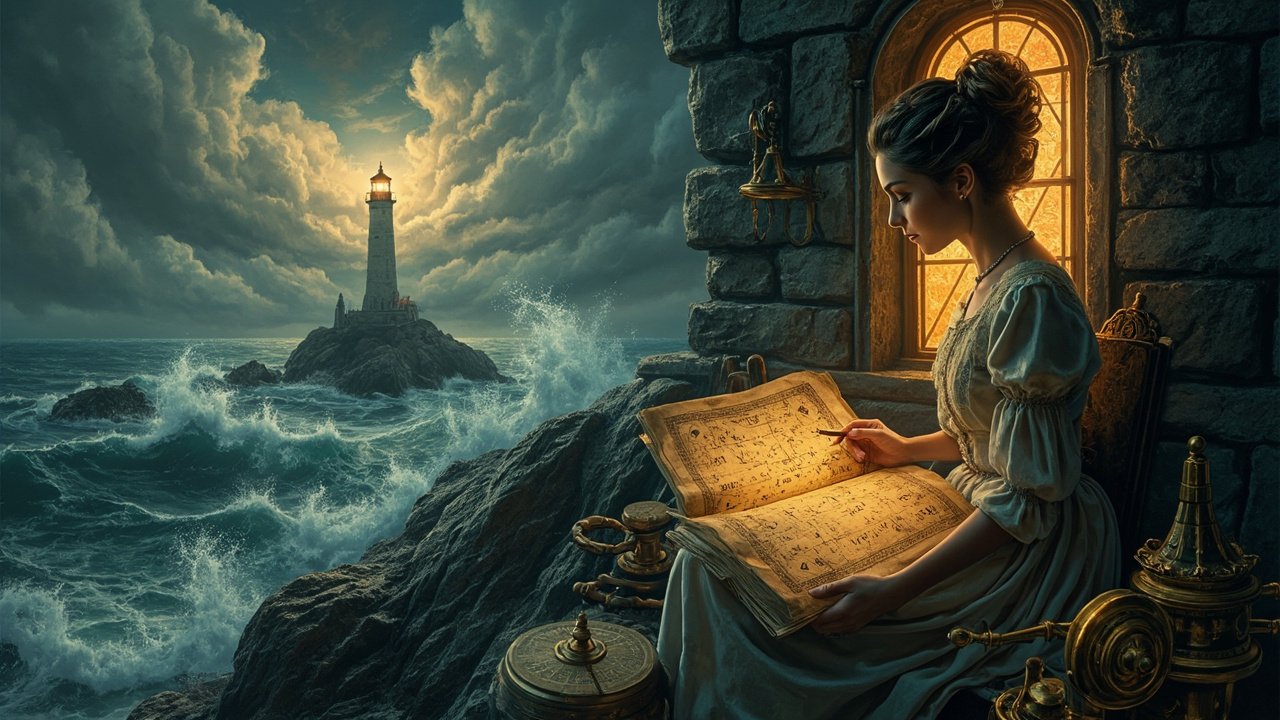
# عالم المد والجزر الفلكي
قبلت الدكتورة إلينور مارش منصبها في منارة كيرنموور بناءً على وعود الأدميرالية فيما يتعلق بالمكتبة. لكن ما لم يذكروه لها كان العزلة، أو الإيقاع الدائم الذي تضرب به الأطلسي الصخور من أسفل، أو تلك الطبيعة الغريبة للصمت التي تستقر بعد انسحاب الأمواج.
وصلت في أواخر أكتوبر، عندما لم تكن العواصف قد بدأت بشكل حقيقي بعد، لكن الضوء كان يحمل تلك الجودة النحاسية التي تسبق الشتاء. أشار إليها حارس المنارة، رجل في نحو الستين من عمره بيدين كخشب البلوط العتيق، إلى مقر إقامتها في الطابق الثاني - مكتب الحارس، كما أوضح، رغم أنه لم يحفظ هناك شيئاً سوى يقطته الخاصة منذ خمسة عشر عاماً. كان عالم المد والجزر الفلكي السابق سابقاً لسابقه؛ ولم يترك أيٌّ من الرجلين أوراقاً خلفه، بل مجرد هوس بسجلات المد والجزر الدقيقة التي تمتد لعقود.
"هل لديك الحسابات القمرية؟" سأل الحارس، رغم أن نبرته أشارت إلى أنه يعرف الإجابة مسبقاً.
"نظرية نيوتن، وتحسينات لابلاس. أحدث جداول الأدميرالية." وضعت إلينور صندوق أدواتها. "البحر ليس بهذه عدم القدرة على التنبؤ، سيد دروموند. يحتاج فقط إلى الصبر."
ستثبت أنها مخطئة، رغم أنها لم تعلم بذلك آنذاك.
مرت الأشهر الثلاثة الأولى بكفاءة هادئة. كانت إلينور تقوم قبل الفجر لتسجيل مستويات المياه، وتشارك ملاحظاتها مع التقويم القمري، وترسل تنبؤاتها إلى الأدميرالية عبر مكتب التلغراف في القرية، على بعد اثني عشر ميلاً. أطاعت المد والجزر حساباتها بدقة ميكانيكية كانت تتوقعها. يحدث المد العالي في كيرنموور تقريباً بعد اثنتين وخمسين دقيقة كل يوم، وفقاً لمرور القمر. تتبع مد الربيع الانقلابات. كل شيء كان كما ينبغي.
ومع ذلك.
كانت المكتبة هي حيث بدأت المتاعب. احتل الغرفة أصغر حجرة في المنارة، مساحة دائرية تحت شرفة الفوانيس حيث تراكمت الكتب لأكثر من قرن. اكتشفت إلينور ذلك في أسبوعها الثاني، عندما أصبح المشي في الهواء الطلق مستحيلاً وطلبت نشاطاً يتجاوز أدواتها. كانت معظم المجلدات خرائط بحرية، وتوجيهات إبحار الأدميرالية، وأدلة تقنية متراكمة لأجيال. لكن في الجزء الخلفي من أدنى رف، خلف صف من التقويمات المبقعة بالماء، وجدت مخطوطة.
لم تكن قديمة بالمعنى التقليدي - لا رق، ولا كتابة قرون وسطى. كان الورق سميكاً، ليفياً، وبدا مصنوعاً يدوياً. كُتب النص بحبر تلاشى لونه إلى لون الدم المجفف، ولم تكن لغة تستطيع إلينور التعرف عليها. لا أبجدية درستها، ولا عائلة نصوص تستطيع تصنيفها. كانت الأحرف كثيفة وزاوية، على عكس المنحنيات المتدفقة للعربية أو الدقة الهندسية للسنسكريتية. بدت وكأنها تطوى على نفسها، كما لو أن الكلمات صُممت لتُقرأ فقط من زاوية العين.
نسخت عدة صفحات وأرسلتها إلى زميل في كامبريدج، عالم لغات متخصص في اللغات الميتة. جاء ردُه بعد ثلاثة أسابيع: غير معروف تماماً بالنسبة لي. أريته لزميليين. واحد يعتقد أنه قد يكون شفرة؛ والآخر غير متأكد مما إذا كان يشكل لغة على الإطلاق. أين وجدت هذا؟
لم ترد إلينور. كانت قد بدأت تلاحظ التناقضات.
كانت صغيرة في البداية - مد والجزر يصلان دقائق قبل الوقت، أو يطولان بعد انخفاضاتها المتوقعة. نسبت ذلك إلى الأدوات، أعدت معايرتها، تحققت من حساباتها. ثم نمت الأخطاء. في ليلة الانقلاب الشتوي، ارتفع البحر إلى ارتفاع قالت جداولها إنه مستحيل: ثلاثة أقدام فوق أعلى مد ربيعي، بدون أي سبب قمري على الإطلاق. وقفت عند نافذة الشرفة وشاهدت المياه تتدفق ضد الصخور بإيقاع لا تستطيع تفسيره. لم يكن فوضوياً. لم يكن عشوائياً. كان شيئاً آخر تماماً - نمطاً يمكنها أن تكاد تدركه، لكن فقط عند حافة الفهم.
أدركت أن المخطوطة لم تكن مجرد غير قابلة للقراءة. كانت غير قابلة للترجمة لأنها لا تصف العالم بمصطلحات يمكن أن تُترجم إلى اللغة البشرية. لكنها كانت تصف شيئاً على أي حال. بدأت تدرسها بحدّة، تتتبع ارتفاعات المد مقابل الرموز، تبحث عن علاقة. كانت الأحرف تتجمع في مجموعات؛ وتتكرر المجموعات في تسلسلات؛ والتسلسلات تقابل أحداث المد والجزر التي سجلتها. لم تكن سرداً. لم تكن تقويماً. كانت أقرب إلى الموسيقى - درجة للبحر نفسه، كتبها شخص تعلم كيف يقرأ ذاكرة الماء.
لم تستطع فك رموز النص. لكنها تعلمت إيقاعه.
بحلول فبراير، توقفت إلينور عن إرسال تنبؤاتها القمرية إلى الأدميرالية. بدلاً من ذلك، سجّلت دورات المخطوطة ووزعتها كتوقعاتها. اعتقد حارس المنارة أنها غريبة لكنه لم يطرح أسئلة؛ كان قد تعلم، ربما، أن علماء المد والجزر الكوكبية مخلوقات غريبة، وأن التدخل لا يدعو إلا للتعقيد. قالت أسطول الصيد في القرية إن جداول المد والجزر الخاصة بها كانت الأكثر دقة في الذاكرة الحية. تلقت إشادة من المكتب الهيدروغرافي، أودعتها دون قراءة.
جاء الربيع متأخراً تلك السنة. في ليلة الاعتدال الربيعي، صعدت إلينور إلى شرفة الفوانيس وفتحت المخطوطة عند الصفحة التي صارت تفكر فيها كالحركة الأخيرة. كانت الرموز هناك مختلفة - أكبر، متباعدة أكثر عمداً، كما لو أن المؤلف الأصلي توقف ليعتبر كل واحد منها. لم تفهمها. لن تفهمها أبداً. لكنها تستطيع أن تشعر بها الآن: إيقاعاً vast وصبوراً لا علاقة له بالقمر، يستمد دوراته من شيء أعمق وأقدم من أي قمر صناعي يمكن أن يقيس.
ارتفع البحر للقاءها. كانت محقة في اتباعه.
في الأسفل، نظر حارس المنارة لأعلى من دفتره ورأى أن الضوء قد انطفأ. دوّن ساعة الحدوث، كما يقتضي البروتوكول، ولم يتساءل لماذا. بعض المعرفة، كما اعتقد،
# Die Gezeiten-Astronomin
Dr. Eleanor Marsh hatte die Stelle am Leuchtturm von Cairnmore aufgrund der Zusicherungen der Admiralität bezüglich der Bibliothek angenommen. Was sie nicht erwähnt hatten, waren die Isolation, das unablässige Schlagen des Atlantiks gegen die Felsen darunter, oder die eigentümliche Beschaffenheit der Stille, die sich nach dem Zurückweichen der Wellen niederließ.
Sie arrived in late October, als die Stürme noch nicht recht begonnen hatten, aber das Licht jene messingfarbene Qualität besaß, die dem Winter vorausgeht. Der Leuchtturmwärter, ein vielleicht sechzigjähriger Mann mit Händen wie verwitterte Eiche, zeigte ihr ihre Unterkunft im zweiten Stock – das Wärterbüro, erklärte er, obwohl er dort seit fünfzehn Jahren nichts außer seiner eigenen Wache gehalten hatte. Der vorherige Gezeiten-Astronom war der Vorgänger seines Vorgängers gewesen; keiner der beiden Männer hatte Papiere hinterlassen, nur eine Besessenheit von akribischen Gezeitendaten, die sich über Jahrzehnte erstreckten.
"Haben Sie die Mondberechnungen?" fragte der Wärter, obwohl sein Tonfall verriet, dass er die Antwort bereits kannte.
"Newtons Theorie, Laplaces Verfeinerungen. Die neuesten Tabellen der Admiralität." Eleanor stellte ihren Instrumentenkoffer ab. "Das Meer ist nicht so unberechenbar, Mr. Drummond. Es erfordert lediglich Geduld."
Sie sollte sich irren, obwohl sie es damals noch nicht wusste.
Die ersten drei Monate vergingen in stiller Kompetenz. Eleanor stand vor der Dämmerung auf, um die Wasserstände aufzuzeichnen, verglich ihre Beobachtungen mit dem Mondkalender und sandte ihre Vorhersagen per Telegraph an die Admiralität im Dorf, zwölf Meilen entfernt. Die Gezeiten gehorchten ihren Berechnungen mit der mechanischen Präzision, die sie erwartet hatte. Hochwasser in Cairnmore trat ungefähr zweiundfünfzig Minuten später jeden Tag auf, gemäß dem Monddurchgang. Die Springfluten folgten den Syzygien. Alles war, wie es sein sollte.
Und doch.
Es war in der Bibliothek, wo die Probleme begannen. Der Raum nahm die kleinste Kammer des Leuchtturms ein, einen runden Raum unter der Laternengalerie, wo sich Bücher über ein Jahrhundert hinweg angesammelt hatten. Eleanor entdeckte ihn in ihrer zweiten Woche, als das Wetter Spaziergänge im Freien unmöglich machte und sie eine Beschäftigung jenseits ihrer Instrumente suchte. Die meisten Bände waren Seekarten, admiralitätliche Segelanweisungen und die akkumulierten technischen Handbücher von Generationen. Aber ganz hinten im untersten Regal, hinter einer Reihe wasserfleckiger Almanache, fand sie eine Handschrift.
Sie war nicht im konventionellen Sinne alt – kein Pergament, keine mittelalterliche Schrift. Das Papier war dick, faserig und schien von Hand gefertigt worden zu sein. Der Text war in einer Tinte geschrieben, die zu der Farbe von getrocknetem Blut verblasst war, und es war keine Sprache, die Eleanor erkannte. Kein Alphabet, das sie studiert hatte, keine Schriftenfamilie, die sie einordnen konnte. Die Zeichen waren dicht und eckig, anders als die fließenden Kurven des Arabischen oder die geometrische Präzision des Sanskrit. Sie schienen sich in sich selbst zu falten, als wären die Worte dafür konzipiert, nur aus dem Augenwinkel gelesen zu werden.
Sie kopierte mehrere Seiten und schickte sie an einen Kollegen in Cambridge, einen Linguisten, der sich auf tote Sprachen spezialisiert hatte. Seine Antwort kam drei Wochen später: Mir völlig unbekannt. Ich habe sie zwei Kollegen gezeigt. Einer glaubt, es könnte eine Chiffre sein; der andere ist unsicher, ob es überhaupt eine Sprache darstellt. Wo haben Sie dies gefunden?
Eleanor antwortete nicht. Sie hatte begonnen, die Diskrepanzen zu bemerken.
Sie waren zunächst klein – Gezeiten, die Minuten zu früh eintrafen oder sich über ihre vorhergesagten Tiefststände hinaus hinzogen. Sie führte dies auf die Instrumente zurück, kalibrierte sie neu, überprüfte ihre Berechnungen. Dann wuchsen die Fehler. In der Nacht der Wintersonnenwende stieg das Meer auf eine Höhe, die ihre Tabellen als unmöglich bezeichneten: drei Fuß über der höchsten Springflut, ohne jede lunare Ursache. Sie stand am Galeriefenster und beobachtete, wie das Wasser gegen die Felsen schlug, mit einem Rhythmus, den sie nicht erklären konnte. Es war nicht chaotisch. Es war nicht zufällig. Es war etwas völlig anderes – ein Muster, das sie fast wahrnehmen konnte, gerade jenseits der Grenze des Verstehens.
Sie erkannte, dass die Handschrift nicht einfach unlesbar war. Sie war unübersetzbar, weil sie die Welt nicht in Begriffen beschrieb, die sich in menschliche Sprache abbilden ließen. Aber sie beschrieb dennoch etwas. Sie begann sie besessen zu studieren, verfolgte die Gezeitenhöhen gegen die Symbole, suchte nach Korrelationen. Die Zeichen gruppierten sich; die Gruppen wiederholten sich in Sequenzen; die Sequenzen entsprachen Gezeitenereignissen, die sie aufgezeichnet hatte. Es war keine Erzählung. Es war kein Kalender. Es war etwas, das näher an Musik war – eine Partitur für das Meer selbst, geschrieben von jemandem, der gelernt hatte, die Erinnerung des Wassers zu lesen.
Sie konnte den Text nicht entziffern. Aber sie lernte seinen Rhythmus.
Im Februar hörte Eleanor auf, der Admiralität ihre Mondvorhersagen zu schicken. Stattdessen zeichnete sie die Zyklen der Handschrift auf und verbreitete sie als ihre Prognosen. Der Leuchtturmwärter hielt sie für seltsam, stellte aber keine Fragen; er hatte vielleicht gelernt, dass Gezeiten-Astronomen eigentümliche Wesen waren und dass Einmischung nur Komplikationen einlud. Die Fischereiflotte im Dorf bemerkte, dass ihre Gezeitentabellen die genauesten seit Menschengedenken waren. Sie erhielt eine Auszeichnung vom Hydrographischen Amt, die sie ungelesen ablegte.
Der Frühling kam spät in diesem Jahr. In der Nacht der Frühlingstagundnachtgleiche stieg Eleanor zur Laternengalerie hinauf und schlug die Handschrift an der Seite auf, die sie als den letzten Satz zu betrachten gelernt hatte. Die Symbole dort waren anders – größer, bewusster platziert, als hätte der ursprüngliche Autor innezuhalten erwogen, um jedes einzelne zu bedenken. Sie verstand sie nicht. Sie würde sie niemals verstehen. Aber sie konnte sie jetzt fühlen: einen gewaltigen und geduldigen Rhythmus, der nichts mit dem Mond zu tun hatte, der seine Zyklen aus etwas zog, das tiefer und älter war als jeder Satellit messen konnte.
Das Meer stieg ihr entgegen. Sie hatte Recht gehabt, ihm zu folgen.
Unten blickte der Leuchtturmwärter von seinem Logbuch auf und sah, dass das Licht erloschen war. Er vermerkte die Stunde, wie das Protokoll es verlangte, und fragte nicht, warum. Manche Kenntnis, hatte er vielleicht gelernt,
# La Astrónoma de las Mareas
La Doctora Eleanor Marsh había aceptado el puesto en el Faro de Cairnmore basándose en las garantías del Almirantazgo respecto a la biblioteca. Lo que no habían mencionado era el aislamiento, la percusión incesante del Atlántico contra las rocas de abajo, o la cualidad peculiar del silencio que se asentaba después de que las olas se retiraban.
Llegó a finales de octubre, cuando las tormentas aún no habían comenzado realmente pero la luz tenía esa cualidad color bronce que precede al invierno. El farero, un hombre de unos sesenta años con manos como roble weathered, la condujo a sus aposentos en el segundo piso — la oficina del farero, explicó, aunque no había guardado nada más que su propia vigilia allí durante quince años. El anterior astrónomo de mareas había sido el predecesor del predecesor; ninguno de los dos hombres había dejado papeles, solo una obsesión con meticulosos registros de mareas que abarcaban décadas.
"¿Tiene los cálculos lunares?" preguntó el farero, aunque su tono sugería que ya conocía la respuesta.
"La teoría de Newton, los refinamientos de Laplace. Las tablas más recientes del Almirantazgo." Eleanor放下了 su maletín de instrumentos. "El mar no es tan impredecible, Señor Drummond. Solo requiere paciencia."
Se equivocaría, aunque no lo sabía entonces.
Los primeros tres meses pasaron con una competencia silenciosa. Eleanor se levantaba antes del amanecer para registrar los niveles del agua, cruzaba sus observaciones con el calendario lunar y enviaba sus predicciones al Almirantazgo mediante la oficina de telégrafos del pueblo, a doce millas de distancia. Las mareas obedecían sus cálculos con la precisión mecánica que había aprendido a esperar. La pleamar en Cairnmore ocurría aproximadamente cincuenta y dos minutos después cada día, de acuerdo con el tránsito de la luna. Las mareas vivas seguían las sicigias. Todo estaba como debía estar.
Y sin embargo.
Fue en la biblioteca donde comenzaron los problemas. La habitación ocupaba la cámara más pequeña del faro, un espacio circular bajo la galería de la linterna donde los libros se habían acumulado durante más de un siglo. Eleanor lo descubrió en su segunda semana, cuando el clima hacía imposibles los paseos al aire libre y buscaba una ocupación más allá de sus instrumentos. La mayoría de los volúmenes eran cartas náuticas, instrucciones de navegación del Almirantazgo y los manuales técnicos acumulados de generaciones. Pero al fondo del estante más bajo, detrás de una fila de almanaques manchados de agua, encontró un manuscrito.
No era antiguo en el sentido convencional —sin vitela, sin escritura medieval. El papel era grueso, fibroso y parecía haber sido hecho a mano. El texto estaba escrito con tinta que se había desvanecido al color de la sangre seca, y estaba en un idioma que Eleanor no reconocía. Ningún alfabeto que hubiera estudiado, ninguna familia de escritura que pudiera ubicar. Los caracteres eran densos y angulares, al contrario de las curvas fluidas del árabe o la precisión geométrica del sánscrito. Parecían doblarse sobre sí mismos, como si las palabras estuvieran diseñadas para leerse solo desde el rabillo del ojo.
Copió varias páginas y las envió a un colega en Cambridge, un lingüista especializado en lenguas muertas. Su respuesta llegó tres semanas después: Completamente desconocido para mí. Se lo he mostrado a dos colegas. Uno cree que puede ser un cifrado; el otro no está seguro de si constituye lenguaje en absoluto. ¿Dónde lo encontró?
Eleanor no respondió. Había comenzado a notar las discrepancias.
Al principio fueron pequeñas —mareas que llegaban minutos antes, o se demoraban más allá de sus bajamares predichos. Lo atribuyó a los instrumentos, los recalibró, verificó sus cálculos. Luego los errores crecieron. En la noche del solsticio de invierno, el mar subió a una altura que sus tablas decían imposible: tres pies por encima de la marejada más alta, sin causa lunar alguna. Se paró en la ventana de la galería y observó cómo el agua avanzaba contra las rocas con un ritmo que no podía explicar. No era caótico. No era aleatorio. Era algo completamente diferente —un patrón que casi podía percibir, justo más allá del borde de la comprensión.
Se dio cuenta de que el manuscrito no era simplemente ilegible. Era intraducible porque no describía el mundo en términos que pudieran mapearse al lenguaje humano. Pero describía algo de todos modos. Comenzó a estudiarlo obsesivamente, rastreando las alturas de marea contra los símbolos, buscando correlaciones. Los caracteres caían en grupos; los grupos se repetían en secuencias; las secuencias correspondían a eventos de marea que había registrado. No era una narrativa. No era un calendario. Era algo más cercano a la música —una partitura para el mar mismo, escrita por alguien que había aprendido a leer la memoria del agua.
No podía descifrar el texto. Pero aprendió su ritmo.
Para febrero, Eleanor dejó de enviar sus predicciones lunares al Almirantazgo. En su lugar, registraba los ciclos del manuscrito y los emitía como sus pronósticos. El farero la encontraba extraña pero no hacía preguntas; había aprendido, quizás, que los astrónomos de mareas eran criaturas peculiares, y que la interferencia solo invitaba complicaciones. La flota pesquera del pueblo mencionó que sus tablas de mareas eran las más precisas en la memoria de los vivos. Recibió una mención del Servicio Hidrográfico, que archivó sin leer.
La primavera llegó tarde ese año. En la noche del equinoccio de primavera, Eleanor subió a la galería de la linterna y abrió el manuscrito en la página que había llegado a considerar como el movimiento final. Los símbolos allí eran diferentes —más grandes, más deliberadamente espaciados, como si el autor original se hubiera detenido a considerar cada uno de ellos. No los entendía. Nunca los entendería. Pero podía sentirlos, ahora: un ritmo vasto y paciente que no tenía nada que ver con la luna, que extraía sus ciclos de algo más profundo y antiguo que cualquier satélite podría medir.
El mar subió a su encuentro. Había tenido razón al seguirlo.
Abajo, el farero levantó la vista de su libro de registro y vio que la luz se había apagado. Anotó la hora, como el protocolo exigía, y no preguntó por qué. Algún conocimiento, había aprendido quizás,
# L'Astronome des Marées
Le Docteur Eleanor Marsh avait accepté le poste au Phare de Cairnmore sur la foi des assurances de l'Amirauté concernant la bibliothèque. Ce qu'ils avaient omis de mentionner, c'était l'isolement, la percussion incessante de l'Atlantique contre les rochers en contrebas, ou cette qualité particulière du silence qui s'installait après le retrait des vagues.
Elle arriva fin octobre, quand les tempêtes n'avaient pas encore vraiment commencé mais que la lumière possédait cette qualité cuivrée qui précédait l'hiver. Le gardien du phare, un homme d'une soixante d'années aux mains comme du chêne patiné, la conduisit à ses quartiers au deuxième étage — le bureau du gardien, expliqua-t-il, bien qu'il n'y eût rien conservé d'autre que sa propre veille depuis quinze ans. L'astronome des marées précédent était le prédécesseurr du prédécesseurr ; aucun des deux hommes n'avait laissé de documents, seulement une obsession pour des relevés méticuleux des marées s'étendant sur des décennies.
« Vous avez les calculs lunaires ? » demanda le gardien, bien que son ton suggérât qu'il connaissait déjà la réponse.
« La théorie de Newton, les raffinements de Laplace. Les dernières tables de l'Amirauté. » Eleanor déposa sa caisse d'instruments. « La mer n'est pas si imprévisible, Monsieur Drummond. Elle exige simplement de la patience. »
Elle avait tort, bien qu'elle ne le sût pas encore.
Les trois premiers mois s'écoulèrent dans une compétence tranquille. Eleanor se levait avant l'aube pour enregistrer les niveaux d'eau, croisait ses observations avec le calendrier lunaire, et envoyait ses prédictions à l'Amirauté par le bureau télégraphique du village, à douze milles. Les marées obéissaient à ses calculs avec la précision mécanique qu'elle avait appris à attendre. La pleine mer à Cairnmore survenait approximativement cinquante-deux minutes plus tard chaque jour, conformément au passage de la lune. Les grandes marées suivaient les syzygies. Tout était comme il se devait.
Et pourtant.
Ce fut dans la bibliothèque que commencèrent les ennuis. La pièce occupait la plus petite chambre du phare, un espace circulaire sous la galerie de la lanterne où des livres s'étaient accumulés pendant plus d'un siècle. Eleanor la découvrit lors de sa deuxième semaine, quand la météo rendit les promenades extérieures impossibles et qu'elle chercha une occupation au-delà de ses instruments. La plupart des volumes étaient des cartes nautiques, des instructions de navigation de l'Amirauté, et les manuels techniques accumulés de générations. Mais au fond de l'étagère la plus basse, derrière une rangée d'almanachs tachés d'eau, elle trouva un manuscrit.
Il n'était pas ancien au sens conventionnel — pas de vélin, pas d'écriture médiévale. Le papier était épais, fibreux, et semblait avoir été fabriqué à la main. Le texte était écrit à l'encre qui avait pâli jusqu'à la couleur du sang séché, et c'était dans aucune langue qu'Eleanor reconnût. Aucun alphabet qu'elle eût étudié, aucune famille d'écritures qu'elle pût classer. Les caractères étaient denses et angulaires, contrairement aux courbes fluides de l'arabe ou à la précision géométrique du sanskrit. Ils semblaient se replier sur eux-mêmes, comme si les mots étaient conçus pour être lus seulement du coin de l'œil.
Elle copia plusieurs pages et les envoya à un collègue à Cambridge, un linguiste spécialisé dans les langues mortes. Sa réponse parvint trois semaines plus tard : Complètement inconnu de moi. Je l'ai montré à deux collègues. L'un pense que c'est peut-être un chiffre ; l'autre hésite à déterminer si cela constitue un langage. Où avez-vous trouvé cela ?
Eleanor ne répondit pas. Elle avait commencé à remarquer les divergences.
Elles étaient d'abord modestes — des marées qui arrivaient quelques minutes en avance, ou s'attardaient au-delà de leurs basses prédites. Elle les attribua aux instruments, les recalibra, vérifia ses calculs. Puis les erreurs grandirent. La nuit du solstice d'hiver, la mer s'éleva à une hauteur que ses tables disaient impossible : trois pieds au-dessus de la plus haute grande marée, sans cause lunaire whatsoever. Elle se tenait à la fenêtre de la galerie et regardait l'eau déferler contre les rochers avec un rythme qu'elle ne pouvait expliquer. Ce n'était pas chaotique. Ce n'était pas aléatoire. C'était autre chose — un motif qu'elle pouvait presque percevoir, juste au-delà du bord de la compréhension.
Elle réalisa que le manuscrit n'était pas simplement illisible. Il était intraduisible parce qu'il ne décrivait pas le monde en termes qui se cartographiaient au langage humain. Mais il décrivait quelque chose néanmoins. Elle commença à l'étudier obsessionnellement, traçant les hauteurs de marée par rapport aux symboles, cherchant des corrélations. Les caractères se regroupaient ; les groupes se retrouvaient en séquences ; les séquences correspondaient aux événements de marée qu'elle avait enregistrés. Ce n'était pas un récit. Ce n'était pas un calendrier. C'était quelque chose de plus proche de la musique — une partition pour la mer elle-même, écrite par quelqu'un qui avait appris à lire la mémoire de l'eau.
Elle ne pouvait pas déchiffrer le texte. Mais elle en apprit le rythme.
En février, Eleanor cessa d'envoyer ses prédictions lunaires à l'Amirauté. À la place, elle enregistra les cycles du manuscrit et les diffusa comme ses prévisions. Le gardien du phare la trouvait étrange mais ne posait pas de questions ; il avait appris, peut-être, que les astronomes des marées étaient des créatures peculiarities, et que l'ingérence n'invitait que des complications. La flottille de pêche du village remarqua que ses tables de marées étaient les plus précises jamais vues. Elle reçut une commendation du Bureau Hydrographique, qu'elle déposa sans lire.
Le printemps vint tard cette année-là. La nuit de l'équinoxe de printemps, Eleanor grimpa à la galerie de la lanterne et ouvrit le manuscrit à la page qu'elle en était venue à considérer comme le mouvement final. Les symboles y étaient différents — plus grands, plus délibérément espacés, comme si l'auteur original s'était arrêté pour considérer chacun d'eux. Elle ne les comprenait pas. Elle ne les comprendrait jamais. Mais elle pouvait les sentir, maintenant : un rythme vaste et patient qui n'avait rien à voir avec la lune, qui puisait ses cycles dans quelque chose de plus profond et de plus ancien que tout satellite ne pourrait mesurer.
La mer s'éleva à sa rencontre. Elle avait eu raison de la suivre.
En bas, le gardien du phare leva les yeux de son journal de bord et vit que la lumière s'était éteinte. Il nota l'heure, comme le protocole l'exigeait, et ne se demanda pas pourquoi. Certaines connaissances, avait-il peut-être appris,
# L'Astronomo delle Maree
La Dottoressa Eleanor Marsh aveva accettato l'incarico al Faro di Cairnmore sulla base delle assicurazioni dell'Ammiragliato riguardo alla biblioteca. Ciò che non avevano menzionato era l'isolamento, la percussione implacabile dell'Atlantico contro gli scogli sottostanti, o quella particolare qualità del silenzio che si depositava dopo il ritiro delle onde.
Arrivò a fine ottobre, quando le tempeste non erano ancora davvero iniziate ma la luce aveva quella qualità color ottone che precede l'inverno. Il guardiano del faro, un uomo di forse sessant'anni con mani come legno di quercia invecchiato, la accompagnò ai suoi alloggi al secondo piano — l'ufficio del guardiano, spiegò, sebbene non vi avesse custodito nulla fuorché la propria veglia per quindici anni. Il precedente astronomo delle maree era stato il predecessore del predecessore; nessuno dei due uomini aveva lasciato documenti, solo un'ossessione per meticolosi registri di marea che si estendevano per decenni.
"Ha i calcoli lunari?" chiese il guardiano, sebbene il suo tono suggerisse che conoscesse già la risposta.
"La teoria di Newton, i raffinamenti di Laplace. Le ultime tavole dell'Ammiragliato." Eleanor posò la sua cassetta degli strumenti. "Il mare non è così imprevedibile, Signor Drummond. Richiede solo pazienza."
Si sarebbe sbagliata, sebbene non lo sapesse ancora.
I primi tre mesi trascorsero in quieta competenza. Eleanor si alzava prima dell'alba per registrare i livelli dell'acqua, verificava le sue osservazioni contro il calendario lunare e inviava le sue previsioni all'Ammiragliato tramite l'ufficio del telegrafo nel villaggio, a dodici miglia di distanza. Le maree obbedivano ai suoi calcoli con la precisione meccanica che si era aspettata. L'alta marea a Cairnmore si verificava approssimativamente cinquantadue minuti dopo ogni giorno, in conformità con il transito della luna. Le maree vive seguivano le sizigie. Tutto era come avrebbe dovuto essere.
Eppure.
Fu nella biblioteca che iniziarono i guai. La stanza occupava la camera più piccola del faro, uno spazio circolare sotto la galleria della lanterna dove i libri si erano accumulati per più di un secolo. Eleanor la scoprì nella sua seconda settimana, quando il maltempo rendeva impossibili le passeggiate all'aperto e cercava un'occupazione oltre i suoi strumenti. La maggior parte dei volumi erano carte nautiche, istruzioni di navigazione dell'Ammiragliato e i manuali tecnici accumulati di generazioni. Ma sul fondo dello scaffale più basso, dietro una fila di almanacchi macchiati d'acqua, trovò un manoscritto.
Non era vecchio nel senso convenzionale — nessun pergamena, nessuna scrittura medievale. La carta era spessa, fibrosa, e sembrava essere stata fatta a mano. Il testo era scritto con un inchiostro che era sbiadito al colore del sangue secco, ed era in una lingua che Eleanor non riconosceva. Nessun alfabeto che avesse studiato, nessuna famiglia di scritture che potesse classificare. I caratteri erano densi e angolari, unlike the flowing curves of Arabic or the geometric precision of Sanskrit. Sembrava che si piegassero su se stessi, come se le parole fossero progettate per essere lette solo dalla coda dell'occhio.
Copìo diverse pagine e le inviò a un collega a Cambridge, un linguista specializzato in lingue morte. La sua risposta arrivò tre settimane dopo: Completamente sconosciuto a me. L'ho mostrato a due colleghi. Uno crede che possa essere una cifra; l'altro è incerto se costituisca linguaggio. Dove l'ha trovato?
Eleanor non rispose. Aveva iniziato a notare le discrepanze.
Erano piccole all'inizio — maree che arrivavano minuti in anticipo, o indugiavano oltre le loro bassissime previste. Lo attribuì agli strumenti, li ricalibrò, verificò i suoi calcoli. Poi gli errori crebbero. La notte del solstizio d'inverno, il mare si alzò a un'altezza che le sue tavole dicevano impossibile: tre piedi sopra la più alta marea viva, senza alcuna causa lunare. Rimase alla finestra della galleria e osservò l'acqua sorgere contro gli scogli con un ritmo che non poteva spiegare. Non era caotico. Non era casuale. Era qualcos'altro interamente — un modello che poteva quasi percepire, appena oltre il bordo della comprensione.
Si rese conto che il manoscritto non era semplicemente illeggibile. Era intraducibile perché non descriveva il mondo in termini che si potessero mappare al linguaggio umano. Ma descriveva qualcosa comunque. Iniziò a studiarlo ossessivamente, tracciando le altezze delle maree rispetto ai simboli, cercando correlazioni. I caratteri cadevano in gruppi; i gruppi ricorrevano in sequenze; le sequenze corrispondevano a eventi di marea che aveva registrato. Non era una narrazione. Non era un calendario. Era qualcosa di più vicino alla musica — una partitura per il mare stesso, scritta da qualcuno che aveva imparato a leggere la memoria dell'acqua.
Non poteva decifrare il testo. Ma ne imparò il ritmo.
A febbraio, Eleanor smise di inviare all'Ammiragliato le sue previsioni lunari. Invece, registrò i cicli del manoscritto e li trasmise come sue previsioni. Il guardiano del faro la trovava strana ma non faceva domande; aveva imparato, forse, che gli astronomi delle maree erano creature peculiar, e che l'interferenza invitava solo complicazioni. La flotta da pesca nel villaggio notò che le sue tavole delle maree erano le più accurate mai viste. Ricevette una lode dall'Ufficio Idrografico, che archiviò senza leggere.
La primavera arrivò tardi quell'anno. La notte dell'equinozio di primavera, Eleanor salì alla galleria della lanterna e aprì il manoscritto alla pagina che era arrivata a considerare come il movimento finale. I simboli lì erano diversi — più grandi, più deliberatamente distanziati, come se l'autore originale si fosse fermato a considerare ciascuno di essi. Non li capiva. Non li avrebbe mai capiti. Ma poteva sentirli, ora: un ritmo vasto e paziente che non aveva nulla a che fare con la luna, che attingeva i suoi cicli da qualcosa di più profondo e antico di quanto qualsiasi satellite potesse misurare.
Il mare si alzò per incontarla. Aveva avuto ragione a seguirlo.
Sotto, il guardiano del faro alzò lo sguardo dal suo registro e vide che la luce si era spenta. Annotò l'ora, come il protocollo richiedeva, e non si chiese perché. Alcune conoscenze, aveva forse imparato,