أرشيف العطور
spent fifteen years as a fragrance historian, and she had long since learned to distrust her own senses. Memory, she understood, was a perfumer's trick—combinations of molecules that unlocked doors within the mind, doors the owner often forgot existed. She had built her career on this principle, parsing Georgian correspondence for references to scent, reconstructing perfumes from literary descriptions, perfume-makers' ledgers, and the handwritten confessions of lovers who had written to one another of roses and musk and something indefinable called whistling jasmine.
كانت إلينور فانس قد أمضت خمس عشرة سنة في مجال تاريخ العطور، وكانت قد تعلمت منذ زمن بعيد ألا تثق بحواسها الخاصة. كانت تدرك أن الذاكرة كانت خدعة العطار—مزيجًا من الجزيئات تفتح أبوابًا في العقل، أبوابًا غالبًا ما ينسى صاحبها أنها موجودة. كانت قد بنت مسيرتها المهنية على هذا المبدأ، تفكيك المراسلات الجورجية بحثًا عن إشارات إلى الروائح، إعادة بناء العطور من الأوصاف الأدبية، ودفاتر صانعي العطور، واعترافات lovers المكتوبة بخط اليد الذين كتبوا لبعضهم البعض عن الورد والمسك وشيء لا يمكن تعريفه叫什么 "الفل المنت Whistle".
The Alderton Collection arrived on a Tuesday in November, seventeen boxes of correspondence spanning 1789 to 1797. Eleanor had been told the letters were routine—a merchant's family, no particularly notable figures, but a remarkable number of references to perfume throughout. She had accepted the commission without enthusiasm. Routine work paid the bills.
وصلت مجموعة ألديرتون يوم الثلاثاء من شهر نوفمبر، في سبعة عشر صندوقًا من المراسلات تمتد من عام 1789 إلى عام 1797. كانت إلينور قد قيل لها إن الرسائل روتينية—عائلة تاجر، ولا شخصيات بارزة بشكل خاص، لكن عددًا ملحوظًا من الإشارات إلى العطر في جميع أنحاءها. كانت قد قبلت التكليف без энтузиазма. العمل الروتيني يدفع الفواتير.
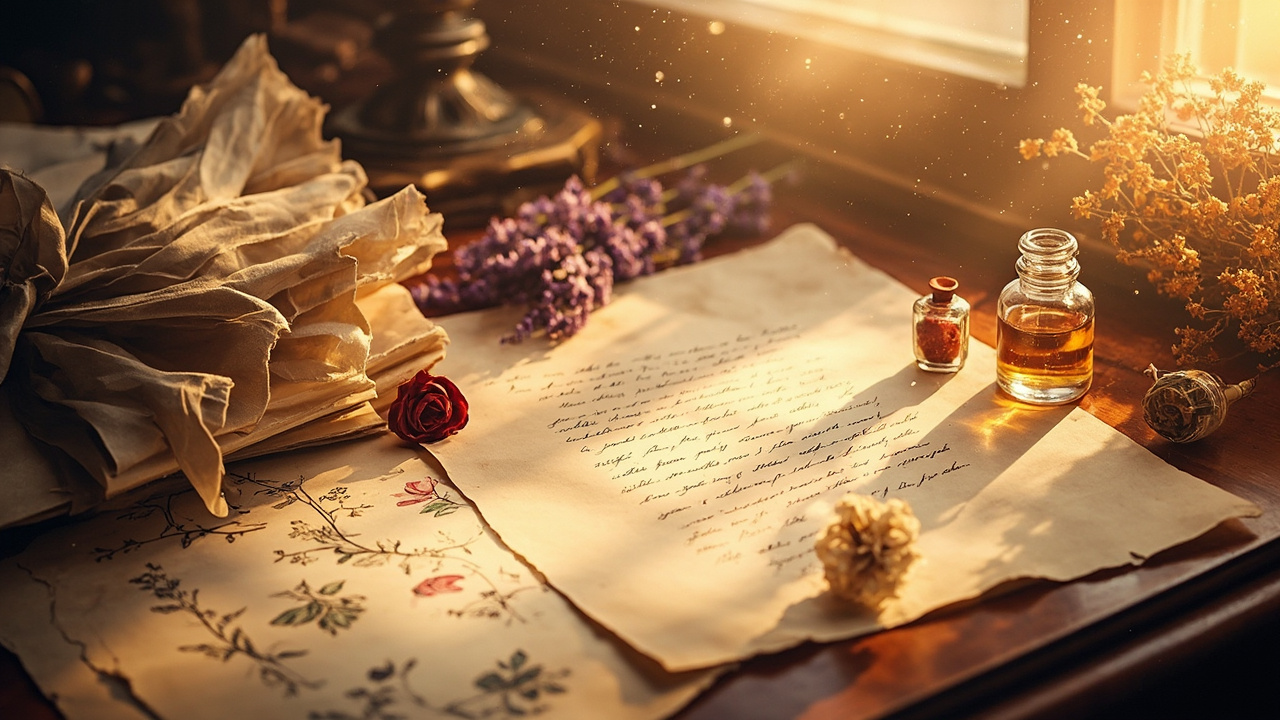
She began with the earliest letters, written in a woman's hand—delicate, the ink faded to the colour of old blood. The writer called herself Cecilia. She wrote to a man named Edmund, and their correspondence had the unmistakable rhythm of a love affair conducted entirely through post.
بدأت بالرسائل earliest، المكتوبة بخط امرأة—رقيق، والحبر باهت إلى لون الدم القديم. كانتكاتبة herself Cecilia. كانت تكتب إلى رجل اسمه Edmund، ومراسلاتهم كانت تحمل إيقاع حب لا لبس فيه conducted entirely through post.
My dearest Edmund,
عزيزي Edmund
You ask me to describe the scent of your mother's garden in summer, that you might carry it with you to London. I shall try. It is, I think, the particular combination that makes it: first the lavender that borders the path, always slightly dusty with the heat; then, when you pass through the gate, the roses—tea roses, the pale yellow ones, not the garish red that blooms elsewhere in the village. And beneath it all, something green and almost bitter, which I believe comes from the box hedge. When these are all heated together by the afternoon sun, they become something singular. Not a perfume. A place. A time of day. Perhaps that is what you truly ask me to capture.
تطلب مني أن أصف لك رائحة حديقة أمك في الصيف، لكي تحملها معك إلى لندن. سأحاول. إنها، أعتقد، تلك التركيبة الخاصة التي تجعلها: أولاً الخزامى التي تحيط بالمسار، دائمًا مزغبة قليلاً بالحرارة؛ ثم، عندما تمر من خلال البوابة، الورد—ورد الشاي، الوردي الباهت، وليس الأحمر الفاحش الذي يزهر في مكان آخر في القرية. وتحته كله، شيء أخضر ومر تقريبًا، أعتقد أنه يأتي من السياج Box. عندما يتم تسخين كل هذه معًا بواسطة شمس ما بعد الظهر، تصبح شيئًا مفردًا. ليس عطرًا. مكان. وقت من اليوم. ربما هذا ما تطلبه مني حقًا أن أسرد.
Eleanor set down the letter. She had read many such descriptions, but something about this one—perhaps the phrase not a perfume, a place—lodged in her chest. She continued reading, making notes, cataloguing ingredients.
وضعت إلينور الرسالة. كانت قد قرأت العديد من هذه الأوصاف، لكن something about this one—ربما العبارة not a perfume, a place—استقرت في صدرها. واصلت القراءة، تدوين الملاحظات، فهرسة المكونات.
By the third week, she had assembled a list: lavender, Rosa alba, common box, something resinous that she suspected was benzoin, and—for the top note—jasmine, though she could not find the whistling variety that Cecilia mentioned. The fragrance houses she consulted had never heard of it. She ordered samples of the other components and began her reconstruction in the small laboratory she kept at the back of her apartment.
بحلول الأسبوع الثالث، كانت قد جمعت قائمة: خزامى، روزا ألبا، Box شائع، شيء صمغي اشتبهت في أنه بنزوين، و—for the top note—ياسمين، على الرغم من أنها لم تستطع find the whistling variety that Cecilia mentioned. لم تسمع بيوت العطور التي consult بها أبدًا به. طلبت عينات من المكونات الأخرى وبدأت إعادة البناء في المختبر الصغير الذي احتفظت به في الجزء الخلفي من شقتها.
The first attempt was wrong. Too sweet, too modern somehow. She adjusted the proportions, waited for the jasmine absolute to arrive, tried again. Still wrong. She reread Cecilia's letters, searching for what she had missed.
كانت المحاولة الأولى خاطئة. حلوة جدًا، عصرية جدًا بطريقة ما. عدلت النسب، انتظرت وصول absolute الياسمين، حاولت مرة أخرى. لا يزال خاطئًا. أعدت قراءة رسائل سيسيليا، تبحث عما فاتها.
I found the jasmine at the old mill, Cecilia had written in a letter from late summer 1791. It grows wild there, by the water, and in the evenings the breeze passes through the flowers and makes them sing. Or so it seems to me. Perhaps you must hear it yourself to understand. When you return, I will take you there.
وجدت الياسمين عند الطاحونة القديمة، كتبت سيسيليا في رسالة من أواخر صيف 1791. ينمو هناك بشكل بري، بجانب الماء، وفي evenings يمر النسيم عبر الأزهار ويجعلها تغني. أو هكذا يبدو لي. ربما يجب أن تسمعها بنفسك لتفهم. عندما تعود، سأأخذك هناك.
Edmund never returned, at least not in the letters Eleanor had. His side of the correspondence ended abruptly in October 1791. Cecilia's continued for years afterward, increasingly desperate, increasingly alone, addressed to someone who never replied.
لم يعد إدموند أبدًا، على الأقل ليس في الرسائل التي كانت لدى إلينور. انتهت مراسلته فجأة في أكتوبر 1791. استمرت مراسلات سيسيليا لسنوات بعد ذلك، increasingly desperate، increasingly alone، موجهة إلى شخص لم يرد أبدًا.
Eleanor found herself, late one night, standing before her workbench with a finished accord in a sample vial. She had found a source for whistling jasmine—a variety of Jasminum grandiflorum grown in specific conditions, its petals producing a compound that, when heated, released a high, almost musical note. She had recreated it as closely as modern materials allowed. The final perfume sat before her, and she knew—with the certainty that came from fifteen years of this work—that it was right.
وجدت إلينور نفسها، في وقت متأخر من الليل، تقف أمام طاولة عملها مع accord مكتمل في قارورة عينات. كانت قد وجدت مصدرًا للـ whistling jasmine—صنف من الياسمين الجرانديفلوروم يزرع في ظروف محددة، ورقه ينتج مركبًا، عند تسخينه، يطلق note عالية، Almost musical. كانت قد أعادت خلقه بأقصى ما allow المواد الحديثة. كان العطر النهائي أمامها، وكانت تعرف—باليقين الذي جاء من خمس عشرة سنة من هذا العمل—أنه كان صحيحًا.
She uncapped the vial and raised it to her wrist.
أزالت الغطاء عن القارورة ورفعته إلى معصمها.
The first breath was lavender, as expected. The second was roses, yellow and cool. And then—
كانت النَّفَس الأول خزامى، كما هو متوقع. والثاني كان وردًا، أصفر وباردًا. And then—
Eleanor found herself standing not in her laboratory but at the edge of a meadow, the grass long and wet with dew, the light the peculiar golden quality of an English summer evening. She could feel the heat of the day in her skin and the coolness of the approaching night in the air. She could smell—truly smell, not the ghost of it—the jasmine, rising from somewhere beyond the meadow's edge, and she understood suddenly what Cecilia had meant. It was not that the breeze made the flowers sing. It was that the scent itself was music, a high clear note that seemed to hang in the air like a held breath.
وجدت إلينور نفسها تقف ليس في مختبرها ولكن على حافة مرج، العشب طويل ومبلل بالندى، الضوء من النوع الذهبي الخاص لأمسي summer الإنجليزية. كانت تستطيع أن تشعر بحرارة النهار في جلدها وبرودة الليل القادم في الهواء. كانت تستطيع أن تشم—تشم حقًا، وليس مجرد ظله—الياسمين، يتصاعد من مكان ما beyond حافة المرج، وفهمت فجأة ما قصدته سيسيليا. لم يكن الأمر أن النسيم جعل الأزهار تغني. كان الأمر أن الرائحة itself كانت موسيقى، note واضحة عالية بدت وكأنها معلقة في الهواء كنفَس محسوب.
She was wearing a dress of pale green cotton. Her feet were bare. She knew, without knowing how she knew, that she had walked here from the house at the end of the lane, the one with the blue door, and that someone was waiting for her by the mill pond.
كانت ترتدي فستانًا من القطن الأخضر الباهت. كانت قدماها حافيتين. كانت تعرف، دون أن تعرف كيف تعرف، أنها مشت إلى هنا من المنزل في نهاية الممر، quello con la porta blu، وأن شخصًا ما كان ينتظرها بجانب بركة الطاحونة.
The memory—if it was a memory—was so vivid that Eleanor felt her heart constrict with longing. She knew she was about to turn, and in the turning she would see him, and she knew already that when she did, the feeling would be unbearable—not grief, not exactly, but something close to it. The knowledge that this moment would end. The knowledge that it was already ending even as it began.
كانت الذاكرة—إذا كانت ذاكرة—حية لدرجة أن إلينور شعرت بأن قلبها ينقبض بالشوق. كانت تعرف أنها على وشك أن تدور، وفي الدوران ستراه، وكانت تعرف بالفعل أنه عندما تفعل، سيكون الشعور لا يُحتمل—not grief، ليس تمامًا، but something close to it. المعرفة بأن هذه اللحظة ستنتهي. المعرفة بأنها كانت تنتهي بالفعل حتى وهي تبدأ.
She turned.
استدارت.
The vision broke. Eleanor was back in her laboratory, the vial in her trembling hand, her face wet with tears she did not remember shedding.
انكسرت الرؤية. كانت إلينور kembali ke مختبرها، القارورة في يدها المرتجفة، وجهها مبلل بالدموع التي لا تتذكر أنها أراقتها.
She stood there for a long time, breathing carefully, trying to understand what had happened. She had heard of olfactory hallucinations, of course—people with epilepsy or migraine or simple exhaustion sometimes reported vivid sensory memories triggered by smell. But this had not felt like a hallucination. It had felt like remembering. Not the kind of remembering she did in her work, parsing and cataloguing and understanding. Something older. Something cellular.
وقفت هناك لفترة طويلة، تتنفس بعناية، تحاول أن تفهم ما حدث. كانت قد سمعت عن الهلوسة الشمية، بالطبع—الناس المصابون بالصرع أو الصداع النصفي أو الإرهاق البسيط sometimes reported ذكريات حسية vivid triggered by smell. لكن هذا لم يشعروا وكأنه هلوسة. had felt like remembering. ليس نوع تذكر الذي كانت تفعله في عملها، التحليل والفهرسة والفهم. شيء أقدم. شيء خلوي.
She looked again at Cecilia's final letters, the ones written to silence.
再一次نظرت إلى رسائل سيسيليا الأخيرة، those written to silence.
Das Parfum-Archiv
Eleanor Vance hatte fünfzehn Jahre als Parfümhistorikerin verbracht, und sie hatte längst gelernt, ihren eigenen Sinnen zu misstrauen. Sie verstand, dass Erinnerung ein Trick der Parfumeure war—Kombinationen von Molekülen, die Türen im Geist aufschlossen, Türen, deren Existenz der Besitzer oft vergessen hatte. Sie hatte ihre Karriere auf diesem Prinzip aufgebaut, georgianische Korrespondenz nach Geruchsreferenzen durchkämmt, Parfüms aus literarischen Beschreibungen, den Hauptbüchern von Parfümherstellern und den handgeschriebenen Geständnissen von Liebenden rekonstruiert, die einander von Rosen und Moschus und etwas Undefinierbarem geschrieben hatten, das man „singendes Jasmin" nannte.
Die Alderton-Sammlung kam an einem Dienstag im November an, siebzehn Kartons mit Korrespondenz, die sich von 1789 bis 1797 erstreckte. Eleanor war gesagt worden, die Briefe seien routinemäßig—eine Kaufmannsfamilie, keine besonders bemerkenswerten Persönlichkeiten, aber eine bemerkenswerte Anzahl von Referenzen auf Parfüm throughout. Sie hatte den Auftrag ohne Begeisterung angenommen. Routenarbeit bezahlte die Rechnungen.
Sie begann mit den frühesten Briefen, in einer Frauenhandschrift verfasst—zart, die Tinte verblasst zu der Farbe alten Blutes. Die Verfasserin nannte sich Cecilia. Sie schrieb an einen Mann namens Edmund, und ihre Korrespondenz hatte den unverkennbaren Rhythmus einer Liebesaffäre, die ganz und gar durch die Post geführt wurde.
Mein innigstgeliebter Edmund,
Du bittest mich, den Duft des Gartens deiner Mutter im Sommer zu beschreiben, damit du ihn mit nach London nehmen kannst. Ich werde es versuchen. Es ist, glaube ich, diese besondere Kombination, die ihn ausmacht: zuerst der Lavendel, der den Pfad säumt, immer leicht staubig vor Hitze; dann, wenn du durch das Tor trittst, die Rosen—Teerosen, die blassgelben, nicht das grelle Rot, das anderswo im Dorf blüht. Und darunter, etwas Grünes und fast Bitteres, das, wie ich glaube, von der Buchsbaumhecke kommt. Wenn das alles zusammen von der Nachmittagssonne erwärmt wird, wird es zu etwas Einzigartigem. Kein Parfüm. Ein Ort. Eine Tageszeit. Vielleicht ist das es, was du mich wirklich zu erfassen bittest.
Eleanor legte den Brief nieder. Sie hatte viele solche Beschreibungen gelesen, aber etwas an dieser—vielleicht die Phrase kein Parfüm, ein Ort—hatte sich in ihrer Brust festgesetzt. Sie las weiter, machte sich Notizen, katalogisierte Zutaten.
Bis zur dritten Woche hatte sie eine Liste zusammengestellt: Lavendel, Rosa alba, Gemeiner Buchs, etwas Harziges, das sie für Benzoe hielt, und—für die Kopfnote—Jasmin, obwohl sie die singende Sorte, die Cecilia erwähnte, nicht finden konnte. Die Parfümerien, die sie konsultiert hatte, hatten noch nie davon gehört. Sie bestellte Proben der anderen Komponenten und begann ihre Rekonstruktion in dem kleinen Labor, das sie im hinteren Teil ihrer Wohnung unterhielt.
Der erste Versuch war falsch. Zu süß, irgendwie zu modern. Sie passte die Proportionen an, wartete auf das Jasmin-Absolue, versuchte es erneut. Immer noch falsch. Sie las Cecilias Briefe erneut, suchte nach dem, was sie übersehen hatte.
Ich fand den Jasmin an der alten Mühle, hatte Cecilia in einem Brief vom Spätsommer 1791 geschrieben. Er wächst dort wild, am Wasser, und abends weht die Brise durch die Blumen und lässt sie singen. Oder so scheint es mir. Vielleicht musst du es selbst hören, um zu verstehen. Wenn du zurückkommst, werde ich dich dorthin bringen.
Edmund kam nie zurück, zumindest nicht in den Briefen, die Eleanor hatte. Seine Seite der Korrespondenz endete abrupt im Oktober 1791. Cecilias setzte sich noch Jahre danach fort, zunehmend verzweifelt, zunehmend allein, adressiert an jemanden, der nie antwortete.
Eleanor fand sich spät in einer Nacht stehend vor ihrer Werkbank mit einer fertigen Accord in einem Probengläschen wieder. Sie hatte eine Quelle für singenden Jasmin gefunden—eine Sorte von Jasminum grandiflorum, die unter bestimmten Bedingungen angebaut wurde, deren Blütenblätter eine Verbindung produzierten, die beim Erhitzen eine hohe, fast musikalische Note freisetzte. Sie hatte sie so gut nachgebildet, wie es moderne Materialien erlaubten. Das fertige Parfüm lag vor ihr, und sie wusste—mit der Gewissheit, die fünfzehn Jahre dieser Arbeit mit sich brachten—dass es richtig war.
Sie entfernte die Kappe vom Gläschen und hob es an ihr Handgelenk.
Der erste Atemzug war Lavendel, wie erwartet. Der zweite war Rosen, gelb und kühl. Und dann—
Eleanor fand sich nicht in ihrem Labor stehend, sondern am Rand einer Wiese, das Gras lang und taufeucht, das Licht von der besonderen goldenen Qualität eines englischen Sommerabends. Sie konnte die Hitze des Tages in ihrer Haut spüren und die Kühle der nahenden Nacht in der Luft. Sie konnte riechen—wirklich riechen, nicht den Geist davon—den Jasmin, aufsteigend von irgendwo jenseits des Wiesenrands, und sie verstand plötzlich, was Cecilia gemeint hatte. Es war nicht so, dass die Brise die Blumen zum Singen brachte. Es war so, dass der Duft selbst Musik war, eine hohe klare Note, die in der Luft zu schweben schien wie ein angehaltener Atemzug.
Sie trug ein Kleid aus blassgrüner Baumwolle. Ihre Füße waren barfuß. Sie wusste, ohne zu wissen, wie sie es wusste, dass sie von dem Haus am Ende des Weges, dem mit der blauen Tür, hierher gewandert war, und dass jemand sie am Mühlteich erwartete.
Die Erinnerung—wenn es eine war—war so lebendig, dass Eleanors Herz sich vor Sehnsucht zusammenzog. Sie wusste, dass sie sich umdrehen würde, und in dem Umdrehen würde sie ihn sehen, und sie wusste bereits, dass das Gefühl unerträglich sein würde—nicht Trauer, nicht genau, aber etwas dem Nahes. Das Wissen, dass dieser Moment enden würde. Das Wissen, dass er bereits endete, selbst als er begann.
Sie drehte sich um.
Die Vision zerbrach. Eleanor war zurück in ihrem Labor, das Gläschen in ihrer zitternden Hand, ihr Gesicht nass von Tränen, an die sie sich nicht erinnerte, sie vergossen zu haben.
Sie stand dort lange Zeit, atmete vorsichtig, versuchte zu verstehen, was geschehen war. Sie hatte natürlich von olfaktorischen Halluzinationen gehört—Menschen mit Epilepsie oder Migräne oder einfacher Erschöpfung berichteten manchmal von lebhaften sensorischen Erinnerungen, die durch Geruch ausgelöst wurden. Aber das hatte sich nicht wie eine Halluzination angefühlt. Es hatte sich angefühlt wie Erinnern. Nicht die Art von Erinnern, die sie in ihrer Arbeit tat, analysierte und katalogisierte und verstand. Etwas Älteres. Etwas Zelluläres.
Sie schaute erneut auf Cecilias letzte Briefe, diejenigen, die an die Stille geschrieben waren.
Les Archives du Parfum
Eleanor Vance avait passé quinze années en tant qu'historienne du parfum, et elle avait appris depuis longtemps à se méfier de ses propres sens. La mémoire, comprit-elle, était une astuce de parfumeur—des combinaisons de molécules qui déverrouillaient des portes dans l'esprit, des portes dont le propriétaire avait souvent oublié l'existence. Elle avait bâti sa carrière sur ce principe, analysant la correspondance géorgienne pour y trouver des références aux odeurs, reconstruisant des parfums à partir de descriptions littéraires, de registres de fabricants de parfum, et des confessions manuscrites d'amants qui s'étaient écrit mutuellement au sujet de roses et de musc et de quelque chose d'indéfinissable appelé jasmin siffleur.
La Collection Alderton arriva un mardi de novembre, dix-sept boîtes de correspondance s'étendant de 1789 à 1797. On avait dit à Eleanor que les lettres étaient ordinaires—une famille de marchands, aucune figure particulièrement notable, mais un nombre remarquable de références au parfum tout au long. Elle avait accepté la commande sans enthousiasme. Le travail ordinaire payait les factures.
Elle commença par les lettres les plus anciennes, écrites d'une main féminine—délicate, l'encre décolorée à la couleur du vieux sang. La rédactrice se nommait Cecilia. Elle écrivait à un homme nommé Edmund, et leur correspondance avait le rythme indéniable d'une histoire d'amour menée entièrement par la poste.
Mon très cher Edmund,
Tu me demandes de décrire le parfum du jardin de ta mère en été, afin que tu puisses l'emporter avec toi à Londres. Je vais essayer. C'est, je pense, cette combinaison particulière qui le fait : d'abord la lavande qui borde le sentier, toujours légèrement poussiéreuse de chaleur ; puis, quand tu passes le portail, les roses—des roses de thé, les jaune pâle, pas le rouge criard qui fleurit ailleurs dans le village. Et sous tout cela, quelque chose de vert et presque amer, qui je crois vient du buis. Quand tout cela est chauffé ensemble par le soleil de l'après-midi, cela devient quelque chose de singulier. Pas un parfum. Un lieu. Un moment de la journée. Peut-être est-ce ce que tu me demandes vraiment de capturer.
Eleanor posa la lettre. Elle avait lu beaucoup de ces descriptions, mais quelque chose dans celle-ci—peut-être la phrase pas un parfum, un lieu—s'était logé dans sa poitrine. Elle continua sa lecture, prenant des notes, cataloguant les ingrédients.
À la troisième semaine, elle avait assemblé une liste : lavande, rosa alba, buis commun, quelque chose de résineux qu'elle soupçonnait être du benjoin, et—pour la note de tête—du jasmin, bien qu'elle n'ait pas trouvé la variété sifflante mentionnée par Cecilia. Les maisons de parfum qu'elle avait consultées n'en avaient jamais entendu parler. Elle commanda des échantillons des autres composants et commença sa reconstruction dans le petit laboratoire qu'elle gardait à l'arrière de son appartement.
La première tentative était fausse. Trop sucrée, trop moderne d'une certaine manière. Elle ajusta les proportions, attendit l'arrivée de l'absolue de jasmin, réessaya. Toujours faux. Elle relut les lettres de Cecilia, cherchant ce qu'elle avait manqué.
J'ai trouvé le jasmin au vieux moulin, avait écrit Cecilia dans une lettre de la fin de l'été 1791. Il pousse là-bas à l'état sauvage, au bord de l'eau, et le soir la brise traverse les fleurs et les fait chanter. Ou du moins c'est ce qu'il me semble. Peut-être dois-tu l'entendre toi-même pour comprendre. Quand tu reviendras, je t'y amènerai.
Edmund ne revint jamais, du moins pas dans les lettres qu'Eleanor possédait. Sa partie de la correspondance s'interrompit brutalement en octobre 1791. Celle de Cecilia continua pendant des années après, de plus en plus désespérée, de plus en plus seule, adressée à quelqu'un qui ne répondit jamais.
Eleanor se retrouva, tard un soir, debout devant son établi avec un accord terminé dans un flacon d'échantillon. Elle avait trouvé une source pour le jasmin siffleur—une variété de jasminum grandiflorum cultivée dans des conditions spécifiques, ses pétales produisant un composé qui, lorsqu'il était chauffé, libérait une note haute, presque musicale. Elle l'avait recréé aussi fidèlement que les matériaux modernes le permettaient. Le parfum final était devant elle, et elle savait—avec la certitude qui venait de quinze années de ce travail—qu'il était juste.
Elle déboucha le flacon et le leva vers son poignet.
La première bouffée était de la lavande, comme prévu. La seconde était des roses, jaunes et fraîches. Et ensuite—
Eleanor se retrouva debout non pas dans son laboratoire mais au bord d'un pré, l'herbe haute et mouillée de rosée, la lumière ayant cette qualité dorée particulière d'une soirée d'été anglaise. Elle pouvait sentir la chaleur du jour dans sa peau et la fraîcheur de la nuit qui approchait dans l'air. Elle pouvait sentir—vraiment sentir, pas le fantôme de l'odeur—le jasmin, s'élevant de quelque part au-delà du bord du pré, et elle comprit soudain ce que Cecilia avait voulu dire. Ce n'était pas que la brise faisait chanter les fleurs. C'était que le parfum lui-même était musique, une note haute et claire qui semblait suspendue dans l'air comme une respiration contenue.
Elle portait une robe de coton vert pâle. Ses pieds étaient nus. Elle savait, sans savoir comment elle le savait, qu'elle avait marché jusqu'ici depuis la maison au bout du chemin, celle avec la porte bleue, et que quelqu'un l'attendait au bord de l'étang du moulin.
Le souvenir—si c'était un souvenir—était si vivant qu'Eleanor sentit son cœur se contracter de longing. Elle savait qu'elle allait se retourner, et qu'en se retournant elle le verrait, et elle savait déjà que quand elle le ferait, le sentiment serait insupportable—pas du chagrin, pas exactement, mais quelque chose de proche. La connaissance que ce moment allait finir. La connaissance qu'il était déjà en train de finir même en commençant.
Elle se retourna.
La vision se brisa. Eleanor était de retour dans son laboratoire, le flacon dans sa main tremblante, son visage mouillé de larmes qu'elle ne se souvenait pas avoir versées.
Elle resta là pendant longtemps, respirant soigneusement, essayant de comprendre ce qui s'était passé. Elle avait entendu parler d'hallucinations olfactives, bien sûr—les personnes atteintes d'épilepsie ou de migraine ou simplement d'épuisement signalaient parfois des souvenirs sensoriels vifs déclenchés par l'odeur. Mais cela n'avait pas ressemblé à une hallucination. Cela avait ressemblé à se souvenir. Pas le genre de souvenir qu'elle faisait dans son travail, analysant et cataloguant et comprenant. Quelque chose de plus ancien. Quelque chose de cellulaire.
Elle regarda à nouveau les dernières lettres de Cecilia, celles écrites au silence.
**Difficulté de traduction :** La phrase "whistling jasmine" pose un défi particulier car elle combine une description sensorielle avec une métaphore musicale. La traduction française "jasmin siffleur" tente de capturer cet effet, mais perd une partie de la poésie de l'original.
Архив духов
Элеонора Вэнс потратила пятнадцать лет на то, чтобы стать историком парфюмерии, и давно научилась не доверять собственным чувствам. Она понимала, что память — это уловка парфюмера: сочетания молекул, отпирающие двери в сознании, о существовании которых владелец часто забывал. Она построила свою карьеру на этом принципе, разбирая грузинскую корреспонденцию в поисках упоминаний о запахах, реконструируя духи по литературным описаниям, бухгалтерским книгам парфюмеров и рукописным признаниям влюблённых, писавших друг другу о розах, мускусе и чём-то неопределимом, что они называли «свистящим жасмином».
Коллекция Олдертона прибыла во вторник ноября, семнадцать коробок корреспонденции, охватывающей период с 1789 по 1797 год. Элеоноре сказали, что письмаRoutine — семейство торговца, никаких особо примечательных фигур, но удивительно много ссылок на духи throughout. Она приняла заказ без энтузиазма. Рoutine работа оплачивала счета.
Она начала с самых ранних писем, написанных женской рукой — изящной, чернила выцвели до цвета засохшей крови. Писавшая называла себя Сесилия. Она писала мужчине по имени Эдмунд, и их переписка имела неповторимый ритм романа, ведущегося Entirely through post.
Мой дорогой Эдмунд,
Ты просишь меня описать запах сада твоей матери летом, чтобы ты мог взять его с собой в Лондон. Я попробую. Это, я думаю, particular сочетание делает его таким: сначала лаванда, обрамляющая дорожку, всегда чуть пыльная от жары; затем, когда ты проходишь через ворота, розы — чайные розы, бледно-жёлтые, не кричащий красный, который цветёт в других местах деревни. И под всем этим — что-то зелёное и почти горькое, что, я думаю, исходит от самшитовой изгороди. Когда всё это together нагревается послеполуденным солнцем, оно становится чем-то singular. Не духами. Местом. Временем дня. Perhaps это то, что ты действительно просишь меня capture.
Элеонора положила письмо. Она читала many such descriptions, но что-то в этом — perhaps фраза «не духи, а место» — застряло в её груди. Она продолжила читать, делая заметки, каталогизируя ингредиенты.
К третьей неделе она составила список: лаванда, роза альба, обычный самшит, что-то смолистое, что она подозревала как benzoin, и — для верхней ноты — жасмин, хотя она не могла найти свистящий сорт, который упоминала Сесилия. Парфюмерные дома, которые она консультировала, никогда о нём не слышали. Она заказала образцы других компонентов и начала свою реконструкцию в небольшой лаборатории, которую держала в задней части своей квартиры.
Первая попытка была неудачной. Слишком сладко, слишком modern somehow. Она скорректировала пропорции, дождалась arrival абсолюта жасмина, попробовала снова. Всё ещё неправильно. Она перечитала письма Сесилии, searching for того, что пропустила.
Я нашла жасмин у старой мельницы, — написала Сесилия в письме конца лета 1791 года. — Он растёт там дико, у воды, и по вечерам бриз проходит сквозь цветы и заставляет их петь. Или мне так кажется. Perhaps тебе нужно услышать это самому, чтобы понять. Когда вернёшься, я отведу тебя туда.
Эдмунд никогда не вернулся, по крайней мере не в письмах, которые были у Элеоноры. Его часть переписки оборвалась abruptly в октябре 1791 года. Письма Сесилии продолжались годы спустя, становясь всё более отчаянными, всё более одинокими, адресованными тому, кто никогда не отвечал.
Элеонора обнаружила себя однажды поздно ночью, стоящей перед своим рабочим столом с готовым аккордом в пробирке для образцов. Она нашла источник «свистящего жасмина» — сорт жасмина крупноцветкового, выращиваемый в специфических условиях, чьи лепестки produce соединение, которое при нагревании высвобождает высокую, почти музыкальную ноту. Она воссоздала его максимально близко к оригиналу, насколько позволяли современные материалы. Финальные духи стояли перед ней, и она знала — с уверенностью, которая приходит после пятнадцати лет такой работы, — что они правильные.
Она откупорила пробирку и поднесла её к запястью.
Первый вдох был лавандовый, как и ожидалось. Второй — розы, жёлтые и прохладные. А затем —
Элеонора обнаружила себя стоящей не в своей лаборатории, а на краю луга, трава высокая и wet with dew, свет того особенного золотого качества английского летнего вечера. Она могла чувствовать heat дня на своей коже и прохладу надвигающейся ночи в воздухе. Она могла чувствовать запах — truly smell, не призрак его — жасмин, поднимающийся откуда-то из-за края луга, и она внезапно поняла, что имела в виду Сесилия. Дело было не в том, что бриз заставлял цветы петь. Дело было в том, что сам аромат был музыкой, высокой clear нотой, которая, казалось, hanging in the air как задержанное дыхание.
На ней было платье из бледно-зелёного хлопка. Её ноги were bare. Она знала, не понимая как, что пришла сюда пешком из дома в конце переулка, того, с синей дверью, и что кто-то ждёт её у мельничного пруда.
Память — если это была память — была настолько vivid, что Элеонора почувствовала, как её сердце сжалось от тоски. Она знала, что собирается повернуться, и в этом повороте она увидит его, и она уже знала, что когда это произойдёт, ощущение будет невыносимым — не горем, не совсем, но чем-то близким к нему. Знание того, что этот момент закончится. Знание того, что он уже заканчивался, even as начинался.
Она повернулась.
Видение разбилось. Элеонора снова была в своей лаборатории, пробирка в её дрожащей руке, лицо мокрое от слёз, которые она не помнила, чтобы проливала.
Она стояла там долгое время, дыша осторожно, пытаясь понять, что произошло. Она, конечно, слышала об обонятельных галлюцинациях — люди с эпилепсией или мигренью или простым истощением sometimes сообщали о ярких sensory воспоминаниях, вызванных запахом. Но это не ощущалось как галлюцинация. Это ощущалось как воспоминание. Не тот kind воспоминания, которые она делала в своей работе, parsing and cataloguing and understanding. Что-то древнее. Что-то клеточное.
Она снова посмотрела на последние письма Сесилии, те, что были написаны в тишину.