In English, when you meet a friend on Monday, it is very common to ask, "How was your weekend?" or "What did you do last weekend?" This is a friendly way to start a conversation. People ask this in person, on the phone, and in messages at the start of the week.
To answer, start with a time expression and use a past simple verb. For example: "I went to the park on Saturday." "I watched a film on Sunday afternoon." "I stayed at home." "I visited my grandmother." You can also add a short detail, like who you were with or where you went.
To ask a follow-up question, use "Did you … ?" For example: "Did you do anything on Sunday?" or "Did you go out with friends?" To show interest, use short friendly responses such as "Nice!", "Cool!", "Great!" or "That sounds lovely!"
Here are the key phrases you will use in your conversation:
Phrase
When to use
How was your weekend?
to start
What did you do?
to ask
I went to …
to answer
I watched / played / visited …
to answer
Did you … ?
to ask more
That sounds lovely!
to respond
Remember the question word order: Did + subject + base verb. So we say "Did you play football?" — never "Did you played football?" Also remember: after did, we use the base form, not the past form.
When you answer, give a little detail. Don't just say "I watched a film." Say what film, or who you were with. For example: "I watched a film with my brother. It was very good."
Listen to the model conversation. Emma meets Tom on Monday morning. They ask and answer about the weekend in a natural, friendly way. Notice how Emma asks a follow-up question and Tom shows interest. You will then have your own conversation with Tom.
Generating translation…
Listen to Emma and Tom talk about their weekend. Notice the past simple verbs and the follow-up question with 'Did you'.
E
EmmaHi Tom! How was your weekend?
T
TomHi Emma! It was good. I went to the park on Saturday.
E
EmmaNice! Did you do anything on Sunday?
T
TomYes, I watched a film at home. What about you?
E
EmmaI visited my grandmother. We cooked lunch together.
T
TomThat sounds lovely!
How was your weekend?
Listen to this common Monday morning question. Notice the linking 'w' in 'was' and 'your'.
Required
Read this sentence about your weekend. Speak clearly and at a natural speed.
I went to the park on Saturday.
Required
Read this follow-up question. Speak clearly. Notice 'did you' is followed by the base verb 'do'.
Did you do anything on Sunday?
Required
It is Monday morning. You are at the office with Tom, a colleague. Greet him and ask about his weekend. When he answers, ask a follow-up question with 'Did you …?'. Then answer when he asks you. Use past simple verbs and time expressions. Try to give one or two details.
Required
Vocabulary
Vocabulary
6
cards
We use the past simple to talk about things that happened in the past. Last weekend is finished, so we use past simple verbs to say what we did. Look at the table below and learn the words. They are common things people do at the weekend.
Notice the verb forms. Regular verbs add -ed: play → played, watch → watched, visit → visited, cook → cooked, walk → walked, study → studied. Some verbs are very common and are irregular: go → went, have → had, do → did, see → saw. We will use went a lot in this lesson.
We often use time expressions with the past simple. These tell us when the action happened: last weekend, last Saturday, last Sunday, on Saturday morning, on Sunday afternoon, yesterday. You can put the time expression at the start or at the end of the sentence.
You can also ask questions with Did you … ? For example: "Did you play football?" For short answers, say "Yes, I did" or "No, I didn't."
Here is the vocabulary you will learn in this lesson:
Word
Type
Example
visited
verb
I visited my grandmother.
watched
verb
She watched a film.
played
verb
We played football.
went
verb
He went to the park.
stayed
verb
They stayed at home.
cooked
verb
I cooked dinner.
walked
verb
We walked in the city.
studied
verb
She studied English.
Read the example sentences. They all use the past simple. The verb tells us the action is finished. The time expression tells us when.
Generating translation…
Learn these eight past simple verbs. They describe common things people do at the weekend. Listen to each word and say it after the speaker.
cookedkʊkt
Prepared by heating; having been cooked. Describes food that has been prepared by boiling, frying, baking, gri
playedpleɪd
The past tense of play. It means to have taken part in a game or activity, to have performed on a musical inst
stayedsteɪd
To remain in a place or not leave; to continue in an activity or state.
studiedˈstʌdid
Past simple and past participle of 'study'. It means to have spent time learning about a subject by reading, g
visitedˈvɪzɪtɪd
Went to see someone or a place, especially for a short period of time.
walkedwɔːkt
Past tense of walk; to have moved on foot at a steady pace
watchedwɒtʃt
The past tense of watch, meaning to look at or observe someone or something over a period of time.
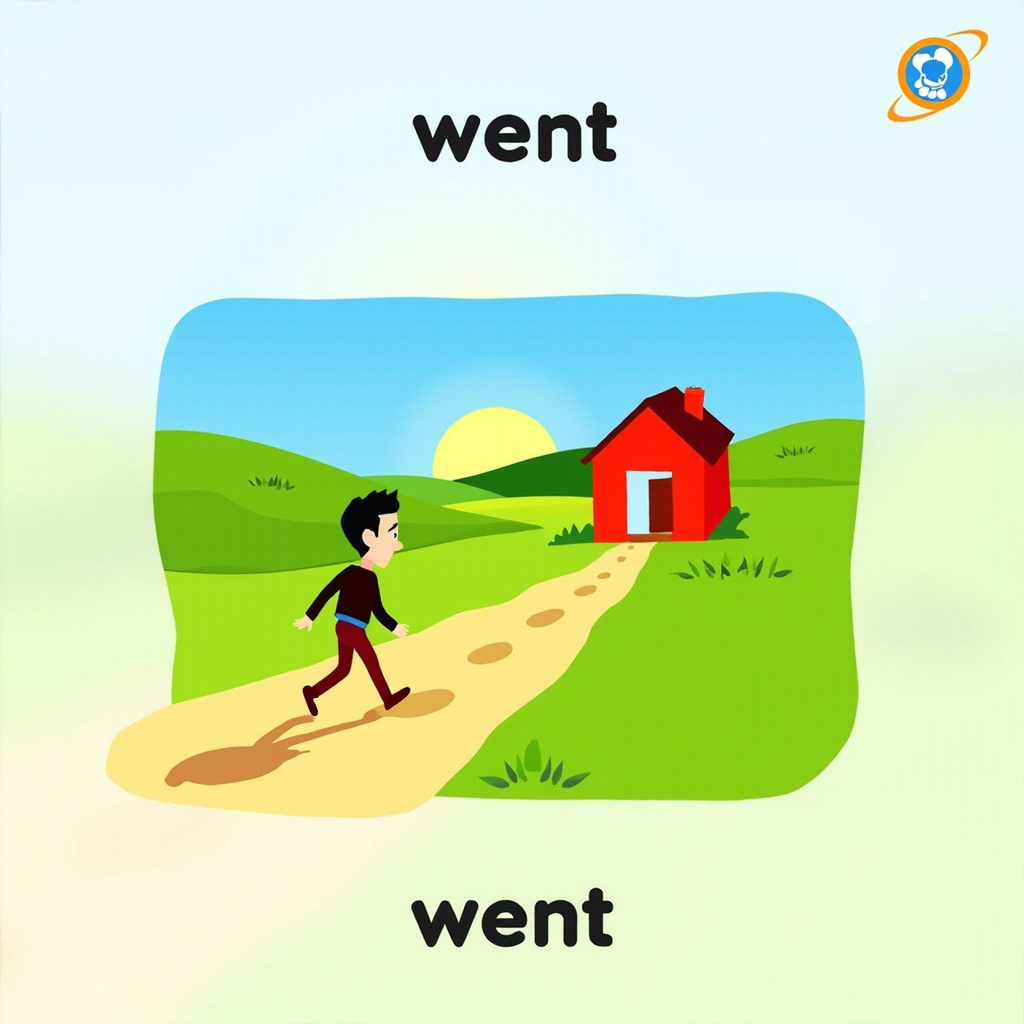
wentwɛnt
Past tense of 'go'; used to describe movement from one place to another in the past.
Required
Match each verb with its meaning.
Match each verb with its meaning.
visited
watched
played
went
cooked
walked
went to see someone or a place
looked at a film or a show
did a sport or a game
travelled to a place
made a meal
moved on foot
I visited my grandmother last weekend.
Read and listen. Notice the past simple verb 'visited' and the time expression 'last weekend' at the end.