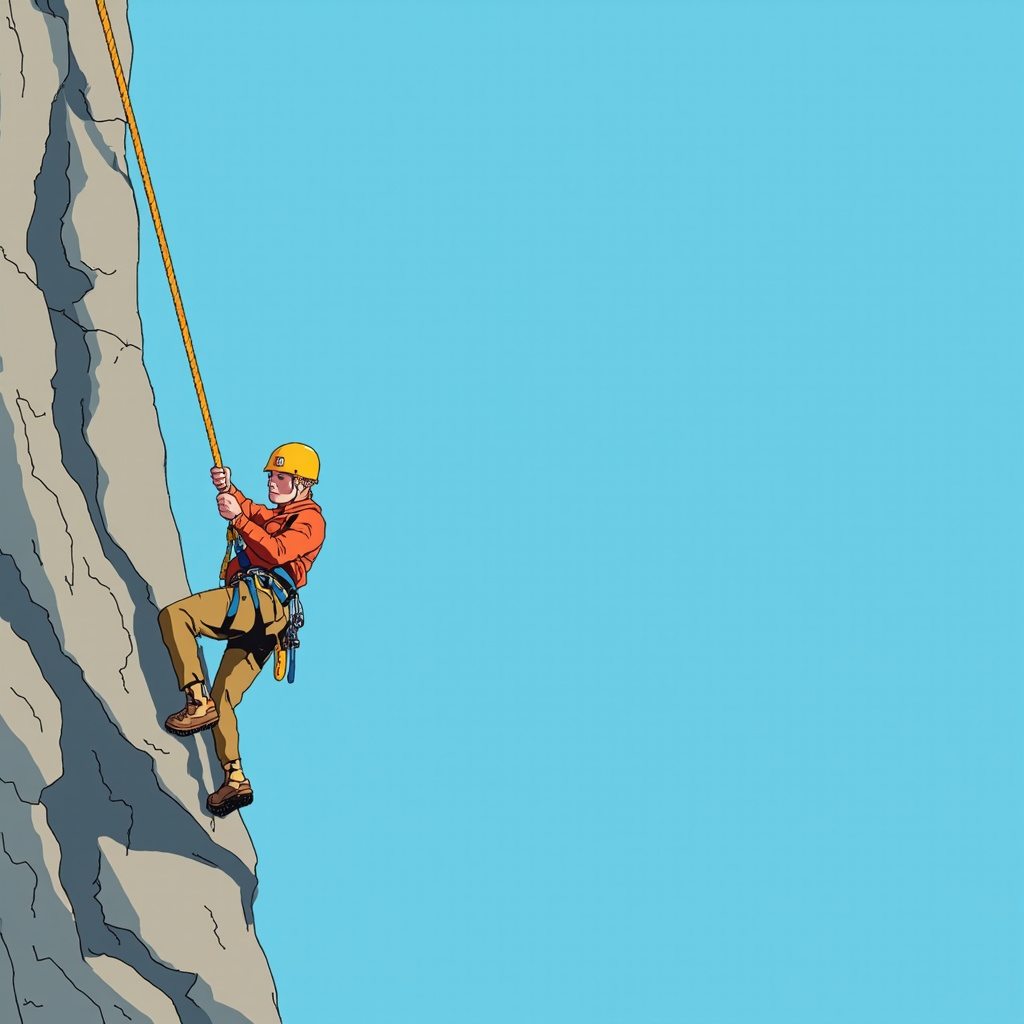
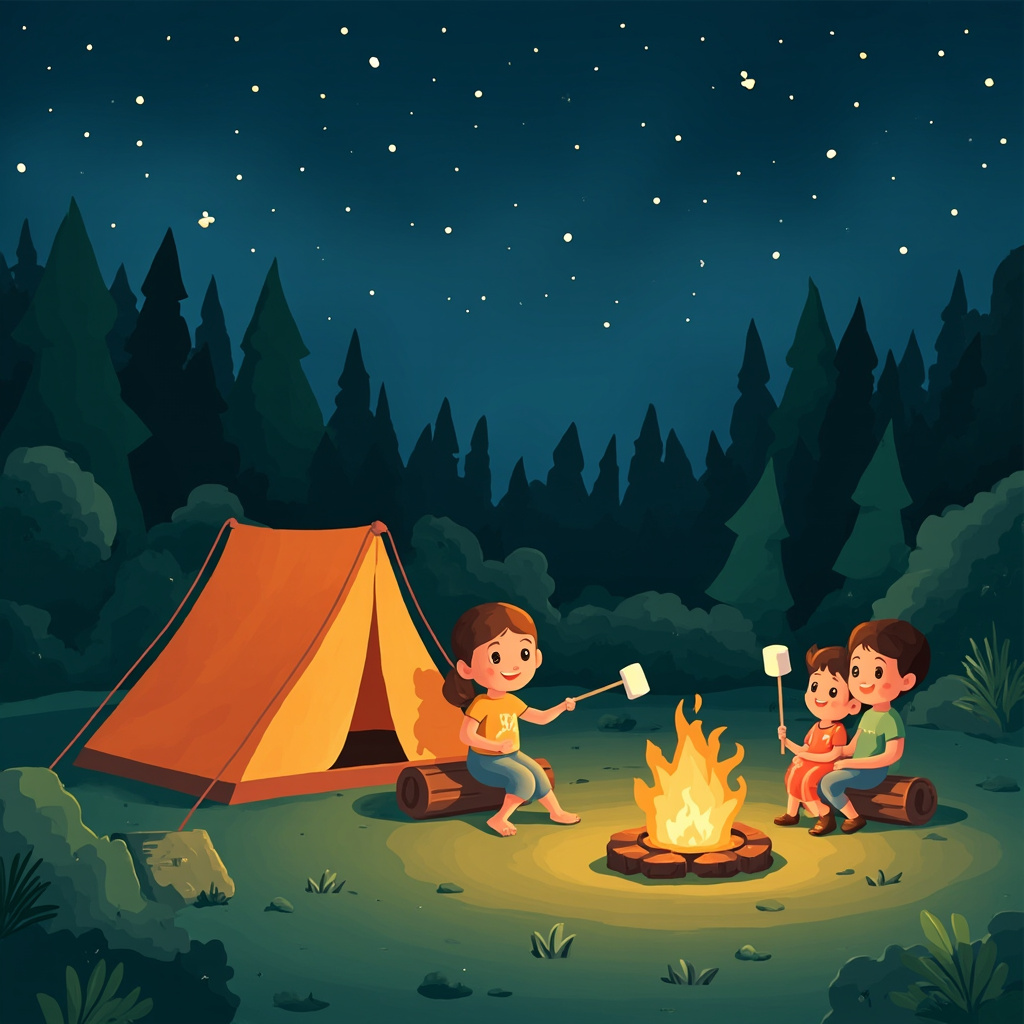
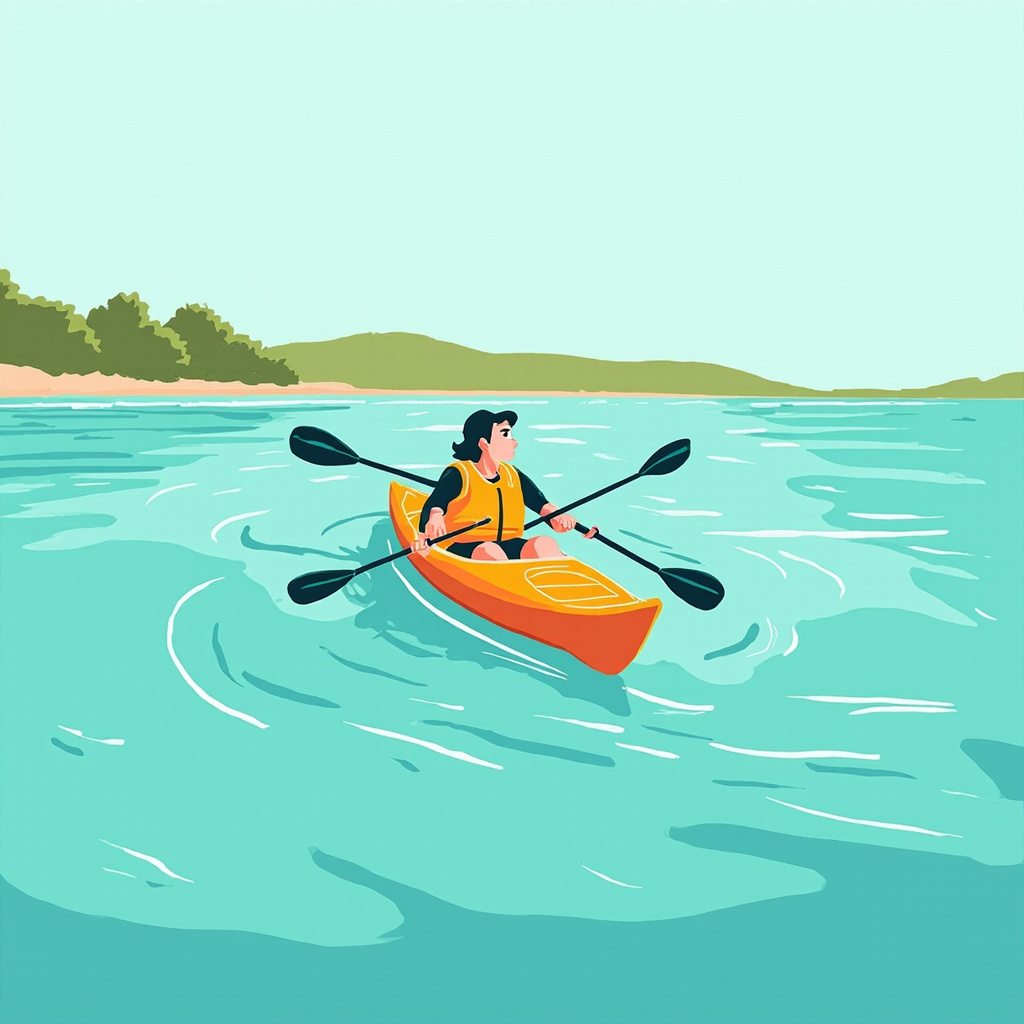
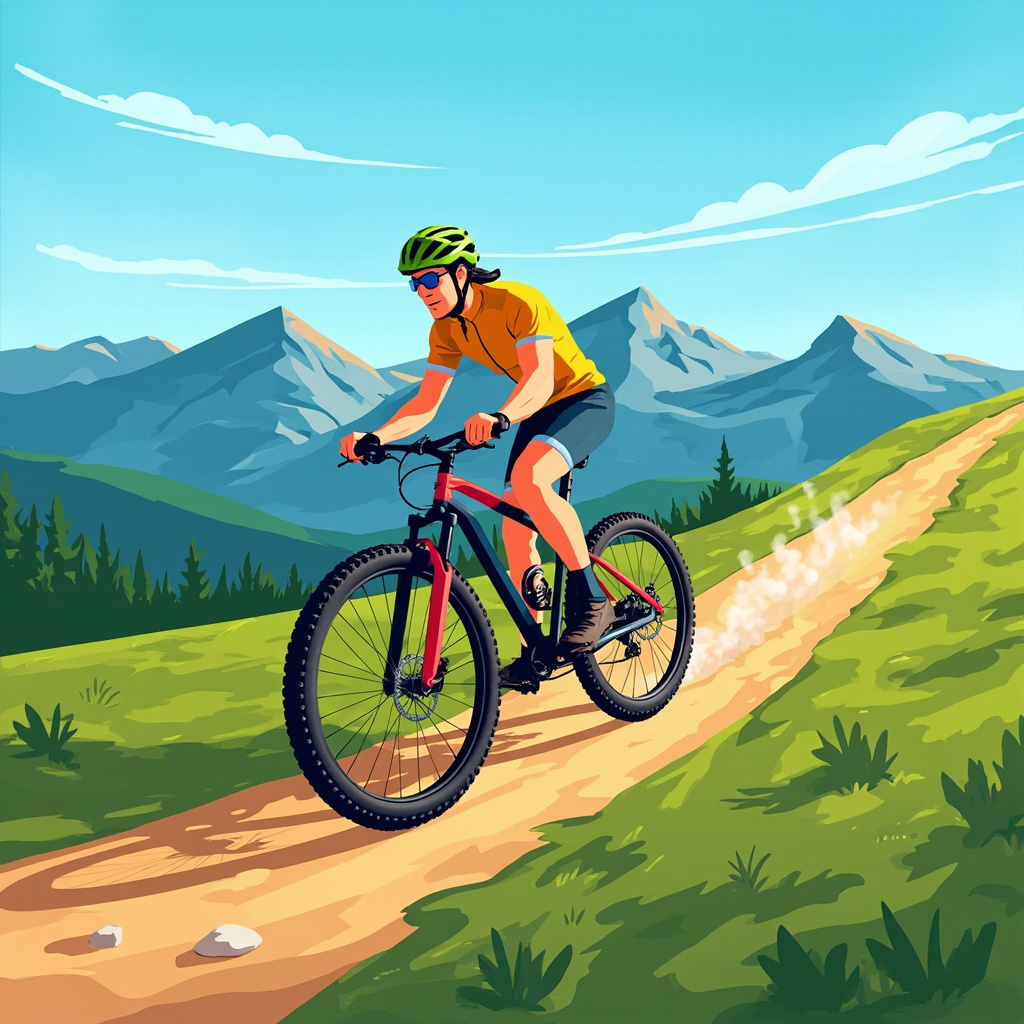
✓I CAN compare activities using as ... as structures
✓I CAN read about adventure sports
Grammar
Grammar
9
cards
In this lesson, you will learn how to compare two activities, experiences or qualities using one of the most useful comparative structures in English: as ... as. This structure expresses that two things are equal in some way, or that they are different in a way you can measure.
The basic positive form is simple: as + adjective + as. The adjective goes between the two as words. For example, you can say Hiking is as exciting asclimbing - meaning hiking and climbing give you the same level of excitement. The word order is fixed: the first as is always followed by the adjective, never the other way around.
To make a negative comparison - saying that one thing is less than another - you add not before the first as and you can use either as or so after not. Both forms are correct in British English, but not as ... as is the more common choice in everyday speech. So we say Kayaking is not as easy as it looks, meaning kayaking is harder than it appears. Note that the second as in the negative form is almost always as, not so.
You can also use as ... as with adverbs, not only adjectives. The pattern is identical: as + adverb + as. She climbs as quickly as her brother means they climb at the same speed. The position of the adverb matters: it must come directly after the first as, before the verb it describes.
With nouns, English uses as much (for uncountable nouns) and as many (for countable plural nouns) in the same pattern.I don't have as much experience as you (experience is uncountable) and He doesn't have as many friends as she does (friends is countable). A common mistake is to write as much friends - remember to match the noun: much + uncountable, many + countable.
Finally, you can strengthen the structure with twice as, three times as, half as and similar expressions, and you can add as ... as possible to mean 'to the maximum degree'. This route is twice as long as the other one and We should climb as high as possible** are both natural, fluent uses of the structure.
Form
Pattern
Example
Positive
as + adjective + as
Hiking is as exciting asclimbing.
Negative
not as/so + adjective + as
Cycling is not as tiring as running.
With adverb
as + adverb + as
She climbs as quickly as her brother.
Uncountable noun
as much + noun + as
I don't have as much experience as you.
Countable noun
as many + noun + as
He doesn't have as many friends as she does.
Multiplier
twice / half + as + adjective + as
The new rope is half as expensive as the old one.
Maximum
as + adjective + as possible
Try to paddle as quietly as you can.
This structure is essential for B2 speakers because it lets you give opinions, weigh advantages, and write more sophisticated comparisons than the simple -er than form allows.
Generating translation…
Hiking is as exciting as climbing.
A positive comparison. Two things are equal.
Cycling is not as tiring as running, but it is just as enjoyable.
Two negative comparisons in the same sentence - notice the second uses just as to emphasise equality.
Required
Look at the examples above. What comes right after the first 'as' in every comparison?
the second noun being compared
an adjective or an adverb
a verb in the past tense
Required
Kayaking ___ as difficult as people think.
Required
Which sentence is correct?
Trekking is more hard as mountaineering.
Trekking is not as hard as mountaineering.
Trekking is not so harder than mountaineering.
Required
'I don't have as many experience as you.' is a correct sentence.
*Experience* is an uncountable noun, so it must take *much*, not *many*. The correct form is: *I don't have as much experience as you.*
Required
Put the words in the correct order to make a sentence.
Hiking
is
as
popular
as
cycling
Required
Drag the correct word into each gap. The gap must fit between the two as words.
dangerous
exciting
much
long
quickly
Hiking is as as climbing.
Mountain biking is not as as people think.
She climbs as as her brother.
I don't have as experience as you.
This route is twice as as the other one.
Listening
Listening
5
cards
Before you listen, it helps to predict what you might hear. This lesson is about outdoor activities, and the two speakers, Emma and Tom, are discussing their plans for the weekend. Think for a moment: what kind of outdoor activity would you choose if a friend invited you out this Saturday? Would you prefer something energetic, like mountain biking, or something calmer, like a gentle walk or a trip to a lake?
The dialogue you are about to hear takes place on a weekday evening, probably over the phone or on a messaging app. Emma and Tom are deciding what to do on Saturday. Tom enjoys energetic, sporty activities, while Emma is a little less confident about her fitness. Listen for the comparative structures (as ... as, not as ... as) they use to describe the activities, and try to catch the specific details about where they are going and how much it will cost.
When you listen for the first time, do not worry about understanding every word. Focus on the gist - the general situation and the speakers' main point. Emma and Tom are choosing an activity for the weekend, but they have different preferences. Whose idea do you think they will follow in the end?
Prediction question: Before you press play, what do you think Emma will choose? A relaxing activity by water, or a challenging activity in the mountains? Listen and find out.
You will hear the dialogue once, then answer the questions. The questions test three different listening skills: the gist, specific information, and detailed facts. Remember - in real life, native speakers do not always speak slowly or clearly, so do not panic if you miss a word the first time. Use the context to fill in the gaps.
To make the listening task easier, here are some useful tips. First, read the questions before you listen. This tells you what information you need to focus on. Second, listen for signpost words such as but, however and actually - these often signal a change of opinion or a contrast. Third, pay attention to the comparative structures you practised in the grammar section. When you hear 'not as ... as', you know a comparison is being made, and the second item is the standard against which the first is being measured.
Finally, do not translate the dialogue word by word in your head. Instead, listen for chunks - small groups of words that carry meaning together. For example, 'I'm not as fit as I used to be' is one chunk, and once you recognise it, you can answer a question about Emma's fitness without translating every single word. This skill takes time to develop, but with practice you will start hearing English in meaningful groups rather than as a stream of separate words.
In this particular dialogue, you will hear several examples of the grammar from Section 2. Listen for the second as in each comparative - it tells you what the comparison is being made against. You will also hear contractions such as 'I'm' and 'isn't', and informal phrases such as 'How about you?' and 'That sounds perfect!' These are all natural features of everyday British English and they are exactly what you need to understand to follow a real conversation.
Generating translation…
It is Thursday evening. Emma and Tom are chatting on the phone, deciding what to do this weekend.
E
EmmaHey Tom! Have you got any plans for the weekend?
T
TomI was thinking of going hiking in the Lake District. How about you?
E
EmmaI'd love to, but I'm not as fit as I used to be. Is there something a bit easier?
T
TomWhat about kayaking? There's a calm lake about an hour from here.
E
EmmaThat sounds perfect! Is it expensive?
T
TomNot really - it's not as costly as climbing, anyway. We can hire the boats for about twenty pounds each.
E
EmmaGreat! Let's go on Saturday morning then.
T
TomSounds good. I'll book it online tonight.
Required
What is the main point of the conversation?
Emma and Tom are arguing about a holiday they did not enjoy.
Emma and Tom are choosing an outdoor activity to do together on Saturday.
Tom is trying to sell Emma some climbing equipment.
Required
Tom thinks kayaking is more expensive than climbing.
Tom says *'it's not as costly as climbing'* - meaning kayaking is cheaper than climbing, not more expensive.
Required
Tom and Emma will meet on ___ morning.
Pronunciation
Pronunciation
6
cards
The pronunciation focus for this lesson is the diphthong /aʊ/, the vowel sound in words like outdoor, mountain and about. This is one of the most important sounds in English and it appears in many of the outdoor activity words you will meet today, so it is well worth practising carefully.
A diphthong is a vowel sound that moves from one position to another inside a single syllable. The British /aʊ/ begins with the tongue low and towards the back of the mouth (similar to the vowel in father) and then glides forward and up towards a position close to /ɪ/. Your lips should start in a slightly open, relaxed shape and end in a position closer to a smile. Crucially, this is one long sound - you should not break it into two separate vowels. Hold it for about the same length as a long vowel like see or car.
Compare these two words to feel the difference: /haʊs/ (the house you live in) and /haʊnd/ (a hound, an old word for a hunting dog). Both start with the /aʊ/ sound. Now compare with /həʊs/ (hose, a long flexible tube) - the starting vowel is completely different. The first is open and moving forward, the second starts with the lips rounded and the tongue higher. Practise saying them in pairs to feel the difference clearly.
Words you will meet in this lesson that contain /aʊ/ include: outdoor, mountain, about, around, found, sound, cloud, loud and shout. Listen carefully to how the vowel moves in each word, and remember that British English uses a pure /aʊ/ that does not become an eh sound in the middle - this is sometimes a problem for speakers whose first language does not use this diphthong.
In connected speech, the /aʊ/ often links smoothly to the next word. For example, about it sounds like a-bow-tit in natural speech, with the /aʊ/ gliding into the short vowel of it. Listen for these links in the listening exercise and try to copy them in your own speaking.
When you are practising /aʊ/, record yourself and listen back. Many learners replace this diphthong with a single long vowel such as /uː/ or /eː/, which makes the words sound very different. The key is the movement - your mouth and tongue should actually change position during the sound, not stay still. Try placing your hand on your jaw as you say the word outdoor. If your jaw is dropping at the beginning and closing as you say the second half, you are doing the movement correctly.
Minimal pairs are an excellent way to train your ear and your mouth at the same time. Listen carefully to the difference between these pairs and repeat them aloud: now /naʊ/ vs know /nəʊ/ - the ow words have very different vowels; loud /laʊd/ vs load /ləʊd/ - the ou and oa are not pronounced the same; house /haʊs/ vs horse /hɔːs/ - different first vowels and different second vowels.
The rhythm and length of the diphthong also matter./aʊ/ is a long vowel, so it takes longer to say than the short vowel in cat or cup. In the sentence The mountains are loud with shouts of excitement, every word with a vowel should be the right length - moun-tains and loud should be clearly longer than the or are. Getting this length right makes your English sound natural and helps listeners understand you without effort.
Generating translation…
How to make /aʊ/: Start with your mouth open and your tongue low and back. Then move your tongue forward and up while pulling your lips slightly towards a smile. The sound should glide in one smooth movement - never stop in the middle. Hold it for the same length as a long vowel. The sound appears in outdoor, mountain, about, around, loud and shout.
Required
You will hear one British English word. Choose the word you hear.
horse
house
Required
Read the word aloud. Focus on the /aʊ/ diphthong - your jaw should drop, then close.
outdoor
Required
Read the word aloud. The first syllable has the /aʊ/ sound, then the second syllable is short: /aʊn/. Keep the rhythm natural.
mountain
Required
Read the full sentence aloud at a natural speed. Make sure every /aʊ/ vowel is long and clear.
The mountains are loud with shouts of excitement.
Reading
Reading
6
cards
Before you start reading, it is useful to have a strategy. At B2 level, you will often meet longer articles, blog posts and reports, and you cannot read every word carefully on a first pass. This lesson uses skimming as the main strategy.
Strategy box: Skimming
When you skim a text, you read it quickly to get the general idea. You do not stop for every new word. Instead, you focus on the title, the first sentence of each paragraph, the last sentence, and any words that are printed in bold or repeated several times. Skimming is perfect for news articles, blog posts and reports at this level. After you have skimmed, you can go back and read more carefully for specific details (this is called scanning).
Before you read the article, here are four key words you will see. They are all connected to the lesson's topic of outdoor activities:
participation (noun) - the act of taking part in something
trend (noun) - a general direction in which something is changing
decade (noun) - a period of ten years
essential (adjective) - completely necessary
Now skim the article. The title asks a question - try to answer it after one quick read, then move on to the detail questions.
The article is a short blog post about a current trend in the UK. It discusses why outdoor activities are becoming more popular and warns about the importance of safety training. As you read, ask yourself: is this a serious news report, an opinion piece, or a personal blog? The answer affects how you interpret the writer's tone. Is the writer enthusiastic, cautious, or balanced?
You will read the article once, then answer the questions. The first question tests your gist reading - can you identify the main idea of the article? The next questions test your detail reading - can you find specific facts in the text? This mirrors how you read in real life: first you decide whether a text is worth reading in full, then you go back for the information you need.
Strategy box: Scanning
In contrast to skimming, scanning is the skill of looking for specific information in a text. You already scan every day - when you look up a phone number in a directory, search for a word in a dictionary, or find a particular product on a supermarket shelf, you are scanning. In English, scanning is useful for finding dates, names, numbers, percentages and other factual details.
The questions in this lesson will ask you to do both. After skimming, you will need to scan the article to find the answers. For example, you might be asked about a percentage mentioned in the text, or whether a particular activity is named. The trick is to read the question first, identify the keyword (e.g.percentage, hiking, instructor), and then search the text for that word or a close synonym.
One important point: the answer to a detail question is usually expressed in the same words as the text, or in a simple paraphrase. If the question says 'What percentage ...?' and the text says '... risen by almost 30%', the answer is 30% (or almost 30%). This is much easier than inference questions, which are more common at C1 level. At B2, you mostly need to recognise information in the text, not interpret it.
Generating translation…
Across the UK, more people are heading for the hills. Participation in adventure sports such as hiking, kayaking and rock climbing has risen by almost 30% since 2019.
Experts point to several factors. Lockdowns made people value outdoor spaces more, and social media has created a generation of young adventurers who love to share their experiences online. Equipment has also become cheaper - decent hiking boots are no longer as expensive as they used to be.
But safety experts warn that beginners should not attempt risky activities alone. 'Mountain biking is not as easy as it looks on YouTube,' says instructor Dave Morris. 'Proper training is essential, no matter how fit you are.'
Generating translation…
Required
What is the main idea of the article?
Adventure sports are dying out in the UK because they are too expensive.
Adventure sports are growing in popularity, but safety training is important.
Mountain biking is more popular than any other outdoor activity.
Required
According to the article, participation in adventure sports has fallen since 2019.
The article says participation *has risen* by almost 30% since 2019 - it has increased, not fallen.
Required
Why are more people doing adventure sports, according to the experts?
Because they want to avoid social media.
Because lockdowns made them value outdoor spaces more.
Because equipment has become much heavier.
Required
The instructor Dave Morris believes that mountain biking is exactly as easy as it looks on YouTube.
Dave Morris says mountain biking is *not as easy as it looks on YouTube* - meaning it is actually more difficult than it appears in online videos.
Speaking
Speaking
7
cards
In the final speaking section, you will have a real conversation about outdoor activities. To do this well, you need a small set of useful phrases that allow you to compare, give opinions, and respond naturally. Below is a list of expressions that native British speakers use all the time when they talk about activities, sports and travel.
English phrase
Function
What kind of outdoor activities do you enjoy?
Asking about preferences
I'm really into ...
Saying you love something
I prefer ... because ...
Giving a preference with a reason
It's not as + adjective + as ...
Comparing two things (negative)
It's as + adjective + as ...
Comparing two things (equal)
I don't have as much + noun + as ...
Comparing quantities (uncountable)
That sounds great!
Reacting positively
I'd rather ... than ...
Saying what you prefer
You will hear a short model conversation first. Listen carefully to how the two speakers compare activities using as ... as and how they react to each other's ideas. Then you will have the chance to repeat the key sentences and finally to have the same conversation yourself with the AI.
Remember: in natural conversation, you do not need to use a comparative structure in every sentence. Mix simple sentences with comparative ones, and react to what your partner says with short responses like 'That sounds great' or 'Really?' to keep the conversation flowing. A conversation is not a list of facts - it is an exchange. Ask questions, give short answers, and show that you are listening.
Common mistakes to avoid:
'Hiking is more exciting as climbing.' (Wrong) → 'Hiking is as exciting asclimbing.' (Right)
'I don't have as many experience as you.' (Wrong) → 'I don't have as much experience as you.' (Right)
'Kayaking is not so easy than swimming.' (Wrong) → 'Kayaking is not as easy as swimming.' (Right)
Notice how the second as in every negative sentence stays the same. The only thing that changes is whether you put as or so after not. Both are correct in British English, but not as ... as is more common in everyday speech.
Finally, when you record your own sentences, try to speak at a natural speed, with clear word endings and a clear rhythm. Native speakers link words together, but every word should still be recognisable. Listen to the model conversation once more before you record - this will help you match the rhythm and intonation, and your sentences will sound much more natural as a result.
One more tip: when you are having the live conversation with the AI, do not worry about making mistakes. The AI will understand you even if your grammar is not perfect, and every mistake is a chance to learn. If you are not sure how to say something, try to express the same idea in a simpler way. The goal of the conversation is to communicate, not to produce a perfect sentence.
If you get stuck, you can use any of the phrases from the table above. They are designed to keep the conversation moving even if you cannot think of what to say next. For example, if your partner mentions an activity you have never heard of, you can simply say 'What is that?' or 'Tell me more!' and the conversation will continue naturally. Real conversations are full of small reactions like this, and using them makes you sound much more fluent.
Take a deep breath, listen carefully to the question, and then answer. The AI is patient and will repeat or rephrase if you need more time. Good luck, and enjoy the conversation!
Generating translation…
Two friends are chatting about their favourite outdoor activities. Listen to the model conversation, then you will have a chance to speak yourself.
E
EmmaWhat kind of outdoor activities do you enjoy?
T
TomI'm really into hiking and mountain biking. What about you?
E
EmmaI prefer kayaking. It's not as tiring as hiking, and I love being on the water.
T
TomIs kayaking as expensive as cycling?
E
EmmaNot really. I don't spend as much money on it as my brother does on his bike.
Hiking is not as tiring as I expected, but kayaking is even more relaxing.
The key model phrase. Notice how two negative comparisons are linked with but to contrast two activities.
Required
Read the sentence aloud, paying attention to the /aʊ/ sound in about (not in this sentence, but use a clear rhythm and a natural falling tone at the end).
Kayaking is not as difficult as people think, but it does require some training.
Required
Read the sentence aloud. Use rising intonation on the first part before but, and falling intonation at the end.
Mountain biking is as exciting as climbing, but it is not as expensive.
Required
You are chatting with a friend about weekend plans. Use the as ... as structures from the lesson to compare activities, give your opinions, and ask questions. Try to use at least three comparative structures in your replies.
Required
Vocabulary
Vocabulary
6
cards
Adventure sports and outdoor activities cover an enormous range of experiences, from gentle weekend walks to heart-pounding descents down mountain cliffs. To talk about these activities fluently at B2 level, you need a confident working vocabulary of the most common activity nouns, and you need to recognise the verbs that go with them. The table below introduces eight essential words that you will see throughout this lesson.
All of these activities are typically done in wild or natural environments - mountains, rivers, forests, cliffs and coastlines. Most of them require some specialist equipment, a certain level of fitness, and - crucially - a healthy respect for the risks involved. Notice how many of the activity names end in -ing: hiking, climbing, kayaking, trekking, mountain biking, abseiling, paragliding. This -ing form is a gerund and is treated as a noun in English. We can say I love hiking or Hiking is popular here, in the same way we say I love swimming or Swimming is good exercise.
Some activities are quite gentle and suitable for beginners or families - camping, for example, or a short hike in the local countryside. Other activities, such as abseiling down a vertical rock face or paragliding from the top of a mountain, demand proper training, an experienced guide and specialist gear. The verbs linked to these activities are usually straightforward: you go hiking, go climbing, go kayaking and go camping. We can also use the gerund directly: I love cycling (or mountain biking), I started climbing last year, She tried abseiling for the first time yesterday.
When you are at B2 level, it is not enough simply to recognise these words - you should be able to use them confidently in your own sentences, pronounce them clearly, and understand them when native speakers use them in conversation. The rest of this lesson will give you plenty of practice with these activities in real contexts: comparing them using as ... as structures, reading about them, listening to people discuss them, and finally speaking about them yourself.
Word
Part of speech
Meaning (Arabic)
Example sentence
hiking
noun
المشي لمسافات طويلة في الطبيعة
We went hiking in the Alps last summer.
climbing
noun
تسلق الجبال أو الصخور
Rock climbing requires strong arms and good balance.
kayaking
noun
التجديف بقارب صغير
Kayaking down the river was thrilling but cold.
camping
noun
التخييم في الخيام
Our family loves camping by the lake.
trekking
noun
المشي الطويل في مناطق وعرة
Trekking in Nepal takes several weeks.
mountain biking
noun
ركوب الدراجة الجبلية
Mountain biking on that trail is quite dangerous.
abseiling
noun
إنزال النفس بحبل من مكان مرتفع
She tried abseiling for the first time yesterday.
paragliding
noun
الطيران الشراعي
Paragliding gives you an incredible view of the valley.
Generating translation…
Meet the eight key words for this lesson on outdoor activities. Tap each word to hear it pronounced in British English, and read the example sentence to see how it is used in context.
abseilingˈæbseɪlɪŋ
Descending a steep slope or rock face by using a doubled rope that is looped over an anchor point above, contr
campingˈkæmpɪŋ
The activity of staying and sleeping outdoors in a tent, usually for pleasure.
climbingˈklaɪmɪŋ
The activity of moving upward using hands and feet, especially on mountains, rocks, or walls.
hikingˈhaɪkɪŋ
The activity of walking long distances in the countryside or mountains for pleasure or exercise.
kayakingkəˈjækɪŋ
The activity or sport of paddling a kayak on rivers, lakes, or oceans.
mountain bikingˈmaʊntɪn ˈbaɪkɪŋ
The activity or sport of riding a bicycle on rough terrain, such as mountains, hills, or trails.
paraglidingˌpærəˈɡlaɪdɪŋ
A recreational sport in which a person flies through the air using a wide, parachute-like wing while being lif
trekkingˈtrekɪŋ
The activity of making a long, difficult journey on foot, typically through mountains, forests, or other wild
Required
Match each outdoor activity to its short definition.
Match each outdoor activity to its short definition.
hiking
climbing
kayaking
camping
trekking
mountain biking
abseiling
paragliding
walking long distances in nature
going up mountains or rocks using your hands and feet
paddling a small narrow boat on water
sleeping outdoors in a tent
a long, hard walk in wild or remote areas
cycling on rough mountain paths
sliding down a rope from a high place
flying with a parachute-like wing
Last summer we went hiking in the Lake District, and the views were as beautiful as everyone had told us.
A model sentence combining the new vocabulary with the lesson's grammar focus. Notice how the activity noun is used after 'go', and how the two halves of the comparison frame the adjective beautiful.
Required
Audio is being generated — try again in a minute.
Listen to the sentence, then choose the statement that best matches its meaning.
Mountain biking is safer than people think.
Mountain biking is more dangerous than people think.
Mountain biking has nothing to do with equipment.
Required
Which sentence uses the activity noun in the correct way?