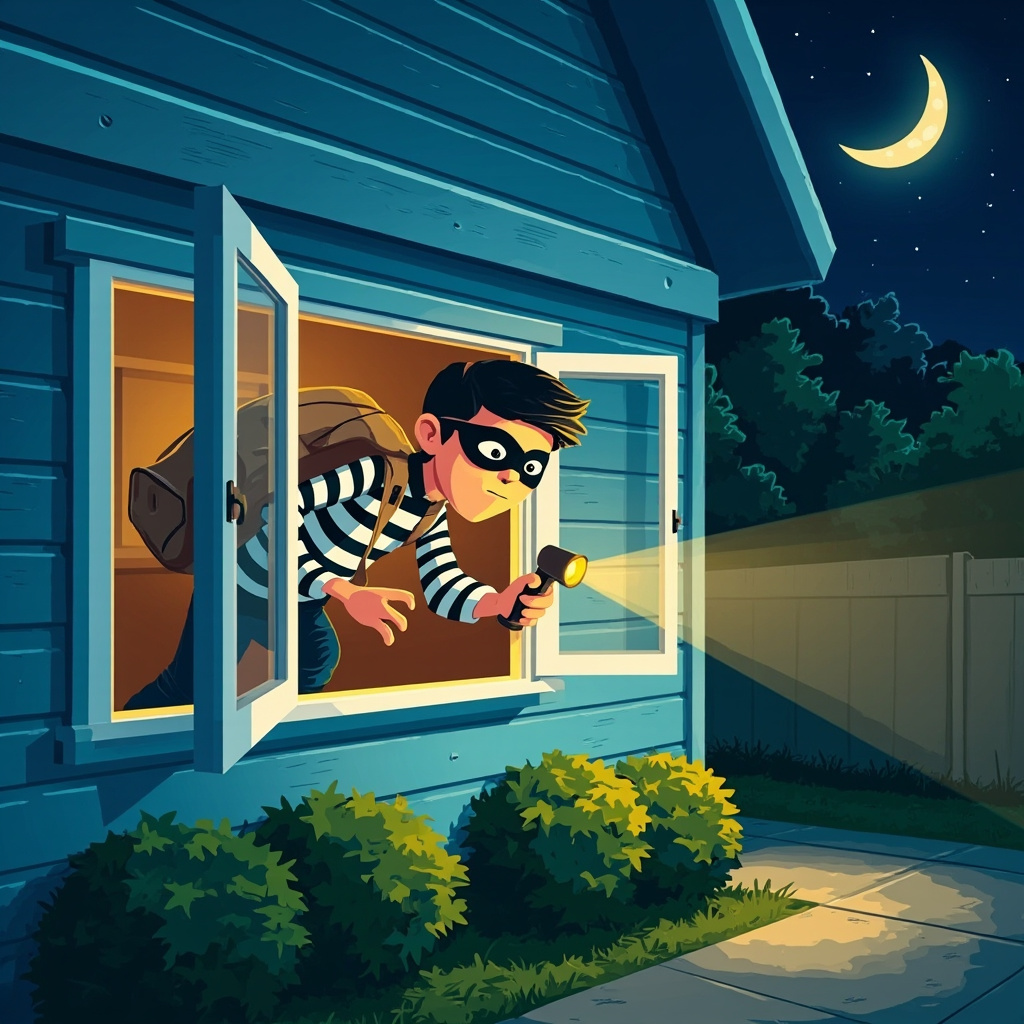
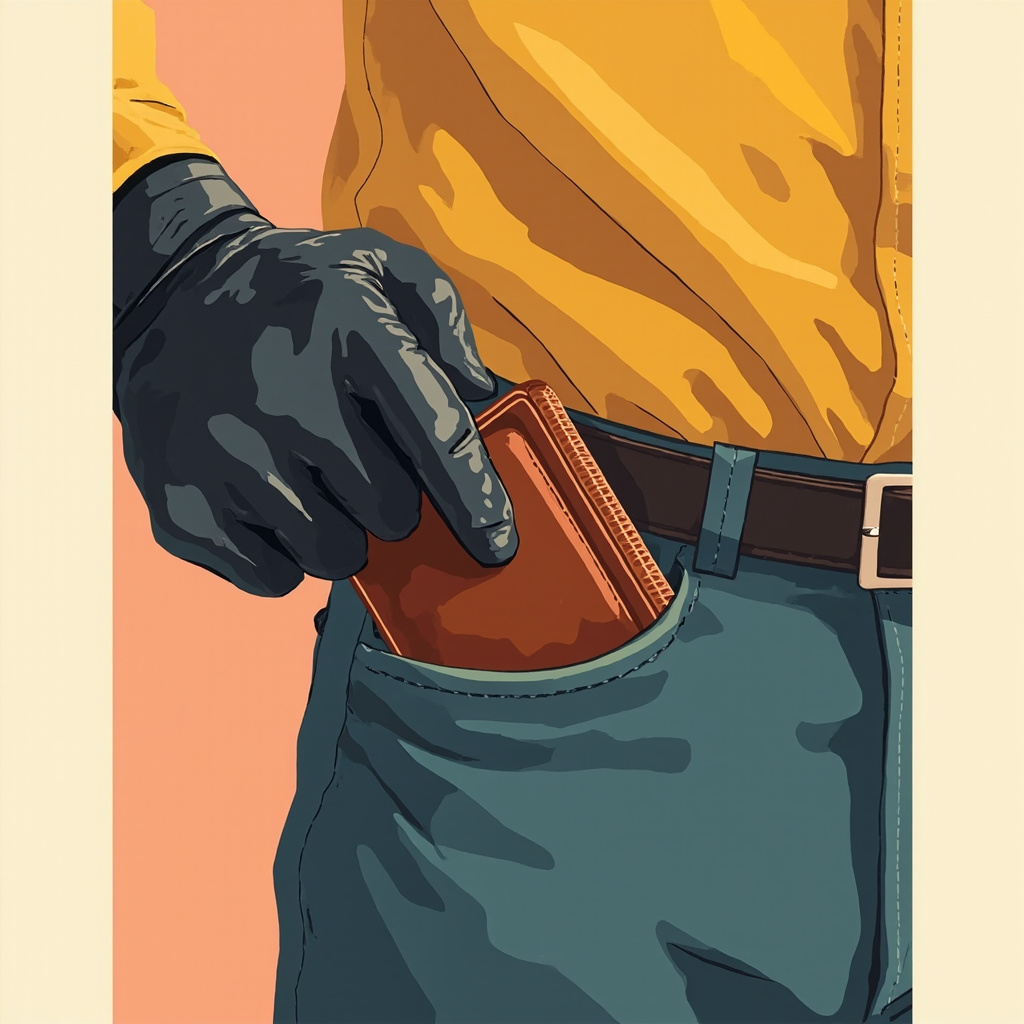
When we talk about crime in conversation, we need more than just the names of crimes. We also need the phrases that help us describe a situation, give an opinion and ask questions politely. In this section, you will learn some of the most common expressions used in British English when discussing safety in your area, and you will have the chance to practise them in a model conversation and a roleplay.
A good way to start the topic is with a general statement. Useful openings include "I've been reading about crime in the news", "I heard that crime has gone up around here" and "Have you seen anything about the recent robberies?". These phrases invite the other person to share their view and create a natural opening for discussion. They are especially common in British small talk, where neighbours often compare notes about local safety over a cup of tea or at the local shop.
To describe your own area, you can use a few simple patterns. You can say, "My area is very safe" or "It's a bit rough, to be honest". You can also use comparison: "It's safer than it used to be" or "It's not as bad as people think". If you want to give a reason, you can use "because" or "since": "It's quite safe because there's a lot of police presence" or "It's not as safe as it was, since several shops have closed down". These patterns are flexible and can be used for almost any neighbourhood, city or country, and they let you sound natural and considered.
You will also need words for changes in crime over time. The verbs rise, fall, increase, decrease, drop and go up are all useful. You can pair them with time expressions such as "in recent years", "over the last few months" and "since the pandemic". A common structure is "There has been a rise in muggings" or "Shoplifting has increased by 10%". This is the kind of sentence you might hear on the radio or read in a newspaper, and using it in your own speech will make you sound more fluent and informed.
When you give an opinion, it is a good idea to qualify it. Instead of saying "This is a dangerous area", you can say "In my opinion, this is a fairly dangerous area" or "I think it can be risky at night". You can also mention personal experience: "I've never had any problems" or "My bike was stolen last year, so I'm a bit more careful now". These phrases make your speech sound natural, considered and British. They also help you avoid sounding too strong or aggressive about a sensitive subject.
Asking questions is another important part of any conversation about crime. You can ask, "Is it safe to walk around at night?", "How do you feel about the police presence here?", "Have you ever had anything stolen?" or "Do you know if there have been any burglaries recently?". These questions help you gather information and keep the conversation going. In British English, people often add "by any chance" or "at all" to soften questions: "Have you heard of any problems at all, by any chance?" This politeness is typical of British conversation style.
Listening to the news is a great way to pick up these phrases in context. When you watch or listen to a British news report about crime, try to notice the verbs the reporter uses, the time expressions and the way experts qualify their opinions. You can copy some of these phrases into a notebook and use them in your own conversations. Over time, this will help you sound more natural and confident when you talk about sensitive topics.
Below, you will hear a model conversation between two neighbours, Emma and Tom, discussing safety in their area. Listen to the phrases they use, then practise saying some of them yourself. After that, you will have a chance to take part in a roleplay with your AI conversation partner.
Generating translation…
Two neighbours, Emma and Tom, discuss local safety and recent burglaries.
E
EmmaHave you seen the news, Tom? They say burglary has gone up in this part of town.
T
TomReally? I hadn't noticed. I usually feel quite safe around here.
E
EmmaWell, my colleague said her flat was broken into last weekend. She lost her laptop and some jewellery.
T
TomThat's awful. Was anyone hurt?
E
EmmaNo, luckily. But she's been quite shaken. I think she's going to move now.
T
TomI can understand that. I've lived here for ten years and nothing has ever happened to me, but you do hear stories.
I think the area is still mostly safe, but I do lock my door twice now, just in case.
A model phrase from the dialogue. Notice the use of 'I do' for emphasis and 'just in case' to soften the opinion.
Required
Read this sentence aloud. Focus on the rhythm and try to sound natural and considered.
I think my area is quite safe, although there have been some burglaries recently.
Required
Read this sentence aloud. Notice the verb form 'has increased' and the percentage expression.
Shoplifting has increased by ten per cent in the city centre over the last year.
Required
A new neighbour has moved in next door and is asking about safety in the area. Describe how safe the area is, mention any crime issues you know about, and answer their questions politely.
Required
Vocabulary
Vocabulary
6
cards
Crime is a topic we see in the news every day, and having the right vocabulary helps us discuss it clearly and accurately. In English, there are many specific words for different types of crime, and using the correct one shows that you understand the situation. For example, theft is a general word for taking something that belongs to someone else, but shoplifting is more specific — it means stealing goods from a shop while it is open. Similarly, burglary is the crime of entering a building illegally in order to steal things, while mugging describes a violent attack in a public place, usually to take money or a bag.
In British English, the police and the courts use particular terms. The Metropolitan Police, for example, publishes crime statistics every quarter for the whole of London. When you read these reports, you will come across words like assault (a physical attack on someone), fraud (cheating someone in order to get money or something valuable), and vandalism (damaging property on purpose, for example breaking windows or spraying paint on walls). Understanding these terms will help you follow news reports and discuss real events with confidence.
One useful way to organise crime vocabulary is by thinking about what the crime affects. Crimes against property damage or take things — for example theft, burglary, shoplifting and vandalism. Crimes against people involve harm or the threat of harm — for example mugging and assault. Crimes involving deception trick people in order to get something — for example fraud and pickpocketing. Knowing this grouping will help you remember the words and choose the right one in conversation. The police often describe pickpocketing as a "deception crime" because the thief uses skill and distraction rather than force.
When you talk about safety, you can use adjectives such as safe, unsafe, dangerous and secure. A neighbourhood can be described as "very safe" or "a bit rough". You can also talk about crime rates with verbs and phrases like "go up", "fall", "increase" or "drop". A common sentence you will hear on the news is: "Burglaries have fallen by 15% in the last year." This is a useful pattern to learn: subject + have/has + past participle + by + percentage. Other common patterns include "There has been a rise in muggings" and "Shoplifting is on the increase."
In a sentence, you can also describe who committed the crime. We usually add a noun ending in -er: a thief, a burglar, a mugger, a vandal, a pickpocket, a shoplifter. Notice that the suffix -er is the most common way to form the person, while fraud uses -ster, giving us fraudster. In British English, people also use informal words like crook for any criminal, and the adjective petty to describe small or unimportant crimes. You might hear someone say, "He was a petty thief before he got involved in something bigger."
It is also important to be careful with collocations. We say "commit a crime", "report a crime to the police", "investigate a crime" and "solve a crime". We say a criminal "is arrested", "is charged" or "is convicted". The victim of a crime "reports it" or "makes a statement". If you are a witness, you may be asked to "give evidence" or "identify the suspect". These collocations are natural and common, and they will make your spoken English sound more fluent in a British context.
Finally, remember that talking about crime can be a sensitive subject. In a real conversation, you might want to soften your opinion with phrases like "I think", "In my experience" or "From what I've read". For example, "In my experience, the area is quite safe, but I have heard about some burglaries recently." This is a polite, balanced way to share your view. Below is a table with the key vocabulary for this lesson, including the part of speech, an Arabic gloss and a model sentence for each word.
Word
Part of speech
Arabic gloss
Example sentence
theft
noun
سَرِقَة
Theft is a serious problem in some city centres.
burglary
noun
سَرِقَة مَنَازِل
Police are investigating three burglaries on our street.
shoplifting
noun
سَرِقَة مِنَ الْمَحَلاَّت
Shoplifting often increases during the sales.
mugging
noun
سَرِقَة بِالْاِكْرَاه
There has been a rise in muggings near the station.
vandalism
noun
تَخْرِيب
Vandalism in the park has made people angry.
fraud
noun
اِحْتِيَال
Online fraud is now more common than ever.
pickpocketing
noun
سَرِقَة الْجُيُوب
Pickpocketing is common in crowded tourist areas.
assault
noun
اِعْتِدَاء
The victim of the assault was taken to hospital.
Generating translation…
Meet the key vocabulary for talking about crime in English. Listen to each word and notice how it is pronounced.
assaultəˈsɔːlt
A violent physical attack on another person. In legal contexts, it can also refer to threatening behavior that
burglaryˈbɜːɡləri
The crime of entering a building illegally, usually to steal something. It involves breaking into a property w
fraudfrɔːd
Fraud is the crime of deceiving someone in order to obtain money, property, or other benefits illegally. It in
muggingˈmʌɡɪŋ
An act of attacking someone in order to steal their money or belongings, typically in a public place.
pickpocketingˈpɪkˌpɒkɪtɪŋ
The criminal act of stealing items from someone's pocket or bag without them noticing, typically done in crowd
shopliftingˈʃɒplɪftɪŋ
The act of stealing goods from a shop by hiding them on your person or in a bag.
theftθeft
The act of stealing; the criminal taking of another person's property without their permission.
vandalismˈvændəlɪzəm
The act of deliberately destroying or damaging public or private property, especially buildings, monuments, or
Required
Match each type of crime with its definition.
Match each type of crime with its definition.
theft
burglary
shoplifting
mugging
vandalism
fraud
pickpocketing
assault
damaging property on purpose
stealing goods from a shop while it is open
cheating someone in order to get money or something valuable
entering a building illegally in order to steal things
attacking someone in a public place to take their money or bag
physically attacking someone
the general crime of taking something that belongs to someone else
stealing from someone's pocket or bag in a crowd
Burglaries on our street have increased by fifteen per cent since last year.
A model sentence using the new vocabulary. Notice the structure: subject + have + past participle + by + percentage.
Required
Audio is being generated — try again in a minute.
Listen to the news report. What has the speaker said about muggings near the central station?
They have fallen by 30%.
They have stayed the same.
They have increased by 30%.
Required
Which of these crimes involves tricking or deceiving someone in order to get money or something valuable?