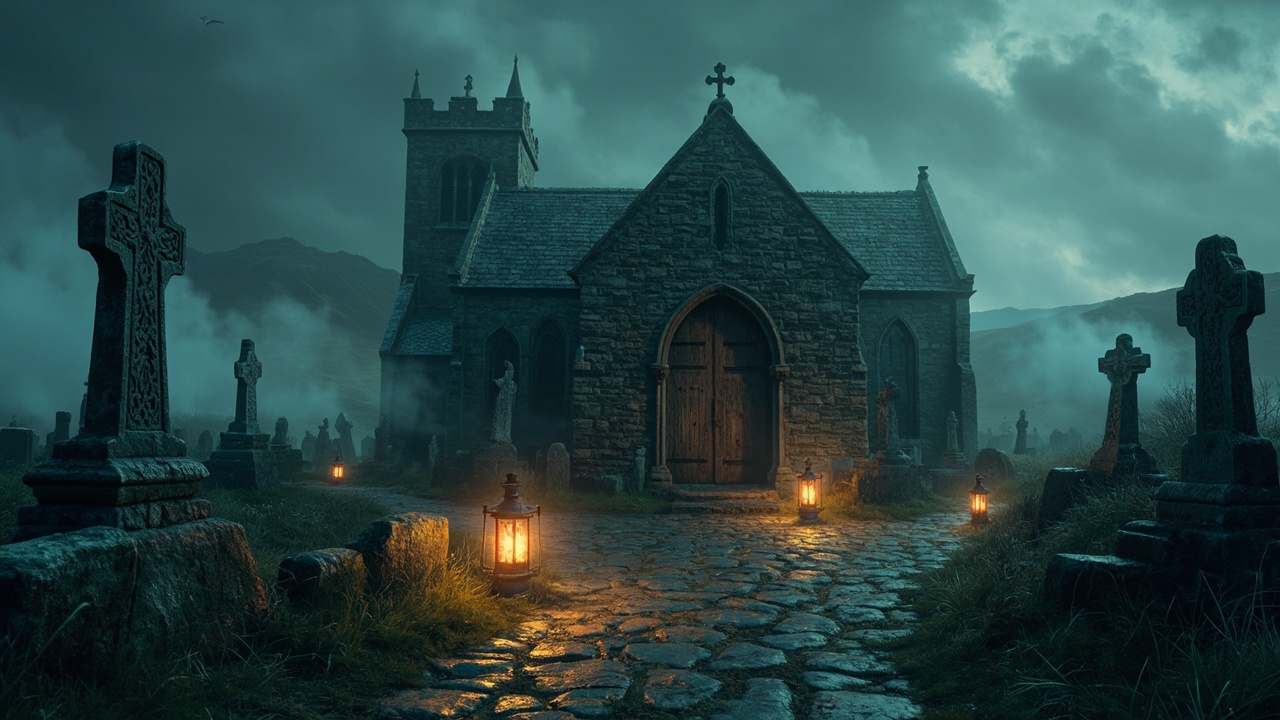
كانت كنيسة سانت مونغو تتربع في قلب كينلوشفورد، جدرانها الحجرية الرمادية متآكلة بفعل قرون من أمطار المرتفعات الأسكتلندية. كانت الدكتورة إلينور ريد قد قطعت ثلاث ساعات بالسيارة من إدنبرة للوصول إلى هذه البلدة الأسكتلندية الصغيرة، حيث ينتظرها شيء غريب يستوجب تحقيقها.
في كل صيف، كان سكان كينلوشفورد يحتفلون بهرجانهم السنوي بحماس كبير. كانت هناك مواكب تجوب الشوارع، وموسيقى تقليدية، وطقوس غريبة تتلخص في إضاءة الفوانيس. stated البرنامج الرسمي أن المهرجان يخلد ذكرى تأسيس الأبرشية عام 1689، لكن إلينور كانت قد قرأت ما يكفي من التواريخ المحلية لتعرف أن الحقيقة نادراً ما تكون بهذه البساطة.
سجّلت إقامتها في نزل البلدة، وهو مبنى أبيض الجدران توقد فيه نار من الخث في الصالة. قدمت له المكلفة، امرأة ضخمة تدعى موراغ، الشاي وسألت عن عملها.
"أبحث عن أصول مهرجانكم"، شرحت إلينور. "أنا مؤرخة في الجامعة."
ارتجّ وجه موراغ بحركة غير قابلة للقراءة. "المهرجان؟ أوه، إنه مجرد تقليد قديم، لا شيء أكثر. لا شيء مثير للاهتمام بما يكفي لأستاذة من إدنبرة."
لكن إلينور أمضت عشرين عاماً في القراءة بين سطور الوثائق التاريخية. كانت تعرف أنه عندما يقول الناس إن شيئاً "لا يستحق الاهتمام"، فإنهم عادةً يقصدون العكس. شكرت موراغ وانسحبت إلى غرفتها، تخطط لزيارة سجلات الأبرشية في الصباح التالي.
تردد القس
كان القس جيمس ماكفيرسون رجلاً نحيفاً بعينين طيبتين ويدين عصبيتين. قاد إلينور إلى غرفة خزانة الكاهن، حيث تغطي أرفف الكتب المجلدة بالجلد. "تعود سجلات الأبرشية إلى عام 1642"، أوضح. "لقد حرصنا كل الحرص على الحفاظ عليها."
فحصت إلينور أقدم المجلدات، تبحث عن إشارات إلى المهرجان. وجدت الميثاق الأصلي من عام 1689، الذي ذكر "وليمة شكر" تُقام سنوياً. لكن الإدخالات من السنوات التي تلت مباشرة كانت ناقصة بشكل غريب.
"ماذا حدث للسجلات من عام 1690 إلى 1695؟" سألت.
رتجفت يدا القس. "فُقدت في حريق. مأساة رهيبة. احترقت غرفة خزانة الكاهن الأصلية، كما ترى، وتدمّرت وثائق كثيرة."
لاحظت إلينور أن غرفة خزانة الكاهن الحالية لا تحمل أي آثار لتلف النار. بدت الجدران الحجرية القديمة سليمة، لم تمسها ألسنة اللهب. لكنها ابتسمت بأدب وشكرت الأب ماكفيرسون على مساعدته، وقررت عدم مواجهته بعد.
في ذلك بعد الظهر، زارت مكتبة البلدة. كان أمين المكتبة، رجل عجوز يدعى أنغوس، أكثر انفتاحاً. "المهرجان أقدم من الكنيسة"، أخبرها بصوت خافت. "جدتي كانت تقول إن الفوانيس كانت تُضاء لتتذكر شيئاً حدث قبل أن يستطيع أحد تذكره."
الحقيقة في الصندوق
عادت إلينور إلى الأب ماكفيرسون في اليوم التالي. "أود رؤية السجلات الأقدم، من فضلك. تلك التي قبل الحريق."
شحب وجه القس. "لست متأكدة أن هذا مناسب. تلك السجلات... خاصة."
"إنها وثائق تاريخية"، ردت إلينور بحزم. "تنتمي إلى السجل العام."
لحظة طويلة، لم يقل الأب ماكفيرسون شيئاً. ثم تنهد بعمق، كأن ثقلاً كبيراً قد رفع عن كتفيه. "تعالي معي"، قال. "سأريك ما أخفته الكنيسة لمدة ثلاثمائة عام."
قادها إلى غرفة صغيرة في مؤخرة غرفة خزانة الكاهن، حيث يستقر صندوق قديم تحت نافذة متربة. "كان ملكاً لجد جدي الأكبر"، أوضح. "كان قساً عام 1691. جعل الجميع يَعِدون بإبقاء الحقيقة سراً."
داخل الصندوق lay a single leather journal, its pages yellowed with age. Eleanor opened it carefully and began to read.
محاكمة أغنيس ماثيسون
سجل المذكرة محاكمة امرأة تدعى أغنيس ماثيسون، متهمة بالسحر في شتاء عام 1691. كان ثلاثة رجال محليين قد شهدوا ضدها — الرجال أنفسهم الذين أسسوا الكنيسة وكتبوا ميثاق عام 1689. ادعوا أنها لعنّت مواشيهم وسممت آبارهم.
لم يكن هناك دليل حقيقي، فقط غيرة الجيران وهمسات الاتهام. كانت أغنيس تمتلك أفضل الأراضي الزراعية في الوادي، وكان شهودها يريدونها لأنفسهم. اعترف المذكرة بذلك بحرية، كتبه رجل يتابعه شبح مشاركته في المحاكمة.
أحرقت أغنيس ماثيسون حية على أرض البلدة في يناير 1691. أدركت إلينور الآن أن المهرجان لم يُخلق للاحتفال بتأسيس الأبرشية. لقد أُسّس كعمل للتكفير — تذكير سنوي بالجريمة التي ارتكبها سكان البلدة.
الفوانيس التي كانوا يضيئونها لم تكن رموزاً للفرح. بل مثلت النيران التي التهمت امرأة بريئة.
نظرت إلينور إلى الأب ماكفيرسون. "لماذا أبقيت هذا السر؟"
"لأن عائلتي كانت جزءاً مما حدث"، رد. "ظننا أن الصمت سيحمي البلدة. لكنني أعتقد أن الحقيقة يجب أن تُعرف أخيراً."
في تلك الليلة، بينما بدأ المهرجان وأضاءت الفوانيس شوارع كينلوشفورد، وقفت إلينور بجانب القبر unmarked حيث دُفنت أغنيس ماثيسون. كان أهل البلدة يغنون ويرقصون، غير مدركين أن احتفالهم قام على مأساة عمرها ثلاثة قرون.
لكن قريباً، فكرت، سيعرفون. وربما عندها فقط، يمكن لأشباح المهرجان أن تستريح بسلام أخيراً.
Die Kirche von St. Mungo stand im Herzen von Kinlochford, ihre grauen Steinmauern von Jahrhunderten hochländischer Regenfälle verwittert. Dr. Eleanor Reid hatte drei Stunden von Edinburgh aus hierher gefahren, um dieses kleine schottische Städtchen zu erreichen, wo sie etwas Seltsames untersuchen sollte.
Jeden Sommer feierten die Menschen von Kinlochford ihr jährliches Fest mit großem Enthusiasmus. Es gab Prozessionen durch die Straßen, traditionelle Musik und ein merkwürdiges Ritual mit dem Entzünden von Laternen. Das offizielle Programm erklärte, dass das Fest die Gründung der Pfarrei im Jahr 1689 commemorierte, aber Eleanor hatte genug lokale Geschichten gelesen, um zu wissen, dass die Wahrheit selten so einfach war.
Sie checkte in das Dorf gasthaus ein, ein weiß getünchtes Gebäude mit einem Torffeuer im Aufenthaltsraum. Die Wirtin, eine stämmige Frau namens Morag, servierte ihr Tee und fragte nach ihrer Arbeit.
"Ich erforsche die Ursprünge Ihres Festes," erklärte Eleanor. "Ich bin Historikerin an der Universität."
Morags Gesicht zuckte mit etwas Unlesbarem. "Das Fest? Oh, es ist nur eine alte Tradition, nichts weiter. Nichts Interessantes genug für eine Professorin aus Edinburgh."
Aber Eleanor hatte zwanzig Jahre damit verbracht, zwischen den Zeilen historischer Dokumente zu lesen. Sie wusste, dass wenn Menschen sagten, etwas sei "nicht interessant", sie meistens das Gegenteil meinten. Sie dankte Morag und zog sich in ihr Zimmer zurück, um am nächsten Morgen die Pfarrakten zu besuchen.
Die Zurückhaltung des Vikars
Reverend James MacPherson war ein dünner Mann mit freundlichen Augen und nervösen Händen. Er führte Eleanor in die Sakristei, wo ledergebundene Bücher die Regale säumten. "Die Pfarrakten reichen bis 1642 zurück," erklärte er. "Wir haben sehr darauf geachtet, sie zu erhalten."
Eleanor untersuchte die frühesten Bände und suchte nach Hinweisen auf das Fest. Sie fand die ursprüngliche Charta von 1689, die ein "Dankesmahl" erwähnte, das jährlich abgehalten werden sollte. Aber die Einträge aus den unmittelbar folgenden Jahren waren merkwürdig lückenhaft.
"Was ist mit den Akten von 1690 bis 1695 passiert?" fragte sie.
Die Hände des Vikars zitterten. "Die wurden bei einem Brand verloren. Eine schreckliche Tragödie. Die ursprüngliche Sakristei brannte ab, verstehen Sie, und viele Dokumente wurden zerstört."
Eleanor bemerkte, dass die heutige Sakristei keine Spuren von Brandschaden aufwies. Die Steinmauern wirkten uralt, unberührt von Flammen. Aber sie lächelte höflich und dankte Vater MacPherson für seine Hilfe und beschloss, ihn noch nicht damit zu konfrontieren.
An diesem Nachmittag besuchte sie die Dorfbibliothek. Der Bibliothekar, ein älterer Mann namens Angus, war gesprächiger. "Das Fest ist älter als die Kirche," erzählte er ihr leise. "Meine Großmutter pflegte zu sagen, dass die Laternen entzündet wurden, um an etwas zu erinnern, das passiert war, bevor sich jemand erinnern konnte."
Die Wahrheit in der Truhe
Eleanor kehrte am nächsten Tag zu Vater MacPherson zurück. "Ich möchte bitte die älteren Akten sehen. Die von vor dem Brand."
Das Gesicht des Vikars wurde bleich. "Ich bin mir nicht sicher, ob das angemessen ist. Diese Akten sind... privat."
"Es sind historische Dokumente," erwiderte Eleanor bestimmt. "Sie gehören zur öffentlichen Überlieferung."
Einen langen Moment sagte Vater MacPherson nichts. Dann seufzte er tief, als ob eine große Last von seinen Schultern genommen worden wäre. "Kommen Sie mit mir," sagte er. "Ich zeige Ihnen, was die Kirche dreihundert Jahre lang verborgen hat."
Er führte sie in einen kleinen Raum hinter der Sakristei, wo eine uralte Truhe unter einem staubigen Fenster stand. "Sie gehörte meinem Ur-Ur-Großvater," erklärte er. "Er war 1691 Vikar. Er ließ alle schwören, die Wahrheit geheim zu halten."
In der Truhe lag ein einzelnes ledergebundenes Tagebuch, seine Seiten vom Alter vergilbt. Eleanor öffnete es vorsichtig und begann zu lesen.
Der Prozess gegen Agnes Matheson
Das Tagebuch verzeichnete den Prozess gegen eine Frau namens Agnes Matheson, angeklagt der Hexerei im Winter 1691. Drei örtliche Männer hatten gegen sie ausgesagt — dieselben Männer, die die Kirche gegründet und die Charta von 1689 verfasst hatten. Sie behaupteten, sie habe ihr Vieh verflucht und ihre Brunnen vergiftet.
Es gab keine echten Beweise, nur den Neid der Nachbarn und gemurmelte Anschuldigungen. Agnes hatte das beste Farmland im Tal besessen, und ihre Ankläger hatten es für sich selbst gewollt. Das Tagebuch gab dies frei zu, geschrieben von einem Mann, der von seiner eigenen Beteiligung am Prozess heimgesucht wurde.
Agnes Matheson wurde im Januar 1691 lebendig auf dem Dorfplatz verbrannt. Das Fest, wurde Eleanor nun klar, war nicht zur Feier der Gründung der Pfarrei geschaffen worden. Es war als Bußakt eingesetzt worden — eine jährliche Erinnerung an das Verbrechen, das die Dorfbewohner begangen hatten.
Die Laternen, die sie entzündeten, waren keine Symbole der Freude. Sie stellten die Flammen dar, die eine unschuldige Frau verzehrt hatten.
Eleanor blickte zu Vater MacPherson auf. "Warum haben Sie dieses Geheimnis bewahrt?"
"Weil meine Familie Teil dessen war, was passiert ist," erwiderte er. "Wir dachten, Schweigen würde das Dorf schützen. Aber ich glaube, die Wahrheit sollte endlich ans Licht kommen."
An diesem Abend, als das Fest begann und Laternen die Straßen von Kinlochford erleuchteten, stand Eleanor neben dem unmarkierten Grab, wo Agnes Matheson begraben lag. Die Dorfbewohner sangen und tanzten, ohne zu wissen, dass ihre Feier auf einer dreihundert Jahre alten Tragödie aufgebaut war.
Aber bald, dachte sie, würden sie es wissen. Und vielleicht dann könnten die Geister des Festes endlich in Frieden ruhen.
La iglesia de St. Mungo se alzaba en el corazón de Kinlochford, sus muros de piedra gris desgastados por siglos de lluvia de las Tierras Altas de Escocia. La Dra. Eleanor Reid había conducido tres horas desde Edimburgo para llegar a esta pequeña ciudad escocesa, donde algo peculiar la esperaba para su investigación.
Cada verano, los habitantes de Kinlochford celebraban su Gala anual con gran entusiasmo. Había procesiones por las calles, música tradicional y un extraño ritual que implicaba encender linternas. El programa oficial declaraba que el Gala commemoraba la fundación de la parroquia en 1689, pero Eleanor había leído suficientes historias locales para saber que la verdad rara vez era tan sencilla.
Se registró en la posada del pueblo, un edificio encalado con una hoguera de turba ardiendo en el salón. La posadera, una mujer robusta llamada Morag, le sirvió té y preguntó por su trabajo.
"Estoy investigando los orígenes de su Gala," explicó Eleanor. "Soy historiadora en la universidad."
El rostro de Morag se iluminó con algo inescrutable. "¿El Gala? Oh, es solo una vieja tradición, nada más. Nada lo suficientemente interesante para una profesora de Edimburgo."
Pero Eleanor había pasado veinte años leyendo entre líneas de documentos históricos. Sabía que cuando la gente decía que algo "no era interesante", generalmente significaban lo contrario. Agradeció a Morag y se retiró a su habitación, planeando visitar los registros parroquiales a la mañana siguiente.
La reticencia del vicario
El reverendo James MacPherson era un hombre delgado con ojos amables y manos nerviosas. Hizo pasar a Eleanor a la sacristía, donde volúmenes encuadernados en cuero forraban los estantes. "Los registros parroquiales se remontan a 1642," explicó. "Hemos tenido mucho cuidado de preservarlos."
Eleanor examinó los volúmenes más antiguos, buscando referencias al Gala. Encontró la carta original de 1689, que mencionaba un "banquete de agradecimiento" que se celebraría anualmente. Pero las entradas de los años inmediatamente posteriores estaban extrañamente incompletas.
"¿Qué pasó con los registros de 1690 a 1695?" preguntó.
Las manos del vicario temblaron. "Se perdieron en un incendio. Una terrible tragedia. La sacristía original se quemó, ¿sabe?, y muchos documentos fueron destruidos."
Eleanor notó que la sacristía actual no mostraba signos de daños por fuego. Las paredes de piedra parecían antiguas, intactas por las llamas. Pero sonrió educadamente y agradeció al padre MacPherson por su ayuda, decidiendo no confrontarlo todavía.
Esa tarde, visitó la biblioteca del pueblo. El bibliotecario, un hombre anciano llamado Angus, fue más comunicativo. "El Gala es más antiguo que la iglesia," le dijo en voz baja. "Mi abuela solía decir que las linternas se encendían para recordar algo que había sucedido antes de que nadie pudiera recordarlo."
La verdad en el cofre
Eleanor regresó al padre MacPherson al día siguiente. "Me gustaría ver los registros más antiguos, por favor. Los de antes del incendio."
El rostro del vicario palideció. "No estoy seguro de que sea apropiado. Esos registros son... privados."
"Son documentos históricos," respondió Eleanor firmemente. "Pertenecen al registro público."
Durante un largo momento, el padre MacPherson no dijo nada. Luego suspiró profundamente, como si un gran peso se hubiera levantado de sus hombros. "Venga conmigo," dijo. "Le mostraré lo que la iglesia ha mantenido oculto durante trescientos años."
La llevó a una pequeña habitación en la parte trasera de la sacristía, donde un cofre antiguo descansaba bajo una ventana polvorienta. "Pertenecía a mi bisabuelo," explicó. "Era el vicario en 1691. Hizo que todos prometieran mantener la verdad en secreto."
Dentro del cofre había un único diario encuadernado en cuero, cuyas páginas estaban amarillentas por la edad. Eleanor lo abrió con cuidado y comenzó a leer.
El juicio de Agnes Matheson
El diario registraba el juicio de una mujer llamada Agnes Matheson, accusada de brujería en el invierno de 1691. Tres hombres locales habían testificado contra ella — los mismos hombres que habían fundado la iglesia y redactado la carta de 1689. Afirmaron que ella había maldecido su ganado y envenenado sus pozos.
No había evidencia real, solo los celos de los vecinos y acusaciones susurradas. Agnes había poseído las mejores tierras de cultivo del valle, y sus accusadores las habían querido para sí mismos. El diario lo admitía libremente, escrito por un hombre atormentado por su propia participación en el juicio.
Agnes Matheson fue quemada viva en la plaza del pueblo en enero de 1691. Eleanor se dio cuenta de que el Gala no había sido creado para celebrar la fundación de la parroquia. Había sido establecido como un acto de penitencia — un recordatorio anual del crimen que los habitantes del pueblo habían cometido.
Las linternas que encendían no eran símbolos de alegría. Representaban las llamas que habían consumido a una mujer inocente.
Eleanor miró al padre MacPherson. "¿Por qué ha mantenido este secreto?"
"Porque mi familia fue parte de lo que pasó," respondió. "Pensamos que guardar silencio protegería al pueblo. Pero creo que la verdad finalmente debería ser conocida."
Esa noche, mientras el Gala comenzaba y las linternas iluminaban las calles de Kinlochford, Eleanor se paró junto a la tumba sin marker donde Agnes Matheson había sido enterrada. Los habitantes del pueblo cantaban y bailaban, sin saber que su celebración se había construido sobre una tragedia de tres siglos de antigüedad.
Pero pronto, pensó, lo sabrían. Y quizás entonces, los fantasmas del Gala finalmente podrían descansar en paz.
L'église de St. Mungo se dressait au cœur de Kinlochford, ses murs de pierre grise usés par des siècles de pluie des Highlands. Le Dr Eleanor Reid avait conduit trois heures depuis Édimbourg pour atteindre ce petit village écossais, où quelque chose de singulier l'attendait pour son investigation.
Chaque été, les habitants de Kinlochford célébraient leur Gala annuel avec un grand enthousiasme. Il y avait des processions dans les rues, de la musique traditionnelle et un étrange rituel impliquant l'allumage de lanternes. Le programme officiel indiquait que le Gala commemorait la fondation de la paroisse en 1689, mais Eleanor avait lu suffisamment d'histoires locales pour savoir que la vérité était rarement aussi simple.
Elle s'enregistra à l'auberge du village, un bâtiment aux murs blanchis à la chaux avec un feu de tourbe brûlant dans le salon. L'aubergiste, une femme robuste nommée Morag, lui servit du thé et demanda ce qui l'amenait.
"Je fais des recherches sur les origines de votre Gala," expliqua Eleanor. "Je suis historienne à l'université."
Le visage de Morag se crispa fugitivement. "Le Gala ? Oh, ce n'est qu'une vieille tradition, rien de plus. Rien d'assez intéressant pour un professeur d'Édimbourg."
Mais Eleanor avait passé vingt ans à lire entre les lignes des documents historiques. Elle savait que lorsque les gens disaient qu'une chose n'était "pas intéressante", ils signifiaient généralement le contraire. Elle remercia Morag et se retira dans sa chambre, prévoyant de visiter les archives paroissiales le lendemain matin.
La réticence du vicaire
Le révérend James MacPherson était un homme maigre aux yeux bienveillants et aux mains nerveuses. Il fit entrer Eleanor dans la sacristie, où des volumes reliés de cuir tapissaient les étagères. "Les archives paroissiales remontent à 1642," expliqua-t-il. "Nous avons veillé à les préserver avec soin."
Eleanor examina les volumes les plus anciens, cherchant des références au Gala. Elle trouva la charte originale de 1689, qui mentionnait un "festin d'action de grâce" à tenir annuellement. Mais les entrées des années immédiatement suivantes étaient étrangement incomplètes.
"Qu'est-il arrivé aux archives de 1690 à 1695 ?" demanda-t-elle.
Les mains du vicaire tremblèrent. "Elles ont été perdues dans un incendie. Une terrible tragédie. La sacristie originale a brûlé, vous comprenez, et de nombreux documents ont été détruits."
Eleanor nota que la sacristie actuelle ne montrait aucun signe de dommages causés par le feu. Les murs de pierre semblaient anciens, intacts par les flammes. Mais elle sourit poliment et remercia le Père MacPherson pour son aide, decidant de ne pas l'affronter pour l'instant.
L'après-midi même, elle visita la bibliothèque du village. Le bibliothécaire, un vieil homme nommé Angus, se montra plus ouvert. "Le Gala est plus ancien que l'église," lui dit-il doucement. "Ma grand-mère disait que les lanternes étaient allumées pour se souvenir de quelque chose qui s'était produit avant que quiconque puisse s'en souvenir."
La vérité dans le coffre
Eleanor retourna voir le Père MacPherson le lendemain. "J'aimerais voir les archives plus anciennes, s'il vous plaît. Celles d'avant l'incendie."
Le visage du vicaire blêmit. "Je ne suis pas sûr que ce soit approprié. Ces archives sont... privées."
"Ce sont des documents historiques," répondit fermement Eleanor. "Ils appartiennent aux archives publiques."
Un long moment, le Père MacPherson ne dit rien. Puis il soupira profondément, comme si un grand poids avait été retiré de ses épaules. "Venez avec moi," dit-il. "Je vais vous montrer ce que l'église a gardé caché pendant trois cents ans."
Il la mena dans une petite pièce à l'arrière de la sacristie, où un coffre ancien reposait sous une fenêtre poussiéreuse. "Il appartenait à mon arrière-arrière-grand-père," expliqua-t-il. "Il était vicaire en 1691. Il a fait jurer à tout le monde de garder la vérité secrète."
Dans le coffre se trouvait un seul journal relié de cuir, ses pages jaunies par l'âge. Eleanor l'ouvrit soigneusement et commença à lire.
Le procès d'Agnes Matheson
Le journal relatait le procès d'une femme nommée Agnes Matheson, accusée de sorcellerie durant l'hiver de 1691. Trois hommes du cru avaient témoigné contre elle — les mêmes hommes qui avaient fondé l'église et rédigé la charte de 1689. Ils prétendirent qu'elle avait maudit leur bétail et empoisonné leurs puits.
Il n'y avait aucune vraie preuve, seulement la jalousie des voisins et des accusations murmurées. Agnes possédait les meilleures terres agricoles de la vallée, et ses accusateurs les avaient convoitées. Le journal l'admettait librement, écrit par un homme hanté par sa propre participation au procès.
Agnes Matheson fut brûlée vive sur la pelouse du village en janvier 1691. Eleanor comprit alors que le Gala n'avait pas été créé pour célébrer la fondation de la paroisse. Il avait été établi comme un acte de pénitence — un rappel annuel du crime que les villageois avaient commis.
Les lanternes qu'ils allumaient n'étaient pas des symboles de joie. Elles représentaient les flammes qui avaient consumé une femme innocente.
Eleanor leva les yeux vers le Père MacPherson. "Pourquoi avez-vous gardé ce secret ?"
"Parce que ma famille faisait partie de ce qui s'est passé," répondit-il. "Nous pensions que garder le silence protégerait le village. Mais je crois que la vérité devrait enfin être connue."
Ce soir-là, tandis que le Gala commençait et que les lanternes illuminaient les rues de Kinlochford, Eleanor se tenait près de la tombe sans marque où reposait Agnes Matheson. Les villageois chantaient et dansaient, ignorants que leur célébration était bâtie sur une tragédie vieille de trois siècles.
Mais bientôt, pensa-t-elle, ils sauraient. Et peut-être alors, les fantômes du Gala pourraient enfin reposer en paix.
La chiesa di St. Mungo si ergeva nel cuore di Kinlochford, le sue mura grigie di pietra consumate da secoli di pioggia delle Highlands. La dottoressa Eleanor Reid aveva percorso tre ore in auto da Edimburgo per raggiungere questa piccola città scozzese, dove l'aspettava qualcosa di singolare da indagare.
Ogni estate, gli abitanti di Kinlochford celebravano il loro Gala annuale con grande entusiasmo. C'erano processioni per le strade, musica tradizionale e un bizzarro rituale che prevedeva l'accensione delle lanterne. Il programma ufficiale dichiarava che il Gala commemorava la fondazione della parrocchia nel 1689, ma Eleanor aveva letto abbastanza storie locali da sapere che la verità raramente era così semplice.
Si registrò alla locanda del villaggio, un edificio intonacato di bianco con un fuoco di torba che ardeva nel salotto. La locandiera, una donna robusta di nome Morag, le servì il tè e chiese del suo lavoro.
"Sto ricercando le origini del vostro Gala," spiegò Eleanor. "Sono una storica all'università."
Il volto di Morag si illuminò con qualcosa di indecifrabile. "Il Gala? Oh, è solo una vecchia tradizione, niente di più. Niente di abbastanza interessante per una professoressa di Edimburgo."
Ma Eleanor aveva passato vent'anni a leggere tra le righe dei documenti storici. Sapeva che quando la gente diceva che qualcosa "non era interessante", di solito intendeva il contrario. Ringraziò Morag e si ritirò nella sua stanza, pianificando di visitare i registri parrocchiali la mattina seguente.
La riluttanza del vicario
Il reverendo James MacPherson era un uomo magro con occhi gentili e mani nervose. Fece entrare Eleanor nella sacrestia, dove volumi rilegati in pelle fiancheggiavano gli scaffali. "I registri parrocchiali risalgono al 1642," spiegò. "Abbiamo avuto molta cura di preservarli."
Eleanor esaminò i volumi più antichi, cercando riferimenti al Gala. Trovò la carta originale del 1689, che menzionava una "festa di ringraziamento" da tenersi annualmente. Ma le voci degli anni immediatamente successivi erano stranamente incomplete.
"Cosa è successo ai registri dal 1690 al 1695?" chiese.
Le mani del vicario tremarono. "Sono andati perduti in un incendio. Una terribile tragedia. L'antica sacrestia bruciò, capisce, e molti documenti furono distrutti."
Eleanor notò che l'attuale sacrestia non mostrava segni di danni da fuoco. Le pareti di pietra apparivano antiche, intatte dalle fiamme. Ma sorrise educatamente e ringraziò padre MacPherson per il suo aiuto, decidendo di non affrontarlo ancora.
Quel pomeriggio, visitò la biblioteca del villaggio. Il bibliotecario, un anziano di nome Angus, fu più aperto. "Il Gala è più antico della chiesa," le disse piano. "Mia nonna diceva che le lanterne venivano accese per ricordare qualcosa che era accaduto prima che chiunque potesse ricordarlo."
La verità nella cassa
Eleanor tornò da padre MacPherson il giorno dopo. "Vorrei vedere i registri più antichi, per favore. Quelli prima dell'incendio."
Il volto del vicario impallidì. "Non sono sicuro che sia appropriato. Quei registri sono... privati."
"Sono documenti storici," rispose Eleanor con fermezza. "Appartengono ai registri pubblici."
Per un lungo momento, padre MacPherson non disse nulla. Poi sospirò profondamente, come se un grande peso fosse stato sollevato dalle sue spalle. "Venga con me," disse. "Le mostrerò cosa la chiesa ha tenuto nascosto per trecento anni."
La guidò in una piccola stanza sul retro della sacrestia, dove giaceva una cassa antica sotto una finestra polverosa. "Apparteneva al mio bis-bisnonno," spiegò. "Era vicario nel 1691. Fece promettere a tutti di mantenere segreta la verità."
Dentro la cassa c'era un unico diario rilegato in pelle, le cui pagine erano ingiallite dal tempo. Eleanor lo aprì con cura e iniziò a leggere.
Il processo di Agnes Matheson
Il diario registrava il processo di una donna di nome Agnes Matheson, accusata di stregoneria nell'inverno del 1691. Tre uomini del luogo avevano testimoniato contro di lei — gli stessi uomini che avevano fondato la chiesa e redatto la carta del 1689. Sostenevano che avesse maledetto il loro bestiame e avvelenato i loro pozzi.
Non c'era alcuna prova reale, solo l'invidia dei vicini e accuse sussurrate. Agnes possedeva i migliori terreni agricoli della valle, e i suoi accusatori li avevano voluti per sé. Il diario lo ammetteva apertamente, scritto da un uomo tormentato dalla propria partecipazione al processo.
Agnes Matheson fu bruciata viva sulla piazza del villaggio nel gennaio del 1691. Eleanor si rese conto che il Gala non era stato creato per celebrare la fondazione della parrocchia. Era stato istituito come atto di penitenza — un promemoria annuale del crimine che gli abitanti del villaggio avevano commesso.
Le lanterne che accendevano non erano simboli di gioia. Rappresentavano le fiamme che avevano consumato una donna innocente.
Eleanor alzò lo sguardo verso padre MacPherson. "Perché ha tenuto questo segreto?"
"Perché la mia famiglia faceva parte di ciò che è accaduto," rispose. "Pensavamo che il silenzio avrebbe protetto il villaggio. Ma credo che la verità debba finalmente essere conosciuta."
Quella sera, mentre il Gala aveva inizio e le lanterne illuminavano le strade di Kinlochford, Eleanor si fermò accanto alla tomba senza nome dove giaceva sepolta Agnes Matheson. Gli abitanti del villaggio cantavano e ballavano, ignari che la loro celebrazione era costruita su una tragedia di tre secoli fa.
Ma presto, pensò, avrebbero saputo. E forse allora, i fantasmi del Gala avrebbero finalmente potuto riposare in pace.