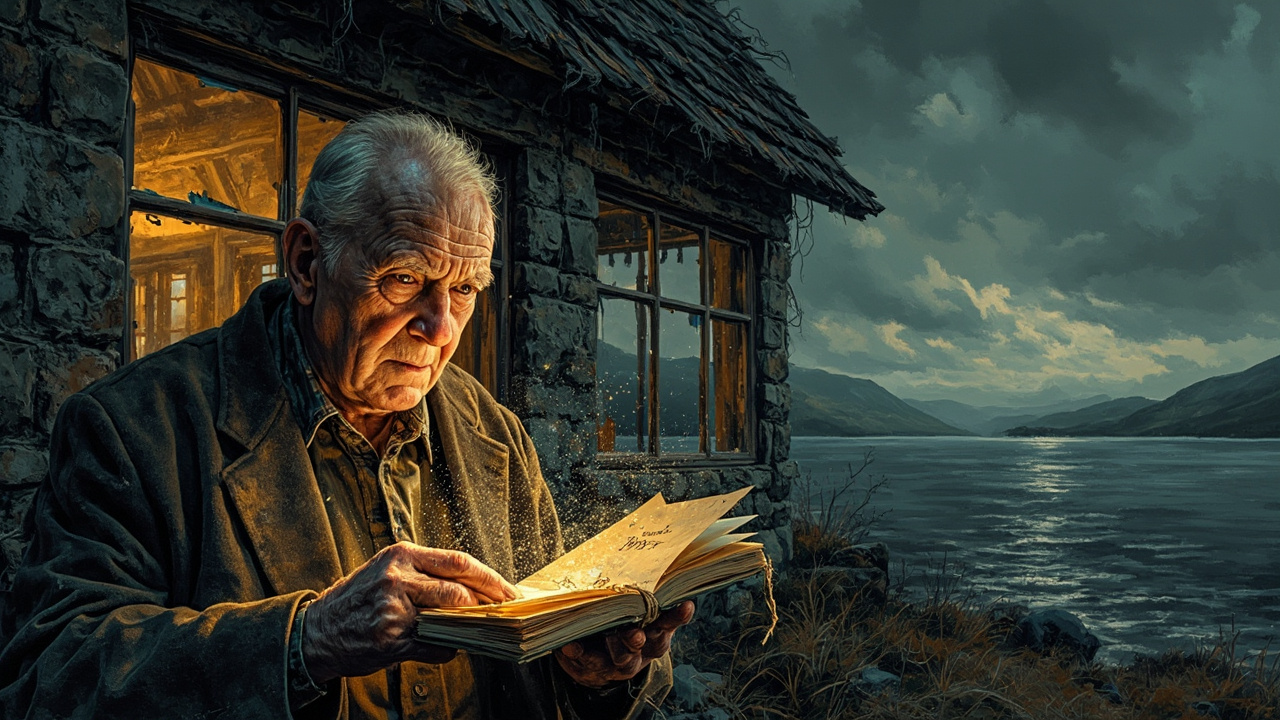
كان مكتب البريد على حافة الخزان مغلقاً منذ أشهر. خطط المجلس لهدمه، وطلب من أنغوس ماكلويد، آخر ساعي بريد خدم المزارع المتفرقة والكوخات المتناثرة، تفريغ المبنى القديم قبل وصول الجرارات الهدمية. توقع أن يجد أثاثاً مكسوراً واستمارات رطبة وربما بعض الطوابع من عقود سابقة. ما اكتشفه كان شيئاً آخر تماماً. في غرفة تخزين بالخلف، خلف أرفف سجلات البريد الصفراء، وجد أنغوس صندوقاً معدنياً مقفلاً. في داخله، ملفوفاً بقطعة قماش مشمعة، كانت حزمة من الرسائل مربوطة بخيط مطبخ. تحمل الطوابع تاريخ يونيو 1974. وبدت الطوابع بتصميم الدراجة القديمة. وكل عنوان يبدأ بنفس اسم القرية: لوتشمور. عرف أنغوس هذا الاسم. كانت قرية لوتشمور القديمة تقف على الشاطئ البعيد للخزان حتى عام 1974، عندما أغرقت الحكومة الوادي لإنشاء مخطط الطاقة الكهرومائية. أُعيد توطين ثلاثة وأربعين عائلة. الكنيسة، المدرسة، المتجر العام، ومكتب البريد—كلها غرقت تحت ثلاثين متراً من المياه الداكنة. كانت الرسائل موجهة لأشخاص لم يقابلهم أنغوس أبداً. سكان سابقون تشتتوا في جميع أنحاء اسكتلندا وخارجها. تعرف على بعض الأسماء العائلية من سجلات البريد القديمة: موراي، ماكنزي، كاميرون، هيندرسون. أحضر الحزمة إلى المنزل وقضى أمسيات ذلك الشتاء في العمل عليها بعناية، يفتح كل مظروف بسكين الزبدة ويمهد الورق الذي لم يُقرأ منذ نصف قرن. كانت رسائل حب. ثلاثة وأربعون منها، كتبت بين يونيو وسبتمبر 1974، من جيمس موراي إلى كيستي ماكنزي. كان اللغو رقيقاً وعاجلاً، مليئاً بالوعود والخطط. كتبوا عن اللقاء سراً عند جسر الحجر القديم، عن الأحلام للمستقبل، عن حياة سيبنيونها معاً متى ما ادخروا ما يكفي من المال. لكن كانت هناك مشكلة في التواريخ. كانت القرية قد أُخلت في أبريل 1974. بحلول يونيو، كان ينبغي أن يكون جيمس وكيستي على بعد مئات الأميال—جيمس في إدنبرة مع عمه، وكيستي أُرسلت إلى أقاربها في إنفرنيس. ومع ذلك استمرت الرسائل عبر الصيف، كأن الإخلاء لم يحدث قط. قرأ أنغوس وفهم. جيمس موراي لم يغادر أبداً. كان مختبئاً في التلال فوق المياه الصاعدة، يعود إلى القرية كل ليلة ليجمع ردود كيستي من مكان متفق عليه. عاش كشبح في بيته الخاص حتى أجبرته المياه على المغادرة في سبتمبر. وكيستي—كيستي أُرسلت بعيداً في أبريل ولم تتلق رسائله على الإطلاق. كانت متراكمة في مكتب البريد، في انتظار تسليم لن يأتي أبداً. عندما تُرِك المبنى، تُoublie، أُغلق في ذلك الصندوق المعدني، في انتظار من يجده. قرر أنغوس أن يسلمها بنفسه. استغرق الأمر أسابيع لتتبع جيمس موراي، الآن في الثالثة والسبعين ويعيش وحده في شقة في إدنبرة. عندما اتصل أنغوس هاتفياً، ارتجف صوت الرجل العجوز. «وجدت رسائلتي؟ بعد كل هذه السنوات؟» شرح أنغوس أنه وجد أيضاً كيستي ماكنزي، الآن كيستي ريد، أرملة تعيش بهدوء في إنفرنيس. صمت جيمس لحظة طويلة. «لم ترد عليّ قط»، قال أخيراً. «ظننت أنها نسيتني.» «لم تتلق رسائلتك يا سيد موراي. لم تُسلَّم قط.» رتب أنغوس اجتماعاً. تم في الربيع، على حافة الخزان، حيث كان مكتب البريد القديم يقف. كان جيمس وكيستي متوترين في البداية—خمسون عاماً تركتهما متغيرين، شعرهما أبيض، حركتهما أبطأ. لكن عندما فتحت كيستي رسائلها وبدأت تقرأ بصوت عالٍ، تلاشت السنوات. بكى جيمس علناً وهو يستمع إلى كلمات كتبها قبل نصف قرن، تصل أخيراً إلى المرأة التي أحبها. تزوجا ذلك الصيف، في حفل صغير بجانب الخزان. كان أنغوس هناك، شاهدهم وبريء بريدهم مرة أخيرة. انتشرت أخبار الرسائل. بدأ السكان السابقون للوتشمور، المتشتتون منذ خمسين عاماً، يتواصلون. سأل بعضهم أنغوس عما إذا كان لديه أي رسائل أخرى من الأيام الماضية. آخرون سألوا ببساطة لمشاركة الذكريات، ليعرفوا أن أحداً يتذكر. وهكذا وُلد الفكرة. petition أنغوس المجلس ألا يهدم مكتب البريد بل يحافظ عليه، ليحولوه إلى نصب تذكاري وأرشيف مجتمعي للقرية الضائعة. جمعت الرسالة دعماً من جميع أنحاء المرتفعات. تبرع السكان السابقون وأطفالهم بصور ومocuments وقصص. المبنى الذي ربط يوماً قرية بعالم أصبح مكاناً يمكن للعالم أن يأتي فيه للتذكر. في يوم افتتاح النصب التذكاري، وقف جيمس وكيستي معاً عند المدخل، الآن زوج وزوجة، أيديهما لا تزالان متشابكتين كما كانت قبل خمسين عاماً. شاهدهما أنغوس من الجهة الأخرى من الغرفة، محاطاً بصور قديمة وأسماء عائلات كانت تدعو هذا المكان وطناً. أُخيراً، تم تسليم آخر بريد.
Das Postamt am Rand des Stausees war seit Monaten geschlossen. Der Rat plante seinen Abriss, und Angus MacLeod, der letzte Briefträger, der die umliegenden Farmen und verstreuten Cottages bedient hatte, wurde gebeten, das alte Gebäude zu räumen, bevor die Bagger anrückten. Er erwartete, zerbrochene Möbel, feuchte Formulare und vielleicht ein paar Briefmarken aus vergangenen Jahrzehnten zu finden. Was er entdeckte, war etwas ganz anderes. In einem Lagerraum hinten, hinter Regalen mit vergilbten Postregistern, fand Angus eine verschlossene Metallbox. Darin, in Wachstuch eingewickelt, lag ein Bündel Briefe, das mit Küchengarn zusammengebunden war. Die Poststempel waren vom Juni 1974. Die Briefmarken zeigten das alte Penny-Farthing-Design. Und jede Adresse begann mit demselben Dorfnamen: Lochmore. Angus kannte diesen Namen. Das alte Dorf Lochmore hatte am fernen Ufer des Stausees gestanden, bis die Regierung 1974 das Tal überflutete, um das Wasserkraftwerk anzulegen. Dreiundvierzig Familien wurden umgesiedelt. Die Kirche, die Schule, der Gemischtwarenladen und das Postamt—alles unter dreißig Metern dunklen Wassers begraben. Die Briefe waren an Menschen gerichtet, die Angus nie kennengelernt hatte. Ehemalige Bewohner, die sich über ganz Schottland und darüber hinaus zerstreut hatten. Er erkannte einige der Nachnamen aus alten Postunterlagen: Murray, MacKenzie, Cameron, Henderson. Er brachte das Bündel nach Hause und verbrachte die Abende jenes Winters damit, es sorgfältig durchzuarbeiten, öffnete jeden Umschlag mit einem Buttermesser und glättete Papier, das ein halbes Jahrhundert lang nicht gelesen worden war. Es waren Liebesbriefe. Dreiundvierzig an der Zahl, geschrieben zwischen Juni und September 1974, von James Murray an Kirsty MacKenzie. Die Sprache war zart und dringlich, voller Versprechen und Pläne. Sie schrieben von heimlichen Treffen an der alten Steinbrücke, von Träumen für die Zukunft, von einem Leben, das sie zusammen aufbauen würden, wenn sie genug Geld gespart hätten. Aber es gab ein Problem mit den Daten. Das Dorf war im April 1974 evakuiert worden. Im Juni hätten James und Kirsty hunderte Meilen entfernt sein sollen—James in Edinburgh bei seinem Onkel, Kirsty zu Verwandten nach Inverness geschickt. Doch die Briefe setzten sich den ganzen Sommer hindurch fort, als wäre die Evakuierung nie passiert. Angus las weiter und verstand. James Murray war nie weggegangen. Er hatte sich in den Hügeln über dem steigenden Wasser versteckt, kehrte jede Nacht ins Dorf zurück, um Kirstys Antworten aus einem vereinbarten Versteck abzuholen. Er hatte wie ein Geist in seinem eigenen Zuhause gelebt, bis das Wasser ihn im September vertrieb. Und Kirsty—Kirsty war im April fortgeschickt worden und hatte seine Briefe überhaupt nie erhalten. Sie hatten sich im Postamt gestapelt und auf eine Zustellung gewartet, die nie kommen würde. Als das Gebäude aufgegeben wurde, waren sie vergessen worden, eingeschlossen in dieser Metallbox, und warteten darauf, dass jemand sie fand. Angus beschloss, sie selbst zuzustellen. Es dauerte Wochen, James Murray aufzuspüren, jetzt dreiundsiebzig Jahre alt und allein lebend in einer Wohnung in Edinburgh. Als Angus anrief, zitterte die Stimme des alten Mannes. «Sie haben meine Briefe gefunden? Nach all den Jahren?» Angus erklärte, dass er auch Kirsty MacKenzie ausfindig gemacht hatte, jetzt Kirsty Reid, eine Witwe, die ruhig in Inverness lebte. James war lange Zeit still. «Sie hat mir nie zurückgeschrieben», sagte er schließlich. «Ich dachte, sie hätte mich vergessen.» «Sie hat Ihre Briefe nie erhalten, Mr Murray. Sie wurden nie zugestellt.» Angus arrangierte ein Treffen. Es fand im Frühling statt, am Rand des Stausees, dort wo das alte Postamt einst gestanden hatte. James und Kirsty waren zunächst beide nervös—fünfzig Jahre hatten sie verändert, ihre Haare weiß, ihre Bewegungen langsamer. Aber als Kirsty ihre Briefe öffnete und zu lesen begann, fielen die Jahre von ihnen ab. James weinte offen, während er Worte hörte, die er ein halbes Jahrhundert zuvor geschrieben hatte, die endlich die Frau erreichten, die er geliebt hatte. Sie heirateten jenen Sommer, in einer kleinen Zeremonie am Stausee. Angus war dabei, als ihr Trauzeuge und ihr Briefträger ein letztes Mal. Nachricht von den Briefen verbreitete sich. Ehemalige Bewohner von Lochmore, die fünfzig Jahre lang verstreut waren, begannen Kontakt aufzunehmen. Einige fragten Angus, ob er noch andere Briefe aus alten Zeiten habe. Andere fragten einfach, um Erinnerungen zu teilen, um zu wissen, dass sich jemand erinnerte. Und so wurde die Idee geboren. Angus petitionierte den Rat, das Postamt nicht abzureißen, sondern zu erhalten, um es in ein Denkmal und ein Gemeindearchiv für das verlorene Dorf zu verwandeln. Der Vorschlag fand Unterstützung aus den gesamten Highlands. Ehemalige Bewohner und ihre Kinder spendeten Fotos, Dokumente und Geschichten. Das Gebäude, das einst ein Dorf mit der Welt verbunden hatte, wurde ein Ort, an den die Welt kommen konnte, um sich zu erinnern. Am Tag der Denkmalseinweihung standen James und Kirsty zusammen am Eingang, jetzt Mann und Frau, ihre Hände noch immer ineinander verschlungen wie fünfzig Jahre zuvor. Angus beobachtete sie von der anderen Seite des Raumes, umgeben von alten Fotos und den Namen von Familien, die einst dieses Ort Zuhause genannt hatten. Die letzte Post war endlich zugestellt worden.
La oficina de correos al borde del embalse había estado cerrada durante meses. El consejo planeaba derribarla, y Angus MacLeod, el último cartero que había servido a las granjas circundantes y las cottages dispersas, había sido invitado a vaciar el viejo edificio antes de que llegaran las excavadoras. Esperaba encontrar muebles rotos, formularios húmedos y quizás algunos sellos de décadas pasadas. Lo que descubrió fue algo completamente diferente. En una habitación de almacenamiento en la parte trasera, detrás de estantes de registros postales amarillentos, Angus encontró una caja metálica cerrada con llave. Dentro, envuelta en tela encerada, había un manojo de cartas atadas con bramante de cocina. Los matasellos llevaban fecha de junio de 1974. Los sellos mostraban el antiguo diseño de penique. Y cada dirección comenzaba con el mismo nombre de pueblo: Lochmore. Angus conocía ese nombre. El antiguo pueblo de Lochmore había estado en la orilla opuesta del embalse hasta 1974, cuando el gobierno inundó el valle para crear el esquema hidroeléctrico. Cuarenta y tres familias habían sido reubicadas. La iglesia, la escuela, la tienda general y la oficina de correos—todo sumergido bajo treinta metros de agua oscura. Las cartas estaban dirigidas a personas que Angus nunca había conocido. Antiguos residentes que se habían dispersado por toda Escocia y más allá. Reconoció algunos de los apellidos de los antiguos registros postales: Murray, MacKenzie, Cameron, Henderson. Llevó el manojo a casa y pasó las tardes de ese invierno examinándolos cuidadosamente, abriendo cada sobre con un cuchillo de mantequilla y alisando papel que no había sido leído en medio siglo. Eran cartas de amor. Cuarenta y tres de ellas, escritas entre junio y septiembre de 1974, por James Murray a Kirsty MacKenzie. El lenguaje era tierno y urgente, lleno de promesas y planes. Escribían sobre encontrarse en secreto en el antiguo puente de piedra, sobre sueños para el futuro, sobre una vida que construirían juntos una vez hubieran ahorrado suficiente dinero. Pero había un problema con las fechas. El pueblo había sido evacuado en abril de 1974. Para junio, James y Kirsty deberían haber estado a cientos de millas de distancia—James en Edimburgo con su tío, Kirsty enviada a parientes en Inverness. Sin embargo, las cartas continuaron durante todo el verano, como si la evacuación nunca hubiera ocurrido. Angus leyó y entendió. James Murray nunca se había ido. Se había escondido en las colinas sobre el agua que subía, regresando al pueblo cada noche para recoger las respuestas de Kirsty de un lugar acordado. Había vivido como un fantasma en su propio hogar hasta que las aguas lo obligaron a marcharse en septiembre. Y Kirsty—Kirsty había sido enviada lejos en abril y nunca había recibido sus cartas en absoluto. Se habían acumulado en la oficina de correos, esperando una entrega que nunca llegaría. Cuando el edificio fue abandonado, habían sido olvidadas, encerradas en esa caja metálica, esperando a que alguien las encontrara. Angus decidió que él mismo las entregaría. Tomó semanas rastrear a James Murray, ahora de setenta y tres años, viviendo solo en un apartamento en Edimburgo. Cuando Angus telefoneó, la voz del anciano tembló. «¿Encontró mis cartas? ¿Después de todos estos años?» Angus explicó que también había localizado a Kirsty MacKenzie, ahora Kirsty Reid, una viuda que vivía tranquilamente en Inverness. James guardó silencio un largo momento. «Ella nunca me escribió de vuelta», dijo finalmente. «Pensé que me había olvidado.» «Ella nunca recibió sus cartas, señor Murray. Nunca fueron entregadas.» Angus organizó una reunión. Tuvo lugar en la primavera, al borde del embalse, donde una vez había estado la antigua oficina de correos. James y Kirsty estaban nerviosos al principio—cincuenta años los habían cambiado, su cabello blanco, sus movimientos más lentos. Pero cuando Kirsty abrió sus cartas y comenzó a leer en voz alta, los años se desvanecieron. James lloró abiertamente mientras escuchaba palabras que había escrito medio siglo antes, finalmente llegando a la mujer que había amado. Se casaron ese verano, en una pequeña ceremonia al borde del embalse. Angus estuvo allí, como su testigo y su cartero una última vez. La noticia de las cartas se extendió. Antiguos residentes de Lochmore, dispersos durante cincuenta años, comenzaron a ponerse en contacto. Algunos preguntaron a Angus si tenía otras cartas de los viejos tiempos. Otros simplemente preguntaron para compartir recuerdos, para saber que alguien recordaba. Y así nació la idea. Angus presentó una petición al consejo para no derribar la oficina de correos sino para preservarla, para convertirla en un memorial y un archivo comunitario para el pueblo perdido. La propuesta собрала apoyo de todo el Highlands. Antiguos residentes y sus hijos donaron fotografías, documentos e historias. El edificio que alguna vez había conectado un pueblo con el mundo se convirtió en un lugar donde el mundo podía venir a recordar. El día de la inauguración del memorial, James y Kirsty estaban juntos en la entrada, ahora marido y mujer, sus manos aún tomadas como lo habían estado cincuenta años antes. Angus los observaba desde el otro lado de la habitación, rodeado de viejas fotografías y los nombres de familias que alguna vez habían llamado a este lugar hogar. El último correo finalmente había sido entregado.
Le bureau de poste au bord du réservoir était fermé depuis des mois. Le conseil avait prévu de le démolir, et Angus MacLeod, le dernier facteur à avoir desservi les fermes environnantes et les cottages dispersés, avait été chargé de vider le vieux bâtiment avant l'arrivée des bulldozers. Il s'attendait à trouver des meubles cassés, des formulaires humides, et peut-être quelques timbres d'il y a des décennies. Ce qu'il découvrit fut tout autre chose. Dans une pièce de stockage à l'arrière, derrière des étagères de registres postaux jaunis, Angus trouva une boîte métallique fermée à clé. À l'intérieur, enveloppée dans une toile cirée, se trouvait une liasse de lettres attachées avec de la ficelle de cuisine. Les cachets postaux dataient de juin 1974. Les timbres montraient l'ancien modèle penny-farthing. Et chaque adresse commençait par le même nom de village : Lochmore. Angus connaissait ce nom. Le vieux village de Lochmore s'était dressé sur la rive opposée du réservoir jusqu'en 1974, lorsque le gouvernement avait inondé la vallée pour créer le scheme hydroélectrique. Quarante-trois familles avaient été relocalisées. L'église, l'école, l'épicerie et le bureau de poste—tous submergés sous trente mètres d'eau sombre. Les lettres étaient adressées à des gens qu'Angus n'avait jamais rencontrés. D'anciens résidents qui s'étaient éparpillés à travers l'Écosse et au-delà. Il reconnut certains noms de famille dans les vieux dossiers postaux : Murray, MacKenzie, Cameron, Henderson. Il rapporta le paquet chez lui et passa les soirs de cet hiver à les examiner soigneusement, ouvrant chaque enveloppe avec un couteau à beurre et lissant du papier qui n'avait pas été lu depuis un demi-siècle. C'étaient des lettres d'amour. Quarante-trois d'entre elles, écrites entre juin et septembre 1974, par James Murray à Kirsty MacKenzie. Le langage était tendre et urgent, plein de promesses et de projets. Ils écrivaient de leurs rencontres secrètes au vieux pont de pierre, de leurs rêves pour l'avenir, d'une vie qu'ils construiraient ensemble une fois assez d'argent économisé. Mais il y avait un problème avec les dates. Le village avait été évacué en avril 1974. En juin, James et Kirsty auraient dû être à des centaines de kilomètres—James à Édimbourg chez son oncle, Kirsty envoyée chez des parents à Inverness. Pourtant, les lettres continuaient tout l'été, comme si l'évacuation n'avait jamais eu lieu. Angus lut et comprit. James Murray n'était jamais parti. Il s'était caché dans les collines au-dessus des eaux montantes, retournant au village chaque nuit pour récupérer les réponses de Kirsty dans un endroit convenu. Il avait vécu comme un fantôme dans son propre foyer jusqu'à ce que les eaux le forcent à partir en septembre. Et Kirsty—Kirsty avait été envoyée loin en avril et n'avait jamais reçu ses lettres du tout. Elles s'étaient accumulées au bureau de poste, attendant une livraison qui ne viendrait jamais. Lorsque le bâtiment fut abandonné, elles avaient été oubliées, enfermées dans cette boîte métallique, attendant que quelqu'un les trouve. Angus décida qu'il les livrerait lui-même. Il fallut des semaines pour retrouver James Murray, aujourd'hui soixante-treize ans, vivant seul dans un appartement à Édimbourg. Quand Angus téléfona, la voix du vieil homme tremblait. «Vous avez trouvé mes lettres ? Après toutes ces années ?» Angus expliqua qu'il avait aussi localisé Kirsty MacKenzie, maintenant Kirsty Reid, une veuve vivant paisiblement à Inverness. James resta silencieux un long moment. «Elle ne m'a jamais écrit en retour», dit-il enfin. «Je pensais qu'elle m'avait oublié.» «Elle n'a jamais reçu vos lettres, Monsieur Murray. Elles n'ont jamais été livrées.» Angus organisa une rencontre. Elle eut lieu au printemps, au bord du réservoir, là où le vieux bureau de poste s'était autrefois dressé. James et Kirsty furent tous deux nerveux au début—cinquante ans les avaient changés, leurs cheveux blancs, leurs mouvements plus lents. Mais quand Kirsty ouvrit ses lettres et commença à lire à voix haute, les années s'effacèrent. James pleura ouvertement en écoutant des mots qu'il avait écrits un demi-siècle auparavant, arrivant enfin à la femme qu'il avait aimée. Ils se marièrent cet été-là, lors d'une petite cérémonie au bord du réservoir. Angus était là, en tant que témoin et facteur une dernière fois. La nouvelle des lettres se répandit. D'anciens résidents de Lochmore, éparpillés depuis cinquante ans, commencèrent à prendre contact. Certains demandèrent à Angus s'il avait d'autres lettres des vieux jours. D'autres demandèrent simplement à partager des souvenirs, à savoir que quelqu'un se souvenait. Et ainsi l'idée naquit. Angus fit une petition au conseil pour ne pas démolir le bureau de poste mais pour le préserver, pour en faire un mémorial et une archive communautaire pour le village perdu. La proposition rassembla des soutiens de partout dans les Highlands. D'anciens résidents et leurs enfants donnèrent des photographies, des documents et des histoires. Le bâtiment qui avait autrefois relié un village au monde devint un endroit où le monde pouvait venir se souvenir. Le jour de l'inauguration du mémorial, James et Kirsty se tenaient ensemble à l'entrée, maintenant mari et femme, leurs mains toujours jointes comme cinquante ans auparavant. Angus les observait depuis l'autre bout de la pièce, entouré de vieilles photographies et des noms de familles qui avaient autrefois appelé cet endroit chez elles. Le dernier courrier avait finalement été délivré.
L'ufficio postale al bordo del serbatoio era chiuso da mesi. Il consiglio aveva in programma di demolirlo, e Angus MacLeod, l'ultimo portalettere che aveva servito le fattorie circostanti e le casette sparse, era stato incaricato di sgombrare il vecchio edificio prima dell'arrivo delle ruspe. Si aspettava di trovare mobili rotti, moduli umidi, e forse qualche francobollo di decenni passati. Quello che scoprì fu qualcosa di completamente diverso. In una stanza di deposito sul retro, dietro scaffali di registri postali ingialliti, Angus trovò una scatola metallica chiusa a chiave. All'interno, avvolta in tela cerata, c'era un fascio di lettere legate con lo spago da cucina. I timbri postali portavano la data di giugno 1974. I francobolli mostravano il vecchio disegno della penny-farthing. E ogni indirizzo iniziava con lo stesso nome di villaggio: Lochmore. Angus conosceva quel nome. Il vecchio villaggio di Lochmore si era trovato sulla riva opposta del serbatoio fino al 1974, quando il governo aveva allagato la valle per creare il progetto idroelettrico. Quarantatré famiglie erano state trasferite. La chiesa, la scuola, il negozio generale e l'ufficio postale—tutti sommersi sotto trenta metri di acqua scura. Le lettere erano indirizzate a persone che Angus non aveva mai incontrato. Ex residenti che si erano dispersi in tutta la Scozia e oltre. Riconobbe alcuni dei cognomi dai vecchi archivi postali: Murray, MacKenzie, Cameron, Henderson. Portò il pacchetto a casa e trascorse le sere di quell'inverno a esaminarlo con cura, aprendo ogni busta con un coltello da burro e lisciando carta che non veniva letta da mezzo secolo. Erano lettere d'amore. Quarantatré in tutto, scritte tra giugno e settembre 1974, da James Murray a Kirsty MacKenzie. Il linguaggio era tenero e urgente, pieno di promesse e progetti. Scrivevano di incontrarsi di nascosto al vecchio ponte di pietra, di sogni per il futuro, di una vita che avrebbero costruito insieme una volta risparmiato abbastanza soldi. Ma c'era un problema con le date. Il villaggio era stato evacuato nell'aprile del 1974. A giugno, James e Kirsty avrebbero dovuto essere a centinaia di chilometri di distanza—James a Edimburgo con suo zio, Kirsty mandata da parenti a Inverness. Eppure le lettere continuarono per tutta l'estate, come se l'evacuazione non fosse mai avvenuta. Angus lesse e capì. James Murray non se n'era mai andato. Si era nascosto nelle colline sopra l'acqua che saliva, tornando al villaggio ogni notte per raccogliere le risposte di Kirsty da un nascondiglio concordato. Era vissuto come un fantasma nella propria casa fino a quando l'acqua non lo cacciò in settembre. E Kirsty—Kirsty era stata mandata via in aprile e non aveva mai ricevuto le sue lettere affatto. Si erano accumulate all'ufficio postale, in attesa di una consegna che non sarebbe mai arrivata. Quando l'edificio fu abbandonato, erano state dimenticate, chiuse in quella scatola metallica, in attesa che qualcuno le trovasse. Angus decise che le avrebbe consegnate lui stesso. Ci vollero settimane per rintracciare James Murray, ora settantatreenne che viveva da solo in un appartamento a Edimburgo. Quando Angus telefonò, la voce del vecchio tremò. «Avete trovato le mie lettere? Dopo tutti questi anni?» Angus spiegò che aveva anche rintracciato Kirsty MacKenzie, ora Kirsty Reid, una vedova che viveva tranquilla a Inverness. James rimase in silenzio per un lungo momento. «Lei non mi ha mai risposto», disse infine. «Pensavo mi avesse dimenticato.» «Non ha mai ricevuto le sue lettere, signor Murray. Non sono mai state consegnate.» Angus organizzò un incontro. Avvenne in primavera, al bordo del serbatoio, dove un tempo sorgeva il vecchio ufficio postale. James e Kirsty erano entrambi nervosi all'inizio—cinquant'anni li avevano cambiati, i capelli bianchi, i movimenti più lenti. Ma quando Kirsty aprì le sue lettere e cominciò a leggere ad alta voce, gli anni svanirono. James pianse apertamente ascoltando parole che aveva scritto mezzo secolo prima, che finalmente raggiungevano la donna che aveva amato. Si sposarono quell'estate, in una piccola cerimonia al bordo del serbatoio. Angus era lì, come loro testimone e portalettere un'ultima volta. La notizia delle lettere si diffuse. Ex residenti di Lochmore, dispersi per cinquant'anni, cominciarono a mettersi in contatto. Alcuni chiesero a Angus se avesse altre lettere dei vecchi tempi. Altri chiesero semplicemente di condividere ricordi, di sapere che qualcuno ricordava. E così nacque l'idea. Angus presentò una petizione al consiglio per non demolire l'ufficio postale ma per preservarlo, per trasformarlo in un memoriale e un archivio comunitario per il villaggio perduto. La proposta raccolse sostegno da tutto il Highlands. Ex residenti e i loro figli donarono fotografie, documenti e storie. L'edificio che un tempo aveva collegato un villaggio al mondo divenne un luogo dove il mondo poteva venire a ricordare. Il giorno dell'inaugurazione del memoriale, James e Kirsty stavano insieme all'ingresso, ora marito e moglie, le loro mani ancora strette come cinquant'anni prima. Angus li osservava dall'altra parte della stanza, circondato da vecchie fotografie e dai nomi di famiglie che un tempo avevano chiamato questo posto casa. L'ultima posta era finalmente stata consegnata.