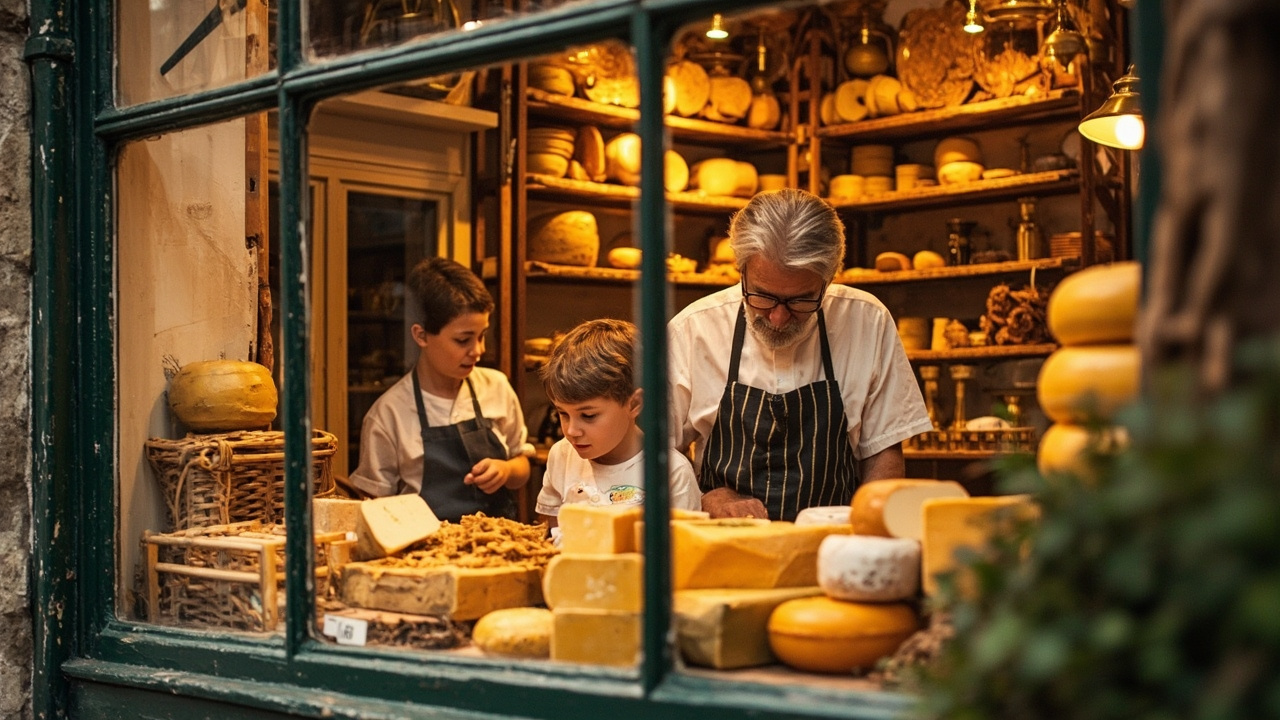
حلم مارسل دوبوا بهذا اللحظة عشرين عاماً. واقفاً أمام محله الجديد في شارع بريكستون المرصوف بالحصى في مدينة ثورنبري، وهي مدينة سوقية صغيرة تحضنها منطقة كوتسوولدز، عدّل اللافتة فوق الباب للمرة الأخيرة. اللافتة الخشبية حملت اسمه بخط أنيق، وتحتها الكلمات التي عاش حياته كلها البالغين: 'فورماج أفينيه' (جبن مُكتمل النضج). أمضى مارسل عقوداً في كهوف وادي اللوار، يُتقن فن الإفينور - الحرفي الذي يكبر الجبن حتى ذروته من الكمال. والآن، في الثالثة والخمسين من عمره، وفّر أخيراً ما يكفي لفتح محله الخاص في إنجلترا، بلد زاره مرتين فقط من قبل. إنجليزيته كانت مقبولة لكن شغفه بالجبن كان عالمياً. المحل كان أصغر مما أمل، لكنه كان يتميز بطابع خاص. الجدران الحجرية السميكة ستحافظ على الرطوبة المثالية لعجلاته الغالية من جبن كومتيه وجبن الكامامبير من الحليب الخام. أحضر أدواته من فرنسا، والمعرفة المتوارثة عبر ثلاثة أجيال من عائلة دوبوا، وصفات كتبتها جدته بخطها الدقيق كشبكة العنكبوت. الأسبوع الأول كان هادئاً. سكان ثورنبري كانوا ودودين لكن حذرين. يتطلعون من النافذة إلى أنواع الجبن الأجنبية الغريبة بأسمائها غير المألوفة. احدة من كبار النساء، قدّمت نفسها الآنسة هارجريفز من الجهة الأخرى من الساحة، دخلت في اليوم الثالث. 'هل تبيع شيئاً يشبه الجبن الحقيقي؟' سألت، تنظر حولها وذراعيها متصالبتان. 'شيء إنجليزي، ربما؟ جبن ونزديل؟ شيدر؟' ابتسم مارسل وقدّم لها قطعة صغيرة من جبن بري دو ميو. 'هذا'، قال بحذر، 'هو ملك الأجبان الفرنسية. لكن ملكة الأجبان الإنجليزية - الشيدر الملفوف بالقماش - هي أيضاً رائعة. أمين الإفينور الطيب يحترم كل التقاليد.' تذوقت الآنسة هارجريفز البري ووسع عيناها. غادرت دون أن تشتري شيئاً، لكنها عادت الأسبوع التالي. والأسبوع الذي يليه. انتشرت الأخبار في المدينة عن الفرنسي الذي يعرف كل شيء عن الجبن. في صباح ماطر أحد أيام الإثنين، ظهر شاب عند الباب. اسمه توم، عمره تسعة عشر عاماً، وكان قد أُسرح للتو من المصنع المحلي. 'أريد أن أتعلم حرفة'، قال توم. 'شيء حقيقي. شيء تستخدم فيه يديك.' درس مارسل الوجه المتحمس للشاب. 'هذا العمل يتطلب الصبر'، قال. 'سنوات منه. الجبن لا يستعجل لأحد.' 'عندني صبر'، رد توم. 'عندني لا شيء غيره.' وهكذا أخذ مارسل متعلماً. فن الصبر الأشهر التي تلت كانت مُرهقة. علّم مارسل توم أن يقلب كل عجلة في اللحظة المناسبة تماماً، أن يُفرش القشور بماء مالح، أن يُحدد النضج باللمس وحده. 'الإفينور الطيب يطور صبر الراهب وغريزة البستاني'، كان مارسل يقول وهما يعملان جنباً إلى جنب في القبو البارد. توم تعلّم بسرعة. اكتشف أن يديه الخشنتين كانتا مثاليتين لفرشات الشعر الخشن. تعلّم أن يُميّز الفرق بين جبن يحتاج أسبوعاً آخر وآخر يحتاج ساعة أخرى. والأهم من ذلك كله، تعلّم أن الجودة لا يمكن استعجالها. 'لكن سيدّي'، سأل توم ذات مساء، 'كيف نتنافس مع محلات السوبرماركت؟ يبيعون الجبن بنصف سعرنا.' رفع مارسل عجلة من جبن إبوسيز، قشرتها البرتقالية اللامعة. 'سوبرماركت يبيع طعاماً. نحن نبيع وقتاً. نبيع حرفية. نبيع قصة لا يمكن إنتاجها بكميات ضخمة.' المنافسة جاءت في الخريف، عندما宣布ت مهرجان ثورنبري السنوي للأغذية مسابقة للجبن. مارغريت هارجريفز - ابنة الآنسة هارجريفز - كانت قد تولت العمل العائلي وتنظر إلى محل مارسل comme إهانة للتقاليد الإنجليزية. 'أساليبك الفرنسية جيدة كلها'، قالت له ببرود في اجتماع التخطيط، 'لكن هذه إنجلترا. الجبن الإنجليزي له تراث يسبق بلدك.' أومأ مارسل باحترام. 'شيدرك ممتاز. قلت دائماً ذلك. لكن الجبن ليس منافسة بين الأمم. إنه محادثة بين صانع الجبن والإفينور والزبون.' يوم المسابقة جاء بارداً ومشرقاً. اختار مارسل أفضل عروضه: كامامبير من الحليب الخام، كومتيه مُكبّر، بيكورينو صغير بجبن من حديقته، وسلاحه السري - إبوسيز قوي الرائحة كان يكبره منذ أربعة أشهر. تذوق سكان المدينة كل شيء باهتمام متزايد. عندما أعلنت النتائج، جاء إبوسيز مارسل كأفضل جبن حرفي، بينما فاز شيدر هارجريفز الفاخر كأفضل تقليدي. كلا المحلين فاز بشيء ثمين. ماشياً إلى البيت ذلك المساء، حمل توم الكأس الصغيرة. 'جاءتنا الثانية'، قال. 'لا'، رد مارسل، يبتسم. 'جئنا أولاً في الشيء المهم. وجدنا شخصاً أراد أن يتعلم. شاركنا معرفتنا. وسعدنا الناس. الكأس مجرد جبن في نهاية المطاف.' فكر توم في هذا وهما يمشيان بجوار ساحة السوق، حيث كانت مارغريت هارجريفز ترتب عرض شيدرها الفائز بالفعل. سيتنافس المحلان مرة أخرى العام القادم، والسنة التي تليها. لكن بطريقة ما، اشتبه مارسل، سيتعلمان أيضاً من بعضهما. بعد كل شيء، هذا هو الفن الحقيقي للإفينور: معرفة متى تقلب العجلة، ومتى تتركها ترتاح.
Der Lehrling des Affineurs
Marcel Dubois hatte diesen Moment zwanzig Jahre lang想象t. Vor seinem neuen Laden in der kopfsteingepflasterten Hauptstraße von Thornbury, einer Marktstadt in den Cotswolds, rückte er das Schild über der Tür ein letztes Mal zurecht. Die hölzerne Tafel trug seinen Namen in eleganter Handschrift und darunter die Worte, die sein ganzes Erwachsenenleben lang sein Motto gewesen waren: 'Fromage Affiné'. Marcel hatte Jahrzehnte in den Kellern des Loiretals verbracht und die Kunst des Affineurs perfektioniert – des Handwerkers, der Käse zu seiner höchsten Vollendung reift. Nun, mit dreiundfünfzig Jahren, hatte er endlich genug gespart, um seinen eigenen Laden in England zu eröffnen, einem Land, das er nur zweimal zuvor besucht hatte. Sein Englisch war angemessen, aber seine Leidenschaft für Käse war universell. Der Laden war kleiner als er gehofft hatte, aber er hatte Charakter. Dicke Steinwände würden die Luftfeuchtigkeit perfekt für seine kostbaren Räder aus Comté und seinem Rohmilch-Camembert halten. Er hatte Werkzeuge aus Frankreich mitgebracht, Wissen, das durch drei Generationen der Duboises weitergegeben worden war, und Rezepte, die seine Großmutter in ihrer spinnenartigen Handschrift geschrieben hatte. Die erste Woche war ruhig. Die Menschen von Thornbury waren freundlich, aber vorsichtig. Sie spähten durch das Fenster auf die fremden Käsesorten mit ihren ungewohnten Namen. Eine ältere Dame, die sich als Mrs. Hargreaves von gegenüber dem Platz vorstellte, kam am dritten Tag herein. 'Verkaufen Sie etwas, das an richtigen Käse erinnert?' fragte sie und sah sich mit verschränkten Armen um. 'Etwas Englisches vielleicht? Wensleydale? Cheddar?' Marcel lächelte und bot ihr ein kleines Stück Brie de Meaux an. 'Dies hier', sagte er sorgfältig, 'ist der König der französischen Käse. Aber die Königin des englischen Käses – der in Tuch gewickelte Cheddar – ist ebenfalls großartig. Ein guter Affineur respektiert alle Traditionen.' Mrs. Hargreaves kostete den Brie und ihre Augen weiteten sich. Sie ging ohne etwas zu kaufen, aber sie kam in der darauffolgenden Woche wieder. Und in der Woche danach. Die Nachricht verbreitete sich durch die Stadt über den Franzosen, der alles über Käse wusste. An einem feuchten Montagmorgen erschien ein junger Mann an der Tür. Sein Name war Tom, er war neunzehn und war gerade aus dem örtlichen Werk entlassen worden. 'Ich will ein Handwerk lernen', sagte Tom. 'Etwas Echtes. Etwas, bei dem man die Hände gebraucht.' Marcel studierte das eifrige Gesicht des jungen Mannes. 'Diese Arbeit erfordert Geduld', sagte er. 'Jahre davon. Käse wartet auf niemanden.' 'Ich habe Geduld', erwiderte Tom. 'Ich habe nichts anderes.' Und so nahm Marcel einen Lehrling an.
Die Kunst der Geduld
Die folgenden Monate waren anspruchsvoll. Marcel brachte Tom bei, jedes Rad genau im richtigen Moment zu wenden, die Rinden mit Salzwasser zu bürsten, die Reife allein durch sanftes Berühren zu beurteilen. 'Ein guter Affineur entwickelt die Geduld eines Mönchs und die Instinkte eines Gärtners', pflegte Marcel zu sagen, während sie Seite an Seite im kühlen Keller arbeiteten. Tom lernte schnell. Er entdeckte, dass seine rauen Hände perfekt für die groben Borstenbürsten waren. Er lernte, den Unterschied zwischen einem Käse zu erkennen, der noch eine Woche brauchte, und einem, der nur noch eine weitere Stunde brauchte. Am wichtigsten war, dass er lernte, dass Qualität nicht erzwungen werden konnte. 'Aber Monsieur', fragte Tom eines Abends, 'wie können wir mit den Supermärkten konkurrieren? Sie verkaufen Käse für die Hälfte unseres Preises.' Marcel hielt ein Rad Époisses hoch, dessen orangefarbene Rinde glänzte. 'Der Supermarkt verkauft Essen. Wir verkaufen Zeit. Wir verkaufen Handwerk. Wir verkaufen eine Geschichte, die nicht in Massenproduktion hergestellt werden kann.'
Der Wettbewerb
Die Herausforderung kam im Herbst, als das jährliche Thornbury Food Festival einen Käse-Wettbewerb ankündigte. Margaret Hargreaves – Mrs. Hargreaves' Tochter – hatte das Familienunternehmen übernommen und sah Marcles Laden als Beleidigung für die englische Tradition. 'Ihre französischen Methoden sind ja ganz gut', sagte sie ihm kühl bei der Planungsbesprechung, 'aber dies ist England. Englischer Käse hat ein Erbe, das älter ist als Ihr Land.' Marcel nickte respektvoll. 'Ihr Cheddar ist ausgezeichnet. Das habe ich immer gesagt. Aber Käse ist kein Wettbewerb zwischen Nationen. Es ist ein Gespräch zwischen dem Käser, dem Affineur und dem Kunden.' Der Tag des Wettbewerbs kam kalt und hell. Marcel wählte seine feinsten Angebote aus: einen Rohmilch-Camembert, einen gereiften Comté, einen jungen Pecorino mit Kräutern aus seinem Fensterbrett, und seine Geheimwaffe – einen strengen Époisses, den er vier Monate lang gereift hatte. Die Stadtbewohner kosteten alles mit wachsender Begeisterung. Als die Ergebnisse verkündet wurden, wurde Marcles Époisses zum besten Handwerkskäse gewählt, während der Hargreaves-Jahrgangscheddar den besten traditionellen Käse holte. Beide Läden hatten etwas Wertvolles gewonnen. Auf dem Nachhauseweg an diesem Abend trug Tom die kleine Trophäe. 'Wir wurden Zweiter', sagte er. 'Nein', erwiderte Marcel und lächelte. 'Wir wurden Erster in dem, was zählt. Wir fanden jemanden, der lernen wollte. Wir teilten unser Wissen. Und wir machten Menschen glücklich. Die Trophäe ist am Ende des Tages nur Käse.' Tom dachte darüber nach, als sie am Marktplatz vorbeikamen, wo Margaret Hargreaves bereits eine Auslage ihres preisgekrönten Cheddars arrangierte. Die beiden Läden würden nächstes Jahr wieder konkurrieren, und im Jahr danach. Aber irgendwie, vermutete Marcel, würden sie auch voneinander lernen. Denn das war die wahre Kunst des Affineurs: zu wissen, wann man das Rad dreht, und wann man es ruhen lässt.
L'apprenti de l'affineur
Marcel Dubois avait imaginé ce moment pendant vingt ans. Debout devant sa nouvelle boutique dans la rue pavée de Thornbury, une ville market nichée dans les Cotswolds, il ajusta l'enseigne au-dessus de la porte une dernière fois. La plaque de bois portait son nom en écriture élégante et en dessous, les mots qui avaient guidé toute sa vie adulte : 'Fromage Affiné'. Marcel avait passé des décennies dans les caves de la Loire, perfectionnant l'art de l'affineur - l'artisan qui affine les fromages jusqu'à leur perfection. À cinquante-trois ans, il avait enfin économisé assez pour ouvrir sa propre boutique en Angleterre, un pays qu'il n'avait visité que deux fois. Son anglais était convenable mais sa passion pour le fromage était universelle. La boutique était plus petite qu'il ne l'avait espéré, mais elle avait du caractère. Les murs de pierre épais conserveraient l'humidité parfaite pour ses précieuses meules de Comté et son Camembert au lait cru. Il avait apporté des outils de France, des connaissances transmises à travers trois générations de Dubois, et des recettes écrites de la main hésitante de sa grand-mère. La première semaine fut calme. Les gens de Thornbury étaient sympathiques mais prudents. Ils regardaient à travers la vitrine les fromages étrangers aux noms inconnus. Une vieille dame, qui se présenta comme Mrs Hargreaves, de l'autre côté de la place, entra le troisième jour. 'Vendez-vous quelque chose qui ressemble à un vrai fromage ?' demanda-t-elle, regardant autour d'elle les bras croisés. 'Quelque chose d'anglais, peut-être ? Du Wensleydale ? Du Cheddar ?' Marcel sourit et lui offrit un petit morceau de Brie de Meaux. 'Celui-ci', dit-il soigneusement, 'est le roi des fromages français. Mais la reine des fromages anglais - le cheddar enveloppé de tissu - est aussi magnifique. Un bon affineur respecte toutes les traditions.' Mrs Hargreaves goûta le Brie et ses yeux s'écarquillèrent. Elle partit sans rien acheter, mais elle revint la semaine suivante. Et celle d'après. La nouvelle se répandit dans la ville au sujet du Français qui savait tout sur le fromage. Un matin pluvieux de lundi, un jeune homme apparut à la porte. Il s'appelait Tom, il avait dix-neuf ans, et venait d'être licencié de l'usine locale. 'Je veux apprendre un métier', dit Tom. 'Quelque chose de réel. Quelque chose qui utilise ses mains.' Marcel étudia le visage animé du jeune homme. 'Ce travail demande de la patience', dit-il. 'Des années de patience. Le fromage ne se presse pour personne.' 'J'ai de la patience', répondit Tom. 'Je n'ai rien d'autre.' Et ainsi Marcel prit un apprenti.
L'art de la patience
Les mois qui suivirent furent exigeants. Marcel apprit à Tom à tourner chaque meule au bon moment, à brosser les croûtes avec de l'eau salée, à juger de la maturité par le toucher seul. 'Un bon affineur développe la patience d'un moine et les instincts d'un jardinier', disait Marcel alors qu'ils travaillaient côte à côte dans la cave fraîche. Tom apprit vite. Il découvrit que ses mains calleuses étaient parfaites pour les grosses brosses à chiendent. Il apprit à détecter la différence entre un fromage qui avait besoin d'une semaine de plus et un autre qui n'avait besoin que d'une heure de plus. Plus important encore, il apprit que la qualité ne pouvait pas être précipitée. 'Mais Monsieur', demanda Tom un soir, 'comment concurrencer les supermarchés ? Ils vendent le fromage à la moitié de notre prix.' Marcel leva une meule d'Époisses, sa croûte orange luisante. 'Le supermarché vend de la nourriture. Nous vendons du temps. Nous vendons de l'artisanat. Nous vendons une histoire qui ne peut pas être produite en masse.'
La compétition
Le défi vint en automne, lorsque le Festival Alimentaire annuel de Thornbury annonça un concours de fromages. Margaret Hargreaves - la fille de Mrs Hargreaves - avait pris la direction de l'entreprise familiale et considérait la boutique de Marcel comme une insulte à la tradition anglaise. 'Vos méthodes françaises c'est bien beau', lui dit-elle froidement lors de la réunion de planification, 'mais ceci est l'Angleterre. Le fromage anglais a un héritage qui précède votre pays.' Marcel hocha la tête respectueusement. 'Votre cheddar est excellent. Je l'ai toujours dit. Mais le fromage n'est pas une compétition entre nations. C'est une conversation entre le fromager, l'affineur et le client.' Le jour du concours arriva, froid et lumineux. Marcel sélectionna ses meilleures offres : un Camembert au lait cru, un Comté affiné, un jeune Pecorino aux herbes de sa fenêtre, et son arme secrète - un Époisses piquant qu'il avait affiné pendant quatre mois. Les habitants goûtèrent tout avec un enthousiasme croissant. Quand les résultats furent annoncés, l'Époisses de Marcel fut élu meilleur fromage artisanal, tandis que le cheddar vintage des Hargreaves fut sacré meilleur traditionnel. Les deux boutiques avaient gagné quelque chose de précieux. En rentrant chez lui ce soir-là, Tom portait le petit trophée. 'On est arrivés deuxièmes', dit-il. 'Non', répondit Marcel en souriant. 'Nous sommes arrivés premiers dans ce qui compte. Nous avons trouvé quelqu'un qui voulait apprendre. Nous avons partagé notre savoir. Et nous avons rendu les gens heureux. Le trophée n'est que du fromage au bout du compte.' Tom réfléchit à cela alors qu'ils passaient devant la place du marché, où Margaret Hargreaves arrangeait déjà un étalage de son cheddar primé. Les deux boutiques se feraient concurrence à nouveau l'année prochaine, et l'année d'après. Mais d'une certaine manière, Marcel le soupçonnait, ils apprendraient aussi l'un de l'autre. Après tout, c'était le vrai art de l'affineur : savoir quand tourner la meule, et quand la laisser reposer.
Ученик аффинёра
Марсель Дюбуа представлял этот момент двадцать лет. Стоя перед своим новым магазином на мощёной главной улице Торнбери, рыночного городка в Котсуолдсе, он в последний раз поправил вывеску над дверью. Деревянная табличка несла его имя элегантным почерком, а под ней — слова, которым он следовал всю свою взрослую жизнь: 'Fromage Affiné'. Марсель провёл десятилетия в погребах долины Луары, совершенствуя искусство аффинёра — мастера, который выдерживает сыр до его высшего совершенства. Теперь, в пятьдесят три года, он наконец скопил достаточно, чтобы открыть собственный магазин в Англии, стране, которую он посещал лишь дважды. Его английский был приемлемым, но его страсть к сыру была универсальной. Магазин был меньше, чем он надеялся, но в нём была душа. Толстые каменные стены сохраняли бы идеальную влажность для его драгоценных головок комте и камамбера из сырого молока. Он привёз инструменты из Франции, знания, передававшиеся через три поколения семьи Дюбуа, и рецепты, написанные его бабушкой её мелким «паучьим» почерком. Первая неделя была тихой. Жители Торнбери были дружелюбны, но осторожны. Они заглядывали в окно на странные зарубежные сыры с их незнакомыми названиями. Одна пожилая леди, представившаяся миссис Харгривз из-за площади, зашла на третий день. — Вы продаёте что-нибудь похожее на настоящий сыр? — спросила она, оглядываясь вокруг со скрещёнными руками. — Что-нибудь английское, может быть? Уэнсдейл? Чеддер? Марсель улыбнулся и предложил ей кусочек бри де Мео. — Это, — осторожно сказал он, — король французских сыров. Но королева английского сыра — тканевый чеддер — тоже великолепна. Хороший аффинёр уважает все традиции. Миссис Харгривз попробовала бри, и её глаза расширились. Она ушла, ничего не купив, но вернулась на следующей неделе. И через неделю после этого. Слухи о французе, который знает всё о сыре, разнеслись по городу. В сырое утро понедельника у двери появился молодой человек. Его звали Том, ему было девятнадцать, и его только что уволили с местной фабрики. — Я хочу научиться ремеслу, — сказал Том. — Чему-то настоящему. Чему-то, где нужны руки. Марсель изучил серьёзное лицо молодого человека. — Эта работа требует терпения, — сказал он. — Годы терпения. Сыр ни для кого не торопится. — У меня есть терпение, — ответил Том. — У меня ничего другого нет. Итак, Марсель взял ученика.
Искусство терпения
Последующие месяцы были требовательными. Марсель учил Тома поворачивать каждую головку сыра вExactно в нужный момент, протирать корки солёной водой, определять зрелость одним лишь нежным прикосновением. — Хороший аффинёр развивает терпение монаха и интуицию садовника, — говаривал Марсель, работая рядом с ним в прохладном погребе. Том учился быстро. Он обнаружил, что его грубые руки идеально подходят для жёстких щёток. Он научился определять разницу между сыром, которому нужна ещё одна неделя, и тем, которому нужна ещё один час. Что важнее всего — он усвоил, что качество нельзя торопить. — Но месье, — спросил Том однажды вечером, — как нам конкурировать с супермаркетами? Они продают сыр за половину нашей цены. Марсель поднял головку эпуаса, его оранжевая корка блестела. — Супермаркет продаёт еду. Мы продаём время. Мы продаём мастерство. Мы продаём историю, которую нельзя тиражировать.
Соревнование
Испытание пришло осенью, когда ежегодный Торнберийский продовольственный фестиваль объявил конкурс сыров. Маргарет Харгривз — дочь миссис Харгривз — взяла на себя семейное дело и считала магазин Марселя оскорблением английской традиции. — Ваши французские методы — это очень хорошо, — холодно сказала она ему на плановом совещании, — но это Англия. Английский сыр имеет наследие, которое старше вашей страны. Марсель почтительно кивнул. — Ваш чеддер превосходен. Я всегда это говорил. Но сыр — это не соревнование между нациями. Это разговор между сыроваром, аффинёром и покупателем. День соревнования выдался холодным и ясным. Марсель отобрал лучшие предложения: камамбер из сырого молока, выдержанный комте, молодой пекорино с травами из его оконного ящика и своё секретное оружие — резкий эпуас, который он выдерживал четыре месяца. Горожане дегустировали всё с растущим энтузиазмом. Когда объявили результаты, эпуас Марселя был признан лучшим ремесленным сыром, а чеддер Харгривз из винтажных запасов взял приз за лучший традиционный сыр. Оба магазина выиграли нечто ценное. Возвращаясь домой тем вечером, Том нёс маленький кубок. — Мы заняли второе место, — сказал он. — Нет, — ответил Марсель, улыбаясь. — Мы заняли первое место в том, что действительно важно. Мы нашли того, кто хотел учиться. Мы поделились своими знаниями. И мы сделали людей счастливыми. Кубок — это просто сыр в конце концов. Том задумался об этом, когда они проходили мимо рыночной площади, где Маргарет Харгривз уже раскладывала выставочный стенд со своим удостоенным наград чеддером. Оба магазина будут соревноваться снова в следующем году, и в году после этого. Но почему-то, подозревал Марсель, они также будут учиться друг у друга. В конце концов, в этом и заключается истинное искусство аффинёра: знать, когда повернуть головку, а когда дать ей отдохнуть.