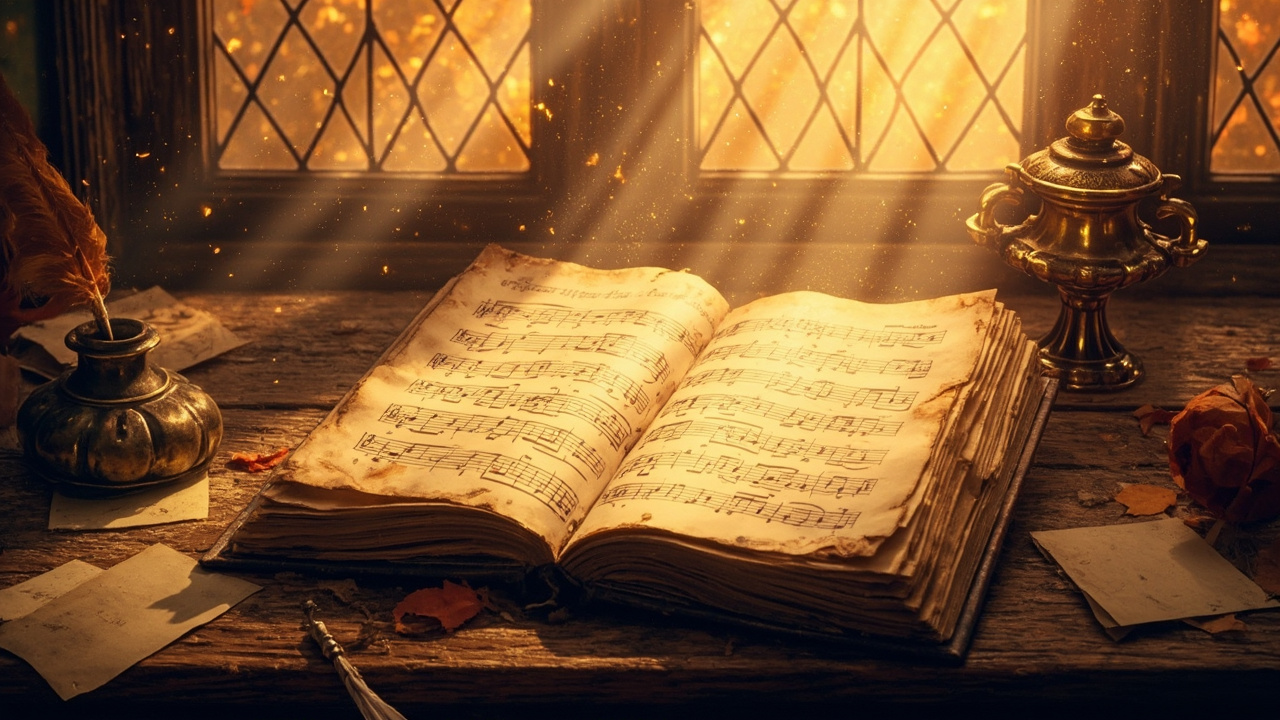
ألقى ضوء الخريف المتسلل عبر نوافذ قاعة المزادات المتسخة ظلالاً طويلة عبر القطع التي لم تُبع بعد. لم تكن إلينور مارش تنوي المزايدة على أي شيء؛ جاءت فقط لت удовлетворвори فضولها بشأن تصفية مجموعة اللورد أشوورث، رجل لم تقابله قط لكن اسمه ظهر في هوامش كل نص جاد في علم الموسيقى الذي استشرت него. ومع ذلك ها هي واقفة، الدليل في يدها، قلبها يخفق بنبض سابق لأوانه لا تستطيع تسميته. وصلت المخطوطة إلى المزاد دون ضجة. القطعة 247: «مجموعة من المقامات الموسيقية والمراسلات، متنوعة». رفعت إلينور المضرب майстически quase reflexivamente quando subastador raggiunse quella partita. لم تكن قد نظرت داخل الصندوق. لم تكن بحاجة إلى ذلك. شيء في عظامها告诉她这是她应该拥有的。 في شقة الاستوديو الخاصة بها في كينينغتون، سحبت المخطوطة من غلافها الأرشيفي بيدين لم ترتجفا إلا قليلاً. الورق كان قديماً، مرسوماً باليد، والنوتة الموسيقية دقيقة لكنها منقوعة بنوع من الطاقة اليائسة. في الأعلى، بحبر بني باهت: سيمفونية في مي بيمول كبير، الأوبرا 47. abaixo منها، بخط أصغر: أ. بلاكوود. التاريخ يقول 1889. وفي أسفل الصفحة الأخيرة، حيث كان الملحن عادةً يضع «فاين» أو «نهاية»، لم يكن هناك شيء. فقط ثلاث سلّم موسيقي من الموسيقى توقفت في منتصف المقياس، الأجزاء الأخيرة محكومة بالصمت الأبدي. ألدوس بلاكوود. الاسم علق في ذهن إلينور كالنفَس المحبوس. كانت تعرف القصة، كما يعرفها كل موسيقي: الملحن الموهوب موهبة هائلة الذي هبّ على escena اللندنية في سبعينيات القرن التاسع عشر، ليموت في الثالثة والأربعين في ظروف لم يفسرها أحد بشكل مرضٍ. سيمفونيته الأخيرة—التي وعد بأنها ستكون تحفته الكبرى—بقيت غير مكتملة عند وفاته. ظهرت مقاطع على مدى العقود، لكنها لم تكن كافية أبداً لإعادة بناء رؤيته. ناقش العلماء ما إذا كان بلاكوود قد مُنع من إكمال العمل، أم أنه simply abandoned it، غير قادر على تحقيق الرؤية في عقله. أمضت إلينور الأسابيع التالية في حالة من الهوس المتأمل. عزفت الحركات الموجودة حتى تؤلمتها أصابعها، حتى اخترقت الموسيقى وعيها ككائن حي. كانت السيمفونية مختلفة عن أي شيء واجهته: بدأت في الظلام وتسلقت نحو النور، incorporate folk motifs which suggested a journey across the British Isles، تتصاعد نحو حركة نهائية شعرت المرء أنها أقل موسيقى وأكثر طلباً. إنها أرادت شيئاً. إنها «مدّت يدها» نحو شيء. وسقطت قبل أن تصل. زارت مكتبة بريطانيا، ثم الأكاديمية الملكية للموسيقى. تتبعت سيرة بلاكوود من خلال قصاصات الصحف الصفراء ورسائل كتبت بخط مضغوط ومتقلب باضطراد متزايد. كان قد انسحب إلى منزل في المرتفعات الاسكتلندية صيف عام 1889، مصمماً على إنهاء سيمفونيته قبل الخريف. كان قد كتب لpublisherه في أغسطس، وهو في غاية الفرح، مدعياً أن الحركة الأخيرة شبه مكتملة.بحلول أكتوبر، كان قد فارق الحياة. سقوط من على الجرف، خلصت السلطات المحلية. انتحار أم حادث—لم ي Determine أبداً، لم يحل أبداً. كلما تعلمت أكثر، اقتنعت إلينور أكثر بأن بلاكوود كان يعرف أنه يموت. الحركة الأخيرة، came to believe، لم تكن مهجورة. كانت ميت تركت عمداً—باب مفتوح على مصراعيه غير enter, inviting the listener to step through into the unknown. كان قد رفض أن ي dikte what should come next لأنه أراد أن تظل الموسيقى حية، متحولة، سؤالاً بدلاً من إجابة.,而现在她坐在办公桌前,面前是空白的手稿纸,手中的笔,墨迹未干的奥尔德斯·布莱克伍德紧紧相随。完成交响乐就是为一个选择沉默的男人发声。保留原样则是尊重一个逝者的意愿,但也是拒绝音乐本身的完整,拒绝它彻底表达、在寂静重新占据之前呼吸的机会。三周的思考。三周里,她写下一个又一个片段又划掉,感觉布莱克伍德的存在压在肩上,从理解的边缘传来低语。第二十二天,她放下笔,看着自己写下的内容。美丽动人,但不是他的。永远不会是他的。埃莉诺从书桌前站起,走到窗边,望向伦敦的夜晚。城市的某处,一个街头艺人在演奏一首半遗忘的曲调,旋律消散在暮色中,仿佛不愿结束。她想到布莱克伍德站在高地悬崖上,面对大海的无垠冷漠,选择让他的最后愿景悬在存在与非存在之间,永远接近却永不到达。她回到书桌前,但不是继续写,而是开始把最后几个不完整的小节抄到新的手稿纸上,完全按照布莱克伍德留下的样子。三个小节,中途停止,最后一个音符悬在空中如一个问题。她要把这份手稿裱起来,挂在钢琴上方,作为提醒:有些沉默比任何声音都更雄辩,最深远的艺术陈述有时就是那些从未到来的。交响乐将保持未完成。但在拒绝完成它的过程中,埃莉诺感到她终于理解了布莱克伍德一直试图表达的:神秘不是要解决的问题,而是要保护的礼物。强迫一个不存在的结局不是创造,而是侵犯。
Das Herbstlicht, das durch die schmutzigen Fenster des Auktionssaals sickerte, warf lange Schatten über die noch nicht verkauften Lose. Eleanor March hatte nicht vorgehabt, auf irgendetwas zu bieten; sie war lediglich gekommen, um ihre Neugier über die Versteigerung der Sammlung von Lord Ashworth zu befriedigen, einem Mann, den sie nie getroffen hatte, dessen Name jedoch in den Fußnoten eines jeden ernsthaften musikwissenschaftlichen Textes auftauchte, den sie je konsultiert hatte. Und doch stand sie hier, Katalog in der Hand, das Herz schlagend mit einer seltsamen Vorahnung, die sie nicht benennen konnte. Das Manuskript kam ohne Aufhebens in die Auktion. Los 247: 'Sammlung von Musikalien und Korrespondenz, verschiedene.' Eleanor hob fast reflexhaft ihr Paddel, als der Auktionator das Los aufrief. Sie hatte nicht in die Box geschaut. Sie hatte es nicht gebraucht. Etwas in ihren Knochen sagte ihr, dass es ihr gehörte. Zurück in ihrer Studio-Wohnung in Kennington zog sie das Manuskript mit Händen aus dem Archivumschlag, die nur leicht zitterten. Das Papier war alt, handliniiert, die Notation präzise, doch durchdrungen von einer Art verzweifelter Energie. Oben in verblasster brauner Tinte: Sinfonie in Es-Dur, Op. 47. Darunter in kleinerer Schrift: A. Blackwood. Das Datum lautete 1889. Und am unteren Rand der letzten Seite, wo ein Komponist normalerweise Fine oder Ende eingetragen hätte, war nichts. Nur drei Notensysteme Musik, die mitten im Takt endeten, die letzten Takte zum ewigen Schweigen verdammt. Aldous Blackwood. Der Name schwebte in Eleanors Geist wie ein angehaltener Atem. Sie kannte die Geschichte, wie alle Musiker: der unglaublich begabte Komponist, der in den 1870er Jahren auf die Londoner Szene getreten war, nur um mit dreiundvierzig Jahren unter Umständen zu sterben, die niemand jemals zufriedenstellend erklärte. Seine letzte Sinfonie — die er versprochen hatte, sein magnum opus sein würde — war bei seinem Tod unvollendet geblieben. Fragmente waren im Laufe der Jahrzehnte aufgetaucht, aber nie genug, um seine Absichten zu rekonstruieren. Gelehrte hatten debattiert, ob Blackwood daran gehindert worden war, das Werk zu vollenden, oder ob er es einfach aufgegeben hatte, außerstande, die Vision in seinem Geist zu verwirklichen. Eleanor verbrachte die folgenden Wochen in einem Zustand ehrfürchtiger Besessenheit. Sie spielte die vorhandenen Sätze durch, bis ihre Finger schmerzten, bis die Musik sich in ihr Bewusstsein gegraben hatte wie ein lebendiges Wesen. Die Sinfonie war unlike anything sie je begegnet war: Sie begann in der Dunkelheit und stieg zum Licht empor, incorporating folk motifs die eine Reise durch die britischen Inseln nahelegten, sich aufbauend zu einem Finalsatz, der sich weniger wie Musik und mehr wie eine Anrufung anfühlte. Sie wollte etwas. Sie 'griff' nach etwas. Und sie verfehlte das Erreichen. Sie besuchte die British Library, dann die Royal Academy of Music. Sie verfolgte Blackwoods Biographie durch vergilbte Zeitungsausschnitte und Briefe in einer zunehmend verkrampften, agitierten Handschrift. Er hatte sich im Sommer 1889 in ein Haus in den schottischen Highlands zurückgezogen, entschlossen, seine Sinfonie vor dem Herbst zu vollenden. Er hatte seinem Verleger im August geschrieben, jubelnd, claiming the final movement was almost complete. Bis Oktober war er tot. Ein Sturz von den Klippen, so die örtlichen Behörden. Selbstmord oder Unfall — nie geklärt, nie gelöst. Je mehr sie erfuhr, desto überzeugter war Eleanor, dass Blackwood gewusst hatte, dass er sterben würde. Der Finalsatz, sie kam zu glauben, war nicht aufgegeben worden. Er war absichtlich unvollendet gelassen worden — eine Tür, die aufgerissen, aber nicht durchschritten wurde, die den Hörer einlud, ins Unbekannte zu treten. Er hatte sich geweigert zu diktieren, was als nächstes kommen sollte, weil er wollte, dass die Musik lebendig blieb, veränderlich, eine Frage statt einer Antwort. Und nun saß sie hier, an ihrem Schreibtisch, Notenpapier vor sich, Feder in der Hand, der Geist von Aldous Blackwood drängend nah. Die Sinfonie zu vollenden würde bedeuten, für einen Mann zu sprechen, der Schweigen gewählt hatte. Sie unvollendet zu lassen würde bedeuten, den Wunsch eines toten Mannes zu ehren, aber auch der Musik ihre Vollendung zu verweigern, ihre Chance, vollständig auszuatmen, bevor das Schweigen sie zurückforderte. Drei Wochen lang grübelte sie. Drei Wochen, in denen sie Takte schrieb und wieder durchstrich, in denen sie Blackwoods Präsenz spürte wie ein Gewicht auf ihren Schultern, wie eine Stimme, die vom jenseits des Verständnisses flüsterte. Am zweiundzwanzigsten Tag legte sie die Feder nieder und betrachtete, was sie geschrieben hatte. Es war wunderschön. Es war nicht seines. Es würde nie seines sein. Eleanor erhob sich von ihrem Schreibtisch, ging zum Fenster und blickte auf den Londoner Abend hinaus. Irgendwo in der Stadt spielte ein Straßenmusiker eine halb vergessene Melodie, die in der zunehmenden Dämmerung verhallte, als wäre sie ungern zu Ende. Sie dachte an Blackwood, wie er auf jenen Hochlandklippen stand, der grenzenlosen Gleichgültigkeit des Meeres gegenüber, und wählte, seine letzte Vision schweben zu lassen zwischen Sein und Nichtsein, sich ewig nähernd, aber niemals ankommend. Sie kehrte an ihren Schreibtisch zurück, doch nicht zum Schreiben. Stattdessen begann sie, die letzten unvollendeten Takte auf frisches Notenpapier zu übertragen, genau wie Blackwood sie hinterlassen hatte. Drei Notensysteme, mitten im Takt, die letzte Note in der Luft hängend wie eine Frage. Sie würde das Manuskript einrahmen lassen. Sie würde es über ihrem Klavier aufhängen als Erinnerung daran, dass manche Stille beredter war als jeder Klang, dass die tiefgreifendste künstlerische Aussage manchmal diejenige sein konnte, die niemals kam. Die Sinfonie würde unvollendet bleiben. Aber in dieser Weigerung, sie zu vollenden, fühlte Eleanor, dass sie endlich verstanden hatte, was Blackwood zu sagen versucht hatte: dass Geheimnis kein zu lösendes Problem war, sondern ein zu bewahrendes Geschenk. Und dass ein Ende zu erzwingen, wo keines existierte, nicht Schöpfung war, sondern Übergriff.
La lumière automnale qui filtrait à travers les fenêtres poussiéreuses de la salle des ventes projetait de longues ombres sur les lots encore invendus. Eleanor March n'avait pas eu l'intention d'enchérir sur quoi que ce soit ; elle était venue simplement pour assouvir sa curiosité concernant la dispersion de la collection du lord Ashworth, un homme qu'elle n'avait jamais rencontré mais dont le nom apparaissait dans les notes de bas de page de chaque texte musicologique sérieux qu'elle avait consulté. Pourtant, la voici debout, catalogue en main, le cœur battant d'un pressentiment étrange qu'elle ne pouvait nommer. Le manuscrit arriva dans la vente sans tambour ni trompette. Lot 247 : « Collection de partitions musicales et correspondance, diverses. » Eleanor leva presque réflexivement sa raquette lorsque le commissaire-priseur atteignit le lot. Elle n'avait pas regardé à l'intérieur de la boîte. Elle n'en avait pas eu besoin. Quelque chose dans ses os lui disait que c'était à elle de l'emporter. De retour dans son appartement-studio de Kennington, elle sortit le manuscrit de son enveloppe d'archives d'une main qui ne tremblait que légèrement. Le papier était ancien, réglé à la main, l'écriture musicale précise mais imprégnée d'une sorte d'énergie désespérée. En haut, à l'encre brune délavée : Symphonie en mi bémol majeur, Op. 47. En dessous, en écriture plus petite : A. Blackwood. La date indiquait 1889. Et au bas de la dernière page, là où un compositeur inscrirait normalement Fine ou Fin, il n'y avait rien. Juste trois portées de musique qui s'arrêtaient au milieu de la mesure, les dernières mesures condamnées au silence éternel. Aldous Blackwood. Le nom flottait dans l'esprit d'Eleanor comme une respiration suspendue. Elle connaissait l'histoire, comme tous les musiciens : le compositeur doué d'un talent prodigieux qui avait burst upon the London scene dans les années 1870, pour mourir à quarante-trois ans dans des circonstances que personne n'a jamais satisfactorily expliquées. Sa dernière symphonie — celle qu'il avait promise être son magnum opus — était restée inachevée à sa mort. Des fragments avaient refait surface au fil des décennies, mais jamais assez pour reconstruire ses intentions. Les scholars avaient débattu pour savoir si Blackwood avait été empêché de terminer l'œuvre, ou s'il l'avait simplement abandonnée, incapable de réaliser la vision dans son esprit. Eleanor passa les semaines suivantes dans un état d'obsession révérencieuse. Elle joua les mouvements existants jusqu'à ce que ses doigts lui fassent mal, jusqu'à ce que la musique se soit nichée dans sa conscience comme un être vivant. La symphonie était unlike anything elle avait rencontré : elle commençait dans l'obscurité et grimpait vers la lumière, incorporant des motifs folkloriques qui suggéraient un voyage à travers les îles britanniques, construisant vers un mouvement final qui semblait moins de la musique et plus comme une invocation. Elle voulait quelque chose. Elle « tendait la main » vers quelque chose. Et elle tombait juste avant de l'atteindre. Elle visita la British Library, puis la Royal Academy of Music. Elle retraca la biographie de Blackwood à travers des coupures de journaux jaunies et des lettres écrites d'une main de plus en plus serrée et agitée. Il s'était retiré dans une maison des Highlands écossaises à l'été 1889, déterminé à terminer sa symphonie avant l'automne. Il avait écrit à son éditeur en août, jubilant, claiming the final movement was almost complete. En octobre, il était mort. Une chute sur les falaises, avaient conclu les autorités locales. Suicide ou accident — nunca determinado, nunca resuelto. Plus elle en apprit, plus Eleanor était convaincue que Blackwood avait su qu'il mourait. Le mouvement final, elle en vint à croire, n'était pas abandonné. C'était délibérément laissé incomplet — une porte grande ouverte mais non franchie, invitant l'auditeur à entrer dans l'inconnu. Il avait refusé de dicter ce qui devrait suivre parce qu'il voulait que la musique reste vivante, malléable, une question plutôt qu'une réponse. Et maintenant, la voici assise à son bureau, avec du papier à musique devant elle, une plume à la main, le fantôme d'Aldous Blackwood pressing close. Terminer la symphonie serait parler pour un homme qui avait choisi le silence. La laisser incomplète serait honorer un souhait d'homme mort, mais aussi dénier à la musique son achèvement, sa chance de respirer complètement avant que le silence ne la reprenne. Trois semaines, elle délibéra. Trois semaines où elle écrivit des mesures et les barra, où elle sentit la présence de Blackwood comme un poids sur ses épaules, comme une voix chuchotant juste au-delà du seuil de compréhension. Le vingt-deuxième jour, elle posa sa plume et regarda ce qu'elle avait écrit. C'était magnifique. Ce n'était pas le sien. Ce ne serait jamais le sien. Eleanor se leva de son bureau, marcha jusqu'à la fenêtre, et regarda le soir londonien. Quelque part dans la ville, un músico callejero jouait une mélodie à demi oubliée, la mélodie s'effilochant dans le crépuscule comme si elle était réticente à finir. Elle pensa à Blackwood debout sur ces falaises des Highlands, faisant face à la vaste indifférence de la mer, choisissant de laisser sa dernière vision suspendue entre l'être et le non-être, s'approchant forever but never arriving at its destination. Elle revint à son bureau, mais pas pour écrire. Au lieu de cela, elle commença à copier les dernières mesures incomplètes sur du papier à musique vierge, exactement comme Blackwood les avait laissées. Trois portées de musique, à mi-mesure, la dernière note suspendue dans l'air comme une question. Elle ferait encadrer le manuscrit. Elle l'accrocherait au-dessus de son piano comme rappel que certains silences étaient plus éloquents que n'importe quel son, que la déclaration artistique la plus profonde pouvait parfois être celle qui ne vint jamais. La symphonie resterait inachevée. Mais dans ce refus de l'achever, Eleanor felt she had finally compris ce que Blackwood avait essayé de dire : que le mystère n'était pas un problème à résoudre, mais un cadeau à préserver. Et que forcer une fin là où aucune n'existait n'était pas création, mais violation.
Осенний свет, просачивающийся через грязные окна аукционного зала, отбрасывал длинные тени на лоты, которые еще не были проданы. Элеанор Марч не собиралась участвовать в торгах; она пришла лишь удовлетворить любопытство по поводу распродажи коллекции лорда Эшворта — человека, которого она никогда не встречала, но чье имя встречалось в сносках каждого серьезного музыковедческого текста, который она когда-либо изучала. И все же вот она стояла, каталог в руках, сердце билось от странного предчувствия, которому она не могла дать имени. Рукопись поступила на аукцион без лишней помпы. Лот 247: «Коллекция нотных рукописей и переписки, разное». Элеанор почти рефлекторно подняла бид-paddle, когда аукционист дошел до этого лота. Она не заглядывала внутрь коробки. Ей не нужно было. Что-то в ее костях подсказывало ей, что это принадлежит ей. Вернувшись в свою квартиру-студию в Кеннингтоне, она извлекла рукопись из архивной упаковки руками, которые дрожали лишь чуть-чуть. Бумага была старой, с разлиновкой от руки, нотная запись точная, но пронизанная своего рода отчаянной энергией. Сверху, выцветшими коричневыми чернилами: Симфония ми-бемоль мажор, соч. 47. Ниже, более мелким почерком: А. Блэквуд. Дата — 1889 год. И внизу последней страницы, где композитор обычно пишет «Fine» или «Конец», не было ничего. Только три системы нот, обрывающиеся на полтакта, последние такты, обреченные на вечное молчание. Олдос Блэквуд. Имя повисло в сознании Элеанор, словно задержанное дыхание. Она знала эту историю, как и все музыканты: о невероятно одаренном композиторе, который ворвался на лондонскую сцену в 1870-х годах, чтобы умереть в сорок три года при обстоятельствах, которые никто так и не смог удовлетворительно объяснить. Его последняя симфония — ту, что он обещал стать его magnum opus, — осталась незавершенной после его смерти. Фрагменты всплывали на протяжении десятилетий, но их никогда не было достаточно, чтобы восстановить его замысел. Ученые спорили о том, был ли Блэквуд лишен возможности завершить произведение или просто бросил его, не в силах воплотить видение своего разума. Элеанор провела следующие недели в состоянии благоговейной одержимости. Она разучивала существующие части, пока пальцы не начинали болеть, пока музыка не впивалась в ее сознание, словно живое существо. Симфония была непохожа ни на что, с чем она сталкивалась: она начиналась во тьме и карабкалась к свету, включая народные мотивы, намекавшие на путешествие по Британским островам, выстраиваясь к финальной части, которая ощущалась скорее как не музыка, а как призыв. Она хотела чего-то. Она «протягивала руки» к чему-то. И не дотягивалась до цели. Она посетила Британскую библиотеку, затем Королевскую академию музыки. Она проследила биографию Блэквуда по пожелтевшим газетным вырезкам и письмам, написанным все более сжатым, все более тревожным почерком. Он уединился в доме в шотландском Хайленде летом 1889 года, полный решимости закончить симфонию до осени. В августе он писал своему издателю, ликуя, утверждая, что финальная часть почти завершена. К октябрю он был мертв. Падение со скал, таков был вывод местных властей. Самоубийство или несчастный случай — так и не установлено, так и не разрешено. Чем больше она узнавала, тем больше Элеанор была убеждена, что Блэквуд знал о своей скорой смерти. Финальная часть, пришла она к убеждению, не была оставлена. Она была намеренно оставлена незавершенной — дверь, распахнутая, но не перейденная, приглашающая слушателя шагнуть в неизвестность. Он отказался диктовать, что должно было последовать, потому что хотел, чтобы музыка оставалась живой, изменчивой, вопросом, а не ответом. И вот теперь она сидела за своим столом, перед ней — чистая нотная бумага, в руке — перо, призрак Олдоса Блэквуда давил на плечи. Завершить симфоницию означало бы говорить от имени человека, избравшего молчание. Оставить ее незавершенной означало бы чтить желание мертвеца, но также отринуть от музыки ее завершение, ее шанс полностью выдохнуть, прежде чем молчание снова поглотит ее. Три недели она размышляла. Три недели, в течение которых она писала такты и вычеркивала их, ощущая присутствие Блэквуда как груз на плечах, как голос, шепчущий из-за порога понимания. На двадцать второй день она опустила перо и посмотрела на то, что написала. Это было прекрасно. Это было не его. Это никогда не будет его. Элеанор встала из-за стола, подошла к окну и посмотрела на лондонский вечер. Где-то в городе уличный музыкант играл наполовину забытую мелодию, которая таяла в сгущающихся сумерках, словно не желая заканчиваться. Она думала о Блэквуде, стоявшем на тех высокогорных скалах перед безразличием моря, избравшем оставить свое последнее видение подвешенным между бытием и небытием, вечно приближающимся, но так и не достигающим цели. Она вернулась к столу, но не писать. Вместо этого она начала переписывать последние незавершенные такты на свежей нотной бумаге, точно так, как их оставил Блэквуд. Три системы нот, оборванные на полтакта, последняя нота, повисшая в воздухе, словно вопрос. Она велит повесить рукопись в раме. Она повесит ее над своим пианино как напоминание о том, что некоторые молчания красноречивее любого звука, что самые глубокие художественные высказывания порой — это те, что так и не прозвучали. Симфония останется незавершенной. Но в этом отказе завершить ее Элеанор почувствовала, что наконец поняла, что Блэквуд пытался сказать: что тайна — не проблема, которую нужно решить, а дар, который нужно сберечь. И что навязать окончание там, где его не существует, — не творение, а посягательство.