I. الاكتشاف
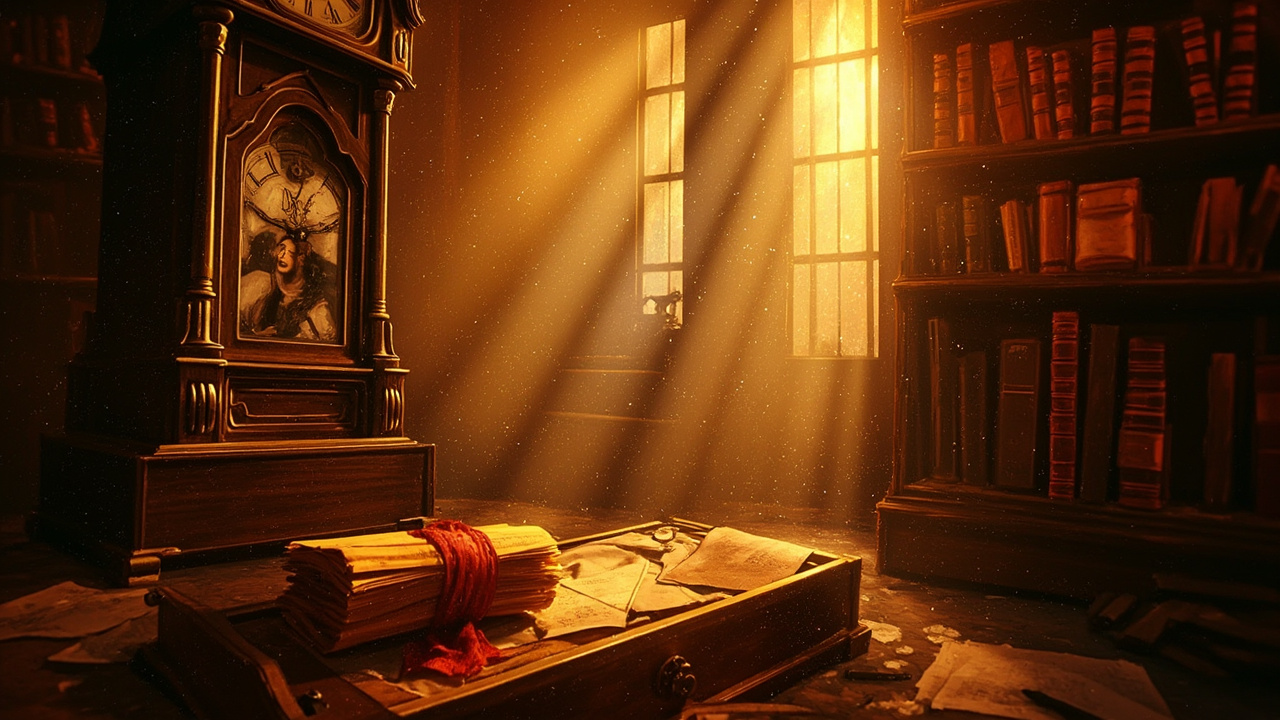
في الصيف الذي بلغت فيه إلينور مارش الثامنة والعشرين من عمرها، وجدت نفسها غارقة حتى مرفقيها في الأنقاض المتراكمة لحياة رجل ميت. كانت حبيبات الغبار تتراقص في ضوء العنبر المتدفق عبر النوافذ العالية لقصر هارتويل، مضيئةً عقودًا من الإهمال. كان العقار قد آلت ملكيته إلى أرشيف المقاطعة، وقد أُرسلت إلينور - التي عُيّنت حديثًا ولا تزال متحمسة - لجرد محتوياته قبل وصول هواة التحف. كانت قد طوّرت fondnessًا خاصًا للدراسة. كانت رفوف خشبة الماهوجني تنحني تحت ثقل مجلدات اللاتينية المُصفرّة، وكان الهواء يفوح منه رائحة الورق القديم والأسرار. لكن ساعة الآباء الكبيرة هي التي استقطبت انتباهها - تحفة رائعة من خشب الجوز الداكن والنحاس المعتم، برقّاص ساكن منذ زمن طويل. شيءٌ في سكونها أرّقها؛ فالساعات، في النهاية، لا يُفترض أن تتوقف أبدًا. عندما رسمت أصابعها نقوش الورود المنحوتة على قاعدتها، شعرت بعدم انتظام فوري. انحنى بتلة واحدة تحت الضغط، وانبثق لوح لم تلاحظه قط بفتح ناعم، كاشفًا عن حجيرة لا أكبر من علبة مجوهرات. في الداخل، رزمة من الرسائل مربوطة بشريطة بلون الدم الجاف، وصورة لامرأة شابة بزي الحرب، عيناها مشتعلان بالتصميم. على الظهر، بحبر باهت: لابنتي، حين يحين الوقت المناسب.
II. الشفرة
حملت إلينور الرزمة إلى غرفة القراءة، يداها ترتجفان من فضول لا تستطيع تسميته بالكامل. كان الخط كالعناكب لكنه دقيق، لغة شخص اعتاد إخفاء المعنى في وضح النهار. تعرّفت على الخط فورًا - خط جدّتها، رغم أن الرسائل سبقت ولادة أمها بعقودين تقريبًا. قالت الرسالة الأولى:
يا أغلى إي،
الليلة التي مررنا فيها بالقبطان عبر النفق، فكرت فيك. ما أغرب أن تستخدم نفس اليدين اللتين كانتا تُزرار معطفك يومًا لنقل الرجال إلى الحرية. لكن ماذا تكون الأم إن لم حارسة روح بلدها؟
كانت هناك إشارات لم تستطع إلينور فكّها - إحداثيات، تواريخ، أسماء لا تعني لها شيئًا. لم تلاحظ النمط إلا عندما نشرت الرسائل على الطاولة. كل كلمة ثالثة، كل سطر خامس - بداية شفرة، جُمعت بصبر من يفهم أن الأسرار يجب أن تبقى بعد رعايتها. عملت طوال الليل، تقارن الأسماء بسجلات المقاطعة، تجمع جدولًا زمنيًا. جدّتها - الهادئة، المترددة للكنيسة، التي لم تكن يومًا بدون كوب من التيفو - كانت جزءًا من شبكة. شبكة كانت تُهرّب الطيارين المُسقطين عبر القنال، وتُزوّر الوثائق، التي كانت تنتظر، دائمًا تنتظر، ذلك القرع الذي لم يأتِ.
III. الحساب
وجدتها أمها في الصباح التالي، لا تزال على الطاولة، الرسائل منتشرة كدليل في محاكمة لم تكن تعلم أنها محاكمة.
"وجدتها إذن."
لم يكن هناك دهشة في صوت أمها - فقط إرهاق، ثقل شيءٍ يُحمل منذ زمن طويل.
"كنتِ تعرفين؟"
"كنت أعرف دائمًا أن جدتكِ كانت استثنائية. لم تتحدث عنها قط، ولا مرة. لكن بعد وفاتها، وجدت قصاصات الصحف مخبأة في كتابها المقدس. اعتقالات، هروب، أسماء لم أسمع بها قط. لم تبوح لي بكلمة واحدة، إلينور. ربّما ظنت أن الصمت كان نوعًا من الحماية."
نظرت إلينور إلى الصورة مرة أخرى - المرأة ذات العينين الناريتين التي كانت قد تكون انعكاسها الخاص. ابنة صانع الساعات، هكذا كانت تُلقَّب جدتها في القرية، رغم أن إلينور لم تفهم السبب قط. الآن تتساقط القطع معًا بدقة آلية مُصممة أخيرًا.
"تركتها لي،" قالت إلينور ببطء. "وليس لكِ. لي. كانت تعلم أنني سأجدها."
لم تقل أمها شيئًا، لكن عينيها لمعنا بشيء كان قد يكون فخرًا، أو حزنًا، أو تلك الآلام الخاصة من إدراك أن أم المرء كانت غريبة.
وقفت إلينور ومضت إلى النافذة، تراقب البستانيين يقلمون الورود في السياج البعيد. أخبرتها الرسائل أن جدتها أخفت طيارًا تشيكيًا في الغرفة ذاتها التي تقف فيها إلينور الآن، أنها زوّرت أوراقًا بحبر دمها حين اقتضت الضرورة، أنها آمنت - آمنت حقًا - أن الناس العاديين يملكون قوة ثني تاريخ الإنسانية.
عادت إلى الطاولة، جمعت الرسائل بعناية، ووضعتها في صندوق أرشيف خاص بها. تستحق الحفاظ، هذه شظايا الشجاعة. تستحق أن تُذكر.
وبالنسبة لإلينور مارش، أمينة الأرشيف، حارسة إرث الآخرين - فهمت الآن أن بعض الميراث لا يتعلق بالثروة أو الممتلكات، بل بأفعال那些 هادئة، استثنائية ممن سبقوها. ستضيف قصة جدتها إلى السجلات، بخطها الدقيق الخاص. بعد كل شيء، هذا ما تفعله بنات صانعي الساعات: يحافظن على الوقت، حتى عندما يتوقف الوقت.
I. Die Entdeckung
Im Sommer, als Eleanor Marsh achtundzwanzig wurde, fand sie sich bis zu den Ellbogen in den angesammelten Überresten eines toten Mannes wieder. Staubkörner tanzten im bernsteinfarbenen Licht, das durch die hohen Fenster des Herrenhauses Hartwell strömte und Jahrzehnte der Vernachlässigung beleuchtete. Das Anwesen war dem Kreisarchiv vermacht worden, und Eleanor - neu ernannt, noch eifrig - war entsandt worden, um seinen Inhalt zu katalogisieren, bevor die Antiquitätenhändler eintrafen. Sie hatte eine besondere Vorliebe für das Arbeitszimmer entwickelt. Mahagoniregale bogen sich unter Bänden vergilbten Lateins, und die Luft roch nach altem Papier und Geheimnissen. Aber es war die Standuhr, die ihre Aufmerksamkeit erregte - ein prächtiges Werk aus dunklem Walnussholz und angelaufenem Messing, dessen Pendel längst stillstand. Etwas an ihrer Bewegungslosigkeit beunruhigte sie; Uhren sind schließlich niemals dazu bestimmt, stehenzubleiben. Als ihre Finger die geschnitzten Rosen an ihrer Basis nachzeichneten, spürte sie die Unregelmäßigkeit sofort. Ein Blütenblatt gab dem Druck nach, und eine Verkleidung, die sie nie bemerkt hatte, sprang mit einem leisen Klicken auf und enthüllte ein Fach, nicht größer als ein Schmuckkästchen. Darin lag ein Bündel Briefe, mit einem Band in der Farbe von getrocknetem Blut gebunden, und ein Foto einer jungen Frau in Kriegsuniform, deren Augen vor Entschlossenheit brannten. Auf der Rückseite, in verblasster Tinte: Für meine Tochter, wenn die Zeit gekommen ist.
II. Die Chiffre
Eleanor trug das Bündel in den Leseraum, ihre Hände zitterten vor einer Neugier, die sie nicht ganz benennen konnte. Die Handschrift war spinnenhaft, aber präzise, die Sprache von jemandem, der gewohnt war, Bedeutung im offenen Plain zu verbergen. Sie erkannte die Handschrift sofort - die ihrer Großmutter, obwohl die Briefe fast zwei Jahrzehnte vor der Geburt ihrer Mutter geschrieben worden waren. Der erste Brief lautete:
Meine liebste E,
Als wir den Kapitän durch den Tunnel brachten, dachte ich an dich. Wie seltsam, dass dieselben Hände, die einst deinen Mantel zuknöpften, nun Männer in die Freiheit führen. Aber was ist eine Mutter, wenn nicht eine Hüterin der Seele ihres Landes?
Es gab Verweise, die Eleanor nicht entschlüsseln konnte - Koordinaten, Daten, Namen, die ihr nichts sagten. Erst als sie die Briefe auf dem Tisch ausbreitete, bemerkte sie das Muster. Jedes dritte Wort, jede fünfte Zeile - die Anfänge einer Chiffre, zusammengestellt mit der Geduld von jemandem, der verstand, dass Geheimnisse ihre Hüter überdauern müssen. Sie arbeitete die ganze Nacht hindurch, verglich Namen mit den Kreisunterlagen und fügte einen Zeitplan zusammen. Ihre Großmutter - still, kirchgangig, nie ohne ihre Tasse Typhoo - war Teil eines Netzwerks gewesen. Ein Netzwerk, das abgeschossene Flieger über den Ärmelkanal geschleust, Dokumente gefälscht, das gewartet hatte, immer gewartet, auf das Klopfen, das nie kam.
III. Die Abrechnung
Ihre Mutter fand sie am nächsten Morgen, noch am Tisch, die Briefe wie Beweisstücke in einem Prozess ausgebreitet, von dem sie nicht wusste, dass sie vor Gericht stand.
"Du hast sie also gefunden."
Es gab keine Überraschung in der Stimme ihrer Mutter - nur Erschöpfung, das Gewicht von etwas, das lange getragen wurde.
"Du wusstest es?"
"Ich wusste immer, dass deine Großmutter bemerkenswert war. Sie hat nie davon gesprochen, nicht ein einziges Mal. Aber nach ihrem Tod fand ich die Zeitungsartikel, die in ihrer Bibel versteckt waren. Verhaftungen, Fluchten, Namen, die ich nie gehört hatte. Sie hat mir nie ein Wort gesagt, Eleanor. Vielleicht glaubte sie, dass Schweigen eine Art von Schutz war."
Eleanor schaute das Foto wieder an - die Frau mit den feurigen Augen, die ihr eigenes Spiegelbild hätte sein können. Die Tochter des Uhrmachers, so war ihre Großmutter im Dorf genannt worden, obwohl Eleanor nie verstanden hatte, warum. Jetzt fügten sich die Teile mit der befriedigenden Präzision eines endlich aufgezogenen Mechanismus zusammen.
"Sie hat sie für mich hinterlassen," sagte Eleanor langsam. "Nicht für dich. Für mich. Sie wusste, dass ich sie finden würde."
Ihre Mutter sagte nichts, aber ihre Augen schimmerten vor etwas, das Stolz hätte sein können, oder Trauer, oder das eigentümliche Leiden, zu erkennen, dass die eigene Mutter eine Fremde gewesen war.
Eleanor stand auf und ging zum Fenster, beobachtete die Gärtner, die die Rosen in der fernen Hecke beschnitten. Die Briefe hatten ihr erzählt, dass ihre Großmutter einst einen tschechischen Piloten in genau dem Raum versteckt hatte, in dem Eleanor jetzt stand, dass sie Papiere mit der Tinte ihres eigenen Blutes gefälscht hatte, als die Situation es erforderte, dass sie glaubte - wirklich glaubte - dass gewöhnliche Menschen die Macht besaßen, den Bogen der Geschichte zu biegen.
Sie kehrte zum Tisch zurück, sammelte die Briefe sorgfältig auf und legte sie in eine eigene Archivbox. Sie verdienten es, bewahrt zu werden, diese Fragmente des Mutes. Sie verdienten es, erinnert zu werden.
Und was Eleanor Marsh betraf, Archivarin, Hüterin der Vermächtnisse anderer - sie verstand jetzt, dass manche Erbschaften nicht über Reichtum oder Eigentum sind, sondern über die stillen, außergewöhnlichen Taten derer, die vor ihr kamen. Sie würde die Geschichte ihrer Großmutter mit ihrer eigenen sorgfältigen Handschrift zu den Aufzeichnungen hinzufügen. Schließlich taten Töchter von Uhrmachern das: Sie hielten die Zeit, selbst wenn die Zeit stehengeblieben war.
I. La découverte
L'été où Eleanor Marsh eut vingt-huit ans, elle se trouva les mains enfouies jusqu'aux coudes dans les décombres accumulés d'une vie d'homme mort. Des particules de poussière dansaient dans la lumière ambre qui se déversait par les hautes fenêtres du manoir Hartwell, illuminant des décennies de négligence. La propriété avait été léguée aux archives du comté, et Eleanor - nouvellement nommée, encore zélée - avait été envoyée pour inventorier son contenu avant l'arrivée des collectionneurs d'antiquités. Elle avait développé un attachement particulier pour l'étude. Les étagères d'acajou ployaient sous des volumes de latin jauni, et l'air sentait le vieux papier et les secrets. Mais c'est la pendule qui attira son attention - une création magnifique de noyer sombre et de laiton terni, son pendule depuis longtemps immobile. Quelque chose dans son immobilité la troublait ; les horloges, après tout, ne sont jamais censées s'arrêter. Lorsque ses doigts tracèrent les roses sculptées ornant sa base, elle sentit l'irrégularité immédiatement. Un pétale céda sous la pression, et un panneau qu'elle n'avait jamais remarqué s'ouvrit avec un déclic doux, révélant un compartiment pas plus grand qu'une boîte à bijoux. À l'intérieur se trouvait un paquet de lettres, attachées avec un ruban de la couleur du sang séché, et une photographie d'une jeune femme en tenue de guerre, ses yeux brûlants de détermination. Au verso, à l'encre pâlie : Pour ma fille, quand le moment sera venu.
II. Le chiffre
Eleanor emporta le paquet dans la salle de lecture, ses mains tremblant d'une curiosité qu'elle ne pouvait entièrement nommer. L'écriture était araignée mais précise, le langage de quelqu'un habitué à cacher le sens au plain jour. Elle reconnut l'écriture instantanément - celle de sa grand-mère, bien que les lettres précédassent la naissance de sa mère de près de deux décennies. La première lettre disait :
Ma chère E,
La nuit où nous avons fait passer le capitaine par le tunnel, j'ai pensé à toi. Comme c'est étrange que les mêmes mains qui boutonnaient autrefois ton manteau fassent maintenant traverser des hommes vers la liberté. Mais qu'est-ce qu'une mère sinon la gardienne de l'âme de son pays ?
Il y avait des références qu'Eleanor ne pouvait déchiffrer - des coordonnées, des dates, des noms qui ne signifiaient rien pour elle. Ce ne fut qu'en étalant les lettres sur la table qu'elle remarqua le motif. Chaque troisième mot, chaque cinquième ligne - les beginnings d'un chiffre, assemblé avec la patience de quelqu'un qui comprenait que les secrets doivent survivre à leurs gardiens. Elle travailla toute la nuit, recoupant les noms avec les registres du comté, assemblant une chronologie. Sa grand-mère - silencieuse, pieuse, jamais sans sa tasse de Typhoo - avait fait partie d'un réseau. Un réseau qui avait fait passer des aviateurs abattus à travers la Manche, falsifié des documents, attendu, toujours attendu, le coup quinet qui ne vint jamais.
III. Le reckoning
Sa mère la trouva le lendemain matin, toujours à la table, les lettres étalées comme des preuves lors d'un procès dont elle ne savait pas qu'elle était jugée.
"Tu les as trouvés, alors."
Il n'y avait aucune surprise dans la voix de sa mère - seulement une lassitude, le poids de quelque chose longtemps porté.
"Tu savais ?"
"Je savais toujours que ta grand-mère était remarquable. Elle n'en a jamais parlé, pas une seule fois. Mais après sa mort, j'ai trouvé les coupures de presse cachées dans sa Bible. Des arrestations, des évasions, des noms que je n'avais jamais entendus. Elle ne m'a jamais rien dit, Eleanor. Peut-être pensait-elle que le silence était une forme de protection."
Eleanor regarda à nouveau la photographie - la femme aux yeux féroces qui aurait pu être son propre reflet. La fille de l'horloger, c'est ainsi qu'on appelait sa grand-mère au village, bien qu'Eleanor n'eût jamais compris pourquoi. Maintenant les pièces s'assemblaient avec la précision satisfaisante d'un mécanisme enfin remonté.
"Elle les a laissés pour moi," dit lentement Eleanor. "Pas pour toi. Pour moi. Elle savait que je les trouverais."
Sa mère ne dit rien, mais ses yeux brillèrent de quelque chose qui aurait pu être de la fierté, ou du chagrin, ou cette douleur particulière de réaliser que sa propre mère avait été une étrangère.
Eleanor se leva et marcha vers la fenêtre, regardant les jardiniers tailler les roses dans la haie lointaine. Les lettres lui avaient appris que sa grand-mère avait autrefois caché un pilote tchèque dans la pièce même où Eleanor se tenait maintenant, qu'elle avait forgé des papiers avec l'encre de son propre sang quand la situation l'exigeait, qu'elle avait cru - vraiment cru - que les gens ordinaires possédaient le pouvoir de courber l'arc de l'histoire.
Elle revint à la table, ramassa les lettres avec soin, et les plaça dans une boîte d'archives qui leur était propre. Elles méritaient d'être préservées, ces fragments de courage. Elles méritaient d'être rememberées.
Et pour ce qui est d'Eleanor Marsh, archiviste, gardienne des legs des autres - elle comprenait maintenant que certains héritages ne concernent pas la richesse ou la propriété, mais les actes silencieux et extraordinaires de ceux qui nous ont précédés. Elle ajouterait l'histoire de sa grand-mère aux registres, de sa propre écriture soignée. Après tout, c'est ce que font les filles d'horlogers : elles gardent le temps, même quand le temps s'est arrêté.
I. Открытие
Летом, когда Элеанор Марш исполнилось двадцать восемь, она оказалась по локоть в накопившемся хламе жизни мертвого человека. Пылинки танцевали в янтарном свете, струившемся через высокие окна поместья Хартвелл, освещая десятилетия запустения. Поместье было завещано окружному архиву, и Элеанор — недавно назначенная, все еще полная энтузиазма — была отправлена каталогизировать его содержимое до прибытия ценителей антиквариата. Она особенно полюбила кабинет. Полированные шкафы из красного дерева прогибались под томами латинских книг с пожелтевшими страницами, а воздух пах старой бумагой и секретами. Но именно большие часы привлекли ее внимание — великолепное создание из темного ореха и потускневшей латуни, маятник которых давно застыл. Что-то в этой неподвижности ее беспокоило; часы, в конце концов, никогда не должны останавливаться. Когда ее пальцы скользнули по резным розеткам на основании, она сразу почувствовала неправильность. Один лепесток поддался давлению, и панель, которую она никогда раньше не замечала, открылась с тихим щелчком, обнажив отсек размером не больше шкатулки для драгоценностей. Внутри лежала связка писем, перевязанная лентой цвета засохшей крови, и фотография молодой женщины в военной форме, глаза которой горели решимостью. На обороте, выцветшими чернилами: «Для моей дочери, когда наступит подходящее время».
II. Шифр
Элеанор отнесла связку в читальный зал, ее руки дрожали от волнения, которое она не могла полностью объяснить. Почерк был хрупким, но точным — почерк человека, привыкшего скрывать смысл на виду у всех. Она сразу узнала почерк своей бабушки, хотя письма предшествовали рождению ее матери почти на два десятилетия. Первое письмо гласило:
Моя дорогая Э.
Той ночью, когда мы провели капитана через туннель, я думала о тебе. Как странно, что те же руки, которые когда-то застегивали твой плащ, теперь переправляют людей на свободу. Но что такое мать, если не хранительница души своей страны?
Были ссылки, которые Элеанор не могла распутать — координаты, даты, имена, ничего для нее не значившие. Только когда она разложила письма на столе, она заметила закономерность. Каждое третье слово, каждая пятая строка — начало шифра, составленного с терпением того, кто понимал, что секреты должны пережить своих хранителей. Она проработала всю ночь, сверяя имена с записями уезда, собирая хронологию. Ее бабушка — тихая, ходившая в церковь, никогда без своей чашки чая — была частью сети. Сети, которая переправляла сбитых летчиков через Ла-Манш, подделывала документы, которая ждала, всегда ждала стука, который так и не прозвучал.
III. Расплата
Ее мать нашла ее следующим утром, все еще за столом, письма разложены как улики на суде, о котором она не знала, что сама проходит его.
— Ты нашла их, значит.
В голосе матери не было удивления — только усталость, тяжесть чего-то давно носимого.
— Ты знала?
— Я всегда знала, что твоя бабушка была замечательной. Она никогда об этом не говорила, ни разу. Но после ее смерти я нашла вырезки из газет, спрятанные в ее Библии. Аресты, побеги, имена, которых я никогда не слышала. Она никогда ни слова не сказала мне, Элеанор. Возможно, она думала, что молчание — это своего рода защита.
Элеанор снова посмотрела на фотографию — на женщину с яростными глазами, которая могла бы быть ее собственным отражением. «Дочь часовщика» — так называли ее бабушку в деревне, хотя Элеанор никогда не понимала почему. Теперь части сошлись с точностью механизма, который наконец завели.
— Она оставила их для меня, — медленно произнесла Элеанор. — Не для тебя. Для меня. Она знала, что я их найду.
Ее мать ничего не сказала, но в глазах ее блеснуло что-то, что могло быть гордостью, или горем, или той особой болью осознания, что собственная мать была незнакомкой.
Элеанор встала и подошла к окну, наблюдая, как садовники подстригают розы в дальней живой изгороди. Письма рассказали ей, что ее бабушка когда-то прятала чешского пилота в той самой комнате, где теперь стояла Элеанор, что она подделывала документы чернилами собственной крови, когда того требовала ситуация, что она верила — искренне верила — что обычные люди обладают силой изменить ход истории.
Она вернулась к столу, осторожно собрала письма и положила их в отдельную архивную коробку. Они заслуживали сохранности, эти осколки мужества. Они заслуживали того, чтобы их помнили.
И что касается Элеанор Марш, архивариуса, хранителя чужих наследий — она теперь понимала, что некоторые наследства не о богатстве или собственности, а о тихих, необыкновенных деяниях тех, кто был до нее. Она добавит историю своей бабушки к записям, своим собственным аккуратным почерком. В конце концов, именно это делали дочери часовщиков: они хранили время, даже когда время остановилось.