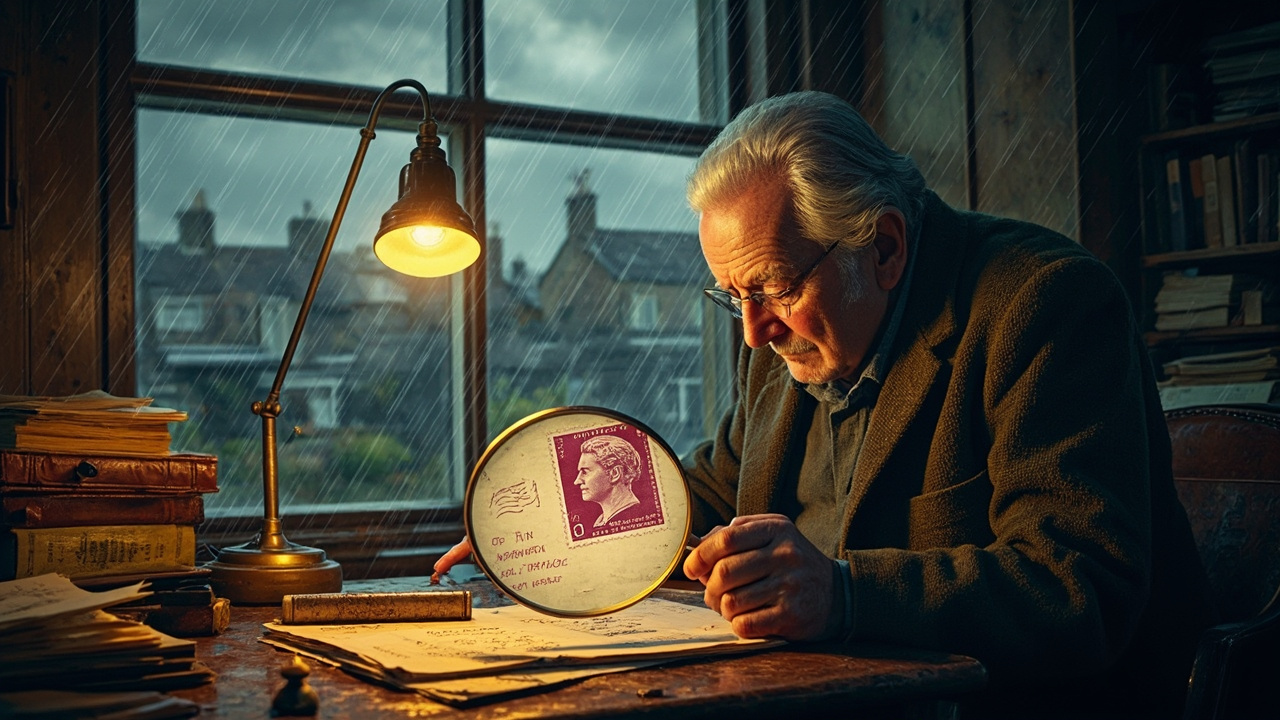
الختم المستحيل قضى إدموند آشوورث ثلاثة وأربعين عامًا من حياته ساعيًا إلى اقتناء روائع مصغرة. كان مكتبه، وهو غرفة ضيقة لكنها نظيفة تمامًا تطل على أسطح تشيلتنهام المتعرضة للمطر، يضم أكثر من اثني عشر ألف ألبوم تحتوي على طوابع من كل ركن من أركان العالم. إلا أن شيئًا في مجموعته الواسعة لم يكن قد أعده لما وصل في ذلك الصباح الرمادي من نوفمبر. كان المظروف يحمل ختم بريد تشيلتنهام المؤرخ في 14 أكتوبر 1951، ومكتوبًا إليه بخط غريب. كان بداخله بطاقة بريدية تصور منارة على ساحل يوركشاير تتمايل تحت الرياح. كانت الصورة فوتوغرافية عادية، والرسالة أقل من ذلك: بعض المجاملات حول طقس الخريف ورغبة غامضة في أن يزور المنطقة ذات يوم. لكن الأمر الذي جعل أنفاس إدموند تتوقف في حلقه كان الختم. حول البطاقة نحو النافذة، ووجهها تحت مصباح المكتب حتى سقط الضوء بدقة على سطحها. هناك، مرسومًا بحبر قرمزي عميق، كان وجه الملك جورج السادس تحت كلمتي "بيني" و"الادخار الوطني". إلا أن هذا كان مستحيلًا. عرف إدموند يقينًا أن هذه النوعية بالذات - إصدار تذكاري صدر عام 1940 فقط، يتميز بورق الأمان الأخضر الداكن المميز وخطأ المطبع الذي حذف سيرافًا واحدًا من التصميم - قد سُحب من التداول في أقل من ثمان وأربعين ساعة من إصداره. أُعيدت كل نسخة واحدة، فُحصت، ثم دُمّرت من قبل السلطات. لم تنجُ واحدة. أو هكذا زعمت السجلات الرسمية. بداية التحقيق اهتزت يداه وهو يمد يده نحو عدسته المكبرة. اجتاز الختم كل اختبار يستطيع التفكير فيه. مقياس الثقب كان صحيحًا، وتوزيع الصمغ أصليًا، وتركيب الورق لا يمكن الجدال فيه. لو كان هذا تزويرًا، فهو أكثر إعادة إنتاج متطورة واجهها إدموند على الإطلاق - وإدموند كان قد كشف عدة احتياليات بارزة في وقته. أمضى الأسبوع التالي في استفسارات حذرة. كانت البطاقة البريدية قد أُرسلت من قرية ريفية على بعد اثني عشر ميلًا خارج يورك، من مكتب بريد أوقف عملياته عام 1947. أصبح المبنى الآن منزلًا خاصًا تقيم فيه أرملة تدعى الآنسة إديث بروكتور. كتب إليها إدموند يطلب الإذن بفحص المكان. لم يأتِ أي رد. لم يثنه ذلك، فسافر شمالًا بنفسه، ووصل إلى القرية في مساء الخميس البارد. كانت الآنسة بروكتور امرأة صغيرة بعيون يقظة وأسلوب شكوكي يشبه طريقة تفكير من عاشوا سنوات الحرب. نفت معرفتها بأي شيء عن البطاقة البريدية، إلا أن شيئًا ارتسم على وجهها عندما ذكر الختم - شق لحظي في رباطة جأشها говорил volumes. "من الحكمة أن تتخلى عن هذا التحقيق، سيد آشوورث"، قالت، وأغلقت الباب جزئيًا. لكن إدموند لم يكن يمتلك قط حكمة ترك الأمور على حالها. كشف الشبكة جاء الاختراق من مصدر غير متوقع. بينما كان يبحث عن شذوذات بريدية زمن الحرب في المكتبة البريطانية، صادف إدموند إشارة إلى برنامج مصنف للغاية يعمل تحت تسمية "عملية المنارة". كانت الوثائق مُ redactée بكثافة، لكن فقرة واحدة ظلت مقروءة: شبكة من العملاء الاستخباريين كانوا يتواصلون باستخدام طوابع مُعدّة خصيصًا كإشارات تعريف بين العملاء. كانت الطوابع نفسها هي الرسالة. كانت بعض الأنواع النادرة، المفترض تدميرها، قد أُعيد توزيعها في الواقع من خلال قناة سرية، يحمل كل منها نمط ثقب مجهري يمكن قراءته فقط تحت التكبير. لم يكن "الخطأ" في إصدار 1940 خطأً على الإطلاق - بل كان شفرة، جزءًا من إحداثيات تتوافق مع صناديق المراسيل الميتة في جميع أنحاء المملكة المتحدة. فهم إدموند حينها ما كانت الآنسة بروكتور غير قادرة أو غير راغبة في إخباره به. لم تكن البطاقة البريدية مجرد فضول - بل كانت دعوة. كان شخص ما من تلك الشبكة القديمة يحاول إعادة الاتصال، ربما لأن الخطر قد عاد للظهور، وربما لأن أسرارًا مدفونة منذ زمن طويل تطلب الحفر. عاد إلى كوخ الآنسة بروكتور في تلك الليلة وتحدث معها من خلال الباب. هذه المرة، حمل نبرته سلطة رجل他已经 glimpses الحقيقة. "عملية المنارة"، قال بهدوء. "الختم الذي في حوزتي - ليس تزويرًا، أليس كذلك؟ إنه مفتاح." امتد الصمت بينهما. ثم، ببطء، فتح الباب أكثر. "كان زوجي مهندس الشبكة"، قالت الآنسة بروكتور أخيرًا. "ومات قبل سبع عشرة سنة دون أن يفصح أبدًا عن الموقع النهائي لدفتر الشفرة الرئيسي. البطاقة البريدية التي تلقيتها هي唯一 remaining الدليل - وهي موجهة إليك لأنك كنت الوحيد الذي وثقت به لتفهرج مجموعته." وقف إدموند آشوورث في ضوء الشتاء المتلاشي، متمسكًا بختم البيني الذي يستحق أكثر مما يمكن لأي تقييم نقدي التعبير عنه. كان هناك في تلك الصورة للمنارة المتمايلة السر النهائي لشبكة تجسس زمن الحرب، رسالة انتظرت أحد عشر عامًا لتعثر على مستقبلها. سيجيب على النداء. لم يكن لديه أي نية لفعل غير ذلك.
Die unmögliche Briefmarke Edmund Ashworth hatte dreiundvierzig Jahre seines Lebens der Jagd nach Miniatur-Meisterwerken gewidmet. Sein Arbeitszimmer, ein beengtes aber makelloses Zimmer mit Blick auf die regengepeitschten Dächer von Cheltenham, beherbergte über zwölftausend Alben mit Briefmarken aus allen Ecken der Welt. Doch nichts in seiner umfangreichen Sammlung hatte ihn auf das vorbereitet, was an jenem grauen Novembermorgen ankam. Der Umschlag trug einen Cheltenhamer Poststempel vom 14. Oktober 1951 und war in einer ihm unbekannten Handschrift an ihn adressiert. Darin lag eine Postkarte mit einem windgepeitschten Leuchtturm an der Küste von Yorkshire. Das Foto war unauffällig, die Nachricht noch mehr: ein paar Höflichkeiten über das Herbstwetter und der vage Wunsch, die Gegend einmal zu besuchen. Aber es war die Briefmarke, die Edmund den Atem stocken ließ. Er drehte die Karte zum Fenster und neigte sie unter der Schreibtischlampe, bis das Licht genau auf ihre Oberfläche fiel. Dort, in tiefem karminroter Tinte, war das Profil von König Georg VI. unter den Worten "Zwei Pence" und "Nationalsparkasse" dargestellt. Doch das war unmöglich. Edmund wusste mit absoluter Gewissheit, dass diese besondere Sorte – eine Gedenkausgabe, die nur 1940 herausgegeben wurde, mit dem distinctive dunkelgrünen Sicherheitspapier und dem Druckfehler, der einen einzelnen Seraph aus dem Design wegließ – innerhalb von achtundvierzig Stunden nach ihrer Veröffentlichung aus dem Verkehr gezogen worden war. Jedes einzelne Exemplar war zurückgerufen, untersucht und anschließend von den Behörden vernichtet worden. Nicht eine einzige war übrig geblieben. Oder zumindest behaupteten das die offiziellen Aufzeichnungen. Der Beginn der Untersuchung Seine Hände zitterten, als er nach seiner Lupe griff. Die Briefmarke bestand jeden Test, den er sich ausdenken konnte. Das Perforationsmaß war korrekt, die Gummierung authentisch, die Papierzusammensetzung unbestreitbar. Wenn dies eine Fälschung war, dann war es die ausgefeilteste Reproduktion, die er je gesehen hatte – und Edmund hatte in seiner Laufbahn bereits mehrere bemerkenswerte Fälschungen aufgedeckt. Er verbrachte die folgende Woche mit diskreten Nachforschungen. Die Postkarte war in einem zwölf Meilen außerhalb von York gelegenen Dorf aufgegeben worden, von einem Postamt, das 1947 seinen Betrieb eingestellt hatte. Das Gebäude diente nun als Privathaus, bewohnt von einer Witwe namens Mrs. Edith Proctor. Edmund schrieb ihr und bat um die Erlaubnis, die Räumlichkeiten zu untersuchen. Keine Antwort kam. Unbeirrt reiste er selbst nach Norden und kam an einem bitterkalten Donnerstagnachmittag im Dorf an. Mrs. Proctor war eine kleine Frau mit wachsamen Augen und dem misstrauischen Wesen, das für Menschen common war, die die Kriegsjahre durchlebt hatten. Sie bestritt jedes Wissen über die Postkarte, doch als er die Briefmarke erwähnte, flackerte etwas über ihr Gesicht – ein kurzer Riss in ihrer Fassung, der Bände sprach. „Sie wären klug daran, diese Untersuchung aufzugeben, Mr. Ashworth", sagte sie und ließ die Tür einen Spalt offen. Doch Edmund hatte niemals die Weisheit besessen, die Dinge auf sich beruhen zu lassen. Das Netzwerk enthüllt Der Durchbruch kam von unerwarteter Seite. Während er im British Museum nach Kriegspost-Anomalien recherchierte, stieß er auf einen Verweis auf ein hochgeheimes Programm unter der Bezeichnung „Operation Leuchtturm". Die Dokumente waren stark geschwärzt, aber ein Abschnitt blieb lesbar: ein Netzwerk von Geheimdienstagenten, die mittels speziell präparierter Briefmarken als Erkennungssignale zwischen Agenten kommuniziert hatten. Die Briefmarken selbst waren die Nachricht. Bestimmte seltene Sorten, die angeblich vernichtet worden waren, waren tatsächlich über einen geheimen Kanal neu verteilt worden, jede mit einem mikroskopisch kleinen Perforationsmuster, das nur unter Vergrößerung lesbar war. Der „Fehler" in der Ausgabe von 1940 war kein Fehler überhaupt – es war eine Chiffre, ein Fragment von Koordinaten, das toten Briefkästen im gesamten Vereinigten Königreich entsprach. Edmund verstand dann, was Mrs. Proctor ihm nicht hatte sagen können oder wollen. Die Postkarte war nicht nur eine Kuriosität – sie war eine Vorladung. Jemand aus diesem alten Netzwerk versuchte, wieder Kontakt aufzunehmen, vielleicht weil Gefahr wiederaufgetaucht war, vielleicht weil längst begrabene Geheimnisse ausgegraben werden mussten. Er kehrte an diesem Abend zu Mrs. Proctors Cottage zurück und sprach durch die Tür mit ihr. Diesmal trug sein Ton die Autorität eines Mannes, der die Wahrheit bereits erahnt hatte. „Operation Leuchtturm", sagte er leise. „Die Briefmarke in meinem Besitz – es ist keine Fälschung, oder? Es ist ein Schlüssel." Stille dehnte sich zwischen ihnen. Dann öffnete sich die Tür langsam weiter. „Mein Mann war der Architekt des Netzwerks", sagte Mrs. Proctor schließlich. „Und er starb vor siebzehn Jahren, ohne jemals den endgültigen Standort des Hauptkodebuchs preiszugeben. Die Postkarte, die Sie erhalten haben, ist der einzige verbleibende Hinweis – und sie ist an Sie adressiert, weil Sie der einzige Händler waren, dem er vertraute, seine Sammlung zu katalogisieren." Edmund Ashworth stand im verblassenden Winterlicht und umklammerte eine Zwei-Pence-Briefmarke, die mehr wert war als jeder Geldeswert ausdrücken konnte. Irgendwo in diesem windgepeitschten Leuchtturm-Foto lag das letzte Geheimnis eines Kriegsspionagenetzwerks, eine Nachricht, die elf Jahre gewartet hatte, um ihren Empfänger zu finden. Er würde dem Ruf folgen. Er hatte nicht die Absicht, anders zu handeln.
Le Timbre Impossible Edmund Ashworth avait consacré quarante-trois années de sa vie à la quête de chefs-d'œuvre miniatures. Son bureau, une pièce exiguë mais impeccable donnant sur les toits balayés de pluie de Cheltenham, contenait plus de douze mille albums remplis de timbres des quatre coins du globe. Pourtant, rien dans son immense collection ne l'avait préparé à ce qui arriva ce matin gris de novembre. L'enveloppe portait un cachet postal de Cheltenham daté du 14 octobre 1951 et était adressée dans une écriture qui lui était inconnue. À l'intérieur se trouvait une carte postale représentant un phare battu par les vents sur la côte du Yorkshire. La photographie était quelconque, le message l'était encore plus : quelques amabilités sur le temps automnal et un væu vague de visiter la région un jour. Mais c'était le timbre qui fit s'arrêter le souffle d'Edmund dans sa gorge. Il tourna la carte vers la fenêtre, l'inclinant sous la lampe de bureau jusqu'à ce que la lumière tombe précisément sur sa surface. Là, rendu dans une encre rouge cramoisi profond, se trouvait le profil du roi George VI sous les mots « Deux Pence » et « Épargne Nationale ». Pourtant, c'était impossible. Edmund savait avec une certitude absolue que cette variété particulière — un émission commemorative sortie uniquement en 1940, caractérisée par le papier de sécurité vert foncé distinctif et l'erreur de l'imprimeur qui avait omis un seul séraphin du design — avait été retirée de la circulation dans les quarante-huit heures suivant sa sortie. Chaque exemplaire avait été rappelé, examiné, puis détruit par les autorités. Pas un seul n'avait survécu. Ou du moins, c'est ce que prétendaient les archives officielles. Le début de l'enquête Ses mains tremblaient tandis qu'il tendait la main vers sa loupe. Le timbre passait chaque test qu'il pouvait imaginer. Le gauge de perforation était correct, la distribution de la gomme authentique, la composition du papier indiscutable. S'il s'agissait d'un faux, c'était la reproduction la plus sophistiquée qu'il ait jamais rencontrée — et Edmund en avait démasqué plusieurs de notable lors de sa carrière. Il passa la semaine suivante à mener des enquêtes discrètes. La carte postale avait été postée dans un village rural à douze miles de York, depuis un bureau de poste qui avait cessé ses opérations en 1947. Le bâtiment servait désormais de résidence privée, occupée par une veuve nommée Mme Edith Proctor. Edmund lui écrivit, demandant la permission d'examiner les lieux. Aucune réponse ne vint. Nullement découragé, il fit le voyage vers le nord lui-même, arrivant au village un jeudi glacial. Mme Proctor était une petite femme aux yeux vigilants et à la manner méfiante commune à ceux qui avaient traversé les années de guerre. Elle niait toute connaissance de la carte postale, pourtant quelque chose traversa son visage quand il mentionna le timbre — une fissure momentanée dans sa composure qui en disait long. « Vous feriez sagement d'abandonner cette enquête, M. Ashworth », dit-elle en entrebâillant la porte. Mais Edmund n'avait jamais eu la sagesse de laisser les choses tranquilles. Le réseau démasqué La percée vint d'une direction inattendue. En researching les anomalies postales de guerre à la bibliothèque britannique, il tomba sur une référence à un programme hautement classé opérant sous la désignation « Opération Phare ». Les documents étaient fortement caviardés, mais un passage restait lisible : un réseau d'agents de renseignement qui communiquaient en utilisant des timbres spécialement préparés comme signaux de reconnaissance entre agents. Les timbres eux-mêmes étaient le message. Certaines variétés rares, censément détruites, avaient en fait été redistribuées par un canal secret, chacune portant un motif de perforation microscopique lisible uniquement sous magnification. L'« erreur » dans l'émission de 1940 n'était pas une erreur du tout — c'était un chiffre, un fragment de coordonnées correspondant à des boîtes aux lettres mortes à travers le Royaume-Uni. Edmund comprit alors ce que Mme Proctor n'avait pas pu ou voulu lui dire. La carte postale n'était pas simplement une curiosité — c'était une convocation. Quelqu'un de ce vieux réseau tentait de renouer le contact, peut-être parce que le danger était réapparu, peut-être parce que des secrets longtemps enfouis réclamaient être déterrés. Il revint au cottage de Mme Proctor ce soir-là et lui parla à travers la porte. Cette fois, son ton portait l'autorité d'un homme qui avait déjà entrevu la vérité. « Opération Phare », dit-il doucement. « Le timbre que je possède — ce n'est pas un faux, n'est-ce pas ? C'est une clé. » Le silence s'étira entre eux. Puis, lentement, la porte s'ouvrit davantage. « Mon mari était l'architecte du réseau », dit enfin Mme Proctor. « Et il est mort il y a dix-sept ans sans jamais révéler l'emplacement final du registre de codes maître. La carte postale que vous avez reçue est le seul indice restant — et elle vous est adressée parce que vous étiez le seul marchand en qui il avait confiance pour cataloguer sa collection. » Edmund Ashworth se tenait dans la lumière hivernale déclinante, serrant un timbre de deux pence qui valait plus que toute valeur monétaire ne pourrait exprimer. Quelque part dans cette photographie de phare battu par les vents gisait le secret final d'un réseau d'espionnage de guerre, un message qui avait attendu onze ans pour trouver son destinataire. Il répondrait à l'appel. Il n'avait aucune intention de faire autrement.
Невозможная марка Эдмунд Эшворт посвятил сорок три года своей жизни поискам миниатюрных шедевров. Его кабинет — тесная, но безупречно чистая комната с видом на дождливые крыши Челтнема — вмещал более двенадцати тысяч альбомов с марками со всех концов света. Однако ничто в его обширной коллекции не подготовило его к тому, что прибыло в то серое ноябрьское утро. Конверт имел челтнемский почтовый штемпель от 14 октября 1951 года и был адресован ему незнакомым почерком. Внутри лежала почтовая открытка с изображением штормового маяка на побережье Йоркшира. Фотография была ничем не примечательна, сообщение — ещё менее: несколько любезностей об осенней погоде и смутное пожелание когда-нибудь посетить эти места. Но именно марка заставила дыхание Эдмунда оборваться. Он повернул открытку к окну, наклонив её под настольной лампой так, чтобы свет падал точно на её поверхность. Там, воспроизведённая глубокой малиновой краской, был профиль короля Георга VI под словами «Два пенса» и «Национальные сбережения». И всё же это было невозможно. Эдмунд знал с абсолютной уверенностью, что именно эта разновидность — коммеморативный выпуск, вышедший только в 1940 году, с характерной тёмно-зелёной защитной бумагой и ошибкой печатника, который пропустил одного серафима в рисунке — была изъята из обращения в течение сорока восьми часов после выпуска. Каждая единственная копия была отозвана, проверена и впоследствии уничтожена властями. Ни одна не выжила. Или, по крайней мере, так утверждали официальные записи. Начало расследования Его руки дрожали, когда он потянулся за лупой. Марка проходила каждый тест, который он мог придумать. Перфорация была правильной, распределение клея аутентичным, состав бумаги неоспоримым. Если это была подделка, то это была самая изощрённая репродукция, которую он когда-либо видел — а Эдмунд разоблачил несколько известных мошенничеств за свою карьеру. Следующую неделю он провёл, делая осторожные запросы. Открытка была отправлена из деревушки в двенадцати милях от Йорка, из почтового отделения, прекратившего работу в 1947 году. Здание теперь служило частным домом, в котором жила вдова по имени миссис Эдит Проктор. Эдмунд написал ей, запрашивая разрешение осмотреть помещения. Ответа не последовало. Не сдаваясь, он сам отправился на север, прибыв в деревню холодным четвергом. Миссис Проктор была маленькой женщиной с настороженными глазами и подозрительными манерами, свойственными тем, кто прожил военные годы. Она отрицала всякое знание об открытке, однако что-то мелькнуло на её лице, когда он упомянул марку — мгновенная трещина в её невозмутимости, говорившая о многом. «Вам бы следовало оставить это расследование, мистер Эшворт», — сказала она, приоткрыв дверь. Но Эдмунд никогда не обладал мудростью оставлять дела в покое. Разоблачение сети Прорыв пришёл с неожиданной стороны. Исследуя почтовые аномалии военного времени в Британской библиотеке, он наткнулся на ссылку на highly classified программу, действующую под обозначением «Операция «Маяк». Документы были сильно зацензурированы, но один абзац оставался читаемым: сеть агентов разведки, которые общались с помощью специально подготовленных марок как опознавательных сигналов между агентами. Сами марки и были посланием. Некоторые редкие разновидности, якобы уничтоженные, на самом деле были перераспределены через тайный канал, каждая с микроскопическим перфорационным узором, читаемым только при увеличении. «Ошибка» в выпуске 1940 года не была ошибкой вообще — это был шифр, фрагмент координат, соответствующих тайникам на территории всего Соединённого Королевства. Эдмунд понял тогда, что миссис Проктор не могла или не хотела ему сказать. Открытка была не просто любопытством — она была вызовом. Кто-то из той старой сети пытался восстановить контакт, возможно, потому что опасность снова возникла, возможно, потому что давно похороненные секреты требовали раскопок. Он вернулся к коттеджу миссис Проктор тем вечером и говорил с ней через дверь. На этот раз его тон нёс власть человека, который уже увидел проблеск истины. «Операция «Маяк», — сказал он тихо. — Марка в моём распоряжении — это не подделка, ведь так? Это ключ». Тишина повисла между ними. Затем медленно дверь открылась шире. «Мой муж был архитектором сети», — наконец сказала миссис Проктор. — И он умер семнадцать лет назад, так и не раскрыв окончательного местанахождения главной кодовой книги. Открытка, которую вы получили, — единственная оставшаяся улика — и она адресована вам, потому что вы были единственным дилером, которому он доверял каталогизировать свою коллекцию». Эдмунд Эшворт стоял в угасающем зимнем свете, сжимая двухпенсовую марку, стоимость которой превышала всё, что можно выразить любой денежной оценкой. Где-то в этой фотографии штормового маяка таилось последняя тайна военной шпионской сети, послание, которое ждало одиннадцать лет, чтобы найти своего получателя. Он ответит на зов. У него не было намерения поступать иначе.