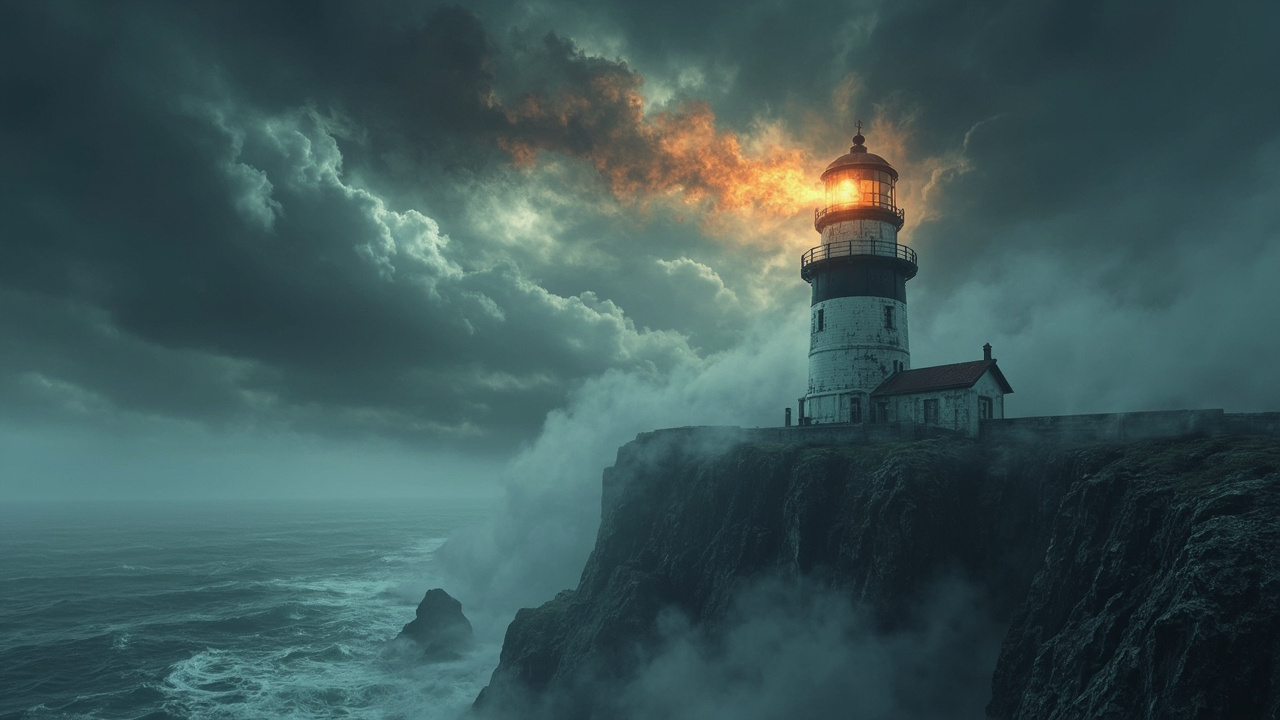
العاصفة كانت تتصاعد منذ الفجر، تُظلم الأفق بتلك الغيوم الكئيبة التي يتعلم البحارة احترامها. وقف ماركوس ثورن عند مقدمة سفينة الإمداد، يراقب ظهور معالم رأس مورو من الضباب كأنها شبح يطفو من الأعماق. وقف المنارة حيث كانت دائماً تقف، أو هكذا بدا الأمر—جدران بيضاء مُبيضّة، شريط أسود، تلك الحارس الذي لا يتزعزع والذي أرشد سفناً لا تُحصى بعيداً عن الصخور الخطرة تحته. كان ماركوس مهندساً بحرياً بخبرة خمس عشرة سنة، الرجل الذي يعالج المشاكل بدقة منهجية بدلاً من الخيال. أرسلته هيئة السواحل لإصلاح الآليات المتقادمة في المنارة—عمل يتطلب اهتماماً عملياً لا تستطيع أي طائرة بدون طيار أو قمر صناعي تقديمه. كانت منارة رأس مورو شذوذاً، أثراً عاملاً في عصر نظام تحديد المواقع العالمي والملاحة عبر الأقمار الصناعية، ومع ذلك كانت أسطول الصيد المحلي لا يزال يعتمد على شعاعها الثابت، وقد كُلف ماركوس باستبدال آلية الدوران في غرفة الفوانيس. كان إيفاده موجزاً وتوجيهاته واضحة: الوصول، إتمام العمل، المغادرة. عندما arredondou a enseada final، استشار ماركوس خرائطه للمرة Hundred. شيء ما كان يزعجه منذ أن راجع الإحداثيات لأول مرة. كان من المفترض أن تكون المنارة bear duas نقاط إلى يمين اليخت، لكنها كانت أمامه مباشرة، كان ذلك الوهم قد انتقل بين عشية وضحاها. طرد الفكرة واعتبرها إرهاقاً يلعب بحواسه. كانت المياه حول رأس مورو معروفة بتقلباتها؛ يمكن للضباب والتيار أن يتآمرا لجعل حتى أكثر ربانين خبرة يشككون في عيونهم. كان الحارس الذي استقبله على الرصيف المتآكل رجلاً في الثامنة والستين تقريباً، بوجه مُتقشف من عقود من الملح والرياح. اسمه كان كالفيرت، ومصافحته كانت قوية لكنها مشتتة، وعيناه رجعت مراراً نحو المنارة كما لو كان يؤكد وجودها. "وقفت هنا منذ 1887،" قال كالفيرت، كأنه يقرأ أفكار ماركوس. "لم تفوّت ليلة واحدة طوال تلك المدة." "الخرائط تقول خلاف ذلك،" رد ماركوس وفتح الوثائق ذات الصلة. "وفقاً لمسح الأدميرالية، هذا الموقع تقريبي في أحسن الأحوال. بعض صور الأقمار الصناعية الأحدث لا تُظهر الهيكل حتى." ارتجّ تعبير كالفيرت—شيء غير قابل للقراءة مرّ خلف عينيه. "أجل، أظن ذلك. هذه الجدران القديمة لها طريقتها الخاصة في الحفاظ على آرائها حول مكانها." قرر ماركوس عدم المضي في الموضوع. كان لديه عمل يقوم به، والتأملات الفلسفية حول الشذوذ الخرائطي لم تكن من اختصاصه. كان في المساء الثالث، بينما كان يعمل في غرفة الفوانيس يستبدل آلية التروس القديمة، عندما لاحظ ماركوس شيئاً غير طبيعي لأول مرة. البحر أدناه، عادةً خليط مضطرب رمادي-أخضر من التيار والمد، أصبح ساكناً. ليس هادئاً بالضبط—الكلمة توحي بالسلام، ولم يكن هناك شيء سلمي حول هذا التوقف المفاجئ للحركة. استقرت المياه كالزجاج، سطحها يعكس المنارة في تناظر تام، كان البرج معلقاً في فراغ مستحيل بين البحر والسماء. نزل عبر المنارة، footsteps صدّى على السلالم الحديدية، ووجد كالفيرت واقفاً عند نافذة المطبخ، وشايه بارد بجانبه. لم يلتفت الحارس القديم عندما اقترب منه ماركوس. "أنت أيضاً تراه،" قال كالفيرت. لم يكن سؤالاً. "المياه أصبحت غريبة. كالمرآة." "يحدث هذا أحياناً. خاصة في هذا الوقت من العام." صوت كالفيرت حمل ثقل الاستسلام المتكرر. "المنارة... تنتقل. مؤقتاً. ليس على أي خريطة، غير مرئية لأي جهاز. إنها ببساطة تتوقف عن الوجود حيث ينبغي أن تكون." شعر ماركوس بشعرات مؤخرة عنقه تقف. "هذا غير ممكن." "لا،" وافق كالفيرت. "ومع ذلك." قاده إلى دراسة صغيرة من الممر الرئيسي، حيث كانت دفتر جلد موضوع على رف مغطى بالغبار. belonged the volume to one توماس ألدريدج، حارس خدم في رأس مورو عام 1923، وصفحاته contained قصة جعلت عقل ماركوس المنضبط يدور. كان ألدريدج قد وثّق الظاهرة بتفصيل دقيق. في ليالٍ معينة—دائماً في الخريف، دائماً بالقرب من ذكرى حدث مهم—تدخل المنارة ما أسماه "الحالة البينية". يتحول البحر أدناه إلى سطح غير عاكس، وتوجد المنارة في نوع من التعليق، لا موجودة تماماً ولا غائبة تماماً. في تلك الليالي، كتب ألدريدج، يمكن للمرء أن يسمع أصواتاً صاعدة من الماء: صرخات أرواح لا تزال تبحث عن الإنقاذ، لا تزال تنادي في الظلام بعد أن fadeت كل أمل. كانت、米ارا سفينة ركاب فقدت في عاصفة شديدة قبالة رأس مورو عام 1891. لقي ثلاثة وأربعون soulاً حتفهم. أو هكذا stated السجل الرسمي. وفقاً لألدريدج، كانت الحقيقة أعقد بكثير. "لم يجدوا طريقهم أبداً،" شرح كالفيرت. "الناجون—إذا كان يمكن تسميتهم كذلك—يبقون في الفضاء البيني. يسمعون المنارة عندما تدخل عالمهم، ويتبعون نورها، على أمل أنه سيرشدهم إلى الشاطئ." "هذا سخيف." "أليس كذلك؟" عيناه ثابتتان. "جئت هنا للحفاظ على منارة. ما الذي تتخيل أن المنارة من أجله؟" مرت ذكرى غرق 米ارا بعد ثلاثة أيام. شرح كالفيرت أنه في تلك الليلة، ستظهر المنارة في المكان البيني مرة أخرى، وسيجتمع الناجون عند حافة الماء—إذا كان يمكن تسمية ذلك شاطئاً—ينادون طلباً للمساعدة التي لم تأتِ أبداً. "حاولت الوصول إليهم،" اعترف الحارس العجوز. "حاول سلفه أيضاً، وسلف سلفه قبله. لكن المنارة تعود دائماً إلى موقعها الصحيح قبل أن يتمكن أحد من العبور. نسمعهم، لكن لا نستطيع الوصول إليهم. يبقون ضائعين، ونبقى غير قادرين على مساعدتهم." قضى ماركوس الأيام التالية يُتم إصلاحاته بينما يكافح مع المستحيل. كان رجلاً من العلوم"}
Der Sturm war seit der Morgendämmerung im Anzug, verdunkelte den Horizont mit jener Art von düsteren Wolken, die Seeleute zu respektieren lernen. Marcus Thorne stand am Bug des Versorgungsschiffes und beobachtete, wie die Silhouette von Morrow Point aus dem Nebel auftauchte wie ein Geist, der aus der Tiefe auftaucht. Der Leuchtturm stand dort, wo er immer gestanden hatte, oder zumindest schien es so — gekalkte Wände, schwarzer Streifen, jene stoische Wache, die unzählige Schiffe von den gefährlichen Felsen dort unten weggeführt hatte. Marcus war ein Marineingenieur mit fünfzehn Jahren Erfahrung, die Art von Mann, der Probleme mit methodischer Präzision statt mit Vorstellungskraft anging. Er war von der Küstenbehörde entsandt worden, um die alternden Mechanismen des Leuchtturms zu warten — Arbeiten, die persönliche Aufmerksamkeit erforderten, die kein Drohne oder Satellit leisten konnte. Der Leuchtturm von Morrow Point war ein Anachronismus, ein funktionierendes Relikt in einem Zeitalter von GPS und Satellitennavigation, und doch verließ sich die örtliche Fischerflotte noch auf seinen stetigen Strahl, und Marcus war damit beauftragt worden, den Drehmechanismus im Laternenraum auszuwechseln. Seine Einweisung war kurz und seine Anweisungen klar gewesen: Ankommen, Arbeit erledigen, abreisen. Als das Versorgungsschiff das letzte Kap umrundete, konsultierte Marcus zum hundertsten Mal seine Karten. Etwas hatte ihn seit seiner ersten Überprüfung der Koordinaten beschäftigt. Der Leuchtturm hätte zwei Strich Steuerbord liegen sollen, doch er lag direkt voraus, als hätte sich die Landzunge über Nacht verschoben. Er verwarf den Gedanken als Müdigkeit, die seiner Wahrnehmung Streiche spielte. Die Gewässer um Morrow Point waren berüchtigt launenhaft; Nebel und Strömung konnten zusammenarbeiten, um selbst den erfahrensten Navigator an seinen eigenen Augen zweifeln zu lassen. Der Leuchtturmwärter, der ihn auf dem verwitterten Kai empfing, war ein etwa achtundsechzig Jahre alter Mann mit einem Gesicht, das von Jahrzehnten aus Salz und Wind gezeichnet war. Sein Name war Calvert, und sein Händedruck war fest, aber abgelenkt, seine Augen wanderten wiederholt zum Leuchtturm, als bestätigte er dessen Vorhandensein. "Sie steht hier seit 1887", sagte Calvert, als lese er Marcus' Gedanken. "Nicht eine einzige Nacht in all der Zeit versäumt." "Die Karten sagen etwas anderes", erwiderte Marcus und faltete die relevanten Unterlagen auf. "Der Admiralty-Vermessung zufolge ist diese Position bestenfalls ungefähr. Einiges der neueren Satellitenbilder zeigt die Struktur nicht einmal." Calverts Ausdruck flackerte — etwas Unlesbares huschte hinter seinen Augen vorbei. "Ja, ich nehme an, das tut es nicht. Diese alten Wände haben ihre eigene Art, darüber zu urteilen, wo sie sein wollen." Marcus beschloss, der Sache nicht weiter nachzugehen. Er hatte Arbeit zu erledigen, und philosophische Betrachtungen über kartografische Anomalien gehörten nicht zu seinem Aufgabenbereich. Am dritten Abend, als er im Laternenraum den alten Zahnradmechanismus ersetzte, bemerkte Marcus zum ersten Mal etwas Ungewöhnliches. Das Meer darunter, normalerweise ein brodelndes graugrünes Chaos aus Strömung und Gezeiten, war still geworden. Nicht ruhig, genau genommen — das Wort implizierte Frieden, und es gab nichts Friedliches an diesem plötzlichen Aufhören der Bewegung. Das Wasser lag glatt wie Glas, seine Oberfläche spiegelte den Leuchtturm in perfekter Symmetrie wider, als wäre der Turm in irgendeiner unmöglichen Leere zwischen Meer und Himmel aufgehängt. Er stieg durch den Leuchtturm hinab, seine Schritte hallten auf den Eisentreppen, und fand Calvert am Küchenfenster stehen, sein Tee längst erkaltet neben ihm. Der alte Wärter drehte sich nicht um, als Marcus näher kam. "Du siehst es auch", sagte Calvert. Es war keine Frage. "Das Wasser ist seltsam geworden. Wie ein Spiegel." "Das passiert manchmal. Besonders zu dieser Jahreszeit." Calverts Stimme trug das Gewicht eingeübter Resignation. "Der Leuchtturm... verlagert sich. Vorübergehend. Auf keiner Karte verzeichnet, für kein Instrument sichtbar. Er hört einfach auf, dort zu sein, wo er sein sollte." Marcus spürte, wie sich die Nackenhaare aufstellten. "Das ist unmöglich." "Nein", stimmte Calvert zu. "Und doch." Er führte Marcus in ein kleines Arbeitszimmer neben dem Hauptdurchgang, wo ein ledergebundenes Journal auf einem staubbedeckten Regal lag. Das Buch stammte von einem Thomas Aldridge, einem Wärter, der 1923 in Morrow Point gedient hatte, und seine Seiten enthielten einen Bericht, der Marcus' methodischen Verstand erschütterte. Aldridge hatte das Phänomen akribisch dokumentiert. An bestimmten Nächten — immer im Herbst, immer nahe dem Jahrestag eines bedeutenden Ereignisses — trat der Leuchtturm in das ein, was er einen "Zwischenzustand" nannte. Das Meer darunter verwandelte sich in eine nicht reflektierende Oberfläche, und der Leuchtturm existierte in einer Art Schwebezustand, weder ganz präsent noch ganz abwesend. An solchen Nächten, schrieb Aldridge, konnte man Stimmen aus dem Wasser aufsteigen hören: die Rufe von Seelen, die noch immer nach Rettung suchten, noch immer in die Dunkelheit riefen, nachdem alle Hoffnung längst geschwunden war. Die Mira war ein Passagierdampfer gewesen, der 1891 in einem heftigen Sturm vor Morrow Point verloren ging. Dreiundvierzig Menschenleben waren verloren gegangen. Oder zumindest behauptete das offizielle Protokoll. Aldridge zufolge war die Wahrheit ziemlich komplizierter. "Sie fanden nie ihren Weg", erklärte Calvert. "Die Überlebenden — wenn man sie so nennen kann — verbleiben im Zwischenraum. Sie hören den Leuchtturm, wenn er in ihre Welt eintritt, und sie folgen seinem Licht, in der Hoffnung, dass es sie an Land führen wird." "Das ist absurd." "Ist es das?" Calverts Augen waren ruhig. "Du kamst hierher, um ein Leuchtfeuer zu erhalten. Was, glaubst du, ist der Zweck eines Leuchtfeuers?" Der Jahrestag des Untergangs der Mira war in drei Tagen. Calvert erklärte, dass in jener Nacht der Leuchtturm erneut im Zwischenreich erscheinen würde, und die Überlebenden würden sich am Wasserrand versammeln — wenn man das so nennen kann — um Hilfe rufend, die niemals gekommen war. "Ich habe versucht, sie zu erreichen", gab der alte Wärter zu. "Mein Vorgänger versuchte es auch, und sein Vorgänger vor ihm. Aber der Leuchtturm kehrt immer an seinen rechtmäßigen Ort zurück, bevor jemand die Überquerung schaffen kann. Wir hören sie, aber wir können sie nicht erreichen. Sie bleiben verloren, und wir bleiben außerstande zu helfen." Marcus verbrachte die folgenden Tage damit, seine Reparaturen abzuschließen und gleichzeitig mit dem Unmöglichen zu ringen. Er war ein Mann der Wissenschaft, ein Mann der Logik, ein Mann dessen ganzes Leben der Suche nach rationellen Erklärungen und messbaren Lösungen gewidmet gewesen war. Aber es gab etwas in der Luft von Morrow Point, etwas in der Art, wie der alte Mann von den Toten sprach, das sich weigerte, erklärt zu werden.
La tempête se préparait depuis l'aube, assombrissant l'horizon de ces nuages sinistres que les marins apprennent à respecter. Marcus Thorne se tenait à la proue du navire de ravitaillement, regardant la silhouette de Morrow Point émerger du brouillard comme un spectre surgissant des profondeurs. Le phare se dressait là où il s'était toujours dressé, ou du moins c'est ce qu'il semblait — murs blanchis à la chaux, bande noire, ce sentinelle impassible qui avait guidé d'innombrables navires loin des rochers traîtres en contrebas. Marcus était un ingénieur maritime de quinze ans d'expérience, le genre d'homme qui abordait les problèmes avec une précision méthodique plutôt qu'avec l'imagination. Il avait été dépêché par les Autorités côtières pour entretenir les mécanismes vieillissants du phare — un travail qui nécessitait une attention concrète qu'aucun drone ni satellite ne pouvait fournir. Le phare de Morrow Point était un anachronisme, une relique fonctionnelle à l'ère du GPS et de la navigation par satellite, et pourtant la flotte de pêche locale comptait encore sur son faisceau régulier. La tempête faisait rage depuis l'aube, obscurcissant l'horizon de ces nuages menaçants que les marins apprennent à respecter. Marcus Thorne se tenait à la proue du vaisseau de ravitaillement, observant le contour de Morrow Point émerger du brouillard comme un spectre surgissant des profondeurs. Le phare se dressait là où il s'était toujours dressé, ou du moins c'est ce qu'il semblait — murs blanchis à la chaux, bande noire, ce sentinelle stoïque qui avait guidé d'innombrables navires loin des rochers traîtres en contrebas. Marcus était un ingénieur maritime avec quinze ans d'expérience, le genre d'homme qui aborde les problèmes avec une précision méthodique plutôt qu'avec l'imagination. Il avait été envoyé par l'Autorité côtière pour entretenir les mécanismes vieillissants du phare — un travail qui nécessitait une attention directe qu'aucun drone ni satellite ne pouvait fournir. Le phare de Morrow Point était un anachronisme, une relique en activité à une époque de GPS et de navigation par satellite, pourtant la flotte de pêche locale comptait toujours sur son faisceau régulier, et Marcus avait été chargé de remplacer le mécanisme de rotation dans la chambre de la lanterne. Son briefing avait été bref et ses instructions claires : arriver, terminer le travail, partir. Alors que le vaisseau contournait le dernier cap, Marcus consulta ses cartes pour la centième fois. Quelque chose le tracassait depuis qu'il avait examiné les coordonnées pour la première fois. Le phare aurait dû être à deux points tribord, pourtant il se trouvait droit devant, comme si la falaise elle-même s'était déplacée du jour au lendemain. Il repoussa cette pensée en l'attribuant à la fatigue qui jouait des tours à sa perception. Les eaux autour de Morrow Point étaient notoirement capricieuses ; le brouillard et le courant pouvaient conspirer pour faire douter même le navigateur le plus aguerri de ses propres yeux. Le gardien qui l'accueillit sur le quai Weathered était un homme d'environ soixante-huit ans, au visage marqué par des décennies de sel et de vent. Il s'appelait Calvert, et sa poignée de main était ferme mais distraite, ses yeux revenant sans cesse vers le phare comme pour en confirmer la présence. « Elle est là depuis 1887 », dit Calvert, comme s'il lisait dans les pensées de Marcus. « Pas une seule nuit manquée depuis tout ce temps. » « Les cartes disent le contraire », répondit Marcus en déployant la documentation pertinente. « Selon le levé de l'Amirauté, cette position est approximative au mieux. Certaines des imageries satellite les plus récentes ne montrent même pas la structure. » L'expression de Calvert vacilla — quelque chose d'illisible passa dans ses yeux. « Oui, je suppose que non. Ces vieilles parois ont leur propre façon de décider où elles veulent être. » Marcus décida de ne pas poursuivre cette voie. Il avait du travail, et les musations philosophiques sur les anomalies cartographiques ne faisaient guère partie de ses attributions. C'est le troisième soir, alors qu'il travaillait dans la chambre de la lanterne pour remplacer l'ancien mécanisme d'engrenage, que Marcus remarqua quelque chose d'anormal pour la première fois. La mer en contrebas, normalement un chaos gris-vert tourbillonnant de courants et de marées, était devenue immobile. Pas calme, précisément — le mot impliquait la paix, et il n'y avait rien de paisible dans cet arrêt soudain du mouvement. L'eau reposait plate comme du verre, sa surface reflétant le phare en parfaite symétrie, comme si la tour était suspendue dans un vide impossible entre mer et ciel. Il descendit à travers le phare, ses pas résonnant sur les escaliers de fer, et trouva Calvert debout devant la fenêtre de la cuisine, son thé devenu froid à côté de lui. Le vieux gardien ne se retourna pas à l'approche de Marcus. « Vous le voyez aussi », dit Calvert. Ce n'était pas une question. « L'eau est devenue étrange. Comme un miroir. » « Cela arrive parfois. Particulièrement à cette période de l'année. » La voix de Calvert portait le poids d'une résignation répétée. « Le phare... se relocalise. Temporairement. Pas sur aucune carte, invisible pour aucun instrument. Il cesse simplement d'être là où il devrait être. » Marcus sentit les cheveux se dresser sur sa nuque. « C'est impossible. » « Non », convint Calvert. « Et pourtant. » Il conduisit Marcus vers un petit bureau donnant sur le couloir principal, où un journal relié de cuir reposait sur une étagère couverte de poussière. Le volume appartenait à un certain Thomas Aldridge, gardien ayant servi à Morrow Point en 1923, et ses pages contenaient un récit qui fit tourner l'esprit méthodique de Marcus. Aldridge avait documenté le phénomène avec une minutie méticuleuse. Certaines nuits — toujours en automne, toujours près de l'anniversaire d'un événement significatif — le phare entrait dans ce qu'il appelait un « état intermédiaire ». La mer en contrebas se transformait en une surface non réfléchissante, et le phare existait dans une sorte de suspension, ni complètement présent ni complètement absent. Ces nuits-là, Aldridge avait écrit, on pouvait entendre des voix s'élevant de l'eau : les cris des âmes cherchant encore le salut, appelant encore dans l'obscurité alors que tout espoir s'était éteint depuis longtemps. Le Mira avait été un paquebot perdu dans une violente tempête au large de Morrow Point en 1891. Quarante-trois âmes avaient péri. Ou du moins le disait le registre officiel. Selon Aldridge, la vérité était bien plus compliquée. « Ils n'ont jamais trouvé leur chemin », expliqua Calvert. « Les survivants — si l'on peut les appeler ainsi — restent dans l'espace intermédiaire. Ils entendent le phare quand il entre dans leur monde, et ils suivent sa lumière, espérant qu'elle les guidera vers le rivage. » « C'est absurde. » « Vraiment ? » Les yeux de Calvert étaient tranquilles. « Vous êtes venu ici pour maintenir un phare. Que pensez-vous qu'un phare est censé faire ? » L'anniversaire du naufrage du Mira tombait dans trois jours. Calvert expliqua que cette nuit-là, le phare apparaîtrait à nouveau dans l'espace intermédiaire, et les survivants se rassembleraient au bord de l'eau — si l'on peut appeler cela un rivage — appelant à l'aide qui n'était jamais venue. « J'ai essayé de les atteindre », admit le vieux gardien. « Mon prédécesseur a également essayé, et son prédécesseur avant lui. Mais le phare retourne toujours à son emplacement approprié avant que quiconque ne puisse traverser. Nous les entendons, mais nous ne pouvons pas les atteindre. Ils restent perdus, et nous restons incapables de les aider. » Marcus passa les jours suivants à terminer ses réparations tout en luttant avec l'impossible. C'était un homme de science, un homme de logique, un homme dont la vie entière avait été dédiée à des explications rationnelles et à des solutions mesurables. Mais il y avait quelque chose dans l'air de Morrow Point, quelque chose dans la façon dont le vieil homme parlait des morts, qui refusait de se laisser expliquer.
Шторм зарождался с самого рассвета, заволакивая горизонт теми угрюмыми облаками, которым моряки учатся оказывать уважение. Маркус Торн стоял на носу судна снабжения, наблюдая, как очертания мыса Морроу выплывают из тумана, словно призрак, всплывающий из пучины. Маяк стоял там, где всегда стоял, или по крайней мере так казалось — побеленные стены, чёрная полоса, тот невозмутимый страж, который вёл бесчисленные корабли прочь от коварных скал внизу. Маркус был морским инженером с пятнадцатилетним опытом, человеком, который подходил к проблемам с методичной точностью, а не с воображением. Он был направлен Береговой службой для обслуживания устаревших механизмов маяка — работа требовала непосредственного внимания, которое не могли обеспечить ни дроны, ни спутники. Маяк на мысе Морроу был анахронизмом, действующим реликтом в эпоху GPS и спутниковой навигации, однако местный рыболовный флот по-прежнему полагался на его ровный луч, и Маркусу было поручено заменить поворотный механизм в фонарном помещении. Его инструктаж был кратким, а указания — ясными: прибыть, выполнить работу, убыть. Когда судно снабжения огибало последний мыс, Маркус в сотый раз сверился с картами. Что-то не давало ему покоя с тех пор, как он впервые изучил координаты. Маяк должен был находиться в двух точках по правому борту, однако он виднелся прямо по курсу, словно сама скала переместилась за ночь. Он отмахнулся от этой мысли, списав её на усталость, играющую с его восприятием. Воды вокруг мыса Морроу были известны своим коварством; туман и течение могли сговориться, чтобы заставить даже самого опытного штурмана усомниться в собственных глазах. Смотритель, встретивший его на ветхом причале, был мужчиной лет шестидесяти восьми, с лицом, изборождённым десятилетиями соли и ветра. Его звали Калверт, и его рукопожатие было крепким, но рассеянным, а взгляд снова и снова скользил к маяку, словно подтверждая его присутствие. "Стоит здесь с 1887 года", — сказал Калверт, словно читая мысли Маркуса. "Ни единой ночи не пропустила за всё это время." "Карты говорят иначе", — возразил Маркус, разворачивая соответствующую документацию. "Согласно съёмке Адмиралтейства, это положение в лучшем случае приблизительное. Некоторые из недавних спутниковых снимков вообще не показывают эту конструкцию." Выражение лица Калверта дрогнуло — что-то нечитаемое мелькнуло в его глазах. "Да, полагаю, так и есть. У этих старых стен есть свой собственный взгляд на то, где они предпочитают находиться." Маркус решил не продолжать эту тему. У него была работа, а философские размышления о картографических аномалиях едва ли входили в его обязанности. На третьего вечера, когда он работал в фонарном помещении, заменяя древний зубчатый механизм, Маркус впервые заметил неладное. Море внизу, обычно бурлящая серо-зелёная каша из течений и приливов, застыло. Не спокойно — слово предполагало мир, а в этом внезапном прекращении движения не было ничего мирного. Вода лежала гладкая как стекло, её поверхность отражала маяк в идеальной симметрии, словно башня парила в каком-то невозможном пространстве между морем и небом. Он спустился через маяк, его шаги отдавались эхом на железных ступенях, и нашёл Калверта стоящим у кухонного окна, его чай давно остыл рядом. Старый смотритель не обернулся при приближении Маркуса. "Ты тоже это видишь", — сказал Калверт. Это не был вопрос. "Вода стала странной. Как зеркало." "Так иногда случается. Особенно в это время года." Голос Калверта нёс тяжесть заученной покорности. "Маяк... перемещается. Временно. Ни на одной карте, невидим ни для одного прибора. Он просто перестаёт быть там, где должен быть." Маркус почувствовал, как волоски на затылке встали дыбом. "Это невозможно." "Нет", — согласился Калверт. "И всё же." Он провёл Маркуса в небольшой кабинет ответвления от главного коридора, где на пыльной полке лежал кожаный переплёт журнала. Книга принадлежала некоему Томасу Олдриджу, смотрителю, служившему на мысе Морроу в 1923 году, и её страницы содержали рассказ, от которого упорядоченный разум Маркуса пошёл кругом. Олдридж документировал это явление с методичной тщательностью. В определённые ночи — всегда осенью, всегда вблизи годовщины какого-либо значимого события — маяк входил в то, что он назвал "промежуточным состоянием". Море внизу превращалось в неотражающую поверхность, и маяк существовал в своего рода подвешенном состоянии, не полностью присутствуя и не полностью отсутствуя. В такие ночи, писал Олдридж, можно было услышать голоса, поднимающиеся из воды: крики душ, всё ещё ищущих спасения, всё ещё взывающих во тьму после того, как всякая надежда давно угасла. "Мира" была пассажирским лайнером, потерянным в жестокий шторм у мыса Морроу в 1891 году. Сорок три души погибли. Или, по крайней мере, так гласила официальная запись. Согласно Олдриджу, правда была гораздо сложнее. "Они так и не нашли дорогу", — объяснил Калверт. "Выжившие — если их можно так назвать — остаются в промежуточном пространстве. Они слышат маяк, когда он входит в их мир, и следуют за его светом, надеясь, что он выведет их к берегу." "Это абсурдно." "Неужели?" Глаза Калверта были спокойны. "Ты приехал сюда поддерживать маяк. Как ты думаешь, для чего служит маяк?" Годовщина гибели "Миры" должна была наступить через три дня. Калверт объяснил, что в ту ночь маяк снова появится в промежуточном пространстве, и выжившие соберутся у кромки воды — если это можно назвать берегом — взывая о помощи, которая так и не пришла. "Я пытался до них добраться", — признался старый смотритель. "Мой предшественник тоже пытался, и его предшественник перед ним. Но маяк всегда возвращается на своё место раньше, чем кто-либо успевает переправиться. Мы слышим их, но не можем reaching их. Они остаются потерянными, а мы остаёмся неспособными помочь." Маркус провёл следующие дни, завершая ремонт, одновременно борясь с невозможным. Он был человеком науки, человеком логики, человеком, чья жизнь была посвящена рациональным объяснениям и измеримым решениям. Но в воздухе мыса Морроу было что-то, что-то в том, как старый человек говорил о мёртвых, что отказывалось быть объяснённым.