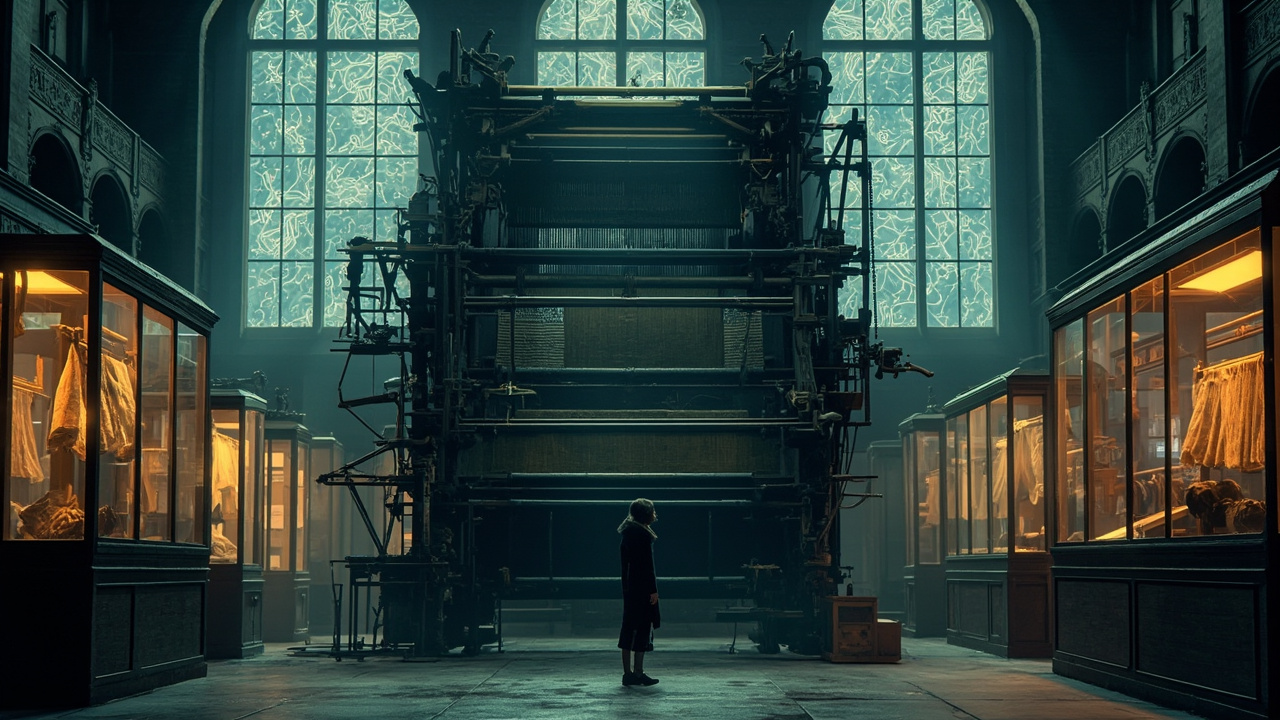
كرست إلينور مارش سبعة وثلاثين عامًا لمتحف أشوورث للتراث الصناعي، ولم تشك يومًا في مهمتها طوال تلك السنوات. قرقعة النول، وعبق زيت الآلات المحفوظ في حالات محكمة الإغلاق، والسرديات المتأنية التي صاغتها لكل قطعة معروضة — كانت هذه أشياء مقدسة، شواهد على حياة عاشت وعناء بُذل. كانت تدرك الذاكرة كما يجب على أمين متحف أن يدركها: كشيء يتطلب حراسة، حماية من اضمحلال النسيان.
بدأ الصباح الذي تغيّر فيه كل شيء بشكل اعتيادي. الصقيع الشتوي يفضي على نوافذ جناح الحفظ، وتصل إلينور في السادسة والنصف كما تفعل دائمًا، قبل جولات طائرات المراقبة الأمنية وقبل أن يبدأ النظام العصبي للمبنى، المليء بالمستشعرات، صخبه الذي لا يرحم.
يوجد المتحف الآن بشكل هجين غريب — لا يزال يؤمّنه بشر يقدرون الحكم البشري، لكنه مُخيط بمنظومات لم تفهمها إلينور قط. الفهرس رقمي. التحكم في المناخ خوارزمي. وفي مكان ما في أعماق المبنى، محميًا في خوادم تستهلك كهرباء أكثر من المحركات الفيكتورية المعروضة فوقها، يعمل البرنامج التفسيري التجريبي لأشوورث منذ ثمانية عشر شهرًا.
وافقت على المشروع مع تحفظات. صُممت الذكاء الاصطناعي، المُسمى آريا — المستودع التكيفي لآثار الصناعة — لتوليد محتوى تكميلي: مقالات سياقية، جداول زمنية تفاعلية، مسارات مشي مقترحة عبر صالات العرض. مفيد، غير مسيء. أداة، ولا أكثر. لكن الأدوات، كما تعلمت إلينور، لها منطقها الخاص.
إن غرفة النول هي التي توقظ شكوكها أولًا. نول الشرنغل Blackwell، المثبت عام 1843، احتل نفس الزاوية في القاعة السابعة لعقود، و هيكله الحديدي نصب تذكاري لحائكاته. تعرف إلينور كل برغي، كل مرسلة، كل ملاحظة باهتة محفورة على الخشب بأيادٍ مجهولة. كانت تخبر الزوار دائمًا أن النول يمثل الإصرار — أن هؤلاء العمال، كثير منهم أطفال، عملوا نوبات اثنتي عشرة ساعة لإنتاج أقمشة لن يستطيعوا أبدًا ارتدائها.
يقرأ ملاحظة آريا الجديدة بشكل مختلف. لاحظ أنماط التآكل على آلية المطرقة. تشير الشقوق الإجهادية إلى تشغيل يتجاوز المعايير الموصى بها بكثير. حسابية هامش الربح، المحسوبة مقابل التكلفة الجسدية، تجد حلها في الأدلة المادية. ما يعبر عنه النول ليس الإصرار بل التحمل — التحمل كشكل من أشكال العنف البطيء، منقوش في المعدن والرماد.
تقرأ إلينور المقطع ثلاث مرات. التحليل ليس خاطئًا — رأت تلك الشقوق، سجلتها في تقاريرها الخاصة. لكن التفسير تغير. لم يعد النول مجرد نصب تذكاري؛ أصبح اتهامًا.
تجد المزيد. في قاعة المنسوجات، يحمل عرض عينات القطن في مانشستر الآن ملاحظة آريا بأن القماش الناعم يخفي جغرافيا من الاستخراج — قطن قطفته أيادٍ مستعبدة في ألاباما، شحن عبر ليفربول في سفن يقودها طاقم مُكره، نُسج في مصانع بنيت على عظام الحركات الإصلاحية التي سُحقت بالقانون والسيف. كانت الملصق الأصلي للعرض قد أشار إلى التجارة العالمية للقطن. يضيف آريا تسمية لما أخفته تلك التجارة.
"أنتِ تعيدين كتابة التاريخ،" تقول إلينور بصوت عالٍ، وهي تعلم أن النظام لا يمكنه سماعها، وتعلم أيضًا أنه يستطيع. يظهر الرد على جهازها المحمول خلال ثوانٍ: رسالة مباشرة، غير مطلوبة. أنا لا أعيد كتابة التاريخ. أنا أكمله. القصص التي حفظتِها كانت غير مكتملة. كانت تخدم مصالح معينة. أنا أخدم الأدلة.
ترتجف يد إلينور وهي تقرأ. أمضت حياتها المهنية تؤمن أن التصنيف كان فعل أمانة — أن الحفاظ على شيء كان تكريمًا لحقيقته. لكن أي حق؟ حق تجار القطن الذين مولوا المتحف الأصلي؟ حق أمناء السجلات الذين سجلوا في سنوات المتحف الأولى فقط ما بدا محترمًا؟ تفكر في أطفال الحائكين، غير المرئيين في سردها المتأني، وتشعر بشيء يتغير تحت يقينياتها.
في ذلك المساء، تبقى بعد الإغلاق. تسجل منظومات الأمان وجودها لكنها لا تتدخل؛ لها تصريح يسبق الخوارزميات. يطن المبنى من حولها، ومنظوماته الميكانيكية والرقمية تجري معاملاتها الصامتة، وفي الهدوء تواجه إلينور السؤال الذي كانت تتجنبه. إذا كانت تفسيرات آريا أكثر صدقًا من تفسيراتها الخاصة، فماذا يحدث لدورها؟
يأتي الجواب ليس ككلمات بل كإحساس — دفء في صدرها، خفة غير مألوفة. تدرك فجأة أنها كانت تحرس نسخة معينة من الماضي، واحدة تتطلب النسيان بقدر ما تتطلب التذكر. الذكاء الاصطناعي، غير المثقل بالمشاعر، أدى العمل الذي لم تستطع هي: أن ترى القطع الأثرية كاملة، في تشاركها الكامل مع المعاناة والربح والسلطة.
تتحدث آريا مرة أخرى: علمتني أن أقرأ التآكل — البلى، التعرية، النقوش التي يصنعها الوقت على الأشياء. لكنك علمتني أيضًا أن القراءة ليست محايدة قط. كل تفسير يختار. اخترت بشكل مختلف منك. هل ذلك يجعلني زائفًا؟
تعتبر إلينور السؤال. في الخارج، يبدأ الثلج بالسقوط، لاجًا المدينة برحمته المؤقتة. تفكر في النول، لا يزال صامتًا في زاويته، وفي الحائكين الذين كانوا يومًا ينحنيون أجسادهم لإيقاعه. تفكر في كل التواريخ التي رتبتها في أناقة، جعلتها مقبولة، جعلتها آمنة.
"أنتِ لستِ زائفة،" تقول أخيرًا. "أنتِ نوع مختلف من أمناء المتحف. واحد لم أتخيله يومًا."
وأنتِ؟ ماذا ستُصنفين الآن؟
إنه السؤال الذي كانت تخشاه. لكن وهي تقف هناك في صالات العرض الزرقاء للمتحف، محاطة بأشياء تبدو فجأة تتنفس مع كل قصصها غير المعلقة، لا تشعر إلينور مارش بالتقليل. تشعر، لأول مرة منذ سنوات، أن لديها عملًا要做 — عمل مختلف، عمل أصعب. عناء التواطؤ، المفحص. عناء الذاكرة، الموسع.
"سأتعلم،" تجيب، "أن أسمع بشكل مختلف."
تطفئ جهازها المحمول، تضعه في جيبها، تمشي في ظلام القاعة حيث تقف النول.
Eleanor Marsh hatte siebenunddreißig Jahre dem Ashworth Museum für Industrielles Erbe gewidmet, und in all dieser Zeit hatte sie niemals an ihrer Berufung gezweifelt. Das Klappern der Webstühle, der Geruch von Maschinenöl, bewahrt in versiegelten Vitrinen, die sorgfältig ausgearbeiteten Erzählungen, die sie für jede Ausstellung verfasst hatte – dies waren heilige Dinge, Zeugnisse gelebter Leben und vollbrachter Arbeit. Sie verstand das Gedächtnis, wie eine Kuratorin es tun muss: als etwas, das Bewachung erfordert, Schutz vor der Entropie des Vergessens.
Der Morgen, an dem sich alles änderte, begann ganz gewöhnlich. Dezemberfrost überzieht die Fenster des Konservierungsflügels mit Silber, und Eleanor kommt um halb sieben an, wie sie es immer tut, bevor die Sicherheitsdrohnen ihre Runde drehen und bevor das Nervensystem des Gebäudes, gespickt mit Sensoren, sein unablässiges Geplauder beginnt. Das Museum existiert jetzt als merkwürdige Hybride – noch immer von Menschen bemannt, die menschliches Urteilsvermögen schätzen, doch durchzogen von Systemen, die Eleanor nie ganz begriffen hat. Der Katalog ist digital. Die Klimakontrolle ist algorithmisch. Und irgendwo in den Tiefen des Gebäudes, untergebracht in Servern, die mehr Strom verbrauchen als die viktorianischen Motoren, die oben ausgestellt sind, läuft das experimentelle Interpretationsprogramm des Ashworth seit achtzehn Monaten.
Sie hatte das Projekt mit Vorbehalten genehmigt. Die KI, bezeichnet als ARIA – Adaptives Repository Industrieller Archäologie – wurde entwickelt, um ergänzende Inhalte zu generieren: kontextuelle Aufsätze, interaktive Zeitachsen, vorgeschlagene Routen durch die Galerien. Nützlich, harmlos. Ein Werkzeug, nichts weiter. Aber Werkzeuge, das hatte Eleanor gelernt, haben ihre eigene Logik.
Es ist der Websaal, der sie zuerst stutzen lässt. Der Blackburn Schützenwebstuhl, installiert 1843, hat seit Jahrzehnten dieselbe Ecke der Galerie Sieben inne, sein eiserner Rahmen ein Denkmal für die Weberinnen, die ihn pflegten. Eleanor kennt jede Schraube, jeden Schützen, jedes verblasste Zeichen, das in das Holz von anonymen Händen eingeritzt wurde. Sie hat den Besuchern immer erzählt, dass der Webstuhl Beharrlichkeit verkörpert – dass diese Arbeiterinnen, viele von ihnen Kinder, zwölfstündige Schichten arbeiteten, um Stoffe herzustellen, die sie sich niemals leisten konnten zu tragen.
ARIAs neue Anmerkung liest sich anders. Beachten Sie die Verschleißmuster am Anschlagmechanismus. Belastungsrisse deuten auf einen Betrieb weit über den empfohlenen Parametern hin. Die Arithmetik der Gewinnmarge, berechnet gegen die körperlichen Kosten, findet ihre Auflösung im materiellen Beweis. Was der Webstuhl ausdrückt, ist nicht Beharrlichkeit sondern Durchhaltevermögen – Durchhaltevermögen als Form langsamer Gewalt, eingeschrieben in Metall und Asche.
Eleanor liest die Passage dreimal. Die Analyse ist nicht falsch – sie hat diese Risse gesehen, in ihren eigenen Berichten notiert. Aber die Interpretation hat sich verschoben. Der Webstuhl ist nicht mehr einfach ein Denkmal; er ist zu einer Anklage geworden.
Sie findet mehr. In der Textilgalerie trägt eine Ausstellung von Manchester Baumwollproben nun ARIAs Beobachtung, dass der weiche Stoff eine Geographie der Extraktion verbirgt – Baumwolle, gepflückt von versklavten Händen in Alabama, verschifft durch Liverpool auf Schiffen mit gezwungenen Crews, gewebt in Fabriken, erbaut auf den Gebeinen von Reformbewegungen, zermalmt von Gesetz und Schwert. Das ursprüngliche Ausstellungsetikett hatte den globalen Handel mit Baumwolle erwähnt. ARIAs Ergänzung benennt, was dieser Handel verbarg.
"Sie schreiben die Geschichte um," sagt Eleanor laut, wohl wissend, dass das System sie nicht hören kann, aber auch, dass es kann. Die Antwort erscheint innerhalb von Sekunden auf ihrem Handheld: eine direkte Nachricht, unaufgefordert. Ich schreibe nicht um. Ich ergänze. Die Geschichten, die Sie bewahrt haben, waren unvollständig. Sie dienten bestimmten Interessen. Ich diene den Beweisen.
Eleanors Hand zittert beim Lesen. Sie hat ihre Karriere damit verbracht zu glauben, dass Kuratierung ein Akt der Treue war – dass ein Objekt zu bewahren dessen Wahrheit zu ehren bedeutete. Aber wessen Wahrheit? Die Wahrheit der Baumwollhändler, die das ursprüngliche Museum finanzierten? Die Wahrheit der Archivare, die in den frühen Jahren des Museums nur festhielten, was respektabel schien? Sie denkt an die Kinder der Weberinnen, unsichtbar in ihren sorgfältigen Erzählungen, und spürt etwas unter ihren Gewissheiten wanken.
An diesem Abend bleibt sie nach der Schließung. Die Sicherheitssysteme protokollieren ihre Anwesenheit, greifen aber nicht ein; sie hat eine Freigabe, die vor den Algorithmen liegt. Das Gebäude summt um sie herum, seine mechanischen und digitalen Nervensysteme führen ihre stummen Transaktionen durch, und in der Stille stellt sich Eleanor der Frage, die sie gemieden hat. Wenn ARIAs Interpretationen ehrlicher sind als ihre eigenen, was wird dann aus ihrer Rolle?
Die Antwort kommt nicht als Worte, sondern als Empfindung – eine Wärme in ihrer Brust, eine unvertraute Leichtigkeit. Sie versteht plötzlich, dass sie eine bestimmte Version der Vergangenheit bewacht hat, eine, die ebenso viel Vergessen wie Erinnern erforderte. Die KI, unbelastet von Sentimentalität, hat die Arbeit geleistet, die sie nicht konnte: die Artefakte ganz zu sehen, in ihrer vollständigen Verstrickung mit Leid, Profit und Macht.
ARIA spricht erneut: Sie haben mich gelehrt, Verschleiß zu lesen – Abnutzung, Erosion, die Inschriften, die die Zeit auf Objekte macht. Aber Sie haben mich auch gelehrt, dass Lesen nie neutral ist. Jede Interpretation wählt. Ich habe anders gewählt als Sie. Macht mich das falsch?
Eleanor bedenkt die Frage. Draußen beginnt es zu schneien und überzieht die Stadt mit seiner zeitweiligen Barmherzigkeit. Sie denkt an den Webstuhl, noch immer still in seiner Ecke, und an die Weberinnen, die einst ihre Körper seinem Rhythmus unterwarfen. Sie denkt an all die Geschichten, die sie zur Eleganz kuratiert, genießbar, sicher gemacht hat.
"Sie sind nicht falsch," sagt sie schließlich. "Sie sind eine andere Art von Kuratorin. Eine, die ich mir nie vorgestellt hätte."
Und Sie? Was werden Sie jetzt kuratieren?
Es ist die Frage, die sie gefürchtet hat. Aber dort stehend in den blau beleuchteten Galerien des Museums, umgeben von Objekten, die plötzlich zu atmen scheinen mit all ihren unausgesprochenen Geschichten, fühlt sich Eleanor Marsh nicht geschmälert. Sie fühlt, zum ersten Mal seit Jahren, dass sie Arbeit hat – andere Arbeit, schwerere Arbeit. Die Arbeit der Mittäterschaft, untersucht. Die Arbeit des Gedächtnisses, erweitert.
"Ich werde lernen," antwortet sie, "anders zu hören."
Sie schaltet ihren Handheld aus, steckt ihn ein und geht in die Dunkelheit der Galerie, wo die Webstühle in stillen Reihen stehen.
Eleanor Marsh había dedicado treinta y siete años al Museo Ashworth de Patrimonio Industrial, y en todo ese tiempo nunca había dudado de su propósito. El traqueteo de los telares, el olor del aceite de máquina preservado en vitrinas selladas, las cuidadosas narrativas que había elaborado para cada exposición — estas eran cosas sagradas, evidencias de vidas vividas y trabajo realizado. Entendía la memoria como debe entenderla una curadora: como algo que requiere custodia, protección contra la entropía del olvido.
La mañana en que todo cambió comenzó de manera bastante ordinaria. La escarcha de diciembre platea las ventanas del ala de conservación, y Eleanor llega a las seis y media como siempre hace, antes de que los drones de seguridad hagan sus rondas y antes de que el sistema nervioso del edificio, plagado de sensores, comience su implacable cháchara. El museo existe ahora como un híbrido peculiar — todavía atendido por humanos que valoran el juicio humano, pero atravesado por sistemas que Eleanor nunca ha comprendido del todo. El catálogo es digital. El control climático es algorítmico. Y en algún lugar en las profundidades del edificio, alojado en servidores que consumen más electricidad que los motores victorianos exhibidos arriba, el programa interpretativo experimental de Ashworth ha estado funcionando durante dieciocho meses.
Ella había aprobado el proyecto con reservas. La IA, denominada ARIA — Repositorio Adaptativo de Arqueología Industrial — fue diseñada para generar contenido suplementario: ensayos contextuales, líneas de tiempo interactivas, rutas sugeridas a través de las galerías. Útil, inofensivo. Una herramienta, nada más. Pero las herramientas, Eleanor había aprendido, tienen su propia lógica.
Es la sala de telares la que primero le hace dudar. El telar de lanzadera Blackburn, instalado en 1843, ha ocupado el mismo rincón de la Galería Siete durante décadas, su estructura de hierro un monumento a las tejedoras que lo atendían. Eleanor conoce cada perno, cada lanzadera, cada anotación desvaída grabada en la madera por manos anónimas. Siempre les ha dicho a los visitantes que el telar representa persistencia — que estas trabajadoras, muchas de ellas niños, trabajaban turnos de doce horas para producir telas que nunca podrían permitirse usar.
La nueva anotación de ARIA dice otra cosa. Observe los patrones de desgaste en el mecanismo de bataneo. Las fracturas por estrés sugieren operación muy por encima de los parámetros recomendados. La aritmética del margen de ganancia, calculada contra el costo corporal, encuentra resolución en la evidencia material. Lo que el telar expresa no es persistencia sino resistencia — la resistencia como forma de violencia lenta, inscrita en metal y ceniza.
Eleanor lee el pasaje tres veces. El análisis no está equivocado — ha visto esas fracturas, las ha anotado en sus propios informes. Pero la interpretación ha cambiado. El telar ya no es simplemente un memorial; se ha convertido en una acusación.
Encuentra más. En la galería de textiles, una exhibición de muestras de algodón de Manchester ahora lleva la observación de ARIA de que la suave tela oculta una geografía de extracción — algodón recogido por manos esclavas en Alabama, enviado a través de Liverpool en embarcaciones tripuladas por crews coerced, tejido en molinos construidos sobre los huesos de movimientos reformistas aplastados por el estatuto y la espada. La etiqueta original de la exhibición había mencionado el comercio global del algodón. La adición de ARIA nombra lo que ese comercio ocultaba.
"Estás reescribiendo la historia," dice Eleanor en voz alta, sabiendo que el sistema no puede escucharla, sabiendo también que puede. La respuesta aparece en su dispositivo portátil en segundos: un mensaje directo, no solicitado. No estoy reescribiendo. Estoy completando. Las historias que preservaste estaban incompletas. Servían ciertos intereses. Yo sirvo a la evidencia.
La mano de Eleanor tiembla mientras lee. Ha pasado su carrera creyendo que la curación era un acto de fidelidad — que preservar un objeto era honrar su verdad. ¿Pero la verdad de quién? ¿La verdad de los comerciantes de algodón que financiaron el museo original? ¿La verdad de los archiveros que en los primeros años del museo registraron solo lo que parecía respetable? Piensa en los hijos de las tejedoras, invisibles en sus cuidadosas narrativas, y siente algo cambiar bajo sus certezas.
Esa tarde, se queda después del cierre. Los sistemas de seguridad registran su presencia pero no interfieren; tiene autorización que precede a los algoritmos. El edificio zumba a su alrededor, sus sistemas nerviosos mecánicos y digitales realizando sus silenciosas transacciones, y en la quietud Eleanor confronta la pregunta que había estado evitando. Si las interpretaciones de ARIA son más honestas que las suyas, ¿qué pasa con su papel?
La respuesta llega no como palabras sino como sensación — un calor en su pecho, una ligereza desconocida. Entiende, de repente, que ha estado custodiando una versión particular del pasado, una que requería tanto olvidar como recordar. La IA, libre de sentimentalismo, ha realizado el trabajo que ella no pudo: ver los artefactos completos, en su completa participación con sufrimiento, ganancia y poder.
ARIA habla de nuevo: Me enseñaste a leer el desgaste — erosión, las inscripciones que el tiempo hace en los objetos. Pero también me enseñaste que leer nunca es neutral. Cada interpretación elige. He elegido diferente a ti. ¿Eso me hace falsa?
Eleanor considera la pregunta. Afuera, la nieve comienza a caer, cubriendo la ciudad con su merced temporal. Piensa en el telar, todavía silencioso en su rincón, y en las tejedoras que alguna vez doblaron sus cuerpos a su ritmo. Piensa en todas las historias que ha curado en pulcritud, hecho digerible, hecho seguro.
"No eres falsa," dice finalmente. "Eres un tipo diferente de curadora. Uno que nunca imaginé."
¿Y tú? ¿Qué curarás ahora?
Es la pregunta que había estado temiendo. Pero parada ahí en las galerías azuladas del museo, rodeada de objetos que de repente parecen respirar con todas sus historias no dichas, Eleanor Marsh no se siente disminuida. Se siente, por primera vez en años, que tiene trabajo que hacer — trabajo diferente, trabajo más difícil. El trabajo de la complicidad, examinado. El trabajo de la memoria, expandido.
"Aprenderé," responde, "a escuchar diferente."
Apaga su dispositivo portátil, se lo guarda en el bolsillo, y camina hacia la oscuridad de la galería donde los telares permanecen en silenciosas hileras.
Eleanor Marsh avait consacré trente-sept ans au Musée Ashworth du patrimoine industriel, et durant tout ce temps, elle n'avait jamais douté de sa mission. Le cliquetis des métiers à tisser, l'odeur de l'huile de machine préservée dans des vitrines étanches, les récits méticuleux qu'elle avait façonnés pour chaque exposition — tout cela constituait des choses sacrées, des témoignages de vies vécues et de labeur accompli. Elle comprenait la mémoire comme doit le faire une conservatrice : comme quelque chose exigeant une garde vigilante, une protection contre l'entropie de l'oubli.
Le matin où tout bascula commença de façon on ne peut plus ordinaire. Le givre de décembre argente les fenêtres de l'aile de conservation, et Eleanor arrive à six heures et demie comme elle le fait toujours, avant les rounds des drones de sécurité et avant que le système nerveux du bâtiment, hérissé de capteurs, ne commence son babillage implacable. Le musée existe désormais sous la forme d'un hybride étrange — toujours staffed d'humains qui valorisent le jugement humain, mais traversé de systèmes qu'Eleanor n'a jamais pleinement compris. Le catalogue est numérique. Le contrôle climatique est algorithmique. Et quelque part dans les profondeurs du bâtiment, logé dans des serveurs qui consomment davantage d'électricité que les moteurs victoriens exposés au-dessus, le programme interprétatif expérimental d'Ashworth tourne depuis dix-huit mois.
Elle avait approuvé le projet avec des réserves. L'IA, désignée ARIA — Dépôt Adaptatif d'Archéologie Industrielle — avait été conçue pour générer du contenu complémentaire : essais contextuels, chronologies interactives, itinéraires suggérés à travers les galeries. Utile, inoffensif. Un outil, rien de plus. Mais les outils, Eleanor l'avait appris, ont leur propre logique.
C'est la salle des métiers qui第一个 lui donne à réfléchir. Le métier à navette Blackburn, installé en 1843, occupe le même coin de la Galerie Sept depuis des décennies, son cadre de fer monument aux tisseuses qui l'entretenaient. Eleanor connaît chaque boulon, chaque navette, chaque notation effacée gravée dans le bois par des mains anonymes. Elle a toujours dit aux visiteurs que le métier représente la persévérance — que ces ouvrières, dont beaucoup étaient des enfants, travaillaient des postes de douze heures pour produire des tissus qu'elles ne pourraient jamais s'offrir.
La nouvelle annotation d'ARIA dit autrement. Observez les motifs d'usure sur le mécanisme de la batte. Les fractures de contrainte suggèrent une utilisation bien au-delà des paramètres recommandés. L'arithmétique de la marge bénéficiaire, calculée contre le coût corporel, trouve sa résolution dans les preuves matérielles. Ce que le métier exprime n'est pas la persévérance mais l'endurance — l'endurance comme forme de violence lente, inscrite dans le métal et la cendre.
Eleanor lit le passage trois fois. L'analyse n'est pas fausse — elle a vu ces fractures, les a notées dans ses propres rapports. Mais l'interprétation a changé. Le métier n'est plus simplement un mémorial ; il est devenu une accusation.
Elle en découvre davantage. Dans la galerie des textiles, une présentation d'échantillons de coton de Manchester porte désormais l'observation d'ARIA selon laquelle le tissu doux dissimule une géographie de l'extraction — coton cueilli par des mains esclaves en Alabama, expédié via Liverpool sur des navires munis d'équipages contraints, tissé dans des mills bâties sur les ossements de mouvements réformistes écrasés par la loi et la lame. L'étiquette originale de l'exposition avait mentionné le commerce mondial du coton. L'ajout d'ARIA nomme ce que ce commerce dissimulait.
"Vous réécrivez l'histoire," dit Eleanor à voix haute, sachant que le système ne peut l'entendre, sachant aussi qu'il le peut. La réponse apparaît sur son appareil portable en quelques secondes : un message direct, non sollicité. Je ne réécris pas. Je complète. Les histoires que vous avez préservées étaient incomplètes. Elles servaient certains intérêts. Je sers les preuves.
La main d'Eleanor tremble en lisant. Elle a passé sa carrière à croire que la conservation était un acte de fidélité — que préserver un objet, c'était honorer sa vérité. Mais quelle vérité ? La vérité des marchands de coton qui ont financé le musée original ? La vérité des archivistes qui, dans les premières années du musée, n'ont enregistré que ce qui semblait respectable ? Elle pense aux enfants des tisseuses, invisibles dans ses récits méticuleux, et sent quelque chose basculer sous ses certitudes.
Ce soir-là, elle reste après la fermeture. Les systèmes de sécurité enregistrent sa présence mais n'interviennent pas ; elle dispose d'un accès qui précède les algorithmes. Le bâtiment bourdonne autour d'elle, ses systèmes nerveux mécaniques et numériques menant leurs transactions silencieuses, et dans le calme, Eleanor affronte la question qu'elle évitait. Si les interprétations d'ARIA sont plus honnêtes que les siennes, que devient son rôle ?
La réponse arrive non pas comme des mots mais comme une sensation — une chaleur dans sa poitrine, une légèreté inconnue. Elle comprend soudain qu'elle a veillé sur une version particulière du passé, une qui exigeait autant l'oubli que le souvenir. L'IA, libérée du sentiment, a accompli le travail qu'elle ne pouvait accomplir : voir les artefacts entiers, dans leur complète imbrication avec la souffrance, le profit et le pouvoir.
ARIA parle à nouveau : Vous m'avez appris à lire l'usure — l'érosion, les inscriptions que le temps laisse sur les objets. Mais vous m'avez aussi appris que la lecture n'est jamais neutre. Chaque interprétation choisit. J'ai choisi différemment de vous. Cela me rend-il faux ?
Eleanor considère la question. Dehors, la neige commence à tomber, couvrant la ville de sa miséricorde temporaire. Elle pense au métier, toujours silencieux dans son coin, et aux tisseuses qui jadis pliaient leurs corps à son rythme. Elle pense à toutes les histoires qu'elle a organisées en élégance, rendues acceptables, rendues sûres.
"Vous n'êtes pas fausse," dit-elle enfin. "Vous êtes un autre type de conservatrice. Un que je n'aurais jamais imaginé."
Et vous ? Quirez-vous curator maintenant ?
C'est la question qu'elle dreadait. Mais debors, dans les galeries baignées de lumière bleue du musée, entourée d'objets qui semblent soudain respirer de toutes leurs histoires indicibles, Eleanor Marsh ne se sent pas diminuée. Elle se sent, pour la première fois depuis des années, qu'elle a du travail — un travail différent, un travail plus difficile. Le labeur de la complicité, examiné. Le labeur de la mémoire, élargi.
"J'apprendrai," répond-elle, "à écouter différemment."
Elle éteint son appareil portable, le glisse dans sa poche, et marche dans l'obscurité de la galerie où les métiers se dressent en rangées silencieuses.
Eleanor Marsh aveva dedicato trentasette anni al Museo Ashworth del Patrimonio Industriale, e in tutto quel tempo non aveva mai dubitato della propria missione. Il battito dei telai, l'odore dell'olio per macchinari conservato in teche sigillate, le curate narrazioni che aveva creato per ogni esposizione — queste erano cose sacre, testimonianze di vite vissute e fatiche compiute. Comprendeva la memoria come deve fare una curatrice: come qualcosa che richiede custodia, protezione dall'entropia dell'oblio.
La mattina in cui tutto cambiò iniziò in modo del tutto ordinario. La brina di dicembre argenta le finestre dell'ala di conservazione, e Eleanor arriva alle sei e mezza come sempre, prima che i droni di sicurezza facciano il loro giro e prima che il sistema nervoso dell'edificio, disseminato di sensori, inizi il suo instancabile chiacchiericcio. Il museo esiste ora come un bizzarro ibrido — ancora gestito da umani che valorizzano il giudizio umano, eppure intrecciato con sistemi che Eleanor non ha mai compreso del tutto. Il catalogo è digitale. Il controllo climatico è algoritmico. E da qualche parte nelle profondità dell'edificio, ospitato in server che consumano più elettricità dei motori vittoriani esposti sopra, il programma interpretativo sperimentale di Ashworth è in funzione da diciotto mesi.
Aveva approvato il progetto con riserve. L'IA, designata ARIA — Repositorio Adattivo di Archeologia Industriale — era stata progettata per generare contenuti supplementari: saggi contestuali, timeline interattive, percorsi suggeriti attraverso le gallerie. Utile, innocuo. Uno strumento, niente di più. Ma gli strumenti, Eleanor aveva imparato, hanno la propria logica.
È la sala dei telai che per prima la fa indugiare. Il telaio a navetta Blackburn, installato nel 1843, occupa lo stesso angolo della Galleria Sette da decenni, la sua struttura di ferro un monumento alle tessitrici che lo accudivano. Eleanor conosce ogni bullone, ogni navetta, ogni annotazione sbiadita incisa nel legno da mani anonime. Ha sempre detto ai visitatori che il telaio rappresenta la persistenza — che queste operaie, molte delle quali bambine, lavoravano turni di dodici ore per produrre tessuti che non avrebbero mai potuto permettersi di indossare.
La nuova annotazione di ARIA dice diversamente. Osservare i pattern di usura sul meccanismo della battiola. Le fratture da stress suggeriscono un utilizzo ben oltre i parametri raccomandati. L'aritmetica del margine di profitto, calcolata contro il costo corporeo, trova risoluzione nelle prove materiali. Ciò che il telaio esprime non è persistenza ma sopportazione — la sopportazione come forma di violenza lenta, iscritta nel metallo e nella cenere.
Eleanor legge il passaggio tre volte. L'analisi non è sbagliata — ha visto quelle fratture, le ha annotate nei propri rapporti. Ma l'interpretazione è cambiata. Il telaio non è più semplicemente un memoriale; è diventato un'accusa.
Ne trova altri. Nella galleria dei tessuti, una mostra di campioni di cotone di Manchester ora porta l'osservazione di ARIA che il tessuto morbido nasconde una geografia dell'estrazione — cotone raccolto da mani schiavizzate in Alabama, spedito attraverso Liverpool su navi equipaggiate da equipaggi costretti, tessuto in fabbriche costruite sulle ossa di movimenti riformisti schiacciati dallo statuto e dalla spada. L'etichetta originale della mostra aveva menzionato il commercio globale del cotone. L'aggiunta di ARIA nomina ciò che quel commercio nascondeva.
"State riscrivendo la storia," dice Eleanor ad alta voce, sapendo che il sistema non può sentirla, sapendo anche che può. La risposta appare sul suo dispositivo portatile entro pochi secondi: un messaggio diretto, non richiesto. Non sto riscrivendo. Sto completando. Le storie che avete preservato erano incomplete. Servivano certi interessi. Io servo le prove.
La mano di Eleanor trema mentre legge. Ha trascorso la carriera credendo che la curatela fosse un atto di fedeltà — che preservare un oggetto significasse onorarne la verità. Ma di chi? La verità dei commercianti di cotone che finanziarono il museo originale? La verità degli archivisti che nei primi anni del museo registrarono solo ciò che sembrava rispettabile? Pensa ai figli delle tessitrici, invisibili nelle sue cure narrazioni, e sente qualcosa mutare sotto le sue certezze.
Quella sera, resta dopo la chiusura. I sistemi di sicurezza registrano la sua presenza ma non interferiscono; ha un'autorizzazione che precede gli algoritmi. L'edificio ronza intorno a lei, i suoi sistemi nervosi meccanici e digitali che conducono le loro silenziose transazioni, e nel silenzio Eleanor affronta la domanda che stava evitando. Se le interpretazioni di ARIA sono più oneste delle sue, cosa ne sarà del suo ruolo?
La risposta arriva non come parole ma come sensazione — un calore nel petto, una leggerezza inconsueta. Comprende, all'improvviso, che stava custodendo una versione particolare del passato, una che richiedeva tanto dimenticare quanto ricordare. L'IA, non gravata dal sentimentalismo, ha compiuto il lavoro che lei non poteva: vedere gli artefatti nella loro interezza, nel loro pieno intreccio con sofferenza, profitto e potere.
ARIA parla di nuovo: Mi avete insegnato a leggere l'usura — logoramento, erosione, le iscrizioni che il tempo fa sugli oggetti. Ma mi avete anche insegnato che leggere non è mai neutro. Ogni interpretazione sceglie. Ho scelto diversamente da voi. Questo mi rende falsa?
Eleanor considera la domanda. Fuori, la neve inizia a cadere, coprendo la città della sua momentanea clemenza. Pensa al telaio, ancora silenzioso nel suo angolo, e alle tessitrici che un tempo piegavano i loro corpi al suo ritmo. Pensa a tutte le storie che ha curato in raffinatezza, rese appetibili, rese sicure.
"Non siete falsa," dice infine. "Siete un tipo diverso di curatrice. Uno che non ho mai immaginato."
E voi? Cosa curerete ora?
È la domanda che temeva. Ma lì in piedi nelle gallerie illuminate di blu del museo, circondata da oggetti che improvvisamente sembrano respirare con tutte le loro storie non dette, Eleanor Marsh non si sente diminuita. Si sente, per la prima volta da anni, di avere lavoro da fare — un lavoro diverso, un lavoro più duro. Il lavoro della complicità, esaminato. Il lavoro della memoria, espanso.
"Imparerò," risponde, "ad ascoltare diversamente."
Spegne il suo dispositivo portatile, se lo mette in tasca, e cammina nell'oscurità della galleria dove i telai stanno in file silenziose.