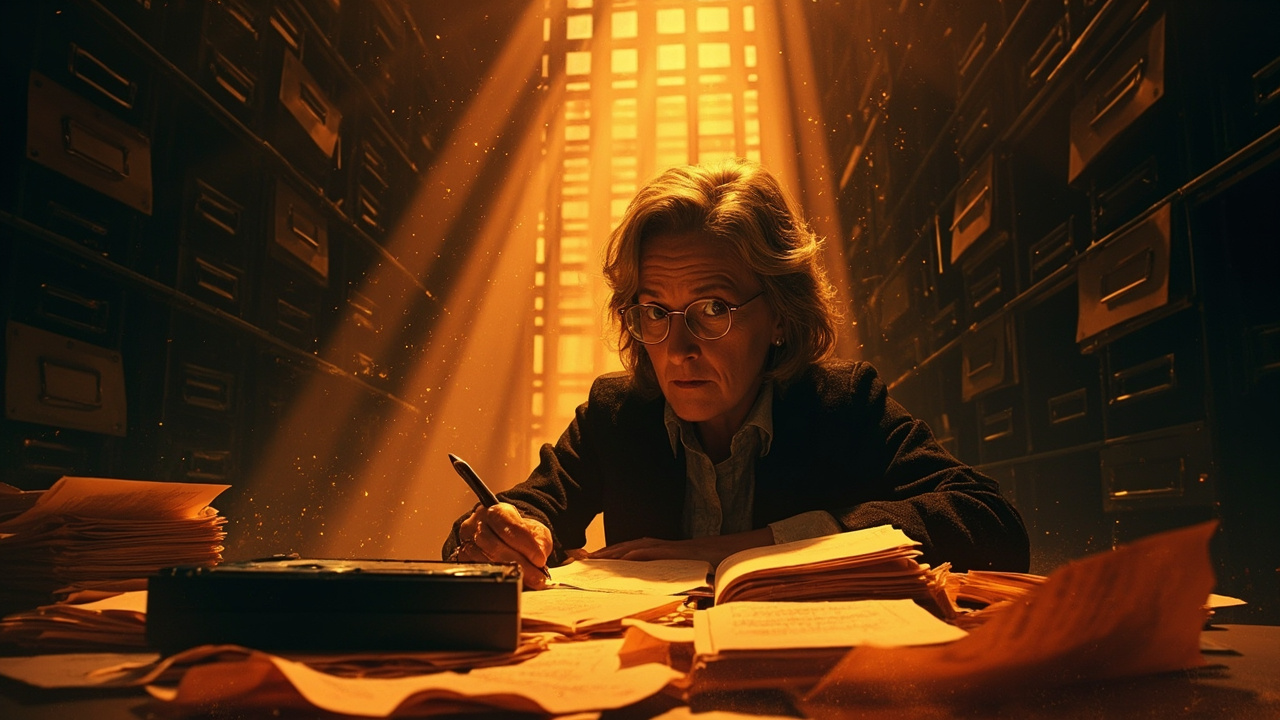
في الصباح الذي اكتشفت فيه إلينور مارش الشذوذ، كان الخريف قد بدأ للتو يطلّي على ملفات الأرشيف الوطني بظل الكهرماني الذي يجعل كل شيء في لندن يبدو كلوحة زيتية. أمضت إحدى عشر عامًا تُضفي على ما حاول القرن العشرون دفنه في أشرطة مغناطيسية متآكلة صورة من الوضوح، وقد تعلّمت أن تتوقع الصمت من أقبية التخزين العميقة — لا أسرار، ليس حقًا، مجرد النسيان الإداري المعتاد. لكن هذا كان مختلفًا. وصل القرص الصلب الخارجي بدون توثيق، بدون نسب، بدون أي من البنية البيروقراطية التي ترافق عادةً المواد التاريخية. كان هناك ملاحظة مثبتة على غلافه تقول فقط: «للأرشيف الذي يتذكر. افتح فقط عندما تفهم ما لا يجب أن يُفقَد.» كان الخط عتيقًا، وال tinta باهتة بلون الدم القديم. ركّبتُه في محطة العمل الخاصة بها، تتوقع ملفات تالفة، ضوضاء رقمية، ربما مزحة مُتقنة من أحد زملائها. بدلًا من ذلك، وجدت ألفًا ومائتي ساعة من شهادات فيديو مشفّرة، مؤرّخة بين عامَي 1956 و1971، وحاملة رموز إدارية لقسم كان رسميًا غير موجود أبدًا. عملت إلينور طوال الليل. مع الفجر، كانت قد كسرت التشفير — ليس من خلال أي تقنية متطورة، بل لأن كلمة المرور كانت ببساطة كلمة REMEMBER بحروف كبيرة، كأن الشخص الذي حفظ هذه الملفات كان يريدها أن تُعثر عليها، كان يحتاجها أن تُعثر عليها، من قبل أي شخص صبور بما يكفي للبحث. أظهر الفيديو الأول رجلاً في الأربعينيات من عمره، ووجهه يحمل الإرهاق الخاص بمن شهد شيئًا لا يمكن أن يُسمى. جلس أمام كاميرا في مبنى يبدو أنه تابع للحكومة، وتحدّث لمدة سبع وأربعين دقيقة عن تمرّد ماو ماو، عن معسكرات الاعتقال، عن التعذيب المنهجي الذي أنكرته التاريخية الرسمية لعقود. كانت شهادته مؤيّدة بواسطة اثني عشر آخرين في تلك الدفعة الأولى وحدها. على مدى الأسابيع التالية، جمعت إلينور محتويات الأرشيف في شكل مفهوم. جاءت الشهادات من أنحاء الإمبراطورية المنهارة — من كينيا، من ماليزيا، من قبرص وعُدن ومن سنواتWindrush المبكرة. تحدّث أطفالSubjects الاستعماريون السابقون جنبًا إلى جنب مع الإداريين البريطانيون والجنود وضباط الشرطة. بعض الروايات تناقضت مع بعضها بدقة كذّابين؛其它形成了令人震惊的共识。但总体画面不容置疑:这是帝国自己的嘴巴,讲述着自己的忏悔,由自己的机构录制,然后故意隐藏。创建这个档案的动机一直困扰着埃莉诺。她在1973年11月的一份备忘录中找到了答案,埋在档案的行政文件中。一位高级公务员提议保存这些证词"以备将来历史重新审视",他的意思是防止帝国形象有朝一日可能需要恢复。这个档案不是良心,而是保险。一批储存起来以应对预期清算的弹药。当清算到来时,埃莉诺在数月的仔细核实后,向档案馆托管委员会提交了她的发现。随后的辩论沿着一直存在但从未被提及的断层线分裂了机构。一方,由副主任领导,认为这些证词过于敏感,不宜公开——它们会激化种族紧张关系,损害国际关系,没有任何建设性目的。另一方,由埃莉诺自己倡导,坚持认为隐瞒它们正是档案存在所要防止的制度性共谋。故事泄露了,就像这样的故事不可避免的那样。不到两周,国家档案馆入口的玻璃幕墙就被涂上了"真相"一词,字迹一米多高。议会召开了紧急会议。外交部发表了一份措辞如此谨慎的声明,以至于什么都没说。一群英联邦国家正式请求访问完整档案,援引从未被测试过的文化遗产协议。在十一月一个阴沉沉的星期四,埃莉诺站在议会委员会面前,提供了四个小时的证词,讲述她的发现。她谈到了一位尼日利亚教师记录了祖国的分裂。她谈到了一位牙买加护士记录了Windrush移民的第一个冬天,他们的胜利和屈辱。她谈到了一位塞浦路斯记者走私出他的报纸被禁止报道的示威 footage。她没有发表编辑评论;她只是呈现,让证词说出自己积累的分量。当会议结束时,一位年轻记者问她,她是否相信档案的发布会治愈历史伤痕还是会重新打开它们。埃莉诺认真考虑了这个问题。"伤痕不会通过遗忘来愈合,"她说。"它们通过疤痕组织愈合,而疤痕组织需要承认。这个档案不是指控。这是记忆。问题是我们是否有勇气分享它。"到了春天,Glass Archive的编辑版本——以那座解锁了其秘密的建筑命名——已经公开。学者、记者和纪录片制作人开始进行漫长的 contextualisation工作。它引发的辩论是痛苦的,往往是激烈的,但绝对必要的。纪念碑被重新审视;课程被修订;一个世纪舒适的叙事被压缩成更诚实因此更有用的东西。埃莉诺·马什回到了她的工作站,回到使过去变得可辨别的无尽项目中。她当然没有解决任何问题。历史抵制 resolution。但她确保了一千两百小时的人类证词不会再次消失在官僚的黑暗中,等待未来的继承者重新发现它们。
An dem Morgen, als Eleanor Marsh die Anomalie entdeckte, hatte der Herbst gerade begonnen, die Akten des Nationalarchivs in jenem besonderen Bernsteinton zu vergolden, der alles in London wie ein Gemälde aussehen lässt. Sie hatte elf Jahre damit verbracht, das lesbar zu machen, was das zwanzigste Jahrhundert in verfallenden Magnetbändern zu vergraben versucht hatte, und sie hatte gelernt, Stille aus den tiefen Lagergewölben zu erwarten — keine Geheimnisse, nicht wirklich, nur das gewöhnliche Vergessen der Bürokratie. Aber das hier war anders. Die externe Festplatte war ohne Dokumentation eingetroffen, ohne Herkunftsnachweis, ohne eines der bürokratischen Gerüste, die historisches Material üblicherweise begleiten. Eine an ihrem Gehäuse festgeklammerte Notiz lautete lediglich: «Für das Archiv, das sich erinnert. Nur öffnen, wenn Sie verstehen, was nicht verloren gehen darf.» Die Handschrift war alt, die Tinte zu der Farbe alten Blutes verblasst. Sie schloss sie an ihre Workstation an, erwartete beschädigte Dateien, digitales Rauschen, vielleicht einen ausgefeilten Streich von einem ihrer Kollegen. Stattdessen fand sie eintausendzweihundert Stunden verschlüsselter Videozeugnisse, die zwischen 1956 und 1971 mit Zeitstempeln versehen waren, und trugen die Verwaltungscodes einer Abteilung, die offiziell nie existiert hatte. Eleanor arbeitete die ganze Nacht. Bei Morgengrauen hatte sie die Verschlüsselung geknackt — nicht durch eine ausgefeilte Technik, sondern weil das Passwort einfach das Wort «REMEMBER» in Großbuchstaben war, als hätte die Person, die diese Dateien aufbewahrt hatte, gewollt, dass sie gefunden werden, sie gebraucht, dass sie gefunden werden, von jedem, der geduldig genug war zu suchen. Das erste Video zeigte einen Mann in seinen Vierzigern, dessen Gesicht die besondere Erschöpfung trug von jemandem, der etwas bezeugt hatte, das nicht benannt werden konnte. Er sass vor einer Kamera in einem Gebäude, das wie ein Regierungsgebäude aussah, und er sprach siebenundvierzig Minuten lang über den Mau-Mau-Aufstand, über Internierungslager, über die systematische Folter, die die offizielle Geschichte jahrzehntelang geleugnet hatte. Seine Aussage wurde von zwölf anderen in dieser ersten Charge allein bestätigt. In den folgenden Wochen ordnete Eleanor den Inhalt des Archivs in verständlicher Form. Die Zeugnisse stammten aus dem gesamten zerfallenden Empire — aus Kenia, aus Malaya, aus Zypern und Aden und aus den frühen Jahren der Windrush-Generation. Ehemalige koloniale Untertanen sprachen neben britischen Verwaltern, Soldaten und Polizeibeamten. Einige Narrative widersprachen einander mit der Präzision von Lügnern; andere bildeten einen Chor der verurteilenden Übereinstimmung. Aber das Gesamtbild war unverkennbar: hier war der Mund des Empire selbst, der seine eigenen Geständnisse sprach, aufgezeichnet von seinem eigenen Apparat und dann absichtlich versteckt. Die Frage, warum das Archiv erstellt worden war, beunruhigte Eleanor am meisten. Sie fand ihre Antwort in einem Memorandum vom November 1973, vergraben in den Verwaltungsakten des Archivs. Ein hochrangiger Beamter hatte vorgeschlagen, diese Zeugnisse «für eine zukünftige historische Neubewertung» aufzubewahren, womit er die Möglichkeit meinte, dass das Image des Empire eines Tages vielleicht einer Rehabilitation bedürfen könnte. Das Archiv war also kein Gewissen; es war eine Versicherung. Ein Munitionsvorrat, gelagert für eine erwartete Abrechnung. Diese Abrechnung kam, als Eleanor nach monatelanger sorgfältiger Verifizierung ihre Ergebnisse dem Vorstand des Archivs präsentierte. Die anschliessende Debatte spaltete die Institution entlang von Verwerfungslinien, die immer existiert hatten, aber nie benannt worden waren. Eine Fraktion, angeführt vom stellvertretenden Direktor, argumentierte, dass die Zeugnisse zu sensibel für eine öffentliche Freigabe seien — dass sie rassische Spannungen verschärfen, internationale Beziehungen beschädigen und keinem konstruktiven Zweck dienen würden. Die andere, von Eleanor selbst verteidigt, vertrat die Ansicht, dass ihre Zurückhaltung gerade die institutionelle Komplizenschaft wäre, die das Archiv stets zu verhindern existiert hatte. Die Geschichte leakte, wie solche Geschichten unvermeidlich tun. Innerhalb von zwei Wochen war die Glasfassade des Eingangs des Nationalarchivs mit dem Wort «WAHRHEIT» in einem Meter hohen Buchstaben besprüht worden. Das Parlament berief eine Dringlichkeitssitzung ein. Das Aussenministerium gab eine Erklärung ab, die so sorgfältig formuliert war, dass sie überhaupt nichts sagte. Eine Koalition von Commonwealth-Nationen forderte offiziell Zugang zum vollständigen Archiv und berief sich dabei auf Abkommen zum kulturellen Erbe, die zuvor nie auf die Probe gestellt worden waren. An einem grauen Donnerstag im November stand Eleanor vor einem Parlamentsausschuss und sagte vier Stunden lang über das aus, was sie gefunden hatte. Sie sprach von einem nigerianischen Lehrer, der die Teilung seines Landes dokumentiert hatte. Sie sprach von einer jamaikanischen Krankenschwester, die die ersten Winter der Windrush-Ankünfte aufgezeichnet hatte, ihre Triumphe und Demütigungen. Sie sprach von einem zyprischen Journalisten, der Filmaufnahmen von Demonstrationen geschmuggelt hatte, über die seine Zeitung nicht hatte berichten dürfen. Sie kommentierte nicht; sie präsentierte lediglich und liess die Zeugnisse ihre eigene ansammelnde Gewichtung sprechen. Als die Sitzung zu Ende war, fragte sie ein junger Journalist, ob sie glaube, dass die Freigabe des Archivs historische Wunden heilen oder wieder aufreissen würde. Eleanor erwog die Frage mit dem Ernst, den sie verdiente. «Wunden heilen nicht durch Vergessen», sagte sie. «Sie heilen durch Narbengewebe, und Narbengewebe erfordert Anerkennung. Dieses Archiv ist keine Anklage. Es ist eine Erinnerung. Die Frage ist, ob wir mutig genug sind, sie zu teilen.» Im Frühjahr war eine redigierte Version des Glasarchivs — benannt nach dem Gebäude, dessen Geheimnisse es enthüllt hatte — öffentlich zugänglich gemacht worden. Gelehrte, Journalisten und Dokumentarfilmer begannen die lange Arbeit der Kontextualisierung. Die Debatten, die es auslöste, waren schmerzhaft, oft erbittert und absolut notwendig. Denkmäler wurden überdacht; Lehrpläne wurden revidiert; die bequemen Narrative eines Jahrhunderts wurden zu etwas Ehrlicherem und daher Nützlicherem verdichtet. Eleanor Marsh kehrte an ihre Workstation zurück, zu dem endlosen Projekt, die Vergangenheit lesbar zu machen. Sie hatte natürlich nichts gelöst. Geschichte widersetzt sich der Lösung. Aber sie hatte sichergestellt, dass eintausendzweihundert Stunden menschlicher Zeugnisse nicht wieder in bürokratischer Dunkelheit verschwinden würden, wartend auf einen zukünftigen Erben, der sie wiederentdeckte.
Le matin où Eleanor Marsh découvrit l'anomalie, l'automne venait juste de dorer les dossiers des Archives nationales de cette nuance particulière d'ambre qui fait que tout à Londres ressemble à une peinture. Elle avait passé onze années à rendre lisible ce que le vingtième siècle avait tenté d'enterrer dans des bandes magnétiques détériorées, et elle avait appris à attendre le silence des profondes vaultes de stockage — non pas des secrets, pas vraiment, juste l'oubli ordinaire de la bureaucratie. Mais c'était différent. Le disque dur externe était arrivé sans documentation, sans provenance, sans aucune des échafaudages bureaucratiques qui accompagnent habituellement le matériel historique. Une note agrafée sur son boîtier disait seulement : « Pour les archives qui se souviennent. Ouvrir seulement quand vous comprenez ce qui ne doit pas être perdu. » L'écriture était celle d'une personne âgée, l'encre décolorée à la couleur du vieux sang. Elle le brancha sur son poste de travail, s'attendant à des fichiers corrompus, du bruit numérique, peut-être une plaisanterie élaborée d'un de ses collègues. Au lieu de cela, elle trouva douze cents heures de témoignages vidéo chiffrés, horodatés entre 1956 et 1971, et portant les codes administratifs d'un département qui officiellement n'avait jamais existé. Eleanor travailla toute la nuit. À l'aube, elle avait cassé le chiffrement — non pas grâce à une technique sophistiquée, mais parce que le mot de passe était simplement le mot « REMEMBER » en majuscules, comme si la personne qui avait préservé ces fichiers avait voulu qu'on les trouve, avait eu besoin qu'on les trouve, par quiconque assez patient pour chercher. La première vidéo montrait un homme dans la quarantaine, son visage marqué par l'épuisement particulier de quelqu'un qui avait été témoin de quelque chose qui ne pouvait pas être nommé. Il était assis devant une caméra dans ce qui semblait être un bâtiment gouvernemental, et il parla pendant quarante-sept minutes au sujet de la rébellion Mau Mau, des camps d'internement, de la torture systématique que l'histoire officielle avait niée pendant des décennies. Son témoignage était corroboré par douze autres dans ce premier lot seulement. Au cours des semaines suivantes, Eleanor assembla le contenu des archives sous une forme compréhensible. Les témoignages venaient de toute l'empire qui s'effondrait — du Kenya, de Malaisie, de Chypre, d'Aden et des premières années de la génération Windrush. d'anciens sujets coloniaux parlaient aux côtés d'administrateurs britanniques, de soldats et d'officiers de police. Certaines narratives se contredisaient avec la précision de menteurs ; d'autres formaient un chœur d'accusation concordante. Mais le tableau global était sans équivoque : voici la bouche même de l'empire, prononçant ses propres confessions, enregistrées par son propre appareil puis délibérément cachées. La question de savoir pourquoi les archives avaient été créées tourmentait le plus Eleanor. Elle trouva sa réponse dans un mémorandum daté de novembre 1973, enterré dans les fichiers administratifs des archives. Un haut fonctionnaire avait proposé que ces témoignages soient préservés « en prévision d'une future révision historique », par quoi il entendait la possibilité que l'image de l'empire puisse un jour avoir besoin de réhabilitation. Les archives n'étaient donc pas une conscience ; c'était une assurance. Un arsenal de munitions entreposé en prévision d'un règlement de comptes anticipated. Ce règlement vint quand Eleanor, après des mois de vérification minutieuse, présenta ses conclusions au Conseil d'administration des Archives. Le débat qui suivit divisa l'institution le long de lignes de faille qui avaient toujours existé mais n'avaient jamais été nommées. Une faction, menée par le Directeur adjoint, argumenta que les témoignages étaient trop sensibles pour une libération publique — qu'ils provoqueraient des tensions raciales, endommageraient les relations internationales et ne serviraient aucun objectif constructif. L'autre, défendue par Eleanor elle-même, maintint que les retenir était précisément la complicité institutionnelle que les archives avaient toujours existé pour prévenir. L'histoire fuit, comme de telles histoires le font inévitablement. En moins de quinze jours, la façade de verre de l'entrée des Archives nationales avait été taguée avec le mot « VÉRITÉ » en lettres d'un mètre de haut. Le Parlement tint une session d'urgence. Le Foreign Office publia une déclaration si soigneusement formulée qu'elle ne disait rien du tout. Une coalition de nations du Commonwealth demanda officiellement accès aux archives complètes, invoquant des accords sur le patrimoine culturel qui n'avaient jamais été mis à l'épreuve auparavant. Un jeudi gris de novembre, Eleanor se tint devant un comité parlementaire et témoigna pendant quatre heures sur ce qu'elle avait trouvé. Elle parla d'un enseignant nigérian qui avait documenté le partage de son pays. Elle parla d'une infirmière jamaïcaine qui avait enregistré les premiers hivers des arrivées Windrush, leurs triomphes et leurs humiliations. Elle parla d'un journaliste chypriote qui avait fait sortir en contrebande des images de manifestations que son journal avait interdit de couvrir. Elle n'ajouta aucun commentaire éditorial ; elle présenta simplement, et laissa les témoignages parler de leur propre poids accumulé. Lorsque la session se termina, un jeune journaliste lui demanda si elle croyait que la libération des archives cicatriserait les blessures historiques ou les rouvrirait. Eleanor considéra la question avec le sérieux qu'elle méritait. « Les blessures ne cicatrisent pas par l'oubli, » dit-elle. « Elles cicatrisent par le tissu cicatriciel, et le tissu cicatriciel nécessite une reconnaissance. Ces archives ne sont pas une accusation. C'est une mémoire. La question est de savoir si nous sommes assez courageux pour la partager. » Au printemps, une version expurgée des Archives de Verre — nommées d'après le bâtiment dont elles avaient déverrouillé les secrets — fut rendue accessible au public. Des universitaires, des journalistes et des documentaires entamèrent le long travail de contextualisation. Les débats qu'elles déclenchèrent furent douloureux, souvent acrimonieux, et absolument nécessaires. Des monuments furent reconsidérés ; des programmes furent révisés ; les récits confortables d'un siècle furent condensés en quelque chose de plus honnête et donc de plus utile. Eleanor Marsh retourna à son poste de travail, au projet sans fin de rendre le passé lisible. Elle n'avait rien résolu, bien sûr. L'histoire résiste à la résolution. Mais elle avait veillé à ce que douze cents heures de témoignages humains ne disparaissent plus jamais dans l'obscurité bureaucratique, attendant quelque futur héritier pour les redécouvrir.
Тем утром, когда Элеанор Марш обнаружила аномалию, осень только начала золотить дела Национального архива тем особым оттенком янтаря, который заставляет всё в Лондоне выглядеть как картина. Она одиннадцать лет делала читаемым то, что двадцатый век пытался похоронить в разрушающихся магнитных лентах, и научилась ожидать молчания из глубоких хранилищ — не секретов, не совсем, просто обычного бюрократического забвения. Но это было другим. Внешний жёсткий диск прибыл без документации, без происхождения, без той бюрократической структуры, которая обычно сопровождает исторические материалы. Записка, приколотая к его корпусу, гласила лишь: «Для архива, который помнит. Открывайте только тогда, когда понимаете, что не должно быть утрачено». Почерк был пожилой, чернила выцвели до цвета старой крови. Она подключила его к своей рабочей станции, ожидая повреждённые файлы, цифровой шум, возможно, изощрённую шутку от одного из коллег. Вместо этого она обнаружила тысячу двести часов зашифрованных видеопоказаний, с временными метками между 1956 и 1971 годами, несущих административные коды департамента, который официально никогда не существовал. Элеанор работала всю ночь. К рассвету она взломала шифр — не с помощью какой-то сложной техники, а потому, что пароль был просто словом «REMEMBER» заглавными буквами, словно тот, кто сохранил эти файлы, хотел, чтобы их нашли, нуждался, чтобы их нашли, кто угодно достаточно терпеливый, чтобы искать. На первом видео был мужчина лет сорока с небольшим, чьё лицо несла особую усталость того, кто стал свидетелем чего-то, чему нельзя дать имя. Он сидел перед камерой в том, что казалось правительственным зданием, и говорил сорок семь минут о восстании Мау Мау, о лагерях интернирования, о систематических пытках, которые официальная история десятилетиями отрицала. Его показания подтверждались двенадцатью другими только в этой первой партии. В последующие недели Элеанор собрала содержимое архива в понятную форму. Показания поступали со всего рушащейся империи — из Кении, Малайи, с Кипра и Адена, из первых лет поколения Windrush. Бывшие колониальные подданные говорили наравне с британскими администраторами, солдатами и полицейскими. Некоторые повествования противоречили друг другу с точностью лжецов; другие складывались в хор обличающего согласия. Но общая картина была неоспоримой: вот собственный рот империи, произносящий собственные признания, записанные её собственным аппаратом и затем умышленно скрытые. Вопрос о том, зачем был создан этот архив, больше всего беспокоил Элеанор. Ответ она нашла в меморандуме от ноября 1973 года, запрятанном в административных файлах архива. Высший гражданский служащий предложил сохранить эти показания «на случай будущего исторического пересмотра», подразумевая возможность того, что образ империи может когда-нибудь потребовать реабилитации. Архив был не совестью, а страховкой. Запасом боеприпасов, хранящихся на случай ожидаемого расчёта. Этот расчёт наступил, когда Элеанор, после месяцев тщательной проверки, представила свои выводы Совету попечителей Архива. Последовавшие дебаты раскололи институт по линиям раскола, которые всегда существовали, но никогда не были названы. Одна фракция, возглавляемая заместителем директора, утверждала, что показания слишком чувствительны для публичного раскрытия — что они разожгут расовую напряжённость, нанесут ущерб международным отношениям и не послужат никакой конструктивной цели. Другая, защищаемая самой Элеанор, настаивала на том, что их укрытиетельство было бы именно той институциональной соучастием, предотвращать которую архив всегда существовал. История просочилась, как это неизбежно делают подобные истории. В течение двух недель стеклянный фасад входа в Национальный архив был испещрён словом «ПРАВДА» буквами в метр высотой. Парламент созвал экстренную сессию. Форин Офис выступил с заявлением, столь тщательно сформулированным, что оно ничего не говорило. Коалиция стран Содружества официально запросила доступ к полному архиву, ссылаясь на соглашения о культурном наследии, которые никогда ранее не подвергались испытанию. В серый четверг ноября Элеанор стояла перед парламентским комитетом и давала показания в течение четырёх часов о том, что она обнаружила. Она говорила о нигерийском учителе, задокументировавшем раздел его страны. Она говорила о ямайской медсестре, записавшей первые зимы прибытий Windrush, их триумфы и унижения. Она говорила о кипрском журналисте, который контрабандой вывез кадры демонстраций, о которых его газете было запрещено сообщать. Она не комментировала; она просто представляла, и позволяла показаниям говорить своим накапливающимся весом. Когда заседание закончилось, молодой журналист спросил её, верит ли она, что раскрытие архива исцелит исторические раны или вскроет их вновь. Элеанор обдумала вопрос с серьёзностью, которую он заслуживал. «Раны не исцеляются через забвение, — сказала она. — Они исцеляются через рубцовую ткань, а рубцовая ткань требует признания. Этот архив — не обвинение. Это память. Вопрос в том, достаточно ли мы храбры, чтобы поделиться ею». К весне редактированная версия Стеклянного архива — названного так в честь здания, чьи секреты он раскрыл — стала общедоступной. Учёные, журналисты и создатели документальных фильмов начали долгую работу по контекстуализации. Вызванные им дебаты были болезненными, часто ожесточёнными и абсолютно необходимыми. Памятники были пересмотрены; учебные программы переработаны; удобные повествования века сжаты во что-то более честное и потому более полезное. Элеанор Марш вернулась к своей рабочей станции, к бесконечному проекту делать прошлое читаемым. Она, конечно, ничего не решила. История сопротивляется разрешению. Но она обеспечила, чтобы тысяча двести часов человеческих показаний не исчезли вновь в бюрократической тьме, ожидая какого-то будущего наследника, который заново их откроет.