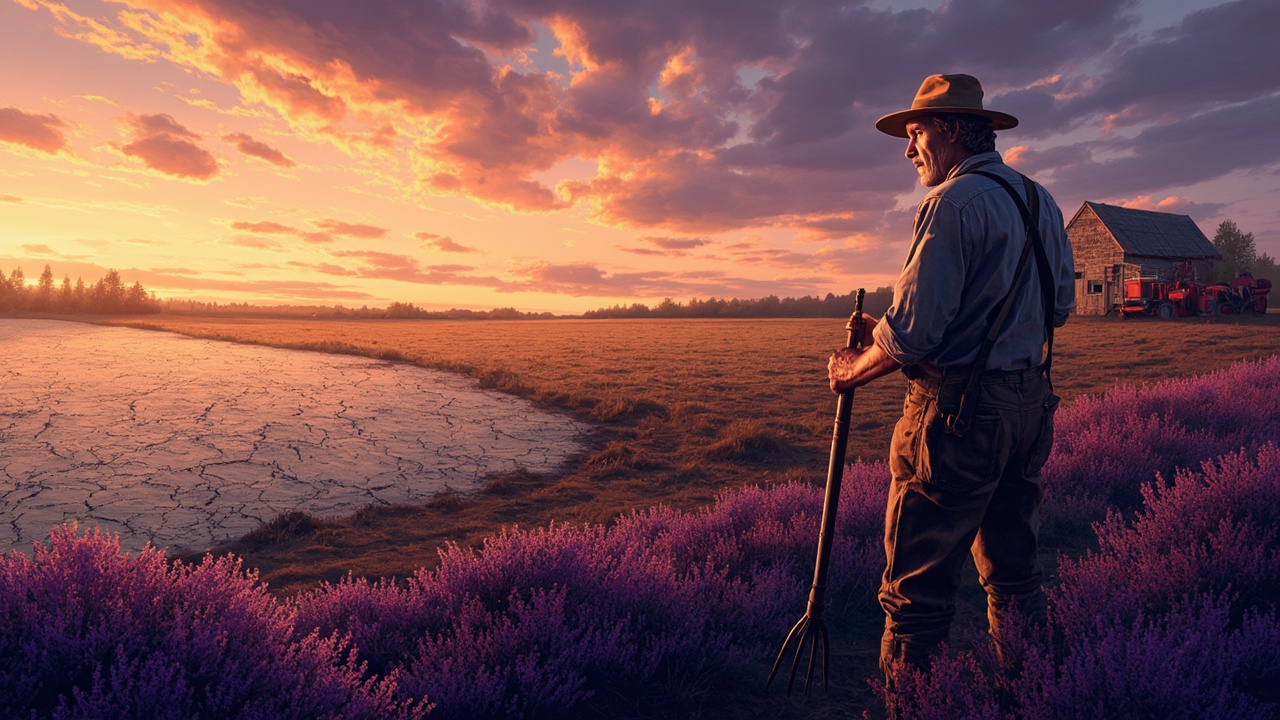
كان الثرى قد صار عنيداً منذ جفت الإعانات. عرف توماس مارش هذه الحقيقة كما عرف تقاسيم يديه—بشكل حميمي، دون عاطفة. كانت تلال الطباشير فوق ويلوبروك قد شحبت وأجهدت، وتربتها مُستنزفة بسبب عقود من الزراعة المكثفة، ولم يكن ثمة قدر من التدخل الصناعي يفلح في إعادة الحيوية إليها. في الثالثة والخمسين من عمره، وجد نفسه يرعى ثلاثمائة فدان من عائدات متناقصة، يشهد جيرانه يبيعون أراضيهم للمطورين أو يرتدون إلى اليأس. حانة القرية أُغلقت الشتاء الماضي. تلاها المدرسة في الربيع.
Britain ما بعد الخروج من الاتحاد الأوروبي وعدت بالتجديد. لكنه Deliver بدلا من ذلك نقصا في العمالة ترك المحاصيل تتعفن في الحقول، وحواجز تجارية ضغطت على الهوامش حتى أصبح المزارعون من أمثال توماس يعملون بخسارة. كان قد صوت لصالح الخروج، مصدقا الوعود الخطابية للسيادة والفرصة، لكن بعد أربع سنوات، تصطدم المفهوم الرومانسي للاستقلال بالواقع القاسي لقوى السوق. كانت زوجته إلينور قد تولت منصبا تمريضيا في بريستول لإبقاء المزرعة صافية. ابنتهم صوفي كانت تدرس في إدنبرة وتتحدث عن الريف باعتباره معرضا متحفا—شيئا تزوره، تصوره، ثم تتركه خلفها.
كانت إلينور هي من أرسلت له المقال. الزراعة التجديدية: عودة إلى الزراعة المتنوعة، محاصيل الغطاء، الحراثة الدنيا. أنظمة تعمل مع العمليات الطبيعية بدلا من противоречіها. قرأه توماس مرتين، ثم ثلاث مرات، وسخرية كانت تتنحى تدريجيا أمام الفضول. تحدث علماء التربة عن الشبكات الفطرية، عن احتجاز الكربون، عن حقول يمكن أن تصبح صافية الإيجابية بدلا من المنهكة باستمرار. بدا الأمر كم الأمنية، ذلك النوع من الهراء الأكاديمي الذي ينهار أمام طقس واقتصاد الزراعة الفعلية.
لكن البديل كان الاستسلام. ولم يكن توماس مارش قد نجا كل هذه المدة بالاستسلام.
بدأ بفدان واحد خلف الحظيرة القديمة—قطعة أرض مُنهكة لدرجة أنه لم ينمُ فيها شيء بشكل جيد منذ خمسة عشر عامًا. غرس محصول غطاء من الفاسيليا وبرسيم أحمر، ترك الجذور تعمل دون اضطراب، شاهد الأرض تتدكن وتطرى تحت المظلة الواقية. ظن الجيران أنه مجنون. فرانك هينشو، الذي كانت عائلته تزرع الأرض المجاورة لأربعة أجيال، أوقف جراره ذات ظهيرة ونادى عبر السياج: "ستزرع الأعشاب الضارة والتشاؤم يا توم." ابتسم توماس ولم يقل شيئا. لم يكن هناك نقطة في الجدال مع رجال قرروا بالفعل.
بحلول الربيع الثاني، كان الفدان قد تحول. استعمرت ديدان الأرض التربة بأعداد لم يشهدها توماس منذ زمن جده. تحسنت البنية، زادت قدرة الاحتفاظ بالماء، ونمت النباتات بvigor يتحدى خبرته. وسع التجربة إلى عشرين فدانا، ثم خمسين، مع دمج تناوب المواشي والزراعة المرافقة. قلّت المدخلات الكيميائية إلى جزء يسير من سابقها. انخفضت التكاليف. تنفست التربة.
كان ذلك أثناء الحفر قرب الجدار الحجري القديم الذي كان يحدد الحد الشرقي للمزرعة—حد قديم يسبق التسييج، يسبق السجلات المكتوبة—أن توماس اصطدم بشيء غير متوقع. ارتطمت الإزميل بالمعدن. جثا على ركبتيه في التراب الرطب ونحى بعيدا عقودًا من المادة المتراكمة، كاشفا عن إناء صغير من الطين، مختوم بالقار، لا يزيد حجمه عن قبضته. كانت الصنعة بدائية لكن مقصودة. بداخله، ملفوف في قماش تفكك منذ زمن طويل، وجد سبع بذور. كانت داكنة ومجعدة، لا تشبه أي شيء يعرفه.
وضعها في صينية إنبات بيدين مرتجفتين. بدت احتمالية الحياة بعد أي عدد من القرون ضئيلة. لكن بعد ثلاثة أيام، كانت جميع البذور السبع قد可愛.
ثانياً
نمت النباتات بسرعة خارقة. في غضون أسابيع، صارت أطول من توماس، بأوراق عريضة وخضراء داكنة، وأنظمة جذرية تنحدر أمتارا في التربة المُهيأة. لم تكن تحتاج إلى سقاية إضافية، ولا تسميد، ولا حماية من الآفات—التي بدت غريبة عنه بشكل ما. عندما حصد توماس أخيرا في أواخر أكتوبر، فاق المحصول كل ما سجله في ثلاثين سنة من الزراعة التقليدية.
كان الحب طعميا ولذيذا، على غير القمح أو الشعير، أقرب ربما إلى الإيرن القديم أو الزُؤان لكن بخصائص خاصة به entirely. خبز رغيفا وأكله وحيدا على طاولة المطبخ، يشاهد آخر ضوء يخبو فوق التلال. كان الطعم استثنائيا— earthly, sweet, sustaining. شعر بآثاره لأيام بعدها: طاقة معززة، صفاء ذهني، إحساس بالرفاهية العميقة الذي لم يستطع إلا أن يعزوه إلى الكثافة الغذائية الملحوظة لما زرعه.
زرع المزيد في الموسم التالي، بحفظ البذور بعناية، موسعا بحذر. انتشرت الكلمة عبر communauté الزراعية المحطمة—توماس مارش ينتج شيئاmiraculous من أرض منهكة. وصل أكاديميون من الجامعة لأخذ عينات. تبعهم صحفيون. عرضت عليه شركة بذور مبلغا ضخما للحصول على حقوق حصرية، فرفضه. قام الباحثون تأريخ الإناء إلى حوالي 1200 سنة، ما قبل احتلال السكسون للمنطقة، ربما أقدم. كانت البذور قد حُفظت عمدا، دُفنت ربما خلال some نسي forgotten crisis، منتظرة условиا قد تسمح في يوم من الأيام بإحيائها.
فهم توماس، بالطريقة التي يفهم بها أهل الريف الأرض، أنه قد أُوكل إليه شيء ثمين. مثلت هذه البذور نسبا unbroken منذ قبل الذاكرة المسجلة، تراثا جينيا نجا من الأوبئة والغزوات والتقلبات المناخية قرونا من الاضطراب الزراعي. لم تكن مجرد محصول بل عهد—اتفاقا بين البشر والأرض يسبق التصنيع والمبيدات الحشرية وسلاسل التوريد العالمية.
جاء الحصاد في منتصف الليل ذلك الخريف، cuando بلغت luna ذروتها وألقت ضوءها الفضي عبر الحقول. عمل توماس وحده، كما عمل جده، كما عملت أجيال من المزارعين في الساعات الصغيرة من الصباح.
لكن هذه البذور لم تكن مجرد بقاء. كانت resurrection.
في صباح اليوم التالي للحصاد، استيقظ توماس على صوت غير مألوف—طنين منخفض coming from the old barn. بحث حتى وجده مصدره: صوامع صغيرة كانت تستخدم لتخزين الحبوب، لكن الآن كانت تهتز بحركة داخلية. فتح أحد الأبواب ووجد البذور المتبقية تتوهج بنور خافت ذهبي. في الصباح التالي، بدأت البراعم تظهر في الحقول التي حصدها—محصول يفترض أنه انتهى.
عرف توماس أن لا أحد سيصدق هذه القصة. لكن الأرض عرفت، والأجيال القادمة ستعرف، ما الذي يكنزه هذا الإرث.
Der Boden war stur geworden, seit die Subventionen versiegten. Thomas Marsh wusste das so gut, wie er die Konturen seiner eigenen Hände kannte — intim, ohne Sentimentalität. Die kreidehaltigen Hügel über Willowbrook waren blass und erschöpft geworden, ihr Boden durch Jahrzehnte intensiver Bewirtschaftung ausgelaugt, und keine Menge synthetischer Eingriffe schien Vitalität in sie zurückzubringen zu können. Mit dreiundfünfzig Jahren fand er sich dabei, dreihundert Morgen schwindender Erträge zu bewirtschaften, während er zusehen musste, wie Nachbarn ihr Land an Entwickler verkauften oder in Verzweiflung versanken. Die Dorfkneipe hatte letzten Winter geschlossen. Die Schule folgte im Frühling.
Das post-Brexit-Britannien hatte Erneuerung versprochen. Stattdessen lieferte es einen Arbeitskräftemangel, der dazu führte, dass Ernten auf den Feldern verrotteten, und Handelsbarrieren, die die Margen so lange zusammendrückten, bis Bauern wie Thomas mit Verlust arbeiteten. Er hatte für den Austritt gestimmt, in dem Glauben an die rhetorischen Versprechen von Souveränität und Chancen, aber vier Jahre später war die romantische Vorstellung von Unabhängigkeit mit der nüchternen Realität der Marktkräfte kollidiert. Seine Frau Eleanor hatte eine Pflegestelle in Bristol angenommen, um den Hof liquide zu halten. Ihre Tochter Sophie studierte in Edinburgh und sprach vom Landleben wie von einem Museumsausstellungsstück — etwas zum Besuchen, Fotografieren und Zurücklassen.
Es war Eleanor, die ihm den Artikel schickte. Regenerative Landwirtschaft: eine Rückkehr zur Mischkultur, zu Deckfrüchten, zur Minimalbearbeitung. Systeme, die mit natürlichen Prozessen arbeiteten statt gegen sie. Thomas las ihn zweimal, dann dreimal, während seine Skepsis allmählich der Neugier wich. Die Bodenkundler sprachen von mykorrhizalischen Netzwerken, von Kohlenstoffbindung, von Feldern, die netto-positiv werden konnten statt perpetuell erschöpft zu bleiben. Es klang nach frommen Wünschen, nach akademischem Unsinn, der am Wetter und der Ökonomie echter Landwirtschaft zerbrach.
Aber die Alternative war Kapitulation. Und Thomas Marsh hatte nicht so lange überlebt, indem er kapitulierte.
Er begann mit einem einzigen Morgen hinter der alten Scheune — einem Stück Land so erschöpft, dass dort seit fünfzehn Jahren nichts Vernünftiges gewachsen war. Er pflanzte eine Deckfrucht aus Phazelia und Inkarnatklee, ließ die Wurzeln ungestört arbeiten, beobachtete, wie die Erde unter dem schützenden Baldachin dunkler und weicher wurde. Die Nachbarn hielten ihn für verrückt. Frank Henshaw, dessen Familie seit vier Generationen das angrenzende Land bewirtschaftete, hielt eines Nachmittags seinen Traktor an und rief über die Hecke: «Du wirst Unkraut und Selbstmitleid anbauen, Tom.» Thomas lächelte und sagte nichts. Es hatte keinen Sinn, mit Männern zu streiten, die bereits entschieden hatten.
Bis zum zweiten Frühling hatte sich der Morgen verwandelt. Regenwürmer besiedelten den Boden in Zahlen, die Thomas seit der Zeit seines Großvaters nicht mehr gesehen hatte. Die Struktur verbesserte sich, die Wasserspeicherfähigkeit nahm zu, und die Pflanzen wuchsen mit einer Vitalität, die seine Erfahrung Lügen strafte. Er erweiterte das Experiment auf zwanzig Morgen, dann fünfzig, integrierte Viehrotation und Begleitpflanzung. Die chemischen Inputs schrumpften auf einen Bruchteil ihrer ehemaligen Menge. Die Kosten sanken. Der Boden atmete.
Es war beim Graben in der Nähe der alten Steinmauer, die die östliche Grenze des Gehöfts markierte — eine alte Grenze, älter als die Einhegungen, älter als schriftliche Aufzeichnungen — als Thomas auf etwas Unerwartetes stieß. Die Kelle schlug gegen Metall. Er kniete im feuchten Boden und fegte Jahrzehnte angesammelter Materie beiseite, enthüllte ein kleines Tongefäß, mit Pech versiegelt, nicht größer als seine Faust. Die Handwerkskunst war primitiv, aber absichtsvoll. Darin, in Tuch gewickelt, das längst zu Staub zerfallen war, fand er sieben Samen. Sie waren dunkel und runzelig, glichen nichts, das er erkannte.
Er legte sie mit zitternden Händen in eine Keimschale. Die Wahrscheinlichkeit der Lebensfähigkeit nach, nun ja, Jahrhunderten schien gering. Aber drei Tage später waren alle sieben gekeimt.
II
Die Pflanzen wuchsen mit übernatürlicher Geschwindigkeit. Innerhalb weniger Wochen überragten sie Thomas, ihre Blätter breit und tiefgrün, ihre Wurzelwerke sanken Meter tiefer in den vorbereiteten Boden. Sie brauchten keine zusätzliche Bewässerung, keine Düngung, keinen Schutz vor Schädlingen — die merkwürdig desinteressiert zu sein schienen. Als Thomas schließlich im späten Oktober erntete, übertraf der Ertrag alles, was er in dreißig Jahren konventioneller Bewirtschaftung verzeichnet hatte.
Das Korn war nussig und schmackhaft, anders als Weizen oder Gerste, vielleicht näher an antikem Emmer oder Einkorn, aber mit völlig eigenen Charakteristika. Er backte einen Laib und aß ihn allein am Küchentisch, während er zusah, wie das letzte Licht über den Downs verblasste. Der Geschmack war außergewöhnlich — erdig, süß, nährend. Er fühlte seine Wirkung noch Tage danach: gesteigerte Energie, mentale Klarheit, ein Gefühl tiefen Wohlbefindens, das er nur der bemerkenswerten Nährstoffdichte des Geernteten zuschreiben konnte.
Er pflanzte mehr in der folgenden Saison, sparte sorgfältig Samen, dehnte vorsichtig aus. Die Nachricht verbreitete sich durch die zerschlagene Landwirtschaftsgemeinschaft — Thomas Marsh produzierte etwas Mirakulöses aus erschöpftem Land. Akademiker von der Universität kamen, um Proben zu nehmen. Journalisten folgten. Eine Saatgutfirma bot ihm eine beträchtliche Summe für exklusive Rechte, die er ablehnte. Die Forscher datierten sein Gefäß auf ungefähr 1200 Jahre, vor die sächsische Besiedlung der Region, vielleicht älter. Die Samen waren absichtlich erhalten worden, vielleicht versteckt während einer vergessenen Krise, warteten auf Bedingungen, die eines Tages ihre Auferstehung ermöglichen könnten.
Thomas verstand, auf die Art, wie Landbewohner die Erde verstehen, dass ihm etwas Kostbares anvertraut worden war. Diese Samen repräsentierten eine Linie, die seit vor dem schriftlichen Gedächtnis ungebrochen war, ein genetisches Erbe, das Epidemien, Invasionen, Klimaverschiebungen und Jahrhunderte landwirtschaftlicher Umwälzungen überlebt hatte. Sie waren nicht nur eine Ernte, sondern ein Bund — ein Übereinkommen zwischen Mensch und Erde, das Industrialisierung, Pestizide und globale Lieferketten vorausging.
Die Ernte kam um Mitternacht jenes Herbstes, als der Mond seinen Zenit erreichte und silbernes Licht über die Felder warf. Thomas arbeitete allein, wie sein Großvater gearbeitet hatte, wie Generationen von Bauern in den frühen Morgenstunden gearbeitet hatten.
La terre était devenue têtue depuis que les subventions s'étaient taries. Thomas Marsh le savait comme il connaissait les contours de ses propres mains — intimement, sans sentimentalisme. Les Downs crayeux au-dessus de Willowbrook étaient devenus pâles et épuisés, leur sol lessivé par des décennies de culture intensive, et aucune intervention synthétique ne semblait réussir à y ramener la vitalité. À cinquante-trois ans, il se retrouvait à entretenir trois cents acres de rendements décroissants, regardant ses voisins vendre leurs terres aux promoteurs ou sombrer dans le désespoir. Le pub du village avait fermé l'hiver dernier. L'école avait suivi au printemps.
La Grande-Bretagne post-Brexit avait promis un renouveau. Elle avait livré à la place une pénurie de main-d'œuvre qui laissait les récoltes pourrir dans les champs, et des barrières commerciales qui comprimaient les marges jusqu'à ce que des fermiers comme Thomas travaillent à perte. Il avait vot خروج، persuadé par les promesses rhétoriques de souveraineté et d'opportunité, mais quatre ans plus tard, la notion romantique d'indépendance s'était heurtée à la réalité contraignante des forces du marché. Sa femme, Eleanor, avait pris un poste d'infirmière à Bristol pour maintenir la ferme solvable. Leur fille, Sophie, étudiait à Édimbourg et parlait de la campagne comme d'une exposition de musée — quelque chose à visiter, photographier, puis laisser derrière soi.
C'était Eleanor qui lui avait envoyé l'article. L'agriculture régénératrice : un retour à la polyculture, aux cultures de couverture, au travail minimal du sol. Des systèmes qui travaillaient avec les processus naturels plutôt que contre eux. Thomas l'avait lu deux fois, puis trois fois, son scepticisme cédant progressivement la place à la curiosité. Les scientifiques du sol parlaient de réseaux mycorhiziens, de séquestration du carbone, de champs qui pouvaient devenir nets positifs plutôt que perpétuellement appauvris. Cela ressemblait à des vœux pieux, le genre de nonsens académique qui s'effondrait face à la météo et à l'économie de l'agriculture réelle.
Mais l'alternative était la capitulation. Et Thomas Marsh n'avait pas survécu aussi longtemps en capitulant.
Il commença par un seul acre derrière la vieille grange — une parcelle de terre si épuisée que rien n'y avait bien poussé depuis quinze ans. Il planta une culture de couverture de phacélie et trèfle incarnat, laissa les racines travailler sans perturbation, regarda la terre s'assombrir et s'assouplir sous le couvert protecteur. Les voisins le croyaient fou. Frank Henshaw, dont la famille cultivait les terres adjacentes depuis quatre générations, arrêta son tracteur un après-midi et appela par-dessus la haie : « Tu ne feras pousser que des mauvaises herbes et de la pitié de toi-même, Tom. » Thomas sourit et ne dit rien. Il n'y avait pas d'intérêt à argumenter avec des hommes qui avaient déjà décidé.
Au deuxième printemps, l'acre s'était transformé. Les vers de terre avaient colonisé le sol en nombres que Thomas n'avait pas vus depuis l'époque de son grand-père. La structure s'était améliorée, la rétention d'eau avait augmenté, et les plantes poussaient avec une vigueur qui défiait son expérience. Il étendit l'expérience à vingt acres, puis cinquante, incorporant la rotation du bétail et les cultures associées. Les intrants chimiques diminuèrent jusqu'à une fraction de leur utilisation précédente. Les coûts baissèrent. Le sol respirait.
C'est en creusant près de l'ancien mur de pierre qui marquait la limite orientale de la ferme — une vieille limite, antérieure aux enclosures, antérieure aux archives écrites — que Thomas frappa quelque chose d'inattendu. Le transplantoir résonna contre le métal. Il s'agenouilla dans la terre humide et écarta des décennies de matière accumulée, révélant un petit vase d'argile, scellé de poix, pas plus grand que son poing. L'artisanat était grossier mais délibéré. À l'intérieur, enveloppé dans un tissu depuis longtemps désintégré, il trouva sept graines. Elles étaient sombres et ridées, ne ressemblant à rien qu'il reconnaisse.
Il les plaça dans un bac de germination d'une main tremblante. La probabilité de viabilité après quelques siècles semblait négligeable. Mais trois jours plus tard, les sept avaient germé.
II
Les plantes poussèrent à une vitesse surnaturelle. En quelques semaines, elles dépassaient Thomas en hauteur, leurs feuilles larges et d'un vert profond, leurs systèmes racinaires s'enfonçant à plusieurs mètres dans le sol préparé. Elles ne nécessitaient aucun arrosage supplémentaire, aucune fertilisation, aucune protection contre les ravageurs — qui semblaient curieusement désintéressés. Quand Thomas finally harvested à la fin octobre, le rendement dépassait tout ce qu'il avait enregistré en trente ans de culture conventionnelle.
Le grain était noisette et savoureux, contrairement au blé ou à l'orge, plus proche peut-être de l'épeautre ancien ou de l'engrain mais avec des caractéristiques entièrement propres. Il fit cuire un pain et le mangea seul à la table de la cuisine, regardant la dernière lumière s'évanouir sur les Downs. Le goût était extraordinaire — terreux, sucré, nourrissant. Il ressentit ses effets pendant des jours après : énergie accrue, clarté mentale, un sentiment de bien-être profond qu'il ne pouvait attribuer qu'à la densité nutritionnelle remarquable de ce qu'il avait cultivé.
Il planta davantage la saison suivante, sauvegardant soigneusement les graines, s'étendant avec prudence. La nouvelle se répandit à travers la communauté agricole dévastée — Thomas Marsh produisait quelque chose de miraculeux à partir de terre épuisée. Des universitaires de l'université arrivèrent pour prélever des échantillons. Des journalistes suivirent. Une entreprise de semences lui offrit une somme substantielle pour les droits exclusifs, qu'il refusa. Les chercheurs datèrent son vase d'environ 1200 ans, antérieur à l'occupation saxonne de la région, peut-être plus ancien. Les graines avaient été délibérément préservées, cachées peut-être lors d'une crise oubliée, attendant des conditions qui pourraient un jour permettre leur résurrection.
Thomas comprit, à la manière dont les gens de la campagne comprennent la terre, qu'on lui avait confié quelque chose de précieux. Ces graines représentaient une lignée ininterrompue depuis avant la mémoire enregistrée, un héritage génétique qui avait survécu aux pandémies, aux invasions, aux changements climatiques et aux siècles de bouleversement agricole. Ce n'était pas simplement une récolte mais une alliance — un pacte entre les êtres humains et la terre qui précédait l'industrialisation, les pesticides et les chaînes d'approvisionnement mondiales.
La récolte arriva à minuit cet automne-là, alors que la lune atteignait son zénith et projetait une lumière argentée à travers les champs. Thomas travaillait seul, comme son grand-père avait travaillé, comme des générations de fermiers avaient travaillé dans les petites heures du matin.
Земля стала упрямой с тех пор, как иссякли дотации. Томас Марш знал это так же хорошо, как знал очертания собственных рук — интимно, без сентиментальности. Меловые холмы над Уиллоуbrook побледнели и выдохлись, их почва истощена десятилетиями интенсивного земледелия, и никакое количество синтетического вмешательства не могло вернуть им жизненную силу. В пятьдесят три года он обнаружил себя ухаживающим за тремястами акрами сокращающихся урожаев, наблюдая, как соседи продают свои земли застройщикам или погружаются в отчаяние. Сельский паб закрылся прошлой зимой. Школа последовала за ним весной.
Пост-Brexитская Британия обещала обновление. Вместо этого она породила нехватку рабочей силы, из-за которой урожаи гнили в полях, и торговые барьеры, которые сжимали маржи до тех пор, пока фермеры вроде Томаса не стали работать в убыток. Он голосовал за выход, веря риторическим обещаниям суверенитета и возможностей, но четыре года спустя романтическая идея независимости столкнулась с суровой реальностью рыночных сил. Его жена Элеонора заняла медсестринскую должность в Бристоле, чтобы сохранить ферму на плаву. Их дочь Софи училась в Эдинбурге и говорила о деревне как о музейном экспонате — о том, что можно посетить, сфотографировать и оставить позади.
Именно Элеонора прислала ему статью. Регенеративное сельское хозяйство: возвращение к поликультуре, почвопокровным культурам, минимальной обработке почвы. Системы, работающие с естественными процессами, а не против них. Томас прочитал ее дважды, затем трижды, и его скептицизм постепенно уступал любопытству. Ученые-почвоведы говорили о микоризных сетях, о секвестрации углерода, о полях, которые могут стать чистым положительным результатом, а не постоянно истощаться. Это звучало как несбыточные мечты, тот род академической чуши, которая рассыпается перед погодой и экономикой реального фермерства.
Но альтернативой был отказ. А Томас Марш не выживал так долго, сдаваясь.
Он начал с одного акра за старым сараем — участка земли настолько истощенного, что ничего толком там не росло пятнадцать лет. Он посадил почвопокровную культуру из фацелии и красного клевера, позволил корням работать без помех, наблюдал, как земля темнеет и размягчается под защитным пологом. Соседи думали, что он сошел с ума. Фрэнк Хеншо, чья семья возделывала соседнюю землю в течение четырех поколений, остановил свой трактор однажды днем и крикнул через живую изгородь: «Ты вырастишь только сорняки и самосожаление, Том». Томас улыбнулся и ничего не сказал. Не было смысла спорить с людьми, которые уже все решили.
Ко второй весне акр преобразился. Дождевые черви колонизировали почву в количествах, которых Томас не видел со времен своего деда. Структура улучшилась, повысилась влагоудерживающая способность, и растения росли с энергией, бросающей вызов его опыту. Он расширил эксперимент до двадцати акров, затем до пятидесяти, включив ротацию скота и совмещенные посадки. Химические добавки сократились до малой доли прежнего объема. Издержки снизились. Почва дышала.
Именно во время копки у древней каменной стены, отмечавшей восточную границу фермы — старой границы, старше огораживания, старше письменных записей — Томас наткнулся на нечто неожиданное. Зубило звякнуло о металл. Он опустился на колени во влажную землю и отгреб десятилетия накопившегося вещества, обнажив небольшой глиняный сосуд, запечатанный смолой, не larger than his fist. Мастерство было грубым, но намеренным. Внутри, завернутые в ткань, давно уже истлевшую, он нашел семь семян. Они были темные и сморщенные, ни на что знакомое не походили.
Он положил их в поддон для проращивания дрожащими руками. Вероятность жизнеспособности после, вероятно, нескольких столетий казалась ничтожной. Но через три дня все семь проросли.
II
Растения росли со сверхъестественной скоростью. За считанные недели они стали выше Томаса, с широкими листьями глубокого зеленого цвета, их корневые системы уходили на метры в подготовленную почву. Им не требовался дополнительный полив, никакие удобрения, никакая защита от вредителей — которые странно не проявляли к ним интереса. Когда Томас наконец собрал урожай в конце октября, урожайность превысила все, что он зафиксировал за тридцать лет традиционного земледелия.
Зерно было ореховым и ароматным, не похожим на пшеницу или ячмень, ближе, возможно, к древней полбе или однозернянке, но с совершенно собственными характеристиками. Он испек каравай и съел его в одиночестве за кухонным столом, наблюдая, как последний свет угасает над холмами. Вкус был необыкновенным — землистый, сладкий, питательный. Он ощущал его действие днями позже: прилив энергии, ясность ума, чувство глубокого благополучия, которое мог приписать только замечательной питательной плотности того, что вырастил.
Он посадил больше в следующем сезоне, тщательно сохраняя семена, осторожно расширяясь. Слух разнесся по разрушенному фермерскому сообществу — Томас Марш производит нечто чудесное из истощенной земли. Ученые из университета прибыли взять пробы. За ними последовали журналисты. Семенная компания предложила ему значительную сумму за эксклюзивные права, которую он отклонил. Исследователи датировали его сосуд приблизительно 1200 годами, до саксонского заселения региона, возможно, еще старше. Семена были намеренно сохранены, спрятаны, возможно, во время какого-то забытого кризиса, ожидая условий, которые когда-нибудь позволят их воскрешение.
Томас понимал, тем особым пониманием, каким люди земли понимают землю, что ему доверили нечто драгоценное. Эти семена представляли линию, не прерывавшуюся с тех пор, как существует письменная память, генетическое наследие, пережившее эпидемии, нашествия, климатические сдвиги и века agricultural потрясений. Это был не просто урожай, но завет — соглашение между человечеством и землей, предшествовавшее индустриализации, пестицидам и глобальным цепочкам поставок.
Урожай пришел в полночь той осенью, когда луна достигла зенита и залила серебристым светом поля. Томас работал один, как работал его дед, как работали поколения фермеров в ранние утренние часы.