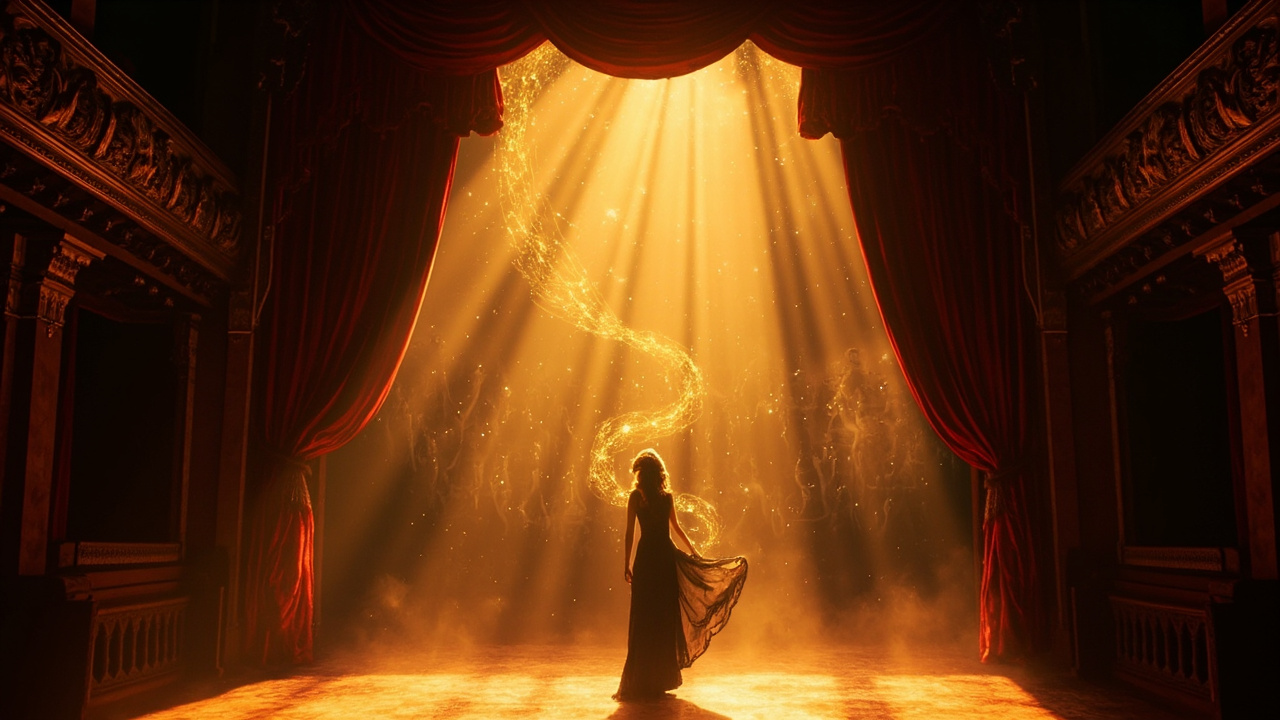
خيط أورفيوس
جاءت النغمات الأولى إليها في الساعات الرمادية قبل الفجر، كما كانت دائمًا—خيوط من اللحن تنبثق من أعماق لا تُقاس، كأن الأساطير القديمة نفسها تطالب بأن تُسمع من خلال صوت معاصر. أمضت إيلارا فوس ثلاث سنوات في العمل على "النزول"، تحفتها الكبرى، حاكةً أسطورة أورفيوس عبر اثنتي عشرة نغمة من الملمس الإلكتروني وإنسانية كورال حي. لم تكن قد ألفت فحسب؛ بل كانت تحفر.
الآن كانت تقف في أجنحة مسرح أولديتش، تتابع آخر بروفة كاملة ويدها مضغوطة على عظم صدرها، تشعر بأن نبضها يتزامن مع الإيقاع. كان الإنتاج مذهلاً—لقد فهم المخرج ماركوس تشن غريزيًا ما كانت ترسمه دائمًا في ذهنها: تأمل في الحزن والحب واستحالة العودة، مُقدَّمًا بالضوء والصوت والصوت البشريجردًا من التكلف.
ثم، قبل ثلاثة أيام من العرض الأول، فتحت حاسوبها المحمول لتفحص بريدها الإلكتروني فوجدت رابطًا لمراجعة.
كانت من صحيفة "الغارديان".
"انتصار للأوبرا الحديثة: عرض أوبرا ''الحب والموت'' بقيادة المايسترو أندريه بومون للعرض الأول يحظى بوقوف الجمهور احترامًا."
قرأت إيلارا المقال مرة، ثم مرة أخرى، ثم ثالثة بينما كانت الكلمات تعيد ترتيب نفسها في نمط لم تستطع فهمه. بومون—القيادي الذي كان قد أرسل لها مرة ملاحظة بخط يده يمدح عملها السابق، والذي ألقى خطبًا في المؤتمرات عن أهمية دعم المؤلفين الصاعدين—كان يستعد لعرض أوبراه الخاصة. أوبرا تحمل توقيع عملها الذي لا يُخطأ: نمط النغمة الكاملة المنخفضة الذي أسمته "الخيط"، الطريقة التي نَسَجَت بها قيثارة أورفيوس عبر عالم الصوت الإلكتروني، وهيكل الفصل الثالث بصمته المدمرة قبل الكورال الختامي.
لم يكن قد تأثر فحسب. بل كان قد أخذ.
المعركة القانونية التي تلت كانت سريعة وقاسية، جرت بلغة العقود وقانون حقوق النشر، والطوابع الزمنية وتوقيعات المخطوطات. عرضت المحامية جوديث ثورنتون، المرأة القوية، الأدلة بجراحة دقيقة: مسودات مخزنة على خوادم محمية بكلمة مرور، مراسلات مع كاتب النص، تسجيلات للتمرينات المبكرة مع طوابع زمنية تسبق التأليف المزعوم لبومون ثمانية عشر شهرًا. لم تكن التشابهات الموسيقية متشابهات دقيقة؛ بل كانت، كما سيشهد خبير واحد لاحقًا، "العظام المعمارية للعمل نفسه، المنقولة بالكامل."
لكن قاعة المحكمة لم تكن ساحة معركة واحدة فقط. كانت الأخرى تُخاض في صفحات الصحف، في المقابلات والمقالات ذات الآراء، في التضاريس الخادعة للرأي العام. بومون، الوسيم ذو اللسان الفضي، بكى على التلفزيون. تحدث عن الإبداع المتوازي، عن الروح الزمنية، عن كيف أن موضوعات الأساطير اليونانية تنتمي للجميع. اتهم إيلارا بالغرور—بالإيمان بأنها الوحيدة التي تستطيع أن تسمع ما تحاول الأساطير قوله.
الوسط الموسيقي، تلك الشبكة القديمة للأولاد التي تنقلت بينها إيلارا بحذر متكلف، وقفت إلى حد كبير مع بومون. بعد كل شيء، كان راسخًا، متصلاً،fixture من عروض البرومز وقاعات الحفلات الموسيقية في أوروبا. كانت هي موهوبة لكن صعبة، امرأة في مجال لا يزال يقدم فروض الاحترام لفكرة العبقرية بينما يوبخ بصمت أولئك الذين لا يعتذرون عن أنفسهم. همس البعض بأن ربما كانت قد امتصت下意识ًا أعمال بومون السابقة الأقل أهمية، بأن التشابه كان مصادفة بدلاً من سرقة.
كان ماركوس تشن من وجد القطعة الأخيرة من الأدلة. كان قد كان يبحث بصمت بين البرامج القديمة والمراجعات عندما اكتشفها: حفل قبل خمس سنوات-dirige فيه بومون فرقة صغيرة في أداء لبيريو. كانت إيلارا قد حضرت ذلك الحفل. تحدثا بإيجاز في الاستقبال بعده. و اتضح أن بومون كان في الجمهور مرة أخرى في أداء تجريبي لأوبرا إيلارا السابقة—"حديقة الطرق المتشعبة"—حيث كانت قد أجرت تجاربها الأولى على نمط النغمة الكاملة المنخفضة الذي سيصبح خيط أورفيوس.
كان قد سمعه. كان قد أخذه.
كان التسوية سريًا، لكن النتيجة لم تكن كذلك. سُحبت أوبرا بومون، وأُلغيت جولته الدولية المخططة. استقال من مناصبه كقيادي. سيقوم لاحقًا بنشر مذكرات أعاد فيها تشكيل نفسه كراوية تحذيرية عن الغيرة الفنية وثقافة الإلغاء، سردية وجدت إيلارا أنها جريئة جدًا في خدمة الذات لدرجة أنها لم تستطع إلا أن تضحك—ثم، بشكل غير متوقع، تشعر بشيء مثل الشفقة.
لكن الانتصار، إن كان يمكن تسميته كذلك، كان أجوف. استمر العرض الأول لـ"النزول" وحصل على مراجعات استثنائية، لكن إيلارا وجدت أنها لم تعد تستطيع أن تستمع إليه دون أن تسمع شبح ما كان يمكن أن يكون. الموسيقى التي جاءت إليها في تلك الساعات الرمادية قبل الفجر الآن تحمل عيبًا لا تستطيع تسميته، تذكيرًا بأن الإبداع ليس فعلاً نقيًا، وأن حتى أكثر الأصوات أصالة موجودة في حوار مع كل ما سبق—وكل ما يمكن سرقته.
عامًا لاحقًا، تلقت رسالة. لا عنوان إرجاع، لا توقيع. في الداخل كانت جملة واحدة، مكتوبة بخط اليد على ورق كريمي: ربما سمعنا معًا الخيط، ولا منا عرف من أين جاء.
وقفت إيلارا عند نافذتها وقتًا طويلاً بعد قراءتها، تراقب ضوء الخريف يتناقص ويتشتت عبر الأسطح. فكرت في أورفيوس، الذي نظر خلفه عندما لم يكن ينبغي له ذلك، الذي فقد يوريديكي ليس للموت بل لعجزه عن الثقة بأنها لا تزال هناك. فكرت في الأساطير نفسها، تلك القصص القديمة التي لا تنتمي لأحد لأنها تنتمي للجميع، المتوارثة عبر آلاف السنين من إعادة السرد حتى فُقد الخيط الأصلي وما تبقى كان شيئًا جديدًا—شيئًا قديماً وجديدًا تمامًا في آن واحد.
أحرقت الرسالة. لكنها احتفظت بالسؤال.
وفي الموسيقى التي جاءت إليها في تلك الساعات الرمادية قبل الفجر، كان الآن نغمة جديدة—متذبذبة، غير محلولة، عدم توافق يرفض أن يحل. كان صوت عدم اليقين.
كان صوت الاستماع.
\n
Der Faden des Orpheus
Die ersten Noten waren ihr in den grauen Stunden vor der Dämmerung gekommen, wie immer—Melodieketten, die sich aus unergründlichen Tiefen entfalteten, als ob die alten Mythen selbst darauf bestanden, durch eine zeitgenössische Stimme gehört zu werden. Elara Voss hatte drei Jahre an Der Abstieg verbracht, ihrem magnum opus, und die Orpheus-Legende durch zwölf Töne elektronischer Textur und die ungefilterte Menschlichkeit eines Live-Chors gewoben. Sie hatte nicht einfach komponiert; sie hatte ausgegraben.
Nun stand sie in den Kulissen des Aldwych Theatre und sah der letzten Generalprobe zu, eine Hand gegen ihr Brustbein gepresst, spürend, wie ihr eigener Herzschlag sich mit dem Rhythmus synchronisierte. Die Produktion war atemberaubend—Regisseur Marcus Chen hatte instinktiv verstanden, was sie immer visioniert hatte: eine Meditation über Trauer, Liebe und die Unmöglichkeit der Rückkehr, dargestellt in Licht und Klang und der menschlichen Stimme, entkleidet von Künstlichkeit.
Und dann, drei Tage vor der Premiere, öffnete sie ihren Laptop, um ihre E-Mails zu checken, und fand einen Link zu einer Rezension.
Es war von der Guardian.
„Ein Triumph der modernen Oper: Dirigent André Beaumonts L'Amour et la Mort feiert Premiere mit Standing Ovations."
Elara las den Artikel einmal, dann noch einmal, dann ein drittes Mal, während die Worte sich in ein Muster neu anordneten, das sie nicht verstehen konnte. Beaumont—der Dirigent, der ihr einst eine handschriftliche Notiz geschickt hatte, in der er ihr früheres Werk lobte, der auf Konferenzen über die Bedeutung der Unterstützung aufstrebender Komponisten gesprochen hatte—präsentierte seine eigene Oper. Eine Oper, die die unverkennbare Signatur ihres Werkes trug: das absteigende Halbton-Motiv, das sie „den Faden" genannt hatte, die Art und Weise, wie sie Orpheus' Leier durch die elektronische Klanglandschaft gewoben hatte, die Struktur des dritten Akts mit seiner verheerenden Stille vor dem Schlußchor.
Er war nicht einfach beeinfußt worden. Er hatte genommen.
Die darauf folgende rechtliche Auseinandersetzung war schnell und erbarmungslos, geführt in der Sprache von Verträgen und Urheberrecht, von Zeitstempeln und Manuskriptsignaturen. Elaras Anwalt, eine formidable Frau namens Judith Thornton, legte die Beweise mit chirurgischer Präzision dar: Entwürfe auf passwortgeschützten Servern gespeichert, Korrespondenz mit ihrem Librettisten, Aufnahmen von frühen Proben mit Zeitstempeln, die Beaumonts angebliche Komposition um achtzehn Monate vorgriffen. Die musikalischen Parallelen waren keine subtilen Ähnlichkeiten; sie waren, wie ein Sachverständiger später aussagen würde, „die architektonischen Grundpfeiler des Werkes selbst, vollständig übertragen."
Aber der Gerichtssaal war nur ein Schlachtfeld. Das andere wurde in Zeitungsseiten ausgetragen, in Interviews und Meinungsartikeln, im trügerischen Gelände der öffentlichen Meinung. Beaumont, gutaussehend und silberzüngig, weinte im Fernsehen. Er sprach von paralleler Schöpfung, vom Zeitgeist, davon, wie Themen aus der griechischen Mythologie allen gehörten. Er beschuldigte Elara der Arroganz—des Glaubens, dass nur sie hören könnte, was die Mythen zu sagen versuchten.
Das musikalische Establishment, dieses alte Boys' Network, durch das Elara immer mit sorgfältiger Ambivalenz navigiert hatte, stellte sich größtenteils auf Beaumonts Seite. Immerhin war er etabliert, vernetzt, ein fixture der Proms und der Konzerthäuser Europas. Sie war brillant, aber schwierig, eine Frau in einem Bereich, der der Idee des Genies noch immer lip service leistete, während er leise diejenigen verübelte, die sich nicht für sich selbst entschuldigten. Einige flüsterten, dass sie vielleicht unbewusst Beaumonts frühere, mindere Werke aufgenommen hatte, dass die Ähnlichkeit eher zufällig als gestohlen war.
Es war Marcus Chen, der das letzte Beweisstück fand. Er hatte still durch alte Programme und Rezensionen gesucht, als er es entdeckte: ein Konzert fünf Jahre zuvor, bei dem Beaumont ein kleines Ensemble dirigiert hatte, das ein Werk von Berio aufführte. Elara hatte dieses Konzert besucht. Sie hatten kurz im Empfang danach gesprochen. Und Beaumont, wie sich herausstellte, war erneut im Publikum bei einer Workshop-Aufführung von Elaras früherer Oper gewesen—Der Garten der sich verzweigenden Wege—wo sie впервые mit dem absteigenden Halbton-Motiv experimentiert hatte, das zum Faden des Orpheus werden sollte.
Er hatte es gehört. Er hatte es genommen.
Die Einigung war vertraulich, aber das Ergebnis war es nicht. Beaumonts Oper wurde zurückgezogen, seine geplante internationale Tournee abgesagt. Er trat von seinen Dirigentenposten zurück. Später würde er ein Buch veröffentlichen, in dem er sich selbst als abschreckendes Beispiel für künstlerische Eifersucht und Cancel Culture neu erfand, eine Erzählung, die Elara so dreist selbstgefällig fand, dass sie nur lachen konnte—und dann, unerwartet, so etwas wie Mitleid empfand.
Aber der Sieg, wenn man ihn so nennen konnte, war hohl. Die Premiere von Der Abstieg ging mit außergewöhnlichen Kritiken weiter, aber Elara fand, dass sie es nicht mehr hören konnte, ohne das Gespenst von dem zu hören, was hätte sein können. Die Musik, die ihr in jenen grauen Stunden vor der Dämmerung gekommen war, trug jetzt einen Makel, den sie nicht benennen konnte, eine Erinnerung daran, dass Schöpfung keine reine Handlung war, dass selbst die ursprünglichste Stimme im Dialog mit allem stand, was vorausgegangen war—und allem, was ihr gestohlen werden konnte.
Ein Jahr später erhielt sie einen Brief. Keine Rückadresse, keine Unterschrift. Darin war ein einziger Satz, handschriftlich auf cremefarbenem Papier: Vielleicht haben wir beide den Faden gehört, und keiner von uns wusste, woher er kam.
Elara stand noch lange nach dem Lesen an ihrem Fenster und beobachtete, wie das Herbstlicht dünner wurde und sich über die Dächer streute. Sie dachte an Orpheus, der zurückgeblickt hatte, als er es nicht hätte tun sollen, der Eurydike nicht dem Tod verloren hatte, sondern seiner eigenen Unfähigkeit zu vertrauen, dass sie noch da war. Sie dachte an die Mythen selbst, diese alten Geschichten, die niemandem gehörten, weil sie allen gehörten, durch Jahrtausende des Wiedererzählens weitergegeben, bis der ursprüngliche Faden verloren war und was blieb etwas Neues war—etwas zugleich Antikes und völlig Frisches.
Sie verbrannte den Brief. Aber sie behielt die Frage.
Und in der Musik, die ihr in jenen grauen Stunden vor der Dämmerung kam, war jetzt eine neue Note—zögernd, ungelöst, eine Dissonanz, die sich zu lösen weigerte. Es war der Klang der Ungewißheit.
Es war der Klang des Zuhörens.
\n
El Hilo de Orfeo
Las primeras notas le habían llegado en las horas grises antes del amanecer, como siempre—cadenas de melodía desenrollándose desde profundidades insondables, como si los mitos antiguos mismos exigieran ser escuchados a través de una voz contemporánea. Elara Voss había pasado tres años en La Caída, su obra maestra, tejiendo la leyenda de Orfeo a través de doce tonos de textura electrónica y la humanidad cruda de un coro en vivo. No había simplemente compuesto; había excavado.
Ahora estaba en los bastidores del Aldwych Theatre, observando el último ensayo general con una mano presionada contra su esternón, sintiendo su propio latido sincronizarse con la percusión. La producción era impresionante—el director Marcus Chen había entendido instintivamente lo que ella siempre había imaginado: una meditación sobre el duelo, el amor y la imposibilidad del regreso, renderizada en luz y sonido y la voz humana despojada de artificio.
Y entonces, tres días antes del estreno, abrió su portátil para revisar sus correos electrónicos y encontró un enlace a una reseña.
Era del Guardian.
«Un Triunfo de la Ópera Moderna: El Debut de L'Amour et la Mort del Director André Beaumont es Acogido con Ovaciones de Pie.»
Elara leyó el artículo una vez, luego otra, luego una tercera mientras las palabras se reorganizaban en un patrón que no podía comprender. Beaumont—el director que alguna vez le había enviado una nota manuscrita elogiando su trabajo anterior, que había hablado en conferencias sobre la importancia de apoyar a los compositores emergentes—estaba presentando su propia ópera. Una ópera que llevaba la firma inconfundible de su trabajo: el motivo de semitono descendente que ella había llamado «el hilo», la forma en que había tejido la lira de Orfeo a través del paisaje sonoro electrónico, la propia estructura del tercer acto con su silencio devastador antes del coro final.
No había sido simplemente influenciado. Había tomado.
La batalla legal que siguió fue rápida e implacable, conducida en el lenguaje de los contratos y la ley de derechos de autor, de marcas de tiempo y firmas de manuscritos. El abogado de Elara, una formidable mujer llamada Judith Thornton, presentó las pruebas con precisión quirúrgica: borradores almacenados en servidores protegidos por contraseña, correspondencia con su libretista, grabaciones de ensayos tempranos con marcas de tiempo que precedían la supuesta composición de Beaumont por dieciocho meses. Los paralelos musicales no eran sutiles semelhanças; eran, como testificaría más tarde un testigo experto, «los huesos arquitectónicos de la obra misma, trasplantados en su totalidad.»
Pero la sala del tribunal era solo un campo de batalla. El otro se luchaba en las páginas de los periódicos, en entrevistas y artículos de opinión, en el terreno traicionero de la opinión pública. Beaumont, apuesto y elocuente, lloró en televisión. Habló de creación paralela, del zeitgeist, de cómo los temas de la mitología griega pertenecían a todos. Acusó a Elara de arrogancia—de creer que solo ella podía escuchar lo que los mitos intentaban decir.
El establecimiento musical, esa vieja red de muchachos que Elara siempre había navegado con ambivalencia cautelosa, se posicionó en gran parte con Beaumont. Después de todo, él estaba establecido, conectado, un fixture de los Proms y las salas de conciertos de Europa. Ella era brillante pero difícil, una mujer en un campo que aún rendía tributo a la idea del genio mientras secretamente resentía a aquellos que no se disculpaban por sí mismos. Algunos susurraban que quizás ella había inconscientemente absorbido las obras anteriores, menores, de Beaumont, que la semelhança era coincidencia más que robo.
Fue Marcus Chen quien encontró la última pieza de evidencia. Había estado buscando silenciosamente entre viejos programas y reseñas cuando la descubrió: un concierto cinco años antes en el que Beaumont había dirigido un pequeño conjunto en una actuación de Berio. Elara había asistido a ese concierto. Habían hablado brevemente en la recepción después. Y Beaumont, resultaría, había estado en el público nuevamente en una actuación de taller de la ópera anterior de Elara—El Jardín de los Caminos que se Bifurcan—donde ella había experimentado por primera vez con el motivo de semitono descendente que se convertiría en el hilo de Orfeo.
Lo había escuchado. Lo había tomado.
El acuerdo fue confidencial, pero el resultado no lo fue. La ópera de Beaumont fue retirada, su gira internacional planeada cancelada. Renunció a sus puestos de director. Más tarde publicaría unas memorias en las que se retrató como una historia de advertencia sobre los celos artísticos y la cultura de la cancelación, una narrativa que Elara encontró tan descaradamente autoservidora que solo pudo reír—y luego, inesperadamente, sentir algo parecido a la compasión.
Pero la victoria, si podía llamarse así, era hueca. El estreno de La Caída procedió con reseñas extraordinarias, pero Elara descubrió que ya no podía escucharla sin escuchar el fantasma de lo que podría haber sido. La música que le había llegado en esas horas grises antes del amanecer ahora llevaba una mancha que no podía nombrar, un recordatorio de que la creación no era un acto puro, que incluso la voz más original existía en diálogo con todo lo que había venido antes—y todo lo que podría serle robado.
Un año después, recibió una carta. Sin dirección de retorno, sin firma. Dentro había una sola frase, escrita a mano en papel crema: Quizás ambos escuchamos el hilo, y ninguno de nosotros sabía de dónde venía.
Elara permaneció mucho tiempo junto a su ventana después de leerla, observando la luz del otoño adelgazarse y dispersarse sobre los tejados. Pensó en Orfeo, que había mirado hacia atrás cuando no debería haberlo hecho, que había perdido a Eurídice no por la muerte sino por su propia incapacidad de confiar en que ella seguía ahí. Pensó en los mitos mismos, esas viejas historias que no pertenecían a nadie porque pertenecían a todos, transmitidas a través de milenios de reescritura hasta que el hilo original se perdió y lo que quedó fue algo nuevo—algo simultáneamente antiguo y completamente fresco.
Quemó la carta. Pero guardó la pregunta.
Y en la música que le llegaba en esas horas grises antes del amanecer, ahora había una nueva nota—tentativa, sin resolver, una disonancia que se negaba a resolverse. Era el sonido de la incertidumbre.
Era el sonido de escuchar.
\n
Le Fil d'Orphée
Les premières notes lui étaient venues dans les heures grises avant l'aube, comme toujours—des chaînes de mélodie se déployant depuis des profondeurs insondables, comme si les mythes anciens eux-mêmes exigeaient d'être entendus à travers une voix contemporaine. Elara Voss avait passé trois ans sur La Descente, son œuvre magistrale, tissant la légende d'Orphée à travers douze tons de texture électronique et l'humanité brute d'un chœur live. Elle n'avait pas simplement composé ; elle avait excavé.
Maintenant, elle se tenait dans les coulisses du Aldwych Theatre, regardant la dernière répétition générale, une main pressée contre son sternum, sentant son propre battement de cœur se synchroniser avec la percussion. La production était époustouflante—le réalisateur Marcus Chen avait compris instinctivement ce qu'elle avait toujours envisagé : une méditation sur le deuil, l'amour et l'impossibilité du retour, rendue dans la lumière et le son et la voix humaine dépouillée de tout artifice.
Et puis, trois jours avant la première, elle ouvrit son ordinateur portable pour vérifier ses courriels et trouva un lien vers une critique.
C'était du Guardian.
« Un Triomphe de l'Opéra Moderne : La Première de L'Amour et la Mort du Chef André Beaumont Accueille des Ovations Debout. »
Elara lut l'article une fois, puis une deuxième, puis une troisième fois tandis que les mots se réorganisaient en un modèle qu'elle ne pouvait comprendre. Beaumont—le chef qui lui avait autrefois envoyé une note manuscrite louant son travail précédent, qui avait parlé lors de conférences sur l'importance de soutenir les compositeurs émergents—presentait son propre opéra. Un opéra qui portait la signature unmistakable de son œuvre : le motif de la seconde mineure descendante qu'elle avait appelé « le fil », la façon dont elle avait tissé la lyre d'Orphée à travers le paysage sonore électronique, la structure même du troisième acte avec son silence dévastateur avant le chœur final.
Il n'avait pas simplement été influencé. Il avait pris.
La bataille juridique qui suivit fut rapide et impitoyable, menée dans le langage des contrats et du droit d'auteur, des horodatages et des signatures manuscrites. La société d'Elara, une femme redoutable nommée Judith Thornton, présenta les preuves avec une précision chirurgicale : des brouillons stockés sur des serveurs protégés par mot de passe, une correspondance avec son librettiste, des enregistrements de répétitions early avec des horodatages précédant la composition supposée de Beaumont de dix-huit mois. Les parallèles musicaux n'étaient pas de subtiles ressemblances ; ils étaient, comme un témoin expert le déclarerait plus tard, « les os architecturaux de l'œuvre elle-même, transplantés wholesale. »
Mais la salle d'audience n'était qu'un champ de bataille. L'autre se déroulait dans les pages des journaux, dans les interviews et les articles d'opinion, dans le terrain traître de l'opinion publique. Beaumont, beau et éloquent, pleura à la télévision. Il parla de création parallèle, de l'esprit du temps, de comment les thèmes de la mythologie grecque appartenaient à tous. Il accusa Elara d'arrogance—de croire qu'elle seule pouvait entendre ce que les mythes tentaient de dire.
L'établissement musical, ce vieux réseau de garçons qu'Elara avait toujours navigué avec une ambivalence prudente, se rangea largement du côté de Beaumont. Après tout, il était établi, connecté, une figure fixture des Proms et des salles de concert d'Europe. Elle était brillante mais difficile, une femme dans un domaine qui payait encore lip service à l'idée de génie tout en ressenant quietly ceux qui ne s'excusaient pas pour eux-mêmes. Certains murmurèrent que peut-être avait-elle inconsciemment absorbé les œuvres antérieures, moins importantes, de Beaumont, que la ressemblance était coincidence plutôt que volée.
Ce fut Marcus Chen qui trouva la dernière pièce à conviction. Il avait discrètement fouillé dans de vieux programmes et critiques quand il la découvrit : un concert cinq ans plus tôt où Beaumont avait dirigé un petit ensemble dans une performance de Berio. Elara avait assisté à ce concert. Ils avaient brièvement parlé lors de la réception afterwards. Et Beaumont, il s'avérait, avait été dans le public lors d'une performance d'atelier de l'opéra antérieur d'Elara—Le Jardin des Chemins qui se Divisent—où elle avait d'abord expérimenté le motif de la seconde mineure descendante qui deviendrait le fil d'Orphée.
Il l'avait entendu. Il l'avait pris.
Le règlement fut confidentiel, mais l'issue ne le fut pas. L'opéra de Beaumont fut retiré, sa tournée internationale prévue annulée. Il démissionna de ses postes de direction. Il publierait plus tard un mémoire dans lequel il se reframa comme une histoire d'avertissement sur la jalousie artistique et la culture de l'annulation, un récit qu'Elara trouva si effrontément auto-satisfaisant qu'elle ne put qu'en rire—puis, de façon inattendue, ressentir quelque chose comme de la pitié.
Mais la victoire, si l'on pouvait l'appeler ainsi, était creuse. La première de La Descente se poursuivit avec des critiques extraordinaires, mais Elara découvrit qu'elle ne pouvait plus l'écouter sans entendre le fantôme de ce qui aurait pu être. La musique qui lui était venue dans ces heures grises avant l'aube portait maintenant une souillure qu'elle ne pouvait nommer, un rappel que la création n'était pas un acte pur, que même la voix la plus originale existait en dialogue avec tout ce qui avait précédé—et tout ce qui pourrait lui être volé.
Un an plus tard, elle reçut une lettre. Pas d'adresse de retour, pas de signature. À l'intérieur se trouvait une seule phrase, écrite à la main sur du papier crème : Peut-être avons-nous tous deux entendu le fil, et aucun de nous ne savait d'où il venait.
Elara resta longtemps à sa fenêtre après l'avoir lue, regardant la lumière automnale s'amincir et se disperser sur les toits. Elle pensa à Orphée, qui avait regardé en arrière quand il n'aurait pas dû, qui avait perdu Eurydice non pas à cause de la mort mais de sa propre incapacité à faire confiance qu'elle était encore là. Elle pensa aux mythes eux-mêmes, ces vieilles histoires qui n'appartenaient à personne parce qu'elles appartenaient à tout le monde, transmises à travers des millénaires de réécriture jusqu'à ce que le fil original soit perdu et que ce qui restait soit quelque chose de nouveau—quelque chose à la fois ancien et parfaitement frais.
Elle brûla la lettre. Mais elle garda la question.
Et dans la musique qui lui venait dans ces heures grises avant l'aube, il y avait maintenant une nouvelle note—hésitante, non résolue, une dissonance qui refusait de se résoudre. C'était le son de l'incertitude.
C'était le son de l'écoute.
\n
Il Filo di Orfeo
Le prime note le erano giunte nelle ore grigie prima dell'alba, come sempre—catene di melodia che si svolgevano da profondità insondabili, come se i miti antichi stessi esigessero di essere uditi attraverso una voce contemporanea. Elara Voss aveva dedicato tre anni a La Discesa, la sua opera magna, intrecciando la leggenda di Orfeo attraverso dodici toni di texture elettronica e l'umanità cruda di un coro dal vivo. Non aveva semplicemente composto; aveva scavato.
Ora stava in platea del Aldwych Theatre, guardando l'ultima prova generale con una mano premuta contro lo sterno, sentendo il proprio battito cardiaco sincronizzarsi con la percussione. La produzione era mozzafiato—il regista Marcus Chen aveva compreso istintivamente ciò che lei aveva sempre immaginato: una meditazione sul lutto, l'amore e l'impossibilità del ritorno, resa attraverso luce e suono e la voce umana spogliata di artificio.
E poi, tre giorni prima della prima, aprì il laptop per controllare le email e trovò un link a una recensione.
Era del Guardian.
«Un Trionfo dell'Opera Moderna: La Prima de L'Amour et la Mort del Direttore André Beaumont Accolta da Standing Ovations.»
Elara lesse l'articolo una volta, poi ancora, poi una terza volta mentre le parole si riassestavano in un modello che non riusciva a comprendere. Beaumont—il direttore che una volta le aveva mandato una nota a mano elogiando il suo lavoro precedente, che aveva parlato in conferenze sull'importanza di sostenere i compositori emergenti—stava presentando la sua propria opera. Un'opera che recava la firma inconfondibile del suo lavoro: il motivo della semitono discendente che lei aveva chiamato «il filo», il modo in cui aveva intrecciato la lira di Orfeo attraverso il paesaggio sonoro elettronico, la stessa struttura del terzo atto con il suo silenzio devastante prima del coro finale.
Non era stato semplicemente influenzato. Aveva preso.
La battaglia legale che seguì fu rapida e spietata, condotta nel linguaggio dei contratti e del diritto d'autore, dei timestamp e delle firme manoscritte. Il legale di Elara, una formidabile donna di nome Judith Thornton, presentò le prove con precisione chirurgica: bozze archiviate su server protetti da password, corrispondenza con il librettista, registrazioni delle prime prove con timestamp che precedevano la supposta composizione di Beaumont di diciotto mesi. I paralleli musicali non erano sottili somiglianze; erano, come avrebbe testimoniato un perito, «le ossa architettoniche dell'opera stessa, trapiantate interamente.»
Ma l'aula di tribunale era solo un campo di battaglia. L'altro veniva combattuto nelle pagine dei giornali, nelle interviste e nei pezzi d'opinione, nel terreno traditore dell'opinione pubblica. Beaumont, aitante e dalla parlata scaltra, piangeva in televisione. Parlava di creazione parallela, dello zeitgeist, di come i temi della mitologia greca appartenessero a tutti. Accusava Elara di arroganza—di credere che solo lei potesse udire ciò che i miti cercavano di dire.
L'establishment musicale, quella vecchia rete di uomini che Elara aveva sempre navigato con cauta ambivalenza, si schierò in gran parte con Beaumont. Dopotutto, lui era affermato, ben connesso, un fixture dei Proms e delle sale da concerto d'Europa. Lei era brillante ma difficile, una donna in un campo che ancora rendeva omaggio all'idea di genio mentre segretamente risentiva di coloro che non si scusavano per la propria esistenza. Alcuni sussurravano che forse lei aveva inconsciamente assorbito le opere precedenti, minori, di Beaumont, che la somiglianza fosse coincidente piuttosto che rubata.
Fu Marcus Chen a trovare l'ultimo pezzo di prova. Stava cercando silenziosamente tra vecchi programmi e recensioni quando lo scoprì: un concerto cinque anni prima in cui Beaumont aveva diretto un piccolo ensemble in una performance di Berio. Elara aveva partecipato a quel concerto. Avevano parlato brevemente al ricevimento dopo. E Beaumont, risultò, era stato nuovamente nel pubblico a una performance workshop dell'opera precedente di Elara—Il Giardino dei Percorsi che si Divergono—dove lei aveva sperimentato per la prima volta il motivo del semitono discendente che sarebbe diventato il filo di Orfeo.
L'aveva udito. L'aveva preso.
Il compromesso fu confidenziale, ma l'esito non lo fu. L'opera di Beaumont fu ritirata, il suo tour internazionale programmato cancellato. Si dimise dai suoi incarichi direttoriali. In seguito avrebbe pubblicato un memoir in cui si ritrasse come una storia warnitiva sull'invidia artistica e la cultura della cancellazione, una narrazione che Elara trovò così sfacciatamente auto-assolutoria che poté solo ridere—e poi, inaspettatamente, provare qualcosa come pietà.
Ma la vittoria, se così poteva essere chiamata, era vuota. La prima de La Discesa procedette con recensioni straordinarie, ma Elara scoprì che non poteva più ascoltarla senza udire il fantasma di ciò che avrebbe potuto essere. La musica che le era giunta in quelle ore grigie prima dell'alba ora portava una macchia che non riusciva a nominare, un promemoria che la creazione non era un atto puro, che anche la voce più originale esisteva in dialogo con tutto ciò che era venuto prima—e tutto ciò che poteva esserle rubato.
Un anno dopo, ricevette una lettera. Nessun indirizzo di ritorno, nessuna firma. All'interno c'era una singola frase, scritta a mano su carta color crema: Forse entrambi abbiamo udito il filo, e nessuno di noi sapeva da dove venisse.
Elara rimase a lungo alla finestra dopo averla letta, guardando la luce autunnale assottigliarsi e disperdersi sui tetti. Pensò a Orfeo, che aveva guardato indietro quando non avrebbe dovuto, che aveva perso Euridice non alla morte ma alla propria incapacità di fidarsi che lei fosse ancora lì. Pensò ai miti stessi, quelle vecchie storie che non appartenevano a nessuno perché appartenevano a tutti, tramandate attraverso millenni di rinarrazione finché il filo originale non andò perduto e ciò che rimase fu qualcosa di nuovo—qualcosa di antico e completamente fresco allo stesso tempo.
Bruciò la lettera. Ma tenne la domanda.
E nella musica che le giungeva in quelle ore grigie prima dell'alba, c'era ora una nuova nota—esitante, irrisolta, una dissonanza che rifiutava di risolversi. Era il suono dell'incertezza.
Era il suono dell'ascolto.
\n