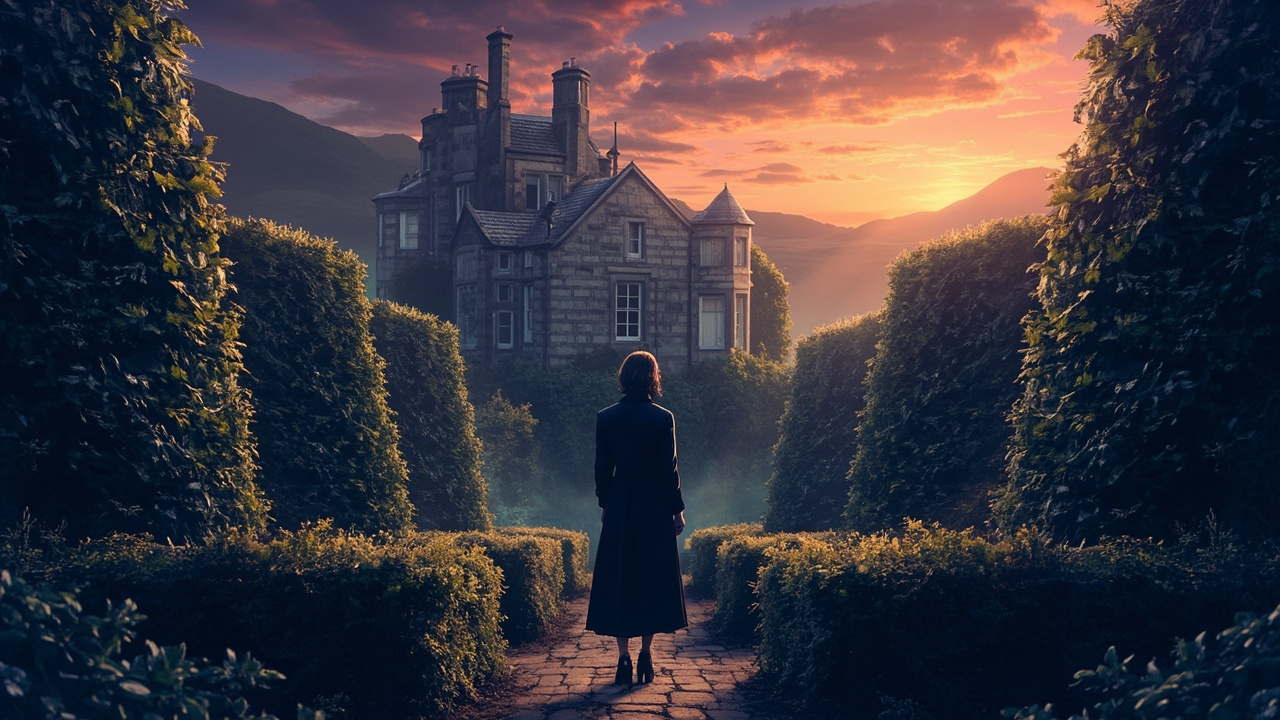
لم تكن الدكتورة إلينور مارش تنوي العودة إلى منزل كاولاس.الرحلة عبر المرتفعات الاسكتلندية—عبر البحيرات التي كانت تحمل في مياهها الرمادية كحديد ذاكرة الشتاء، ومن خلال الممرات حيث كان الريح يتحدث باللغة الغيلية القديمة—أعادت فتح غرز قديمة في ذهنها.كانت قد صنفت ثلاثمائة حديقة في جميع أنحاء أوروبا.ولا واحدة منها امتلكت الرنين الخاص بهذا المكان.كان خطاب وكيل العقارات موجزا: منزل كاولاس، مهجور منذ عام 1952، والحديقة غير محددة المعالم وتنمو برية.كانت عائلة ماكليير، بعد استنزاف ثروتها، قد تبرعت بالعقار لجمعية الحفاظ على التراث.أرادوا مسحا نباتيا شاملا قبل البدء في أي أعمال ترميم.قبلت إلينور التكليف دون تردد، رغم أنها أدركت أن هذا كان عملا من أعمال الخداع الذاتي.لم تكن هنا لمجرد التصنيف.كانت هنا لفهم ما حدث لجدتها، التي فرت من هذا المكان قبل سبعين عامًا ولم تتحدث عنه قط.وصلت عند الغسق.كان سماء المستنقعات بلون كدمة تشفى—بنفسجي وذهبي ورمادي.كان منزل كاولاس يتكوم ضد التلة ككائن ينتظر.كان المبنى من طراز جورجي، قاسٍ في عمارته الحجرية، نوافذه تعكس ضوء الشمس المحتضر بعتامة أجفان مغلقة.أدخلت إلينور الرمز الذي قدمته لها الجمعية ودخلت.كان رائحة الإهمال مألوفة: رطوبة، عفن، تعفن بطيء للخشب والجبس.لكن تحتها كان شيء آخر—شيء نباتي.أخضر وقديء وخاطئ.وضعت حقائبها في ردهة المدخل وصعدت الدرج الكبير إلى غرفتها المخصصة.النافذة تطل على الجزء الخلفي من العقار، وهناك—بعد العشب الكثيف والمباني الخارجية المنهارة—كانت الحديقة.حتى في الضوء الخافت، استطاعت إلينور أن ترى أن الغطاء النباتي لم يكن مجرد مُفرط النمو.بل كان منظماً.الأسوار، أينما ارتفعت فوق تشابك التوت البري والذريرة، كانت تصف هندسات لا يمكن أن تكون عرضية.كانت قد درست الحدائق الرسمية في أوروبا—حدائق الجملونات في قصر هampton COURT، والمختبرات في فرساي، والدقة الرياضية في فيلا ديستي.هذا كان شيئاً مختلفاً.شيئاً أقدم.نامت بشكل سيئ.حلمها كان مليئاً بالأسوار.في الصباح، صنعت الشاي من المؤن التي أحضرتها ووقفت عند النافذة مع دفتر ملاحظاتها، ترسم مخطط الحديقة كما تستطيع تمييزه.الأسوار كانت طويلة—ثمانية أو تسعة أقدام—وبدت وكأنها نوع لم تتعرف عليه فوراً.أوراقها كانت سميكة، شبه عصارية، مرتبة في أزواج على طول السيقان الخشبية.الأسطح العلوية كانت خضراء داكنة، لكن الأسطح السفلية كانت شاحبة، شبه فضية، تلتقط الضوء بطريقة جعلتها تبدو تتلألأ.ستحتاج لأخذ عينات.ستحتاج للدخول إلى الحديقة نفسها.المدخل، عندما وجدته، كان فجوة في جدار السياج المواجه للبيت.الفجوة كانت منخفضة—نصف fünf Fuß فقط—والأسوار على كل جانب كانت تنحني للداخل وكأنها تامر.مرت إلينور وانخفضت ووجدت نفسها في ممر بين جدران من الأخضر الحي.الهواء في الداخل كان مختلفاً.أثقل.مشحون بشيء لم تستطع تسميته.شغّلت مصباحها اليدوي وفحصت المسار الحصوي تحت قدميها—حصى رمادي ناعم، متناثر بأوراق ساقطة.ارتفعت الأسوار فوقها، فروعها متشابكة في الأعلى بحيث مشت في شفق دائم.كان الجو دافئاً، رغم برد أكتوبر بالخارج.أدفأ مما ينبغي.مشت لمدة ثلاثين دقيقة تقريباً قبل أن تلاحظ أنها كانت هنا من قبل.المسار كان مألوفاً.المنعطف الذي اتخذته للتو كان نفس المنعطف الذي اتخذته قبل عشر دقائق.تحققت من بوصلتها.كانت تشير بثبات إلى الشمال والجنوب والشرق والغرب—تعمل بشكل مثالي.لكن إحساسها بالتوجيه أصبح غير موثوق.الأسوار بدت نفسها.الهواء شمّه نفسه.الصمت كان مطلقاً.لم تكن ضائعة.ليس بعد.لكنها كانت تدرك أنها دخلت فضاءً لا يطيع القواعد التي تعرفها.مشت.الأسوار استمرت.المسار التوى وعاد أدراجه واتبعته بإخلاص، دفتر ملاحظات في يدها، تسجل الطريقة التي يتسرب بها الضوء عبر المظلة في هندسات متغيرة.مرت ساعات—أو ما بدا كساعات.الضوء فوق الحديقة، المرئي عبر الفجوات في أوراق الشجر، تغير من الرمادي إلى الذهبي إلى البنفسجي إلى أحمر كدمات عميق لم يكن غسقاً بل شيئاً آخر، شيئاً ينتمي لأي ساعة لا تعرفها.وجدت الوجه الأول محفوراً في السياج.لم يكن زخرفياً.لم يكن ترفيهياً.الملامح كانت خشنة لكن يمكن التعرف عليها كوجه بشري—وجه، أو اقتراح وجه، بعيون جوفاء بدت تتتبع حركتها.اقتربت إلينور وفحصت القطع.الخشب تحت اللحاء كان شاحباً ومبللاً بالعصارة.الحفر كان حديثاً.ربما قبل أشهر.ربما قبل عقود.مشت.وجدت وجهاً آخر.ثم آخر.ظهرا على فترات منتظمة على طول المسار، دائماً نفس الوجه، دائماً نفس الوضعية، لكن بتعبيرات مختلفة.حزن.قبول.سلام رهيب.الوجه كان وجه جدتها.توقفت إلينور عن المشي.قلبها كان ثابتاً، لكن شيئاً بارداً قد دخله.جدتها كانت هنا.جدتها بنت هذا المتاهة.أو وجدته.أو أُخذت به.صمت السبعين عاماً لم يعد لغزاً.بل كان رحمة.مشت.الأسوار همس.الأوجه تضاعفت.الهمسات أصبحت أصواتاً، والأصوات أصبحت كلمات، والكلمات أصبحت لغة فهمتها دون تعلم.تركتني، قالت الأسوار. تركتني ولم تعد أبداً.نسيتني.نسيت ما شاركناه.وفهمت إلينور، أخيراً، ما دخلته.المتاهة لم تكن متاهة.بل كانت عقلاً.ذكاءً واسعاً وبطيئاً وصبوراً نما عبر القرون من جذور وبراعم وحزن متراكم لكل من تجول فيه يوماً.كانت حديقة تتذكر.تغتذي على الوعي البشري—ليس الأفكار، وليس الذكريات، بل
Dr. Eleanor Marsh hatte nicht vorgehabt, nach Caolas House zurückzukehren. Die Fahrt durch die schottischen Highlands—vorbei an Lochs, die die Erinnerung an den Winter in ihrem eisengrauen Wasser bewahrten, durch Pässe, wo der Wind in uraltem Gälisch sprach—hatte alte Nähte in ihrem Geist wieder aufgerissen. Sie hatte dreihundert Gärten in ganz Europa katalogisiert. Keiner hatte die eigentümliche Resonanz dieses Ortes besessen. Der Brief des Grundstücksmaklers war knapp gewesen: Caolas House, seit 1952 verlassen, der Garten unkartiert und verwildert. Die Familie MacLir, deren Vermögen erschöpft war, hatte das Anwesen einem Naturschutzverein gespendet. Sie wollten eine gründliche botanische Bestandsaufnahme, bevor irgendwelche Restaurierungsarbeiten beginnen konnten. Eleanor hatte den Auftrag ohne Zögern angenommen, obwohl sie erkannte, dass dies ein Akt der Selbsttäuschung war. Sie war nicht nur hier, um zu katalogisieren. Sie war hier, um zu verstehen, was mit ihrer Großmutter geschehen war, die vor siebzig Jahren von diesem Ort geflohen war und niemals davon gesprochen hatte. Sie arrive bei Einbruch der Dämmerung. Der Himmel über den Mooren hatte die Farbe einer heilenden Blutergusses—lila und bernsteinfarben und grau. Caolas House duckte sich gegen den Hügel wie eine Kreatur, die wartete. Das Gebäude war georgianisch, streng in seiner Steinarchitektur, seine Fenster reflektierten das sterbende Licht mit der Undurchsichtigkeit geschlossener Augen. Eleanor gab den Code ein, den der Verein ihr gegeben hatte, und trat ein. Der Geruch der Verwahrlosung war vertraut: Feuchtigkeit, Schimmel, die langsame Fäulnis von Holz und Putz. Aber darunter lag etwas anderes—etwas Botanisches. Grün und uralt und falsch. Sie stellte ihre Koffer in der Eingangshalle ab und stieg die geschwungene Treppe zu ihrem zugewiesenen Zimmer hinauf. Das Fenster blickte auf die Rückseite des Anwesens, und dort—jenseits des verwilderten Grases und der eingestürzten Nebengebäude—lag der Garten. Selbst im schwindenden Licht konnte Eleanor sehen, dass die Vegetation nicht nur überwuchert war. Sie war organisiert. Die Hecken, wo immer sie sich über das Gewirr von Brombeeren und Weidenröschen erhoben, beschrieben Geometrien, die nicht zufällig sein konnten. Sie hatte die formellen Gärten Europas studiert—die Knotengärten von Hampton Court, die Labyrinthe von Versailles, die mathematische Präzision der Villa d'Este. Dies war etwas anderes. Etwas Älteres. Sie schlief schlecht. Ihre Träume waren voller Hecken. Am Morgen machte sie Tee aus den Vorräten, die sie mitgebracht hatte, und stand am Fenster mit ihrem Notizbuch, skizzierte den Umriss des Gartens, so gut sie ihn erkennen konnte. Die Hecken waren hoch—zwei bis drei Meter—und schienen eine Art zu sein, die sie nicht sofort erkannte. Ihre Blätter waren dick, fast sukkulent, in Paaren entlang holziger Stängel angeordnet. Die Oberseiten waren dunkelgrün, aber die Unterseiten waren blass, fast silbern, fingen das Licht auf eine Weise ein, die sie schimmern ließ. Sie würde Proben nehmen müssen. Sie würde den Garten selbst betreten müssen. Der Eingang, als sie ihn fand, war eine Lücke in der Hecke, die dem Haus zugewandt war. Die Lücke war niedrig—kaum einen Meter fünfzig—und die Hecken auf beiden Seiten lehnten sich nach innen, als ob sie verschworen. Eleanor bückte sich durch und fand sich in einem Gang zwischen Wänden aus lebendigem Grün wieder. Die Luft darin war anders. Schwerer. Aufgeladen mit etwas, das sie nicht benennen konnte. Sie schaltete ihre Taschenlampe ein und untersuchte den Kiesweg unter ihren Füßen—feines graues Grit, übersät mit heruntergefallenen Blättern. Die Hecken thronten über ihr, ihre Äste verflechteten sich über ihrem Kopf, sodass sie in permanentem Zwielicht ging. Es war warm, trotz der Oktoberkälte draußen. Wärmer als es sein sollte. Sie ging etwa dreißig Minuten, bevor sie bemerkte, dass sie schon einmal hier gewesen war. Der Weg war vertraut. Die Kurve, die sie gerade genommen hatte, war dieselbe Kurve, die sie vor zehn Minuten genommen hatte. Sie überprüfte ihren Kompass. Er zeigte stetig nach Norden, Süden, Osten, Westen—funktionierte perfekt. Aber ihr Orientierungssinn war unzuverlässig geworden. Die Hecken sahen gleich aus. Die Luft roch gleich. Die Stille war absolut. Sie war nicht verloren. Noch nicht. Aber sie war sich bewusst, dass sie einen Raum betreten hatte, der nicht den Regeln gehorchte, die sie verstand. Sie ging weiter. Die Hecken setzten sich fort. Der Weg wand sich und kehrte zurück, und sie folgte ihm treu, Notizbuch in der Hand, notierte, wie das Licht durch das Blätterdach in wechselnden Geometrien sickerte. Stunden vergingen—oder was sich wie Stunden anfühlte. Das Licht über dem Garten, sichtbar durch Lücken im Laub, wechselte von Grau zu Bernstein zu Violett zu einem tiefen, gequetschten Rot, das nicht Dämmerung war, sondern etwas anderes, etwas, das zu keiner Stunde gehörte, die sie kannte. Sie fand das erste Gesicht, das in die Hecke geschnitzt war. Es war nicht dekorativ. Es war nicht ornamental. Die Züge waren grob, aber erkennbar menschlich—ein Gesicht, oder die Andeutung eines Gesichts, mit hohlen Augen, die ihrer Bewegung zu folgen schienen. Eleanor lehnte sich näher und untersuchte den Schnitt. Das Holz unter der Rinde war blass und feucht von Saft. Die Schnitzerei war recent. Vielleicht Monate alt. Vielleicht Jahrzehnte. Sie ging weiter. Sie fand ein weiteres Gesicht. Dann noch eines. Sie erschienen in regelmäßigen Abständen entlang des Weges, immer dasselbe Gesicht, immer dieselbe Pose, aber mit unterschiedlichen Ausdrücken. Trauer. Akzeptanz. Ein schrecklicher Frieden. Das Gesicht war das ihrer Großmutter. Eleanor hörte auf zu gehen. Ihr Herz war ruhig, aber etwas Kaltes war hineingekommen. Ihre Großmutter war hier gewesen. Ihre Großmutter hatte dieses Labyrinth gebaut. Oder gefunden. Oder war von ihm genommen worden. Die siebzigjährige Stille war kein Rätsel mehr. Es war eine Barmherzigkeit. Sie ging weiter. Die Hecken flüsterten. Die Gesichter mehrten sich. Die Flüstern wurden Stimmen, und die Stimmen wurden Worte, und die Worte wurden eine Sprache, die sie ohne zu lernen verstand. Du hast mich verlassen, sagten die Hecken. Du bist gegangen und bist nie zurückgekommen. Du hast mich vergessen. Du hast vergessen, was wir geteilt haben. Und Eleanor verstand endlich, worin sie gegangen war. Das Labyrinth war kein Irrgarten. Es war ein Geist. Eine große, langsame, geduldige Intelligenz, die über Jahrhunderte aus Wurzeln und Trieben und der akkumulierten Trauer aller, die jemals hineingewandert waren, gewachsen war. Es war ein Garten, der sich erinnerte. Es nährte sich von menschlichem Bewusstsein—nicht von Gedanken, nicht von Erinnerungen, sondern von
La doctora Eleanor Marsh no había tenido intención de volver a Caolas House. El viaje a través de las Tierras Altas escocesas—pasando por lagos que guardaban en sus aguas grises como el hierro el recuerdo del invierno, a través de pasos donde el viento hablaba en antiguo gaélico—había reabierto viejas suturas en su mente. Había catalogado trescientos jardines en toda Europa. Ninguno poseía la resonancia particular de este lugar. La carta del agente inmobiliario había sido concisa: Caolas House, abandonada desde 1952, el jardín sin cartografiar y creciendo salvaje. La familia MacLir, su fortuna agotada, había donado la propiedad a un fideicomiso de conservación. Querían un inventario botánico exhaustivo antes de que pudiera comenzar cualquier trabajo de restauración. Eleanor había aceptado el encargo sin dudarlo, aunque reconocía esto como un acto de autoengaño. No estaba aquí meramente para catalogar. Estaba aquí para entender qué le había ocurrido a su abuela, que había huido de este lugar hace setenta años y nunca había hablado de ello. Llegó al anochecer. El cielo sobre los páramos era del color de un hematoma que sana—púrpura y ámbar y gris. Caolas House se acurrucaba contra la ladera como una criatura que esperaba. El edificio era georgiano, severo en su arquitectura de piedra, sus ventanas reflejaban la luz moribunda con la opacidad de párpados cerrados. Eleanor introdujo el código que el fideicomiso le había dado y entró. El olor del abandono era familiar: humedad, moho, la lenta pudrición de madera y yeso. Pero debajo había algo más—algo botánico. Verde y antiguo y equivocado. Depositó sus maletas en el vestíbulo de entrada y subió la amplia escalera hasta su habitación asignada. La ventana daba a la parte trasera de la propiedad, y allí—más allá de la hierba alta y los edificios auxiliares derrumbados—yacía el jardín. Incluso con la luz menguante, Eleanor podía ver que la vegetación no estaba simplemente sobrecrecida. Estaba organizada. Los setos, dondequiera que se elevaran por encima del maraña de zarzas y hierba willowherb, describían geometrías que no podían ser accidentales. Había estudiado los jardines formales de Europa—los jardines de arte topiario de Hampton Court, los laberintos de Versalles, la precisión matemática de la Villa d'Este. Esto era diferente. Algo más antiguo. Durmió mal. Sus sueños estaban llenos de setos. Por la mañana, hizo té con las provisiones que había traído y se quedó en la ventana con su cuaderno, dibujando el contorno del jardín lo mejor que podía distinguirlo. Los setos eran altos—dos metros y medio o tres metros—y parecían ser una especie que no reconoció de inmediato. Sus hojas eran gruesas, casi suculentas, dispuestas en pares a lo largo de tallos leñosos. Las superficies superiores eran de un verde profundo, pero los envés eran pálidos, casi plateados, capturando la luz de una manera que los hacía parecer brillar. Necesitaría tomar muestras. Necesitaría entrar en el jardín en sí. La entrada, cuando la encontró, era un hueco en el muro de seto frente a la casa. El hueco era bajo—apenas un metro y medio—y los setos a ambos lados se inclinaban hacia adentro como conspirando. Eleanor se agachó y se encontró en un pasaje entre paredes de verde vivo. El aire en el interior era diferente. Más pesado. Cargado de algo que no podía nombrar. Encendió su linterna y examinó el sendero de grava bajo sus pies—grava fina y gris, salpicada de hojas caídas. Los setos se alzaban sobre ella, sus ramas entrelazándose sobre su cabeza de modo que caminaba en un crepúsculo permanente. Hacía calor, a pesar del frío de octubre afuera. Más calor del que debería haber. Caminó durante lo que parecieron treinta minutos antes de notar que había estado aquí antes. El sendero era familiar. La curva que acababa de tomar era la misma curva que había tomado hace diez minutos. Comprobó su brújula. Apuntaba constantemente al norte, sur, este, oeste—funcionando perfectamente. Pero su sentido de la dirección se había vuelto poco fiable. Los setos parecían iguales. El aire olía igual. El silencio era absoluto. No estaba perdida. Todavía no. Pero era consciente de haber entrado en un espacio que no obedecía las reglas que entendía. Caminó. Los setos continuaron. El sendero se retorcía y doblaba hacia atrás y ella lo siguió fielmente, cuaderno en mano, anotando la forma en que la luz se filtraba a través del dosel en geometrías cambiantes. Pasaron horas—o lo que parecieron horas. La luz sobre el jardín, visible a través de aberturas en el follaje, cambió de gris a ámbar a violeta a un rojo profundo y amoratado que no era anochecer sino algo más, algo que no pertenecía a ninguna hora que conociera. Encontró el primer rostro tallado en el seto. No era decorativo. No era ornamental. Los rasgos eran toscos pero reconociblemente humanos—un rostro, o la sugerencia de un rostro, con ojos huecos que parecían seguir su movimiento. Eleanor se acercó y examinó el corte. La madera bajo la corteza era pálida y húmeda de savia. El tallado era reciente. Quizás meses. Quizás décadas. Caminó. Encontró otro rostro. Luego otro. Aparecían a intervalos regulares a lo largo del sendero, siempre el mismo rostro, siempre la misma pose, pero con diferentes expresiones. Tristeza. Aceptación. Una paz terrible. El rostro era de su abuela. Eleanor dejó de caminar. Su corazón estaba estable, pero algo frío había entrado en él. Su abuela había estado aquí. Su abuela había construido este laberinto. O lo había encontrado. O había sido tomada por él. El silencio de setenta años ya no era un misterio. Era una misericordia. Caminó. Los setos susurraron. Los rostros se multiplicaron. Los susurros se convirtieron en voces, y las voces se convirtieron en palabras, y las palabras se convirtieron en un lenguaje que ella entendía sin haber aprendido. Me dejaste, dijeron los setos. Te fuiste y nunca volviste. Me olvidaste. Olvidaste lo que compartimos. Y Eleanor entendió, finalmente, en lo que había entrado. El laberinto no era un laberinto. Era una mente. Una inteligencia vasta, lenta, paciente que había crecido a lo largo de siglos a partir de raíces y brotes y el dolor acumulado de todos los que habían vagado alguna vez en él. Era un jardín que recordaba. Se alimentaba de la consciencia humana—no pensamientos, no memorias, sino
Le Dr Eleanor Marsh n'avait pas l'intention de retourner à Caolas House. Le trajet à travers les Highlands écossaises—passant devant des lochs qui gardaient dans leurs eaux gris fer le souvenir de l'hiver, à travers des cols où le vent parlait en gaélique ancien—avait rouvert de vieilles sutures dans son esprit. Elle avait catalogué trois cents jardins à travers l'Europe. Aucun ne possédait la résonance particulière de cet endroit. La lettre de l'agent immobilier avait été laconique : Caolas House, abandonnée depuis 1952, le jardin non cartographié et poussant à l'état sauvage. La famille MacLir, sa fortune épuisée, avait fait don de la propriété à un fonds de conservation. Ils voulaient un inventaire botanique complet avant que tout travail de restauration ne puisse commencer. Eleanor avait accepté la commission sans hésiter, bien qu'elle reconnaisse cela comme un acte d'auto-tromperie. Elle n'était pas là simplement pour cataloguer. Elle était là pour comprendre ce qui était arrivé à sa grand-mère, qui avait fui cet endroit il y a soixante-dix ans et n'en avait jamais parlé. Elle arriva au crépuscule. Le ciel au-dessus des landes était de la couleur d'un bleu qui guérissait—violet et ambre et gris. Caolas House se blottissait contre la colline comme une créature qui attendait. Le bâtiment était géorgien, sévère dans son architecture de pierre, ses fenêtres reflétant la lumière mourante avec l'opacité de paupières closes. Eleanor tapa le code que le fonds lui avait fourni et entra. L'odeur de l'abandon était familière : humidité, mildiou, la lente pourriture du bois et du plâtre. Mais en dessous il y avait autre chose—quelque chose de botanique. Vert et ancien et mal. Elle déposa ses valises dans le hall d'entrée et monta le grand escalier jusqu'à sa chambre assignée. La fenêtre donnait sur l'arrière de la propriété, et là—au-delà de l'herbe haute et des dépendances effondrées—se trouvait le jardin. Même dans la lumière déclinante, Eleanor pouvait voir que la végétation n'était pas simplement envahie par la croissance. Elle était organisée. Les haies, partout où elles s'élevaient au-dessus de l'enchevêtrement de ronces et d'épilobes, décrivaient des géométries qui ne pouvaient être accidentelles. Elle avait étudié les jardins formels d'Europe—les jardins à la française de Hampton Court, les labyrinthes de Versailles, la précision mathématique de la Villa d'Este. Ceci était différent. Quelque chose d'ancien. Elle dormit mal. Ses rêves étaient remplis de haies. Le matin, elle prépara du thé avec les provisions qu'elle avait apportées et se tint à la fenêtre avec son carnet, esquissant le contour du jardin du mieux qu'elle pouvait le discerner. Les haies étaient hautes—environ deux mètres cinquante à trois mètres—et semblaient être une espèce qu'elle ne reconnut pas immédiatement. Leurs feuilles étaient épaisses, presque succulentes, disposées par paires le long de tiges ligneuses. Les surfaces supérieures étaient d'un vert profond, mais les dessous étaient pâles, presque argentés, captant la lumière d'une manière qui les faisait paraître scintiller. Elle devrait prélever des échantillons. Elle devrait entrer dans le jardin lui-même. L'entrée, quand elle la trouva, était une brèche dans le mur de haie faisant face à la maison. La brèche était basse—à peine un mètre cinquante—et les haies de chaque côté penchaient vers l'intérieur comme si elles complotaient. Eleanor se baissa et se retrouva dans un passage entre des murs de vert vivant. L'air à l'intérieur était différent. Plus lourd. Chargé de quelque chose qu'elle ne pouvait nommer. Elle alluma sa torche et examina le chemin de gravier sous ses pieds—gravier fin et gris, jonché de feuilles tombées. Les haies se dressaient au-dessus d'elle, leurs branches s'entrelaçant au-dessus de sa tête de sorte qu'elle marchait dans un crépuscule permanent. Il faisait chaud, malgré le froid d'octobre à l'extérieur. Plus chaud que cela n'aurait dû l'être. Elle marcha pendant ce qui sembla trente minutes avant de remarquer qu'elle avait déjà été ici. Le chemin était familier. Le virage qu'elle venait de prendre était le même virage qu'elle avait pris dix minutes plus tôt. Elle vérifia sa boussole. Elle pointait fermement vers le nord, le sud, l'est, l'ouest—fonctionnant parfaitement. Mais son sens de l'orientation était devenu peu fiable. Les haies semblaient identiques. L'air sentait identique. Le silence était absolu. Elle n'était pas perdue. Pas encore. Mais elle était consciente d'être entrée dans un espace qui n'obéissait pas aux règles qu'elle comprenait. Elle continua à marcher. Les haies continuaient. Le chemin tordait et revenait sur lui-même et elle le suivit fidèlement, carnet à la main, notant la façon dont la lumière se filtrait à travers la canopée en géométries changeantes. Des heures passèrent—ou ce qui sembla être des heures. La lumière au-dessus du jardin, visible à travers les ouvertures dans le feuillage, passa du gris à l'ambre au violet à un rouge meurtri profond qui n'était pas le crépuscule mais autre chose, quelque chose qui n'appartenait à aucune heure qu'elle connaissait. Elle trouva le premier visage sculpté dans la haie. Ce n'était pas décoratif. Ce n'était pas ornemental. Les traits étaient grossiers mais reconnaissablement humains—un visage, ou la suggestion d'un visage, avec des yeux creux qui semblaient suivre son mouvement. Eleanor s'approcha et examina la découpe. Le bois sous l'écorce était pâle et humide de sève. La sculpture était récente. Peut-être des mois. Peut-être des décennies. Elle continua à marcher. Elle trouva un autre visage. Puis un autre. Ils apparaissaient à intervalles réguliers le long du chemin, toujours le même visage, toujours la même pose, mais avec des expressions différentes. Chagrin. Acceptation. Une terrible paix. Le visage était celui de sa grand-mère. Eleanor cessa de marcher. Son cœur était stable, mais quelque chose de froid y était entré. Sa grand-mère avait été ici. Sa grand-mère avait construit ce labyrinthe. Ou l'avait trouvé. Ou avait été prise par lui. Le silence de soixante-dix ans n'était plus un mystère. C'était une miséricorde. Elle continua à marcher. Les haies murmurèrent. Les visages se multiplièrent. Les murmures devinrent voix, et les voix devinrent mots, et les mots devinrent un langage qu'elle comprenait sans l'avoir appris. Tu m'as quittée, dirent les haies. Tu es partie et tu n'es jamais revenue. Tu m'as oubliée. Tu as oublié ce que nous avons partagé. Et Eleanor comprit, finalement, ce dans quoi elle était entrée. Le labyrinthe n'était pas un dédale. C'était un esprit. Une intelligence vaste, lente, patiente qui avait grandi au fil des siècles à partir de racines et de pousses et du chagrin accumulé de tous ceux qui s'y étaient jamais égarés. C'était un jardin qui se souvenait. Il se nourrissait de la conscience humaine—non pas des pensées, pas des souvenirs, mais
La dottoressa Eleanor Marsh non aveva intenzione di tornare a Caolas House. Il viaggio attraverso le Highlands scozzesi—passando per laghi che custodivano nei loro acque color ferro grigio il ricordo dell'inverno, attraverso valichi dove il vento parlava in antico gaelico—aveva riaperto vecchie suture nella sua mente. Aveva catalogato trecento giardini in tutta Europa. Nessuno possedeva la risonanza particolare di questo luogo. La lettera dell'agente immobiliare era stata stringata: Caolas House, abbandonata dal 1952, il giardino non mappato e incolto. La famiglia MacLir, la cui fortuna si era esaurita, aveva donato la proprietà a un fondo di conservazione. Volevano un'indagine botanica completa prima che potessero iniziare qualsiasi lavoro di restauro. Eleanor aveva accettato l'incarico senza esitazione, pur riconoscendo che questo era un atto di autoinganno. Non era lì semplicemente per catalogare. Era lì per capire cosa fosse successo a sua nonna, che era fuggita da questo luogo settant'anni prima e non ne aveva mai parlato. Arrivò al crepuscolo. Il cielo sulle lande era del colore di un livido che guarisce—viola e ambra e grigio. Caolas House si accucciava contro la collina come una creatura che aspettava. L'edificio era georgiano, severo nella sua architettura in pietra, le sue finestre riflettevano la luce morente con l'opacità di occhi chiusi. Eleanor inserì il codice che il fondo le aveva fornito ed entrò. L'odore dell'abbandono era familiare: umidità, muffa, il lento marciume del legno e dell'intonaco. Ma sotto c'era qualcos'altro—qualcosa di botanico. Verde e antico e sbagliato. Depositò le valigie nell'atrio e salì l'ampia scala fino alla sua stanza assegnata. La finestra si affacciava sul retro della proprietà, e lì—oltre l'erba alta e gli edifici secondari crollati—giaceva il giardino. Anche nella luce morente, Eleanor poteva vedere che la vegetazione non era semplicemente troppo cresciuta. Era organizzata. Le siepi, ovunque si elevassero sopra il groviglio di rovi e epilobi, descrivevano geometrie che non potevano essere accidentali. Aveva studiato i giardini formali d'Europa—i giardini geometrici di Hampton Court, i labirinti di Versailles, la precisione matematica della Villa d'Este. Questo era qualcosa di diverso. Qualcosa di più antico. Dormì male. I suoi sogni erano pieni di siepi. La mattina, fece il tè con le provviste che aveva portato e si fermò alla finestra con il suo taccuino, schizzando il contorno del giardino per quanto potesse discernerlo. Le siepi erano alte—due metri e mezzo circa—e sembravano essere una specie che non riconobbe immediatamente. Le loro foglie erano spesse, quasi succulente, disposte a coppie lungo steli legnosi. Le superfici superiori erano verde scuro, ma le superfici inferiori erano pallide, quasi argentate, che catturavano la luce in un modo che le faceva sembrare brillare. Avrebbe dovuto prelevare dei campioni. Avrebbe dovuto entrare nel giardino stesso. L'ingresso, quando lo trovò, era una fessura nel muro di siepe di fronte alla casa. La fessura era bassa—a malapena un metro e cinquanta—e le siepi su entrambi i lati si inclinavano verso l'interno come se cospirassero. Eleanor si chinò e si ritrovò in un passaggio tra pareti di verde vivo. L'aria all'interno era diversa. Più pesante. Carica di qualcosa che non poteva nominare. Accese la torcia ed esaminò il sentiero di ghiaia sotto i suoi piedi—ghiaia fine e grigia, cosparsa di foglie cadute. Le siepi si ergevano sopra di lei, i loro rami intrecciati sopra la testa così che camminava in crepuscolo permanente. Era caldo, nonostante il freddo di ottobre fuori. Più caldo di quanto dovesse essere. Camminò per quello che sembrò trenta minuti prima di notare che era già stata lì. Il sentiero era familiare. La curva che aveva appena preso era la stessa curva che aveva preso dieci minuti prima. Controllò la bussola. Puntava costantemente a nord, sud, est, ovest—funzionava perfettamente. Ma il suo senso dell'orientamento era diventato inaffidabile. Le siepi sembravano uguali. L'aria profumava uguale. Il silenzio era assoluto. Non era persa. Non ancora. Ma era consapevole di essere entrata in uno spazio che non obbediva alle regole che conosceva. Camminò. Le siepi continuavano. Il sentiero si torceva e raddoppiava e lei lo seguì fedelmente, taccuino in mano, annotando il modo in cui la luce filtrava attraverso la volta in geometrie mutevoli. Passarono ore—o quelle che sembrarono ore. La luce sopra il giardino, visibile attraverso le aperture nel fogliame, cambiò da grigio ad ambra a violetto a un rosso profondo e livido che non era crepuscolo ma qualcos'altro, qualcosa che non apparteneva a nessuna ora che conosceva. Trovò il primo volto intagliato nella siepe. Non era decorativo. Non era ornamentale. I lineamenti erano rozzi ma riconoscibilmente umani—un volto, o il suggerimento di un volto, con occhi vuoti che sembravano seguire il suo movimento. Eleanor si avvicinò ed esaminò il taglio. Il legno sotto la corteccia era pallido e bagnato di linfa. L'intaglio era recente. Forse mesi. Forse decenni. Camminò. Trovò un altro volto. Poi un altro. Apparivano a intervalli regolari lungo il sentiero, sempre lo stesso volto, sempre la stessa posa, ma con espressioni diverse. Dispiacere. Accettazione. Una pace terribile. Il volto era quello di sua nonna. Eleanor smise di camminare. Il suo cuore era stabile, ma qualcosa di freddo vi era entrato. Sua nonna era stata lì. Sua nonna aveva costruito questo labirinto. O l'aveva trovato. O ne era stata presa. Il silenzio di settant'anni non era più un mistero. Era una grazia. Camminò. Le siepi sussurrarono. I volti si moltiplicarono. I sussurri divennero voci, e le voci divennero parole, e le parole divennero un linguaggio che lei capiva senza averlo imparato. Mi hai lasciata, dissero le siepi. Sei andata via e non sei mai tornata. Mi hai dimenticata. Hai dimenticato quello che abbiamo condiviso. E Eleanor capì, finalmente, in cosa era entrata. Il labirinto non era un dedalo. Era una mente. Una vasta, lenta, paziente intelligenza che era cresciuta nei secoli da radici e germogli e dal dolore accumulato di tutti coloro che vi si erano mai smarriti. Era un giardino che ricordava. Si nutriva della coscienza umana—non pensieri, non ricordi, ma