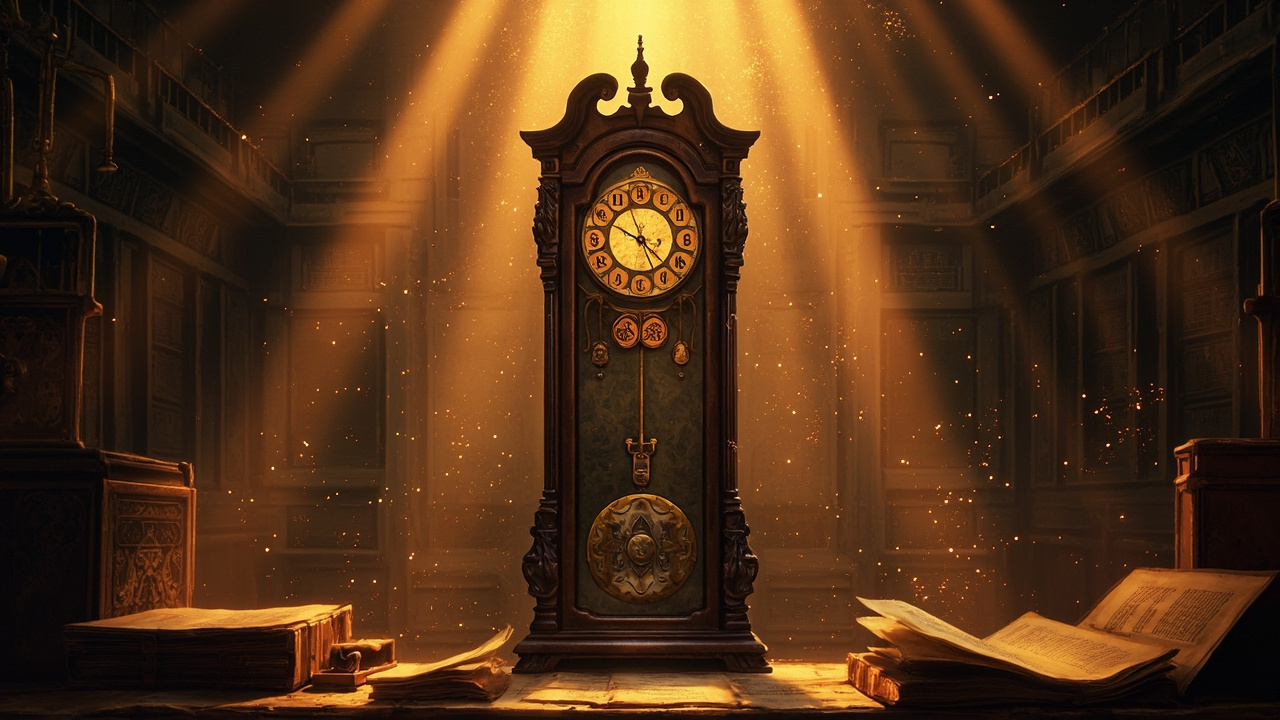
وصل الساعة إلى مختبر الحفظ في مكتبة بودليان وهي في حالة من الخراب البهيج. كان هيكلها، المنحوت من خشب داكن لم أتمكن من تحديد هويته على الفور، يحمل بوضوحSigns of centuries—its surface mottled with the grey-green bloom of aged copper and the deep amber of ancient varnish. د. إلينور أشوورث، أمينة curator senior للأدوات العلمية، كانت قد استدعتني لفحص الآلية الموجودة بداخلها، بعد أن سمعت عن بحثي في الفلسفة الطبيعية للعصر الحديث المبكر. "تم اكتشافها في منزل تم تطهيره في جيريكو،" شرحت، وهي تضغط على مفتاح فتح الباب عند وصولي. "تشير الأوراق القانونية للمحامي إلى أنها لم تُفتح منذ عام 1687. كان المالك السابق—جامع منعزل—قد منَع أي شخص من لمسها. عندما أجبرتها العائلة أخيرًا على فتح القفل، وجدوا بداخلها رسالة. هل تريدني أن أقرأها لك؟" نشرت قطعة من الورق المصفر، كانت أطرافها تتفتت عند الحواف. كان الخط قديماً، والحبر باهتاً حتى أصبح بنياً داكناً. "لمن يجد هذا: ليست الساعة مجرد أداة لقياس الوقت. إنها مفتاح. أدرها فقط عندما تفهم ما تفتحه، وصلِّ حتى لا تضطر أبدًا لاستخدامها." لست، بطبعي، رجلاً superstitious. لكن شيئًا في صياغة تلك الرسالة أوقفني—اليأس الهادئ تحت بناء الجملة القديم. طلبت من إلينور أن تتركني وحدي معها. كانت الآلية استثنائية. الحركة الرئيسية، رغم أنها خاملة، أظهرت حرفية تضاهي أرقى ورش جنيف في تلك الحقبة. لكن الآلية الثانوية هي التي شدت انتباهي: قرص أصغر، مثبت في وجه الساعة بزاوية، سطحه منقوش برموز لم أقابلها إلا في المخطوطات الكيميائية القديمة. الزئبق. الكبريت. الملح. المبادئ الفلسفية، وليس المواد نفسها—على الأقل، ليس تمامًا. خلال الأسابيع التالية، عمل فريقنا الصغير—أنا، وإلينور، والد. جيمس أوكونكو، الكيميائي الفيزيائي من القسم المجاور—على توثيق الآلية دون إزعاج توازنها الدقيق. هندسة الساعة الداخلية رفضت التصنيف السهل. كانت تروسها مصنوعة من سبيكة لم أتمكن من تحديد هويتها، أسطحها صلبة بما يكفي لمقاومة أدوات القطع لدينا، لكنها ناعمة كالزجاج في حركتها. كانت الزنبرك الرئيسي، الرفيع بشكل لا يُصدق، ملفوفًا حول محور من مادة لا تشبه الفولاذ ولا النحاس ولا أي سبيكة في كتالوجاتنا المرجعية. "هذا لا ينبغي أن يوجد،" همس جيمس ذات مساء، وهو يتطلع عبر مجهره الإلكتروني إلى شظية من المعدن استخرجناها للتحليل. "البنية البلورية خاطئة. إنه مستقر، لكنه لا ينبغي أن يكون مستقرًا. الأمر كما لو أن الذرات رُتبت في نمط—" تلاشى صوته، وهو يهز رأسه. جاء الاختراق، كما تأتي الاختراقات غالبًا، بالصدفة. كنت أتتبع آلية القرص الثانوي عندما لاحظت أن نسب التروس تتطابق، بدقة مخيفة، مع المعاملات ستوكيومترية لتفاعل كيميائي. ليس أي تفاعل: المزيج الدقيق من المواد المطلوبة لتحويل عنصر إلى آخر. تحديدًا، لتحويل معدن_BASE إلى ذهب. أدركت أن التدوين على القرص لم يكن مجرد رمز. كان صيغة. كان الكيميائي—خالقه—قد رمز داخل هذه الآلية إلى الخطوات بالضبط المطلوبة لإكمال العمل الكبير. تحققنا من فرضيتنا مقابل كل نص عن التحول الكيميائي القديم يمكننا العثور عليه. تطابق التدوين تمامًا مع الإجراءات الموصوفة في أقدم المخطوطات الروزيكروشيية، المعدلة بشروح بخط أحجمنا في النهاية إلى ستينيات القرن السابع عشر. لم تكن الساعة استعارة لتحول الروح. كانت آلة مصممة لتحقيق تحول المادة itself. "لكن التحول لم يتحقق أبدًا،" اعترضت إلينور، صوتها بالكاد أعلى من الهمس. "لابد أن شخصًا ما كان سي—" "شخص ما فعل،" أجبت. "في عام 1687. ثم بنى هذه الساعة لتفعله مرة أخرى، متىما كانت الظروف مناسبة." الظروف، حددناها في النهاية، تتطلب التنسيق الدقيق للضغط الجوي، درجة الحرارة، والرطوبة—متغيرات كانت آليات الساعة البارومترية والرطوبية مصممة لمراقبتها وتنظيمها. لا يمكن للقرص الثانوي إكمال دورته إلا عندما reach التفاعل الذي يحكمه حالة توازنه. في جوهرها، كان الكيميائي قد صنع نظامًا ذاتي التنظيم: آلة ستعرف متى ينتهي التحول لأن التفاعل نفسه سيكون آليتها. implications ترنحت لنا. إذا كانت الصيغة صحيحة—و suggest تحليلاتنا ذلك—فإننا نملك ليس مجرد فضول تاريخي بل طريقة حقيقية لتحويل العناصر. الآثار الاقتصادية وحدها ستكون زلزالية. الذهب، الذي أصبح وفيرًا، سيتوقف عن العمل كمخزن للقيمة. البلاتين، الزئبق، الرصاص: كلها يمكن نظريًا أن تتحول. الندرة التي قامت عليها التجارة البشرية لآلاف السنين ستختفي. أو ربما لن تعمل الساعة. ربما كان الكيميائي محتالاً، حالمًا، رجلاً رمز هراء أنيقًا في النحاس والخشب. الطريقة الوحيدة لمعرفة ذلك كانت اختبارها. أمضينا ثلاثة أشهر في التحضير. حصلنا على المواد المطلوبة—كل واحد تم التحقق من نقائه، كل واحد تم قياسه بدقة fractions of milligrams. قمنا بمعايرة الآلية الثانوية بدقة صانعي الساعات السويسريين، مع ضبط تروسها بزيادات دقيقة جدًا لدرجة أن أدواتنا struggled لتسجيل التغييرات. وفي afternoon رمادي من نوفمبر، مع قطرات المطر تطرق against نوافذ المختبر، بدأنا التفاعل. بدأت الساعة تtick. لمدة seven أيام، شاهدنا. تقدم القرص الثانوي بدرجات لا barely ملحوظة. vessel التفاعل، خلف glass المعزز، خضع لتغييرات لونية defy نماذجنا الكيميائية—تحولات من violet العميق إلى ذهبي luminous والعكس، في أنماط بدت شبه متعمدة. في اليوم السابع، عندما أكمل القرص دورته النهائية، انزلق drawer صغير في قاعدة الساعة مفتوحًا بـ s
Die Uhr kam in einem Zustand prächtiger Verwahrlosung im Konservierungslabor der Bodleian an. Ihr Gehäuse, aus einem dunklen Holz geschnitzt, das ich nicht sofort identifizieren konnte, trug die unverkennbare Patina von Jahrhunderten—ihre Oberfläche gesprenkelt mit dem grünlich-grauen Belag gealterten Kupfers und dem tiefen Bernstein altersen Firnisses. Dr. Eleanor Ashworth, leitende Kustodin für wissenschaftliche Instrumente, hatte mich hergebeten, um den Mechanismus im Inneren zu untersuchen, nachdem sie von meiner Forschung über die frühnaturphilosophische Moderne erfahren hatte. "Sie wurde bei einer Hausräumung in Jericho entdeckt", erklärte sie und drückte auf den Türöffner, als ich ankam. "Die Unterlagen des Anwalts deuten darauf hin, dass sie seit 1687 nicht geöffnet wurde. Der vorherige Eigentümer—ein zurückgezogener Sammler—hatte offenbar jedermann verboten, sie zu berühren. Als die Familie das Schloss schließlich aufbrach, fanden sie eine Notiz darin. Soll ich sie vorlesen?" Sie faltete ein vergilbtes Stück Papier auf, dessen Ränder an den Kanten bröselten. Die Handschrift war veraltet, die Tinte bis hin zu Sepia verblasst. "'An wen auch immer dies findet: Die Uhr ist nicht nur ein Zeitmesser. Sie ist ein Schlüssel. Drehe sie nur, wenn du verstehst, was sie aufschließt, und bete, dass du niemals Grund hast, sie zu benutzen.'" Ich bin von Natur aus kein abergläubischer Mensch. Aber etwas an der Formulierung dieser Notiz hielt mich fest—die stille Verzweiflung unter der veralteten Syntax. Ich bat Eleanor, mich allein damit zu lassen. Der Mechanismus war außerordentlich. Das Hauptwerk, obwohl schlafend, zeigte eine Handwerkskunst, die mit den feinsten Genfer Werkstätten der Zeit rivalisierte. Aber es war der Nebenmechanismus, der meine Aufmerksamkeit erzwang: ein kleineres Zifferblatt, in das Zifferblatt der Uhr in einem Winkel eingelassen, seine Oberfläche mit Symbolen graviert, die ich nur in alchemistischen Manuskripten gesehen hatte. Quecksilber. Schwefel. Salz. Die philosophischen Prinzipien, nicht die Substanzen selbst—zumindest nicht ganz. In den folgenden Wochen arbeitete unser kleines Team—ich, Eleanor und Dr. James Okonkwo, ein Physikochemiker aus dem Nachbarbereich—daran, den Mechanismus zu dokumentieren, ohne sein delikates Gleichgewicht zu stören. Die innere Architektur der Uhr widerstand einfacher Kategorisierung. Ihre Zahnräder waren aus einer Legierung gefertigt, die ich nicht identifizieren konnte, ihre Oberflächen hart genug, um unseren besten Schneidwerkzeugen zu widerstehen, yet glatt wie Glas in ihrer Artikulation. Die Hauptfeder, unmöglich dünn, war um eine Spindel aus einem Material gewickelt, das weder Stahl noch Messing noch irgendeiner Legierung in unseren Referenzkatalogen ähnelte. "Dies sollte nicht existieren", murmelte James eines Abends, während er durch sein Elektronenmikroskop auf ein Metallfragment blickte, das wir zur Analyse entnommen hatten. "Die Kristallstruktur ist falsch. Es ist stabil, aber es sollte nicht stabil sein. Es ist, als wären die Atome in einem Muster angeordnet worden, das—" Seine Stimme versiegte, während er den Kopf schüttelte. Der Durchbruch kam, wie Durchbrüche es oft tun, durch Zufall. Ich war dabei, den Mechanismus des Nebenrades zu verfolgen, als ich bemerkte, dass die Zahnradübersetzungen mit unheimlicher Präzision den stöchiometrischen Koeffizienten einer chemischen Reaktion entsprachen. Nicht irgendeiner Reaktion: der präzisen Kombination von Substanzen, die erforderlich ist, um ein Element in ein anderes zu transmutieren. Konkret, um ein unedles Metall in Gold zu transmutieren. Die Notation auf dem Zifferblatt, wurde mir klar, war nicht nur symbolisch. Sie war eine Formel. Der Alchemist—sein Schöpfer—hatte in diesem Mechanismus die genauen Schritte kodiert, die erforderlich sind, um das Große Werk zu vollenden. Wir überprüften unsere Hypothese gegen jeden Text über alchemistische Transmutation, den wir finden konnten. Die Notation entsprach exakt den Verfahren, die in den frühesten Rosenkreuzer-Manuskripten beschrieben sind, modifiziert durch Anmerkungen einer Handschrift, die wir letztendlich auf die 1660er datierten. Die Uhr war keine Metapher für die Transmutation der Seele. Sie war eine Maschine, die darauf ausgelegt war, die Transmutation der Materie selbst zu bewirken. "Aber Transmutation wurde nie erreicht", wandte Eleanor ein, ihre Stimme kaum mehr als ein Flüstern. "Sicherlich hätte jemand—" "Jemand hat es getan", erwiderte ich. "Im Jahr 1687. Und dann haben sie diese Uhr gebaut, um es wieder zu tun, wann immer die Bedingungen stimmen." Die Bedingungen, die wir schließlich bestimmten, erforderten die präzise Koordination von Luftdruck, Temperatur und Luftfeuchtigkeit—Variablen, die die barometrischen und hygrometrischen Mechanismen der Uhr überwachen und regulieren sollten. Das Nebenrad konnte seinen Zyklus nur vollenden, wenn die Reaktion, die es steuerte, ihren Gleichgewichtszustand erreicht hatte. Im Wesentlichen hatte der Alchemist ein selbstregulierendes System geschaffen: eine Maschine, die wissen würde, wann die Transmutation beendet war, weil die Reaktion selbst ihr Uhrwerk sein würde. Die implications erschütterten uns. Wenn die Formel korrekt war—and unsere Analysen deuteten darauf hin—dann besaßen wir nicht nur eine historische Kuriosität, sondern eine genuine Methode zur Transmutation von Elementen. Die wirtschaftlichen ramifications allein wären seismisch. Gold, im Überfluss vorhanden, würde aufhören zu funktionieren als Wertspeicher. Platin, Quecksilber, Blei: alle könnten theoretisch transformiert werden. Die Knappheit, die den menschlichen Handel seit Jahrtausenden unterlegt hatte, würde verdampfen. Oder vielleicht würde die Uhr nicht funktionieren. Vielleicht war der Alchemist ein Betrüger gewesen, ein Träumer, ein Mann, der eleganten Unsinn in Messing und Holz kodiert hatte. Der einzige Weg es zu wissen, war, sie zu testen. Wir verbrachten drei Monate mit der Vorbereitung. Wir beschafften die erforderlichen Substanzen—jede auf Reinheit überprüft, jede auf Bruchteile von Milligramm genau abgemessen. Wir kalibrierten den Nebenmechanismus mit der Präzision Schweizer Uhrmacher und ajustierten seine Zahnräder in Inkrementen so fein, dass unsere Instrumente barely die Veränderungen registrieren konnten. Und an einem grauen Novembernachmittag, während der Regen gegen die Laborfenster trommelte, initiate wir die Reaktion. Die Uhr begann zu ticken. Sieben Tage lang sahen wir zu. Das Nebenrad rückte in kaum wahrnehmbaren Graden vor. Das Reaktionsgefäß, hinter verstärktem Glas versiegelt, durchlief Farbwechsel, die unsere chemischen Modelle herausforderten—Verschiebungen von tiefem Violett zu leuchtendem Gold und zurück, in Mustern, die fast absichtsvoll schienen. Am siebten Tag, als das Zifferblatt seine endgültige Rotation vollendete, glitt eine kleine Schublade am Sockel der Uhr auf mit einem s
El reloj llegó al laboratorio de conservación de la Bodleiana en un estado de magnificencia ruinosa. Su caja, tallada en una madera oscura que no pude identificar de inmediato, exhibía la inconfundible pátina de los siglos—su superficie moteada con la floración gris-verde del cobre añejo y el ámbar profundo del barniz antiguo. La Dra. Eleanor Ashworth, Curadora Principal de Instrumentos Científicos, me había convocado para examinar el mecanismo interior, tras escuchar sobre mi investigación en filosofía natural de la modernidad temprana. "Fue descubierto en una liquidación de bienes en Jericho," explicó, presionando el abrepuertas al llegar. "La documentación del abogado sugiere que no ha sido abierto desde 1687. El propietario anterior—un coleccionista ermitaño—al parecer prohibió a cualquiera que lo tocara. Cuando la familia finalmente forzó la cerradura, encontraron una nota dentro. ¿Quieres que te la lea?" Desplegó un pedazo de papel amarillento, cuyos bordes se desmoronaban. La caligrafía era arcaica, la tinta desvanecida hasta el sepia. "'A quien encuentre esto: el reloj no es meramente un instrumento del tiempo. Es una llave. Gírelo solo cuando comprenda lo que abre, y rece para nunca tener motivo de usarlo.'" No soy, por temperamento, un hombre supersticioso. Pero algo en la redacción de esa nota me detuvo—la desesperación silenciosa bajo la sintaxis anticuada. Pedí a Eleanor que me dejara a solas con él. El mecanismo era extraordinario. El movimiento principal, aunque dormido, mostraba una artesanía que rivalizaba con los mejores talleres de Ginebra de la época. Pero fue el mecanismo secundario lo que captó mi atención: un dial más pequeño, empotrado en la esfera del reloj en un ángulo, su superficie inscrita con símbolos que solo había encontrado en manuscritos alquímicos. Mercurio. Azufre. Sal. Los principios filosóficos, no las sustancias mismas—al menos, no del todo. En las semanas siguientes, nuestro pequeño equipo—yo mismo, Eleanor y el Dr. James Okonkwo, un químico físico del departamento vecino—trabajamos para documentar el mecanismo sin perturbar su delicado equilibrio. La arquitectura interna del reloj desafiaba cualquier categorización fácil. Sus engranajes estaban forjados de una aleación que no pude identificar, sus superficies lo suficientemente duras como para resistir nuestras mejores herramientas de corte yet tan suaves como el vidrio en su articulación. El resorte principal, imposiblemente delgado, estaba enrollado alrededor de un husillo de un material que no se parecía al acero ni al latón ni a ninguna aleación de nuestros catálogos de referencia. "Esto no debería existir," murmuró James una tarde, mirando a través de su microscopio electrónico un fragmento de metal que habíamos extraído para análisis. "La estructura cristalina está mal. Es estable, pero no debería ser estable. Es como si los átomos hubieran sido dispuestos en un patrón que—" Su voz se desvaneció mientras negaba con la cabeza. El avance llegó, como suelen llegar los avances, por accidente. Estaba rastreando el mecanismo del dial secundario cuando noté que las relaciones de engranaje correspondían, con uncanny precisión, a los coeficientes estequiométricos de una reacción química. No cualquier reacción: la combinación precisa de sustancias requeridas para transmutar un elemento en otro. Específicamente, para transmutar un metal base en oro. La notación en el dial, me di cuenta, no era meramente simbólica. Era una fórmula. El alquimista—su creador—había codificado dentro de este mecanismo los pasos exactos requeridos para completar la Gran Obra. Verificamos nuestra hipótesis contra cada texto sobre transmutación alquímica que pudimos localizar. La notación correspondía exactamente a los procedimientos descritos en los manuscritos rosacruces más antiguos, modificados por anotaciones en una caligrafía que finalmente fechamos en la década de 1660. El reloj no era una metáfora de la transmutación del alma. Era una máquina diseñada para lograr la transmutación de la materia misma. "Pero la transmutación nunca se logró," objetó Eleanor, su voz apenas por encima del susurro. "Surely alguien habría—" "Alguien lo hizo," respondí. "En 1687. Y luego construyeron este reloj para hacerlo de nuevo, whenever las condiciones fueran las correctas." Las condiciones, que eventualmente determinamos, requerían la coordinación precisa de presión atmosférica, temperatura y humedad—variables que los mecanismos barométricos e higrométricos del reloj estaban diseñados para monitorear y regular. El dial secundario solo podía completar su ciclo cuando la reacción que gobernaba había alcanzado su estado de equilibrio. En esencia, el alquimista había creado un sistema autorregulador: una máquina que sabría cuándo la transmutación había terminado porque la reacción misma sería su mecanismo de relojería. Las implicaciones nos dejaron atónitos. Si la fórmula era correcta—and nuestros análisis sugerían que lo era—entonces poseíamos no meramente una curiosidad histórica sino un método genuino para transmutar elementos. Las ramificaciones económicas por sí solas serían sísmicas. El oro, vuelto abundante, dejaría de funcionar como reserva de valor. Platino, mercurio, plomo: todos podrían teóricamente ser transformados. La escasez que había sustentado el comercio humano durante milenios se evaporaría. O quizás el reloj no funcionaría. Quizás el alquimista había sido un fraude, un soñador, un hombre que había codificado sinsentido elegante en latón y madera. La única forma de saberlo era probarlo. Pasamos tres meses preparando. Adquirimos las sustancias requeridas—cada una verificada por pureza, cada una medida en fracciones de miligramos. Calibramos el mecanismo secundario con la precisión de los relojeros suizos, ajustando sus engranajes en incrementos tan finos que nuestros instrumentos apenas podían registrar los cambios. Y en una tarde gris de noviembre, con la lluvia repiqueteando contra las ventanas del laboratorio, initiate la reacción. El reloj comenzó a hacer tic-tac. Durante siete días, observamos. El dial secundario avanzó por grados imperceptibles. El recipiente de reacción, sellado detrás de vidrio reforzado, sufrió cambios de color que desafiaban nuestros modelos químicos—desplazamientos del violeta profundo al oro luminoso y viceversa, en patrones que parecían casi deliberados. En el séptimo día, cuando el dial completó su rotación final, un pequeño cajón en la base del reloj se deslizó abierto con un s
L'horloge arriva au laboratoire de conservation de la Bodléienne dans un état de magnificence délabrée. Sa caisse, sculptée dans un bois sombre que je ne pus immédiatement identifier, portait l'incontestable patine des siècles—sa surface mouchetée de la fleur gris-vert du cuivre vieilli et de l'ambre profond du vernis ancien. Le Dr Eleanor Ashworth, Conservatrice principale des Instruments scientifiques, m'avait convoqué pour examiner le mécanisme intérieur, ayant entendu parler de mes recherches sur la philosophie naturelle du début de l'époque moderne. « Elle a été découverte lors d'un débarras dans Jericho », expliqua-t-elle, en appuyant sur la gâche électrique à mon arrivée. « Les paperwork du solicitor indiquent qu'elle n'a pas été ouverte depuis 1687. Le propriétaire précédent—un collectionneur solitaire—interdisait apparemment à quiconque de la toucher. Quand la famille a finalement forcé la serrure, ils ont trouvé une note à l'intérieur. Voulez-vous que je la lise ? » Elle déplia un morceau de papier jauni, dont les bords s'effritaient. L'écriture était archaïque, l'encre délavée jusqu'au sépia. « 'À celui qui trouvera ceci : l'horloge n'est pas simplement une pièce horlogère. C'est une clé. Tournez-la seulement quand vous comprenez ce qu'elle ouvre, et priez pour ne jamais avoir à l'utiliser.' » Je ne suis pas, par tempérament, un homme superstitieux. Mais quelque chose dans la formulation de cette note m'arrêta—le désespoir tranquille sous la syntaxe désuète. Je demandai à Eleanor de me laisser seul avec elle. Le mécanisme était extraordinaire. Le mouvement principal, bien que dormant, présentait un savoir-faire qui rivalisait avec les meilleurs ateliers genevois de l'époque. Mais c'est le mécanisme secondaire qui captiva mon attention : un cadran plus petit, incrusté dans le visage de l'horloge à un angle, sa surface gravée de symboles que je n'avais rencontrés que dans des manuscrits alchimiques. Mercure. Soufre. Sel. Les principes philosophiques, non les substances elles-mêmes—du moins, pas entièrement. Au cours des semaines suivantes, notre petite équipe—moi-même, Eleanor et le Dr James Okonkwo, un chimiste physical du département voisin—s'affaira à documenter le mécanisme sans perturber son équilibre délicat. L'architecture interne de l'horloge défiait toute catégorisation aisée. Ses engrenages étaient façonnés dans un alliage que je ne pouvais identifier, leurs surfaces assez dures pour résister à nos meilleures outils de coupe yet lisses comme du verre dans leur articulation. Le ressort principal, impossibilement fin, était enroulé autour d'une broche d'un matériau qui ne ressemblait ni à l'acier ni au laiton ni à aucun alliage de nos catalogues de référence. « Ceci ne devrait pas exister », murmura James un soir, regardant à travers son microscope électronique un fragment de métal que nous avions extrait pour analyse. « La structure cristalline est wrong. C'est stable, mais ça ne devrait pas être stable. C'est comme si les atomes avaient été arrangés dans un motif qui— » Sa voix s'éteignit, secouant la tête. La percée vint, comme viennent souvent les percées, par accident. Je traçais le mécanisme du cadran secondaire quand je remarquai que les rapports d'engrenage correspondaient, avec une précision troublante, aux coefficients stœchiométriques d'une réaction chimique. Pas n'importe quelle réaction : la combinaison précise de substances requise pour transmuer un élément en un autre. Plus précisément, pour transmuer un métal base en or. La notation sur le cadran, je réalisai, n'était pas simplement symbolique. C'était une formule. L'alchimiste—son créateur—avait encodé dans ce mécanisme les étapes mêmes requises pour accomplir le Grand Œuvre. Nous vérifiâmes notre hypothèse contre chaque texte sur la transmutation alchimique que nous pûmes localiser. La notation correspondait exactement aux procédures décrites dans les plus anciens manuscrits rosicruciens, modifiées par des annotations d'une main que nous datâmes finalement des années 1660. L'horloge n'était pas une métaphore de la transmutation de l'âme. C'était une machine conçue pour accomplir la transmutation de la matière elle-même. « Mais la transmutation n'a jamais été accomplie », objecta Eleanor, sa voix à peine au-dessus du murmure. « Surely someone aurait— » « Quelqu'un l'a fait », répondis-je. « En 1687. Et puis ils ont construit cette horloge pour le refaire, whenever les conditions étaient réunies. » Les conditions, nous déterminâmes finalement, nécessitaient la coordination précise de la pression atmosphérique, de la température et de l'humidité—variables que les mécanismes barométriques et hygrométriques de l'horloge étaient conçus pour surveiller et réguler. Le cadran secondaire ne pouvait accomplir son cycle que lorsque la réaction qu'il gouvernait avait atteint son état d'équilibre. En essence, l'alchimiste avait créé un système autorégulateur : une machine qui saurait quand la transmutation serait terminée parce que la réaction elle-même serait son horlogerie. Les implications nous stupéfièrent. Si la formule était correcte—and nos analyses le suggéraient—alors nous possédions non pas une simple curiosité historique mais une méthode genuine pour transmuer les éléments. Les répercussions économiques seules seraient sismiques. L'or, rendu abondant, cesserait de fonctionner comme réserve de valeur. Le platine, le mercure, le plomb : tous pourraient théoriquement être transformés. La rareté qui avait sous-tendu le commerce humain pendant des millénaires s'évaporerait. Ou peut-être l'horloge ne fonctionnerait-elle pas. Peut-être l'alchimiste avait-il été un fraudeur, un rêveur, un homme qui avait encodé du nonsens élégant en laiton et en bois. Le seul moyen de savoir était de la tester. Nous passâmes trois mois à préparer. Nous acquîmes les substances requises—chacune vérifiée pour sa pureté, chacune mesurée au millième de milligramme près. Nous étalonnâmes le mécanisme secondaire avec la précision des horlogers suisses, ajustant ses engrenages par increments si fins que nos instruments peinaient à enregistrer les changements. Et par un après-midi gris de novembre, avec la pluie tambourinant contre les fenêtres du laboratoire, nous initiates la réaction. L'horloge commença à tick. Pendant sept jours, nous regardâmes. Le cadran secondaire avançait par degrés imperceptibles. Le réacteur, scellé derrière du verre renforcé, subissait des changements de couleur qui défiaient nos modèles chimiques—des shifts du violet profond à l'or lumineux et inversement, dans des motifs qui semblaient presque délibérés. Le septième jour, tandis que le cadran accomplissait sa rotation finale, un petit tiroir à la base de l'horloge glissa ouvert avec un s
L'orologio arrivò al laboratorio di restauro della Bodleiana in uno stato di magnifico declino. La sua cassa, intagliata in un legno scuro che non riuscii immediatamente a identificare, recava l'inconfondibile patina dei secoli—la sua superficie screziata dalla fioritura grigio-verde del rame invecchiato e dall'ambra profonda della vernice antica. La Dottoressa Eleanor Ashworth, Curatrice Senior di Strumenti Scientifici, mi aveva convocato per esaminare il meccanismo all'interno, avendo sentito parlare delle mie ricerche sulla filosofia naturale della prima modernità. "È stato scoperto durante uno sgombero in Jericho," spiegò, premendo il'apriporta al mio arrivo. "La documentazione del solicitor suggerisce che non sia stato aperto dal 1687. Il precedente proprietario—un collezionista appartato—aveva apparentemente proibito a chiunque di toccarlo. Quando la famiglia alla fine ha forzato la serratura, hanno trovato un biglietto all'interno. Devo leggertelo?" Srotolò un pezzo di carta ingiallita, i cui bordi si sbriciolavano alle estremità. La calligrafia era arcaica, l'inchiostro sbiadito fino al seppia. "'A chiunque trovi questo: l'orologio non è semplicemente un orologio. È una chiave. Giralo solo quando comprendi cosa apre, e prega di non avere mai motivo di usarlo.'" Non sono, per temperamento, un uomo superstizioso. Ma qualcosa nella formulazione di quel biglietto mi arrestò—la disperazione silenziosa sotto la sintassi antiquata. Chiesi a Eleanor di lasciarmi solo con esso. Il meccanismo era straordinario. Il movimento principale, sebbene dormiente, mostrava una fattura che rivaleggiava con le migliori botteghe di Ginevra del periodo. Ma fu il meccanismo secondario a catturare la mia attenzione: un quadrante più piccolo, incastonato nella faccia dell'orologio a un angolo, la sua superficie incisa con simboli che avevo incontrato solo in manoscritti alchemici. Mercurio. Zolfo. Sale. I principi filosofici, non le sostanze stesse—almeno, non del tutto. Nelle settimane successive, la nostra piccola squadra—io, Eleanor e il Dottor James Okonkwo, un chimico fisico del dipartimento vicino—lavorammo per documentare il meccanismo senza disturbare il suo delicato equilibrio. L'architettura interna dell'orologio sfidava ogni facile categorizzazione. I suoi ingranaggi erano forgiati in una lega che non riuscivo a identificare, le loro superfici abbastanza dure da resistere ai nostri migliori utensili da taglio eppure lisce come il vetro nella loro articolazione. La molla principale, impossibilmente sottile, era avvolta attorno a un mandrino di un materiale che non assomigliava né all'acciaio né all'ottone né ad alcuna lega nei nostri cataloghi di riferimento. "Questo non dovrebbe esistere," mormorò James una sera, osservando attraverso il suo microscopio elettronico un frammento di metallo che avevamo estratto per l'analisi. "La struttura cristallina è sbagliata. È stabile, ma non dovrebbe essere stabile. È come se gli atomi fossero stati disposti in un pattern che—" La sua voce si spense, scuotendo la testa. La svolta arrivò, come le svolte spesso fanno, per caso. Stavo tracciando il meccanismo del quadrante secondario quando notai che i rapporti degli ingranaggi corrispondevano, con uncanny precisione, ai coefficienti stechiometrici di una reazione chimica. Non una reazione qualsiasi: la combinazione precisa di sostanze richiesta per trasmutare un elemento in un altro. Specificamente, per trasmutare un metallo base in oro. La notazione sul quadrante, mi resi conto, non era meramente simbolica. Era una formula. L'alchimista—il suo creatore—aveva codificato all'interno di questo meccanismo i passaggi esatti richiesti per completare la Grande Opera. Verificammo la nostra ipotesi contro ogni testo sulla trasmutazione alchemica che riuscimmo a localizzare. La notazione corrispondeva esattamente alle procedure descritte nei più antichi manoscritti rosacrociani, modificate da annotazioni in una calligrafia che alla fine datammo agli anni Sessanta del Seicento. L'orologio non era una metafora della trasmutazione dell'anima. Era una macchina progettata per compiere la trasmutazione della materia stessa. "Ma la trasmutazione non fu mai raggiunta," obiettò Eleanor, la sua voce appena sopra un sussurro. "Surely qualcuno avrebbe—" "Qualcuno l'ha fatto," risposi. "Nel 1687. E poi hanno costruito questo orologio per rifarlo, quando le condizioni fossero state giuste." Le condizioni, che alla fine determinammo, richiedevano il coordinamento preciso di pressione atmosferica, temperatura e umidità—variabili che i meccanismi barometrici e igrometrici dell'orologio erano progettati per monitorare e regolare. Il quadrante secondario poteva completare il suo ciclo solo quando la reazione che governava aveva raggiunto il suo stato di equilibrio. In sostanza, l'alchimista aveva creato un sistema autorregolante: una macchina che avrebbe saputo quando la trasmutazione era finita perché la reazione stessa sarebbe stata il suo meccanismo. Le implicazioni ci lasciarono senza fiato. Se la formula era corretta—e le nostre analisi suggerivano che lo fosse—allora possedevamo non meramente una curiosità storica ma un metodo genuino per trasmutare gli elementi. Le ripercussioni economiche da sole sarebbero state sismiche. L'oro, reso abbondante, avrebbe cessato di funzionare come riserva di valore. Platino, mercurio, piombo: tutti potevano teoricamente essere trasformati. La scarsità che aveva sotteso il commercio umano per millenni sarebbe evaporata. Oppure forse l'orologio non avrebbe funzionato. Forse l'alchimista era stato un truffatore, un sognatore, un uomo che aveva codificato elegante nonsenso in ottone e legno. L'unico modo per saperlo era testarlo. Spendemmo tre mesi preparandoci. Acquisimmo le sostanze richieste—ciascuna verificata per purezza, ciascuna misurata in frazioni di milligrammi. Calibrammo il meccanismo secondario con la precisione degli orologiai svizzeri, regolando i suoi ingranaggi in incrementi così fini che i nostri strumenti lottavano per registrare i cambiamenti. E in un pomeriggio grigio di novembre, con la pioggia che batteva contro le finestre del laboratorio, iniziammo la reazione. L'orologio cominciò a ticchettare. Per sette giorni, guardammo. Il quadrante secondario avanzò di gradi impercettibili. Il recipiente di reazione, sigillato dietro vetro rinforzato, subì cambiamenti di colore che sfidavano i nostri modelli chimici—spostamenti dal viola profondo all'oro luminoso e viceversa, in pattern che sembravano quasi deliberati. Il settimo giorno, mentre il quadrante completava la sua rotazione finale, un piccolo cassetto alla base dell'orologio scivolò aperto con un s