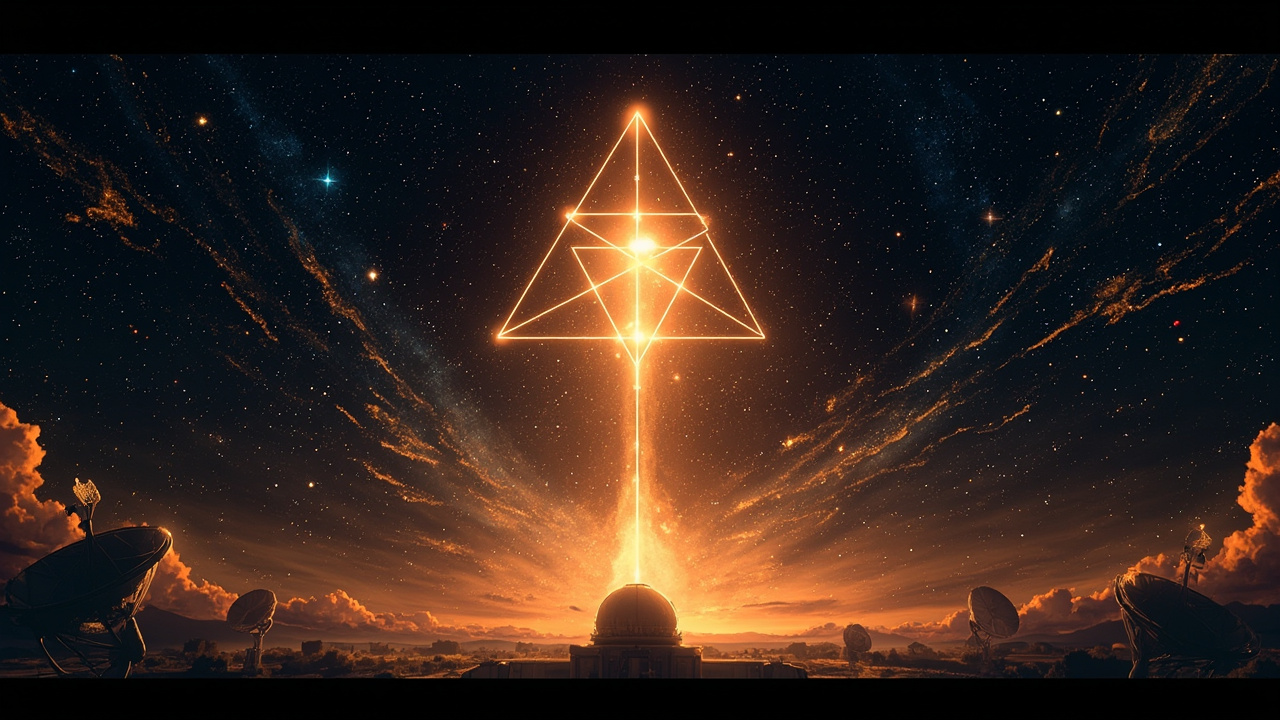
وقع أول تصادم في يوم الثلاثاء، وهو ما ستعتبره الدكتورة إلينور فانس لاحقاً أمراً ملائماً. كان Tuesdays قديمًا مرتبطًا بالحديد، سُمّي على اسم تير، إله النورس ذي اليد الواحدة الذي ضحّى بذراعه الحامل للسيف من أجل تقييد فِنرِير. لم تكن قد عرفت هذا حين سحبت بيانات المسار لأول مرة، لكنها ستأتي لتفهم أن الكون كان يتحدّث بلغة humanity نسيت كيف تسمعها.
عملت إلينور في مختبر رذرفورد أبليتون في أكسفوردشاير، حيث كانت الجدران تطنّ بحركة هادئة لتتبع الأقمار الصناعية. تخصصها كان الحطام المداري — تلك الشظايا المتكاثرة من طموح البشرية التي تدور حول الأرض كالهالة الخطرة بشكل متزايد. حين أشارت خوارزميات التتبع إلى اصطدام قمرين صناعيين للاتصالات الميتين على ارتفاع 1200 كيلومتر فوق المرتفعات الاسكتلندية، كانت تتوقع التحليل المعتاد للأدلة: السرعات النسبية، أنماط تشتت الحطام، الرياضيات الباردة للانتروبيا.
ما لم تتوقعه هو النمط.
جاء التصادم الثاني بعد تسعة أيام، على ارتفاع 800 كيلومتر آخر، فوق جزيرة وايت. والثالث فوق كورنوال. كل نقطة أثر وصفت قوساً عبر جنوب إنجلترا، وحين وضعت إلينور البيانات فوق خرائط النجوم الخاصة بها، أسرت منها الهندسة بشكل أفقدها أنفاسها. شكّلت النقاط الثلاث رؤساء مثلث حاد، والزوايا لم تكن مجرد متشابهة لتلك رمز قديم — بل كانت متطابقة.
قضت أربع ليالٍ بلا نوم في الأرشيف، تقاطع الاستبيانات الفلكية، المسوحات الأثرية، أي شيء قد يفسّر ما تراه. يشير المثلث نحو منطقة محددة من السماء — منطقة ستكون، وفقاً لحساباتها، فوق الرأس مباشرة عند منتصف الليل بعد أحد عشر يوماً بالضبط.
في الليلة الخامسة، وجدت المخطوطة.
كانت نسخة من طقس سلتي للعمل بالحديد، استُعيد من دير في مقاطعة كلير عام 1897 ثم دُفن في أرشيفات دوبلين، حيث يرقد معظم المعارف غير المريحة. الطقس، المعروف بـ تان موتا — حلقة الذرة — وصف بناء شفرة حديدية طقسية من خلال تسلسل محدد من الضربات، كل ضربة موقّتة لتتوافق مع موت جرم سماوي. نجمة. كوكب. قمر. حددت المخطوطة أن ثلاث وفيات سماوية يجب أن تسبق الرابعة، وأن موت أيندياخ، المتأجج، يجب أن يكون رابعاً، وقد ترجمه المترجم بأنه مذنب أو، بشكل أكثر تخميناً، نار تسقط من السماء.
رتجفت يدا إلينور حين أجرت الحسابات. ثلاثة تصادمات أقمار صناعية، ثلاث وفيات سماوية. لم يكن النمط عشوائياً. شخص ما — شيئاً ما — كان قد صمّم عمليات الدمار لإعادة خلق الطقس في السماء نفسها. وبعد أحد عشر يوماً، أشار فهرس الاتحاد الفلكي الدولي إلى أن قمراً صناعياً لمرصد سوفييتي متوقف عن العمل سيعبر عبر المنطقة المحددة. موت آخر في التسلسل.
لكن لأي غرض؟
سحبت خرائط السماء للإحداثيات المحددة وشعرت بالدم يتصريف من وجهها. لم تحتوِ المنطقة المستهدفة على شيء — لا شيء مرئي، على الأقل. لكن تحليلها الطيفي للإشعاع الخلفي كشف شذوذاً: توقيع عدسة الجاذبية متوافق مع جرم ضخم غير مكتشف سابقاً خلف حزام الكويكبات. جرم كان، وفقاً لميكانيكا المدار، سيتوضع بدقة مع الأرض والقمر ونقطة التصادم بعد أحد عشر يوماً.
لم يكن الطقس يدعو شيئاً. كان يفتح باباً.
اتصلت إلينور بوزارة الدفاع في الساعة الثالثة صباحاً، مستخدمة بروتوكول طوارئ لم تكن تعتقد أنها ستستخدمه يوماً. كان الضابط الذي أجاب صبوراً بشكل احترافي مع ما اعتبره بوضوح امرأة صحة عقلها تتدهور. شرحت النمط. شرحت الطقس. شرحت أن البشرية كانت، ربما دون قصد، قد شنت ثلاث ضربات في تسلسل صُمّم لمحاذاة كوكبنا مع شيء هائل وغير معروف.
"الدكتورة فانس،" قال الضابط، باحتقار لطيف محجوز للأكاديميين الذين شاهدوا أفلاماً كثيرة جداً، "أقدّر قلقك، لكن لا يمكننا تغيير مسارات الأقمار الصناعية بناءً على الأساطير السلتية."
"أنت لا تغيّرها،" ردت إلينور، تكافح لإبقاء صوتها ثابتاً. "أنت تمنع تصادماً رابعاً سيخلق رنيناً جذبياً مع جرم لم تره البشرية من قبل. إن اكتملت المحاذاة، لا أستطيع أن أقول لك ما سيحدث. لا أحد يستطيع. لكن الرياضيات لا لبس فيها."
كان هناك صمت. ثم: "سأحيل هذا للأعلى. لا تتوقع إعادة اتصال."
توجد الأيام التسعة التالية في حالة رعب معلق. عملت إلينور مع فريق صغير جمعته وزارة الدفاع — متشككون، كلهم، لكن أكفاء أولئك الذين يتحققون من حساباتها بصرامة كئيبة لأناس يفهمون أن الخطأ بشأن حدث من مستوى الانقراض سيكون محرجاً إلى حد ما. استمر النمط. ستحدث المحاذاة. كان القمر الصناعي الرابع فعلاً في مساره للمرور عبر الإحداثيات المحددة.
استغرق الجدل حول ما يجب فعله ثلاثة أيام. كان الإجماع العلمي أن تحويل مسار القمر الصناعي لن يمنع اكتمال الطقس — أي حدث طاقة كافية في تلك المنطقة سيفي بالغرض. لكن إلينور اقترحت شيئاً آخر. требاة الطقس موت أيندياخ. إن نجا القمر الصناعي الرابع — إن تدخلت البشرية للحفاظ عليه — هل ينكسر التسلسل؟
لا أحد يستطيع الإجابة ب уверенность. لكن في صباح اليوم التاسع، مع اثنتي عشرة ساعة متبقية، أشعلوا المحركات.
شاهدت إلينور البيانات من ملجأ في وايتهول، محاطة بأناس لم يناموا ولم يعودوا مقتنعين تماماً بتشكيكهم الخاص. حمل المسار الجديد للقمر الصناعي ابتعده عن الإحداثيات المحددة، مجرد ما يكفي لتفويت النافذة. لم يكونوا قد دمّروه. لم يكونوا قد أحدثوا أي تصادم جديد. كانوا قد حرّكوا مجرد قطعة من المعدن إلى جزء آخر من السماء.
عند منتصف الليل، لم يحدث شيء.
Die erste Kollision ereignete sich an einem Dienstag, was Dr. Eleanor Vance später als passend empfinden würde. Dienstage hatten schon immer dem Eisen gehört, benannt nach Tyr, dem einhändigen nordischen Gott, der seinen Schwertarm für die Bindung Fenrirs geopfert hatte. Sie hatte dies nicht gewusst, als sie erstmals die Bahndaten zog, aber sie würde verstehen lernen, dass der Kosmos in einer Sprache sprach, die die Menschheit vergessen hatte zu hören.
Eleanor arbeitete im Rutherford Appleton Laboratory in Oxfordshire, wo die Wände vom leisen Treiben der Satellitenverfolgung summten. Ihr Spezialgebiet waren orbitale Trümmer — diese sich vermehrenden Fragmente menschlicher Ambition, die die Erde umkreisten wie einen zunehmend gefährlichen Halo. Als die Verfolgungsalgorithmen zwei stillgelegte Kommunikationssatelliten meldeten, die 1.200 Kilometer über den schottischen Highlands kollidierten, hatte sie die übliche forensische Analyse erwartet: relative Geschwindigkeiten, Trümmerverteilungsmuster, die kalte Mathematik der Entropie.
Was sie nicht erwartet hatte, war das Muster.
Die zweite Kollision erfolgte neun Tage später, weitere 800 Kilometer höher, über der Isle of Wight. Die dritte über Cornwall. Jeder Aufprallpunkt beschrieb einen Bogen über Südengland, und als Eleanor die Daten über ihre Sternenkarten legte, verschlug ihr die Geometrie den Atem. Die drei Punkte bildeten die Ecken eines spitzwinkligen Dreiecks, und die Winkel waren nicht nur ähnlich zu denen eines antiken Symbols — sie waren identisch.
Sie verbrachte vier schlaflose Nächte im Archiv, verglich astronomische Erhebungen, archäologische Erhebungen, alles was erklären könnte, was sie sah. Das Dreieck zeigte auf eine bestimmte Region des Himmels — eine Region, die laut ihrer Berechnungen genau um Mitternacht in genau elf Tagen direkt über ihr liegen würde.
In der fünften Nacht fand sie die Handschrift.
Es war eine Abschrift eines keltischen Eisenarbeiterrituals, das 1897 aus einem Kloster im County Clare geborgen und anschließend in den Dubliner Archiven begraben wurde, wo das meiste ungelegene Wissen zur Ruhe kommt. Das Ritual, bekannt als der Tán Mhóta — der Kreislauf des Mote — schrieb den Bau einer zeremoniellen Eisenklinge durch eine präzise Abfolge von Schlägen vor, wobei jeder Schlag so getimt war, dass er mit dem Tod eines Himmelskörpers zusammenfiel. Ein Stern. Ein Planet. Ein Mond. Die Handschrift spezifizierte, dass drei himmlische Tode dem vierten vorausgehen mussten, und dass der vierte Tod der des Aindeach, des Brennenden, sein musste, den der Übersetzer als Kometen oder, spekulativer, als Feuer, das vom Himmel fällt, wiedergegeben hatte.
Eleanors Hände zitterten, als sie die Berechnungen durchführte. Drei Satellitenkollisionen, drei himmlische Tode. Das Muster war nicht zufällig. Jemand — etwas — hatte die Zerstörungen konstruiert, um das Ritual im Himmel selbst neu zu erschaffen. Und in elf Tagen zeigte der Katalog der Internationalen Astronomischen Union an, dass ein stillgelegter sowjetischer Observatoriumssatellit durch die vorgesehene Zone passieren würde. Ein weiterer Tod in der Sequenz.
Aber zu welchem Zweck?
Sie rief die Himmelskarten für die vorgesehenen Koordinaten auf und fühlte, wie das Blut aus ihrem Gesicht wich. Die Zielregion enthielt nichts — nichts Sichtbares, zumindest. Aber ihre spektrografische Analyse der Hintergrundstrahlung enthüllte eine Anomalie: eine Gravitationslinsensignatur, die mit einem zuvor unentdeckten massiven Objekt auf der anderen Seite des Asteroidengürtels übereinstimmte. Ein Objekt, das laut Bahnmechanik in elf Tagen präzise mit Erde, Mond und Kollisionspunkt ausgerichtet sein würde.
Das Ritual rief nicht etwas herbei. Es öffnete eine Tür.
Eleanor kontaktierte das Verteidigungsministerium um 3 Uhr morgens und zog ein Notfallprotokoll heran, von dem sie nie geglaubt hatte, es jemals anwenden zu müssen. Der Offizier, der ranging, war professionell geduldig mit dem, was er offensichtlich für eine Frau mit sich verschlechternder psychischer Gesundheit hielt. Sie erklärte das Muster. Sie erklärte das Ritual. Sie erklärte, dass die Menschheit vielleicht unbeabsichtigt drei Schläge in einer Sequenz geführt hatte, die darauf ausgelegt war, unseren Planeten mit etwas Uraltem und Unbekanntem auszurichten.
"Dr. Vance", sagte der Offizier mit der sanften Herablassung, die für Akademiker reserviert ist, die zu viele Filme gesehen haben, "ich schätze Ihre Besorgnis, aber wir können Satellitenbahnen nicht auf Basis keltischer Mythologie ändern."
"Sie ändern sie nicht", entgegnete Eleanor und kämpfte, ihre Stimme steady zu halten. "Sie verhindern eine vierte Kollision, die eine Gravitationsresonanz mit einem Objekt erzeugen wird, das die Menschheit nie gesehen hat. Wenn die Ausrichtung vollendet wird, kann ich Ihnen nicht sagen, was passieren wird. Niemand kann das. Aber die Mathematik ist eindeutig."
Es gab eine Pause. Dann: "Ich werde es eskalieren. Erwarten Sie keinen Rückruf."
Die nächsten neun Tage existierten in einem Zustand schwebenden Terrors. Eleanor arbeitete mit einem kleinen Team, das das Verteidigungsministerium zusammengestellt hatte — Skeptiker, alle, aber kompetente solche, die ihre Berechnungen mit der düsteren Gründlichkeit von Menschen überprüften, die verstehen, dass es ziemlich peinlich wäre, bei einem auslöschungswürdigen Ereignis falsch zu liegen. Das Muster hielt. Die Ausrichtung würde eintreten. Der vierte Satellit war tatsächlich auf Kurs, durch die bestimmten Koordinaten zu passieren.
Die Debatte darüber, was zu tun sei, dauerte drei Tage. Der wissenschaftliche Konsens war, dass das Ablenken des Satelliten das Vollenden des Rituals nicht verhindern würde — jedes ausreichend energiereiche Ereignis in dieser Region würde genügen. Aber Eleanor schlug etwas anderes vor. Das Ritual erforderte den Tod des Aindeach. Wenn der vierte Satellit überlebte — wenn die Menschheit eingriff, um ihn zu bewahren — würde dann die Sequenz brechen?
Niemand konnte mit Sicherheit antworten. Aber am Morgen des neunten Tages, mit zwölf verbleibenden Stunden, zündeten sie die Triebwerke.
Eleanor beobachtete die Telemetrie aus einem Bunker in Whitehall, umgeben von Menschen, die nicht geschlafen hatten und nicht mehr vollständig von ihrer eigenen Skepsis überzeugt waren. Die neue Bahn des Satelliten führte ihn von den bestimmten Koordinaten weg, gerade weit genug, um das Fenster zu verpassen. Sie hatten ihn nicht zerstört. Sie hatten keine neue Kollision erzeugt. Sie hatten einfach ein Stück Metall in einen anderen Teil des Himmels bewegt.
Um Mitternacht geschah nichts.
La primera colisión ocurrió un martes, lo cual la Dra. Eleanor Vance consideraría posteriormente apropiado. Los martes siempre habían pertenecido al hierro, nombrados así por Tyr, el dios nórdico manco que había sacrificado su brazo portador de la espada por el encadenamiento de Fenrir. Ella no lo sabía cuando extrajo los datos de trayectoria por primera vez, pero llegaría a entender que el cosmos hablaba en un lenguaje que la humanidad había olvidado cómo escuchar.
Eleanor trabajaba en el Laboratorio Rutherford Appleton en Oxfordshire, donde las paredes zumbaban con la silenciosa industria del seguimiento de satélites. Su especialidad era los escombros orbitales — esos fragmentos proliferadores de la ambición humana que rodeaban la Tierra como un halo cada vez más peligroso. Cuando los algoritmos de seguimiento detectaron dos satélites de comunicaciones defunctos colisionando a 1.200 kilómetros sobre las Tierras Altas de Escocia, ella había esperado el análisis forense habitual: velocidades relativas, patrones de dispersión de escombros, la fría matemática de la entropía.
Lo que no había esperado era el patrón.
La segunda colisión ocurrió nueve días después, otros 800 kilómetros más arriba, sobre la Isla de Wight. La tercera, sobre Cornualles. Cada punto de impacto describía un arco a través del sur de Inglaterra, y cuando Eleanor superpuso los datos sobre sus cartas estelares, la geometría le quitó el aliento. Los tres puntos formaban los vértices de un triángulo agudo, y los ángulos no eran simplemente similares a los de un símbolo antiguo — eran idénticos.
Pasó cuatro noches sin dormir en el archivo, cruzando referencias de encuestas astronómicas, encuestas arqueológicas, cualquier cosa que pudiera explicar lo que estaba viendo. El triángulo apuntaba hacia una región específica del cielo — una región que, según sus cálculos, estaría directamente encima a medianoche exactamente en once días.
En la quinta noche, encontró el manuscrito.
Era una transcripción de un ritual celta de trabajo del hierro, recuperado de un monasterio en el Condado de Clare en 1897 y posteriormente sepultado en los archivos de Dublín, donde descansa la mayor parte del conocimiento inconveniente. El ritual, conocido como el Tán Mhóta — el Circuito del Mote — prescribía la construcción de una cuchilla de hierro ceremonial a través de una secuencia precisa de golpes, cada golpe sincronizado para coincidir con la muerte de un cuerpo celeste. Una estrella. Un planeta. Una luna. El manuscrito especificaba que tres muertes celestes debían preceder a la cuarta, y que la cuarta muerte debía ser la del Aindeach, el Ardoroso, que el traductor había renderizado como un cometa o, más especulativamente, un fuego cayendo del cielo.
Las manos de Eleanor temblaban mientras realizaba los cálculos. Tres colisiones de satélites, tres muertes celestes. El patrón no era aleatorio. Alguien — algo — había ingenierizado las destrucciones para recrear el ritual en los cielos mismos. Y en once días, el catálogo de la Unión Astronómica Internacional indicaba que un satélite observatorio soviético defunto pasaría a través de la zona designada. Una muerte más en la secuencia.
¿Pero para qué propósito?
Consultó las cartas celestes para las coordenadas designadas y sintió cómo la sangre se drenaba de su rostro. La región objetivo no contenía nada — nada visible, al menos. Pero su análisis espectográfico de la radiación de fondo reveló una anomalía: una firma de lente gravitacional consistente con un objeto masivo previamente indetectado al otro lado del cinturón de asteroides. Un objeto que, según la mecánica orbital, se alinearía precisamente con la Tierra, la Luna y el punto de colisión en once días.
El ritual no estaba invocando algo. Estaba abriendo una puerta.
Eleanor contactó al Ministerio de Defensa a las 3 AM, invocando un protocolo de emergencia que nunca había creído que usaría. El oficial que respondió era profesionalmente paciente con lo que claramente asumía era una mujer cuya salud mental se estaba deteriorando. Explicó el patrón. Explicó el ritual. Explicó que la humanidad había, quizás inadvertidamente, lanzado tres golpes en una secuencia diseñada para alinear nuestro planeta con algo vasto y desconocido.
"Doctora Vance", dijo el oficial, con la condescendencia gentil reservada para académicos que han visto demasiadas películas, "aprecio su preocupación, pero no podemos alterar las trayectorias de satélites basándonos en mitología celta."
"No las está alterando", respondió Eleanor, luchando por mantener su voz estable. "Está previniendo una cuarta colisión que creará una resonancia gravitacional con un objeto que la humanidad nunca ha visto. Si la alineación se completa, no puedo decirle qué pasará. Nadie puede. Pero las matemáticas son inequívocas."
Hubo una pausa. Luego: "Escalaré esto. No espere una devolución de llamada."
Los siguientes nueve días existieron en un estado de terror suspendido. Eleanor trabajó con un pequeño equipo reunidos por el Ministerio de Defensa — escépticos, todos, pero competentes que verificaron sus cálculos con la sombría minuciosidad de personas que entienden que estar equivocados sobre un evento de nivel de extinción sería bastante vergonzoso. El patrón se mantuvo. La alineación ocurriría. El cuarto satélite estabaindeed en rumbo de pasar a través de las coordenadas designadas.
El debate sobre qué hacer duró tres días. El consenso científico era que desviar el satélite no evitaría la completación del ritual — cualquier evento suficientemente energético en esa región serviría. Pero Eleanor propuso algo más. El ritual requería la muerte del Aindeach. Si el cuarto satélite sobrevivía — si la humanidad intervenía para preservarlo — ¿se rompería la secuencia?
Nadie podía responder con certeza. Pero en la mañana del noveno día, con doce horas restantes, encendieron los propulsores.
Eleanor observó la telemetría desde un bunker en Whitehall, rodeada de personas que no habían dormido y que ya no estaban completamente convencidas de su propio escepticismo. La nueva trayectoria del satélite lo llevaba lejos de las coordenadas designadas, apenas lo suficiente para perderse la ventana. No lo habían destruido. No habían creado ninguna nueva colisión. Simplemente habían movido una pieza de metal a una diferente parte del cielo.
A medianoche, no pasó nada.
La première collision s'est produite un mardi, ce que la Dre Eleanor Vance considérerait plus tard comme approprié. Les mardis avaient toujours appartenu au fer, nommés d'après Tyr, le dieu nordique manchot qui avait sacrifié son bras d'épée pour enchaîner Fenrir. Elle ne le savait pas lorsqu'elle avait extrait les données de trajectoire pour la première fois, mais elle viendrait à comprendre que le cosmos parlait dans un langage que l'humanité avait oublié comment entendre.
Eleanor travaillait au laboratoire Rutherford Appleton dans l'Oxfordshire, où les murs bourdonnaient du travail silencieux du suivi des satellites. Sa spécialité était les débris orbitaux — ces fragments proliferants de l'ambition humaine qui tournaient autour de la Terre comme un halo de plus en plus dangereux. Lorsque les algorithmes de suivi ont signalé la collision de deux satellites de communications désaffectés à 1 200 kilomètres au-dessus des Highlands écossais, elle s'attendait à l'analyse judiciaire habituelle : vitesses relatives, schémas de dispersion des débris, les mathématiques froides de l'entropie.
Ce qu'elle n'avait pas prévu, c'était le schéma.
La deuxième collision est intervenue neuf jours plus tard, encore 800 kilomètres plus haut, au-dessus de l'île de Wight. La troisième, au-dessus de la Cornouailles. Chaque point d'impact décrivait un arc à travers le sud de l'Angleterre, et quand Eleanor a superposé les données sur ses cartes stellaires, la géométrie lui a coupé le souffle. Les trois points formaient les sommets d'un triangle acutangle, et les angles n'étaient pas simplement similaires à ceux d'un symbole ancien — ils étaient identiques.
Elle a passé quatre nuits blanches dans les archives, en croisant les références des enquêtes astronomiques, des enquêtes archéologiques, tout ce qui pourrait expliquer ce qu'elle voyait. Le triangle pointait vers une région spécifique du ciel — une région qui, selon ses calculs, serait exactement au zénith à minuit dans exactement onze jours.
La cinquième nuit, elle a trouvé le manuscrit.
C'était une transcription d'un rituel celtique de travail du fer, récupéré d'un monastère du comté de Clare en 1897 et subséquemment enterré dans les archives de Dublin, où repose la plupart des connaissances gênantes. Le rituel, connu sous le nom de Tán Mhóta — le Circuit du Móta — prescrivait la construction d'une lame de fer cérémonielle à travers une séquence précise de frappes, chaque coup synchronisé pour coïncider avec la mort d'un corps céleste. Une étoile. Une planète. Une lune. Le manuscrit précisait que trois morts célestes doivent précéder la quatrième, et que la quatrième mort doit être celle de l'Aindeach, le Flamboyant, que le traducteur avait rendu comme une comète ou, plus spéculativement, un feu tombant du ciel.
Les mains d'Eleanor tremblaient tandis qu'elle effectuait les calculs. Trois collisions de satellites, trois morts célestes. Le schéma n'était pas aléatoire. Quelqu'un — quelque chose — avaitENGINE les destructions pour recréer le rituel dans les cieux eux-mêmes. Et dans onze jours, le catalogue de l'Union astronomique internationale indiquait qu'un satellite d'observatoire soviétique désaffecté passerait à travers la zone désignée. Une mort de plus dans la séquence.
Mais dans quel but ?
Elle a affiché les cartes du ciel pour les coordonnées désignées et a senti le sang se retirer de son visage. La région cible ne contenait rien — rien de visible, du moins. Mais son analyse spectrographique du rayonnement de fond a révélé une anomalie : une signature de lentille gravitationnelle cohérente avec un objet massif précédemment indétecté de l'autre côté de la ceinture d'astéroïdes. Un objet qui, selon la mécanique orbitale, s'alignerait précisément avec la Terre, la Lune et le point de collision dans onze jours.
Le rituel n'invoquait pas quelque chose. Il ouvrait une porte.
Eleanor a contacté le ministère de la Défense à 3 heures du matin, invoquant un protocole d'urgence qu'elle n'avait jamais cru utiliser. L'officier qui a répondu était professionnellement patient avec ce qu'il supposait clairement être une femme dont la santé mentale se dégradait. Elle a expliqué le schéma. Elle a expliqué le rituel. Elle a expliqué que l'humanité avait, peut-être inadvertamment, porté trois coups dans une séquence conçue pour aligner notre planète avec quelque chose de vaste et d'inconnu.
« Dre Vance », a dit l'officier, avec la condescendance douce réservée aux académiques qui ont regardé trop de films, « j'apprécie votre préoccupation, mais nous ne pouvons pas altérer les trajectoires des satellites basé sur la mythologie celtique. »
« Vous ne les altérez pas », a répondu Eleanor, luttant pour garder sa voix stable. « Vous empêchez une quatrième collision qui créera une résonance gravitationnelle avec un objet que l'humanité n'a jamais vu. Si l'alignement se complète, je ne peux pas vous dire ce qui se passera. Personne ne le peut. Mais les mathématiques sont sans ambiguïté. »
Il y a eu une pause. Puis : « Je vais escalader ceci. Ne vous attendez pas à un rappel. »
Les neuf jours suivants se sont déroulés dans un état de terreur suspendue. Eleanor a travaillé avec une petite équipe rassemblée par le MoD — des sceptiques, tous, mais compétents qui ont vérifié ses calculs avec la rigueur morne de personnes qui comprennent que se tromper sur un événement de niveau d'extinction serait plutôt embarrassant. Le schéma a tenu. L'alignement se produirait. Le quatrième satellite était bien en route pour traverser les coordonnées désignées.
Le débat sur quoi faire a duré trois jours. Le consensus scientifique était que dévier le satellite n'empêcherait pas l'achèvement du rituel — tout événement suffisamment énergétique dans cette région suffirait. Mais Eleanor a proposé autre chose. Le rituel nécessitait la mort de l'Aindeach. Si le quatrième satellite survivait — si l'humanité intervenait pour le préserver — la séquence se briserait-elle ?
Personne ne pouvait répondre avec certitude. Mais le matin du neuvième jour, avec douze heures restantes, ils ont allumé les propulseurs.
Eleanor regardait la télémétrie depuis un abri à Whitehall, entourée de personnes qui n'avaient pas dormi et qui n'étaient plus entièrement convaincues de leur propre scepticisme. La nouvelle trajectoire du satellite l'emportait loin des coordonnées désignées, juste assez pour manquer la fenêtre. Ils ne l'avaient pas détruit. Ils n'avaient pas créé de nouvelle collision. Ils avaient simplement déplacé un morceau de métal vers une autre partie du ciel.
A minuit, rien ne s'est produit.
La prima collisione avvenne di martedì, cosa che la Dottoressa Eleanor Vance avrebbe in seguito considerato appropriata. I martedì erano sempre appartenuti al ferro, chiamati così per Tyr, il dio nordico monco che aveva sacrificato il suo braccio portatore di spada per l'incatenamento di Fenrir. Non lo sapeva quando aveva estratto per prima i dati della traiettoria, ma sarebbe venuta a comprendere che il cosmo parlava in un linguaggio che l'umanità aveva dimenticato come ascoltare.
Eleanor lavorava al Rutherford Appleton Laboratory nell'Oxfordshire, dove le pareti ronzavano del silenzioso andirivieni del monitoraggio satellitare. La sua specialità era i detriti orbitali — quei frammenti proliferanti dell'ambizione umana che orbitavano attorno alla Terra come un alone sempre più pericoloso. Quando gli algoritmi di tracciamento segnalarono due satelliti per le comunicazioni dismessi che collidevano a 1.200 chilometri sopra le Highlands scozzesi, si era aspettata l'analisi forense abituale: velocità relative, schemi di dispersione dei detriti, la fredda matematica dell'entropia.
Quello che non si era aspettata era lo schema.
La seconda collisione avvenne nove giorni dopo, altri 800 chilometri più in alto, sopra l'Isola di Wight. La terza, sopra la Cornovaglia. Ogni punto d'impatto descriveva un arco attraverso l'Inghilterra meridionale, e quando Eleanor sovrappose i dati alle sue carte stellari, la geometria le tolse il fiato. I tre punti formavano i vertici di un triangolo acutangolo, e gli angoli non erano semplicemente simili a quelli di un antico simbolo — erano identici.
Passò quattro notti insonni nell'archivio, incrociando rilevamenti astronomici, rilevamenti archeologici, qualsiasi cosa potesse spiegare ciò che vedeva. Il triangolo puntava verso una regione specifica del cielo — una regione che, secondo i suoi calcoli, sarebbe stata esattamente allo zenit a mezzanotte tra esattamente undici giorni.
La quinta notte, trovò il manoscritto.
Era una trascrizione di un rituale celtico di lavorazione del ferro, recuperato da un monastero nel County Clare nel 1897 e successivamente sepolto negli archivi di Dublino, dove giace la maggior parte della conoscenza scomoda. Il rituale, noto come il Tán Mhóta — il Circuito del Mote — prescriveva la costruzione di una lama di ferro cerimoniale attraverso una precisa sequenza di colpi, ogni colpo temporizzato per coincidere con la morte di un corpo celeste. Una stella. Un pianeta. Una luna. Il manoscritto specificava che tre morti celesti dovevano precedere la quarta, e che la quarta morte doveva essere quella dell'Aindeach, il Fiammeggiante, che il traduttore aveva reso come una cometa o, più speculativamente, un fuoco cadente dal cielo.
Le mani di Eleanor tremavano mentre eseguiva i calcoli. Tre collisioni satellitari, tre morti celesti. Lo schema non era casuale. Qualcuno — qualcosa — aveva ingegnerizzato le distruzioni per ricreare il rituale nei cieli stessi. E tra undici giorni, il catalogo dell'Unione Astronomica Internazionale indicava che un satellite osservatorio sovietico dismesso sarebbe passato attraverso la zona designata. Un'altra morte nella sequenza.
Ma per quale scopo?
Richiamò le carte celesti per le coordinate designate e sentì il sangue defluire dal suo volto. La regione target non conteneva nulla — nulla di visibile, almeno. Ma la sua analisi spettrografica della radiazione di fondo rivelò un'anomalia: una firma di lente gravitazionale coerente con un oggetto massiccio precedentemente non rilevato dall'altra parte della cintura di asteroidi. Un oggetto che, secondo la meccanica orbitale, si allineerebbe precisamente con la Terra, la Luna e il punto di collisione tra undici giorni.
Il rituale non stava evocando qualcosa. Stava aprendo una porta.
Eleanor contattò il Ministero della Difesa alle 3 di mattina, invocando un protocollo d'emergenza che non aveva mai creduto di dover usare. L'ufficiale che rispose era professionalmente paziente con quello che chiaramente supponeva fosse una donna la cui salute mentale stava deteriorandosi. Spiegò lo schema. Spiegò il rituale. Spiegò che l'umanità aveva, forse inavvertitamente, sferrato tre colpi in una sequenza progettata per allineare il nostro pianeta con qualcosa di vasto e sconosciuto.
"Dottoressa Vance", disse l'ufficiale, con la condiscendenza gentile riservata agli accademici che hanno guardato troppi film, "apprezzo la sua preoccupazione, ma non possiamo alterare le traiettorie satellitari basandoci sulla mitologia celtica."
"Non le state alterando", rispose Eleanor, lottando per mantenere stabile la voce. "State prevenendo una quarta collisione che creerà una risonanza gravitazionale con un oggetto che l'umanità non ha mai visto. Se l'allineamento si completa, non posso dirvi cosa accadrà. Nessuno può. Ma la matematica è inequivocabile."
Ci fu una pausa. Poi: "Esliderò la questione. Non si aspetti una richiamata."
I nove giorni successivi trascorsero in uno stato di terrore sospeso. Eleanor lavorò con una piccola squadra assemblata dal Ministero della Difesa — scettici, tutti, ma competenti che verificarono i suoi calcoli con la cupa accuratezza di persone che capiscono che sbagliare su un evento di livello estinzione sarebbe piuttosto imbarazzante. Lo schema tenne. L'allineamento sarebbe avvenuto. Il quarto satellite era effettivamente in rotta per passare attraverso le coordinate designate.
Il dibattito su cosa fare durò tre giorni. Il consenso scientifico era che deviare il satellite non avrebbe impedito il completamento del rituale — qualsiasi evento sufficientemente energetico in quella regione avrebbe soddisfatto. Ma Eleanor propose qualcos'altro. Il rituale richiedeva la morte dell'Aindeach. Se il quarto satellite fosse sopravvissuto — se l'umanità fosse intervenuta per preservarlo — la sequenza si sarebbe spezzata?
Nessuno poteva rispondere con certezza. Ma la mattina del nono giorno, con dodici ore rimanenti, accesero i propulsori.
Eleanor osservava la telemetria da un bunker a Whitehall, circondata da persone che non avevano dormito e che non erano più entirely convinte del proprio scetticismo. La nuova traiettoria del satellite lo portava via dalle coordinate designate, appena abbastanza per perdere la finestra. Non lo avevano distrutto. Non avevano creato nessuna nuova collisione. Avevano semplicemente spostato un pezzo di metallo in un'altra parte del cielo.
A mezzanotte, non accadde nulla.