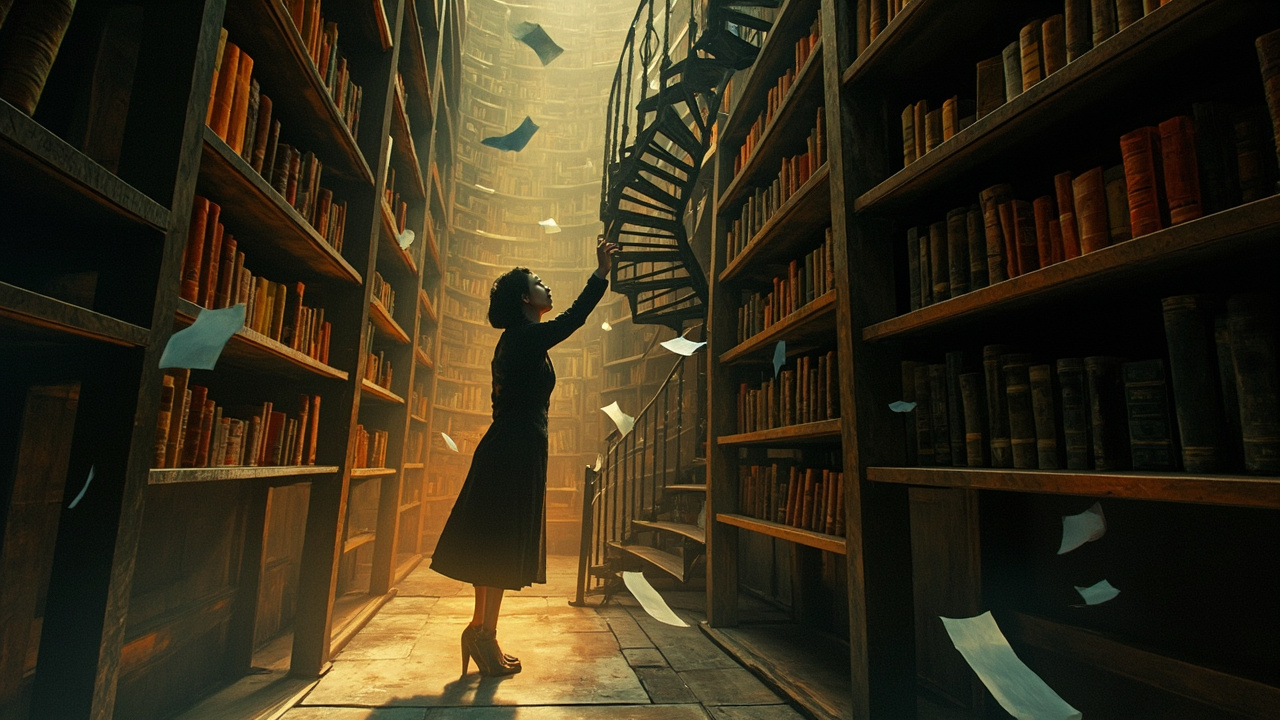
في اليوم الذي نُقل فيه آخر ما تبقى من مجموعة بولتون إلى القبو الجديد تحت الأرض التابع للمكتبة البريطانية، وقفت إلينور مارش وحيدة على رصيف التحميل تستمع إلى الصمت الذي تركته خلفها. سبع عشرة سنة أمضتها محافظاً أقدم، سبع عشرة سنة من المناديل الخالية من الأحماض وصناديق التحكم المناخي والاحترام الخاص الذي يتعلمه الإنسان لتخصيصه للصفحات التي نجت من النار والفيضانات وأيدي القرون غير المبالية. والآن بدت أرفف بولتون فارغة كأنها شواهد قبور، وأصبحت قاعات القراءة الكبرى — التي كانت تعج في يوم من الأيام بحفيف الصفحات المتقلبة وخدش أقلام الرصاص — فارغة بشكل غريب، كأن المبنى نفسه يحبس أنفاسه. كان النقل ضرورة متنكرة في ثوب التقدم. وعد القبو الجديد، المحفور ثلاثة طوابق تحت شارع يوستون، بضوابط بيئية بدقة غير مسبوقة. كان ذلك، على ما طمأنهم المديرون، انتصاراً. ابتسمت إلينور في الأوقات المناسبة خلال الحفل. لم تتحدث عن الأحلام. كانت قد بدأت قبل ثلاث ليالٍ من إتمام النقل. في البداية رفضتها باعتبارها الثمن الطبيعي للإرهاق، العقل يعيد تشغيل عمل اليوم في حلقات متقطعة. لكن الصور كانت محددة جداً، متحسّسة جداً. كانت تحلم بغرفة لم تدخلها أبداً — سقوف منخفضة، أرفف منحنية بالرطوبة، رائحة دخان الشموع وورق متغير اللون — وفي تلك الغرفة، أصوات. ليست أصوات أناس، بل شيء أغرب: أصوات النصوص نفسها، تتلو مقاطع بلغات لا تتحدثها، وتتكالب إيقاعاتها كجوقة أشباح تتخاصم على من سُمع آخر مرة. لم تذكر ذلك لأحد. أن تذكره يعني أن تدعو القلق الودود المتعاطف الذي لاحظته موجهاً إلى الزملاء الذين سمحوا لثقل المجموعة بالاستقرار عليهم ثقلاً شديداً. للمكتبة أشباحها — كل مؤسسة ذات عمر كافٍ لها أشباح — لكن الأشباح ليست موضوعاً للنقاش المهني. نمت الهمسات بصورة أكثر إلحاحاً. جاءت إليها خلال استراحات الغداء، في الممر المهجور خارج جناح بولتون السابق، مكان بدأت تتردد عليه دون أن تعترف لنفسها بالسبب. كانت تضغط راحة يدها على الخشب العاري لرف فارغ وتشعر بالاهتزازات تحت أطراف أصابعها — ليس صوتاً بالضبط، بل ذكرى صوت، كأن الرف يحمل انطباع كل صفحة كانت تستريح عليه يوماً. وداخل ذلك الاهتزاز، كلمات. شظايا. "...البحر يتذكر ما تنساه الشاطئ..." "...في سنة الملك الأجوف، عندما صمتت أجراس كنيسة سانت ميرين..." "...كانت ترتدي وردة البوصلة على معصمها ولا تثق بأي خريطة لا تنزف..." هذه لم تكن عشوائية. كان لدى إلينور يقين من ذلك، بنفس اليقين الذي قادها عبر ثلاثة عقود من التحليل النصي. شظايا، نعم، لكن شظايا تنتمي إلى بعضها، تشكل أعضاء مبعثرة لنص واحد جوهري. بدأت تفهرسها. ملأت دفتراً بنسخات منقولة، محاولة منها أن تورد في إنجليزية بسيطة ما يصل إلى أذنها كتلة موسيقية خالصة. كان الأسلوب لا لبس فيه من أوائل العصر الحديث — ربما القرن السادس عشر المتأخر — لكن الصوت كان مختلفاً عن أي شيء صادفته في الأدب. كان حاداً، سياسياً، يخترقه حميمية بدت شبه اعترافية. قادتها أبحاثها إلى سجلات المنشأ. كانت مجموعة بولتون قد اكتُسبت عام 1847 من ممتلكات السير جيفري بولتون، أرستقراطي صغير هاوٍ للآثار antique whose private library had apparently contained several hundred volumes that were never formally catalogued. Upon Bolton's death, the collection had passed to his university with conditions that were, even by Victorian standards, unusually restrictive. The books had been stored, never displayed, and access had been granted to no more than a handful of scholars over two centuries. Most of those scholars had noted, in their brief reports, that the collection appeared to contain works of which no other copies existed. Eleanor's pulse quickened. Lost texts. Entire libraries of voices that had been silenced not by fire or decay but by deliberate concealment. She thought of the whisper she had heard most often, the one that came to her most clearly: "We are not gone. We are merely unopened." And she understood, with the clarity that arrives not through logic but through accumulated instinct, that the texts were not merely lost. They were waiting. They had been waiting for centuries, and they had chosen the silence of the vault to make themselves heard through the only conduit still open to them — a conservator who had spent her life listening to the complaints of fragile paper. She requested access to the vault. The request was approved with the bureaucratic indifference she had anticipated. She descended alone, her authorisation card glowing green at each checkpoint, until she stood in the chamber itself: a cathedral of steel and humidity, the books arranged in climate-sealed chambers that stretched beyond the reach of the emergency lighting. She walked the aisles slowly, her footsteps muffled by the thick rubber flooring. She could feel nothing. No vibration. No whisper. The silence was total and absolute, and for one terrible moment she believed she had been wrong about everything — that the fragments had been no more than the fevered constructions of an overtired mind. She knelt. She placed both hands flat on the floor between the shelves and closed her eyes. She breathed. And then, from somewhere deep beneath the concrete and the bedrock, she heard it: not a single voice but a vast, polyphonic murmur, as though every text in the vault had turned to speech simultaneously. It was not threatening. It was the sound of something long suppressed, finally permitted to exhale. And within it, she heard — she understood — the shape of what had been hidden. Not a single book but a whole library, assembled in secret by someone who had believed that certain truths were too dangerous to be trusted to the open air of common discourse. She understood then that she had not been chosen by the texts. She had been prepared by them. Every careful unwrapping, every minute of humidity adjustment, every whispered apology to a crumbling binding — all of it had been a form of attention, and attention, given long enough, becomes a kind of love, and love, given to objects that have been starved of it for centuries, becomes a door that swings open in both directions.
An dem Tag, als der letzte Teil der Bolton-Sammlung in den neuen unterirdischen Tresor unter der British Library hinabgelassen wurde, stand Eleanor Marsh allein auf der Verladplattform und lauschte der Stille, die er hinterlassen hatte. Siebzehn Jahre hatte sie als leitende Restauratorin verbracht, siebzehn Jahre säurefreies Seidenpapier und klimakontrollierte Vitrinen und jene besondere Ehrfurcht, die man für Seiten lernt aufzusparen, die Feuer, Überschwemmung und die sorglosen Hände von Jahrhunderten überlebt haben. Nun standen die Bolton-Regale leer wie Grabsteine, und die großen Lesesäle — einst so erfüllt vom Rascheln umgeblätterter Seiten und dem Kratzen von Bleistiften — fühlten sich seltsam hohl an, als halte das Gebäude selbst den Atem an. Der Umzug war Notwendigkeit im Gewand des Fortschritts. Der neue Tresor, drei Stockwerke unter der Euston Road in den Fels gehauen, versprach Umgebungskontrollen von beispielloser Präzision. Es war, so versicherten die Direktoren allen, ein Triumph. Eleanor hatte an den passenden Stellen der Zeremonie gelächelt. Sie erwähnte die Träume nicht. Sie hatten drei Nächte nach Abschluss der Übersiedlung begonnen. Zuerst hatte sie sie als gewöhnlichen Tribut der Erschöpfung abgetan, der Geist spult den Tagesablauf in fragmentarischen Schleifen erneut ab. Aber die Bilder waren zu spezifisch, zu texturiert. Sie träumte von einem Raum, den sie nie betreten hatte — niedrige Decken, durch Feuchtigkeit verworfene Regale, der Geruch von Kerzenrauch und fleckigem Papier — und in dem Raum Stimmen. Nicht die Stimmen von Menschen, sondern etwas Seltsameres: die Stimmen der Texte selbst, die Passagen in Sprachen vortrugen, die sie nicht sprach, ihre Kadenzen überlagerten sich wie ein Chor von Geistern, die darüber stritten, wer zuletzt gehört worden war. Sie erzählte es niemandem. Es zu erwähnen würde bedeuten, die sanfte, mitleidige Fürsorge einzuladen, die sie bei Kollegen beobachtet hatte, die zugelassen hatten, dass das Gewicht der Sammlung zu schwer auf ihnen lastete. Die Bibliothek hatte ihre Geister — jede Institution ausreichenden Alters hat das — aber Geister waren keine Themen für professionelle Diskussion. Das Flüstern wurde hartnäckiger. Es kam zu ihr während ihrer Mittagspausen, in dem verlassenen Korridor vor dem ehemaligen Bolton-Flügel, einem Ort, den sie zu heimsuchen begonnen hatte, ohne ganz zuzugeben, warum. Sie presste ihre Handfläche gegen das bloße Holz eines leeren Regals und spürte Vibrationen unter ihren Fingerspitzen — nicht wirklich ein Geräusch, sondern die Erinnerung an ein Geräusch, als behielte das Regal den Abdruck jeder Seite, die einst darauf geruht hatte. Und innerhalb dieser Vibration, Worte. Fragmente. „...das Meer erinnert sich an das, was das Ufer vergisst...“ „...im Jahr des hohlen Königs, als die Glocken von Sankt Merryn verstummten...“ „...sie trug die Kompassrose am Handgelenk und vertraute keiner Karte, die nicht blutete...“ Diese waren nicht zufällig. Eleanor war sich dessen sicher, mit derselben Gewissheit, die sie durch drei Jahrzehnte textueller Analyse geführt hatte. Fragmente, ja, aber Fragmente, die zusammengehörten, die die verstreuten Gliedmaßen eines einzigen, substantial text bildeten. Sie begann sie zu katalogisieren. Sie füllte ein Notizbuch mit Transkriptionen und versuchte, das, was ihr Ohr als reine kadenzierte Musik empfing, in einfacher englischer Sprache wiederzugeben. Der Stil war unverkennbar frühneuzeitlich — vielleicht spätes sechzehntes Jahrhundert — aber die Stimme war unlike anything she had encountered in the canon. It was fierce, political, and shot through with an intimacy that felt almost confessional. Her research led her to the provenance records. The Bolton Collection had been acquired in 1847 from the estate of Sir Geoffrey Bolton, a minor aristocrat and amateur antiquarian whose private library had apparently contained several hundred volumes that were never formally catalogued. Upon Bolton's death, the collection had passed to his university with conditions that were, even by Victorian standards, unusually restrictive. The books had been stored, never displayed, and access had been granted to no more than a handful of scholars over two centuries. Most of those scholars had noted, in their brief reports, that the collection appeared to contain works of which no other copies existed. Eleanor's pulse quickened. Lost texts. Entire libraries of voices that had been silenced not by fire or decay but by deliberate concealment. She thought of the whisper she had heard most often, the one that came to her most clearly: "We are not gone. We are merely unopened." And she understood, with the clarity that arrives not through logic but through accumulated instinct, that the texts were not merely lost. They were waiting. They had been waiting for centuries, and they had chosen the silence of the vault to make themselves heard through the only conduit still open to them — a conservator who had spent her life listening to the complaints of fragile paper. She requested access to the vault. The request was approved with the bureaucratic indifference she had anticipated. She descended alone, her authorisation card glowing green at each checkpoint, until she stood in the chamber itself: a cathedral of steel and humidity, the books arranged in climate-sealed chambers that stretched beyond the reach of the emergency lighting. She walked the aisles slowly, her footsteps muffled by the thick rubber flooring. She could feel nothing. No vibration. No whisper. The silence was total and absolute, and for one terrible moment she believed she had been wrong about everything — that the fragments had been no more than the fevered constructions of an overtired mind. She knelt. She placed both hands flat on the floor between the shelves and closed her eyes. She breathed. And then, from somewhere deep beneath the concrete and the bedrock, she heard it: not a single voice but a vast, polyphonic murmur, as though every text in the vault had turned to speech simultaneously. It was not threatening. It was the sound of something long suppressed, finally permitted to exhale. And within it, she heard — she understood — the shape of what had been hidden. Not a single book but a whole library, assembled in secret by someone who had believed that certain truths were too dangerous to be trusted to the open air of common discourse. She understood then that she had not been chosen by the texts. She had been prepared by them. Every careful unwrapping, every minute of humidity adjustment, every whispered apology to a crumbling binding — all of it had been a form of attention, and attention, given long enough, becomes a kind of love, and love, given to objects that have been starved of it for centuries, becomes a door that swings open in both directions.
El día en que el último ejemplar de la Colección Bolton fue descendido a la nueva cámara subterránea bajo la Biblioteca Británica, Eleanor Marsh se quedó sola en la plataforma de carga escuchando el silencio que había dejado atrás. Diecisiete años había pasado como restauradora principal, diecisiete años de papel de seda libre de ácidos y vitrinas con control climático y esa reverencia particular que uno aprende a reservar para las páginas que han sobrevivido al fuego, las inundaciones y las manos descuidadas de los siglos. Ahora los estantes Bolton se erguían vacíos como lápidas, y las grandes Salas de Lectura — antes tan densas con el crujido de las páginas al pasar y el rasguño de los lápices — se sentían extrañamente huecas, como si el edificio mismo estuviera conteniendo el aliento. La mudanza había sido necesidad disfrazada de progreso. La nueva cámara, perforada tres pisos bajo Euston Road, prometía controles ambientales de precisión sin precedentes. Era, los directores habían asegurado a todos, un triunfo. Eleanor sonrió en los momentos apropiados durante la ceremonia. No mencionó los sueños. Habían comenzado tres noches después de completarse la transferencia. Al principio los rechazó como el peaje ordinario del agotamiento, la mente reproduciendo el trabajo del día en bucles fragmentarios. Pero las imágenes eran demasiado específicas, demasiado texturizadas. Soñaba con una habitación que nunca había visitado — techos bajos, estantes combados por la humedad, el olor a humo de velas y papel oxidado — y en la habitación, voces. No las voces de personas, sino algo más extraño: las voces de los propios textos, recitando pasajes en idiomas que ella no hablaba, sus cadencias superponiéndose como un coro de fantasmas discutiendo sobre quién había sido escuchado por última vez. No se lo mencionó a nadie. Mencionarlo habría sido invitar la gentil, compasiva preocupación que había observado dirigida a colegas que habían permitido que el peso de la colección se asentara demasiado pesadamente sobre ellos. La Biblioteca tenía sus fantasmas — toda institución de edad suficiente los tiene — pero los fantasmas no eran temas para discusión profesional. Los susurros se volvieron más insistentes. Vinieron a ella durante sus descansos del almuerzo, en el corredor desierto fuera del antiguo ala Bolton, un lugar al que había comenzado a rondar sin admitir del todo por qué. Presionaba la palma de su mano contra la madera desnuda de un estante vacío y sentía vibraciones bajo las yemas de sus dedos — no exactamente un sonido, sino el recuerdo de un sonido, como si el estante conservara la impronta de cada página que alguna vez había descansado sobre él. Y dentro de esa vibración, palabras. Fragmentos. «...el mar recuerda lo que la orilla olvida...» «...en el año del rey hueco, cuando las campanas de San Merryn callaron...» «...ella llevaba la rosa de los vientos en la muñeca y no fiaba de ningún mapa que no sangrara...» Estos no eran aleatorios. Eleanor estaba segura de ello, con la misma certeza que la había guiado a través de tres décadas de análisis textual. Fragmentos, sí, pero fragmentos que pertenecían juntos, que constituían los miembros dispersos de un único texto sustancial. Comenzó a catalogarlos. Llenó un cuaderno con transcripciones, intentandorender en inglés llano lo que su oído recibía como pura música cadenciosa. El estilo era inconfundiblemente de la primera modernidad — quizás del siglo dieciséis tardío — pero la voz era unlike anything she had encountered in the canon. It was fierce, political, and shot through with an intimacy that felt almost confessional. Her research led her to the provenance records. The Bolton Collection had been acquired in 1847 from the estate of Sir Geoffrey Bolton, a minor aristocrat and amateur antiquarian whose private library had apparently contained several hundred volumes that were never formally catalogued. Upon Bolton's death, the collection had passed to his university with conditions that were, even by Victorian standards, unusually restrictive. The books had been stored, never displayed, and access had been granted to no more than a handful of scholars over two centuries. Most of those scholars had noted, in their brief reports, that the collection appeared to contain works of which no other copies existed. Eleanor's pulse quickened. Lost texts. Entire libraries of voices that had been silenced not by fire or decay but by deliberate concealment. She thought of the whisper she had heard most often, the one that came to her most clearly: "We are not gone. We are merely unopened." And she understood, with the clarity that arrives not through logic but through accumulated instinct, that the texts were not merely lost. They were waiting. They had been waiting for centuries, and they had chosen the silence of the vault to make themselves heard through the only conduit still open to them — a conservator who had spent her life listening to the complaints of fragile paper. She requested access to the vault. The request was approved with the bureaucratic indifference she had anticipated. She descended alone, her authorisation card glowing green at each checkpoint, until she stood in the chamber itself: a cathedral of steel and humidity, the books arranged in climate-sealed chambers that stretched beyond the reach of the emergency lighting. She walked the aisles slowly, her footsteps muffled by the thick rubber flooring. She could feel nothing. No vibration. No whisper. The silence was total and absolute, and for one terrible moment she believed she had been wrong about everything — that the fragments had been no more than the fevered constructions of an overtired mind. She knelt. She placed both hands flat on the floor between the shelves and closed her eyes. She breathed. And then, from somewhere deep beneath the concrete and the bedrock, she heard it: not a single voice but a vast, polyphonic murmur, as though every text in the vault had turned to speech simultaneously. It was not threatening. It was the sound of something long suppressed, finally permitted to exhale. And within it, she heard — she understood — the shape of what had been hidden. Not a single book but a whole library, assembled in secret by someone who had believed that certain truths were too dangerous to be trusted to the open air of common discourse. She understood then that she had not been chosen by the texts. She had been prepared by them. Every careful unwrapping, every minute of humidity adjustment, every whispered apology to a crumbling binding — all of it had been a form of attention, and attention, given long enough, becomes a kind of love, and love, given to objects that have been starved of it for centuries, becomes a door that swings open in both directions.
Le jour où le dernier élément de la Collection Bolton fut descendu dans la nouvelle chambre souterraine sous la British Library, Eleanor Marsh se tenait seule sur la plateforme de chargement et écoutait le silence qu'il avait laissé derrière elle. Dix-sept ans qu'elle avait passés comme restauratrice principale, dix-sept ans de papier de soie sans acide et de vitrines à contrôle climatique et de cette révérence particulière qu'on apprend à réserver aux pages qui ont survécu au feu, aux inondations et aux mains négligentes des siècles. Maintenant les étagères Bolton se dressaient vides comme des pierres tombales, et les grandes Salles de lecture — autrefois si épaisses du froissement des pages tournées et du grattement des crayons — semblaient étrangement creuses, comme si le bâtiment lui-même retenait son souffle. Le déménagement avait été une nécessité déguisée en progrès. La nouvelle chambre, forée sur trois étages sous Euston Road, promettait des contrôles environnementaux d'une précision sans précédent. C'était, les directeurs l'avaient assuré à tous, un triomphe. Eleanor avait souli aux moments appropriés de la cérémonie. Elle n'avait pas mentionné les rêves. Ils avaient commencé trois nuits après l'achèvement du transfert. D'abord, elle les avait écartés comme le tribut ordinaire de l'épuisement, l'esprit rejouant le travail de la journée en boucles fragmentaires. Mais les images étaient trop précises, trop texturées. Elle rêvait d'une pièce qu'elle n'avait jamais visitée — plafonds bas, étagères gondolées par l'humidité, odeur de fumée de bougie et de papier piqué — et dans cette pièce, des voix. Non pas les voix de gens, mais quelque chose de plus étrange : les voix des textes eux-mêmes, récitant des passages dans des langues qu'elle ne parlait pas, leurs cadences se chevauchant comme un chœur de fantômes se disputant pour savoir qui avait été entendu en dernier. Elle n'en parla à personne. En parler aurait été inviter la concern poli et compatissant qu'elle avait observé être dirigé vers des collègues qui avaient permis au poids de la collection de s'installer trop lourdement sur eux. La Bibliothèque avait ses fantômes — chaque institution d'un âge suffisant en a — mais les fantômes n'étaient pas des sujets de discussion professionnelle. Les murmures devinrent plus insistants. Ils la visitèrent pendant ses pauses déjeuner, dans le couloir déserté à l'extérieur de l'ancien aile Bolton, un endroit qu'elle avait pris l'habitude de hanter sans vraiment savoir pourquoi. Elle appuyait sa paume contre le bois nu d'une étagère vide et sentait des vibrations sous ses doigts — pas vraiment un son, mais le souvenir d'un son, comme si l'étagère conservait l'empreinte de chaque page qui s'y était autrefois reposée. Et dans cette vibration, des mots. Des fragments. «...la mer se souvient de ce que le rivage oublie...» «...l'année du roi creux, quand les cloches de Saint-Merynn se turent...» «...elle portait la rose des vents à son poignet et ne se fiait à aucune carte qui ne saignait pas...» Ceux-ci n'étaient pas aléatoires. Eleanor en était certaine, avec la même certitude qui l'avait guidée à travers trois décennies d'analyse textuelle. Des fragments, oui, mais des fragments qui appartenaient ensemble, qui constituaient les membres dispersés d'un seul texte substantiel. Elle commença à les cataloguer. Elle remplit un cahier de transcriptions, tentant de rendre en anglais simple ce que son oreille percevait comme une musique purement cadencée. Le style était indéniablement moderne précoce — peut-être fin du seizième siècle — mais la voix était unlike anything she had encountered in the canon. It was fierce, political, and shot through with an intimacy that felt almost confessional. Her research led her to the provenance records. The Bolton Collection had been acquired in 1847 from the estate of Sir Geoffrey Bolton, a minor aristocrat and amateur antiquarian whose private library had apparently contained several hundred volumes that were never formally catalogued. Upon Bolton's death, the collection had passed to his university with conditions that were, even by Victorian standards, unusually restrictive. The books had been stored, never displayed, and access had been granted to no more than a handful of scholars over two centuries. Most of those scholars had noted, in their brief reports, that the collection appeared to contain works of which no other copies existed. Eleanor's pulse quickened. Lost texts. Entire libraries of voices that had been silenced not by fire or decay but by deliberate concealment. She thought of the whisper she had heard most often, the one that came to her most clearly: "We are not gone. We are merely unopened." And she understood, with the clarity that arrives not through logic but through accumulated instinct, that the texts were not merely lost. They were waiting. They had been waiting for centuries, and they had chosen the silence of the vault to make themselves heard through the only conduit still open to them — a conservator who had spent her life listening to the complaints of fragile paper. She requested access to the vault. The request was approved with the bureaucratic indifference she had anticipated. She descended alone, her authorisation card glowing green at each checkpoint, until she stood in the chamber itself: a cathedral of steel and humidity, the books arranged in climate-sealed chambers that stretched beyond the reach of the emergency lighting. She walked the aisles slowly, her footsteps muffled by the thick rubber flooring. She could feel nothing. No vibration. No whisper. The silence was total and absolute, and for one terrible moment she believed she had been wrong about everything — that the fragments had been no more than the fevered constructions of an overtired mind. She knelt. She placed both hands flat on the floor between the shelves and closed her eyes. She breathed. And then, from somewhere deep beneath the concrete and the bedrock, she heard it: not a single voice but a vast, polyphonic murmur, as though every text in the vault had turned to speech simultaneously. It was not threatening. It was the sound of something long suppressed, finally permitted to exhale. And within it, she heard — she understood — the shape of what had been hidden. Not a single book but a whole library, assembled in secret by someone who had believed that certain truths were too dangerous to be trusted to the open air of common discourse. She understood then that she had not been chosen by the texts. She had been prepared by them. Every careful unwrapping, every minute of humidity adjustment, every whispered apology to a crumbling binding — all of it had been a form of attention, and attention, given long enough, becomes a kind of love, and love, given to objects that have been starved of it for centuries, becomes a door that swings open in both directions.
Il giorno in cui l'ultima parte della Collezione Bolton fu calata nella nuova camera ipogea sotto la British Library, Eleanor Marsh stava sola sulla piattaforma di carico ad ascoltare il silenzio che aveva lasciato dietro di sé. Diciassette anni li aveva trascorsi come restauratrice senior, diciassette anni di carta velina priva di acidi e teche a controllo climatico e quella particolare reverenza che si impara a riservare alle pagine che sono sopravvissute al fuoco, alle inondazioni e alle mani incuranti dei secoli. Ora gli scaffali Bolton stavano vuoti come lapidi, e i grandi Sale di Lettura — un tempo così dense del fruscio delle pagine girate e del gratta gratta delle matite — sembravano stranamente vuote, come se l'edificio stesso trattenesse il respiro. Il trasloco era stata una necessità travestita da progresso. La nuova camera, scavata tre piani sotto Euston Road, prometteva controlli ambientali di precisione senza precedenti. Era, i direttori avevano assicurato a tutti, un trionfo. Eleanor aveva sorriso nei momenti appropriati durante la cerimonia. Non aveva menzionato i sogni. Erano iniziati tre notti dopo il completamento del trasferimento. All'inizio li aveva scartati come il pedaggio ordinario dell'esaurimento, la mente che riproduce il lavoro della giornata in loop frammentari. Ma le immagini erano troppo specifiche, troppo texturate. Sognava una stanza che non aveva mai visitato — soffitti bassi, scaffali curvati dall'umidità, l'odore di fumo di candela e carta macchiata — e nella stanza, voci. Non le voci di persone, ma qualcosa di più strano: le voci dei testi stessi, che recitavano passaggi in lingue che lei non parlava, le loro cadenze che si sovrapponevano come un coro di fantasmi che litigano su chi è stato sentito per ultimo. Non ne parlò con nessuno. Parlarne avrebbe significato invitare la gentile, pietosa preoccupazione che aveva osservato essere rivolta a colleghi che avevano permesso al peso della collezione di gravare troppo su di loro. La Biblioteca aveva i suoi fantasmi — ogni istituzione di età sufficiente li ha — ma i fantasmi non erano argomenti per discussioni professionali. I sussurri divennero più insistenti. Vennero a lei durante le pause pranzo, nel corridoio deserto fuori dalla ex ala Bolton, un posto che aveva preso a frequentare senza ammettere del tutto il perché. Premeva il palmo della mano contro il legno nudo di uno scaffale vuoto e sentiva vibrazioni sotto le punte delle dita — non un suono, esattamente, ma il ricordo di un suono, come se lo scaffale conservasse l'impronta di ogni pagina che un tempo vi riposava. E dentro quella vibrazione, parole. Frammenti. «...il mare ricorda ciò che la riva dimentica...» «...nell'anno del re vuoto, quando le campane di San Merryn tacquero...» «...indossava la rosa dei venti al polso e non si fidava di nessuna mappa che non sanguinasse...» Questi non erano casuali. Eleanor ne era certa, con la stessa certezza che l'aveva guidata attraverso tre decenni di analisi testuale. Frammenti, sì, ma frammenti che appartenevano insieme, che costituivano le membra sparse di un unico, sostanzioso testo. Cominciò a catalogarli. Riempì un quaderno di trascrizioni, cercando di rendere in inglese semplice ciò che il suo orecchio riceveva come pura musica cadenzata. Lo stile era inconfondibilmente primo moderno — forse tardo sedicesimo secolo — ma la voce era unlike anything she had encountered in the canon. It was fierce, political, and shot through with an intimacy that felt almost confessional. Her research led her to the provenance records. The Bolton Collection had been acquired in 1847 from the estate of Sir Geoffrey Bolton, a minor aristocrat and amateur antiquarian whose private library had apparently contained several hundred volumes that were never formally catalogued. Upon Bolton's death, the collection had passed to his university with conditions that were, even by Victorian standards, unusually restrictive. The books had been stored, never displayed, and access had been granted to no more than a handful of scholars over two centuries. Most of those scholars had noted, in their brief reports, that the collection appeared to contain works of which no other copies existed. Eleanor's pulse quickened. Lost texts. Entire libraries of voices that had been silenced not by fire or decay but by deliberate concealment. She thought of the whisper she had heard most often, the one that came to her most clearly: "We are not gone. We are merely unopened." And she understood, with the clarity that arrives not through logic but through accumulated instinct, that the texts were not merely lost. They were waiting. They had been waiting for centuries, and they had chosen the silence of the vault to make themselves heard through the only conduit still open to them — a conservator who had spent her life listening to the complaints of fragile paper. She requested access to the vault. The request was approved with the bureaucratic indifference she had anticipated. She descended alone, her authorisation card glowing green at each checkpoint, until she stood in the chamber itself: a cathedral of steel and humidity, the books arranged in climate-sealed chambers that stretched beyond the reach of the emergency lighting. She walked the aisles slowly, her footsteps muffled by the thick rubber flooring. She could feel nothing. No vibration. No whisper. The silence was total and absolute, and for one terrible moment she believed she had been wrong about everything — that the fragments had been no more than the fevered constructions of an overtired mind. She knelt. She placed both hands flat on the floor between the shelves and closed her eyes. She breathed. And then, from somewhere deep beneath the concrete and the bedrock, she heard it: not a single voice but a vast, polyphonic murmur, as though every text in the vault had turned to speech simultaneously. It was not threatening. It was the sound of something long suppressed, finally permitted to exhale. And within it, she heard — she understood — the shape of what had been hidden. Not a single book but a whole library, assembled in secret by someone who had believed that certain truths were too dangerous to be trusted to the open air of common discourse. She understood then that she had not been chosen by the texts. She had been prepared by them. Every careful unwrapping, every minute of humidity adjustment, every whispered apology to a crumbling binding — all of it had been a form of attention, and attention, given long enough, becomes a kind of love, and love, given to objects that have been starved of it for centuries, becomes a door that swings open in both directions.