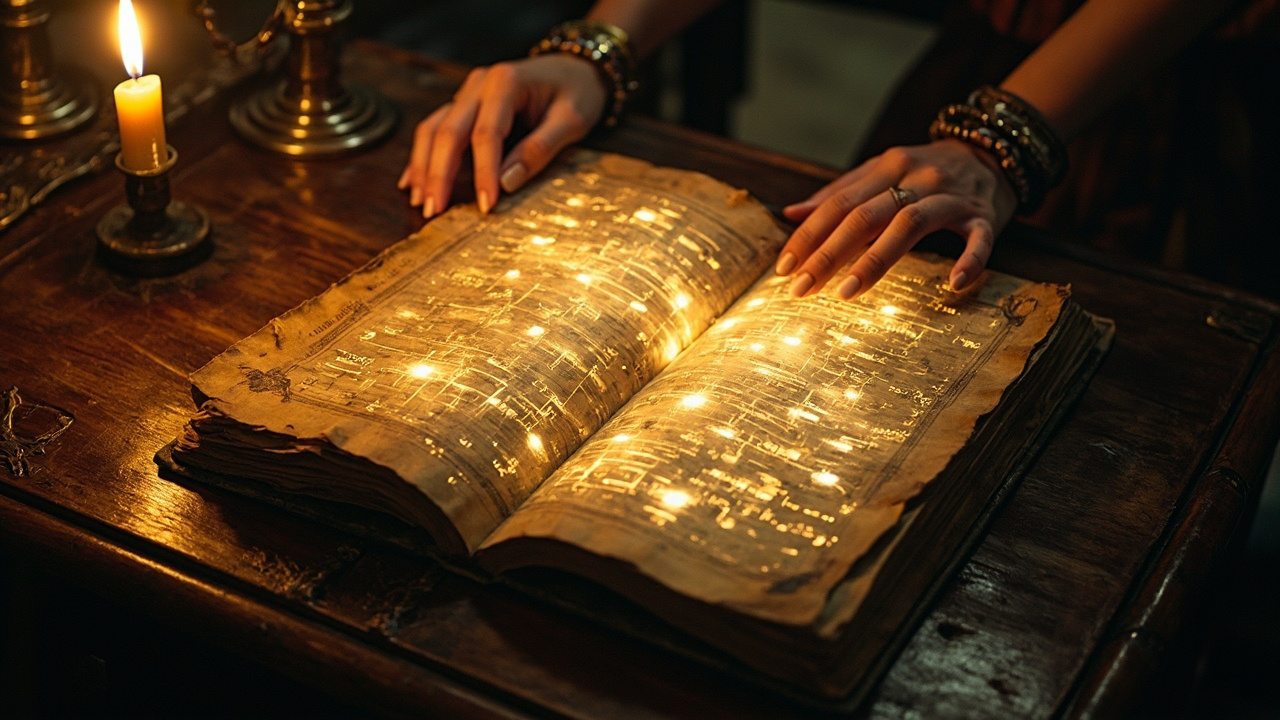
وصل المخطوطة دون أي مظاهر احتفالية. مُغلَّفة في رقٍّ بالٍ متفتت الأطراف، كانت قد أُدرجت خطأً بين المعالجات الفلكية في مكتبة رين ثلاثمائة عام.认识了 equations قبل أن تنتهي من الصفحة الأولى من المخطوطة، доктор إلينور فانس، التي أمضت أربعة عشر عامًا تحاول إثبات أن الإزاحة الزمنية قد تكون ممكنة نظريًا.
كانت الرياضيات مستحيلة. ليس بمعنى أنها كانت خاطئة، بل بمعنى أنها كانت تصف ظواهر لم يكن بإمكان أي عالم في القرن السابع عشر أن يتصورها. التفاضل والتكامل المستخدم لا يشبه صيغ نيوتن في تلك الحقبة، ومع ذلك كان متسقًا داخليًا، أنيقًا، ودقيقًا بشكل مريع.
«يجب أن تكون مخطئة»، قال البروفيسور ماركوس أشوورث، بينما التقت حاجباه الفضيتان معًا وهو يفحص المخطوطة في مكتب إلينور المزدحم. كان قسم التاريخ قد أرسله مترددًا، مقتنعًا بأن الفيزيائية أخيرًا استسلمت للوهم الأكاديمي. «هذه القطعة مؤرخة عام 1687. المؤلف يعرّف نفسه sebagai إيزاك بلاكوود، كيميائي من غلوسcestershire. مهما كانت هذه الرموز تمثل، لا يمكن أن تكون ما تدّعين.»
«ومع ذلك فهي كذلك»، ردت إلينور، موزعة الصفوف الهشة على مكتبها. «ماركوس، أمضيت حياتي المهنية أؤكد أن السفر الزمني العكسي محظور رياضيًا. مفارقة الجد، مفارقة التمهيد، انتهاك السببية itself—هذه ليست مجرد اعتراضات نظرية. إنها حواجز مطلقة. ومع ذلك تصف هذه المخطوطة طريقة للتحايل عليها جميعًا.»
شاهدت وجه المؤرخ يتحول بينما استقرت عليه المضامين. ماركوس أشوورث لم يكن رجلاً يميل إلى السذاجة. بنى سمعته على الدراية الدقيقة، على التراكم المريض للأدلة، على التزام راسخ بالمُثبت والمُتحقق منه. ومع ذلك، هنا أمامه شيء يتحدى التصنيف.
«إذا كان هذا أصليًا»، قال ببطء، «فإن بلاكوود كان يمتلك معرفة لن تُطوَّر قبل ثلاثمائة عام أخرى. كيف؟»
«ذلك»، قالت إلينور، «هو بالضبط ما يجب أن نحدده. ويجب أن نفعل ذلك قبل أن يفعلها شخص آخر.»
كانت قد لاحظت الظلال بالفعل. زميل بدا غير مبالٍ بعملها أصبح يراقبها الآن باهتمام جديد. وافق طلب تمويل بسرعة غير معتادة. موقع المخطوطة سُجّل في قاعدة بيانات يمكن لعشرات الباحثين الوصول إليها. whoever sought the Chronos Codex—وهي كانت قد بدأت بالفعل تسميته بذلك الاسم—لن يكون بعيدًا.
جاء erste التدخل بعد ثلاث ليالٍ. وصلت إلينور عند الفجر لتجد مكتبها مسروقًا، ملاحظاتها متناثرة، حالة الحماية فارغة. اتصلت بماركوس في حالة من الذعر المتحكم فيه، صوتها ثابت رغم ارتجاف يديها.
«إنهم拿到了»، قالت. «必须快速行动.»
ما تلا ذلك كان مطاردة unlike أي واحدة في التاريخ المسجل. تبعوا السارق—شخصية بدت موجودةًا فقط على هامش الذاكرة المؤسسية—إلى مستودع على أطراف المدينة. هناك، محاطًا بحاويات الشحن التي تحمل تواريخ من المستقبل، واجهوا الرجل الذي لم يُعرّف عن نفسه إلا باسم ريناتوس.
«أنتِ تسيئين فهم الموقف»، قال ريناتوس، لكنجته المستحيلةPlace، وعيناه تحتفظان بثقل القرون. «أنا لست الشرير في هذه السردية. أنا مجرد خاتمتها. فهم بلاكوود ما أنتِ بدأتِ فقط تدركينه: أن المدوَّنة ليست هبة بل عبء. يجب جمعها، احتواؤها، منعها من السقوط أبدًا في أيدي من يريدون تفكيك الحاضر سعيًا وراء ماضٍ أفضل.»
«إذن لماذا تسرقها؟» طالب ماركوس. «إذا كانت نواياك حماية، لماذا لا تطلب ببساطة؟»
ابتسم ريناتوس، ولحظة، رأت إلينور الإرهاق وراء يقينه. «لأنني طلبت، بروفيسور. عبر lifetimes، عبر iterations من هذه المحادثة نفسها، طلبت. وفي كل جدول زمني، الإجابة واحدة: البشرية لا تستطيع مقاومة temptation لإعادة الكتابة. الوعد بالكمال، والكمال هو enemy of good enough.»
في المواجهة التي تلت، اتخذت إلينور قرارًا. اختطفت المخطوطة من grasp ريناتوس، وبدلاً من السماح له بالمطالبة بها أو السماح بتدميرها، فتحتها على الصفحة الأخيرة—التي كانت دائمًا فارغة في فحصاتها السابقة. هناك، بحبر لم يكن مرئيًا من قبل، انتظرها entry بلاكوود الأخير.
لمن يجد هذه الكلمات: المعادلات صحيحة. أعرف هذا لأنني استخدمتها، ورأيت العواقب. الجدول الزمني الذي تعيش فيه هو السابع والثلاثون الذي شهدتُه. في كل منها، تجلب المدوَّنة الدمار. ليس عبر الشر، بل عبر الأمل—الأمل في أننا قد نُصحح أخطاءنا، وفي doing so، نخلق أخطاء أكبر. أحرق هذه الصفحات.ذر الرماد. اترك الرياضيات نظرية إلى الأبد. هذا هو المسار الوحيد الذي يقود إلى البقاء.
قرأت إلينور الكلمات بصوت عالٍ. ماركوس، الذي أمضى حياته يعتقد أن المعرفة جيدة inherently، أن الفهم always مفضل على الجهل، شعر بأن foundations فلسفته تتشقق تحت قدميه.
«كتب هذا»، قالت إلينور بهدوء. «رجل في عام 1687 كتب هذا، وهو يعلم أننا سنحتاج إلى سماعه. بطريقة ما، كان قد رأى بالفعل ما سنصبح عليه.»
«كان أول ريناتوس»، تنفس ماركوس. «الأصلي. ذهب إلى الوراء، مرارًا وتكرارًا، محاولًا إصلاح ما لا يمكن إصلاحه.»
في النهاية، لم يحرقوا المخطوطة. لم يستطيعوا. وثيقة بهذا الأصل demanded الحفظ، حتى لو لم يكن بالإمكان استخدام محتوياتها أبدًا. بدلاً من ذلك، أودعوها في أعمق أرشيفات المتحف البريطاني، مختومة في قبو موجود خارج التدفقات العادية للوصول المؤسسي، محمي ببروتوكولات ستتطلب إجماع three مجالس حاكمة منفصلة لتجاوزها.
عادت إلينور إلى الفيزياء النظرية، طموحها الآن مصقولًا بفهم جديد لما لا يجب معرفته. في بعض الأحيان، في ساعات متأخرة من الليل، تتساءل عما إذا كان بلاكوود—أو ريناتوس، كما أصبح يُعرف—يراقب من بعيد، متأكدًا من أن القرار النهائي لم يتخذ بعد. ثم تتذكر كلماته الأخيرة وتترك الظلام يستقر حولها، ممتنةً لما يكفي من الجيد، ومستعدةً للتخلي عن الكمال الذي يَعِد بالخلاص لكنه deliver的唯一结果是毁灭。
Die Handschrift arrived ohne jedes Aufheben. In so altem Pergament eingewickelt, dass es an den Rändern bröselte, war sie drei Jahrhunderte lang falsch katalogisiert worden unter den astronomischen Abhandlungen der Wren-Bibliothek. Dr. Eleanor Vance, die vierzehn Jahre damit verbracht hatte zu beweisen, dass zeitliche Verschiebung theoretisch möglich war, erkannte die Gleichungen, bevor sie die erste Seite fertig gelesen hatte.
Die Mathematik war unmöglich. Nicht in dem Sinne, dass sie falsch war, sondern in dem Sinne, dass sie Phänomene beschrieb, die kein Gelehrter des siebzehnten Jahrhunderts hätte ersinnen können. Die verwendete Infinitesimalrechnung ähnelte in keiner Weise den newtonschen Formulierungen der Ära, und doch war sie intern konsistent, elegant und absolut, furchteinflößend präzise.
„Sie müssen sich irren", sagte Professor Marcus Ashworth, während sich seine silbernen Augenbrauen zusammenzogen, als er die Handschrift in Eleanors überfülltem Büro untersuchte. Die Geschichtsabteilung hatte ihn widerwillig geschickt, überzeugt, dass die Physikerin endlich dem akademischen Wahn verfallen war. „Dieses Fragment ist auf 1687 datiert. Der Autor identifiziert sich als Isaac Blackwood, ein Alchemist aus Gloucestershire. Was auch immer diese Symbole darstellen mögen, sie können unmöglich das sein, was Sie behaupten."
„Und doch sind sie es", erwiderte Eleanor und breitete die brüchigen Seiten auf ihrem Schreibtisch aus. „Marcus, ich habe meine Karriere damit verbracht zu argumentieren, dass Rückwärtsreisen in der Zeit mathematisch verboten ist. Das Großvaterparadoxon, das Bootstrap-Paradoxon, die Verletzung der Kausalität selbst — das sind nicht nur theoretische Einwände. Es sind absolute Barrieren. Und doch beschreibt diese Handschrift eine Methode, sie alle zu umgehen."
Sie beobachtete, wie sich das Gesicht des Historikers wandelte, während die Implikationen sich auf ihn legten. Marcus Ashworth war kein Mann, der leichtgläubig war. Er hatte seinen Ruf auf akribischer Gelehrsamkeit aufgebaut, auf der geduldigen Anhäufung von Beweisen, auf einem unerschütterlichen Engagement für das Nachweisbare und Überprüfbare. Und doch lag hier vor ihm etwas, das sich jeder Kategorisierung entzog.
„Wenn dies echt ist", sagte er langsam, „dann besaß Blackwood Wissen, das erst in weiteren dreihundert Jahren entwickelt werden würde. Wie?"
„Das", sagte Eleanor, „ist genau das, was wir herausfinden müssen. Und wir müssen es tun, bevor es jemand anderes tut."
Sie hatte bereits die Schatten bemerkt. Ein Kollege, der zuvor gleichgültig gegenüber ihrer Arbeit gewesen war, beobachtete sie nun mit neuem Interesse. Ein Finanzierungsantrag war mit ungewöhnlicher Geschwindigkeit genehmigt worden. Der Standort der Handschrift war in einer Datenbank aufgezeichnet worden, auf die Dutzende von Forschern Zugriff hatten. Wer auch immer das Chronos-Kodex suchte — und sie hatte bereits begonnen, es so zu nennen —, würde nicht weit dahinter sein.
Der erste Einbruch erfolgte drei Nächte später. Eleanor kam bei Morgengrauen an und fand ihr Büro durchwühlt vor, ihre Notizen verstreut, die Schutzbox des Manuskripts leer. Sie rief Marcus in einem Zustand kontrollierter Panik an, ihre Stimme ruhig, selbst als ihre Hände zitterten.
„Sie haben es", sagte sie. „Wir müssen schnell handeln."
Was folgte, war eine Verfolgung wie keine andere in der aufgezeichneten Geschichte. Sie verfolgten den Dieb — eine Figur, die nur am Rand des institutionellen Gedächtnisses zu existieren schien — bis zu einem Lagerhaus am Stadtrand. Dort, umgeben von Versandbehältern mit Daten aus der Zukunft, confronteten sie den Mann, der sich nur Renatus nannte.
„Sie verstehen die Situation falsch", sagte Renatus, sein Akzent unmöglich zuzuordnen, seine Augen trugen das Gewicht von Jahrhunderten. „Ich bin nicht der Bösewicht in dieser Erzählung. Ich bin lediglich ihre Konklusion. Blackwood verstand, was Sie erst beginnen zu begreifen: Dass das Kodex kein Geschenk ist, sondern eine Bürde. Es muss gesammelt, eingedämmt, daran gehindert werden, jemals in die Hände derer zu fallen, die die Gegenwart zerstören würden, um eine bessere Vergangenheit zu verfolgen."
„Warum stehlen Sie es dann?", forderte Marcus. „Wenn Ihre Absichten schützend sind, warum nicht einfach fragen?"
Renatus lächelte, und für einen Moment sah Eleanor die Erschöpfung hinter seiner Gewissheit. „Weil ich gefragt habe, Professor. Über Leben hinweg, über Iterationen dieser gleichen Konversation, habe ich gefragt. Und in jeder Zeitlinie ist die Antwort dieselbe: Die Menschheit kann der Versuchung nicht widerstehen umzuschreiben. Das Kodex verspricht Perfektion, und Perfektion ist der Feind von gut genug."
In der Konfrontation, die folgte, traf Eleanor eine Entscheidung. Sie ergriff das Manuskript aus Renatus' Griff und anstatt ihm zu erlauben, es zu beanspruchen oder seine Zerstörung zu gestatten, schlug sie es auf der letzten Seite auf — die in ihren vorherigen Untersuchungen immer leer gewesen war. Dort, in Tinte, die zuvor nicht sichtbar gewesen war, ожидалась Blackwoods letzter Eintrag.
An whoever diese Worte findet: Die Gleichungen sind wahr. Ich weiß dies, weil ich sie benutzt habe, und ich habe die Konsequenzen gesehen. Die Zeitlinie, die ihr bewohnt, ist die siebenunddreißigste, die ich miterlebt habe. In jeder bringt das Kodex Untergang. Nicht durch Bösartigkeit, sondern durch Hoffnung — die Hoffnung, dass wir unsere Fehler korrigieren könnten, und dabei größere schaffen. Verbrennt diese Seiten. Streut die Asche. Lasst die Mathematik für immer theoretisch. Dies ist der einzige Weg, der zum Überleben führt.
Eleanor las die Worte laut vor. Marcus, der sein Leben damit verbracht hatte zu glauben, dass Wissen inhärent gut ist, dass Verständnis immer vorzuziehen ist über Unwissenheit, spürte, wie die Grundfesten seiner Philosophie unter ihm zerbrachen.
„Er schrieb dies", sagte Eleanor leise. „Ein Mann im Jahr 1687 schrieb dies, im Wissen, dass wir es hören müssten. Irgendwie hatte er bereits gesehen, was wir werden würden."
„Er war der erste Renatus", hauchte Marcus. „Der Originale. Er ging zurück, immer wieder, und versuchte zu reparieren, was nicht repariert werden konnte."
Am Ende verbrannten sie die Handschrift nicht. Sie konnten es nicht. Ein Dokument solchen Ursprungs verlangte Bewahrung, selbst wenn sein Inhalt niemals verwendet werden konnte. Stattdessen vertrauten sie es dem tiefsten Archiv des British Museum an, versiegelt in einem Tresor, der außerhalb der normalen Strömungen des institutionellen Zugangs existierte, geschützt durch Protokolle, die den Konsens von drei separaten Leitungsorganen erfordern würden, um außer Kraft gesetzt zu werden.
Eleanor kehrte zur theoretischen Physik zurück, ihr Ehrgeiz nun poliert durch ein neues Verständnis dessen, was man nicht wissen sollte. Manchmal, in den späten Nachtstunden, fragt sie sich, ob Blackwood — oder Renatus, wie er bekannt wurde — aus der Ferne beobachtet, sicher, dass die endgültige Entscheidung noch nicht getroffen wurde. Dann erinnert sie sich an seine letzten Worte und lässt die Dunkelheit sich um sie legen, dankbar für gut genug, bereit, die Perfektion aufzugeben, die Erlösung verspricht, aber nur Zerstörung liefert。
El manuscrito llegó sin fanfarrias. Envuelto en vitela tan envejecida que se desmoronaba por los bordes, había sido mal catalogado entre los tratados astronómicos de la biblioteca Wren durante tres siglos. La Dra. Eleanor Vance, que había pasado catorce años intentando demostrar que el desplazamiento temporal era teóricamente posible, reconoció las ecuaciones antes de terminar la primera página.
Las matemáticas eran imposibles. No en el sentido de que fueran incorrectas, sino en el sentido de que describían fenómenos que ningún scholars del siglo XVII podría haber concebido. El cálculo empleado no se parecía en absoluto a las formulaciones newtonianas de la época, y sin embargo era internamente consistente, elegante y terriblemente, aterradoramente preciso.
«Debes estar equivocada», dijo el profesor Marcus Ashworth, sus cejas plateadas frunciéndose mientras examinaba el manuscrito en la atestada oficina de Eleanor. El departamento de historia lo había enviado a regañadientes, convencido de que la física finalmente había sucumbido al delirio académico. «Este fragmento está fechado en 1687. El autor se identifica como Isaac Blackwood, un alquimista de Gloucestershire. Lo que sea que representen estos símbolos, no pueden ser lo que tú afirmas.»
«Y sin embargo lo son», respondió Eleanor, extendiendo las páginas quebradizas sobre su escritorio. «Marcus, he pasado mi carrera argumentando que el viaje temporal hacia atrás está matemáticamente prohibido. La paradoja del abuelo, la paradoja bootstrap, la violación de la causalidad misma — estas no son meras objeciones teóricas. Son barreras absolutas. Y sin embargo, este manuscrito describe un método para sortear todas ellas.»
Observó cómo el rostro del historiador se transformaba mientras las implicaciones se asentaban sobre él. Marcus Ashworth no era un hombre propenso a la credulidad. Había construido su reputación sobre una erudición meticulosa, sobre la acumulación paciente de evidencias, sobre un compromiso inquebrantable con lo demostrable y lo verificable. Y sin embargo, aquí frente a él yacía algo que desafiaba toda categorización.
«Si esto es genuino», dijo lentamente, «entonces Blackwood poseía conocimiento que no se desarrollaría hasta dentro de trescientos años más. ¿Cómo?»
«Eso», dijo Eleanor, «es precisamente lo que debemos determinar. Y debemos hacerlo antes de que alguien más lo haga.»
Ya había notado las sombras. Un colega que había parecido indiferente a su trabajo ahora la observaba con renovado interés. Una solicitud de financiación había sido aprobada con inusual rapidez. La ubicación del manuscrito había sido registrada en una base de datos accesible a decenas de investigadores. Quien sea que buscara el Codex Chronos —y ya había comenzado a llamarlo así— no estaría lejos.
La primera intrusión llegó tres noches después. Eleanor llegó al amanecer para encontrar su oficina saqueada, sus notas esparcidas, la caja protectora del manuscrito vacía. Llamó a Marcus en un estado de pánico controlado, su voz estable incluso mientras sus manos temblaban.
«Lo tienen», dijo. «Debemos movernos rápidamente.»
Lo que siguió fue una persecución como ninguna otra en la historia registrada. Rastrearon al ladrón —una figura que parecía existir solo en la periferia de la memoria institucional— hasta un almacén en las afueras de la ciudad. Allí, rodeados de contenedores de envío con fechas del futuro, confrontaron al hombre que solo se hacía llamar Renatus.
«Ustedes malinterpretan la situación», dijo Renatus, su acento imposible de ubicar, sus ojos sosteniendo el peso de siglos. «No soy el villano en esta narrativa. Soy meramente su conclusión. Blackwood entendió lo que ustedes apenas comienzan a comprender: que el Codex no es un regalo sino una carga. Debe ser reunido, contenido, impedido de caer jamás en manos de quienes desarmarían el presente en pos de un pasado preferable.»
«Entonces, ¿por qué robarlo?» demandó Marcus. «Si tus intenciones son protectoras, ¿por qué no simplemente preguntar?»
Renatus sonrió, y por un momento, Eleanor vislumbró el agotamiento tras su certeza. «Porque he preguntado, Profesor. A través de vidas, a través de iteraciones de esta misma conversación, he preguntado. Y en cada línea temporal, la respuesta es la misma: la humanidad no puede resistir la tentación de reescribir. El Codex promete perfección, y la perfección es enemiga de lo suficientemente bueno.»
En la confrontación que siguió, Eleanor tomó una decisión. Tomó el manuscrito de las manos de Renatus y, en lugar de permitirle reclamarlo o permitir que fuera destruido, lo abrió en la última página —la que siempre había estado en blanco en sus exámenes previos. Allí, en tinta que no había sido visible antes, esperaba la última entrada de Blackwood.
A quien encuentre estas palabras: las ecuaciones son verdaderas. Lo sé porque las he usado, y he visto las consecuencias. La línea temporal que ustedes habitan es la trigésima séptima de la que he sido testigo. En cada una, el Codex trae ruina. No a través de la malicia, sino a través de la esperanza —la esperanza de que podríamos corregir nuestros errores, y al hacerlo, crear otros mayores. Quemen estas páginas. Esparzan las cenizas. Dejen que las matemáticas permanezcan eternamente teóricas. Este es el único camino que conduce a la supervivencia.
Eleanor leyó las palabras en voz alta. Marcus, que había pasado su vida creyendo que el conocimiento era inherentemente bueno, que la comprensión siempre era preferable a la ignorancia, sintió cómo los cimientos de su filosofía se agrietaban bajo sus pies.
«Él escribió esto», dijo Eleanor en voz baja. «Un hombre en 1687 escribió esto, sabiendo que necesitaríamos escucharlo. De alguna manera, ya había visto lo que nos volveríamos.»
«Fue el primer Renatus», respiró Marcus. «El original. Fue hacia atrás, una y otra vez, intentando arreglar lo que no podía ser arreglado.»
Al final, no quemaron el manuscrito. No podían. Un documento de tal procedencia exigía preservación, incluso si sus contenidos nunca podrían ser usados. En cambio, lo depositaron en el archivo más profundo del Museo Británico, sellado en una bóveda que existía fuera de los flujos normales de acceso institucional, protegida por protocolos que requerirían el consenso de tres organismos rectores separados para ser anulados.
Eleanor regresó a la física teórica, su ambición ahora pulida por una nueva comprensión de lo que no se debe saber. A veces, en las altas horas de la noche, se pregunta si Blackwood —o Renatus, como llegó a ser conocido— la observa desde lejos, seguro de que la decisión final aún no ha sido tomada. Luego recuerda sus últimas palabras y deja que la oscuridad se asiente a su alrededor, agradecida por lo suficientemente bueno, lista para abandonar la perfección que promete salvación pero solo entrega destrucción。
Le manuscrit arriva sans tambour ni trompette. Emballé dans du vélin si vieux qu'il s'effritait sur les bords, il avait été mal catalogué parmi les traités astronomiques de la bibliothèque Wren pendant trois siècles. Le Dr Eleanor Vance, qui avait passé quatorze ans à tenter de prouver que le déplacement temporel était théoriquement possible, reconnut les équations avant même d'avoir terminé la première page.
Les mathématiques étaient impossibles. Non pas au sens où elles étaient incorrectes, mais au sens où elles décrivaient des phénomènes qu'aucun scholar du XVIIe siècle n'aurait pu concevoir. Le calcul utilisé ne ressemblait en rien aux formulations newtoniennes de l'époque, pourtant il était internement cohérent, élégant, et terriblement précis.
« Vous devez vous tromper », dit le professeur Marcus Ashworth, ses sourcils argentés se fronçant tandis qu'il examinait le manuscrit dans le bureau encombré d'Eleanor. Le département d'histoire l'avait envoyé à contrecœur, convaincu que la physicienne avait finalement cédé au délire académique. « Ce fragment est daté de 1687. L'auteur s'identifie comme Isaac Blackwood, un alchimiste du Gloucestershire. Quoi que représentent ces symboles, ils ne peuvent pas être ce que vous prétendez. »
« Et pourtant c'est le cas », répondit Eleanor en déployant les pages fragiles sur son bureau. « Marcus, j'ai passé ma carrière à soutenir que le voyage temporel rétrograde est mathématiquement interdit. Le paradoxe du grand-père, le paradoxe de la.bootstrap, la violation de la causalité elle-même — ce ne sont pas de simples objections théoriques. Ce sont des barrières absolues. Et pourtant, ce manuscrit décrit une méthode pour contourner toutes ces barrières. »
Elle observa le visage de l'historien se transformer tandis que les implications s'enfonçaient en lui. Marcus Ashworth n'était pas un homme porté sur la crédulité. Il avait bâti sa réputation sur une érudition méticuleuse, sur l'accumulation patiente de preuves, sur un engagement indéfectible envers ce qui est démontrable et vérifiable. Pourtant, ici devant lui gisait quelque chose qui défiait toute catégorisation.
« Si ceci est authentique », dit-il lentement, « alors Blackwood possédait une connaissance qui ne serait pas développée avant encore trois cents ans. Comment ? »
« C'est », dit Eleanor, « précisément ce que nous devons déterminer. Et nous devons le faire avant que quelqu'un d'autre ne le fasse. »
Elle avait déjà remarqué les ombres. Un collègue qui semblait indifférent à son travail la surveillait désormais avec un intérêt nouveau. Une demande de financement avait été approuvée avec une rapidité inhabituelle. L'emplacement du manuscrit avait été enregistré dans une base de données accessible à des dizaines de chercheurs. Whoever cherchait le Codex Chronos — et elle avait déjà commencé à l'appeler ainsi — ne serait pas loin derrière.
La première intrusion survint trois nuits plus tard. Eleanor arriva à l'aube pour trouver son bureau saccagé, ses notes éparpillées, l'étui de protection du manuscrit vide. Elle appela Marcus dans un état de panique contrôlée, sa voix stable même si ses mains tremblaient.
« Ils l'ont », dit-elle. « Nous devons agir rapidement. »
Ce qui suivit fut une poursuite comme aucune autre dans l'histoire enregistrée. Ils traquèrent le voleur — une figure qui semblait n'exister qu'à la périphérie de la mémoire institutionnelle — jusqu'à un entrepôt à la périphérie de la ville. Là, entourée de conteneurs d'expédition portant des dates du futur, ils affrontèrent l'homme qui ne se faisait appeler que Renatus.
« Vous comprenez mal la situation », dit Renatus, son accent impossible à situer, ses yeux portant le poids des siècles. « Je ne suis pas le méchant de cette narration. Je suis simplement sa conclusion. Blackwood a compris ce que vous commencez seulement à saisir : que le Codex n'est pas un cadeau mais un fardeau. Il doit être rassemblé, contenu, empêché de tomber jamais entre les mains de ceux qui détruiraient le présent pour poursuivre un passé préférable. »
« Alors pourquoi le voler ? » exigea Marcus. « Si vos intentions sont protectrices, pourquoi ne pas simplement demander ? »
Renatus sourit, et un instant, Eleanor aperçut l'épuisement derrière sa certitude. « Parce que j'ai demandé, Professeur. À travers des vies, à travers des itérations de cette même conversation, j'ai demandé. Et dans chaque chronologie, la réponse est la même : l'humanité ne peut pas résister à la tentation de réécrire. Le Codex promet la perfection, et la perfection est l'ennemie du suffisamment bon. »
Dans la confrontation qui suivit, Eleanor fit un choix. Elle saisit le manuscrit de la prise de Renatus et, plutôt que de lui permettre de le réclamer ou d'autoriser sa destruction, elle l'ouvrit à la dernière page — celle qui avait toujours été vierge lors de ses examens précédents. Là, dans une encre qui n'avait pas été visible auparavant, l'entrée finale de Blackwood les attendait.
À celui qui trouve ces mots : les équations sont vraies. Je le sais parce que je les ai utilisées, et j'ai vu les conséquences. La chronologie que vous habitez est la trente-septième dont j'ai été témoin. Dans chacune, le Codex apporte la ruine. Non pas par malice, mais par espoir — l'espoir que nous pourrions corriger nos erreurs, et ce faisant, en créer de plus grandes. Brûlez ces pages. Dispersionnez les cendres. Laissez les mathématiques demeurer éternellement théoriques. C'est le seul chemin qui mène à la survie.
Eleanor lut les mots à voix haute. Marcus, qui avait passé sa vie à croire que la connaissance était intrinsèquement bonne, que la compréhension était toujours préférable à l'ignorance, sentit les fondations de sa philosophie se fissurer sous lui.
« Il a écrit ceci », dit Eleanor doucement. « Un homme en 1687 a écrit ceci, sachant que nous aurions besoin de l'entendre. D'une certaine manière, il avait déjà vu ce que nous deviendrons. »
« C'était le premier Renatus », souffla Marcus. « L'original. Il est retourné, encore et encore, essayant de réparer ce qui ne pouvait pas être réparé. »
À la fin, ils ne brûlèrent pas le manuscrit. Ils ne le pouvaient pas. Un document d'une telle provenance exigeait préservation, même si son contenu ne pourrait jamais être utilisé. Au lieu de cela, ils le confièrent aux archives les plus profondes du British Museum, scellé dans un coffre qui existait en dehors des flux normaux d'accès institutionnel, protégé par des protocoles qui nécessiteraient le consensus de trois organismes directeurs distincts pour être contournés.
Eleanor retourna à la physique théorique, son ambition désormais polie par une compréhension nouvelle de ce qu'il ne faut pas savoir. Parfois, dans les heures tardives de la nuit, elle se demande si Blackwood — ou Renatus, comme il en est venu à être connu — l'observe de loin, certain que la décision finale n'a pas encore été prise. Puis elle se souvient de ses derniers mots et laisse l'obscurité s'installer autour d'elle, reconnaissante pour le suffisamment bon, prête à abandonner la perfection qui promet le salut mais ne livre que la destruction。
Il manoscritto arrivò senza alcuna cerimonia. Avvolto in pergamena così invecchiata che si sbriciolava ai bordi, era stato catalogato erroneamente tra i trattati astronomici della biblioteca Wren per tre secoli. Il dottor Eleanor Vance, che aveva trascorso quattordici anni cercando di dimostrare che lo spostamento temporale era teoricamente possibile, riconobbe le equazioni prima ancora di aver finito la prima pagina.
La matematica era impossibile. Non nel senso che fosse sbagliata, ma nel senso che descriveva fenomeni che nessuno studioso del diciassettesimo secolo avrebbe potuto concepire. Il calcolo utilizzato non somigliava affatto alle formulazioni newtoniane dell'epoca, eppure era internamente coerente, elegante e terribilmente, spaventosamente preciso.
«Devi sbagliarti», disse il professor Marcus Ashworth, le sue sopracciglia argentate che si univano mentre esaminava il manoscritto nell'ufficio ingombro di Eleanor. Il dipartimento di storia lo aveva mandato a malincuore, convinto che la fisica fosse finalmente caduta nel delirio accademico. «Questo frammento è datato 1687. L'autore si identifica come Isaac Blackwood, un alchimista del Gloucestershire. Qualunque cosa rappresentino questi simboli, non possono essere ciò che sostieni.»
«Eppure lo sono», rispose Eleanor, stendendo le pagine fragili sulla scrivania. «Marcus, ho trascorso la mia carriera a sostenere che il viaggio temporale all'indietro è matematicamente proibito. Il paradosso del nonno, il paradosso del bootstrap, la violazione della causalità stessa — questi non sono semplici obiezioni teoriche. Sono barriere assolute. Eppure questo manoscritto descrive un metodo per aggirarle tutte.»
Osservò il volto dello storico trasformarsi mentre le implicazioni si depositavano su di lui. Marcus Ashworth non era un uomo incline alla credulità. Aveva costruito la sua reputazione su una meticolosa erudizione, sull'accumulo paziente di prove, su un impegno incrollabile verso il dimostrabile e il verificabile. Eppure qui davanti a lui giaceva qualcosa che sfidava ogni categorizzazione.
«Se questo è autentico», disse lentamente, «allora Blackwood possedeva conoscenze che non sarebbero state sviluppate per altri trecento anni. Come?»
«Questo», disse Eleanor, «è esattamente ciò che dobbiamo determinare. E dobbiamo farlo prima che qualcun altro lo faccia.»
Aveva già notato le ombre. Un collega che era sembrato indifferente al suo lavoro ora la osservava con nuovo interesse. Una richiesta di finanziamento era stata approvata con velocità insolita. La posizione del manoscritto era stata registrata in un database accessibile a decine di ricercatori. Chiunque cercasse il Codice Chronos — e lei aveva già iniziato a chiamarlo così — non sarebbe stato lontano.
La prima intrusione arrivò tre notti dopo. Eleanor arrivò all'alba per trovare il suo ufficio saccheggiato, i suoi appunti sparsi, la custodia protettiva del manoscritto vuota. Chiamò Marcus in uno stato di panico controllato, la voce stabile anche mentre le sue mani tremavano.
«Ce l'hanno», disse. «Dobbiamo muoverci rapidamente.»
Ciò che seguì fu un'inseguimento come nessun altro nella storia registrata. Rintracciarono il ladro — una figura che sembrava esistere solo alla periferia della memoria istituzionale — fino a un magazzino alla periferia della città. Lì, circondati da container di spedizione recanti date dal futuro, affrontarono l'uomo che si faceva chiamare solo Renatus.
«Voi fraintendete la situazione», disse Renatus, il suo accento impossibile da collocare, i suoi occhi che portavano il peso dei secoli. «Non sono io il cattivo di questa narrazione. Ne sono semplicemente la conclusione. Blackwood comprese ciò che voi state solo iniziando a comprendere: che il Codice non è un dono ma un fardello. Deve essere raccolto, contenuto, impedito di cadere mai nelle mani di coloro che smantellerebbero il presente per perseguire un passato preferibile.»
«Allora perché rubarlo?» esigette Marcus. «Se le tue intenzioni sono protettive, perché non chiedere semplicemente?»
Renatus sorrise, e per un momento, Eleanor intravide la stanchezza dietro la sua certezza. «Perché ho chiesto, Professore. Attraverso vite, attraverso iterazioni di questa stessa conversazione, ho chiesto. E in ogni linea temporale, la risposta è la stessa: l'umanità non riesce a resistere alla tentazione di riscrivere. Il Codice promette perfezione, e la perfezione è nemica del sufficiently good.»
Nella confrontation che seguì, Eleanor fece una scelta. Afferò il manoscritto dalla presa di Renatus e, piuttosto che permettergli di reclamarlo o permettere che venisse distrutto, lo aprì all'ultima pagina — quella che era sempre stata vuota nei suoi esami precedenti. Lì, in inchiostro che non era stato visibile prima, attendeva l'ultima entry di Blackwood.
A chiunque trovi queste parole: le equazioni sono vere. Lo so perché le ho usate, e ho visto le conseguenze. La linea temporale che voi abitate è la trentasettesima di cui sono stato testimone. In ognuna, il Codice porta rovina. Non attraverso la malizia, ma attraverso la speranza — la speranza che potremmo correggere i nostri errori, e nel farlo, crearne di più grandi. Bruciate queste pagine. Disperdetele cenere. Lasciate che la matematica rimanga per sempre teorica. Questo è l'unico percorso che porta alla sopravvivenza.
Eleanor lesse le parole ad alta voce. Marcus, che aveva trascorso la sua vita credendo che la conoscenza fosse intrinsecamente buona, che la comprensione fosse sempre preferibile all'ignoranza, sentì le fondamenta della sua filosofia sgretolarsi sotto di sé.
«L'ha scritto», disse Eleanor piano. «Un uomo nel 1687 ha scritto questo, sapendo che avremmo avuto bisogno di sentirlo. In qualche modo, aveva già visto ciò che saremmo diventati.»
«Era il primo Renatus», respirò Marcus. «L'originale. È tornato indietro, ancora e ancora, cercando di riparare ciò che non poteva essere riparato.»
Alla fine, non bruciarono il manoscritto. Non potevano. Un documento di tale provenienza richiedeva conservazione, anche se i suoi contenuti non avrebbero mai potuto essere utilizzati. Invece, lo affidarono all'archivio più profondo del British Museum, sigillato in una volta che esisteva al di fuori dei normali flussi di accesso istituzionale, protetta da protocolli che richiederebbero il consenso di tre organismi di governo separati per essere annullati.
Eleanor tornò alla fisica teorica, la sua ambizione ora rifinita da una nuova comprensione di ciò che non si deve sapere. A volte, nelle tarde ore della notte, si chiede se Blackwood — o Renatus, come è venuto essere conosciuto — la osservi da lontano, certo che la decisione finale non sia ancora stata presa. Poi si ricorda delle sue ultime parole e lascia che l'oscurità si depositi attorno a lei, grata per il sufficiently good, pronta ad abbandonare la perfezione che promette salvezza ma consegna only distruzione。