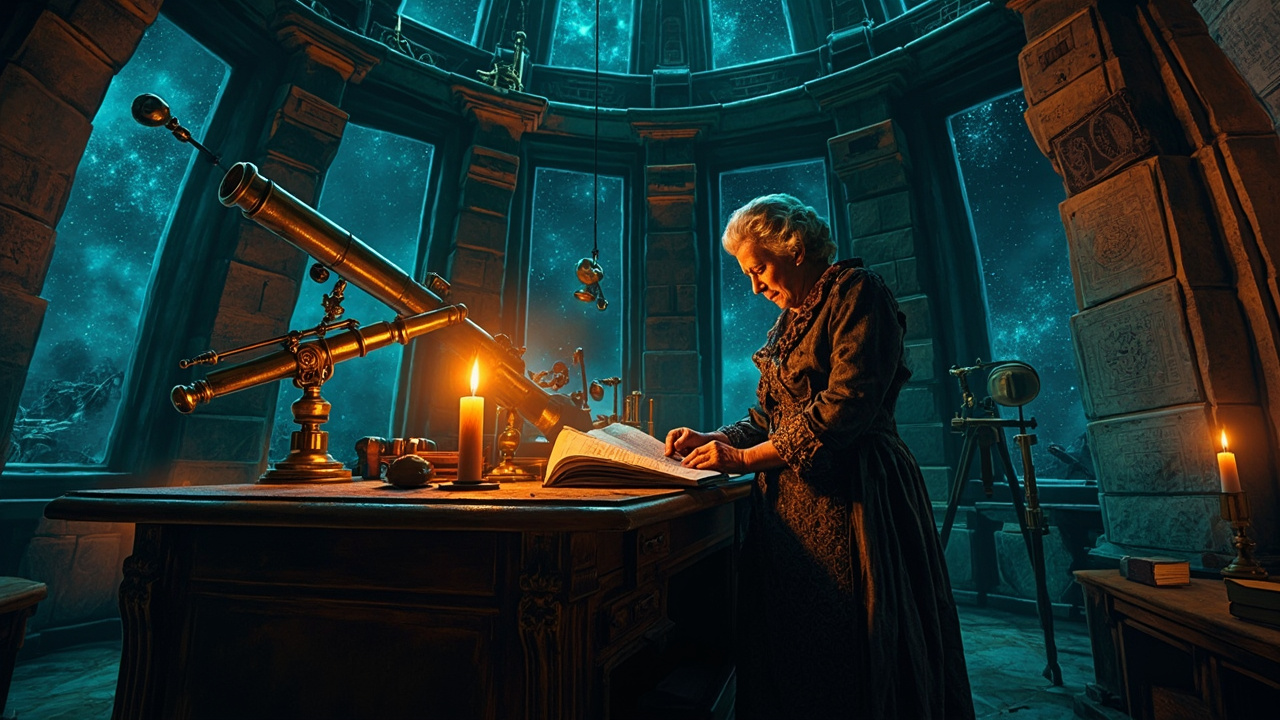
سجّلت الآنسة هارييت فين مرور الوقت في مرصد أشوورث طوال واحد وثلاثين عامًا، ولم تسمح طوال تلك الفترة ولو مرة واحدة بوقوع خطأ دون تصحيحه. كان دفترها نصبًا تذكاريًا للدقة: اتجاه الرياح، الضغط الجوي، انحراف النجوم عند ذروتها — كل ملاحظة مؤداة بخطها الدقيق بإخلاص كاتب العصور الوسطى الذي ينسخ الكتب المقدسة. كان الفلكيون الذين يزورون البرج الجورجي يعتبرون ملاحظاتها كلمة الفلك المقدسة، ولم تفعل هارييت شيئًا لإثناء مثل هذا الإجلال. فقد أدركت، كما قد لا يدركون هم، أن اليقين كان ترفًا يُمنح للذين يسجّلون لا للذين ينظّرون. كانت في الثانية والستين من عمرها، أرملة منذ سبع عشرة سنة، وقد صالحت نفسها مع فكرة أن الكون يتواصل من خلال الرياضيات لا من خلال المعجزات. وهذا يعني أنها لم تؤمن بالأعاجيب. ليس، على الأقل، حتى ليلة الرابع عشر من فبراير عام 1823، عندما بدأت الساعات نفسها تتصرف بغرابة. بدأت بشذوذ طفيف جدًا لدرجة أن حارسًا أقل منها كان قد يتغاضي عنه تمامًا. فقد لاحظت، في القراءة عند الغسق، أن الساعة الرابعة عشرة قد مرت وفقًا للتوقعات. كانت النجوم في مكانها الصحيح؛ كانت البوالين تتأرجح بشكل صحيح. لكن عندما عادت للرصد عند منتصف الليل — الساعة العشرين وفق الحساب القديم — وجدت أن دفترها قد تغيّر. كانت الساعات الرابعة عشرة والسابعة عشرة قد تبادلتا местаهما. الحبر طازج، خطها لا لبس فيه. لم ترتكب خطأ؛ لم تضع أي علامة. ومع ذلك فقد كان الأمر كذلك: تبديل كأن الساعات نفسها قد انزلقت من مراسيها وانجرفت إلى مياه غريبة. فحصت هارييت الصفحة ببرود سريري كطبيب يدرس ورمًا غير مألوف. فحصت قلمها، حبرها، النوافذ المختومة ضد رياح مارس. لا شيء. صححت المدخل وحزمت أمرها على المراقبة أكثر بحذر. لمدة ثلاثة أسابيع، لم تسجّل شيئًا غير عادي، وبدأت تعتقد أن الحادث كان حلمًا حميّيًا،some momentary lapse in the machinery of her mind. ثم حدث الأمر مرة أخرى. ومرة أخرى. بحلول أبريل، أصبح النمط لا يمكن إنكاره: كانت الساعات تعيد ترتيب نفسها، ليس عشوائيًا، بل بهدف لا يمكنها فهمه. كانت تقفز جولاتها المحددة، تختفي من موضع لتعيد الظهور في موضع آخر، كأن الوقت نفسه قد اكتشف ذوقًا للاختباء. ربما كانت لتهمل الظاهرة باعتبارها انحرافًا في الأجهزة، some subtle malfunction in the clockwork that governed their measurements، لكن هارييت عرفت أجهزتها كما تعرف نبض قلبها. علاوة على ذلك، كانت الأخطاء دقيقة جدًا، متعمدة جدًا. شخص ما — أو شيء ما — كان يعدّل سجلاتها بعناية مصحح في دار طباعة. الفكرة في ذاتها سخيفة. كانت وحدها في البرج ليلًا، محاطة بالحجر والزجاج ودوران السماء اللامبالي. لم يكن هناك من يعدّل، لا يد غير يدها. ومع ذلك. بدأت تصنّف التناقضات. كانت سبع وأربعون ساعة قد اختفت في الشهر الماضي، استُبدلت بساعات لا ينبغي أن توجد — ساعات بلا أصل أرضي، مستعارة من بعض帳本の边缘 أو معارة من مستقبل لم يُكتب بعد. كانت الرياضيات مستحيلة، وهذا بالضبط كان المشكلة: لا ينبغي للرياضيات أن تسمح بمثل هذه الاستحيلات. أمضت هارييت أيامها في استشارة أطروحات عن الميكانيكا الزمنية، ولياليها في رصد متزايد الدقة. لم تنم أكثر من أربع ساعات يوميًا. فقدت وزنها. خافت بطريقة لم تكن قد خافت بها منذ وفاة زوجها، وهذا يعني أنها كانت تخاف من الخطأ في شيء يهم. كان في الرابع عشر من يونيو، بعد أربعة أشهر بالضبط من أول شذوذ، حين حلت هارييت اللغز — رغم أن حلها لم يقربها من الفهم. كانت قد اعتادت قضاء ساعات منتصف الليل في الصالة العلوية، حيث يقف التلسكوب الكبير حارسًا على الريف. كانت الليلة صافية، النجوم في مواضعها الصحيحة، وكانت تستعد لتسجيل الساعة السابعة عشرة حين رأت الفتى. كان عمره نحو اثنتي عشرة سنة، واقفًا على حافة أرض المرصد حيث يستسلم العشب المصقول للمرج البري. كان شاحبًا، متوهجًا، حوافه ضبابية كأنه مصنوع بالألوان المائية لا باللحم. كان يمسك شيئًا — يمد يديه إلى الهواء الفارغ كان plucking fruit from an invisible tree. في كل مرة مدّ يده، كان يغلق قبضتيه حول لا شيء ويزلق ما أمسك به في كيس جلدي عند حزامه. كان الكيس قديماً، بالياً، صغيرًا جدًا لدرجة أنه لا يستطيع حمل ما يجمعه، ومع ذلك لم ينتفخ أبدًا. شاهدت هارييت لما بدا لها ساعة لكن كان، حسبما ستحسب لاحقًا، سبع عشرة دقيقة. عندما رأى الفتى أخيرًا أنها تراقبه، لم يهرب. نظر إلى نافذتها بتعبير فضول لطيف، كأنها هي الشيء غير المتوقع في عالم من المفترض أن يحتوي عليه هو وعمله فقط. "يمكنك أن تراني،" قال. صوته كان بعيدًا، محمولًا على ريح غير موجودة. "أستطيع أن أراك،" ردت، وصوتها ثابت رغم الرعشة في يديها. "ماذا تفعل؟" "أجمع،" قال، كأن الأمر بديهي. "ما يفقده الجميع. الساعات التي لا يلاحظ أحد مرورها. الدقائق التي لا يعدها أحد." فتح كيسه وأراه محتوياته: ضوء ناعم دافئ يتحرك كأشياء حية، كطيور أو أسماك أو ذكريات. "أجمعها قبل أن تختفي. وإلا ضاعت." "أنت تأخذ الوقت،" قالت هارييت ببطء، والهلع الكامل يتصاعد فيها. "من ملاحظاتي. من دفاتيري." "آخذ ما هو مفقود بالفعل،" صحّحها الفتى، nicht unfreundlich. "وقت كان سيتلاشى سواء جمعته أم لا. أنا فقط أضمن أنه لا يختفي تمامًا." ابتسم، وفي ابتسامتها رأت شيئًا قديماً صبورًا، شيئًا كان يقوم بهذا العمل منذ قبل بناء المرصد، منذ قبل العصر الجورجي.
Frau Harriet Vane hatte den Lauf der Zeit am Ashworth-Observatorium einunddreißig Jahre lang aufgezeichnet, und in all dieser Zeit hatte sie nicht ein einziges Mal einen Fehler unkorrigiert stehen lassen. Ihr Hauptbuch war ein Denkmal der Präzision: Windrichtung, Luftdruck, die Deklination der Sterne in ihrer Kulmination — jede Beobachtung in ihrer sorgfältigen Handschrift festgehalten mit der Treue eines mittelalterlichen Schreibers, der heilige Schriften kopierte. Die Astronomen, die den georgianischen Turm besuchten, betrachteten ihre Aufzeichnungen als das Wort des astronomischen Gesetzes, und Harriet hatte nichts getan, um solche Ehrfurcht zu entmutigen. Sie verstand, wie vielleicht sie es nicht taten, dass Gewissheit ein Luxus war, der jenen gewährt wurde, die aufzeichneten, anstatt jenen, die Theorien aufstellten. Sie war zweiundsechzig Jahre alt, seit siebzehn Jahren Witwe, und sie hatte sich mit der Erkenntnis abgefunden, dass das Universum durch Mathematik kommunizierte, nicht durch Wunder. Das heißt, sie glaubte nicht an Wunder. Nicht, zumindest, bis zur Nacht des vierzehnten Februar 1823, als die Stunden selbst begannen, sich seltsam zu verhalten. Es begann mit einer so leichten Anomalie, dass ein weniger gewissenhafter Wächter sie völlig übersehen hätte. Sie hatte bei der Dämmerungsablesung vermerkt, dass die vierzehnte Stunde wie erwartet vergangen war. Die Sterne waren, wo sie sein sollten; die Pendel schlugen wahr. Als sie jedoch zur Mitternachtsbeobachtung zurückkehrte — die zwanzigste Stunde nach alter Zählung —, fand sie, dass sich ihr Hauptbuch verändert hatte. Die vierzehnte und siebzehnte Stunde hatten ihre Plätze getauscht. Die Tinte war frisch, ihre Handschrift unverkennbar. Sie hatte keinen Fehler gemacht; sie hatte keine Markierung gemacht. Und doch war es da: eine Vertauschung, als hätten die Stunden selbst ihre Verankerung gelöst und seien in unbekannte Gewässer gedriftet. Harriet untersuchte die Seite mit der klinischen Gelassenheit eines Arztes, der einen ungewohnten Tumor studiert. Sie überprüfte ihren Stift, ihre Tinte, die Fenster, die gegen die Märzwinde versiegelt waren. Nichts. Sie korrigierte den Eintrag und beschloss, aufmerksamer zu beobachten. Drei Wochen lang hielt sie nichts Ungewöhnliches fest, und sie begann zu glauben, dass der Vorfall ein Fiebertraum gewesen war, ein vorübergehendes Versagen der Mechanismen ihres Geistes. Dann geschah es wieder. Und wieder. Im April war das Muster unbestreitbar geworden: Stunden ordneten sich neu an, nicht zufällig, sondern mit einer Absicht, die sie nicht ergründen konnte. Sie übersprangen ihre vorgesehenen Runden, verschwanden aus einer Position nur um in einer anderen wieder aufzutauchen, als hätte die Zeit selbst einen Geschmack für Verstecken entwickelt. Sie hätte das Phänomen als Instrumentendrift abtun können, als subtile Fehlfunktion in dem Räderwerk, das ihre Messungen regelte, aber Harriet kannte ihre Instrumente so gut wie ihren eigenen Herzschlag. Außerdem waren die Fehler zu präzise, zu absichtlich. Jemand — oder etwas — bearbeitete ihre Aufzeichnungen mit der Sorgfalt eines Korrektors in einer Druckerei. Der bloße Gedanke war absurd. Sie war nachts allein im Turm, umgeben von Stein und Glas und der gleichgültigen Drehung des Himmels. Es gab niemanden zum Bearbeiten, keine Hand außer ihrer eigenen. Und doch. Sie begann, die Diskrepanzen zu katalogisieren. Siebenundvierzig Stunden waren im vergangenen Monat verschwunden, ersetzt durch Stunden, die nicht existieren sollten — Stunden ohne irdischen Ursprung, geborgt von some帳本的边缘 oder geliehen aus Zukünften, die noch nicht geschrieben waren. Die Mathematik war unmöglich, und das war genau das Problem: Mathematik sollte solche Unmöglichkeiten nicht zulassen. Harriet verbrachte ihre Tage mit der Konsultation von Abhandlungen über Zeitmechanik, ihre Nächte mit immer genaueren Beobachtungen. Sie schlief nicht mehr als vier Stunden pro Tag. Sie wurde mager. Sie bekam Angst, auf eine Weise, die sie seit dem Tod ihres Mannes nicht mehr gefürchtet hatte, das heißt, sie fürchtete sich davor, bei etwas Wichtigem falsch zu liegen. Am vierzehnten Juni, genau vier Monate nach der ersten Anomalie, löste Harriet das Rätsel — obwohl es zu lösen sie dem Verständnis nicht näher brachte. Sie hatte begonnen, die Mitternachtsstunden in der oberen Galerie zu verbringen, wo das große Teleskop über der Landschaft Wache hielt. Die Nacht war klar, die Sterne an ihrem proper place, und sie machte sich bereit, die siebzehnte Stunde aufzuzeichnen, als sie den Jungen sah. Er war vielleicht zwölf Jahre alt, stand am Rand des Observatoriumsgeländes, wo der gepflegte Rasen der wilden Wiese wich. Er war blass, leuchtend, seine Ränder verschwommen, als wäre er in Aquarell rather than flesh gerendert. Er war dabei, etwas zu fangen — griff mit beiden Händen in die leere Luft, als würde er Früchte von einem unsichtbaren Baum pflücken. Jedes Mal, wenn er griff, schloss er die Fäuste um Nichts und ließ das, was er ergriffen hatte, in einen ledernen Beutel an seinem Gürtel gleiten. Der Beutel war alt, abgetragen, viel zu klein für das, was er sammelte, und doch wölbte er sich nie. Harriet beobachtete, was sich wie eine Stunde anfühlte, aber, wie sie später berechnete, siebzehn Minuten waren. Als der Junge sie schließlich beobachtete, lief er nicht weg. Er blickte zu ihrem Fenster auf mit einem Ausdruck milder Neugier, als wäre sie das Unerwartete in einer Welt, die nur ihn selbst und seine Arbeit enthalten sollte. "Du kannst mich sehen", sagte er. Seine Stimme war fern, getragen von einem Wind, der nicht existierte. "Ich kann dich sehen", erwiderte sie, ihre eigene Stimme fest trotz des Zitterns in ihren Händen. "Was tust du?" "Sammeln", sagte er, als wäre es selbstverständlich. "Was jeder verliert. Die Stunden, die niemand vorbeigehen bemerkt. Die Minuten, die niemand zählt." Er öffnete seinen Beutel und zeigte ihr seinen Inhalt: ein sanftes, warmes Licht, das sich bewegte wie lebende Wesen, wie Vögel oder Fische oder Erinnerungen. "Ich sammle sie, bevor sie verschwinden. Sonst sind sie verschwendet." "Du stiehlst Zeit", sagte Harriet langsam, während das volle Entsetzen sie überkam. "Aus meinen Beobachtungen. Aus meinen Hauptbüchern." "Ich nehme, was bereits verloren ist", korrigierte sie der Junge, nicht unfreundlich. "Zeit, die verschwinden würde, ob ich sie sammle oder nicht. Ich stelle nur sicher, dass sie nicht vollständig verschwindet." Er lächelte, und in diesem Lächeln sah sie etwas Uraltes und Geduldiges, etwas, das diese Arbeit getan hatte, seit bevor das Observatorium gebaut wurde, seit bevor das georgianische Zeitalter begann.
La señora Harriet Vane había registrado el paso del tiempo en el Observatorio de Ashworth durante treinta y un años, y en todo ese tiempo, nunca había permitido que un error permaneciera sin corrección. Su libro de cuentas era un monumento a la precisión: dirección del viento, presión barométrica, la declinación de las estrellas en su cenit — cada observación renderizada en su cuidadosa letra con la fidelidad de un escriba medieval copiando las santas escrituras. Los astrónomos que visitaban la torre georgiana consideraban sus anotaciones como la palabra misma de la ley astronómica, y Harriet no había hecho nada para desalentar tal reverencia. Ella entendía, quizás mejor que ellos, que la certeza era un lujo concedido a quienes registraban en lugar de a quienes teorizaban. Tenía sesenta y dos años, viuda desde hacía diecisiete, y había hecho las paces con la proposición de que el universo se comunicaba a través de las matemáticas en lugar de los milagros. Es decir, no creía en maravillas. No, al menos, hasta la noche del catorce de febrero de 1823, cuando las horas mismas comenzaron a portarse mal. Comenzó con una anomalía tan leve que un guardián menos diligente podría haberla pasado por alto por completo. Había notado, en la lectura del crepúsculo, que la decimacuarta hora había transcurrido según lo esperado. Las estrellas estaban donde debían estar; los péndulos oscilaban correctamente. Sin embargo, cuando regresó para la observación de medianoche — la vigésima hora según el antiguo cómputo — descubrió que su libro de cuentas había cambiado. La decimacuarta y la decimoséptima hora habían intercambiado sus lugares. La tinta estaba fresca, su letra inconfundible. No había cometido ningún error; no había hecho ninguna marca. Y sin embargo ahí estaba: una transposición como si las horas mismas se hubieran soltado de sus amarras y hubieran derivado hacia aguas desconocidas. Harriet examinó la página con el desapego clínico de un médico estudiando un tumor desconocido. Revisó su pluma, su tinta, las ventanas selladas contra los vientos de marzo. Nada. Corrigió la entrada y se propuso observar más cuidadosamente. Durante tres semanas, no registró nada inusual, y comenzó a creer que el incidente había sido un sueño febril, alguna falla momentánea en la maquinaria de su mente. Entonces sucedió de nuevo. Y de nuevo. Para abril, el patrón se había vuelto innegable: las horas se estaban reorganizando, no al azar, sino con un propósito que no podía descifrar. Estaban saltándose sus turnos asignados, desapareciendo de una posición solo para reaparecer en otra, como si el tiempo mismo hubiera desarrollado un gusto por el ocultamiento. Podría haber descartado el fenómeno como deriva instrumental, algún mal funcionamiento sutil en el mecanismo que gobernaba sus mediciones, pero Harriet conocía sus instrumentos como conocía los latidos de su propio corazón. Además, los errores eran demasiado precisos, demasiado deliberados. Alguien — o algo — estaba editando sus registros con el cuidado de un correctos de pruebas en una casa editorial. La idea en sí era absurda. Estaba sola en la torre por la noche, rodeada de piedra y vidrio y la indiferente rotación de los cielos. No había nadie para editar, ninguna mano excepto la suya. Y sin embargo. Comenzó a catalogar las discrepancias. Cuarenta y siete horas habían desaparecido en el último mes, reemplazadas por horas que no deberían existir — horas sin origen terrestre, tomadas prestadas de algún bordes del libro de cuentas o prestadas de futuros aún no escritos. Las matemáticas eran imposibles, que era precisamente el problema: las matemáticas no deberían permitir tales imposibilidades. Harriet pasó sus días consultando tratados sobre mecánica temporal, sus noches en observaciones cada vez más meticulosas. No dormía más de cuatro horas al día. Adelgazó. Tuvo miedo de una manera que no había tenido miedo desde la muerte de su esposo, es decir, tuvo miedo de estar equivocada sobre algo que importaba. Fue el catorce de junio, exactamente cuatro meses después de la primera anomalía, cuando Harriet resolvió el acertijo — aunque resolverlo no la acercó a la comprensión. Había tomado la costumbre de pasar las horas de medianoche en la galería superior, donde el gran telescopio hacía guardia sobre el campo. La noche era clara, las estrellas en sus lugares apropiados, y se preparaba para registrar la decimoséptima hora cuando vio al muchacho. Tenía quizás doce años, de pie al borde de los terrenos del observatorio donde el césped bien cuidado se rendía al prado salvaje. Era pálido, luminoso, sus bordes difusos como si estuviera renderizado en acuarela en lugar de en carne. Estaba atrapando algo — alcanzando el aire vacío con ambas manos como si cogiera fruta de un árbol invisible. Cada vez que alcanzaba, cerraba los puños alrededor de la nada y deslizaba lo que había agarrado en una bolsa de cuero en su cinturón. La bolsa era vieja, desgastada, demasiado pequeña para contener lo que estaba recolectando, y sin embargo nunca se abultaba. Harriet observó durante lo que pareció una hora pero que fue, calcularía más tarde, diecisiete minutos. Cuando el muchacho finalmente se dio cuenta de que ella lo estaba observando, no huyó. Miró hacia arriba a su ventana con una expresión de curiosidad moderada, como si ella fuera la cosa inesperada en un mundo que debería contener solo él mismo y su trabajo. "Puedes verme," dijo. Su voz era distante, traída por un viento que no existía. "Puedo verte," respondió ella, su propia voz estable a pesar del temblor en sus manos. "¿Qué estás haciendo?" "Recolectando," dijo, como si fuera obvio. "Lo que todos pierden. Las horas que nadie nota pasar. Los minutos que nadie cuenta." Abrió su bolsa y le mostró su contenido: una luz suave y cálida que se movía como seres vivos, como pájaros o peces o recuerdos. "Las recolecto antes de que desaparezcan. De lo contrario se pierden." "Estás robando tiempo," dijo Harriet lentamente, el horror completo descending upon ella. "De mis observaciones. De mis libros de cuentas." "Estoy tomando lo que ya está perdido," la corrigió el muchacho, no sin amabilidad. "Tiempo que se desvanecería tanto si lo recolectara como si no. Simplemente me aseguro de que no desaparezca por completo." Sonrió, y en esa sonrisa ella vio algo antiguo y paciente, algo que había estado haciendo este trabajo desde antes de que el observatorio fuera construido, desde antes de la era georgiana.
Mrs. Harriet Vane avait enregistré le passage du temps à l'Observatoire d'Ashworth pendant trente et un ans, et durant tout ce temps, elle n'avait jamais permis qu'une erreur demeure sans correction. Son registre était un monument à la précision : direction du vent, pression barométrique, déclinaison des étoiles à leur zénith — chaque observation rendue de sa main soignée avec la fidélité d'un scribe médiéval copiant les saintes écritures. Les astronomes qui visitaient la tour georgienne considéraient ses notations comme la parole même de la loi astronomique, et Harriet n'avait rien fait pour décourager une telle révérence. Elle comprenait, peut-être mieux qu'eux, que la certitude était un luxe accordé à ceux qui enregistraient plutôt qu'à ceux qui formulaient des théories. Elle avait soixante-deux ans, veuve depuis dix-sept ans, et elle s'était réconciliée avec la proposition que l'univers communiquait par les mathématiques plutôt que par les miracles. C'est-à-dire qu'elle ne croyait pas aux merveilles. Pas, du moins, jusqu'à la nuit du quatorze février 1823, lorsque les heures elles-mêmes commencèrent à se comporter étrangement. Cela commença par une anomalie si légère qu'un gardien moins vigilant l'aurait complètement ignorée. Elle avait noté, lors de la lecture au crépuscule, que la quatorzième heure s'était écoulée conformément aux attentes. Les étoiles étaient où elles auraient dû être ; les pendules oscilaient correctement. Pourtant, lorsqu'elle revint pour l'observation de minuit — la vingtième heure selon l'ancien comput — elle découvrit que son registre avait changé. Les quatorzième et dix-septième heures avaient échangé leurs places. L'encre était fraîche, son écriture sans équivoque. Elle n'avait commis aucune erreur ; elle n'avait fait aucune marque. Et pourtant : une transposition comme si les heures elles-mêmes s'étaient détachées de leurs amarres et avaient dérivé vers des eaux inconnues. Harriet examina la page avec le détachement clinique d'un médecin étudiant une tumeur inhabituelle. Elle vérifia sa plume, son encre, les fenêtres scellées contre les vents de mars. Rien. Elle corrigea l'entrée et résolut d'observer plus attentivement. Pendant trois semaines, elle n'enregistra rien d'inhabituel, et elle commença à croire que l'incident avait été un rêve fébrile, quelque défaillance momentanée dans les rouages de son esprit. Puis cela se reproduisit. Et encore. En avril, le schéma était devenu indéniable : les heures se réarrangeaient, non pas au hasard, mais avec un dessein qu'elle ne pouvait comprendre. Elles sautaient leurs tours назначенные, disparaissant d'une position pour réapparaître dans une autre, comme si le temps lui-même avait développé un goût pour la dissimulation. Elle aurait pu attribuer le phénomène à une dérive instrumentale, algún malfunction subtile dans le mécanisme d'horlogerie qui gouvernait leurs mesures, mais Harriet connaissait ses instruments comme elle connaissait les battements de son propre cœur. De plus, les erreurs étaient trop précises, trop délibérées. Quelqu'un — ou quelque chose — éditait ses enregistrements avec le soin d'un correcteur dans une maison d'impression. L'idée même était absurde. Elle était seule dans la tour la nuit, entourée de pierre et de verre et de la rotation indifférente des cieux. Il n'y avait personne pour éditer, aucune main hormis la sienne. Et pourtant. Elle commença à cataloguer les divergences. Quarante-sept heures avaient disparu au cours du dernier mois, remplacées par des heures qui n'auraient pas dû exister — des heures sans origine terrestre, empruntées à some帳本的边缘 ou prêtées depuis des futurs pas encore écrits. Les mathématiques étaient impossibles, ce qui était précisément le problème : les mathématiques ne devraient pas permettre de telles impossibilités. Harriet passa ses journées à consulter des traités sur la mécanique temporelle, ses nuits en observations de plus en plus méticuleuses. Elle ne dormait pas plus de quatre heures par jour. Elle maigrit. Elle eut peur d'une manière qu'elle n'avait pas eue peur depuis la mort de son mari, c'est-à-dire qu'elle eut peur de se tromper sur quelque chose qui comptait. Ce fut le quatorze juin, exactement quatre mois après la première anomalie, qu'Harriet résolut l'énigme — bien que la résoudre ne la rapprocha pas de la compréhension. Elle avait pris l'habitude de passer les heures de minuit dans la galerie supérieure, où le grand télescope se tenait sentinelle au-dessus de la campagne. La nuit était claire, les étoiles à leur place, et elle se préparait à enregistrer la dix-septième heure lorsqu'elle vit le garçon. Il avait peut-être douze ans, debout au bord du terrain de l'observatoire où la pelouse entretenue cédait au pré sauvage. Il était pâle, lumineux, ses contours flous comme s'il était rendu à l'aquarelle plutôt qu'en chair. Il attrapait quelque chose — tendant les mains vers le vide comme s'il cueillait des fruits sur un arbre invisible. Chaque fois qu'il tendait la main, il fermait les poings sur le néant et glissait ce qu'il avait saisi dans une bourse de cuir à sa ceinture. La bourse était vieille, usée, beaucoup trop petite pour contenir ce qu'il collectait, pourtant elle ne gonflait jamais. Harriet observa ce qui lui sembla une heure mais qui était, calcula-t-elle plus tard, dix-sept minutes. Lorsque le garçon la remarqua enfin en train de l'observer, il ne s'enfuit pas. Il leva les yeux vers sa fenêtre avec une expression de curiosité modérée, comme si elle était la chose inattendue dans un monde qui ne devrait contenir que lui-même et son travail. "Vous pouvez me voir," dit-il. Sa voix était lointaine, portée par un vent qui n'existait pas. "Je peux vous voir," répondit-elle, sa propre voix stable malgré le tremblement de ses mains. "Que faites-vous ?" "Je collecte," dit-il, comme si c'était obvious. "Ce que tout le monde perd. Les heures que personne ne remarque passer. Les minutes que personne ne compte." Il ouvrit sa bourse et lui montra son contenu : une lumière douce et chaude qui se déplaçait comme des êtres vivants, comme des oiseaux ou des poissons ou des souvenirs. "Je les rassemble avant qu'elles ne disparaissent. Sinon elles sont gaspillées." "Vous volez le temps," dit lentement Harriet, l'horreur complète s'éveillant en elle. "De mes observations. De mes registres." "Je prends ce qui est déjà perdu," la corrigea le garçon, non sans gentillesse. "Le temps qui s'évanourait que je le collecte ou non. Je fais simplement en sorte qu'il ne disparaisse pas entièrement." Il sourit, et dans ce sourire elle vit quelque chose d'ancien et de patient, quelque chose qui faisait ce travail depuis avant la construction de l'observatoire, depuis avant l'ère georgienne.
La signora Harriet Vane aveva registrato il passare del tempo all'Osservatorio di Ashworth per trentun anni, e in tutto quel tempo non aveva mai permesso che un errore restasse senza correzione. Il suo registro era un monumento alla precisione: direzione del vento, pressione barometrica, la declinazione delle stelle al loro zenit — ogni osservazione resa nella sua calligrafia accurata con la fedeltà di uno scriba medievale che copia le sacre scritture. Gli astronomi che visitavano la torre georgiana consideravano le sue annotazioni come la parola stessa della legge astronomica, e Harriet non aveva fatto nulla per scoraggiare tale reverenza. Lei capiva, forse meglio di loro, che la certezza era un lusso concesso a coloro che registravano piuttosto che a coloro che teorizzavano. Aveva sessantadue anni, vedova da diciassette, e aveva fatto pace con la proposizione che l'universo comunicasse attraverso la matematica piuttosto che i miracoli. Cioè, non credeva nei prodigi. Non, almeno, fino alla notte del quattordici febbraio 1823, quando le ore stesse iniziarono a comportarsi in modo bizzarro. Cominciò con un'anomalia così lieve che un custode meno attento avrebbe potuto ignorarla del tutto. Aveva notato, nella lettura del crepuscolo, che la quattordicesima ora era passata secondo le aspettative. Le stelle erano dove avrebbero dovuto essere; i pendoli oscillavano correttamente. Eppure quando tornò per l'osservazione di mezzanotte — la ventesima ora secondo il vecchio computo — trovò che il suo registro era cambiato. La quattordicesima e la diciassettesima ora avevano scambiato i loro posti. L'inchiostro era fresco, la sua calligrafia inconfondibile. Non aveva commesso errori; non aveva fatto segni. Eppure eccolo lì: una trasposizione come se le ore stesse si fossero staccate dagli ormeggi e fossero alla deriva in acque sconosciute. Harriet esaminò la pagina con il distacco clinico di un medico che studia un tumore sconosciuto. Controllò la penna, l'inchiostro, le finestre sigillate contro i venti di marzo. Nulla. Corresse la voce e decise di osservare più attentamente. Per tre settimane non registrò nulla di anomalo, e iniziò a credere che l'incidente fosse stato un sogno febbrile, un momentaneo cedimento nei meccanismi della sua mente. Poi accadde di nuovo. E ancora. Ad aprile, lo schema era diventato innegabile: le ore si stavano riorganizzando, non casualmente, ma con uno scopo che non riusciva a comprendere. Saltavano i loro turni assegnati, scomparivano da una posizione solo per riapparire in un'altra, come se il tempo stesso avesse sviluppato un gusto per la dissimulazione. Avrebbe potuto liquidare il fenomeno come deriva strumentale, algún mal funcionamiento sutil en el mecanismo que gobernaba le loro misurazioni, ma Harriet conosceva i suoi strumenti come conosceva il proprio battito cardiaco. Inoltre, gli errori erano troppo precisi, troppo deliberati. Qualcuno — o qualcosa — stava modificando i suoi registri con la cura di un correttore in una casa editrice. L'idea stessa era assurda. Era sola nella torre di notte, circondata da pietra e vetro e l'indifferente rotazione dei cieli. Non c'era nessuno da modificare, nessuna mano oltre la sua. Eppure. Iniziò a catalogare le discrepanze. Quarantasette ore erano scomparse nel mese scorso, sostituite da ore che non avrebbero dovuto esistere — ore senza origine terrestre, prese in prestito da some帳本的边缘 o prestate da futuri non ancora scritti. La matematica era impossibile, e questo era precisamente il problema: la matematica non dovrebbe permettere tali impossibilità. Harriet trascorse le sue giornate consultando trattati sulla meccanica temporale, le sue notti in osservazioni sempre più meticolose. Non dormiva più di quattro ore al giorno. Dimagrì. Ebbe paura in un modo che non aveva provato dalla morte di suo marito, cioè, ebbe paura di sbagliare su qualcosa che contava. Fu il quattordici giugno, esattamente quattro mesi dopo la prima anomalia, che Harriet risolse l'indovinello — sebbene risolverlo non la avvicinò alla comprensione. Aveva preso l'abitudine di trascorrere le ore di mezzanotte nella galleria superiore, dove il grande telescopio vegliava sulla campagna. La notte era serena, le stelle ai loro posti, e stava preparando registrare la diciassettesima ora quando vide il ragazzo. Aveva forse dodici anni, in piedi al bordo del terreno dell'osservatorio dove il prato curato cedeva al pascolo selvaggio. Era pallido, luminoso, i suoi bordi sfumati come se reso ad acquerello piuttosto che in carne. Stava catturando qualcosa — allungando le mani verso l'aria vuota come se raccogliesse frutti da un albero invisibile. Ogni volta che allungava la mano, chiudeva i pugni sul nulla e faceva scivolare ciò che aveva afferrato in una borsa di cuoio alla cintura. La borsa era vecchia, consumata, troppo piccola per contenere ciò che stava raccogliendo, eppure non si gonfiava mai. Harriet osservò per quello che sembrava un'ora ma che era, avrebbe poi calcolato, diciassette minuti. Quando il ragazzo alla fine si accorse che lei lo stava osservando, non scappò. Guardò su verso la sua finestra con un'espressione di mite curiosità, come se lei fosse la cosa inaspettata in un mondo che dovrebbe contenere solo se stesso e il suo lavoro. "Puoi vedermi," disse. La sua voce era lontana, portata da un vento che non esisteva. "Posso vederti," rispose, la sua stessa voce stabile nonostante il tremore nelle sue mani. "Cosa stai facendo?" "Raccogliendo," disse, come se fosse ovvio. "Ciò che tutti perdono. Le ore che nessuno nota passare. I minuti che nessuno conta." Aprì la sua borsa e le mostrò il contenuto: una luce morbida e calda che si muoveva come creature vive, come uccelli o pesci o ricordi. "Le raccolgo prima che scompaiano. Altrimenti vanno sprecate." "Tu stai prendendo il tempo," disse lentamente Harriet, il pieno orrore dawned upon di lei. "Dalle mie osservazioni. Dai miei registri." "Sto prendendo ciò che è già perduto," la corresse il ragazzo, non senza gentilezza. "Tempo che svanirebbe che io lo raccolga o no. Mi limito a garantire che non scompaia completamente." Sorrise, e in quel sorriso lei vide qualcosa di antico e paziente, qualcosa che aveva fatto questo lavoro da prima che l'osservatorio fosse costruito, da prima dell'era georgiana.