ثقل الكلمات
أمضت الدكتورة إلينور فانس خمس عشرة سنة في تطوير نظرية اعتبرها زملاؤها، في أحسن الأحوال، غريبة الأطوار، وفي أسوأها، شكلاً متطوراً من الخداع الذاتي. كانت عالمة لغويات في كامبريدج، متخصصة في الفونética التاريخية، وقد شغلتها فكرة رفضت أن تتركها وشأنها: أن للكلمات وزناً مادياً. الفرضية، كما صقلتها على مر السنين، كانت بسيطة بشكل مخادع. كل عبارة منطوقة، اقترحت، تحل محل كمية ضئيلة من المادة—ليس من خلال أي عملية صوفية، بل من خلال الطاقة الحركية لأمواج الصوت والضغط تحت الوعي للتنفس ضد الغلاف الجوي. بشكل فردي، كانت هذه الإحلالات ضئيلة، بعيدة جداً تحت عتبة أي جهاز قادر على كشفها. لكن متراكمة عبر عمر كامل من الكلام، قد تنتج، حسب نظريتها، تأثيرات قابلة للقياس على التضاريس المادية. ابتسم زملاؤها بود عندما قدمت نتائجها في المؤتمرات، ثم عادوا إلى أبحاثهم حول توزيع الصواتم وتطور التراكيب النحوية. لم تلُمهم إلينور. كانت هي نفسها سترفض نظريتها لو لم تقضِ أسبوعين في جبال الألب النمساوية تقيس الارتفاعات الدقيقة في التضاريس التي، وفقاً لكل المسوحات الجيولوجية، كان يجب أن تكون مسطحة تماماً. وجدتها. تموجات صغيرة، لا يزيد ارتفاعها عن عدة سنتيمترات، لكنها موجودة. وعندما وضعت بيانات الطبوغرافيا الخاصة بها فوق سجلات تاريخية للكثافة السكانية، اكتشفت ارتباطاً جعل نفسها يعلو صوتها: التغيرات الطفيفة كانت تتطابق بدقة مع مواقع ساحات القرى القديمة والأسواق وقاعات الاجتماعات—أماكن كان الناس يجتمعون فيها للكلام عبر الأجيال.
هذا ما قاد她去 إلى سذرلاند. التلة لم تظهر على أي خريطة قبل عام 1890. كان المسح الميداني البريطاني قد مسح تلك المنطقة من المرتفعات الاسكتلندية ثلاث مرات، وفي كل مرة عاد المساحون بخرائط تظهر فقط أراضٍ منبسطة متموجة برفق، النوع من التضاريس الذي جعله ألف عام من الخث عديم الملامح. ومع ذلك، بحلول عام 1920، كانت هناك تلة: خمسون متراً في القطر، ترتفع ربما اثني عشر متراً عند قمتها، مغطاة بعشب الخلنج والعشب الخشن. فحصها الجيولوجيون المحليون وأعلنوها شذوذاً، رصيفاً أو حرة جليدية طرفية فاتتها المسوحات السابقة. لكن إلينور اشتبهت في غير ذلك. كانت قد تتبعت ظهور التلة إلى اسم واحد: جيمس كريشتون، مزارع متعلم ذاتياً توفي عام 1889 عن عمر سبعة وثمانين عاماً. وفقاً لكل الروايات، كان كريشتون يمتلك هبة استثنائية للكلام. كان يخطب ويجادل ويناقش ويلقي لمدة قرابة سبعة عقود، يملأ حانة القرية بصوته العميق في أمسيات الشتاء ويسحر أي جمهور يستمع له. كان، وفقاً للحسابات القليلة الباقية، نادراً ما يصمت.
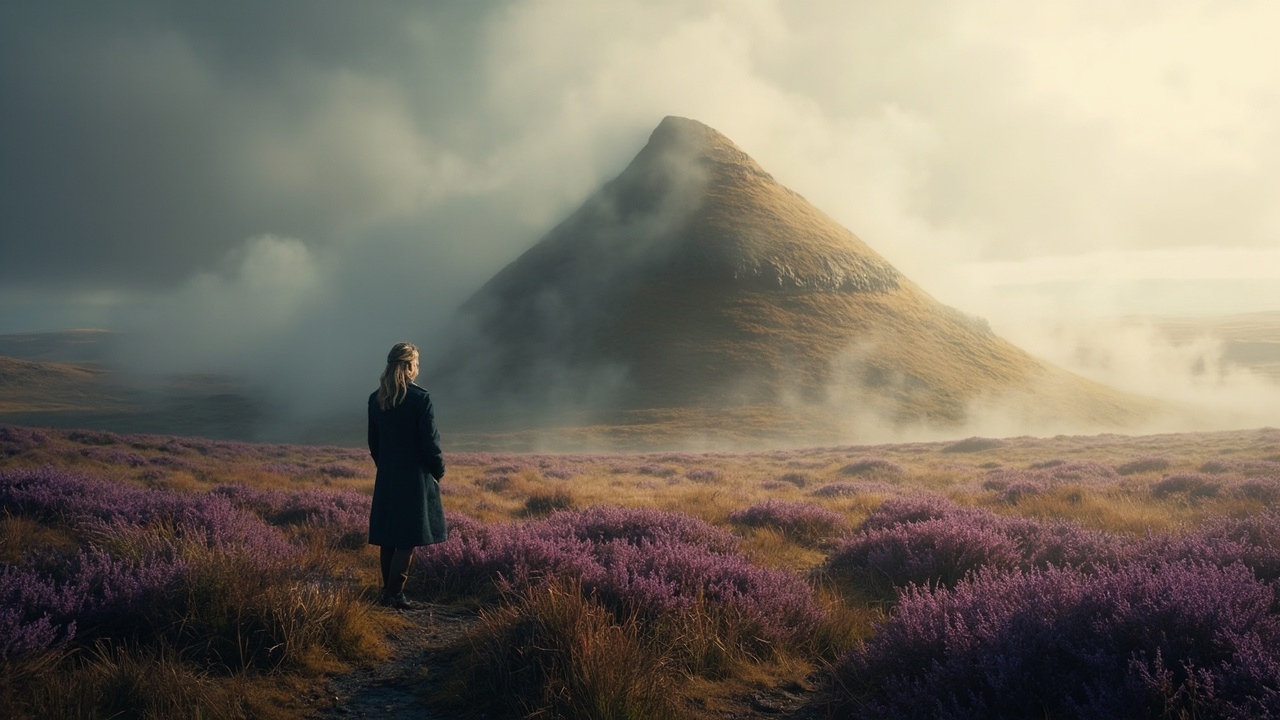
استأجرت إلينور غرفة في أقرب قرية وقضت أسبوعاً في مقابلة أقدم السكان، الذين عرف أجدادهم كريشتون شخصياً. كانت القصص متسقة: كان رجلاً هائل الإنتاجية اللفظية، متكلماً قهرياً لا يمر بحجر دون أن يخاطبه. امرأة عجوز واحدة، صقلت ذاكرتها الخرف إلى شيء يشبه الماس في الدقة، أخبرت إلينور أن جدتها الكبرى كانت قد اشتكت مرة أن كلمات كريشتون كانت ثقيلة لدرجة أنها شعرت بأنها مضطرة للجلوس كلما تحدث. "جعل الهواء كثيفاً،" قالت المرأة العجوز، شعرت إلينور شعرها يقشعر. صعدت التلة صباح يوم الثلاثاء، وكان السماء بلون الفضة المظلمة، carry الريح رائحة الخث والمطر البعيد. عند القمة، وقفت حيث كان كريشتون يقف بلا شك مرات لا تحصى، يصرخ بآرائه نحو السماء، وحاولت أن تتكلم. الكلمات غادرت فمها وبدت كأنها معلقة في الهواء، مترددة في التشتت. تكلمت مرة أخرى، بصوت أعلى، وشعرت بمقاومة خفيفة، كأن الغلاف الجوي حولها قد ثخن. فهمت حينها أنها تقف في مركز عمر كامل من الكلام. التلة لم تكن مجرد مشكلة من كلمات كريشتون؛ كانت، بمعنى أساسي، مكونة منها. كل مقطع صوتي نطقه على الإطلاق ساهم بثقله الضئيل، وتأثيره التراكمي عبر عقود كان قد شوه نسيج التضاريس نفسه، جذبه التراب صعوداً إلى نصب تذكاري لم يصممه أي مهندس معماري.
نزلت من التلة وعادت إلى كامبريدج، حيث قضت عامين في إعداد مخطوطتها. عندما قدمتها إلى الجمعية الملكية، فعلت ذلك بتوقع كامل للرفض. النظرية كانت غير قابلة للإثبات بأي وسيلة تقليدية، والأدلة، رغم أنها تشير، تبقى بعيدة عن الحاسم. تصورت ملاحظات المراجعين بالأقران: "م猜想 رائعة، لكن أين الأساس التجريبي؟" القبول وال rejection. القبول مرة أخرى، بعد المراجعة، وأخيراً النشر في مجلة متخصصة في البحوث البينية على هوامش التخصصات الراسخة. لم تجذب الكثير من الاهتمام في البداية، لكن في غضون عام، كان فيزيائي شاب في إدنبرة قد بدأ تجارب على الرنين الصوتي، وعلم地形 في نيوزيلندا قد اكتشف تشوهات مماثلة في التضاريس التي كانت موقع Maori hui، التجمعات الكبيرة حيث كان الخطاب يلعب دوراً محورياً.
عاشت إلينور عشرين سنة أخرى. استمرت في الكلام، كما يجب المرء—تلقى محاضرات، تجري محادثات، تهمس لنفسها خلال ليالي الأرق. تساءلت أحياناً عما إذا كانت كلماتها أيضاً تتراكم someplace، تشوه الفضاء حولها بطرق لا تستطيع إدراكها. ربما، فكرت، كان كل شخص يبني تلته الخاصة الصغيرة، غير مرئية وغير محسوسة، نصباً تذكارياً شخصياً لوزن كلامه الخاص. ماتت في أواخر الخريف، محاطة بصمت دراستها، ضاعت كلماتها الأخيرة في الصمت الذي يعقب. لكن لو أن أحداً مسح التضاريس حول كامبريدج بدقة كافية، قد يكتشف، في المنحدر اللطيف للحقول، نتوءات طفيفة تتوافق مع مسار حياتها.
---
لكن السؤال ظل معلقاً في الهواء، ثقيلاً مثل الكلمات التي نطقتها ذات مرة في الأكاديميا: هل يمكن للكلام البشري حقاً أن يثقل الأرض؟ هل نحن، بكتاباتنا وأحاديثنا، ننحت نصباً تذكارياً صامتاً لوجودنا؟ الوثيقة، المخبأة في أدراج مكتبة كامبريدج، تنتظر قارئاً آخر، عالماً آخر، متشككاً آخر، يبحث عن دليل على أن الكلمات، ربما، ليست مجرد أصوات في الهواء، بل أثقال على الميزان الكوني.
Die Schwerkraft der Äußerungen
Dr. Eleanor Vance hatte fünfzehn Jahre damit verbracht, eine Theorie zu entwickeln, die ihre Kollegen, bestenfalls, für exzentrisch hielten und, schlimmstenfalls, für eine ausgefeilte Form der Selbsttäuschung. Sie war Linguistin in Cambridge, spezialisiert auf historische Phonetik, und sie war von einer Idee besessen, die sie nicht loslassen wollte: dass Wörter ein physisches Gewicht besaßen. Die Hypothese, wie sie sie im Laufe der Jahre verfeinert hatte, war täuschend einfach. Jede gesprochene Äußerung, so vermutete sie, verdrängte eine winzige Menge Materie — nicht durch einen mystischen Prozess, sondern durch die kinetische Energie von Schallwellen und den unterschwelligen Druck des Atems gegen die Atmosphäre. Im Einzelnen waren diese Verschiebungen vernachlässigbar, weit unter der Schwelle jedes Instruments, das sie nachweisen könnte. Aber über ein ganzes Leben des Sprechens akkumuliert, könnten sie, so ihre Theorie, messbare Auswirkungen auf die physische Landschaft haben. Ihre Kollegen lächelten höflich, als sie ihre Ergebnisse auf Konferenzen präsentierte, und kehrten dann zu ihrer Forschung über Phonemverteilung und syntaktische Evolution zurück. Eleanor machte ihnen keine Vorwürfe. Sie hätte ihre eigene Theorie ebenfalls verworfen, wenn sie nicht zwei Wochen in den österreichischen Alpen damit verbracht hätte, Micro-Erhöhungen im Gelände zu messen, das laut jeder geologischen Vermessung vollkommen flach hätte sein müssen. Sie hatte sie gefunden. Kleine Wellen, nicht höher als ein paar Zentimeter, aber vorhanden. Und als sie ihre topographischen Daten mit historischen Aufzeichnungen über Bevölkerungsdichte überlagerte, entdeckte sie eine Korrelation, die ihr den Atem raubte: Die Wellen entsprachen genau den Standorten ehemaliger Dorfplätze, Märkte und Versammlungshallen — Orte, an denen sich Generationen lang Menschen zum Reden versammelt hatten.
Dies führte sie nach Sutherland. Der Hügel war auf keiner Karte vor 1890 erschienen. Das Ordnance Survey hatte diesen Abschnitt der schottischen Highlands dreimal vermessen, und jedes Mal waren die Kartographen mit Aufzeichnungen zurückgekehrt, die nur sanft gewelltes Moorgebiet zeigten, die Art von Gelände, das tausend Jahre Torf merkwürdig gemacht hatten. Doch bis 1920 stand dort ein Hügel: fünfzig Meter im Durchmesser, vielleicht zwölf Meter hoch an seinem Gipfel, bedeckt mit Heidekraut und grobem Gras. Lokale Geologen hatten ihn untersucht und ihn für eine Anomalie erklärt, eine Oser oder eine Endmoräne, die frühere Vermessungen irgendwie übersehen hatten. Aber Eleanor vermutete anderes. Sie hatte das Auftauchen des Hügels auf einen einzigen Namen zurückverfolgt: James Crichton, ein Autodidakt, der 1889 im Alter von siebenundachtzig Jahren starb. Nach allen Berichten war Crichton mit einer außergewöhnlichen Begabung für Rede begabt gewesen. Er hatte gepredigt, argumentiert, debattiert und deklamiert, und zwar während besserer sieben Jahrzehnte, füllte das Dorfgasthaus mit seiner dröhnenden Stimme an Winterabenden und fesselte jedes Publikum, das ihm zuhören wollte. Er hatte, laut den wenigen überlebenden Berichten, selten geschwiegen.
Eleanor mietete ein Zimmer im nächsten Dorf und verbrachte eine Woche damit, die ältesten Bewohner zu interviewen, deren Großeltern Crichton persönlich gekannt hatten. Die Geschichten waren konsistent: Er war ein Mann von immenser sprachlicher Produktion, ein zwanghafter Redner, der an einem Stein nicht vorbeigehen konnte, ohne ihn anzusprechen. Eine uralte Frau, deren Gedächtnis durch Demenz zu etwas Diamantenartigem und Präzisem geschärft worden war, erzählte Eleanor, dass ihre Urgroßmutter sich einmal darüber beschwert hatte, dass Crichtons Worte so schwer seien, dass sie sich gezwungen fühlte, sich hinzusetzen, wann immer er sprach. "Er machte die Luft dick," sagte die alte Frau, und Eleanor spürte, wie sich die Haare in ihrem Nacken aufstellten. Sie stieg den Hügel an einem Dienstagmorgen hinauf, der Himmel in der Farbe von Zinn, der Wind trug den Geruch von Torf und fernem Regen. Auf dem Gipfel stand sie dort, wo Crichton unzählige Male gestanden haben musste, seine Meinungen in den Himmel brüllend, und sie versuchte zu sprechen. Die Worte verließen ihren Mund und schienen in der Luft zu hängen, widerwillig sich aufzulösen. Sie sprach erneut, lauter, und fühlte einen subtilen Widerstand, als hätte sich die Atmosphäre um sie herum verdickt. Sie verstand dann, dass sie am Epizentrum eines ganzen Lebens von Äußerungen stand. Der Hügel war nicht nur durch Crichtons Worte geformt worden; er war, in einem fundamentalen Sinne, aus ihnen zusammengesetzt. Jede Silbe, die er je gesprochen hatte, hatte ihr infinitesimales Gewicht beigetragen, und die kumulative Wirkung über Jahrzehnte hatte das Gefüge der Landschaft selbst verformt, zog die Erde nach oben in ein Denkmal, das kein Architekt entworfen hatte.
Sie stieg den Hügel hinab und kehrte nach Cambridge zurück, wo sie zwei Jahre damit verbrachte, ihr Manuskript vorzubereiten. Als sie es bei der Royal Society einreichte, tat sie dies in der vollen Erwartung einer Ablehnung. Die Theorie war durch keine konventionellen Mittel beweisbar, und die Beweise, obwohl suggestive, waren weit davon entfernt, schlüssig zu sein. Sie stellte sich die Anmerkungen der Peer-Reviewer vor: "Faszinierende Spekulation, aber wo ist die empirische Grundlage?" Das Papier wurde angenommen. Abgelehnt. Wieder angenommen, überarbeitet und schließlich in einer Zeitschrift veröffentlicht, die sich auf interdisziplinäre Forschung an den Rändern etablierter Disziplinen spezialisiert hatte. Zunächst erregte es wenig Aufmerksamkeit, aber innerhalb eines Jahres hatte ein junger Physiker in Edinburgh begonnen, Experimente mit akustischer Resonanz durchzuführen, und ein Geomorphologe in Neuseeland hatte ähnliche Anomalien in einem Gelände entdeckt, das einst Standort von Maori-Hui gewesen war, großen Zusammenkünften, bei denen die Rhetorik eine zentrale Rolle spielte.
Eleanor lebte weitere zwanzig Jahre. Sie sprach weiter, wie man es muss — dozierte, conversierte, murmelte im Wachzustand während schlafloser Nächte. Sie fragte sich manchmal, ob auch ihre Worte sich irgendwo akkumulierten, den Raum um sie herum auf Weise verformten, die sie nicht wahrnehmen konnte. Vielleicht, dachte sie, baute jeder seinen eigenen kleinen Hügel, unsichtbar und unmerklich, ein persönliches Denkmal für das Gewicht seiner eigenen Äußerungen. Sie starb im späten Herbst, umgeben von der Stille ihres Studierzimmers, ihre letzten Worte in der Stille verloren, die folgt. Aber wenn man die Landschaft um Cambridge mit ausreichender Präzision vermessen würde, könnte man, in der sanften Neigung der Felder, subtile Erhebungen entdecken, die dem Verlauf eines Lebens entsprechen.
---
Aber die Frage blieb in der Luft hängen, schwer wie die Worte, die sie einst in der Akademie gesprochen hatte: Kann menschliche Sprache wirklich die Erde belasten? Sind wir, mit unseren Schriften und Reden, dabei, ein schweigendes Denkmal für unsere Existenz zu meißeln? Das Dokument, verborgen in den Schubladen der Cambridge-Bibliothek, wartet auf einen anderen Leser, einen anderen Gelehrten, einen anderen Skeptiker, der nach einem Beweis sucht, dass Worte vielleicht nicht nur Laute in der Luft sind, sondern Gewichte auf der kosmischen Waage.
La gravedad de las palabras
La doctora Eleanor Vance había pasado quince años desarrollando una teoría que sus colegas consideraban, en el mejor de los casos, excéntrica y, en el peor, una forma elaborada de autoengaño. Era lingüista en Cambridge, especializada en fonética histórica, y se había obsesionado con una idea que se negaba a dejarla en paz: que las palabras poseían peso físico. La hipótesis, tal como la había refinado a lo largo de los años, era engañosamente simple. Cada enunciado pronunciado, propuso, desplazaba una cantidad mínima de materia —no a través de ningún proceso místico, sino mediante la energía cinética de las ondas sonoras y la presión subliminal del aliento contra la atmósfera. Individualmente, estos desplazamientos eran insignificantes, muy por debajo del umbral de cualquier instrumento capaz de detectarlos. Pero acumulados a lo largo de toda una vida de habla, podrían, según su teoría, producir efectos medibles sobre el paisaje físico. Sus colegas sonreían cortésmente cuando presentaba sus hallazgos en las conferencias, y luego regresaban a sus investigaciones sobre la distribución de fonemas y la evolución sintáctica. Eleanor no los culpaba. Ella también habría descartado su propia teoría si no hubiera pasado una quincena en los Alpes austriacos midiendo microelevaciones en un terreno que, según todos los estudios geológicos, debería haber sido perfectamente plano. Los había encontrado. Pequeñas ondulaciones, de apenas unos centímetros de altura, pero presentes. Y cuando superpuso sus datos topográficos con registros históricos de densidad de población, descubrió una correlación que le cortó la respiración: las ondulaciones correspondían precisamente con las ubicaciones de antiguas plazas de pueblos, mercados y salas de reuniones —lugares donde, durante generaciones, la gente se había reunido para hablar.
Fue esto lo que la llevó a Sutherland. La colina no aparecía en ningún mapa anterior a 1890. El Servicio de Cartografía había levantado esa sección de las Tierras Altas escocesas tres veces, y cada vez los cartógrafos habían regresado con registros que mostraban solo landas suavemente onduladas, el tipo de terreno que mil años de turba habían dejado sin rasgos distintivos. Sin embargo, para 1920, allí se alzaba un montículo: cincuenta metros de diámetro, elevándose quizás doce metros en su cima, cubierto de brezos y hierba basta. Geólogos locales lo habían examinado y lo habían declarado una anomalía, un esker o una morrena terminal que de algún modo había pasado desapercibida en levantamientos anteriores. Pero Eleanor sospechaba lo contrario. Había rastreado la aparición de la colina hasta un solo nombre: James Crichton, un granjero autodidacta que murió en 1889, a la edad de ochenta y siete años. Según todos los testimonios, Crichton había poseído un don extraordinario para la palabra. Había predicado, argumentado, debatido y declamado durante casi siete décadas, llenando la taberna del pueblo con su voz retumbante en las noches de invierno y cautivando a cualquier audiencia que quisiera escucharlo. Había, según los pocos relatos que sobrevivieron, rara vez guardado silencio.
Eleanor alquiló una habitación en el pueblo más cercano y pasó una semana entrevistando a los residentes más mayores, cuyos abuelos habían conocido a Crichton personalmente. Las historias eran consistentes: había sido un hombre de enorme producción verbal, un hablante compulsivo que no podía pasar junto a una piedra sin dirigirle la palabra. Una anciana, cuya memoria, afilada por la demencia hasta volverla algo diamantino y preciso, le contó a Eleanor que su bisabuela se había quejado una vez de que las palabras de Crichton eran tan pesadas que se sentía obligada a sentarse cada vez que él hablaba. "Hacía el aire espeso," dijo la anciana, y Eleanor sintió que se le erizaba el vello de la nuca. Subió la colina un martes por la mañana, el cielo del color del peltre, el viento llevando el olor de turba y lluvia lejana. En la cima, se detuvo donde Crichton sin duda se había detenido incontables veces, rugiendo sus opiniones hacia los cielos, e intentó hablar. Las palabras salieron de su boca y parecieron quedar suspendidas en el aire, reacias a dispersarse. Habló de nuevo, más alto, y sintió una sutil resistencia, como si la atmósfera a su alrededor se hubiera espesado. Entendió entonces que estaba de pie en el epicentro de toda una vida de enunciados. La colina no solo había sido moldeada por las palabras de Crichton; estaba, en un sentido fundamental, compuesta por ellas. Cada sílaba que jamás había pronunciado había contribuido con su peso infinitesimal, y el efecto acumulativo a lo largo de décadas había sido deformar la propia tela del paisaje, tirando de la tierra hacia arriba hasta convertirla en un monumento que ningún arquitecto había diseñado.
Descendió de la colina y regresó a Cambridge, donde pasó dos años preparando su manuscrito. Cuando lo envió a la Royal Society, lo hizo con la expectativa plena de rechazo. La teoría era indemostrable por cualquier medio convencional, y las evidencias, aunque sugerentes, estaban muy lejos de ser concluyentes. Imaginaba las notas de los revisores por pares: "Especulación fascinante, pero ¿dónde está la base empírica?" El artículo fue aceptado. Rechazado. Aceptado de nuevo, revisado, y finalmente publicado en una revista especializada en investigación interdisciplinaria en los márgenes de las disciplinas establecidas. Al principio atrajo poca atención, pero en el plazo de un año, un joven físico en Edimburgo había comenzado a realizar experimentos con resonancia acústica, y un geomorfólogo en Nueva Zelanda había descubierto anomalías similares en un terreno que había sido el sitio de hui maoríes, grandes reuniones donde la oratoria desempeñaba un papel central.
Eleanor vivió veinte años más. Continuó hablando, como uno debe hacer —impartiendo clases, conversando, murmurándose a sí misma durante las noches de insomnio. Se preguntaba a veces si sus palabras también se estaban acumulando en algún lugar, deformando el espacio a su alrededor de maneras que no podía percibir. Quizás, pensó, todos estaban construyendo su propia pequeña colina, invisible e imperceptible, un monumento personal al peso de sus propios enunciados. Murió a finales del otoño, rodeada del silencio de su estudio, sus últimas palabras perdidas en el silencio que sigue. Pero si alguien levantara el paisaje alrededor de Cambridge con precisión suficiente, podría detectar, en la suave pendiente de los campos, sutiles elevaciones que corresponden al recorrido de una vida.
---
Pero la pregunta quedó suspendida en el aire, pesada como las palabras que ella había pronunciado una vez en la academia: ¿puede realmente el habla humana gravar la tierra? ¿Estamos nosotros, con nuestros escritos y nuestros discursos, cincelando un monumento silencioso a nuestra existencia? El documento, oculto en los cajones de la biblioteca de Cambridge, aguarda a otro lector, otro erudito, otro escéptico buscando una prueba de que las palabras, quizás, no son solo sonidos en el aire, sino pesos en la balanza cósmica.
La gravité des paroles
La Dre Eleanor Vance avait passé quinze années à développer une théorie que ses collègues considéraient, au mieux, excentrique et, au pire, une forme élaborée d'autoduperie. Elle était linguiste à Cambridge, spécialisée en phonétique historique, et elle s'était prise d'une idée qui refusait de la lâcher : que les mots possédaient un poids physique. L'hypothèse, telle qu'elle l'avait affinée au fil des ans, était d'une simplicité trompeuse. Chaque énoncé prononcé, proposait-elle, déplaçait une quantité infime de matière — non par un processus mystique, mais par l'énergie cinétique des ondes sonores et la pression subliminale du souffle contre l'atmosphère. Individuellement, ces déplacements étaient négligeables, bien en dessous du seuil de tout instrument capable de les détecter. Mais accumulés sur toute une vie de parole, ils pourraient, selon sa théorie, produire des effets mesurables sur le paysage physique. Ses collègues souriaient poliment lorsqu'elle présentait ses découvertes lors des conférences, puis retournaient à leurs recherches sur la distribution des phonèmes et l'évolution syntaxique. Eleanor ne leur en voulait pas. Elle aurait elle-même rejeté sa propre théorie si elle n'avait pas passé une fortnight dans les Alpes autrichiennes à mesurer des micro-élévations dans un terrain qui, selon toute étude géologique, aurait dû être parfaitement plat. Elle les avait trouvées. De petites ondulations, pas plus de quelques centimètres de hauteur, mais présentes. Et lorsqu'elle superposa ses données topographiques aux archives historiques de densité de population, elle découvrit une corrélation qui lui coupa le souffle : les ondulations correspondaient précisément aux emplacements d'anciennes places de village, de marchés et de salles de réunion — des endroits où, pendant des générations, les gens s'étaient rassemblés pour parler.
C'est cela qui l'amena à Sutherland. La colline n'apparaissait sur aucune carte antérieure à 1890. L'Ordnance Survey avait levé cette section des Highlands écossais trois fois, et à chaque fois, les cartographes étaient revenus avec des relevés ne montrant qu'un lande doucement vallonnée, le genre de terrain qu'un millénaire de tourbe avait rendu sans relief. Pourtant, en 1920, se dressait un tertre : cinquante mètres de diamètre, s'élevant peut-être à douze mètres à son apex, couvert de bruyère et d'herbe grossière. Des géologues locaux l'avaient examiné et l'avaient déclaré une anomalie, une esker ou une moraine terminale somehow manquée par les levés antérieurs. Mais Eleanor soupçonnait autre chose. Elle avait remonter l'émergence de la colline à un seul nom : James Crichton, un fermier autodidacte mort en 1889, à l'âge de quatre-vingt-sept ans. De l'avis de tous, Crichton possédait un don extraordinaire pour la parole. Il avait prêché, argumenté, débattu et déclamé pendant près de sept décennies, emplissant le pub du village de sa voix tonitruante les soirs d'hiver et captivant tout auditoire qui voulait bien l'écouter. Il avait, selon les rares témoignages survivants, rarement été silencieux.
Eleanor prit une chambre dans le village le plus proche et passa une semaine à interviewer les résidents les plus âgés, dont les grands-parents avaient connu Crichton personnellement. Les histoires étaient cohérentes : c'était un homme d'une production verbale immense, un locuteur compulsif qui ne pouvait passer devant une pierre sans lui adresser la parole. Une vieille femme, dont la mémoire, aiguisée par la démence en quelque chose de diamanté et de précis, raconta à Eleanor que son arrière-grand-mère s'était un jour plainte que les paroles de Crichton étaient si lourdes qu'elle se sentait obligée de s'asseoir chaque fois qu'il parlait. "Il rendait l'air épais," dit la vieille femme, et Eleanor sentit ses cheveux se hérisser sur sa nuque. Elle grimpa la colline un mardi matin, le ciel de la couleur du plomb, le vent portant l'odeur de la tourbe et de la pluie lointaine. Au sommet, elle se tenait là où Crichton avait dû se tenir d'innombrables fois, hurlant ses opinions vers les cieux, et elle tenta de parler. Les mots quittèrent sa bouche et semblèrent flotter dans l'air, réticents à se disperser. Elle parla encore, plus fort, et sentit une résistance subtile, comme si l'atmosphère autour d'elle s'était épaissie. Elle comprit alors qu'elle se tenait à l'épicentre d'une vie entière de parole. La colline n'était pas simplement façonnée par les paroles de Crichton ; elle était, dans un sens fondamental, composed d'elles. Chaque syllabe qu'il avait jamais prononcée avait contribué à son poids infinitésimal, et l'effet cumulatif sur des décennies avait été de déformer le tissu même du paysage, attirant la terre vers le haut en un monument qu'aucun architecte n'avait conçu.
Elle redescendit la colline et rentra à Cambridge, où elle passa deux ans à préparer son manuscrit. Lorsqu'elle le soumit à la Royal Society, elle le fit avec l'attente pleine de rejet. La théorie était invérifiable par tout moyen conventionnel, et les preuves, bien que suggestives, étaient loin d'être concluantes. Elle想象的 les notes des pairs reviewers : "Spéculation fascinante, mais où est le fondement empirique ?" Le document fut accepté. Rejeté. Accepté à nouveau, révisé, et finalement publié dans une revue spécialisée dans la recherche interdisciplinaire aux marges des disciplines établies. Il attira peu d'attention au début, mais en l'espace d'un an, un jeune physicien à Édimbourg avait commencé à mener des expériences sur la résonance acoustique, et un géomorphologue en Nouvelle-Zélande avait découvert des anomalies similaires dans un terrain qui avait été le site de hui māori, de grands rassemblements où l'éloquence jouait un rôle central.
Eleanor vécut encore vingt ans. Elle continua à parler, comme on doit le faire — donnant des cours, conversant, se murmurant à elle-même pendant les nuits blanches. Elle se demanda parfois si ses mots aussi s'accumulaient quelque part, déformant l'espace autour d'elle de manières qu'elle ne pouvait percevoir. Peut-être, pensa-t-elle, chacun construisait sa propre petite colline, invisible et imperceptible, un monument personnel au poids de ses propres paroles. Elle mourut à la fin de l'automne, entourée du silence de son bureau, ses derniers mots perdus dans le silence qui suit. Mais si l'on arpentait le paysage autour de Cambridge avec une précision suffisante, on pourrait détecter, dans la pente douce des champs, de subtiles élévations correspondant au parcours d'une vie.
---
Mais la question resta suspendue dans l'air, lourde comme les mots qu'elle avait prononcés un jour dans l'académie : la parole humaine peut-elle vraiment peser sur la terre ? Sommes-nous, par nos écrits et nos paroles, en train de sculpter un monument silencieux à notre existence ? Le document, caché dans les tiroirs de la bibliothèque de Cambridge, attend un autre lecteur, un autre savant, un autre sceptique cherchant une preuve que les mots, peut-être, ne sont pas simplement des sons dans l'air, mais des poids sur la balance cosmique.
La gravità delle parole
La dottoressa Eleanor Vance aveva trascorso quindici anni a sviluppare una teoria che i suoi colleghi consideravano, nella migliore delle ipotesi, eccentrica e, nella peggiore, una forma elaborata di autoinganno. Era una linguista a Cambridge, specializzata in fonetica storica, e si era concentrata su un'idea che rifiutava di lasciarla in pace: che le parole avessero un peso fisico. L'ipotesi, così come l'aveva raffinata nel corso degli anni, era ingannevolmente semplice. Ogni enunciato pronunciato, proponeva, spostava una minuscola quantità di materia — non attraverso un processo mistico, ma attraverso l'energia cinetica delle onde sonore e la pressione subliminale del respiro contro l'atmosfera. Singolarmente, questi spostamenti erano trascurabili, ben al di sotto della soglia di qualsiasi strumento capace di rilevarli. Ma accumulati nel corso di una vita di parlato, avrebbero potuto, secondo la sua teoria, produrre effetti misurabili sul paesaggio fisico. I suoi colleghi sorridevano educatamente quando presentava i suoi risultati alle conferenze, e poi tornavano alle loro ricerche sulla distribuzione dei fonemi e l'evoluzione sintattica. Eleanor non li incolpava. Avrebbe scartato anche lei la propria teoria, se non avesse trascorso una quindicina nelle Alpi austriasche misurando micro-elevazioni in un terreno che, secondo ogni rilevamento geologico, avrebbe dovuto essere perfettamente piano. Li aveva trovati. Piccole ondulazioni, non più di qualche centimetro di altezza, ma presenti. E quando sovrappose i suoi dati topografici ai registri storici della densità di popolazione, scoprì una correlazione che le mozzò il fiato: le ondulazioni corrispondevano esattamente alle posizioni delle antiche piazze dei villaggi, dei mercati e delle sale riunioni — luoghi dove, per generazioni, la gente si era riunita a parlare.
Fu questo a condurla a Sutherland. La collina non appariva su nessuna mappa prima del 1890. Il rilevamento territoriale aveva studiato quella porzione delle Highlands scozzesi tre volte, e ogni volta i cartografi erano tornati con registrazioni che mostravano solo una landa dolcemente ondulata, il tipo di terreno che mille anni di torba avevano reso privo di caratteristiche. Eppure, entro il 1920, lì sorgeva una collina: cinquanta metri di diametro, che si ergeva forse dodici metri alla sua cima, coperta di erica e erba grossolana. I geologi locali l'avevano esaminata e l'avevano dichiarata un'anomalia, un esker o una morena terminale in qualche modo sfuggita ai rilevamenti precedenti. Ma Eleanor sospettava diversamente. Aveva rintracciato la comparsa della collina a un solo nome: James Crichton, un agricoltore autodidatta morto nel 1889, all'età di ottantasette anni. Secondo tutti i resoconti, Crichton era stato dotato di un dono straordinario per la parola. Aveva predicato, argomentato, dibattuto e declamato per buona parte di sette decenni, riempiendo la locanda del villaggio con la sua voce tonante nelle sere d'inverno e affascinando qualsiasi uditorio disposto ad ascoltare. Aveva, secondo i pochi resoconti superstiti, raramente taciuto.
Eleanor prese una camera nel villaggio più vicino e trascorse una settimana intervistando i residenti più anziani, i cui nonni avevano conosciuto Crichton personalmente. Le storie erano coerenti: era stato un uomo di immensa produzione verbale, un parlante compulsivo che non poteva passare davanti a una pietra senza rivolgerle la parola. Una donna anziana, la cui memoria, affinata dalla demenza in qualcosa di simile a un diamante e preciso, disse a Eleanor che la sua bisnonna si era una volta lamentata che le parole di Crichton erano così pesanti che si sentiva costretta a sedersi ogni volta che lui parlava. "Rendeva l'aria densa," disse la vecchia donna, e Eleanor sentì i peli drizzarsi sulla nuca. Salì la collina un martedì mattina, il cielo color peltro, il vento che portava l'odore di torba e pioggia lontana. Alla vetta, stava dove Crichton doveva aver stazionato innumerevoli volte, urlando le sue opinioni verso i cieli, e tentò di parlare. Le parole le uscirono dalla bocca e sembrarono restare sospese nell'aria, riluttanti a disperdersi. Parlò di nuovo, più forte, e sentì una sottile resistenza, come se l'atmosfera intorno a lei si fosse addensata. Capì allora che stava in piedi all'epicentro di una vita di enunciati. La collina non era semplicemente modellata dalle parole di Crichton; era, in un senso fondamentale, composta da esse. Ogni sillaba che avesse mai pronunciato aveva contribuito con il suo peso infinitesimale, e l'effetto cumulativo nel corso dei decenni era stato di deformare il tessuto stesso del paesaggio, tirando la terra verso l'alto in un monumento che nessun architetto aveva progettato.
Scese dalla collina e tornò a Cambridge, dove trascorse due anni a preparare il suo manoscritto. Quando lo sottopose alla Royal Society, lo fece con la piena aspettativa di rifiuto. La teoria era indimostrabile con qualsiasi mezzo convenzionale, e le prove, sebbene suggestive, erano ben lontane dall'essere conclusive. Immaginava le note dei revisori paritari: "Congettura affascinante, ma dov'è la base empirica?" L'articolo fu accettato. Rifiutato. Accettato di nuovo, rivisto, e infine pubblicato su una rivista specializzata in ricerca interdisciplinare ai margini delle discipline consolidate. Inizialmente attirò poca attenzione, ma entro un anno, un giovane fisico a Edimburgo aveva iniziato a condurre esperimenti con la risonanza acustica, e un geomorfologo in Nuova Zelanda aveva scoperto anomalie simili in un terreno che era stato il sito di hui māori, grandi raduni dove l'arte oratoria svolgeva un ruolo centrale.
Eleanor visse altri vent'anni. Continuò a parlare, come si deve — tenendo lezioni, conversando, mormorando a se stessa durante le notti insonni. Si chiedeva a volte se anche le sue parole si stessero accumulando da qualche parte, deformando lo spazio intorno a lei in modi che non poteva percepire. Forse, pensò, tutti stavano costruendo la propria piccola collina, invisibile e impercettibile, un monumento personale al peso dei propri enunciati. Morì in autunno inoltrato, circondata dalla quiete del suo studio, le sue ultime parole perse nel silenzio che segue. Ma se si rilevasse il paesaggio intorno a Cambridge con sufficiente precisione, si potrebbe rilevare, nel dolce pendio dei campi, sottili elevazioni che corrispondono al percorso di una vita.
---
Ma la domanda rimase sospesa nell'aria, pesante come le parole che aveva pronunciato un tempo nell'accademia: il parlato umano può davvero gravare sulla terra? Siamo noi, con i nostri scritti e le nostre parole, a scolpire un monumento silenzioso alla nostra esistenza? Il documento, nascosto nei cassetti della biblioteca di Cambridge, attende un altro lettore, un altro studioso, un altro scettico che cerchi una prova che le parole, forse, non sono solo suoni nell'aria, ma pesi sulla bilancia cosmica.