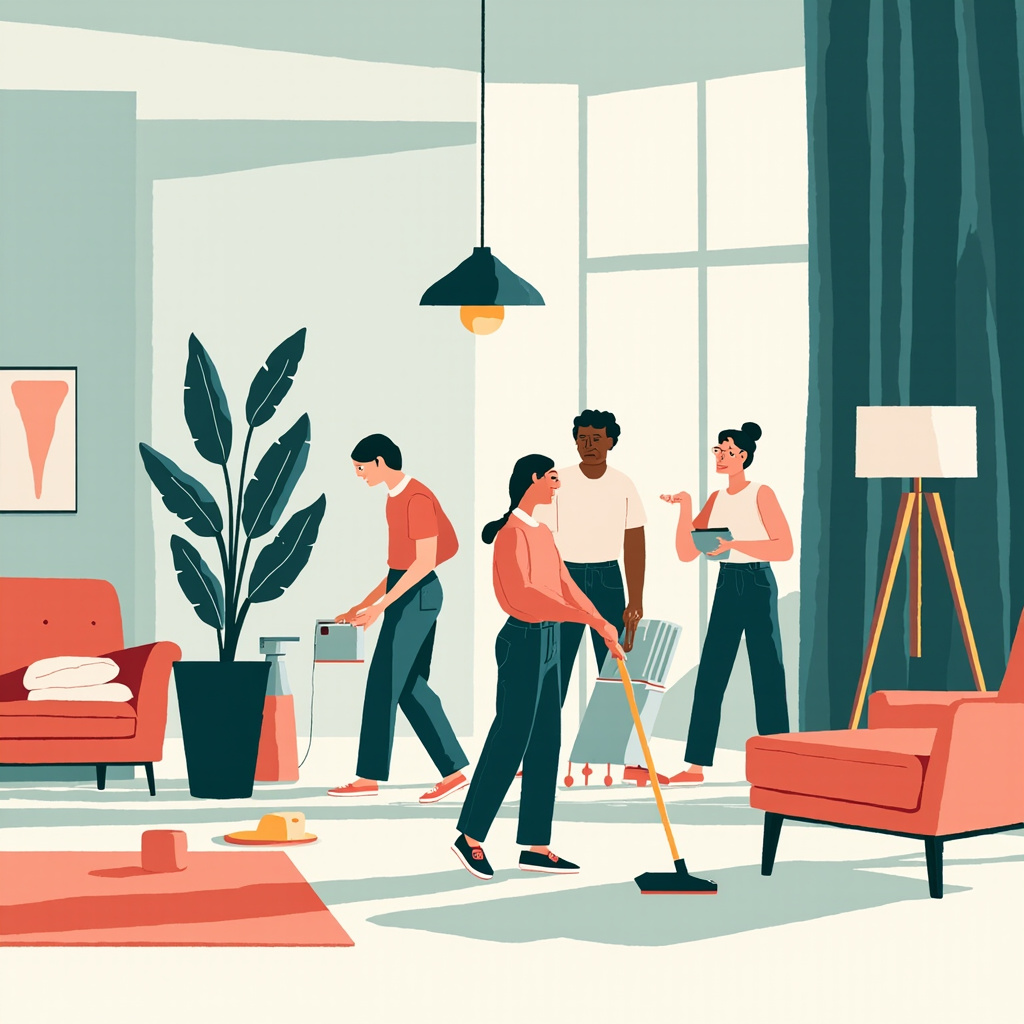
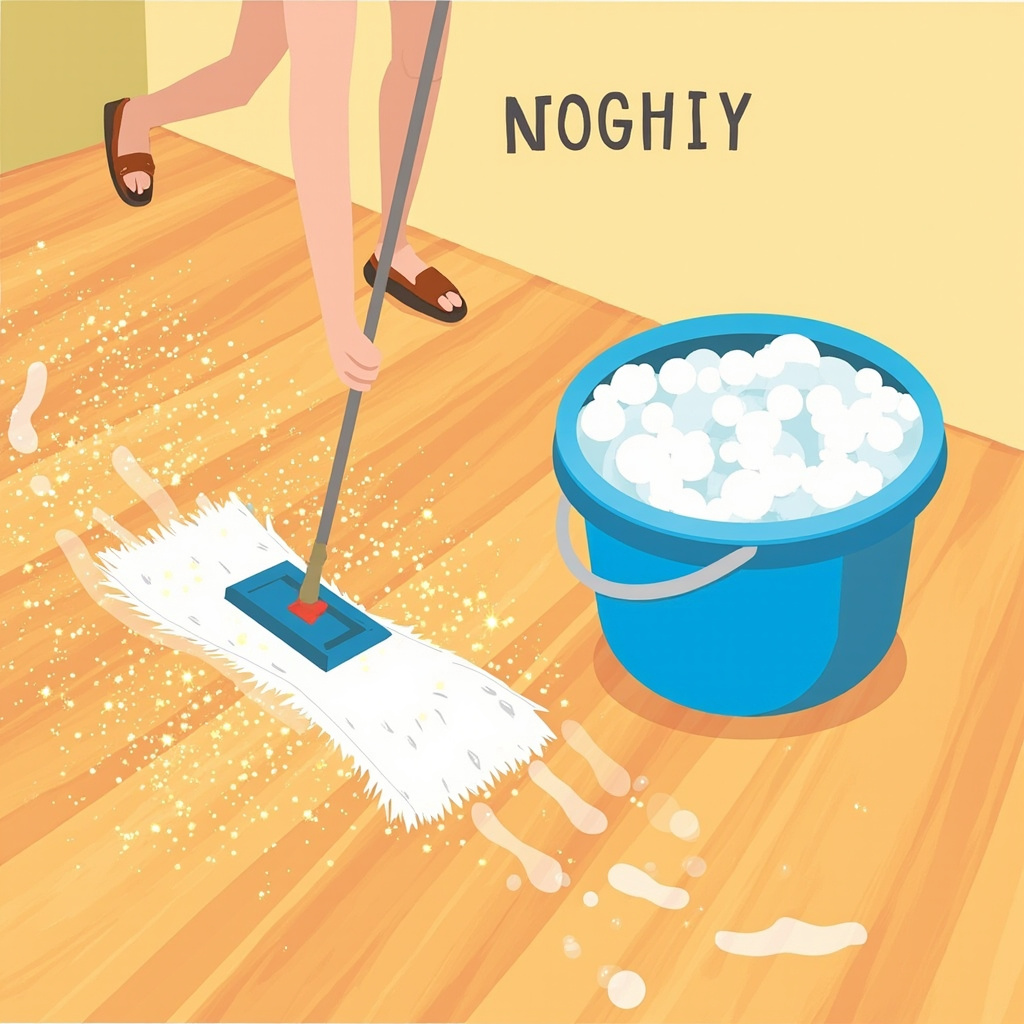
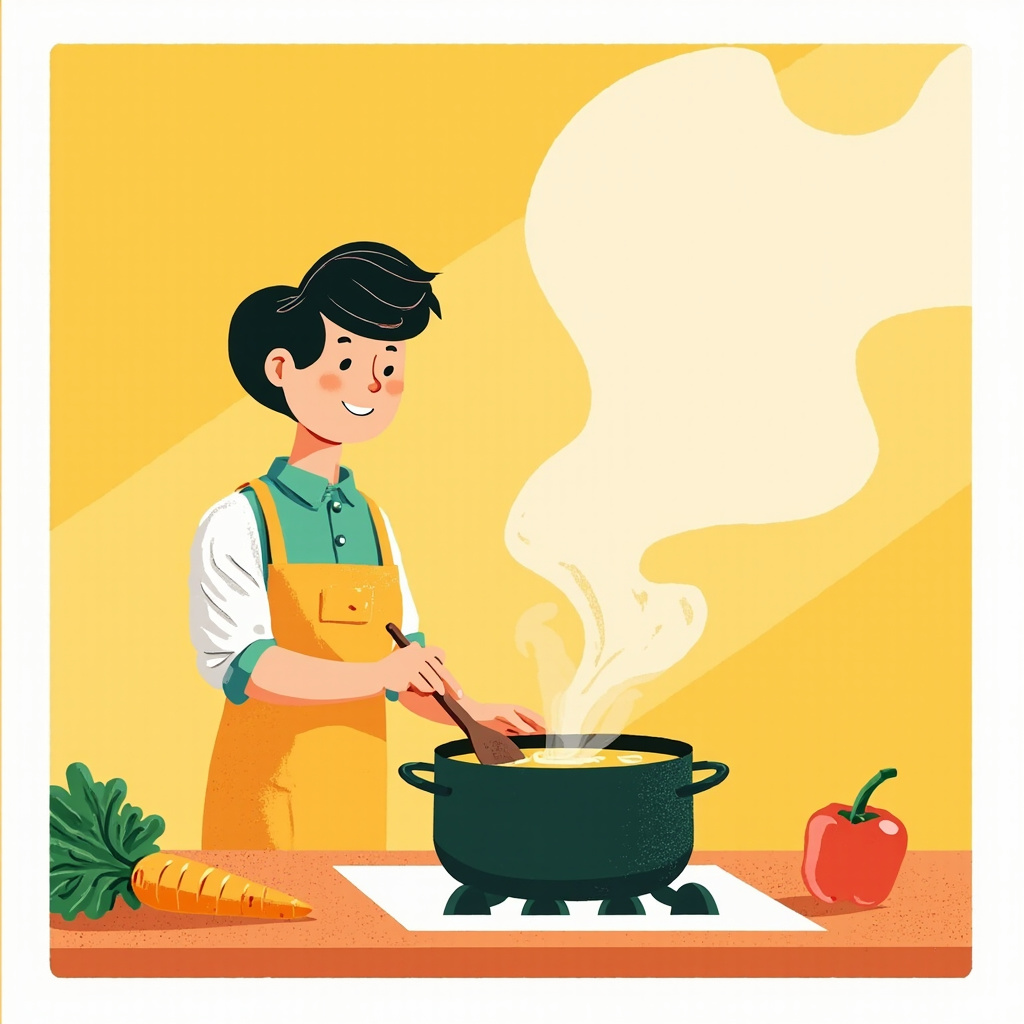
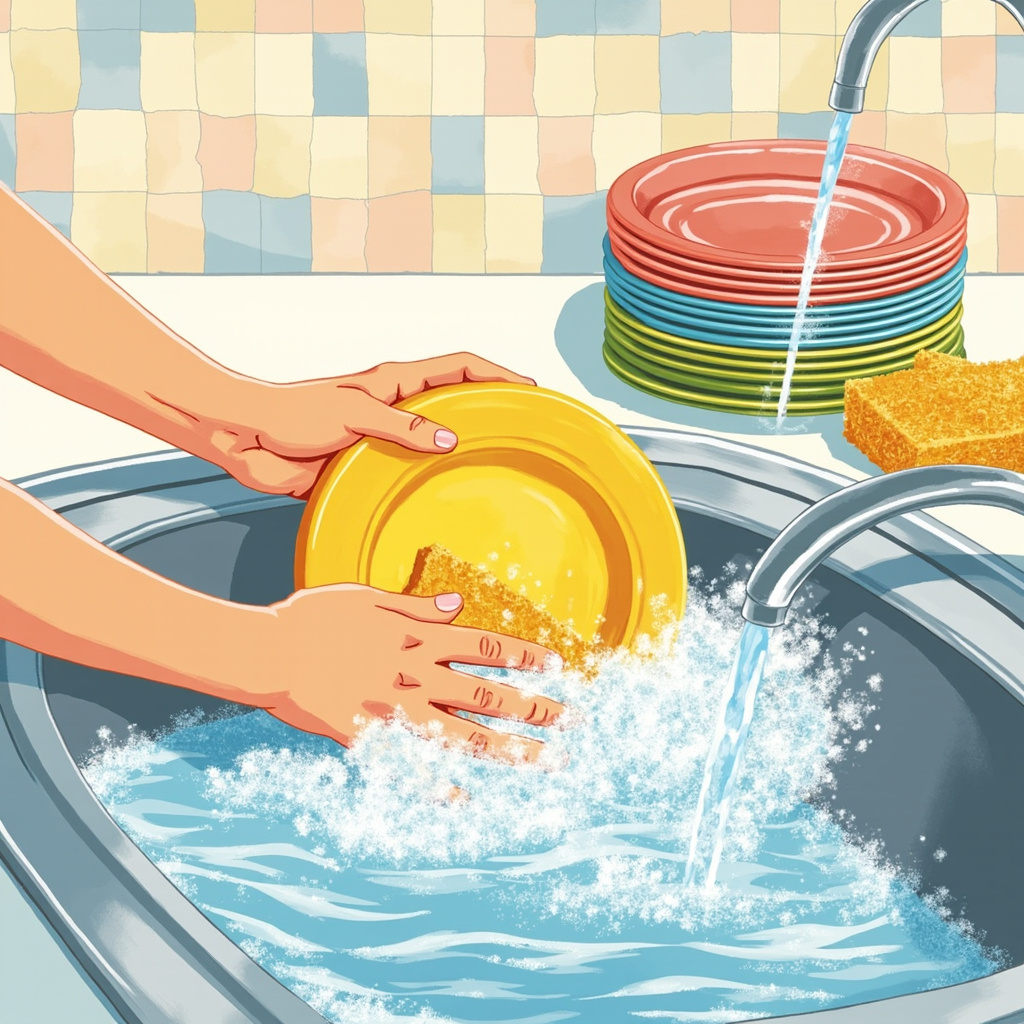
Now let's use these chores in a real conversation. When we talk about habits in English, we often use frequency adverbs to say how often we do something. The most common ones are:
always = 100% of the time
usually = most of the time
often = many times
sometimes = a few times
never = 0% of the time
These adverbs usually go before the main verb in the simple present. For example: I always make my bed. But with the verb be, the adverb goes after: I am always tired on Mondays.
Here are some useful phrases for talking about housework:
"What chores do you do at home?" — a great question to start a conversation.
"I usually tidy my room." — tells someone your habit.
"I often do the washing-up." — another common answer.
"I never sweep the floor." — a useful negative habit.
"I sometimes cook dinner." — talking about a job you do but not every day.
"Do you do the housework?" — a short yes/no question.
"Yes, I do." / "No, I don't." — short answers.
In the dialogue that follows, listen to two friends, Emma and Tom, talking about the chores they do at home. Tom is a student, and Emma is asking him about his daily routine. Notice the order of the frequency adverb and the verb — it is always adverb + verb in affirmative sentences.
إزاي تتكلم عن الشغل البيت في الإنجليزي
في الجزء ده هنتعلم إزاي تسأل وتجاوب عن housework (الشغل البيت) باستخدام حاجة اسمها frequency adverbs - يعني الظروف اللي بنقول بيها قد إيه بنعمل الحاجة دي.
إيه هي الـ frequency adverbs؟
دي كلمات بنحطها جنب الفعل عشان نوصف بيها العادة بتاعتنا، ومرتبين هنا من الأكتر للأقل:
always = دايما (١٠٠٪ من الوقت)
usually = غالبا (معظم الوقت)
often = كتير (مرات كتيرة)
sometimes = أحيانا (شوية مرات)
never = أبدا / عمري ما (٠٪ من الوقت)
القاعدة الأهم: فين بييجي الـ adverb؟
القاعدة العامة بسيطة: الـ adverb بييجي قبل الـ main verb (الفعل الأساسي) في الجملة العادية. مثلا:
I always make my bed.
I usually tidy my room on Saturdays.
I often do the washing-up after dinner.
I sometimes cook dinner for my family.
بس خلي بالك! لو الفعل كان be (am, is, are) الـ adverb بييجي بعده مش قبله:
I am always tired on Mondays.
She is usually happy in the morning.
جمل مفيدة تسأل بيها
"What chores do you do at home?" - سؤال كويس عشان تفتح بيه الـ conversation.
"Do you do the housework?" - سؤال قصير إجابته yes أو no.
والإجابات القصيرة بتكون: "Yes, I do." أو "No, I don't."
شوف الحوار بين Emma و Tom
Emma بتسأل Tom هل بيعمل أي شغل بيت في البيت. Tom بيرد إنه بيعمل شوية حاجات - بي tidy أوضته يوم السبت، وبيعمل washing-up بعد العشا، وأحيانا بيطبخ عشا لأهله. ولما Emma بتسأله لو بياخد الزبالة (take out the rubbish)، Tom قال لأ، أبوه هو اللي بيعمل كده دايما.
نصيحة أخيرة
لما تتكلم عن عاداتك، فكّر في القاعدة: adverb + main verb (مثلا I usually tidy)، بس لو عندك فعل be حط الـ adverb بعده (I am always tired). التزم بالقاعدة دي وهتتكلم زي الـ native speakers.
Listen to Emma and Tom talk about housework. Pay attention to the frequency adverbs.
E
EmmaHi Tom! Do you do any housework at home?
T
TomYes, a little. I usually tidy my room on Saturdays.
E
EmmaThat's good. What about the washing-up?
T
TomI often do the washing-up after dinner. I sometimes cook dinner too.
E
EmmaWow! Do you take out the rubbish?
T
TomNo, I don't. My dad always takes out the rubbish.
I sometimes cook dinner for my family at the weekend.
Key model phrase. Use 'sometimes' before the main verb.
Required
Read this sentence aloud. Remember: adverb + verb.
I usually tidy my room on Saturdays.
Required
Read this sentence aloud. Speak clearly and at a natural speed.
I often do the washing-up after dinner.
Required
Emma is asking about your housework. Answer her questions and use frequency adverbs (always, usually, often, sometimes, never) to say how often you do each chore. Try to mention at least three different chores.
Required
Vocabulary
Vocabulary
6
cards
In this lesson you learn the names of common household chores — the small jobs people do at home every day. In British English we often call these jobs housework or chores. People do housework to keep their home clean, tidy and comfortable.
Look at the table below. Each chore is a verb (or verb phrase) followed by the thing you do. For example, you make the bed in the morning and you do the washing-up after lunch. We can also say wash the dishes — both are correct in British English, but do the washing-up is more common at home.
We use these verbs in the simple present because housework is a habit — something we do again and again. For example: I tidy my room every day. We can also add frequency adverbs like always, usually, often, sometimes and never to say how often we do them.
Notice how we say do the housework, do the washing-up and do the shopping — these three chores all use the verb do as a helper. The other chores use their own special verb: make, take, sweep, tidy, clean, cook. In the simple present, after he, she or it we add -s to the verb: she makes the bed, he takes out the rubbish.
Word / phrase
Type
Meaning (AR)
Example sentence
tidy the room
verb
I tidy my room on Saturday.
do the washing-up
verb
I do the washing-up after dinner.
make the bed
verb
She makes the bed every morning.
clean the floor
verb
He cleans the floor on Fridays.
cook dinner
verb
My mum cooks dinner at six.
take out the rubbish
verb
I take out the rubbish on Tuesdays.
do the shopping
verb
We do the shopping at the weekend.
sweep the floor
verb
He sweeps the kitchen floor.
في الدرس ده هنتعلم أسماء الشغل البيت اللي كلنا بنعمله كل يوم. في الإنجليزي بنسميها household chores أو housework، ودي حاجات بسيطة بس مهمة عشان البيت يفضل نضيف ومرتب.
الأفعال اللي بنستخدمها في الدرس:
عندنا تمانية عبارات، وكل واحدة عبارة عن فعل متبوع بالحاجة اللي بنعملها:
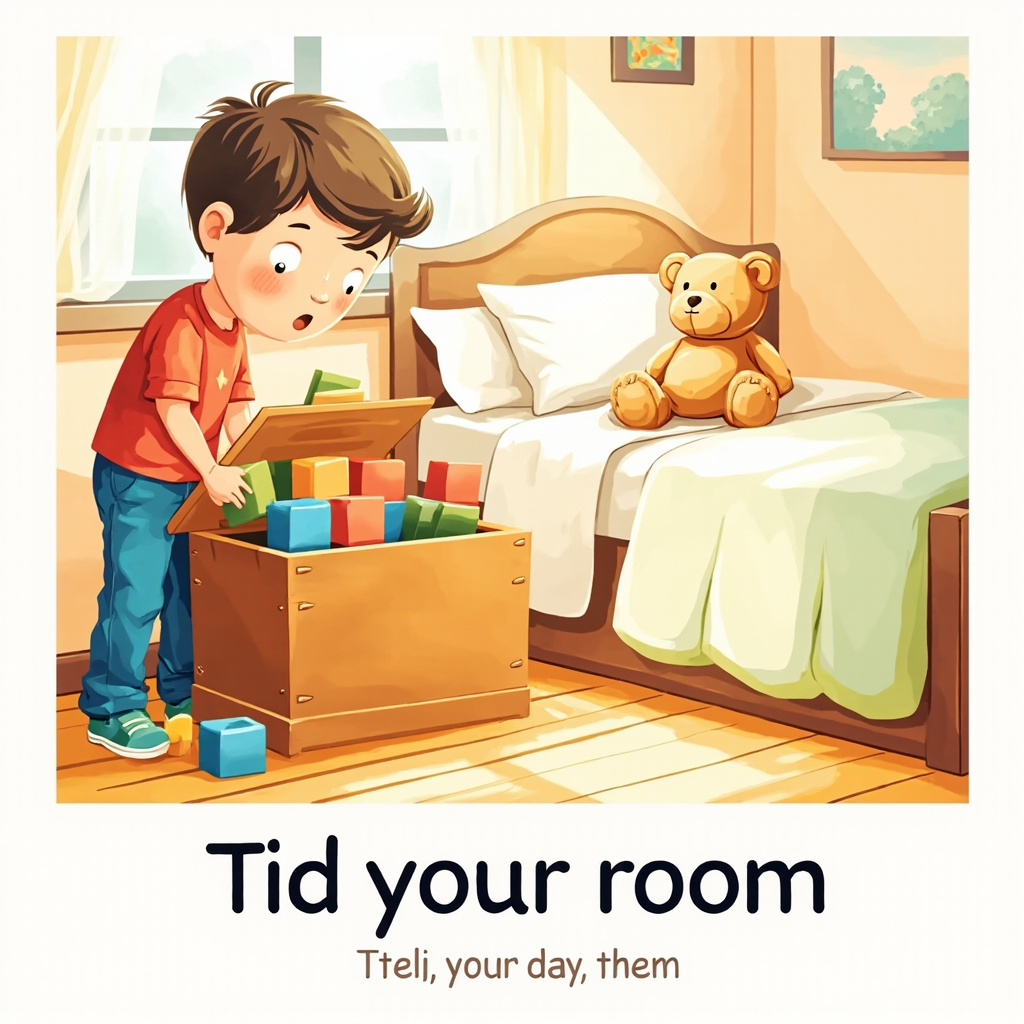
tidy the room يعني ترتب أوضتك
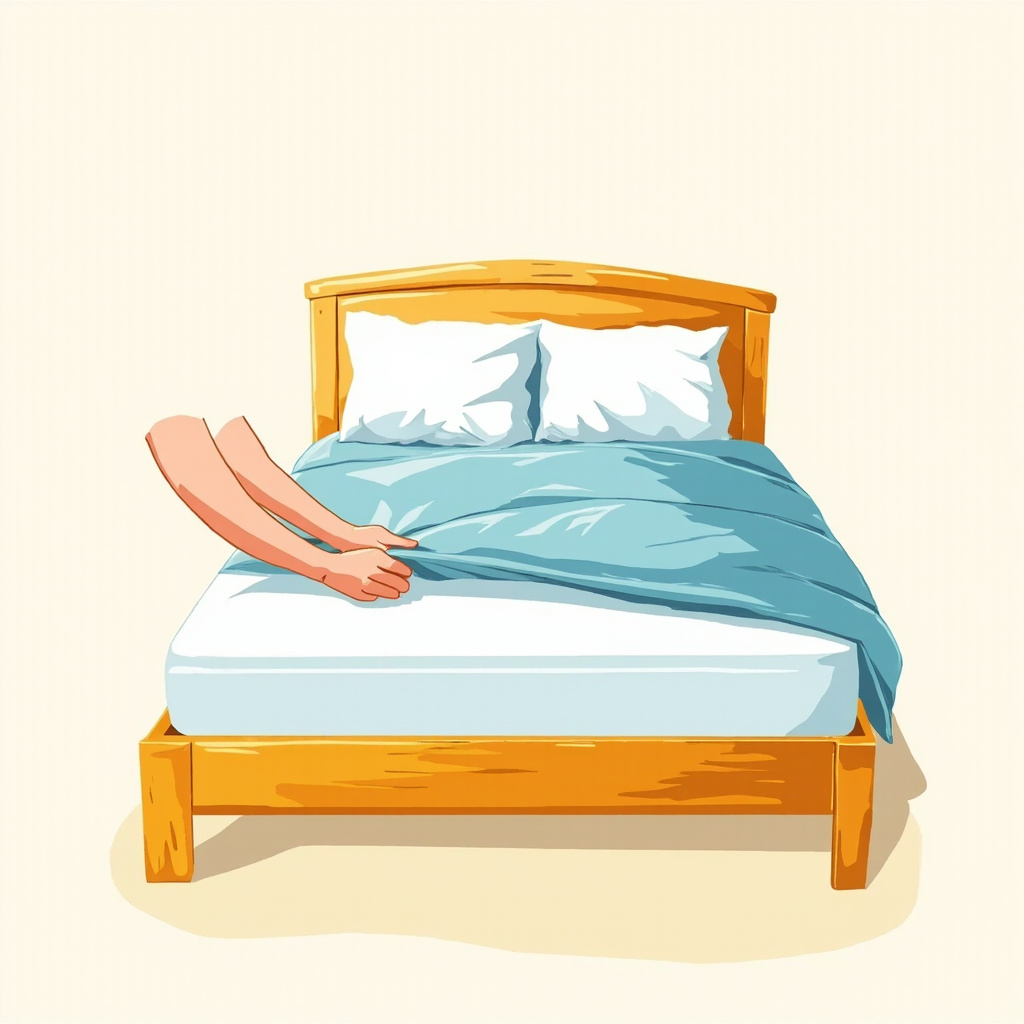
make the bed يعني ترتب السرير بتاعك في الصبح
clean the floor يعني تنضف الأرضية
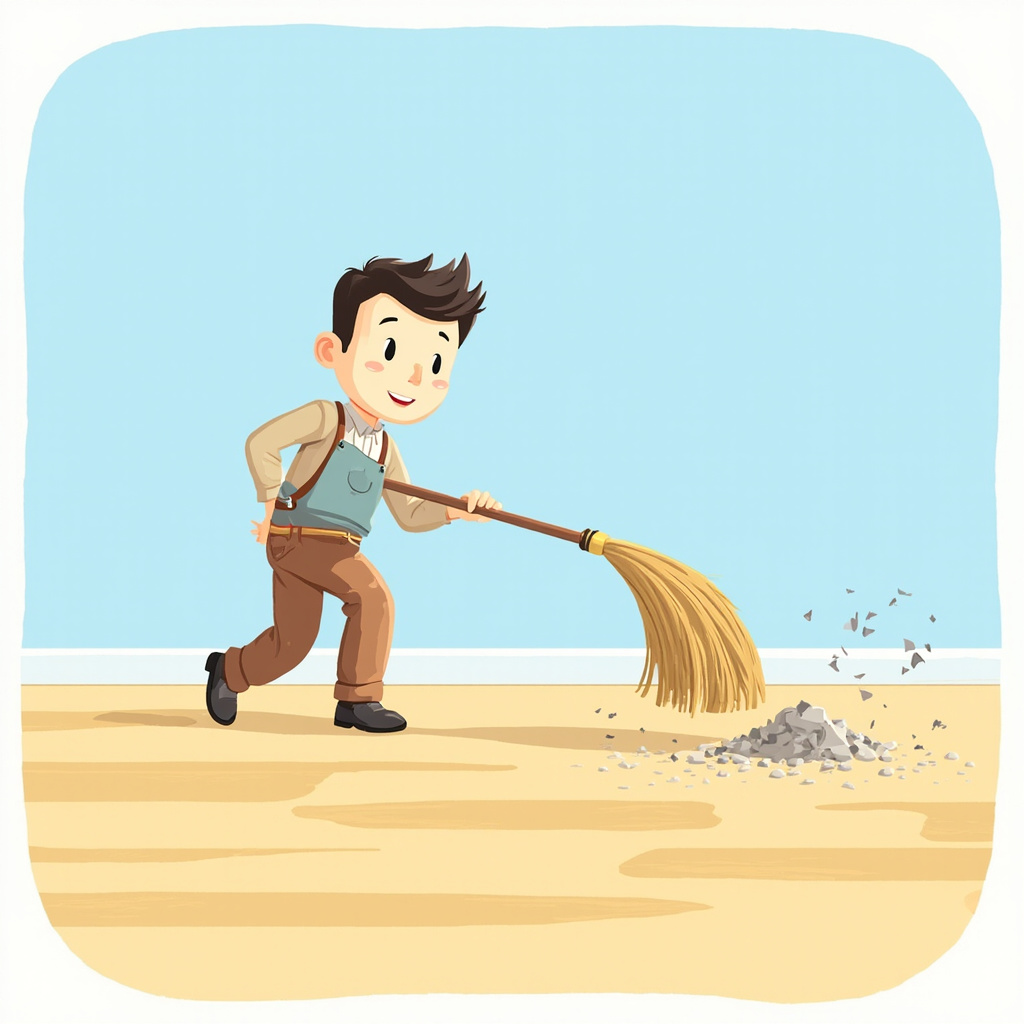
sweep the floor يعني تكنس الأرضية بالكنسة
cook dinner يعني تطبخ العشا
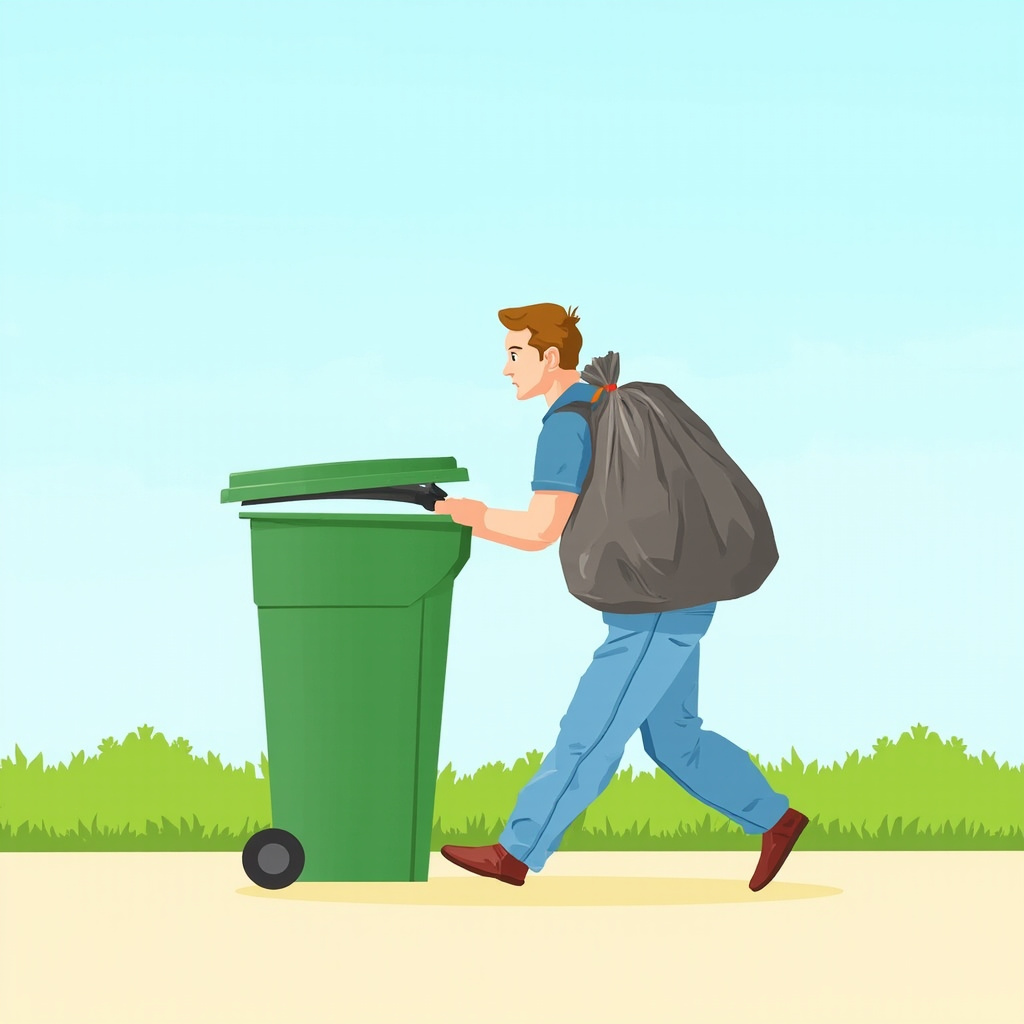
take out the rubbish يعني تنزّل الزبالة بره البيت
do the washing-up يعني تغسل الصحون (وده التعبير البريطاني الشائع، ممكن كمان تقول wash the dishes)
do the shopping يعني تعمل التسوق
قاعدة الجرامر المهمة:
في الإنجليزي بنستخدم simple present مع الشغل البيت لإن ده عادة بنعملها كل يوم. وبنضيفلها كمان adverbs of frequency عشان نقول بنعملها قد إيه. الترتيب بيكون: subject + adverb + verb + object. مثلا: I usually tidy my room، أو She always makes her bed.
حاجة تانية لازم تاخد بالك منها:
في تلات عبارات بييجوا مع فعل do كمساعد: do the housework و do the washing-up و do the shopping. أما باقي العبارات فلكل واحدة فعلها الخاص زي make و take و sweep و tidy و clean و cook.
فرق مهم في الضمائر:
لما نتكلم عن شخص تالت زي he أو she أو it، لازم نضيف -s في آخر الفعل. مثلا: She makes the bed، He takes out the rubbish، My mum cooks dinner. دي من أهم القواعد في المستوى A2.
Read and listen to each chore. These are the jobs you do at home.
clean the floorkliːn ðə ˈflɔː
To make the floor free from dirt, dust, or stains by sweeping, mopping, or wiping.
cook dinnerkʊk ˈdɪnə
To prepare and heat food for the evening meal.
do the shoppingduː ðə ˈʃɒpɪŋ
To go to stores or markets to buy food, household items, and other goods, typically for regular home needs.
do the washing-upduː ðə ˈwɒʃɪŋ ʌp
To wash dishes, glasses, and other kitchen items after a meal.
make the bedmeɪk ðə ˈbed
To arrange sheets, blankets, and pillows on a bed in a tidy and organized way.
sweep the floorswiːp ðə flɔː
To clean the floor by pushing dust and dirt away with a broom or brush.
take out the rubbishteɪk ˈaʊt ðə ˈrʌbɪʃ
to carry or remove garbage, trash, or waste from inside a building to an outside bin or disposal area
tidy the roomˈtaɪdi ðə ruːm
To clean and organize a room by putting things in their proper places and making it neat.
Required
Match each chore with its correct meaning in English.
Match each chore with its correct meaning in English.
tidy the room
do the washing-up
make the bed
clean the floor
cook dinner
take out the rubbish
do the shopping
sweep the floor
put things in their place to make it neat
clean the plates and pans after a meal
straighten the sheets and covers on the bed
wash or wipe the floor
prepare the evening meal
put the bin bag outside the house
go to the shop and buy food
use a brush to clean the floor
I usually tidy my room on Saturdays and I sometimes do the washing-up after dinner.
Model sentence. Notice the frequency adverbs usually and sometimes before the main verb.
Required
Listen to the speaker. Which chore does the speaker always do?