In English we use How much to ask the price of something. The verb that comes after depends on whether the thing is singular or plural.
Look at the pattern:
Singular (one thing)
Plural (two or more)
Question
How much is it?
How much are they?
Short answer
It is £5.
They are £3.
Question word
this, that
these, those
With is we use it / this / that: How much is this T-shirt? With are we use they / these / those: How much are those apples? In answers, the verb is also is or are: It is £10. / They are £4.
We also use How much is…? for uncountable things, like water, bread or coffee: How much is the coffee? — It's £2.50. Notice the price: we say two pounds fifty (not two fifty pounds).
Useful numbers for prices: ten, twenty, twenty-five, fifty, a hundred. We write prices with £ for pounds and p for pence: £10, 50p, £2.50.
Generating translation…
How much is this T-shirt? — It's ten pounds.
Singular. Listen and notice the verb: is / is.
How much are those apples? — They're two pounds.
Plural. Listen and notice the verb: are / are.
Required
Look at the two questions above. What comes after 'How much' when we ask about ONE thing?
are
is
do
Required
How much ___ this bag?
Required
How much ___ those jeans?
Required
You are in a shop. You want the price of ONE book. What do you ask?
How much is this book?
How much are this book?
How much book is this?
Required
The answer to 'How much are the tickets?' is 'It is £15.'
Tickets is plural, so the answer must use 'they are', not 'it is'.
Required
Put the words in order to make a question.
much
How
are
those
apples?
Required
Drag the correct word (is or are) into each sentence.
is
is
are
are
How much this coffee, please?
How much the red apples?
How much your cheapest bag?
How much those sandwiches?
Listening
Listening
5
cards
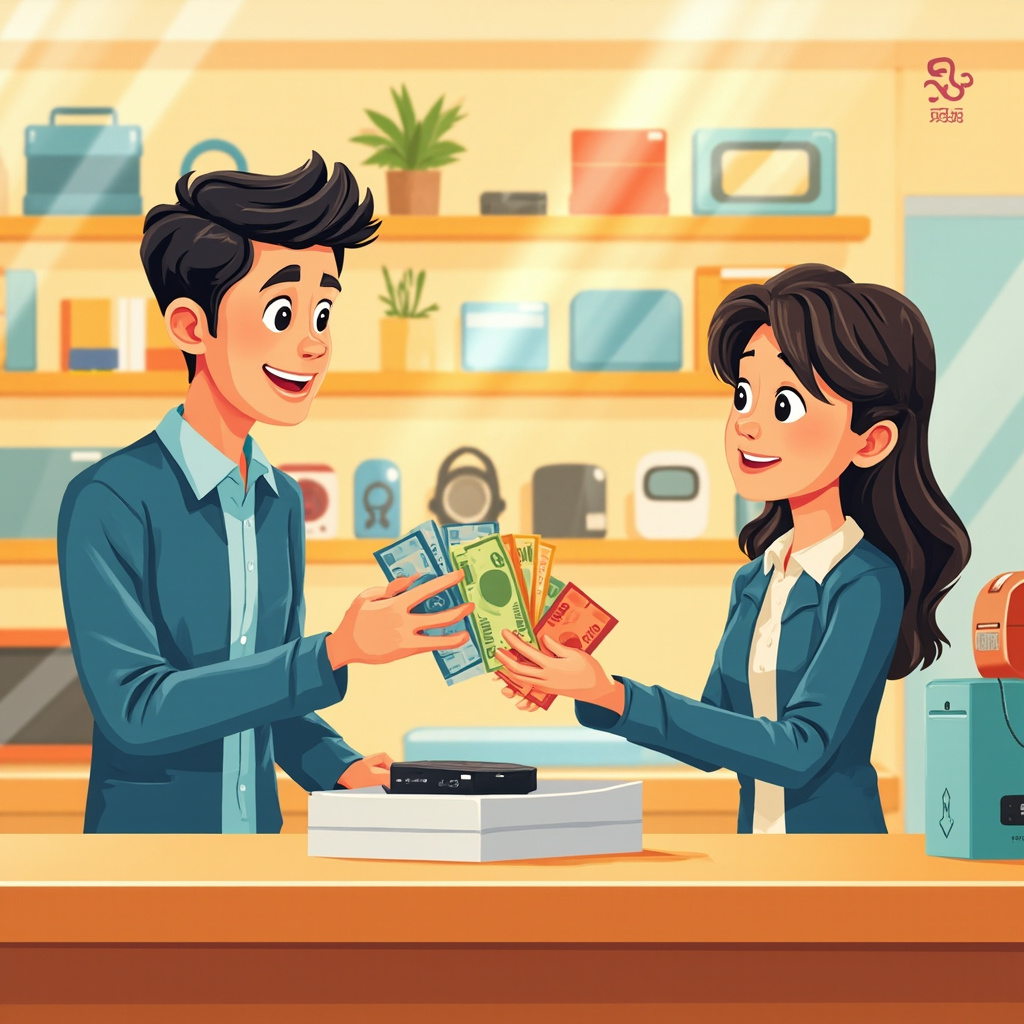
Listen to a short conversation in a clothes shop. Emma is a customer and Tom is the shop assistant. Emma wants to know the price of a T-shirt, the jeans, and a bag. Before you listen, look at the picture in your mind: a small shop with clothes on hangers, a counter, and a card machine.
While you listen, try to hear the numbers and the words pounds and pence. Remember: How much is it? is for one thing, and How much are they? is for more than one thing. Listen carefully for the verbs is and are — they will help you understand.
Prediction question: Do you think the shop is expensive or cheap? Why?
Generating translation…
Emma is in a clothes shop. She wants to know the prices.
E
EmmaExcuse me, how much is this red T-shirt?
T
TomIt's fifteen pounds.
E
EmmaFifteen pounds? OK. How much is the blue one?
T
TomThe blue T-shirt is only ten pounds.
E
EmmaGreat. How much are the jeans?
T
TomThe jeans are twenty-five pounds.
E
EmmaCan I pay by card?
T
TomYes, of course.
E
EmmaI'll take the blue T-shirt, please.
T
TomThanks very much. Have a nice day.
Required
What does Emma buy in the end?
The red T-shirt
The blue T-shirt
The jeans
Required
How much are the jeans?
£15
£20
£25
Required
Emma pays by ___.
Pronunciation
Pronunciation
6
cards
Many words for prices in English begin with the sound /p/. Look at: price, pay, pound, pence, pen, spend. The /p/ sound is very common, so it is important to say it clearly.
The /p/ sound is a voiceless bilabial plosive. Let's break that down:
Voiceless = your throat does NOT vibrate. Put your hand on your throat. Say /p/. Then say /b/. Feel the vibration? /p/ has no vibration; /b/ does.
Bilabial = you use both lips. Close your lips tightly together.
Plosive = you stop the air and then release it in a small puff.
To make /p/: close your lips, build up a little air behind them, then open your lips and let the air out. You should feel a small puff of air on your hand. In English /p/ is aspirated at the start of a word, so the puff is strong. In the middle of a word (like spend or cheap) the puff is smaller.
/p/ vs /b/ — a common problem for Arabic speakers: Arabic /ب/ is voiced, but English /p/ at the start of a word is voiceless. Make sure your throat does not vibrate when you say price — say it like puh-rice with a clear puff of air.
/p/ vs /b/ — a common problem for Arabic speakers: Arabic /ب/ is voiced, but English /p/ at the start of a word is voiceless. Make sure your throat does not vibrate when you say price — say it like puh-rice with a clear puff of air.
To make /p/: close both lips, stop the air, then open your lips and let the air out in a small puff. Do NOT use your voice. Try it now: puh, puh, puh. You should feel air on your hand.
Required
Listen. Which word did you hear?
pay
bay
day
Required
Listen. How much does the speaker say it is?
ten pounds
ten pence
twenty pounds
Required
Say the word. Feel the puff of air on your hand.
price
Required
Say the question. Be careful with the /p/ in 'puff' of 'much' — say it clearly.
How much is it?
Reading
Reading
6
cards
In this section you will read a short message from a friend about shopping in London. Before you read, think: what is a sale? A sale is when a shop sells things for less money — the prices are cheaper than usual. Sale prices are usually in red.
Strategy: Scanning for numbers. When you read for prices, you do NOT need to understand every word. Move your eyes quickly and look only for numbers (£, p) and the words next to them. This is called scanning. It is very useful for menus, price lists, and adverts.
Key words to scan for:
from — T-shirts from £5 means prices start at £5
sale — cheaper prices for a short time
usually — the normal price, not the sale price
Read the message and scan for the prices. Do not worry about every word — just find the numbers.
Generating translation…
Oxford Street Sales — a message from Sara
Hi! I'm in London this weekend. The shops on Oxford Street have great sales! Topshop has T-shirts from £5. H&M has jeans from £10. Boots has perfume from £15.
My friend Kate bought a jacket for £20 — usually it's £50! She is very happy.
But not everything is cheap. The big shops are still expensive. Look for the red sale signs — they are usually near the door.
I'm going back tomorrow. Do you want anything?
Sara x
Required
What is the message about?
A holiday in London
Sales in London shops
Kate's new jacket
Required
At Topshop, T-shirts are from £15.
The message says 'T-shirts from £5', not £15.
Required
How much is Kate's jacket in the sale?
£20
£50
£15
Required
Everything in the big shops on Oxford Street is cheap.
The message says 'not everything is cheap. The big shops are still expensive.'
Speaking
Speaking
7
cards
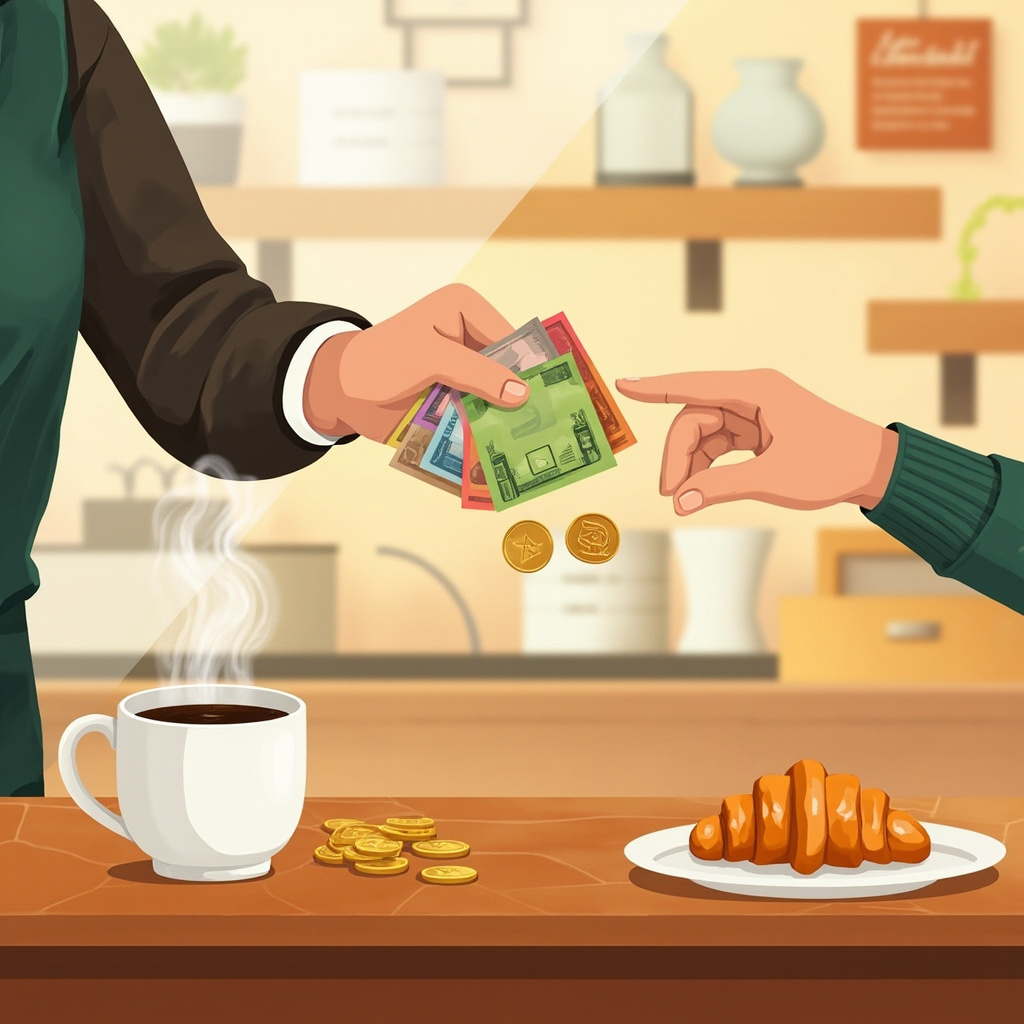
Now it is your turn to speak. In this section you will practise the conversation you heard in the listening — but this time, in a small café. You will ask the shop assistant about the prices of drinks and food, and you will order something.
Here are the useful phrases for asking about prices and ordering:
Excuse me, how much is a coffee? — ask about ONE thing (use is)
How much are the sandwiches? — ask about MORE THAN ONE thing (use are)
It's / They're ___ pounds, please. — answer with a price
Can I pay by card? — ask how to pay
I'll have a coffee, please. — order something
Cash or card? — the shop assistant's question
Remember: is goes with one thing, are goes with more than one. Listen to the model dialogue, then practise saying the key sentences. When you are ready, have a real conversation with the shop assistant.
Generating translation…
Tom is in a small café. He wants a coffee and a sandwich.
T
TomExcuse me, how much is a coffee?
E
EmmaA coffee is two pounds fifty.
T
TomAnd how much is a sandwich?
E
EmmaSandwiches are four pounds.
T
TomOK. I'll have a coffee, please.
E
EmmaCash or card?
Excuse me, how much is a coffee?
This is the most useful sentence for asking about ONE thing. Listen and repeat.
Required
Say the question clearly. Don't forget the /p/ sound in 'please' — say 'puh-lease'.
Excuse me, how much is this T-shirt?
Required
Now ask about more than one thing. Use 'are'.
How much are those apples?
Required
You are in a small clothes shop. Say hello, then ask the shop assistant about the prices of three things: a T-shirt, a pair of jeans and a jacket. Listen to the prices. Decide which one you want to buy. Tell the assistant what you want and how you want to pay (cash or card).
Required
Vocabulary
Vocabulary
6
cards
When you go shopping in the UK, you need special words to talk about money. In this lesson you will learn the most useful words for prices, paying and shopping. Read the table, then look at the examples to see how the words work in real sentences.
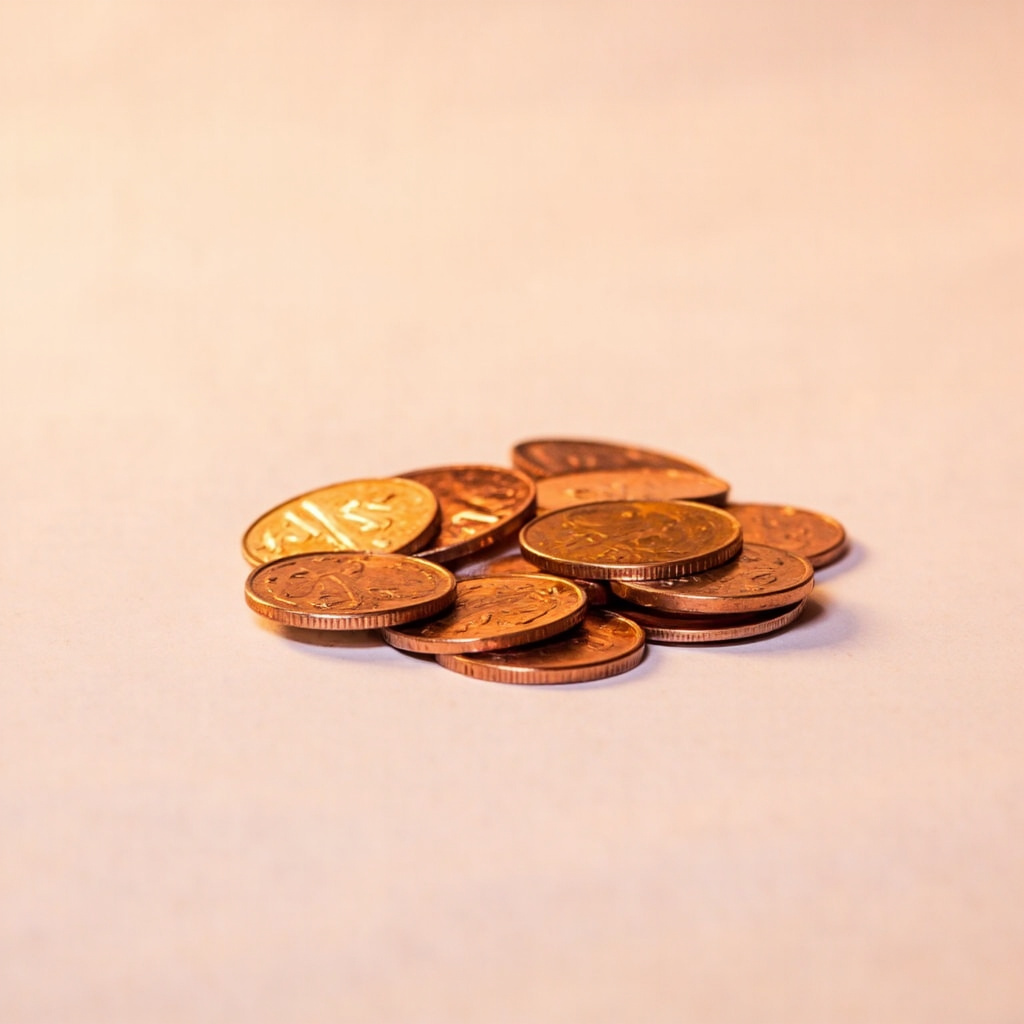
Look at the word price — it is a noun, and we use it to say how much something costs. The opposite of expensive is cheap, but in everyday English people often say it's a good price for something that is not too costly. We pay with British money: pounds (£) and pence (p). One pound is 100 pence.
Word
Type
Example
price
noun
The price is ten pounds.
cheap
adjective
This T-shirt is cheap.
expensive
adjective
That phone is very expensive.
pound
noun
It's five pounds.
pence
noun
It's only fifty pence.
buy
verb
I want to buy a jacket.
pay
verb
Can I pay by card?
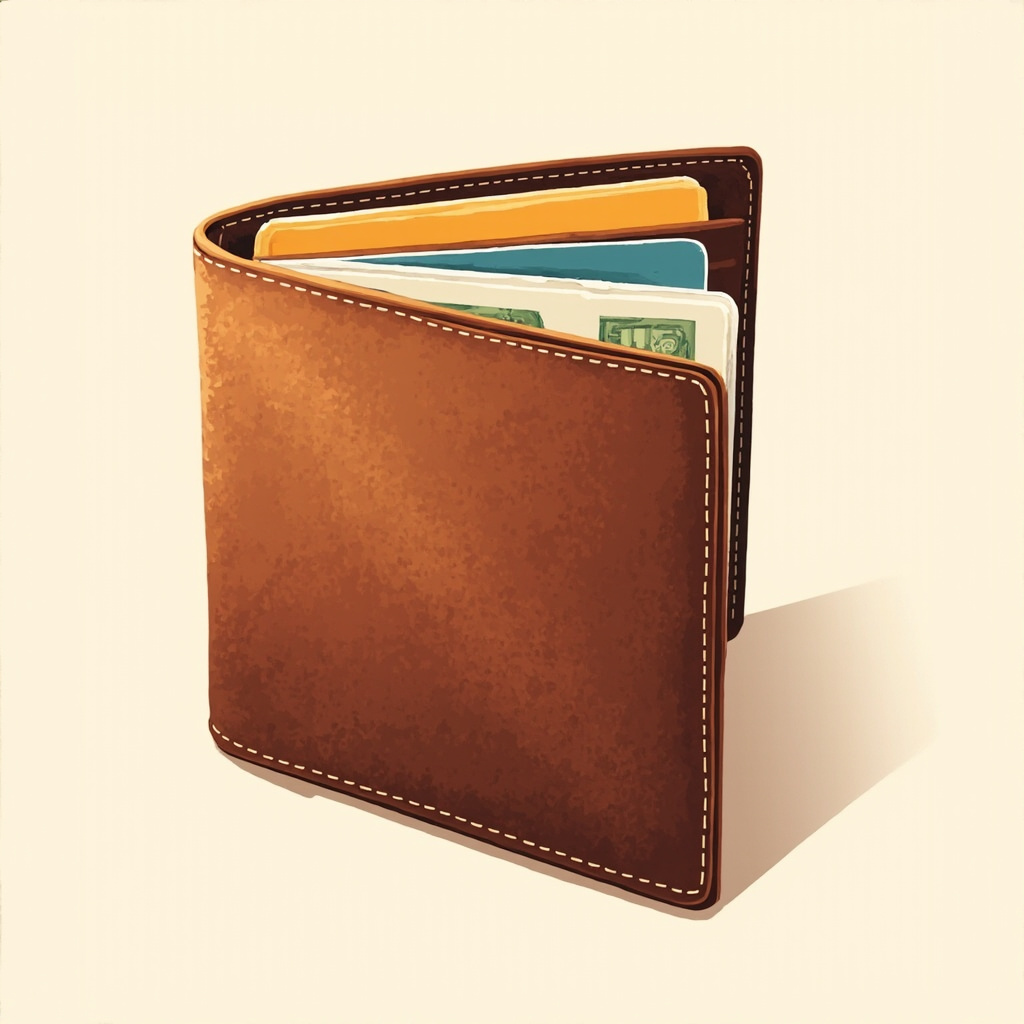
wallet
noun
My wallet is in my bag.
Try to remember the new words. You will use them again in the next sections when you ask about prices in a shop.
Generating translation…
Look at these eight words about prices and shopping. Tap each one to hear it.
buybaɪ
To obtain something by paying money for it; to purchase.
cheaptʃiːp
Low in price; not expensive. Something that costs less than usual or expected.
expensiveɪkˈspensɪv
Costing a lot of money; having a high price.
paypeɪ
To give money to someone for goods or services, or to settle a debt or bill.
pencepɛns
The plural of penny, referring to British coins worth one hundredth of a pound.
poundpaʊnd
A unit of weight equal to 16 ounces or approximately 454 grams, used in the UK and US.
pricepraɪs
The amount of money that you need to pay to buy something.
walletˈwɒlɪt
A small folding case for carrying money and cards, typically made of leather or fabric, usually kept in a pock
Required
Match each word on the left with its meaning on the right.
Match each word on the left with its meaning on the right.