Idioms About Fear
Discover colourful English expressions that describe everything from small worries to true terror.
When Fear Hits You Suddenly
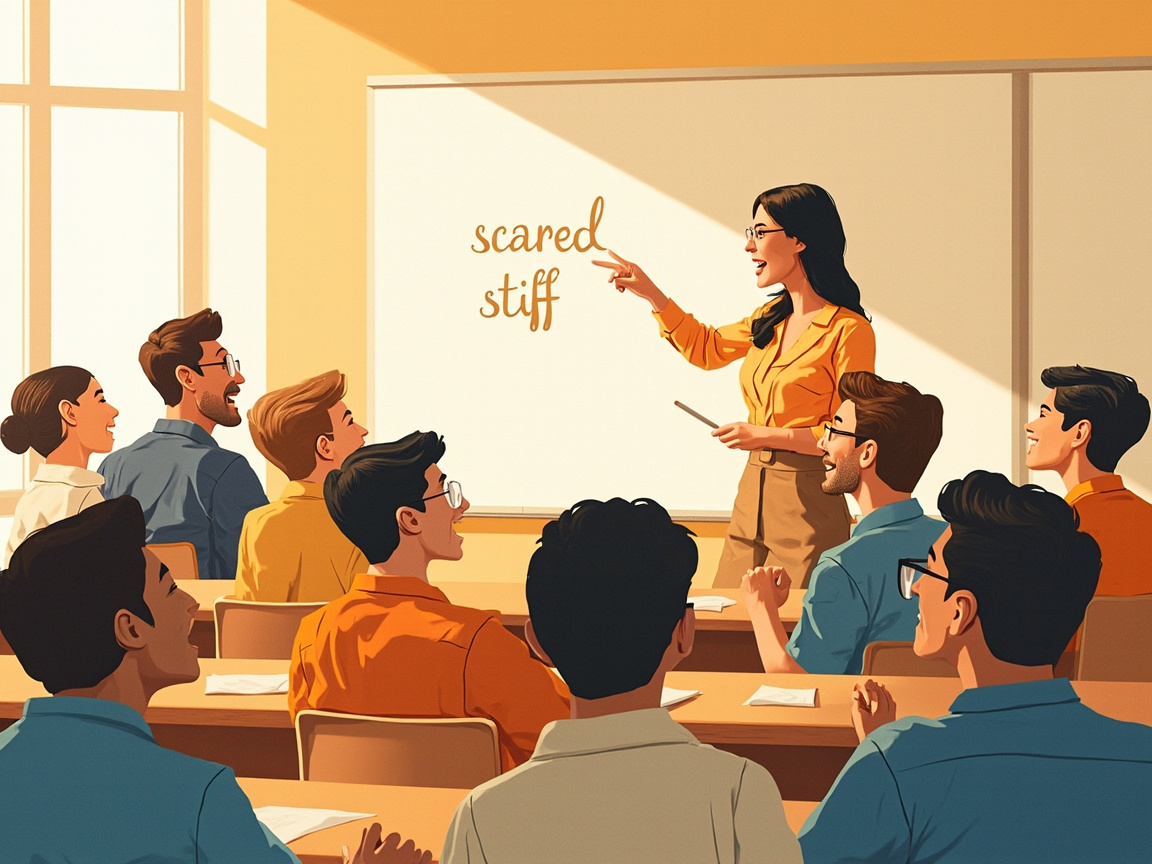
Some moments of fear come without warning — a loud noise, a shadow in the dark, a phone call in the middle of the night. When something really startles you, you might jump out of your skin, moving quickly before your brain even understands what happened. If the fear is strong enough to stop you from moving, you could freeze in your tracks, standing completely still as if your feet are stuck to the floor. Your body also reacts in other ways: your heart pounding so hard you can feel it in your chest, or the hairs on your arms standing up. In the most extreme moments, people say they were scared stiff — too frightened to move a single muscle.
Visible Signs of Fear
When people are nervous or terrified, their bodies often show it in obvious ways. A person who is trembling badly might shake like a leaf, a common image borrowed from trees moving in the wind. Someone a little less dramatic may only shake in their boots, which simply means they are quietly afraid. You may also hear friends say they are scared to death — an exaggeration, of course, that simply means very, very frightened. If the fear is so intense it seems to turn you to stone, the right word is petrified, which originally comes from the idea of turning into stone. Many people also get goosebumps, those tiny bumps on the skin that appear when you feel cold or scared.
Everyday Ways to Talk About Fear
Not all fear is dramatic. Some people are easily worried about almost everything, so we say they are afraid of their own shadow, meaning even imaginary dangers frighten them. Before a big event such as a wedding or an exam, it is normal to have cold feet, which means to suddenly feel nervous about going ahead with a plan. If you decide not to do something brave at the last minute, you chicken out — a casual expression that often makes people laugh at themselves. Strange sounds, dark places, or quiet hallways can also give you the creeps, a feeling of unease that makes your skin feel uncomfortable. Finally, if a place or situation just feels wrong, you might say it is creepy, an adjective that describes a quiet, slightly frightening atmosphere.
Putting It All Together
These expressions are common in films, TV shows, and everyday conversation, so knowing them will help you sound more natural in English. Notice that many fear idioms use the body — jumping, shaking, freezing, sweating — because fear is something we feel physically. You can also be spooked, which is an informal word meaning suddenly frightened, often by something you did not expect. If a noise or sight is so shocking that you cannot think clearly, you might be frightened out of your wits, a colourful old-fashioned way to say you are completely terrified. Try mixing these idioms into your next English conversation and you will sound both fluent and expressive.
Quiz
-
1According to the article, what does the idiom "freeze in your tracks" describe?
The article says "freeze in your tracks" means to stop moving suddenly because of fear or shock.
-
2Which idiom is described as an exaggeration meaning "very, very frightened"?
The article explains that "scared to death" is an exaggeration that simply means very, very frightened.
-
3What situation would most likely make someone "have cold feet"?
The article says "have cold feet" means to feel nervous about a planned event, such as a wedding or exam.
-
4If your friend decides not to do something brave at the last minute, which idiom describes this?
The article defines "chicken out" as deciding not to do something brave at the last minute.
-
5Why do many English fear idioms use images of the body?
The article notes that many fear idioms use the body because fear is something we feel physically.