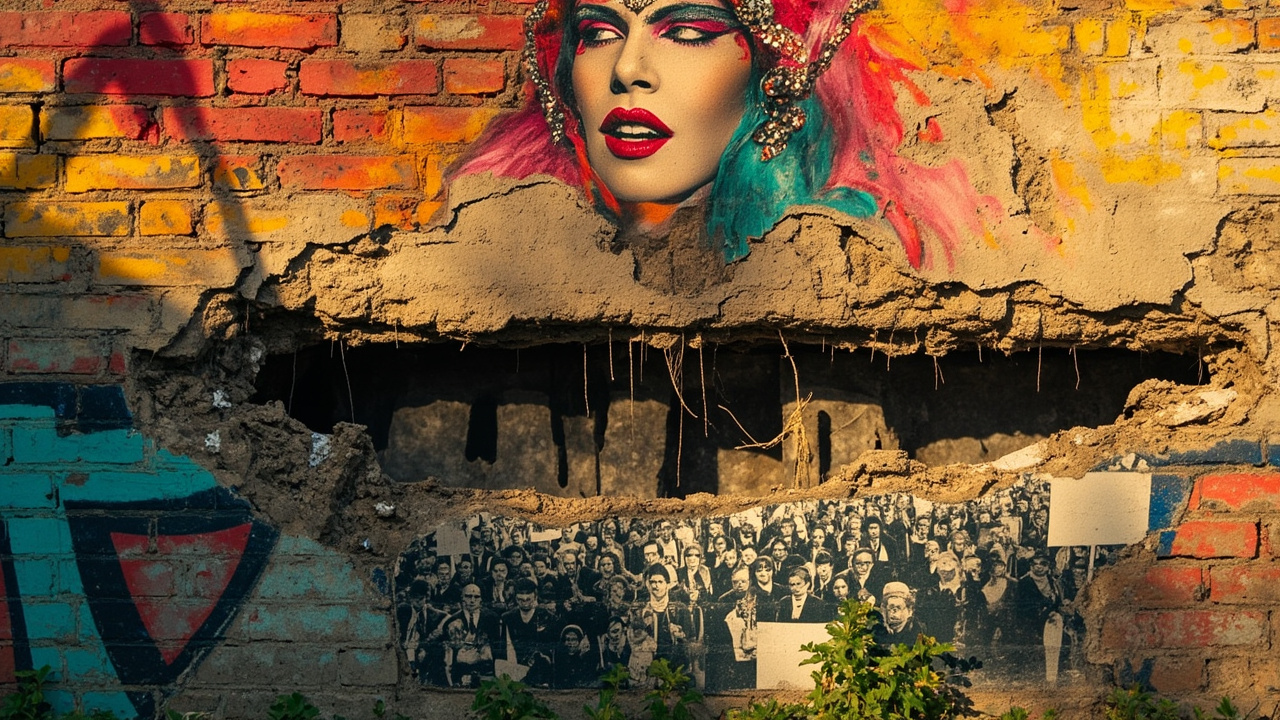
كانت أمارا أوكونكو قد رسمت لوحات جدارية في جميع أنحاء لندن، لكن لم يكن شيء قد أعدها للحالة التي وجدتها عليها في شارع كولد هاربور. كانت الصورة الزاهية ذات مرة لراقصة الكرنفال قد بُهت تحت طبقات من الأوساخ وكتابات Spray. كان العشب البرّي ينبت من خلال الخرسانة المتشققة عند قاعدتها. حين كلفها صندوق تراست المجتمع في بريكسون بترميمها، كانت قد توقعت عملاً بسيطاً. لكنها لم تكن تتوقع أن تكشف عن قصة مدفونة.
جاء أول دليل خلال الساعة الأولى من التنظيف. وبينما كانت تزيل بعناية سنوات من الأوساخ المتراكمة بفرشاة ناعمة، برز يد شاحبة من تحت أكمام الراقصة. ثم عين. ثم صف من النص كانت قد افترضت أنه جزء من التصميم الأصلي. لكنه لم يكن كذلك. كان شخص ما قد رسم صورة ثانية تحت مشهد الكرنفال ثم غطّاها عمداً.
أوقفت أمارا العمل واتصلت بمنسق الصندوق، معلمة متقاعدة تُدعى الآنسة كاذبرت. أمضيا معاً بعد ظهرً كاملاً في الكشف بلطف عما كان مخفياً تحت السطح. ما وجدوه كان صورة شخصية من نوع مختلف: حشد من الناس يحملون لافتات، يسيرون في نفس الشوارع، تحت كلمات "آباء وأمهات سود يدافعون عن أطفالهم — 1972".
تاريخ خفي
امتلأت عينا الآنسة كاذبرت بالدموع. كانت تتذكر اللوحة الجدارية الأصلية، قالت. كانت قد رُسمت فوقها في منتصف الثمانينيات خلال فترة من التوتر العرقي، حين قرر المجلس أن الصورة الأصلية كانت متشددة سياسياً جداً للعرض العام. كان الفنان، رجل يُدعى عزرا تشامبرز، قد أُعطي خيارين: إعادة تصميم اللوحة الجدارية بشيء أكثر قبولاً، أو رؤيتها تُزال تماماً.
لم تستطع أمارا التوقف عن التفكير في عزرا تشامبرز. أمضت الأسبوع التالي في مكتبة بريكسون، تقرأ التقارير الإخبارية المؤرشفة والصور القديمة. اكتشفت أن عزرا كان جزءاً من جيل من الفنانين البريطانيين من أصل أفريقي الذين استخدموا اللوحات الجدارية ليس مجرد كزخرفة، بل كشكل من أشكال التواصل السياسي. كان عمله في شارع كولد هاربور قد وثّق كل شيء بدءاً من محاكمة مانغروف ناين إلى احتجاجات حرب جزر فوكلاند. تحت كل صورة عامة مشرقة، كان قد حفظ بصمت سجلاً نضالات المجتمع.
مصممة على معرفة المزيد، علقت أمارا إعلانات مكتوبة بخط اليد في المحلات المحلية تسأل إن كان أحد يتذكر عزرا أو اللوحة الجدارية الأصلية. في خلال أيام، دُعيت لتناول الشاي من قبل جارة قديمة له، امرأة جامايكية كبيرة في السن تُدعى دوروثي أديسانيا، كانت تحتفظ بصندوق كرتوني من رسوماته في غرفتها الاحتياطية.
أصوات من الماضي
كان منزل دوروثي أرشيفاً حياً. كانت الرسومات مثبتة على كل جدار: صور للتجار في السوق، رسومات للاشتباك مع الشرطة، تصاميم لللافتات التي حُملت في المسيرات. أوضح عزرا، كما شرحت لدوروثي، كان مدرساً قبل أن يصبح فناناً. كان يؤمن أنه إذا استطاع الناس رؤية تاريخهم الخاص في الشوارع التي يعيشون فيها، فستشعر بمزيد من الانتماء والقوة.
"كان يقول دائماً إن بريكسون شُطبت من كتب التاريخ الرسمية،" قالت دوروثي لأمارا، "فكتبها مرة أخرى على الجدران."
هذا الحديث غيّر كل شيء في الطريقة التي تحولت بها أمارا نحو ترميمها. بدلاً من تنظيف اللوحة الجدارية الموجودة فقط، اقترحت إعادة تصور جذرية. ستُعيد ترميم صورة عزرا المخفية لمسيرة 1972 إلى جانب راقصة الكرنفال فوقها، بحيث يمكن أن تتعايش طبقتا التاريخ معاً. وافق صندوق المجتمع، ودُعي سكان الحي للمساهمة بذكرياتهم وصورهم في التصميم المحيط.
على مدار ستة أسابيع، عاد الجدار للحياة. رسم شباب من مركز الشباب القريب الخلفيات بينما شارك كبار السن قصصاً لم تُسجل أبداً. مراهق يُدعى ماركوس، لم يكن قد أمسك فرشاة رسم من قبل، ساهم بصورة شخصية لجدته بين أكشاك السوق. صارت اللوحة الجدارية فعلاً جماعياً للتذكر.
في يوم الافتتاح، امتلأت الشارة بالموسيقى والحديث. وقفت دوروثي أديسانيا أمام الجدار المكتمل ووضع صورة واحدة عند قاعدته: صورة لعزرا تشامبرز يبتسم، فرشاة الرسم في يده، واقفاً أمام راقصة الكرنفال الأصلية في عام 1975.
وقفت أمارا بجانبها، تراقب الحي يتجمع حول جدار أخيراً يحكي قصته الكاملة. فهمت الآن أن الفن لم يكن يوماً مجرد لون وشكل. أحياناً كان عن الشجاعة لقول: كنا هنا، قاومنا، بقينا.
Amara Okonkwo hatte überall in London Wandgemälde gemalt, aber nichts hatte sie auf den Zustand desjenigen in der Coldharbour Lane vorbereitet. Das einst lebendige Bild einer Karnevalstänzerin war unter Schmutz- und Graffitischichten verblasst. Unkraut wucherte durch den rissigen Beton an seiner Basis. Als der Brixton Community Trust sie mit der Restaurierung beauftragt hatte, hatte sie mit einer einfachen Arbeit gerechnet. Sie hatte nicht damit gerechnet, eine verborgene Geschichte aufzudecken.
Der erste Hinweis kam in der ersten Stunde der Reinigung. Als sie sorgfältig jahrelang angesammelten Schmutz mit einer weichen Bürste entfernte, tauchte eine blasse Hand unter dem Ärmel der Tänzerin auf. Dann ein Auge. Dann eine Reihe von Text, von dem sie angenommen hatte, er sei Teil des ursprünglichen Designs. Das war er nicht. Jemand hatte ein zweites Bild unter der Karnevalsszene gemalt und es dann absichtlich überdeckt.
Amara unterbrach die Arbeit und rief die Koordinatorin des Trusts an, eine pensionierte Lehrerin namens Mrs. Cuthbert. Gemeinsam verbrachten sie einen Nachmittag damit, behutsam freizulegen, was darunter lag. Was sie fanden, war ein Porträt einer anderen Art: eine Menschenmenge mit Plakaten, die durch dieselben Straßen marschierte, unter den Worten „Schwarze Eltern in Verteidigung ihrer Kinder – 1972".
Eine verborgene Geschichte
Mrs. Cuthberts Augen füllten sich mit Tränen. Sie erinnerte sich an das ursprüngliche Wandgemälde, sagte sie. Es war Mitte der 1980er Jahre während einer Zeit rassistischer Spannungen übermalt worden, als der Stadtrat entschieden hatte, dass das ursprüngliche Bild zu politisch aufgeladen für die öffentliche Darstellung war. Dem Künstler, einem Mann namens Ezra Chambers, waren zwei Optionen gegeben worden: das Wandgemälde mit etwas Gefälligerem neu gestalten oder es vollständig entfernen lassen.
Amara konnte nicht aufhören, an Ezra Chambers zu denken. Sie verbrachte die folgende Woche in der Brixton-Bibliothek und las durch archivierte Zeitungsberichte und alte Fotografien. Sie entdeckte, dass Ezra Teil einer Generation schwarzer britischer Künstler gewesen war, die Wandgemälde nicht nur als Dekoration, sondern als Form der politischen Kommunikation genutzt hatten. Seine Arbeit in der Coldharbour Lane hatte alles dokumentiert, vom Mangrove Nine-Prozess bis zu den Protesten gegen den Falklandkrieg. Unter jedem fröhlichen öffentlichen Bild hatte er still und leise ein Zeugnis der Kämpfe der Gemeinschaft bewahrt.
Entschlossen, mehr zu erfahren, hängte Amara handgeschriebene Aushänge in lokalen Geschäften auf und fragte, ob sich jemand an Ezra oder das ursprüngliche Wandgemälde erinnerte. Innerhalb weniger Tage wurde sie von einer ehemaligen Nachbarin von ihm zum Tee eingeladen, einer älteren Jamaikanerin namens Dorothy Adesanya, die einen Karton voller seiner Skizzen in ihrem Gästezimmer aufbewahrte.
Stimmen aus der Vergangenheit
Dorothys Haus war ein lebendiges Archiv. Skizzen waren an jeder Wand angepinnt: Porträts von Markthändlern, Zeichnungen von Polizeikonfrontationen, Entwürfe für Banner, die bei Protesten getragen wurden. Ezra, erklärte Dorothy, war Lehrer gewesen, bevor er Künstler wurde. Er hatte geglaubt, dass Menschen, wenn sie ihre eigene Geschichte in den Straßen sehen könnten, in denen sie lebten, ein stärkeres Gefühl von Zugehörigkeit und Stärke entwickeln würden.
„Er sagte immer, Brixton sei aus den offiziellen Geschichtsbüchern gestrichen worden", erzählte Dorothy Amara, „also schrieb er es zurück an die Wände."
Dieses Gespräch veränderte alles an Amaras Ansatz für ihre Restaurierung. Statt das bestehende Wandgemälde einfach zu reinigen, schlug sie eine radikale Neugestaltung vor. Sie würde Ezras verborgenes Porträt des Marsches von 1972 neben der Karnevalstänzerin darüber restaurieren, sodass beide historischen Schichten gemeinsam existieren konnten. Der Community Trust stimmte zu, und lokale Bewohner wurden eingeladen, ihre eigenen Erinnerungen und Bilder zum umgebenden Design beizutragen.
Über sechs Wochen erwachte die Wand wieder zum Leben. Junge Menschen aus dem nahegelegenen Jugendzentrum malten Hintergründe, während ältere Bewohner Geschichten teilten, die noch nie aufgezeichnet worden waren. Ein Teenager namens Marcus, der noch nie einen Pinsel in der Hand gehalten hatte, steuerte ein lebhaftes Porträt seiner Großmutter unter den Marktständen bei. Das Wandgemälde war zu einer gemeinschaftlichen Erinnerungstat geworden.
Am Tag der Enthüllung war die Straße voller Musik und Gespräche. Dorothy Adesanya stand vor der fertigen Wand und legte ein einzelnes Foto an deren Basis: ein Bild von Ezra Chambers, lächelnd, Pinsel in der Hand, vor der ursprünglichen Karnevalstänzerin im Jahr 1975.
Amara stand neben ihr und sah zu, wie sich die Nachbarschaft um eine Wand versammelte, die endlich ihre ganze Geschichte erzählte. Sie verstand jetzt, dass Kunst niemals nur über Farbe und Form gewesen war. Manchmal ging es um den Mut zu sagen: Wir waren hier, wir haben widerstanden, wir sind geblieben.
Amara Okonkwo había pintado murales por todo Londres, pero nada la había preparado para el estado del que estaba en Coldharbour Lane. La imagen otrora vibrante de una bailarina de carnaval se había desvanecido bajo capas de mugre y grafitis. Las malas hierbas brotaban a través del hormigón agrietado en su base. Cuando el fideicomiso comunitario de Brixton le había encargado restaurarlo, esperaba un trabajo sencillo. No esperaba descubrir una historia enterrada.
La primera pista llegó en la primera hora de limpieza. Mientras quitaba cuidadosamente años de suciedad acumulada con un pincel suave, emergió una mano pálida de debajo de la manga de la bailarina. Luego un ojo. Luego una fila de texto que había asumido que formaba parte del diseño original. No era así. Alguien había pintado una segunda imagen debajo de la escena del carnaval y luego la había cubierto deliberadamente.
Amara detuvo el trabajo y llamó a la coordinador del fideicomiso, una maestra jubilada llamada Sra. Cuthbert. Juntos pasaron una tarde descubriendo suavemente lo que yacía debajo. Lo que encontraron fue un retrato de un tipo diferente: una multitud de personas portando pancartas, marchando por las mismas calles, bajo las palabras "Padres negros en defensa de sus hijos — 1972".
Una historia oculta
Los ojos de la Sra. Cuthbert se llenaron de lágrimas. Recordaba el mural original, dijo. Había sido pintado encima a mediados de la década de 1980 durante un período de tensiones raciales, cuando el consejo había decidido que la imagen original era demasiado politizada para exhibición pública. Al artista, un hombre llamado Ezra Chambers, se le habían dado dos opciones: rediseñar el mural con algo más aceptable, o verlo eliminado por completo.
Amara no podía dejar de pensar en Ezra Chambers. Pasó la siguiente semana en la biblioteca de Brixton, leyendo informes de prensa archivados y fotografías antiguas. Descubrió que Ezra había sido parte de una generación de artistas británicos negros que habían usado los murales no solo como decoración, sino como forma de comunicación política. Su trabajo en Coldharbour Lane había documentado todo, desde el juicio de los Nueve de Mangrove hasta las protestas contra la guerra de las Malvinas. Bajo cada imagen pública alegre, había preservado silenciosamente un registro de las luchas de la comunidad.
Decidida a saber más, Amara puso avisos escritos a mano en las tiendas locales preguntando si alguien recordaba a Ezra o el mural original. En pocos días, fue invitada a tomar té por una antigua vecina suya, una anciana jamaicana llamada Dorothy Adesanya, que guardaba una caja de cartón con sus bocetos en su habitación de invitados.
Voces del pasado
El hogar de Dorothy era un archivo vivo. Bocetos estaban clavados en cada pared: retratos de comerciantes del mercado, dibujos de confrontaciones con la policía, diseños de pancartas llevadas en protestas. Ezra, explicó Dorothy, había sido maestro antes de convertirse en artista. Creía que si la gente podía ver su propia historia en las calles donde vivían, sentirían un mayor sentido de pertenencia y poder.
«Siempre decía que Brixton había sido borrada de los libros de historia oficiales», le dijo Dorothy a Amara, «así que la volvió a escribir en las paredes.»
Esta conversación lo cambió todo en cómo Amara acercó su restauración. En lugar de simplemente limpiar el mural existente, propuso una reimaginación radical. Restauraría el retrato oculto de Ezra de la marcha de 1972 junto a la bailarina de carnaval sobre él, para que ambas capas de historia pudieran existir juntas. El fideicomiso comunitario estuvo de acuerdo, y se invitó a los residentes locales a contribuir con sus propios recuerdos e imágenes al diseño circundante.
Durante seis semanas, el muro cobró vida nuevamente. Jóvenes del centro juvenil cercano pintaron fondos mientras los residentes mayores compartían historias que nunca habían sido grabadas. Un adolescente llamado Marcus, que nunca había sostenido un pincel, contribuyó con un retrato vívido de su abuela entre los puestos del mercado. El mural se había convertido en un acto colectivo de recuerdo.
En el día de la inauguración, la calle estaba llena de música y charla. Dorothy Adesanya se paró frente al muro completado y colocó una sola fotografía en su base: una imagen de Ezra Chambers sonriendo, pincel en mano, de pie frente a la bailarina de carnaval original en 1975.
Amara se paró a su lado, observando al vecindario reunirse alrededor de un muro que finalmente contaba su historia completa. Entendió ahora que el arte nunca había sido meramente sobre color y forma. A veces se trataba del coraje de decir: estuvimos aquí, resistimos, permanecimos.
Amara Okonkwo avait peint des fresques partout à Londres, mais rien ne l'avait préparée à l'état de celle de Coldharbour Lane. L'image autrefois vibrante d'une danseuse de carnaval s'était fanée sous des couches de crasse et de tags. Les herbes folles poussaient à travers le béton fissuré à sa base. Quand la fiducie communautaire de Brixton l'avait chargée de la restaurer, elle s'était attendue à un travail simple. Elle n'avait pas prévu de découvrir une histoire enfouie.
Le premier indice vint dans la première heure de nettoyage. Enquanto elle enlevait soigneusement des années de saleté accumulée avec une brosse douce, une main pâle émergea de sous la manche de la danseuse. Puis un œil. Puis une rangée de texte qu'elle avait supposé faire partie du design original. Ce n'était pas le cas. Quelqu'un avait peint une deuxième image sous la scène du carnaval puis l'avait délibérément recouverte.
Amara cessa le travail et appela le coordinateur de la fiducie, une enseignante retraitée nommée Mme Cuthbert. Ensemble, ils passèrent un après-midi à découvrir doucement ce qui se trouvait en dessous. Ce qu'ils trouvèrent était un portrait d'un autre genre : une foule de gens tenant des pancartes, défilant dans les mêmes rues, sous les mots « Parents noirs défendant leurs enfants — 1972 ».
Une histoire cachée
Les yeux de Mme Cuthbert se remplirent de larmes. Elle se souvenait de la fresque originale, dit-elle. Elle avait été repeinte au milieu des années 1980 pendant une période de tensions raciales, quand le conseil avait décidé que l'image originale était trop politiquement chargée pour un affichage public. L'artiste, un homme nommé Ezra Chambers, s'était vu proposer deux options : redesigner la fresque avec quelque chose de plus acceptable, ou la voir entièrement retirée.
Amara ne pouvait pas arrêter de penser à Ezra Chambers. Elle passa la semaine suivante à la bibliothèque de Brixton, lisant des rapports de presse archivés et de vieilles photographies. Elle découvrit qu'Ezra avait fait partie d'une génération d'artistes britanniques noirs qui utilisaient les fresques non pas comme simple décoration, mais comme forme de communication politique. Son travail sur Coldharbour Lane avait documenté tout, du procès des Neuf de Mangrove aux protestations contre la guerre des Malouines. Sous chaque image publique joyeuse, il avait discrètement préservé un témoignage des luttes de la communauté.
Déterminée à en savoir plus, Amara accrocha des avis manuscrits dans les commerces locaux demandant si quelqu'un se souvenait d'Ezra ou de la fresque originale. En quelques jours, elle fut invitée à prendre le thé par une ancienne voisine de celui-ci, une vieille femme jamaïcaine nommée Dorothy Adesanya, qui gardait une boîte en carton pleine de ses esquisses dans sa chambre d'amis.
Des voix du passé
La maison de Dorothy était une archive vivante. Des esquisses étaient épinglées à chaque mur : des portraits de commerçants du marché, des dessins de confrontations avec la police, des designs de bannières portées lors de manifestations. Ezra, expliqua Dorothy, avait été professeur avant de devenir artiste. Il croyait que si les gens pouvaient voir leur propre histoire dans les rues où ils vivaient, ils ressentiraient un plus fort sentiment d'appartenance et de pouvoir.
« Il disait toujours que Brixton avait été effacé des manuels d'histoire officiels, raconta Dorothy à Amara, alors il l'a réécrit sur les murs. »
Cette conversation changea tout dans l'approche d'Amara pour sa restauration. Au lieu de simplement nettoyer la fresque existante, elle proposa une reimagining radicale. Elle restaurerait le portrait caché d'Ezra de la marche de 1972 aux côtés de la danseuse de carnaval au-dessus, afin que les deux couches d'histoire puissent coexister. La fiducie communautaire accepta, et les résidents locaux furent invités à contribuer leurs propres souvenirs et images au design environnant.
Pendant six semaines, le mur reprit vie. Des jeunes du centre de jeunesse nearby peignirent les arrière-plans tandis que les résidents âgés partageaient des histoires qui n'avaient jamais été enregistrées. Un adolescent nommé Marcus, qui n'avait jamais tenu un pinceau auparavant, contribua un portrait vif de sa grand-mère parmi les étals du marché. La fresque était devenue un acte collectif de mémorisation.
Le jour de l'inauguration, la rue était remplie de musique et de bavardages. Dorothy Adesanya se tint devant le mur achevé et plaça une seule photographie à sa base : une image d'Ezra Chambers souriant, pinceau à la main, se tenant devant la danseuse de carnaval originale en 1975.
Amara se tint à côté d'elle, regardant le quartier se rassembler autour d'un mur qui racontait enfin son histoire complète. Elle comprit maintenant que l'art n'avait jamais été simplement une question de couleur et de forme. Parfois, c'était le courage de dire : nous étions là, nous avons résisté, nous sommes restés.
Amara Okonkwo aveva dipinto murales in tutta Londra, ma nulla l'aveva preparata allo stato di quello in Coldharbour Lane. L'immagine un tempo vivida di una danzatrice del carnevale si era sbiadita sotto strati di sporcizia e scritte vandaliche. Le erbacce spuntavano attraverso il cemento crepato alla base. Quando il fondo comunitario di Brixton le aveva commissionato il restauro, si era aspettata un lavoro semplice. Non si era aspettata di scoprire una storia sepolta.
Il primo indizio arrivò nella prima ora di pulizia. Mentre rimuoveva con cura anni di sporcizia accumulata con una spazzola morbida, emerse una mano pallida da sotto la manica della danzatrice. Poi un occhio. Poi una riga di testo che aveva assunto facesse parte del design originale. Non era così. Qualcuno aveva dipinto una seconda immagine sotto la scena del carnevale e poi l'aveva coperta deliberatamente.
Amara fermò il lavoro e chiamò il coordinatore del fondo, un'insegnante in pensione di nome signora Cuthbert. Insieme trascorsero un pomeriggio a scoprire gentilmente ciò che giaceva sotto. Ciò che trovarono fu un ritratto di un tipo diverso: una folla di persone che portavano cartelli, che marciavano attraverso le stesse strade, sotto le parole "Genitori neri a difesa dei loro figli — 1972".
Una storia nascosta
Gli occhi della signora Cuthbert si riempirono di lacrime. Ricordava il muro originale, disse. Era stato dipinto sopra alla metà degli anni '80 durante un periodo di tensioni razziali, quando il consiglio aveva deciso che l'immagine originale era troppo politicamente carica per la visione pubblica. All'artista, un uomo di nome Ezra Chambers, erano state date due opzioni: ridisegnare il muro con qualcosa di più accettabile, oppure vederlo rimosso completamente.
Amara non poteva smettere di pensare a Ezra Chambers. Passò la settimana successiva nella biblioteca di Brixton, leggendo rapporti giornalistici archiviati e vecchie fotografie. Scoprì che Ezra era stato parte di una generazione di artisti britannici neri che avevano usato i murals non come semplice decorazione, ma come forma di comunicazione politica. Il suo lavoro in Coldharbour Lane aveva documentato tutto, dal processo dei Nove di Mangrove alle proteste contro la guerra delle Falkland. Sotto ogni immagine pubblica allegra, aveva silenziosamente preservato una testimonianza delle lotte della comunità.
Determinata a scoprire di più, Amara appese avvisi scritti a mano nei negozi locali chiedendo se qualcuno ricordasse Ezra o il muro originale. Entro pochi giorni, fu invitata a prendere il tè da un'ex vicina di lui, un'anziana donna giamaicana di nome Dorothy Adesanya, che teneva una scatola di cartone piena dei suoi schizzi nella sua stanza degli ospiti.
Voci dal passato
La casa di Dorothy era un archivio vivente. Schizzi erano appuntati a ogni parete: ritratti di commercianti del mercato, disegni di scontri con la polizia, progetti per striscioni portati alle proteste. Ezra, spiegò Dorothy, era stato insegnante prima di diventare artista. Credeva che se le persone avessero potuto vedere la propria storia nelle strade in cui vivevano, avrebbero sentito un senso più forte di appartenenza e potere.
« Diceva sempre che Brixton era stata cancellata dai libri di storia ufficiali », disse Dorothy ad Amara, « così lui la riscrisse sui muri. »
Questa conversazione cambiò tutto nell'approccio di Amara al restauro. Invece di semplicemente pulire il muro esistente, propose una rivalutazione radicale. Avrebbe restaurato il ritratto nascosto di Ezra della marcia del 1972 accanto alla danzatrice del carnevale sopra di esso, così che entrambi gli strati di storia potessero esistere insieme. Il fondo comunitario accettò, e gli abitanti del quartiere furono invitati a contribuire con i propri ricordi e immagini al design circostante.
Per sei settimane, il muro tornò in vita. Giovani del centro giovanile vicino dipinsero gli sfondi mentre gli anziani condividevano storie che non erano mai state registrate. Un adolescente di nome Marcus, che non aveva mai tenuto in mano un pennello, contribuì con un ritratto vivace di sua nonna tra le bancarelle del mercato. Il muro era diventato un atto collettivo di ricordo.
Il giorno dell'inaugurazione, la strada era piena di musica e chiacchiere. Dorothy Adesanya si fermò davanti al muro completato e pose una singola fotografia alla sua base: un'immagine di Ezra Chambers che sorrideva, pennello in mano, in piedi davanti alla danzatrice del carnevale originale nel 1975.
Amara stava accanto a lei, osservando il quartiere radunarsi attorno a un muro che finalmente raccontava la sua storia completa. Capì ora che l'arte non era mai stata semplicemente una questione di colore e forma. A volte riguardava il coraggio di dire: eravamo qui, abbiamo resistito, siamo rimasti.