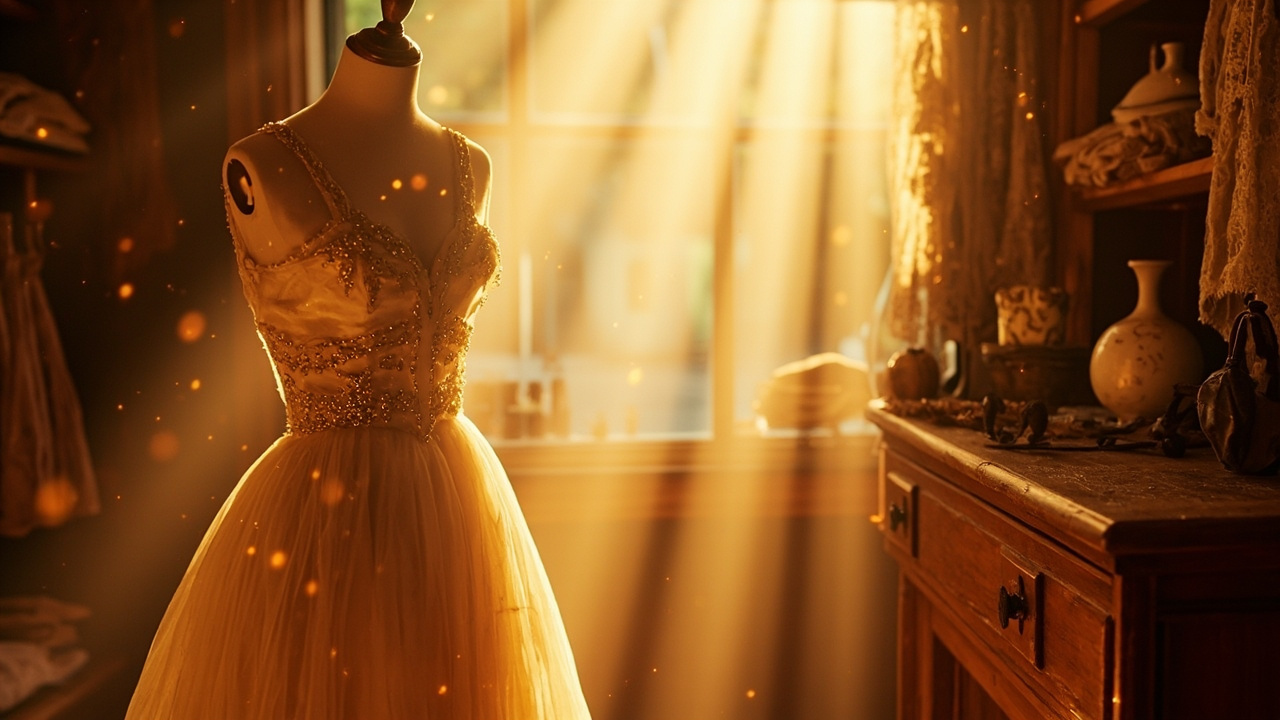
امتلكت إلينور المحل الصغير في زاوية شارع تشيرش منذ سبع سنوات، وكانت لا تزال تشعر بومضة صغيرة من الفرح في كل مرة تقلب فيها اللافتة في النافذة من "مغلق" إلى "مفتوح". كان محلا متخصصا في الملابس القديمة والأقمشة العتيقة، يجذب العملاء من جميع أنحاء سافولك وأحيانا من أماكن أبعد. كان المحل يفوح منه رائحة خشب الأرز والتول العتيق، وكانت إلينور تحب كل شبر فيه.
كان صباح الثلاثاء الممطر من شهر أكتوبر عندما وصلت السيدة العجوز. كانت تتحرك ببطء، تتكئ على مظلة سوداء، وترفع جرس الباب فوقه بحذر.
"هل أنتِ إلينور ويثمور؟" سألت المرأة، صوتها رقيق لكنه واضح.
"أنا هي," أجابت إلينور. "كيف يمكنني مساعدتك؟"
مدت المرأة يدها في حقيبتها الجلدية البالية وأخرجت حزمة ملفوفة في قماش قطني فاتح. وضعتها على المنضدة بكل عناية، كأنها تحوي شيئا ثمينا وهشا. ببطء، فكتها.
استمتعت إلينور بنفسها. كان فستان الزفاف رائعًا، مصنوعا من الحرير العاجي مع خرز دقيق مخيط يدويا على الجزء العلوي. وعلى الرغم من أن القماش قد اصفر مع مرور الزمن، إلا أن الحرفية ظلت استثنائية.
"كان يخص أختي الراحلة," شرحت المرأة. "كان ينبغي أن أفعل شيئا به منذ سنوات، لكنني لم أستطع أن أفارقه. الآن أنتقل إلى منزل أصغر، ولا أستطيع أن آخذه معي. تساءلت إن كنتِ قد تستعيدينه."
فحصت إلينور الفستان بعناية. "سأكون مشرفة," قالت. "سيستغرق العمل بعض الوقت، لكنني أعتقد أنني أستطيع إعادة الجمال إليه. هل يجوز أن أسأل عن اسم أختك؟"
"أغنس مارش. توفيت عام 1987."
سجلت إلينور التفاصيل ورتبت لموعد الاستلام. عندما عادت إلى المحل، بدأت عملية دقيقة لتنظيف الفستان وإعادته. وبينما كانت تعمل بجانب النافذة، سقط ضوء الخريف على الهامش، ولاحظت شيئا ما.
هناك، مخبأة ضمن الخياطة المعقدة للهامش، كانت حرفان: إ.م.
حاجبا إلينور التقيا. كان الفستان يخص أغنس مارش. لماذا ستُخاط الحروف الأولى إ.م. في الهامش؟ فككت جزءا صغيرا من الخياطة واكتشفت أنها كانت مطرزة على قطعة قماش مخبأة عمدا داخل بناء الفستان. مهما كان من صنع هذا الفستان، فقد أخفى شيئا.
فكرت في المرأة التي أحضرت الفستان، صوتها الرقيق وأسلوبها المتأني. قررت إلينور زيارتها قبل أن تواصل عملية الترميم.
"وجدتيها," قالت المرأة بهدوء عندما أظهرت إلينور الحروف الأولى. "تساءلت إن كنتِ ستجدينها."
"ماذا تعني؟"
جلست المرأة بثقل على كرسيها. "لم ترتدِ أغنس هذا الفستان في زفافها، يا آنسة ويثمور. صنعته أمي لها. أمضت شهورا في التطريز، وعمل الخرز، وكل شيء. لكن في صباح حفل الزفاف، هربت أغنس مع رجل آخر. لم تتزوج أبدا الرجل الذي كان من المفترض أن تتزوجه."
"إذن من هي إ.م؟"
ابتسمت المرأة بحزن. "إلينور مارش. اسم أمي. هي التي صنعت الفستان، ترين، وأخفت حروفها الأولى بداخله كنوع من البركة، أمنية سرية بأن تكون العروس سعيدة. لكن أغنس اختارت طريقا مختلفا. هربت مع رجل اسمه توماس هارفي، وتزوجا في مكتب السجل المدني بعد ثلاثة أيام. ظل الفستان في خزانة أمي حتى وفاتها."
امتصت إلينور هذه القصة بهدوء. "وأغنس لم ترتدِ هذا الفستان أبدا؟"
"أبدا. اعتبرته رمزا للحياة التي رفضتها. لكن أمي احتفظت به على أي حال، ثم احتفظت به أنا بعد رحيلها. ربما حان الوقت ليجد غرضا جديدا في مكان ما."
عادت إلينور إلى محلها والفستان ملفوف بعناية مرة أخرى. فكرت في الخياطة التي أخفت حروفها الأولى في الهامش، التي سكبت أملها وبركتها في غرز لن تُرى أبدا. ربما هذا هو طبيعة الحب، reflet إلينور. لا يحتاج إلى اعتراف. إنه ببساطة موجود، مخبأ وصبور، ينتظر من يكتشفه بعد سنوات.
Eleanor hatte den kleinen Laden an der Ecke der Church Lane seit sieben Jahren besessen, und jedes Mal, wenn sie das Schild im Fenster von GESCHLOSSEN auf GEÖFFNET drehte, durchlief sie noch immer ein kleines Zucken der Aufregung. Ihr Geschäft bot Vintagekleidung und antike Textilien an und zog Kunden aus ganz Suffolk und gelegentlich auch von weiter her an. Der Laden roch nach Zedernholz und alter Spitze, und Eleanor liebte jeden Zentimeter davon.
Es war ein feuchter Dienstagnachmittag im Oktober, als die alte Frau ankam. Sie bewegte sich langsam, stützte sich auf einen schwarzen Regenschirm und läutete vorsichtig die Glocke über der Tür.
"Sind Sie Eleanor Whitmore?" fragte die Frau, ihre Stimme dünn, aber präzise.
"Ja, die bin ich," erwiderte Eleanor. "Wie kann ich Ihnen helfen?"
Die Frau griff in ihre abgetragene Ledertasche und zog ein Bündel hervor, das in hellem Baumwollstoff gewickelt war. Sie stellte es mit offensichtlicher Sorgfalt auf die Theke, als enthalte es etwas Kostbares und Zerbrechliches. Langsam wickelte sie es aus.
Eleanor holte scharf Luft. Das Hochzeitskleid war prächtig, gefertigt aus elfenbeinfarbener Seide mit zart von Hand aufgenähten Perlen auf dem Oberteil. Obwohl der Stoff mit dem Alter vergilbt war, war die Handwerkskunst außergewöhnlich.
"Es gehörte meiner verstorbenen Schwester," erklärte die Frau. "Ich hätte schon vor Jahren etwas damit tun sollen, aber ich konnte mich nie davon trennen. Jetzt ziehe ich in ein kleineres Haus, und ich kann es nicht mitnehmen. Ich fragte mich, ob Sie es vielleicht restaurieren könnten."
Eleanor untersuchte das Kleid sorgfältig. "Ich würde mich geehrt fühlen," sagte sie. "Die Arbeit wird einige Zeit dauern, aber ich glaube, ich kann es zu seinem früheren Glanz zurückbringen. Darf ich nach dem Namen Ihrer Schwester fragen?"
"Agnes Marsh. Sie verstarb 1987."
Eleanor notierte die Details und vereinbarte eine Abholung. Als sie in den Laden zurückkehrte, begann sie den sorgfältigen Prozess der Reinigung und Restaurierung des Kleides. Während sie am Fenster arbeitete, fiel das Herbstlicht auf den Saum, und etwas erregte ihre Aufmerksamkeit.
Dort, verborgen in der aufwendigen Naht des Saums, befanden sich zwei Buchstaben: E.M.
Eleanor runzelte die Stirn. Das Kleid gehörte Agnes Marsh. Warum sollten die Initialen E.M. in den Saum genäht sein? Sie trennte einen kleinen Abschnitt der Naht auf und entdeckte, dass sie auf ein Stoffstück gestickt und absichtlich in der Konstruktion des Kleides versteckt worden waren. Wer auch immer dieses Kleid angefertigt hatte, hatte etwas verborgen.
Sie dachte an die Frau, die das Kleid gebracht hatte, ihre dünne Stimme und ihre sorgfältige Art. Eleanor beschloss, sie zu besuchen, bevor sie mit der Restaurierung fortfuhr.
"Sie haben sie gefunden," sagte die Frau leise, als Eleanor ihr die Initialen zeigte. "Ich fragte mich, ob Sie es vielleicht tun würden."
"Was bedeuten sie?"
Die Frau ließ sich schwer auf ihren Stuhl sinken. "Agnes hat dieses Kleid bei ihrer eigenen Hochzeit nie getragen, Fräulein Whitmore. Meine Mutter hat es für sie angefertigt. Sie hat Monate an der Stickerei, der Perlenarbeit, allem verbracht. Aber am Morgen der Zeremonie ist Agnes mit einem anderen Mann durchgebrannt. Sie hat den Mann, den sie hätte heiraten sollen, nie geheiratet."
"Wer ist dann E.M.?"
Die Frau lächelte traurig. "Eleanor Marsh. Der Name meiner Mutter. Sie hat das Kleid gemacht, verstehen Sie, und sie hat ihre eigenen Initialen darin versteckt, als eine Art Segen, einen geheimen Wunsch, dass die Braut glücklich sein möge. Aber Agnes wählte einen anderen Weg. Sie brach mit einem Mann namens Thomas Harvey durch, und sie heirateten drei Tage später im Standesamt. Das Kleid blieb im Kleiderschrank meiner Mutter, bis sie starb."
Eleanor nahm diese Geschichte schweigend auf. "Und Agnes hat dieses Kleid nie getragen?"
"Niemals. Sie betrachtete es als Symbol des Lebens, das sie abgelehnt hatte. Aber meine Mutter behielt es trotzdem, und dann behielt ich es nach ihrem Tod. Vielleicht ist es Zeit, dass es einen neuen Zweck irgendwo findet."
Eleanor kehrte mit dem sorgfältig wieder eingepackten Kleid in ihren Laden zurück. Sie dachte an die Näherin, die ihre Initialen im Saum versteckt hatte, die ihre Hoffnung und ihren Segen in Stiche gegossen hatte, die niemals gesehen werden würden. Vielleicht war das die Natur der Liebe, sinnierte Eleanor. Sie erforderte keine Anerkennung. Sie existierte einfach, verborgen und geduldig, und wartete darauf, dass jemand sie Jahre später entdeckte.
Eleanor había poseído la pequeña tienda en la esquina de Church Lane durante siete años, y todavía sentía un pequeño estremecimiento cada vez que giraba el letrero en la ventana de CERRADO a ABIERTO. Su negocio se dedicaba a ropa vintage y textiles antiques, atrayendo clientes de todo Suffolk y ocasionalmente de lugares más lejanos. La tienda olía a madera de cedro y encaje antiguo, y Eleanor amaba cada centímetro de ella.
Era una húmeda tarde de martes en octubre cuando llegó la anciana. Se movía lentamente, apoyándose en un paraguas negro, y levantó con cuidado la campana sobre la puerta.
"¿Es usted Eleanor Whitmore?" preguntó la mujer, su voz delgada pero precisa.
"Soy yo," respondió Eleanor. "¿Cómo puedo ayudarla?"
La mujer metió la mano en su gastada bolsa de cuero y sacó un bulto envuelto en algodón pálido. Lo colocó sobre el mostrador con evidente cuidado, como si contuviera algo precioso y frágil. Lentamente, lo desenvolvió.
Eleanor contuvo el aliento. El vestido de novia era magnificent, elaborado en seda color marfil con delicadas cuentas cosidas a mano sobre el corpiño. Aunque la tela se había amarillento con la edad, la artesanía seguía siendo extraordinaria.
"Esto pertenecía a mi hermana difunta," explicó la mujer. "Debería haber hecho algo con él hace años, pero nunca pude separarme de él. Ahora me mudo a una casa más pequeña, y no puedo llevármelo conmigo. Me preguntaba si usted podría restaurarlo."
Eleanor examinó el vestido con cuidado. "Sería un honor," dijo. "El trabajo tomará algún tiempo, pero creo que puedo devolverle su belleza anterior. ¿Puedo preguntar el nombre de su hermana?"
"Agnes Marsh. Falleció en 1987."
Eleanor tomó nota de los detalles y organizó la recogida. Cuando regresó a la tienda, comenzó el meticuloso proceso de limpieza y restauración del vestido. Mientras trabajaba junto a la ventana, la luz del otoño cayó sobre el dobladillo, y algo llamó su atención.
Allí, oculto dentro de la intricate costura del dobladillo, había dos letras: E.M.
Eleanor frunció el ceño. El vestido pertenecía a Agnes Marsh. ¿Por qué estarían las iniciales E.M. cosidas en el dobladillo? Deshizo una pequeña sección de la costura y descubrió que habían sido bordadas sobre un retazo de tela y ocultadas deliberadamente dentro de la construcción del vestido. Quienquiera que hubiera hecho este vestido había escondido algo.
Pensó en la mujer que había traído el vestido, su voz delgada y su manera cuidadosa. Eleanor decidió visitarla antes de continuar con la restauración.
"Los encontró," dijo suavemente la mujer cuando Eleanor le mostró las iniciales. "Me preguntaba si lo haría."
"¿Qué significan?"
La mujer se sentó pesadamente en su silla. "Agnes nunca usó este vestido en su propia boda, señorita Whitmore. Mi madre se lo hizo para ella. Pasó meses en el bordado, el trabajo de cuentas, todo. Pero la mañana de la ceremonia, Agnes se fugó con otro hombre. Nunca se casó con el hombre con quien debía casarse."
"¿Entonces quién es E.M.?"
La mujer sonrió tristemente. "Eleanor Marsh. El nombre de mi madre. Ella hizo el vestido, ¿sabe?, y ocultó sus propias iniciales dentro de él como una especie de bendición, un deseo secreto de que la novia fuera feliz. Pero Agnes eligió un camino diferente. Se fugó con un hombre llamado Thomas Harvey, y se casaron en el registro civil tres días después. El vestido permaneció en el armario de mi madre hasta su muerte."
Eleanor absorbió esta historia en silencio. "¿Y Agnes nunca usó este vestido?"
"Nunca. Lo vio como un símbolo de la vida que había rechazado. Pero mi madre lo guardó de todos modos, y luego yo lo guardé después de que ella partiera. Quizás es hora de que encuentre un nuevo propósito en algún lugar."
Eleanor regresó a su tienda con el vestido cuidadosamente envuelto de nuevo. Pensó en la costurera que había ocultado sus iniciales en el dobladillo, que había vertido su esperanza y bendición en puntadas que nunca serían vistas. Quizás esa era la naturaleza del amor, reflexionó Eleanor. No requería reconocimiento. Simplemente existía, oculto y paciente, esperando que alguien lo descubriera años después.
Eleanor possédait la petite boutique au coin de Church Lane depuis sept ans, et elle ressentait encore un petit frisson chaque fois qu'elle tournait l'enseigne dans la fenêtre de FERMÉ à OUVERT. Son commerce proposait des vêtements vintage et des textiles anciens, attirant des clients de tout le Suffolk et parfois de plus loin. La boutique sentait le bois de cèdre et la dentelle ancienne, et Eleanor l'adorait dans chaque recoin.
C'était un mardi afternoon d'octobre, humide, quand la vieille femme arriva. Elle se déplaçait lentement, appuyée sur un parapluie noir, et souleva soigneusement la cloche au-dessus de la porte.
"Êtes-vous Eleanor Whitmore ?" demanda la femme, sa voix fine mais précise.
"C'est moi," répondit Eleanor. "Comment puis-je vous aider ?"
La femme plongea la main dans son sac en cuir usé et en sortit un paquet enveloppé dans du coton pâle. Elle le posa sur le comptoir avec un soin évident, comme s'il contenait quelque chose de précieux et de fragile. Lentement, elle le défit.
Eleanor retint son souffle. La robe de mariée était magnifique, confectionnée en soie ivoire avec des perles délicates cousues main sur le corsage. Bien que le tissu ait jauni avec l'âge, l'artisanat demeurait extraordinaire.
"Elle appartenait à ma sœur disparue," expliqua la femme. "J'aurais dû en faire quelque chose il y a des années, mais je n'ai jamais pu m'en séparer. Maintenant je emménage dans une maison plus petite, et je ne peux pas l'emporter avec moi. Je me demandais si vous pourriez la restaurer."
Eleanor examina la robe avec soin. "J'en serais honorée," dit-elle. "Le travail prendra du temps, mais je crois pouvoir lui rendre sa beauté d'autrefois. Puis-je demander le nom de votre sœur ?"
"Agnes Marsh. Elle est décédée en 1987."
Eleanor nota les détails et arrangea la récupération. Quand elle revint à la boutique, elle commença le processus méticuleux de nettoyage et de restauration de la robe. Pendant qu'elle travaillait près de la fenêtre, la lumière automnale tomba sur l'ourlet, et quelque chose attira son regard.
Là, dissimulées dans les points complexes de l'ourlet, se trouvaient deux lettres : E.M.
Eleanor fronça les sourcils. La robe appartenait à Agnes Marsh. Pourquoi les initiales E.M. seraient-elles cousues dans l'ourlet ? Elle défît une petite section de points et découvrit qu'elles avaient été brodées sur un morceau de tissu et délibérément cachées dans la construction de la robe. Celui ou celle qui avait fait cette robe avait dissimulé quelque chose.
Elle pensa à la femme qui avait apporté la robe, sa voix fine et sa manière méticuleuse. Eleanor décida de lui rendre visite avant de poursuivre la restauration.
"Vous les avez trouvés," dit doucement la femme quand Eleanor lui montra les initiales. "Je me demandais si vous le feriez."
"Qu'est-ce que ça signifie ?"
La femme s'assit lourdement dans sa chaise. "Agnes n'a jamais porté cette robe à son propre mariage, mademoiselle Whitmore. Ma mère la lui a faite. Elle a passé des mois sur la broderie, le travail de perles, tout. Mais le matin de la cérémonie, Agnes s'est enfuie avec un autre homme. Elle n'a jamais épousé l'homme qu'elle devait épouser."
"Alors qui est E.M. ?"
La femme sourit tristement. "Eleanor Marsh. Le nom de ma mère. C'est elle qui a fait la robe, vous voyez, et elle a caché ses propres initiales dedans comme une sorte de bénédiction, un souhait secret que la mariée soit heureuse. Mais Agnes a choisi un autre chemin. Elle s'est enfuie avec un homme nommé Thomas Harvey, et ils se sont mariés au bureau d'état civil trois jours plus tard. La robe est restée dans la garde-robe de ma mère jusqu'à sa mort."
Eleanor absorba cette histoire en silence. "Et Agnes n'a jamais porté cette robe ?"
"Jamais. Elle la considérait comme le symbole de la vie qu'elle avait rejetée. Mais ma mère l'a gardée quand même, et ensuite je l'ai gardée après son départ. Peut-être est-il temps qu'elle trouve un nouveau but quelque part."
Eleanor retourna à sa boutique avec la robe soigneusement ré-emballée. Elle pensa à la couturière qui avait caché ses initiales dans l'ourlet, qui avait versé son espoir et sa bénédiction dans des points qui ne seraient jamais vus. Peut-être était-ce la nature de l'amour, réfléchit Eleanor. Il ne réclamait pas de reconnaissance. Il existait simplement, caché et patient, attendant que quelqu'un le découvre des années plus tard.
Eleanor possedeva il piccolo negozio all'angolo di Church Lane da sette anni, e provava ancora un piccolo brivido ogni volta che girava l'insegna nella vetrina da CHIUSO a APERTO. Il suo commercio si occupava di abbigliamento vintage e tessuti antichi, attirando clienti da tutto il Suffolk e occasionalmente da più lontano. Il negozio profumava di legno di cedro e pizzo antico, e Eleanor lo amava in ogni suo centimetro.
Era un umido martedì pomeriggio di ottobre quando arrivò la vecchia signora. Si muoveva lentamente, appoggiandosi a un ombrello nero, e sollevò con cura il campanello sopra la porta.
"Lei è Eleanor Whitmore?" chiese la donna, la voce sottile ma precisa.
"Sono io," rispose Eleanor. "Come posso aiutarla?"
La donna immerse la mano nella sua logora borsa di pelle e ne estrasse un involto avvolto in cotone pallido. Lo posò sul bancone con evidente cura, come se contenesse qualcosa di prezioso e fragile. Lentamente, lo scartò.
Eleanor trattenne il respiro. L'abito da sposa era magnifico, confezionato in seta color avorio con delicate perle cucite a mano sul corpetto. Sebbene il tessuto si fosse ingiallito con il tempo, l'artigianato era straordinario.
"Apparteneva a mia sorella defunta," spiegò la donna. "Avrei dovuto fare qualcosa con esso anni fa, ma non sono mai riuscita a separarmene. Ora mi sto trasferendo in una casa più piccola, e non posso portarlo con me. Mi chiedevo se potrebbe restaurarlo."
Eleanor esaminò l'abito con cura. "Sarebbe un onore," disse. "Il lavoro richiederà del tempo, ma credo di poter riportarlo alla sua bellezza originaria. Posso chiedere il nome di sua sorella?"
"Agnes Marsh. È passata nel 1987."
Eleanor prese nota dei dettagli e concordò un ritiro. Quando tornò al negozio, iniziò l meticoloso processo di pulizia e restauro dell'abito. Mentre lavorava vicino alla finestra, la luce autunnale cadde sull'orlo, e qualcosa attirò la sua attenzione.
Lì, nascosta tra le intricate cuciture dell'orlo, c'erano due lettere: E.M.
Eleanor aggrottò la fronte. L'abito apparteneva a Agnes Marsh. Perché le iniziali E.M. sarebbero state cucite nell'orlo? Scucì una piccola sezione di cucitura e scoprì che erano state ricamate su un pezzo di stoffa e nascoste deliberatamente nella costruzione dell'abito. Chiunque avesse realizzato questo abito aveva nascosto qualcosa.
Pensò alla donna che aveva portato l'abito, la sua voce sottile e il suo modo accurato. Eleanor decise di farle visita prima di continuare con il restauro.
"Li ha trovati," disse piano la donna quando Eleanor le mostrò le iniziali. "Mi chiedevo se ci sarebbe riuscita."
"Cosa significano?"
La donna si sedette pesantemente sulla sedia. "Agnes non ha mai indossato questo abito al proprio matrimonio, signorina Whitmore. Mia madre lo fece per lei. Passò mesi sul ricamo, sulla lavorazione delle perle, su tutto. Ma la mattina della cerimonia, Agnes fuggì con un altro uomo. Non sposò mai l'uomo che avrebbe dovuto sposare."
"Allora chi è E.M.?"
La donna sorrise tristemente. "Eleanor Marsh. Il nome di mia madre. Fu lei a fare l'abito, vede, e nascose le proprie iniziali dentro di esso come una sorta di benedizione, un desiderio segreto che la sposa fosse felice. Ma Agnes scelse un'altra strada. Fuggì con un uomo di nome Thomas Harvey, e si sposarono in municipio tre giorni dopo. L'abito rimase nell'armadio di mia madre fino alla sua morte."
Eleanor assorbì questa storia in silenzio. "E Agnes non ha mai indossato questo abito?"
"Mai. Lo considerava il simbolo della vita che aveva rifiutato. Ma mia madre lo tenne comunque, e poi io lo tenni dopo che lei se ne andò. Forse è tempo che trovi un nuovo scopo da qualche parte."
Eleanor tornò al suo negozio con l'abito accuratamente riavvolto. Pensò alla sarta che aveva nascosto le proprie iniziali nell'orlo, che aveva versato la propria speranza e benedizione in punti che non sarebbero mai stati visti. Forse quella era la natura dell'amore, rifletté Eleanor. Non richiedeva riconoscimento. Esisteva semplicemente, nascosto e paziente, in attesa che qualcuno lo scoprisse anni dopo.