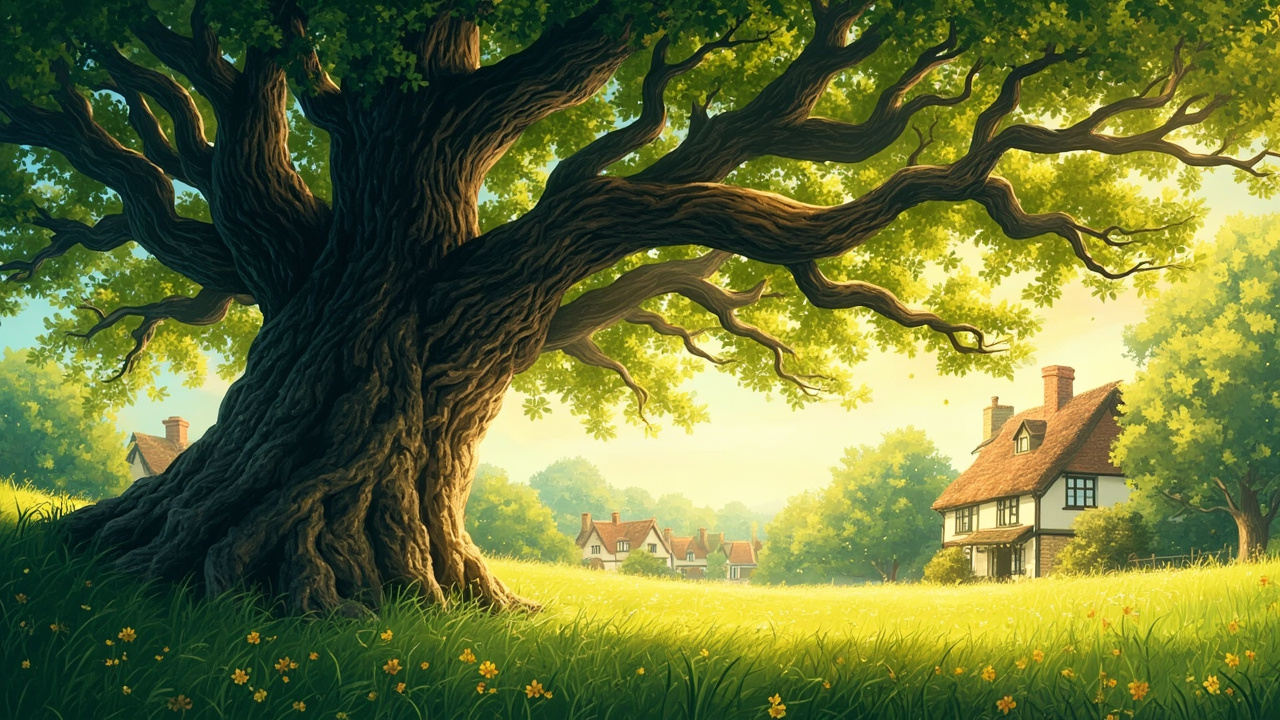
berdiriَت قرية ثورنبري على ضفاف نهر كيم منذ أكثر من ثمانمائة عام. وفي قلبها، حيث تلتقي الممرات عند صليب الحجر العتيق، نما البلوط العظيم. كان أقدم شيء في القرية—وربما أقدم شيء في المقاطعة بأسرها. كان جذعه عريضاً لدرجة أن أربعة رجال بالغين، لو ربطوا أيديهم ببعضها، لما استطاعوا الإحاطة به. وامتدت أغصانه كأذرع عملاق، تلامس أسطح المنازل القريبة وألقيت ظلالاً تغطي المرج الأخضر في الصيف.
لأجيال عديدة، كان البلوط جزءاً من كل لحظة مهمة في حياة القرية. تسلق الأطفال أغصانه وتأرجحوا على حباله. التقت تحته الشباب السري لأحاديثهم. تذكرت الآنسة بيرمبتون العجوز أن جدتها告诉她 أن الشجرة كانت قديمة جداً حتى قبل وصول الرومان. نجت من العواصف والجفاف وحربين عالميتين. لكن الآن واجهت القرية تهديداً لا يمكن محاربته بالأسلحة العادية.
اشترى مطور عقاري من كامبريدج الحقل المجاور للبلوط. أراد بناء ثمانية houses there—منازل عصرية موفرة للطاقة من شأنها جلب عائلات شابة إلى القرية. كان مجلس الرعية قد وافق بالفعل على خططه.况且 وقد مُنحت التصاريح على لوحة إعلانات القرية لمدة ثلاثة أسابيع. بدا كل شيء محسوماً.
ثم وصلت إشارة的保护.
قرر مجلس المقاطعة أن البلوط مهم جداً ليُفقد. كان قد站在那里 لقرون، وينبغي أن يبقى لقرون أخرى. كان المطور غاضباً. هدد بمقاضاة المجلس. لكن الإشارة صمدت، والبلوط في أمان.
لكن الإشارة فعلت شيئاً غير متوقع. أجبرت القرية على النظر إلى نفسها—إلى الضغائن والصمت الذي تراكم عبر السنين كرواسب في النهر. كان البلوط دائماً هناك، الأرض المشتركة التي يتقاسمها الجميع. الآن، فجأة، أصبح مركز كل جدال.
كان آرثر فينش رجلاً عنيداً في الثانية والسبعين من عمره. كان يزرع الأرض التي كانت لعائلته منذ خمسة أجيال، ولم يغفر أبداً لعائلة ديفيز بسبب نزاع على حدود حقل حدث قبل ولادته. عندما نقش أطفال ديفيز أحرفهم الأولى على لحاء البلوط قبل خمسين عاماً، شاهدهم آرثر يفعلون ذلك ولم يقل شيئاً. ذهب القطع عميقاً في قلب الشجرة. لسنوات، خشي الناس أن يموت البلوط. نجا، لكنه حمل الجرح.
كان توم ديفيز، الابن الأصغر لعائلة ديفيز، قد عاد إلى القرية الآن. كان مهندس معماري ناجح في لندن، وكان هو من اقترح التطوير السكني. كان والده، ريتشارد، في مجلس الرعية الذي وافق على الخطط. كان اسم عائلة ديفيز واسم عائلة فينش على طرفي نقيض من كل جدال في ثورنبري منذ أن يستطيع أي شخص التذكر.
دعا مجلس الرعية إلى اجتماع قرية. اجتمعوا في قاعة الكنيسة، حيث قرقعت المشعاعات القديمة وأصدرت أزيزاً. كانت كل المقاعد مشغولة. فتحت مارثا وايتفيلد، كاتبة الرعية، الاجتماع.
"نحتاج أن نقرر،" قالت، "ما نريده لقرية我们的. البلوط محمي بالقانون الآن. لكن يجب أن نقرر أيضاً ما نحن مستعدون للقيام به بأنفسنا—لاعتناء به، لتذكره، لجعله جزءاً من مستقبلنا."
استمر الاجتماع لساعات. تحدث الناس عن ذكرياتهم. قالت أرملة الجزار أن زوجها المتوفى تقدم لخطبتها تحت البلوط. وصف الكاهن المعموديات التي أجراها في ظله. تحدثت أمهات شابات عن بعد الظهيرة الصيفية التي قضاها أطفالهن في اللعب بين جذوره.
ثم وقف توم ديفيز. كان متوتراً؛ يداه ترتجفان بينما يمسك حافة الطاولة.
"أحتاج أن أقول شيئاً،" بدأ. "أنا آسف. ليس بشأن التطوير—ما زلت أعتقد أننا بحاجة إلى منازل جديدة هنا. لكنني آسف بشأن الشجرة. كنت في الثامنة عشرة عندما نقشت أحرفني الأولى عليها. ظننت أنني ذكي. لم أفهم ما كنت أفعله."
نظر آرثر فينش، الجالس في الصف الخلفي، إلى أعلى بحركة حادة.
"أعود إلى هنا كل عام،" تابع توم. "وفي كل عام، أرى تلك الندبة. تجعلني أشعر بالخجل. أريد المساعدة في إصلاحها، إذا سمحتم لي."
الغرفة كانت صامتة. ثم وقف آرثر. مشى إلى مقدمة القاعة، حذائه القديم ثقيل على الأرض الخشبية. توقف أمام توم ديفيز ومد يده.
"قالت لي جدتي مرة،" قال آرثر ببطء، "إن حدود الحقل التي متنازع عليها جدكم لم تكن في الحقيقة عن الحقل. كانت عن الغرور. خسرت العائلتان شيئاً تلك الليلة—شيئاً أهم من الأرض. أعتقد أنه حان وقتنا للتوقف عن خسارته."
أخذ توم يد آرثر وصافحه. انفجرت القاعة بالتصفيق.
في ذلك الخريف، صوتت القرية على إنشاء ائتلاف لحماية البلوط. جمعوا المال لشراء الحقل وتحويله إلى حديقة مفتوحة للجميع. المطور العقاري، seeing resolve of the community، باع الأرض في النهاية للائتلاف بسعر عادل. ساهم مجلس المقاطعة بمنحة. وقف البلوط في مركز这一切، قديم وصبور، يراقب قرية أخيراً تعلمت أن تنمو معاً.
في evening دافئ من أواخر الصيف، could be seen آرثر فينش وتوم ديفيز يعملان جنباً إلى جنب في الحديقة الجديدة، يزرعان صفاً من أشتال البلوط الصغيرة في دائرة حول جدهم. لم يتحدثا كثيراً. لم يكونا بحاجة إلى ذلك. ستتحدث الأشجار بالنيابة عنهما—في خمسين عاماً، في مائة، في أي عدد من القرون تختاره القرية للتذكر.
Das Dorf Thornbury hatte seit über achthundert Jahren an der Themse gestanden. In seinem Herzen, wo sich die Gassen an dem alten steinernen Kreuz trafen, wuchs die große Eiche. Sie war das älteste Ding im Dorf—vielleicht das älteste Ding im gesamten Landkreis. Ihr Stamm war so breit, dass vier erwachsene Männer, die sich an den Händen hielten, ihn nicht hätten umfassen können. Ihre Äste breiteten sich wie die Arme eines Riesen aus, berührten die Dächer der nahen Cottages und warfen Schatten, die im Sommer das Dorfgreen bedeckten.
Generationen lang war die Eiche Teil jedes wichtigen Moments im Dorfleben gewesen. Kinder waren in ihre Äste geklettert und hatten sich an ihren Seilen geschwungen. Junge Paare hatten sich darunter zu geheimen Gesprächen getroffen. Die alte Mrs. Pemberton erinnerte sich daran, dass ihre Großmutter ihr erzählt hatte, dass der Baum bereits uralt gewesen war, als die Römer kamen. Er hatte Stürme, Dürren und zwei Weltkriege überlebt. Aber nun sah sich das Dorf einer Bedrohung gegenüber, die es nicht mit gewöhnlichen Waffen bekämpfen konnte.
Ein Entwickler aus Cambridge hatte das Feld neben der Eiche gekauft. Er wollte dort acht Häuser bauen—moderne, energieeffiziente Häuser, die junge Familien in das Dorf bringen würden. Der Gemeinderat hatte seine Pläne bereits genehmigt. Die Bekanntmachungen waren drei Wochen lang am schwarzen Brett des Dorfes ausgehängt gewesen. Alles schien entschieden.
Dann kam die Denkmalschutzverordnung.
Der Kreistag hatte entschieden, dass die Eiche zu wichtig war, um verloren zu gehen. Sie war dort Jahrhunderte lang gestanden, und sie sollte noch Jahrhunderte bleiben. Der Entwickler war wütend. Er drohte, den Rat zu verklagen. Aber die Verordnung hielt stand, und die Eiche war sicher.
Doch die Verordnung tat etwas Unerwartetes. Sie zwang das Dorf, sich selbst anzusehen—auf die Groll und Stille, die sich über die Jahre wie Sediment in einem Fluss aufgebaut hatte. Die Eiche war immer da gewesen, der gemeinsame Boden, den alle teilten. Nun wurde sie plötzlich zum Mittelpunkt jedes Streits.
Arthur Finch war ein sturer Mann von zweiundsiebzig Jahren. Er bewirtschaftete das Land, das seiner Familie seit fünf Generationen gehört hatte, und er hatte der Familie Davies den Streit über eine Feldgrenze, der vor seiner Geburt stattgefunden hatte, nie verziehen. Als die Davies-Kinder vor fünfzig Jahren ihre Initialen in die Rinde der Eiche geritzt hatten, hatte Arthur ihnen zugesehen und nichts gesagt. Der Schnitt war tief ins Herz des Baumes gegangen. Jahre lang hatten die Menschen befürchtet, die Eiche würde sterben. Sie überlebte, aber sie trug die Wunde.
Der jüngste Sohn der Familie Davies, Tom, war nun ins Dorf zurückgekehrt. Er war ein erfolgreicher Architekt in London und hatte die Wohnbauentwicklung vorgeschlagen. Sein Vater Richard war im Gemeinderat gewesen, der die Pläne genehmigt hatte. Der Name Davies und der Name Finch waren auf gegenüberliegenden Seiten jedes Streits in Thornbury gewesen, solange sich jemand erinnern konnte.
Der Gemeinderat berief eine Dorfsversammlung ein. Sie trafen sich im Gemeindehaus, wo der alte Heizkörper klapperte und zischte. Jeder Platz war besetzt. Martha Whitfield, die Gemeindeschreiberin, eröffnete die Versammlung.
"Wir müssen entscheiden," sagte sie, "was wir für unser Dorf wollen. Die Eiche ist jetzt gesetzlich geschützt. Aber wir müssen auch entscheiden, was wir selbst bereit sind zu tun—um für sie zu sorgen, uns an sie zu erinnern, sie zu einem Teil unserer Zukunft zu machen."
Die Versammlung dauerte Stunden. Die Menschen sprachen über ihre Erinnerungen. Die Witwe des Metzgers sagte, ihr verstorbener Mann habe ihr unter der Eiche einen Heiratsantrag gemacht. Der Pfarrer beschrieb die Taufen, die er in ihrem Schatten vorgenommen hatte. Junge Mütter sprachen von den SommerNachmittagen, die ihre Kinder zwischen ihren Wurzeln spielend verbracht hatten.
Dann stand Tom Davies auf. Er war nervös; seine Hände zitterten, als er die Tischkante umklammerte.
"Ich muss etwas sagen," begann er. "Es tut mir leid. Nicht wegen der Entwicklung—ich bin immer noch der Meinung, dass wir neue Häuser brauchen. Aber es tut mir leid wegen des Baumes. Ich war achtzehn, als ich meine Initialen hineingeritzt habe. Ich dachte, ich wäre clever. Ich verstand nicht, was ich tat."
Arthur Finch, der in der hintersten Reihe saß, schaute scharf auf.
"Ich komme jedes Jahr hierher zurück," fuhr Tom fort. "Und jedes Jahr sehe ich diese Narbe. Sie macht mich beschämt. Ich möchte helfen, sie zu reparieren, wenn ihr mich lasst."
Der Raum war still. Dann stand Arthur auf. Er ging nach vorne, seine alten Stiefel schwer auf dem Holzboden. Er blieb vor Tom Davies stehen und streckte die Hand aus.
"Mein Großvater hat mir einmal gesagt," sagte Arthur langsam, "dass die Feldgrenze, die euer Großvater disputierte, nie wirklich um das Feld ging. Es ging um Stolz. Beide Familien verloren in jener Nacht etwas—etwas Wichtigeres als Land. Ich denke, es ist Zeit, dass wir aufhören, es zu verlieren."
Tom ergriff Arthurs Hand und schüttelte sie. Der Raum brach in Applaus aus.
In jenem Herbst stimmte das Dorf für die Gründung eines Treuhandfonds zum Schutz der Eiche. Sie sammelten Geld, um das Feld zu kaufen und in einen für alle zugänglichen Garten zu verwandeln. Der Entwickler, der die Entschlossenheit der Gemeinschaft sah, verkaufte das Land schließlich zu einem fairen Preis an den Treuhandfonds. Der Kreistag steuerte einen Zuschuss bei. Die Eiche stand im Zentrum von allem, uralt und geduldig, und wachte über ein Dorf, das endlich gelernt hatte, zusammen zu wachsen.
An einem warmen Abend Ende Sommers konnte man Arthur Finch und Tom Davies Seite an Seite in dem neuen Garten arbeiten sehen, wobei sie eine Reihe junger Eichensetzlinge in einem Kreis um ihren Vorfahren pflanzten. Sie sprachen nicht viel. Sie mussten es nicht. Die Bäume würden für sie sprechen—in fünfzig Jahren, in hundert Jahren, in so vielen Jahrhunderten, wie das Dorf sich erinnern wollte.
El pueblo de Thornbury había estado junto al río Cam durante más de ochocientos años. En su corazón, donde los senderos se encontraban en la antigua cruz de piedra, crecía el gran roble. Era lo más antiguo del pueblo—quizás lo más antiguo del condado. Su tronco era tan ancho que cuatro hombres adultos, tomados de la mano, no podrían haberlo rodeado. Sus ramas se extendían como los brazos de un gigante, tocando los tejados de las cottages cercanas y proyectando sombras que cubrían el prado del pueblo en verano.
Durante generaciones, el roble había sido parte de cada momento importante en la vida del pueblo. Los niños habían trepado por sus ramas y se habían columpiado en sus sogas. Parejas jóvenes se habían reunido debajo de él para conversaciones secretas. La anciana señora Pemberton recordaba que su abuela le había dicho que el árbol ya había sido antiguo cuando llegaron los romanos. Había sobrevivido a tormentas, sequías y dos guerras mundiales. Pero ahora el pueblo enfrentaba una amenaza que no podía combatir con armas ordinarias.
Un promotor de Cambridge había comprado el campo junto al roble. Quería construir ocho casas allí—hogares modernos y eficientes energéticamente que traerían familias jóvenes al pueblo. El consejo parroquial ya había aprobado sus planes. Los avisos habían estado publicados en el tablón de anuncios del pueblo durante tres semanas. Todo parecía decidido.
Entonces llegó la orden de preservación.
El consejo del condado había decidido que el roble era demasiado importante para perderlo. Había estado allí durante siglos, y debería permanecer durante siglos más. El promotor estaba furioso. Amenazó con llevar al consejo a los tribunales. Pero la orden se mantuvo, y el roble estaba a salvo.
Sin embargo, la orden hizo algo inesperado. Forzó al pueblo a mirarse a sí mismo—a los rencores y silencios que se habían acumulado a lo largo de los años como sedimento en un río. El roble siempre había estado ahí, el terreno común que todos compartían. Ahora, de repente, se convirtió en el centro de cada argumento.
Arthur Finch era un hombre terco de setenta y dos años. Trabajaba la tierra que había pertenecido a su familia durante cinco generaciones, y nunca había perdonado a la familia Davies por una disputa sobre un lindero que había ocurrido antes de su nacimiento. Cuando los hijos de los Davies habían grabado sus iniciales en la corteza del roble hace cincuenta años, Arthur los había visto hacerlo y no había dicho nada. El corte había llegado profundamente al corazón del árbol. Durante años, la gente había temido que el roble muriera. Sobrevivió, pero llevaba la herida.
El hijo menor de la familia Davies, Tom, había vuelto al pueblo ahora. Era un arquitecto exitoso en Londres, y había sido él quien propuso el desarrollo de viviendas. Su padre, Richard, había estado en el consejo parroquial que aprobó los planes. El nombre Davies y el nombre Finch habían estado en lados opuestos de cada argumento en Thornbury durante todo lo que cualquiera pudiera recordar.
El consejo parroquial convocó una reunión del pueblo. Se reunieron en el salón de la iglesia, donde el antiguo radiador traqueteaba y siseaba. Cada asiento estaba ocupado. Martha Whitfield, la Secretaria de la parroquia, abrió la reunión.
"Necesitamos decidir," dijo, "qué queremos para nuestro pueblo. El roble está protegido por la ley ahora. Pero también debemos decidir qué estamos dispuestos a hacer nosotros mismos—para cuidarlo, para recordarlo, para hacerlo parte de nuestro futuro."
La reunión duró horas. La gente habló de sus recuerdos. La viuda del carnicero dijo que su difunto marido le había propuesto matrimonio bajo el roble. El vicario describió los bautizos que había realizado a su sombra. Madres jóvenes hablaron de las tardes de verano que sus hijos habían pasado jugando entre sus raíces.
Entonces Tom Davies se levantó. Estaba nervioso; sus manos temblaban mientras agarraba el borde de la mesa.
"Necesito decir algo," comenzó. "Lo siento. No sobre el desarrollo—todavía creo que necesitamos casas nuevas aquí. Pero lo siento por el árbol. Tenía dieciocho años cuando grabé mis iniciales en él. Pensé que estaba siendo listo. No entendía lo que estaba haciendo."
Arthur Finch, sentado en la fila de atrás, levantó la vista bruscamente.
"Vuelvo aquí cada año," continuó Tom. "Y cada año, veo esa cicatriz. Me da vergüenza. Quiero ayudar a arreglarla, si me dejan."
La habitación estaba en silencio. Entonces Arthur se levantó. Caminó hacia el frente del salón, sus botas viejas pesadas sobre el piso de madera. Se detuvo frente a Tom Davies y extendió la mano.
"Mi abuelo me dijo una vez," dijo Arthur lentamente, "que el lindero que su abuelo disputó nunca fue realmente sobre el campo. Fue sobre el orgullo. Ambas familias perdieron algo esa noche—algo más importante que la tierra. Creo que es hora de que dejemos de perderlo."
Tom tomó la mano de Arthur y la estrechó. La habitación estalló en aplausos.
Ese otoño, el pueblo votó para crear un fideicomiso para proteger el roble. Recaudaron dinero para comprar el campo y convertirlo en un jardín abierto a todos. El promotor, viendo la determinación de la comunidad, finalmente vendió la tierra al fideicomiso a un precio justo. El consejo del condado contribuyó con una subvention. El roble se erguía en el centro de todo, antiguo y paciente, velando sobre un pueblo que finalmente había aprendido a crecer juntos.
En una cálida tarde de finales del verano, Arthur Finch y Tom Davies podían verse trabajando lado a lado en el nuevo jardín, plantando una hilera de jóvenes robles en un círculo alrededor de su antepasado. No hablaban mucho. No necesitaban hacerlo. Los árboles hablarían por ellos—en cincuenta años, en cien, en tantos siglos como el pueblo eligiera recordar.
Le village de Thornbury se trouvait au bord de la rivière Cam depuis plus de huit cents ans. En son cœur, là où les ruelles se rencontraient à la vieille croix de pierre, poussait le grand chêne. C'était la chose la plus ancienne du village—peut-être la chose la plus ancienne du comté. Son tronc était si large que quatre hommes adultes, se tenant par la main, n'auraient pas pu l'encercler. Ses branches s'étendaient comme les bras d'un géant, touchant les toits des chaumières voisines et projetant des ombres qui couvraient le pré du village en été.
Pendant des générations, le chêne avait fait partie de chaque moment important de la vie du village. Les enfants avaient grimpé dans ses branches et s'étaient balançés sur ses cordes. De jeunes couples s'étaient rencontrés dessous pour des conversations secrètes. La vieille Mme Pemberton se souvenait que sa grand-mère lui avait dit que l'arbre avait déjà été ancien à l'arrivée des Romains. Il avait survécu aux tempêtes, aux sécheresses et à deux guerres mondiales. Mais maintenant, le village faisait face à une menace qu'il ne pouvait combattre avec des armes ordinaires.
Un promoteur de Cambridge avait acheté le champ à côté du chêne. Il voulait y construire huit maisons—des maisons modernes et économes en énergie qui apporteraient des jeunes familles au village. Le conseil deparoissial avait déjà approuvé ses plans. Les avis avaient été affichés sur le tableau d'affichage du village pendant trois semaines. Tout semblait réglé.
Puis l'arrêt de préservation arriva.
Le conseil du comté avait décidé que le chêne était trop important pour être perdu. Il était là depuis des siècles, et il devrait rester pendant des siècles encore. Le promoteur était furieux. Il menaça de poursuivre le conseil en justice. Mais l'arrêt tint bon, et le chêne était en sécurité.
Pourtant, l'arrêt fit quelque chose d'inattendu. Il força le village à se regarder—aux rancœurs et aux silences qui s'étaient accumulés au fil des ans comme des sédiments dans une rivière. Le chêne avait toujours été là, le terrain commun que tous partageaient. Maintenant, soudain, il était devenu le centre de chaque dispute.
Arthur Finch était un homme têtu de soixante-douze ans. Il cultivait la terre qui appartenait à sa famille depuis cinq générations, et il n'avait jamais pardonné à la famille Davies pour un différend sur une limite de champ qui avait eu lieu avant sa naissance. Quand les enfants Davies avaient gravé leurs initiales dans l'écorce du chêne il y a cinquante ans, Arthur les avait regardés faire et n'avait rien dit. La coupure était allée profondément dans le cœur de l'arbre. Pendant des années, les gens avaient craint que le chêne meure. Il avait survécu, mais il portait la blessure.
Le plus jeune fils de la famille Davies, Tom, était revenu au village maintenant. C'était un architecte prospère à Londres, et c'était lui qui avait proposé le développement immobilier. Son père, Richard, avait siégé au conseil paroissial qui avait approuvé les plans. Le nom des Davies et le nom des Finch avaient été de part et d'autre de chaque dispute à Thornbury depuis aussi longtemps que les gens pouvaient se souvenir.
Le conseil paroissial convoqua une réunion du village. Ils se retrouvèrent dans la salle paroissiale, où l'ancien radiateur cliquetait et sifflait. Chaque siège était pris. Martha Whitfield, la greffière paroissiale, ouvrit la réunion.
"Nous devons décider," dit-elle, "ce que nous voulons pour notre village. Le chêne est protégé par la loi maintenant. Mais nous devons aussi décider ce que nous sommes prêts à faire nous-mêmes—pour en prendre soin, pour nous en souvenir, pour en faire partie de notre avenir."
La réunion dura des heures. Les gens parlèrent de leurs souvenirs. La veuve du boucher dit que son défunt mari lui avait fait sa demande en mariage sous le chêne. Le curé décrivit les baptêmes qu'il avait célébrés à son ombre. De jeunes mères parlèrent des après-midis d'été que leurs enfants avaient passés à jouer parmi ses racines.
Puis Tom Davies se leva. Il était nerveux ; ses mains tremblaient alors qu'il saisissait le bord de la table.
"J'ai besoin de dire quelque chose," commença-t-il. "Je suis désolé. Pas à propos du développement—je pense toujours que nous avons besoin de nouvelles maisons ici. Mais je suis désolé pour l'arbre. J'avais dix-huit ans quand j'ai gravé mes initiales dedans. Je pensais être intelligent. Je ne comprenais pas ce que je faisais."
Arthur Finch, assis au dernier rang, leva vivement les yeux.
"Je reviens ici chaque année," continua Tom. "Et chaque année, je vois cette cicatrice. Ça me fait honte. Je veux aider à la réparer, si vous me le permettez."
La pièce était silencieuse. Puis Arthur se leva. Il marcha vers l'avant de la salle, ses vieilles bottes lourdes sur le plancher de bois. Il s'arrêta devant Tom Davies et lui tendit la main.
"Mon grand-père m'a dit une fois," dit Arthur lentement, "que la limite de champ que votre grand-père a contestée n'a jamais vraiment été question du champ. C'était une question d'orgueil. Les deux familles ont perdu quelque chose cette nuit-là—quelque chose de plus important que la terre. Je pense qu'il est temps que nous cessions de le perdre."
Tom prit la main d Arthur et la serra. La pièce éclata en applaudissements.
Cet automne-là, le village vota pour créer une fiducie afin de protéger le chêne. Ils collectèrent de l'argent pour acheter le champ et le transformer en jardin ouvert à tous. Le promoteur, constatant la détermination de la communauté, finit par vendre le terrain à la fiducie à un prix équitable. Le conseil du comté contribua avec une subvention. Le chêne se dressait au centre de tout cela, ancien et patient, veillant sur un village qui avait enfin appris à grandir ensemble.
Par un soir chaud de fin d'été, Arthur Finch et Tom Davies pouvaient être vus travaillant côte à côte dans le nouveau jardin, plantant une rangée de jeunes chênes en cercle autour de leur ancêtre. Ils ne parlèrent pas beaucoup. Ils n'en avaient pas besoin. Les arbres parleraient pour eux—dans cinquante ans, dans cent ans, dans autant de siècles que le village choisirait de se souvenir.
Il villaggio di Thornbury si trovava accanto al fiume Cam da più di ottocento anni. Nel suo cuore, dove i sentieri si incontravano all'antica croce di pietra, cresceva la grande quercia. Era la cosa più antica del villaggio—forse la cosa più antica dell'intera contea. Il suo tronco era così largo che quattro uomini adulti, tenendosi per mano, non avrebbero potuto circondarlo. I suoi rami si espandevano come le braccia di un gigante, toccando i tetti delle casette vicine e proiettando ombre che coprivano il prato del villaggio in estate.
Per generazioni, la quercia era stata parte di ogni momento importante nella vita del villaggio. I bambini avevano arrampicato sui suoi rami e oscillato sulle sue corde. Giovani coppie si erano incontrate sotto di essa per conversazioni segrete. La vecchia signora Pemberton ricordava che sua nonna le aveva detto che l'albero era già antico quando erano arrivati i Romani. Era sopravvissuto a tempeste, siccità e due guerre mondiali. Ma ora il villaggio affrontava una minaccia che non poteva combattere con armi ordinarie.
Un costruttore di Cambridge aveva comprato il campo accanto alla quercia. Voleva costruirci otto case—case moderne ed efficienti dal punto di vista energetico che avrebbero portato famiglie giovani nel villaggio. Il consiglio parrocchiale aveva già approvato i suoi piani. Gli avvisi erano stati esposti sulla bacheca del villaggio per tre settimane. Tutto sembrava deciso.
Poi arrivò il decreto di tutela.
Il consiglio della contea aveva deciso che la quercia era troppo importante per essere persa. Era lì da secoli, e avrebbe dovuto rimanere per altri secoli. Il costruttore era furioso. Minacciò di portare il consiglio in tribunale. Ma il decreto rimase in piedi, e la quercia era al sicuro.
Eppure il decreto fece qualcosa di inaspettato. Costrinse il villaggio a guardarsi—ai risentimenti e ai silenzi che si erano accumulati negli anni come sedimento in un fiume. La quercia era sempre stata lì, il terreno comune che tutti condividevano. Ora, improvvisamente, era diventata il centro di ogni argomento.
Arthur Finch era un uomo testardo di settantadue anni. Gestiva la terra che apparteneva alla sua famiglia da cinque generazioni, e non aveva mai perdonato la famiglia Davies per una disputa sui confini di un campo che era avvenuta prima della sua nascita. Quando i figli dei Davies avevano inciso le loro iniziali nella corteccia della quercia cinquant'anni prima, Arthur li aveva guardati fare e non aveva detto nulla. Il taglio era andato profondamente nel cuore dell'albero. Per anni, la gente aveva temuto che la quercia morisse. Era sopravvissuta, ma portava la ferita.
Il figlio più giovane della famiglia Davies, Tom, era tornato al villaggio ora. Era un architetto di successo a Londra, ed era stato lui a proporre lo sviluppo edilizio. Suo padre, Richard, era stato nel consiglio parrocchiale che aveva approvato i piani. Il nome Davies e il nome Finch erano stati su lati opposti di ogni discussione a Thornbury per quanto chiunque potesse ricordare.
Il consiglio parrocchiale convocò un'assemblea del villaggio. Si riunirono nel salone della chiesa, dove l'antico radiatore sbatteva e sibilava. Ogni posto era occupato. Martha Whitfield, la segretaria parrocchiale, aprì l'assemblea.
"Dobbiamo decidere," disse, "cosa vogliamo per il nostro villaggio. La quercia è protetta dalla legge ora. Ma dobbiamo anche decidere cosa siamo disposti a fare noi stessi—per curarla, per ricordarla, per farne parte del nostro futuro."
L'assemblea durò ore. La gente parlò dei propri ricordi. La vedova del macellaio disse che il suo defunto marito le aveva fatto la proposta di matrimonio sotto la quercia. Il vicario descrisse i battesimi che aveva celebrato alla sua ombra. Giovani madri parlarono dei pomeriggi estivi che i loro figli avevano passato giocando tra le sue radici.
Poi Tom Davies si alzò. Era nervoso; le sue mani tremavano mentre afferrava il bordo del tavolo.
"Devo dire qualcosa," cominciò. "Mi dispiace. Non per lo sviluppo—penso ancora che abbiamo bisogno di nuove case qui. Ma mi dispiace per l'albero. Avevo diciotto anni quando incisi le mie iniziali. Pensavo di essere furbo. Non capivo cosa stavo facendo."
Arthur Finch, seduto nell'ultima fila, alzò lo sguardo bruscamente.
"Torno qui ogni anno," continuò Tom. "E ogni anno, vedo quella cicatrice. Mi vergogno. Voglio aiutare a sistemarla, se mi lasciate."
La stanza era silenziosa. Poi Arthur si alzò. Camminò verso il davanti della sala, i suoi vecchi stivali pesanti sul pavimento di legno. Si fermò davanti a Tom Davies e gli tese la mano.
"Mio nonno mi disse una volta," disse Arthur lentamente, "che il confine del campo che vostro nonno contestò non fu mai veramente sul campo. Era sull'orgoglio. Entrambe le famiglie persero qualcosa quella notte—qualcosa di più importante della terra. Penso che sia ora di smettere di perderlo."
Tom prese la mano di Arthur e la strinse. La stanza esplose in applausi.
Quell'autunno, il villaggio votò per creare un fondo per proteggere la quercia. Raccolsero soldi per comprare il campo e trasformarlo in un giardino aperto a tutti. Il costruttore, vedendo la determinazione della comunità, alla fine vendette il terreno al fondo a un prezzo equo. Il consiglio della contea contribuì con un contributo. La quercia stava al centro di tutto, antica e paziente, vegliando su un villaggio che finalmente aveva imparato a crescere insieme.
In una calda serata di fine estate, Arthur Finch e Tom Davies potevano essere visti lavorare fianco a fianco nel nuovo giardino, piantando una fila di giovani querce in un cerchio attorno al loro antenato. Non parlavano molto. Non ne avevano bisogno. Gli alberi avrebbero parlato per loro—in cinquant'anni, in cento, in quanti secoli il villaggio sceglierà di ricordare.