Must Know Vocabulary
| Word | العربية | Deutsch | Français | Русский |
|---|---|---|---|---|
| متقاعدة | im Ruhestand | à la retraite | на пенсии | |
| شاحنة نقل | Transporter | fourgonnette de transit | грузовой фургон | |
| تجمع | Gruppe | amas | группа | |
| يحدق | spähen | scruter | вглядываться | |
| مكتبة الإعارة | Leihbibliothek | bibliothèque de prêt | библиотека выдачи книг | |
| معزول | isoliert | isolé | изолированный | |
| توصيات | Empfehlungen | recommandations | рекомендации | |
| موحَّد | vereint | uni | объединённый |
The Story
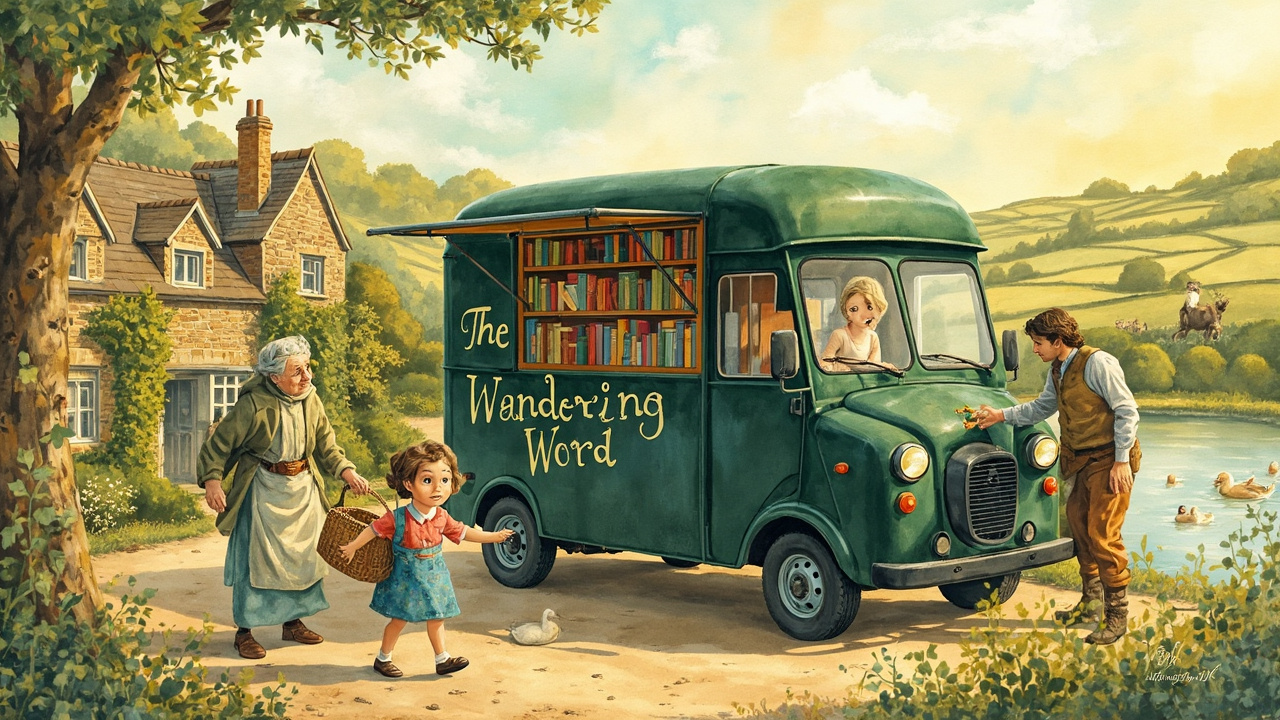
When Margaret retired from the town library after thirty-two years, her colleagues expected her to take up gardening or perhaps join a walking group. Instead, she bought a transit van, painted it deep green, and fitted shelves along both sides. On the side, in cream letters, she painted the words: The Wandering Word.
Her daughter thought she had gone mad. 'You'll be lonely out there, Mum. These villages... they're dying. Nobody reads anymore.'
Margaret smiled and packed another box of paperbacks.
The first village she visited was Thornwick, a cluster of stone cottages at the end of a muddy lane. She parked by the duck pond and opened her doors. A small girl approached first, peering at the colourful spines with wide eyes. Her grandmother followed, then a young man with oil-stained hands. Margaret watched the grandmother select three novels—agricultural memoirs—and the young man chose a book about motorbike maintenance.
Word spread slowly at first. A shepherd on Coldbarrow Hill came down from his lonely farmhouse once a month. A silent woman who lived alone in the old lighthouse keeper's cottage appeared one grey afternoon, asking for poetry. A retired schoolteacher became her most devoted customer, working through the classics he had never had time to read during his career.
By the end of her first year, Margaret knew the names of dozens of readers scattered across the hills and valleys. She knew that Tom on Hill Farm preferred thrillers but would accept anything with horses. She knew that the Morrigan sisters in Millbrook shared their books between them and always returned them in perfect condition. She knew that young Liam, who worked at the garage in Lower Bracken, read poetry when he thought nobody was watching.
'We were always here,' the retired teacher told her one autumn afternoon. 'We just needed someone to come and find us.'
Margaret understood then what she had really been doing. She had not been bringing books to people who did not read. She had been revealing a hidden community that had always existed, connecting people who had been isolated by geography but united by their love of stories.
That winter, something remarkable happened. The villages began to talk to each other. Readers from Thornwick exchanged recommendations with readers from Millbrook. The shepherd on Coldbarrow started a small lending library in his barn, using books Margaret had given him as seed stock. The lighthouse woman began hosting poetry readings for her neighbours.
When spring arrived, Margaret drove her van up the familiar lanes and found that her little community had grown beyond anything she could have imagined. People waved from doorways. Children ran to meet her van. A notice board in Thornwick displayed a handwritten sign: 'The Wandering Word arrives Thursday. All welcome.'
She parked by the duck pond, opened her doors, and watched them come—all the readers she had met, and many she had not. They browsed her shelves, discussed their favourite authors, and asked her what new books she had brought. Margaret looked at their eager faces and realised that she had not retired at all. She had simply found a new library to serve.